


Showing posts with label Martyrdoms. Show all posts

Tuesday, October 27, 2009

ST CYNFARCH, St Kynemark's Priory, Chepstow and The Desert Fathers and Welsh ‘llans’

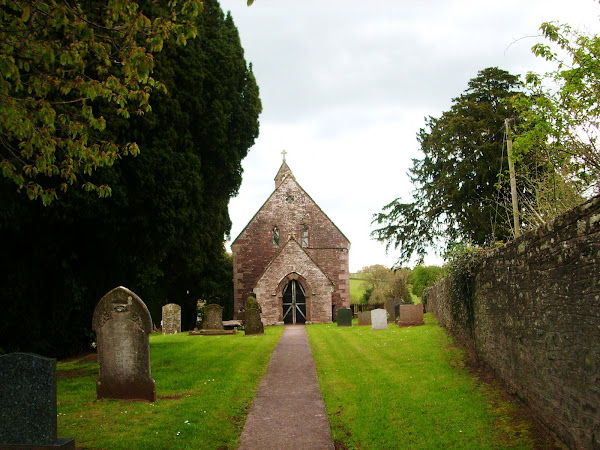
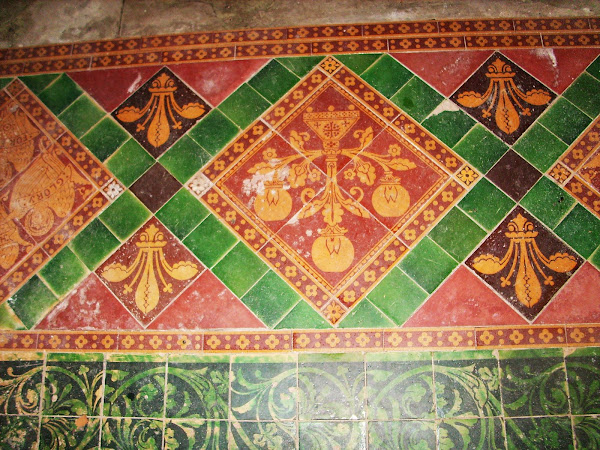
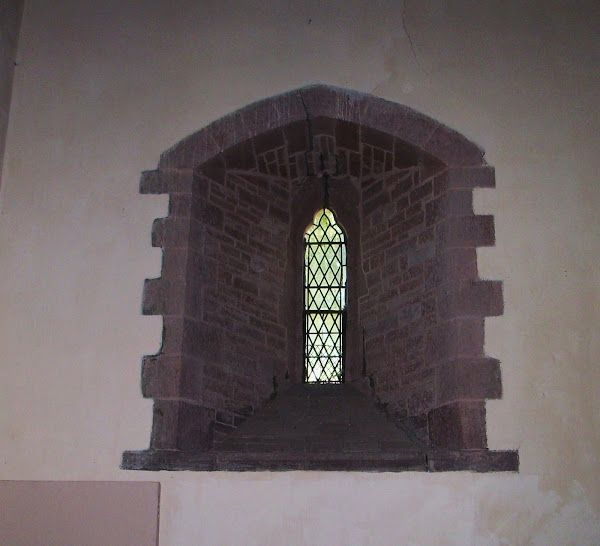
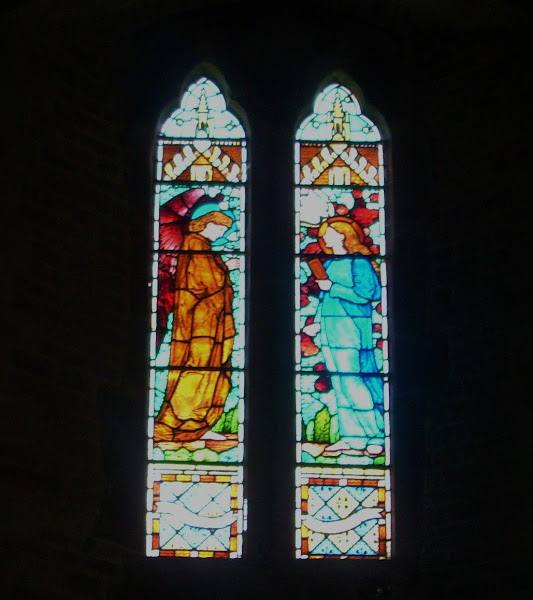
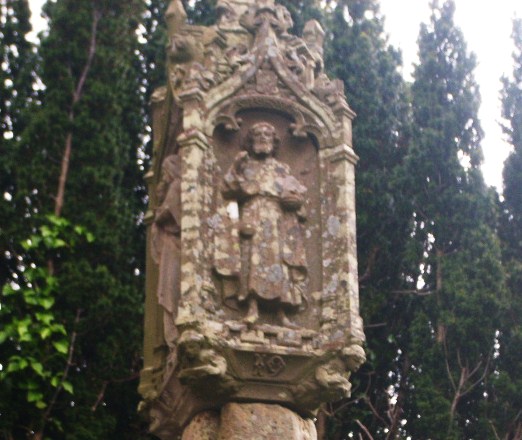
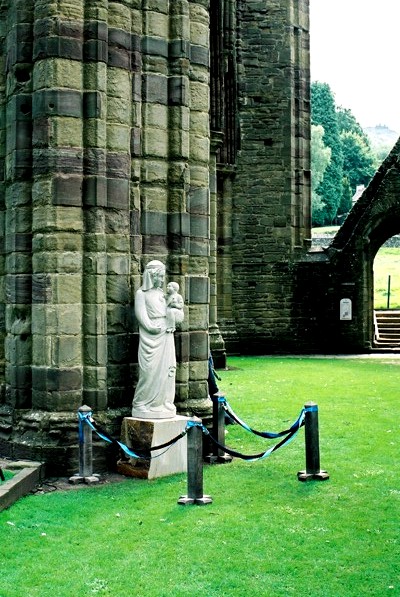
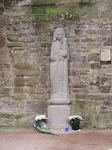
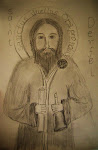
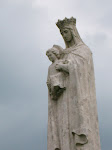
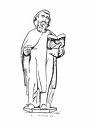
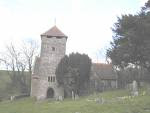
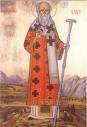
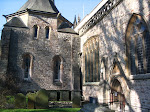
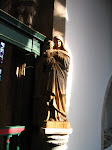
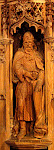
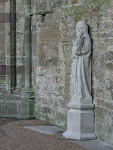
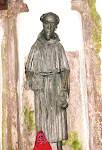
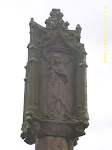
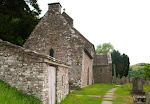
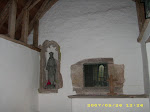
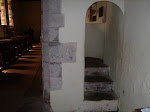
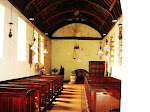
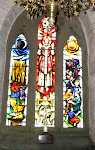
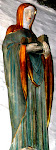
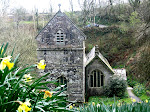
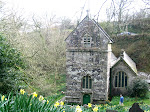
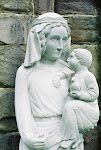
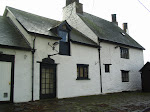
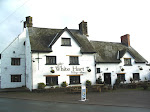
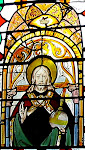
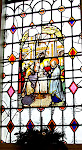
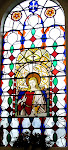
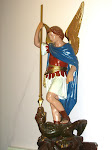
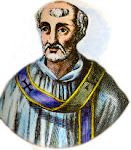
Here are pictures of St Antony of Egypt, one of the Desert Fathers and also of Penmon Priory-similar in size to St Kynemarks which is destroyed. Also some shards of stained glass showing St Cyngar and St Cynfarch at St Llanfair Cynfarch inClwyd (near Ruthin, North Wales)Tomorrow there is more detail about St Kynemark's priory from the scholarship of L.A.S.Butler of Leeds University. This is by way of introduction, exlaining the common origins of the Welsh 'Llan' monastic system and the 'Martyrdoms' and the original hermits -the desert fathers by St Anthony and various other Fathers of the Eastern Church who were the first to engage in the way of life of hermits. Tomorrow's post will consider what we know about St Kynemark's Priory near Chepstow.


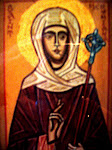
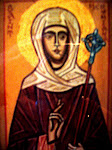
St Cynfarch.


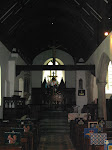
Penmon Augustinian Priory in Middle Ages-probably similar scale to St Kynemark's(Cynfarch's)

_________________________________________________________________________________


"This is the truth, if a monk regards contempt a praise, poverty as riches, and hunger as a feast, he will never die." Blessed Macarios of the Desert


Cynfarch Oer, King of North of England and Welsh Saint

Cynfarch's (Oer) has a strange title which means 'the Dismal'. He was the son of Meirchion Gul, the King of Greater Rheged in the North of what is now England and, upon his father's death, inherited the Northern portion of his Kingdom. Cynfarch lost the South of the country to his brother Elidyr but soldiered on in what is now Scotland. About AD 550, King Senyllt of Galwyddel seems to have been expelled from Galloway and was forced to seek refuge on his island stronghold of Ynys Manaw (Isle of Man). King Cynfarch is the most likely aggressor, especially as a number of places in the region are associated with him. Susan Mayes, however, to his possible identity of a saint and poet and a softer side to his personality, and his conversion to Christianity and founding of his ‘desert’ or White Martyrdom at the lower side of Offa’s Dyke at the area we know as St Kynemarks. One mile north of Chepstow.

She discusses on her web page the ‘Canu Heledd’, the song of Heledd (you remember we discussed her and her settlement at Llanheledd near Pontypool) Llanhilleth. The pagan Anglo Saxon Mercians pillaged and ravaged the kingdom of Powys and destroyed King Cynddylan. Susan suggests for various reasons, the poet may have been Cynfarch.? Possibly Cynfarch had been educated in one of Dubricius’ monasteries, as were so many of the Welsh saints, and we know he was a disciple of Dubricius (known as Dyfrig). Like King Tewdrig he had to follow his calling as King and but may have passed on his Kingdom when his son Urien reached his maturity and had the youth and strength to defend his people, as Tewdrig had done with Meurig. Cynfarch could have then dedicated himself to his love of history and poetry in his later years.)
Susan writes

Highly skilled in the Welsh poetic tradition, fond of contrast and irony, a keen observer, compassionate, acknowledging women within his cultural limits, a man who loved Powys: who and what was the poet?

An educated man of his era was almost certainly a trained bard, a churchman or a member of the ruling elite. It may be that the Canu Heledd poet was of privileged rank, associated with a royal house of Powys in the ninth century and formally trained as a professional poet. It is not impossible that he was Cyngen's historian and the writer of the Elise's Pillar text, Cynfarch. ‘ (This Pillar and its poetry is to be found at Valle Crucis Abbey near Llangollen in North Wales.)

This is her website, but you will have to c and p

http://www.castlewales.com/canuhel.html

Ystafell Gyndylan ys tywyll heno Cynddylan's hall is dark tonight.
heb dan heb wely. without fire, without a bed.
wylaf wers. tawaf wedy. I will weep a while, be silent later.
Ystafell Gyndylan ys tywyll y nenn. Cynddylan's hall, dark its roof
gwedy gwen gyweithyd. after its fair company.
gwae ny wna da ae dyuyd. Alas not to do good as it comes.

The Welsh 'Martyrdoms' and the Desert Fathers

St Cynfarch’s ‘llan’ or religious settlement on the banks of the Wye, probably followed all the previous foundations of ‘llans’ which I have written about before (the preparation of the land, the fasting, the delineation of the wall in separating the earth from heaven within etc) and when Cynfarch’s son, Urien took over from him as monarch, the older King lived out his life in his special monastery in peace and tranquillity. If Susan Mayes hunch is correct, it might be that the Canu Heledd was written here. We learn that at some time, possibly as a child,but not certainly so, as he may have discovered a vocation late, he became a pupil of St Dubricius-perhaps at one of the saints many monasteries. The early Welsh (romanised Britons) designated the finding of their plot of land for their ‘desert island’ as a Martyrdom-giving their life to God. Red Martyrdom was literally giving their lives for Christ with God and Blue or Green Martyrdom was actually the life spent on that special site, dedicated to the service of God. King Cynfarch seems to have been proclaimed a saint at this very early time, possibly because of the wars against the Saxon Mercians
and then retiring to a life of holiness after a lifetime of battles, in early life as a soldier and young king and in later life, being forced to defend his kingdom.

The Desert Fathers,St Anthony and St Augustine

"Sit in thy cell and thy cell will teach thee all." Father Moses,

We have recently learned how the Augustinian Friars of Newport and elsewhere in Britain admired the Fathers of the desert and sought to copy their hermit existence. The ‘Desert Fathers’ were Hermits, Ascetics and Monks who lived mainly in the Scetes desert of Egypt, beginning around the third century. They were the first Christian hermits, who abandoned the cities of the pagan world to live as hermits. These original desert hermits were Christians fleeing the chaos and persecution of the Roman Empire's Crisis of the Third Century. They were men who did not believe in letting themselves be passively guided and ruled by a decadent state. Christians were often scapegoated during these times of unrest, and near the end of the century, the Diocletianic Persecution was more severe and systematic. In Egypt, refugee communities formed at the edges of population centres, -far enough away to be safe from Imperial scrutiny.

Fasting and Abstinence

In 313, when Christianity was made legal in Egypt by Diocletian's successor Constantine I, a trickle of individuals, many of them young men, continued to live in these marginal areas. The solitude of these places attracted them because the privations of the desert were a means of learning self-discipline. Such self-discipline was modelled after the examples of Jesus' fasting in the desert and of his cousin John the Baptist (himself a desert hermit). These individuals believed that desert life would teach them to eschew the things of this world and allow them to follow God's call in a more deliberate and individual way.

Thus, during the fourth century, the empty areas around Egyptian cities continued to attract others from the world over, wishing to live in solitude with a reputation for holiness and wisdom. In its early form, each hermit followed more or less an individual spiritual program, perhaps learning some basic practices from other monks, but developing them into their own unique (and sometimes highly idiosyncratic) practice. Later monks, notably St Anthony, developed a more regularized approach to desert life, and introduced some aspects of community living (especially common prayer and meals) that would eventually develop into monastic hermit style life Many individuals who spent part of their lives in the Egyptian desert went on to become important figures in the Church and society of the fourth and fifth century, among them Athanasius of Alexandria, John Chrysostom, and John Cassian. Through the work of the John Cassian and Augustine of Hippo the spirituality of the desert fathers, emphasizing an ascent to God through periods of purgation and illumination that led to unity with the Divine, deeply affected the spirituality of the Western Church and the Eastern Church. For this reason, the writings and spirituality of the desert fathers are still of interest to many people today.

We can therefore see that both the Celtic Spirituality of the Martyrdoms and that of the desert fathers led by St Anthony (Athanasius) and others had their root in the same tradition. Losing themselves in the love and worship of God, becoming closer to him by separating themselves from a wicked world . In Welsh practice, marking out the area of their heaven by means of a wall, which contained their piece of the desert, by fasting and prayer for forty days and nights.

Menace of the Pagan Saxons

There is no doubt at all that the initial Saxon onslaught left people shaken. Meurig had managed by endless battles and the help of the Wyche and Dean Forests, which the pagan Saxon feared, so that only certain Roman roads had to be defended, to keep them out of Monmouthshire, after his father the Blessed King Tewdrig had been martyred by those who had been attacking his llan at Tintern (Ty-nderyn-the ‘House of the King’).Monmouthshire (or the Gwent kingdoms as they were then) received a great many refugees from over the border and much of it remained free from Saxon interference until well into the seventh and eighth centuries so it’s Christian basis was safe there, possibly why Cynfarch chose to come to comparative safety here. Much of this remains conjecture, as we have few records, many having been destroyed throughout the years, but safety is surely a very good reason for founding a desert settlement or llan dedicated to a peaceful existence and end. Moreover the settlement of St Cynfarch above Chepstow seems to have had privileged or special status even into Norman times.

Reform and restructuring by the Normans of the llans within the original faith of the Desert Fathers and St Augustine.

When the Normans arrived the Benedictines arrived with them to found the priories in Monmouthshire, but they also began to regularise the Welsh monastic settlements they found there. This was not a kind of ‘Jack boot’ measure destined to shoehorn Welsh monasticism into a Norman understanding, but rather perhaps to reform Welsh practices which over the centuries had deviated somewhat from the original doctrines of St David and the early Welsh saints. There were Druid practices in some places, and what was important for the whole universal church was that the teachings of Christ were adhered to and not mixed with more ancient heresies and, in truth, the Normans did this by reminding them of the spiritual leadership of their inspiration, the Desert fathers, and through them to St Augustine of Hippo, a giant Church teacher, who had written a Rule based on these hermit practices and St Anthony.

St Augustine, therefore , became the pattern for the host of different Welsh ‘llans’ and these communities were helped to build stone churches, if they did not have them already, but had proper priors and a hierarchy, responsible for the upkeep of buildings and souls in the area. The other Order which arrived in Wales and were enthusiastically received by them was that of the Cistercians, of whom we shall speak later. The Cistercians, a more austere Benedictine Order ,worked physically for a living, sought out remote places to worship,live and work and had as a spiritual father the saintly Bernard of Clairvaux. They left a deep impression on Gwent (including Welsh Herefordshire) from their communities at Tintern, Grace Dieu, Llantarnam and Dore.More about them later.

The Augustinians took over the administration of the following places in Wales:

In North Wales: Bardsey Abbey, Gwynedd
Beddgelert Priory, GwyneddPenmon Priory, Anglesey, Puffin Island Priory, Gwynedd, St Tudwal's Island Priory, Gwynedd


In Mid Wales: Carmarthen Priory, Dyfed, Haverfordwest Priory, Pembrokeshire

In South Wales:

Llanthony Prima Priory, Monmouthshire, St Kynemark Priory, Gwent, and Peterstone, St Peter’s Priory, formerly St Arthfael’s, Monmouthshire. (West of Newport)
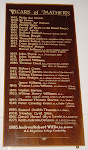
St Kynemark’s (Cynfarch’s)Priory- Llangynfarch’

We have discussed some of the larger Benedictine Priories in Monmouthshire, and then some of the Augustinian foundations. The Augustinian canons who settled in Llanthony , then their later order of Austin Friars of Newport. We now come to a third. About one mile north of Chepstow lie the remains of another small monastic house. St Kynemark, Kinmarchus, Kinmarch seem to be Norman corruptions of ‘Cynfarch’ as some sort of approximate pronunciation, and this house was the one situated a mile North of Chepstow, but was not a church administered from Chepstow Priory.
It lies on the road from Chepstow , but the church lay on high ground.

The ridge reaches a height of 250 feet above sea level providing extensive views over the lower Wye and the Bristol Channel. To the North is Chepstow Park and to the wet the view is blocked by St Lawrence’s Hill and by Cophill. Butler says in his excellent paper for the Historical Journal of The Church in Wales, that the priory lies close to the cliffs bordering the Wye and the head of a steep side valley from the river;It also commands the head of a more gentle valley sweeping down into Chepstow from springs near Kynemark farm, which was built with many of the ruined building stone.

There is a Church dedicated to Cynfarch at Llanfair Dyffryn,Clwyd,which used to have a ‘Sanctus Kynvarch’ represented in a stained-glass window (Benedictine Records, Farmer).Smashed up in the ravages of the 17th century, precious shards have been put together and replaced in the window. There is another church dedicated to St Cynfarch at the Hope Parish at Flint in North Wales.

Disputed Dedication

St John the Baptist is said to have been the dedicatee of St Cynfarch’s Priory and as a hermit himself, living on what God provided in the mountains, plus the fact that most priories became Augustinian Canons, this would seem the most likely dedication. The Catholic Encyclopedia, however, insists that the Priory at some stage became ‘Premontensian’ or Norbertine. We know that from time to time, however, different orders took over different houses, or even that a new order might be given a lease on some of the buildings to commence in an area, but there seem to be no records of the White Canons to substantiate this, unless it was a very ‘ad hoc’ arrangement, as it often was with mendicant Greyfriars or even the Carmelites. Around 1491 the Priory was in financial difficulties and it may be when perhaps a small Norbertine cell may have moved in .The historian Willis Bund described it as Norbertine or Premontensian after considering it similar to Talley in France, and so in the later 15th century, it is possible that the younger order moved in and cared for the older Augustinians there. It is confusing, but there was clearly input from both orders there, overwhelmingly Augustinian, but perhaps the anglicising to Kynemark implies some imput from the monks of the Holy Norbert of Xanten. We may never know. At any rate in the early middle ages St Kynemark or Llangynfarch was a deeply holy place and the Prior seemed to be on a level with the Abbot of Tintern and the Prior of Chepstow in resolving disputes.

My next post will consider how St Cynfarch/Kynemark’s would have looked and its subsequent history.

Petition for the Intercession of St Cynfarch

Seeing that many were brought to Christ by the radiant example of thy virtuous life/ and thy missionary labours, O holy Cynfarch,/ pray that we too may follow thee/ in the service of our Saviour, that our souls may be saved. AMEN

Wednesday, April 23, 2008

Saint Tydfil (Tudfal) of Merthyr Tydfil,daughter of Brychan, Mother of Teilo


Tydfil and Teilo at Llandaff Cathedral
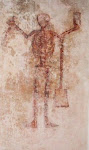
Above the Martyrdom of Saint Tydfil

Yesterday I put up a podcast about two South Welsh saints. We have already mentioned a daughter of Brychan Byrcheiniog whose name was Gwladys, who married Gwynlliw (st Woolos) and became a religieuse. and gave birth to another great Welsh Saint-St Cadog (Cattwg)the Wise. Brychan had many daughters Most were married to chieftains and petty chieftains. Gwynlliw’s son Bugi had married his cousin Goleu who gave birth to yet another great Welsh Saint-St Beuno who figures in the story of St Winifride.Tydfil was also married to a chieftain in West Wales in what is now Pembrokeshire. When her husband died or was killed she returned and embraced a life of chastity. Her father , Brychan received a plot of her fathers land at the foothills of the Brecon Beacons, where the land was fair and fertile. She probably planted an orchard-or had one planted for her, had her own small hut and a tiny church built at the centre of hier little Island of land. The women grew their own food and herbs and they prayed the Prayers of the Hours every day dedicating themselves to the service of the small community round about, offering their services as healers, herbalists giving remedies, growing lavender and buying or even growing sheaves of corn to crush it to meal and bake bread.Some of the men would fish too. It was unlikely Brychan would leave his daughters to fend for themselves. They would probably have had a weekly visit from a priest from her father’s court to administer the sacraments and say Mass.

The role of the Priest was important in these times in a court. The Priest would take care of oaths and legalities and be responsible for the care of the relics and church property as oaths were always sworn over the relics. If you want to know more about this and the other Laws ofHywel Dda lstn to thePodcast on Relics and St Teilos Skull-a very interesting story about how St Teilo’s skull ended up agoing around the world!

Life in an Early Welsh Convent


Tydfil and her women as many nuns in the centuries to come would offer theirexpertise in helping women with childbirth when their confinements came. They devoted themselves to feeding the hungry, clothing the naked and caring for the sick and the other works of mercy.The Catechism of the Catholic Church says :’The fruits of Charity are joy, peace and mercy; charity demands beneficence and fraternal correction, it is benevolence; it fosters reciprocity (inspires the same generosity and love in those to whom it is given) and remains disinterested and generous. It is Friendship and Communion. Love is itself the communion of all our works. There is the goal, thatis why we run towards it, and once we reach it, in it we shall find rest.’Para 1829.

Work and Mission

Mary was their Patroness, the Mother of Mercy and their inspiration to follow the teachings of Christ, as Mary always points to her son. They would have learned to card and spin wool, weave and knit again with a few male servants to did the harder aspects of animal husbandry. We know St Maches, Gwynlliw’s daughter had worked as a shepherdess. Tydfil was greatly loved locally by all, and made strangers welcome. She tried to live out the vocations to which she had been called in the same was as Mother Teresa and her nuns, and the large number of Franciscan and other sisters and brothers around the refugee camps in Zimbabwe, giving Hope to those for whom life is hard and so the church goes on.


Tudfal and Teilo

Tydfil seemed to love the secure life she had and gained great joy working for the Kingdom of Heaven.The stained glass window shows Tyfil with the child Teilo, who may even have been brought up with his mother at her monastery for a while until he was sent away to school at Ty Gwyn. We can only assume, Teilo having been born at Llandeilo in West Wales, that her husband died, and there were other children to succeed him.. They may even have continued a Roman custom that when children had been born and grown up, a married woman, supported financially by her husband had freedom to go and follow her religious vocation, as Roman ex wives had become successful farmers and business women. With the help of some of Brychan’s servants who came to help them build their strong church and walls, they built a small settlement, probably from wood or mud and wattles, and became a Christian centre, offering Mass to local people, who perhaps had no priest.

Anglo-Saxon Raiding Bands

This was, however during 400-600AD and before the routing of the Saxons by Meurig and Tewdrig at Tintern. (Meurig had been named after St Maurice the Roman Commander who with his whole legion had been martyred for their faith. Many places in Europe too were named for him-eg Saint Moritz. Tewdrig was named for the King Bishop Theoderick (also of the Eastern Catholic Church)who popularised the fate of the Legion. It shows that the Welsh Church was very much part of the Universal Church at that time.)


Fall of Glevum (Gloucester) gave access to Wales

Ceowulf the Saxon had taken Glevum (Gloucester) but did a deal with the Angles who had settled in Mercia. They were just beginning forays into Wales. King Arthwys had stemmed the tide at the Battle of Mons Badonis (Mount Badon) near Bath before his death but the tide of Saxons entering the Country was strong. The Saxon threat was not the only one. Irish raiding parties were rife, moving up from Swansea and the coast up the heads of the valleys track, in search of lucrative 'llans' to raid, young healthy people for slaves as well as gold or silver.
St Tudfal gains a Martyr's Crown

Tydfil chose as her home, the Taff River valley, sparsely populated by Celt farmers and their families. She became known for her compassion and her healing skills as she undertook to nurse the sick: human and animal.

She established an early British monastic community, leading a small band of men and women. She built a "llan" or enclosure around a small wattle and daub church according to common practice.

Her home included a hospice, outhouses and a scriptorium. There she lived quietly, bringing hope and support to the people of the Taff valley.

In his old age, King Brychan decided to visit his children one last time. He took with him his son Rhun Dremrudd, his grandson Nefydd and Nefydd's own son, along with servants and warriors.

They visited his third daughter, Tanglwstl, at her religious community at Hafod Tanglwstl, what is now known as the village of Aberfan, south of Merthyr Tydfil. Brychan wanted to linger with his daughters a little longer, so he sent most of his warriors and Nefydd on ahead, along the homeward journey. The king went on to Tydfil's home while Rhun and Nefydd's son were still at Hafod Tanglwstl.

So the party was spread out along the Taff Valley; a distance of about seven miles and all uphill.

Wales at this time was suffering from raids from the Irish, free to roam around now that the Romans had long gone. Some had even settled at South Radnorshire, near Brychan's kingdom. Perhaps the news of the king's absence had reached the Irish settlement and they decided to take advantage of the king's vulnerability. In retrospect, Brychan would appear to have made a very foolish decision in allowing his party to split up. But he must have known that, being so old, he was unlikely to ever see Tanglwstl and Tydfil again.

Rhun Dremrudd was attacked by an Irish raiding party, a mile from Hafod Tanglwstl and he died defending a bridge over the river at what is now the village of Troedyrhiw (the bridge is still called Pont Rhun). The bridge gave the Irish free access to the King's party and Rhun Dremrudd put up a good fight. The Irish then split into two groups: one devastated the Hafod Tanglwstl community and the other pursued the king.

The king and his followers were robbed of their jewellery, money and clothes. Servants and family; they were all cut down. While the others ran and fought and panicked, Tydfil knelt and calmly prayed, before she too was brutally slain.

Then the Irish retreated over the Aberdare mountain. By then, Nefydd and his warriors caught up with them and avenged the deaths of his family at "Irishman's Hill". Then they returned to bury their dead.

Tydfil was buried within the church she founded, amongst the people for which she had cared

A Celtic Cross was put up in a clearing near the Taff which became a meeting place for the people of the valley. In the 13th century the cross and wattle and daub church Normans replaced the old church to a stone church dedicated to Saint Tydfil the Martyr, which was itself replaced in 1807, and rebuilt again in 1894. The church still stands, at its place by the River Taff and is one of the first things the tourist sees as she enters the town centre from the south side.

In recent times we have seen such cruelty ourselves, or heard of it. It is unlikely Tydfil was as young and beautiful as in the portrayal of her Martyrdom in the stained glass window, yet such a sacrifice for God made her beautiful in the sight of many. She was brave and fearless and merciful.

Stained Glass at Llandaff, and Corporation of Merthyr Tydfil. 'Mertyr means 'Martyr'

The picture of this martyrdom is contained at Llandaff Cathedral, where you can see her just before she was beheaded. She met her death bravely offering no resistance. She was not a women the Saxons would have liked or understood. These Angles were puzzled by what religious women were and may have feared them or even offered them to their many gods. The Welsh word for ‘Martyr’ is Merthyr and Merthyr Tydfil means ‘The Martyr Tydfil’to this day, she remains on the crest of the town of Merthyr Tydfil.She was buried on the site where the Church of St Tydfil now stands. The Catholic church and Priory re established in the nineteenth century was also dedicated to this remarkable woman.

Conclusions

Merthyr Tydfil is not a beautiful town today. It was not planned and developed during the industrial revolution into an important coal mining town and further disfigured by ugly council estates in the 1960s. The Coal Mine owners the Crawshay family were closely connected with the town and eventually funded an important concert Brass Band, famous throughout South Wales. The collapse of the mining industry has brought difficult adjustments but the town is proud of its martyr princess.The views are wonderful and to drive slightly north into Brecon brings you through the most amazing countryside and solitude, similar to that St Tydfil would have enjoyed. She gave Birth to one of the greatest Welsh Saints, Teilo who founded the College at Llandaff following his trip to the Patriarch of Jerusalem and being consecrated Bishop by him, and so she enriched the Catholic and Christian life of the whole of Wales.

Monday, April 14, 2008

Saints of Newport-Children of Gwynlliw-St Maches of LLANVACHES St Cynydir, St Bugi


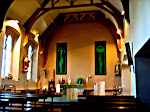
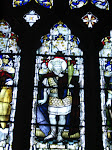
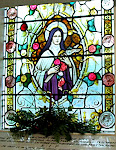
This beautiful stained glass window is to be found in St Dubricius (Dyfrig's)Church at Llanvaches (The-Holy-Place-of Maches) Curiously earlier known as Merthyr Maches.This Church is not dedicated to Maches, because it was actually founded by St Tatheus is memory of her. It is to be found north of the A40 road going from Newport to Chepstow.Interestingly, the tower also contains a beehive.The presnt Church is Norman, but is now quite plain, although very ancient. Nearby is the oldest non-conformist Chapel anywhere, actually on the Chepstow Road, near the turn off to Llanvaches. The pastor of this church was a former Vicar of Llanfaches church who had left because of his doctrinal differences. He had, however stripped all sacramentals of Catholic interest out of the church which have left it quite plain. Its antiquity is undeniable, however, and the stained glass window showing St Maches very beautiful.
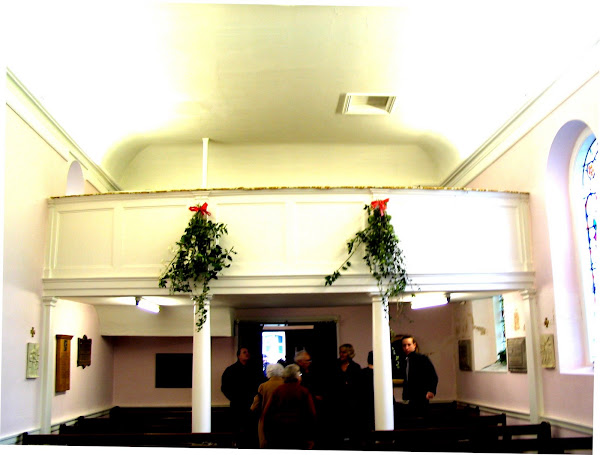
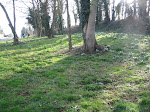
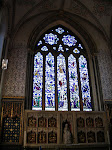
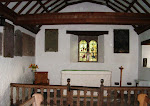
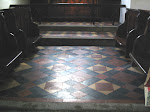
I was told bypeople in the church, who were preparing it for a wedding, that Maches was actually killed a bit further away under a tree commemorating the murder near the village pub. Testained glass window of Maches is to be found in the church of her father, St Gwynlliw (Woolos the Warrier) in Newport, and the image next to her is of Gwynlliw Farfog (Gwynlliw the Bearded) the pirate himself. The other images are of the altar (a) and nave(b) to the tower of St Dubricius Church, Llanvaches.The Latin form of her name is 'Machuta'


---------------------------------------------------------------------------------------------------

Gwaldys, saintly daughter of King Brychan Brycheiniog after which Brecon is named.She was married to Gwynlliw the Pirate.They soon had a son, the famous Saint Cadoc the Wise. To celebrate his son's birth Gwynllyw went on another raid stealing cattle from Tatheus at Caerwent. When Saint Tatheus came courageously to demand the return of a cow, the King was so impressed he decided in return to send his son to Tathyw at Caerwent to be educated. Gwynllyw supposedly had other children also saints Cynidr,Maches, Bugi and Egwine.

We have heard about Gwynlliw and Gwladys and there was a whole podcast about St Tatheus (Tathwyn) of Caerwent, the famous Irish educator, and grandson of King Meurig of Gwent, King Tewdrig's son and benefactor of Caerwent College. He was succeeded by Maegwyn educated at Caerleon. When her brother was so impressed with Tatheus and begged to go back to the monastery with him, they often all talked about the things which Tatheus had told them. They were told about the Scriptures, the Apostles and Church and the Holy Wafer, which would bring them Christ, also how St Peter had organised the church, according to Christ's instruction. Even then there were severe fines for dropping the Eucharist on the floor. Maches was obverjoyed to hear the Good News -that Life is unending, death is not an end, but a beginning. She began to yearn , like her mother for the ife of a religious, or hermit. It was decided she was as yet too young and shoulod study when she came of age. In recompense Tatheus gave her a small farm near Caerwent, where she could study and pray and look after the sheep as well.She tended some of the beasts of particularly a valuable three year old ram.While she kept te sheep and lived tranquilly and in a most holy way. However two brothers who were thieves arrived in her little settlement. This was in the area of what is now the small hamlet of Llanvachesa small hamlet just north of the pub in Llanvaches, north ofthe A4 from Newport to Chepstow. Maches the young giel was dragged protesting in the forest and they decided to silence her, rather than let her talk. They bent her over and beheaded her. They also killed the stolen ram and took it home. The sheep wandered back to Caerwent by themselves and st Tathwyn was worried because the flock hed returend without her.He and Cadoc her brother grieved tremendously with Cadoc and Gwynlliw and Gwladys and prayed for help.
On the first night, they wondered what hade become of her, when she did not visit her parents. The two murderers became wracked with remorse and came to the monastery to do confession. They found the church and Tatheus said they should confess their sin for fear of their immortal souls and do penance. A search party including Tatheus found the body of the martyred girl. .A churh was built on the site near her martyrdom and although she is commemorated inside, the dedication is to their bishop, St Dyfrig -Dubricius. Maches was carried back to Caerwent to be buried. to the great grief of parents and the court.A sad story this. The sorrowing Tatheus, who blamed himself had her body brought back to Caerwent, where she was buried and where she bacame a saint because she was a martyr. Her relics are still at St Stephen's Church in Caerwent.
Maches is aommemorated i beautiful stained glass windows at St Woolos (Gwynlliw's) cathedral in Newport. All mourned beautiful Maches whose life had been 'snuffed out' at a vary early age and wom Gd ad taken to be one of his own.

CYNYDIR a son of Gwynlliw.

Although Cynidir no longer has a church dedicated to him in Herefordshire, Kenderchurch preserves his name (the church here is now dedicated to St Mary). Cynidir, like Clydawg, was the grandson of the King of Brycheiniog and founded several churches in Breconshire, including Glasbury, where he was buried.
P340 Married Goleu daughter of Brychan for wife.

Cynidir established a hermitage on an island in the river Wye near Winforton (only 9 miles down river from Glasbury). In 1675 Blount wrote that 'Walter, a Canon of Wormsley Priory, betook himself to an Life of a hermit in a little island on upon the river Wey (sic)... wherein he built a Chappel (sic) dedicated deo beatae Mariae, beato Kenedro - .
Vita Cadoci

Dispute between Saint Cadoc and King Arthur

All assembled when the sone of Elliman offended king Arthrwys and took sanctuary with Cadoc who did not fear Arthwys-He thought 'Fear not those who kill the body as they canot hkill the soul'. Cadoc hid the sons for seven years in Gwent. They were then betrayed to King Arthur by someone and Arthur came o the River Usk with a large force with the idea of laying a legal claim because he did not dare to violate the sanctuary of Cadoc. St David, St Teilo and St Oudoceus agreed to be judges, and Cynydir a Son or grandson of Brychan and brother of Cadoc met together on the banks of the Usk. They disputed for a time and then the judges agreed that Arthur should receive 3 oxen for every one of this three dead men-others fixed that one hundred cows should be given and Arthur would only accept those with a certain colouring. A miracle occurred when they magically turned into the correct colours. When Bedwr and Kai tried to drive them through the water thaey became ferns and the village became known as the Town of Ferns Trefredinauc, possibly Tredunnock, which also contains the relics of St Julian. Cynydir seems to have formed a monastery on the Wye and near Brecon, probably because he was close to his mother's family and the land there much more beautiful and remote (see location above)


Egwine

There is little about Egwine. He either became a warrior and looked after the Kingdom for his father and brother, as we have no special details about him, perhaps he did not embrace a saintly career.He may, however, as a younger son have simply joined his brother's monastery. There are no records of a marriage.

Bugi

Bugi, another son of Gwynlliw was also obviously grandson of Brychan and was offered land on which to live in Powys. He married Beren, daughter of Llawden. The records said they lived quietly and were inoffensive to all and their lives were virtuous, They kept the commandments of God in all ways as far as they were able and no one ever accused them of anything. They had no son to be their heir and were in their forties and they no longer had relations, as they had passed the greater part of their lives. One evening they were sitting and talking when an angel came and told them they would have a son if they slept together.He said 'Be merry and joyful for God has heard your prayer. The angel said ' tonight your wife will become with child if you sleep with her and from that pregnancy a son will be born to thee and he will be honourable with respect to God and man'. Indeed nine months later a child was born to them. He was baptised locally and the Child's name was Beino-also a child who became a great saint. When Beuno was old enough, they sent him to Tatheus school at Caerwent, although Tatheus had died by then and was replaced by Tangusius, a former scribe and great teacher at Caerleon College.He learned the Holy Scripture and the Sacraments and the Rules of the Church(Canon Law). St Beino grew up, albeit moved to North Wales.Beuno was important in the Life of St Winefriede of Wales. near Holywell in Fflint.Since St Winifride's (Gwenfrewi)Well (Holy-well) was a major place of pilgrimage fro people all over Wales (and later by Saxons, because the Benedictines of Shrewsbury removed some of her remains from Gwytherin to Shrewsbury Abbey-see the ITV series of 'Cadfael'-A Morbid Case for Bones) I will deal with her a bit later on.During the times of persecution even in the sixteenth century the money collected at St Winefrides was so plentiful, Henry's Commissioners left it alone, and it is one of the few mediaeval pilgrimage sites left in Britain. It is still, with Our Lady of the Taper in Cardigan, and possibly now Our LAdy St Mary of Tintern one of the three important shrines in Wales

It is said that Ynyr Gwent himself, in his old age, granted Beuno lands in Ewyas (North Gwent) and that Ynyr became his disciple. This is now Llanfeuno, a chapelry under Clodock, near Longtown in Herefordshire. Whilst there, Beuno heard that his father,Bugi, was ill so he committed his foundation in Ewyas to three of his disciples, and hurried back to Powys, where, "his father, after receiving the Eucharist, making his confession and rendering his end perfect, departed this life." Beuno made founded a monastery there and planted an acorn by his father's grave. It grew into a mighty tree of which one branch curved down to the ground and then rose again "and there was a part of this branch in the soil, as at present; and if an Englishman should pass between this branch and the trunk of the tree, he would immediately die; but should a Welshman go, he would in no way suffer."(Life of St Beino)
All photographs are by Christopher Tottle, Photograqpher with permission.
The Church of Llangynydir is to be found near the Talybont Reservoir in South Breconshire, and area still named for Brychan Brycheiniog, Bugi, Egwine, Cynydir, Maches and Cadoc's grandfather through Gwladys (Latin Claudia) their mother.

Sunday, March 30, 2008

Download my Podcast -Summary of early Christian Gwent-Haut de la Garenne, Madeleine McCann Investigation


___________________________________________________________________________________

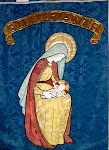
This is a picture of the Christ child in a nativity scene in a fresco that was found in the Gunter House in Abergavenny. It is a detail. The whole plaster was cut out and taken to the museum. It was here that Catholics secretly and in terror for their lives heard Masses said by Father Philip Evans and Father David Lewis among others both of whome were martyred during the terror of the Titus Oates lies.The Blessed Mother's head is elsewhere on this blog.

To download my podcasts visit iTunes and download this free. Then type in 'MaryinMonmouth' into the window of the 'Store'and double click.
You should see the icon come up. Then click 'subscribe' and it will put it into your 'podcast' folder . Click on that and then click any episodes you like. Itis safe for your computer and by clicking on the episode twice, it will play on your computer.You can click 'file'-make new playlist, name it ie 'Mary' Click on it and then drag in the spisodes you want. You can burn a disc by clicking on 'burn disc-yes it is quite easy.It is all absolutely free.

Latest Podcast tells of St Tathan and his arrival in Monmouthshire (ancient Kingdom of Gwent) where he set up a college of great excellence at Caerwent. In addition there is some feedback on Boscastle after the flood and also a visit to the Tiny chapel at Fontrevault at Tintagel. Later this week there will be a soundseeing tour in a very chilly Padstow!! And a longer one later from Tintagel St Materiana’s Church, not far from the castle and Merlin’s Cave.

I also did a summary of what we have learned about early Christianity in Gwent.

Joseph of Arimathea’s arriving and departure to Glastonbury. He had been sent by St Peter and St Philip and arrived with some of Christ’s disciples.Mud and wattle church.
Possible early Christianisation of Caractacus’ family. Eurgain (Claudia Rufina and husband Pudens and younger brother Linus born in Rome, all good friends with St Peter. At the time of Nero, Claudia returned with her son Timotheus to Winchester, where she founded her hermitage.
Persecution and martyrdoms of Saints Julius, Aaron and Alban, first two at Caerleon (Isca Silurum) and Alban at Verulamium (St Albans)
Age of the Welsh Saints, of noble birth, often consecrated hermits or monks in small monasteries.
White Martyrdom-giving up life to God by going possibly in a boat over the sea and being taken where God wants you to go to work for him.
Green martyrdom-setting up hermitage or monastery on a partch of land (island) usually near a holy well for baptism.
Red Martyrdom-martered by blood (ie being killed)
Blue martyrdom is when through fasting and hard work the desires are controlled and they live on struggling in penance and repentance.
3 kinds of Martyrdom that are precious in the Sight of God
Chastity in youth, moderation in the midst of abundance and not receiving gifts that a corrupt right judgement. Cambrai Celtic homily)

Characteristics
All things held in common-common injunction to feed and clothe each other and make the stranger welcome.
Monks and priests were often ‘soul friends’Soul friends anmchara Saints and holy men travelled around together. Made pilgrimages to Rome and Jerusalem together.
Heard one another’s confessions individually, a practice later accepted by the church, as bringing the sinner close to God. Until then, confessions only for very serious sins and would incur years of penance and could only be given once.

Characters

St Materiana (Queen Madryn of Gwent ) and son Cedwyn-green island martyrdom at Minster in Boscastle. Cedwyn ordained at Truro on the Feast of St Peter’s Chair.
Pater Ishow (Issui,) gives rules of hospitality to a robber who murders him. Place of Pilgrimage.

St David’s Cell in Golden Valley at Llanthony where he had his green island. He defends the teaching of the church against the claims of Pelagius and is canonised.
The Major seat of Christianity held by Dyfrig (Dubricius) from North Gwent. He founds monasteries and places of learning throughout Gwent. Retires after David’s acclamation at Llandewi Brevi and levitation.there. David takes the headquarters to St Davids (in Roman Menevia-Pembrokeshire-where St David is) and Dyfrig founds Llandaff as his new headquarters and monastery. Dyfrig leaves to spend his last days on Ynys Enlli (Bardsey Island) called the ‘Island of the Blessed’ where Materiana had had a church built as a younger woman.

Teilo takes over Llandaff and David, Teilo and Padarn are consecrated bishops by the Patriarch of Jerusalem. (The Orthodox church and Roman branches of the church in full communion and were to be for hundreds of years)

St Tewdrig is martered by Angles out to attack the church and then his son Meurig gives many lands to the diocese of Llandaff via St Oudoceus (St Docco, or Welsh Euddogwy)The Bishops Palace of the Bishops of Llandaff remain at Mathern to thisday . King Tewdrig the Martyr is buried at the church at Mathern where his relics are interred under the altar in the chancel.

Anna, Meurig’s daughter was the mother of St Tathan who came to Wales to found a magnificent monastery. Gwynlliw, the wickled bandit chief and rular is converted by his saintly wife Gwladys and his son, taught by Tathan at Caerwent, who becomes a priest and bishop (as well as King, when Gwynlliw decides to do his green and ble martyrdom on Stow Hill in Newport) St Gwladys takes the veil and retires to a small convent at Bassaleg, near ‘Cadocs Pool’.Cadoc made seven pilgrimages to Rome and was away suring the synod of Llandewi Brefi. He was also a good friend of Irish White and St Barruc, who was doing a green martyrdom at the sea (Barry) Cadoc also had a small ‘island’ in the coast there at ‘Cadoc’s Town’-(Cadoxton)

This is all the ground we have covered up until now. The adventures of St David are also very interesting, as well as a soundseeing tour around Llandaff Cathedral.


The Pain lives on....

Seventy three years old man tells of Haut de la Garenne

John Buckley was at the home from 1946 to 1951 and says that children were mentally and physically tortured and were ‘brainwashed by fear’.

Now 73 and living in Brisbane, he was 11 years old when he first went to the former children’s home in St Martin, the grounds of which are being treated as a potential homicide scene after the discovery of a skull fragment on 23 February.

Mr Buckley says that he was never sexually abused at the home, but he feels that the States are to blame for the years of suffering and cruelty that he and other children had to endure at the hands of a number of sadistic staff.

The police did not warn ministers about the discovery of human remains at Haut de la Garenne before calling a press conference for the national media, it has emerged. And the Council of Ministers are being kept ‘at arm’s length’ from the investigation and are not receiving regular updates from the investigating team
Chief Minister Frank Walker says that he was told that police had started working at the Haut de la Garenne site, but not why, nor what they were looking for. He says that he was as shocked as anyone by the announcement on 23 February that the ‘partial remains of a child’ — later reported to be part of a skull — had been found at the site.

THE Chief Minister has called for a committee of inquiry into historic child abuse and alleged cover-ups.
However, the plans being drawn up do not say when the committee will be set up or what its terms of reference will be.

Senator Walker said that the committee would be set up only after the police investigations and prosecutions had run their course so that the inquiry would not prejudice court cases.

However, former Health Minister Stuart Syvret said that without a start date or terms of reference, the suggestion of an inquiry was ‘a PR exercise’ and that the proposal made no sense at all.

Ben Queree in the Jersey Evening Post (01534 611611)

Madeleine McCann (Today's Mail on Sunday)

The British police are to question the nine people in the Tapas bar on the night Madeleine McCann disappeared. This will be of three days duration in an attempt to clear up inconsistencies and try to unearth some new facts, not discovered by the investigations in Portugal.
Please pray for Mary, my friend, and Eva her daughter, if you have a prayer diary.