
Showing posts with label Gwynlliw. Show all posts

Thursday, October 2, 2008

GWYNLLW's CHURCH IN NEWPORT-now ST WOOLOS CATHEDRAL


_____________________________________________________________________________

GWYNLLIW and HIS VISION - ORigin of St Woolos

CONVERSION OF A PIRATE!

When Dyfrig/Dubricius was Bishop of Caerleon, Glywys-(Glaoo-iss), a local British chieftain governed one of the districts of Gwent. When he died, his land was divided between his sons, but only one Gwynlliw Farfog (The Bearded) was able to fight off marauders and keep the kingdom intact. He exceeded all his brothers in nobility and prowess in battle and was such a worthy prince, and ruled so well that peace ws established throughout the district all his life. He was based in Caerleon, which was still a magnificent city.

After a while, Gwynlliw (Gwinn-thloo)wanted to marry, and found a bride in the beautiful princess Gwladys born at Gwynllwgat Bochriwcarn in Gelligaer, around 497,daughter of a neighbouring prince. Their marriage was happy and they had a noble son, Cadoc, who was a very holy and good person to whom the Church (and hospital)at Caerleon was entrusted in a dedication. he Church was built on the site of a Temple of Jupiter in the centre of the city. Cadoc (baptised "Cadfael" by St. Tathyw)begged his father to think of his immortal soul At a young age Cadoc had been sent away to be educated by this Irish saint (Tathyw) at his monastery in Caerwent. For Gwynlliw had killed many people to achieve his peace

. The saintly Gwladys and Cadoc prayed that Gwynlliw would repent of his sins and turn to God. Fred Hando writes the fierce Welshman revelled in his adventures and scorned the prayers of his saintly wife and son’

Near the mouth of the Usk (Wsg) in a creek called Pill Gwenlliw ,he kept a long fast boat and it was his custom to go out into the Bristol channel with his men and attack passing ships, killing the crews and stealing the cargoes.
One night, so tradition has it, he was visited by his Guardian angel, who told him to leave his worldly possessions.

VISION OF THE WHITE BULL and THE FOUNDATION OF THE CHURCH OF THE BLESSED VIRGIN MARY (Llanfair)


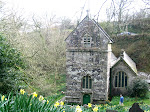
The angel instructed him that on the hill by the banks of the river, he would discover a white ox with a black spot between its horns. The land where he found the ox would be uncultivated and there he must live and labour. Gwynlliw and his wife went out , and discovering the ox on the side of an ancient hill fort, where the angel had told him , he built a cell on the hillside overlooking the sea, and the site of modern Newport. There he also erected a Chapel for prayer and meditation dedicated to the Mother of God, whom he thought should intercede for him with God, because his sins had been many and he thought Mary would plead for him.

GWYNLLIW PASSES TO THE NEXT LIFE

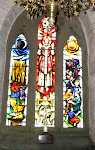
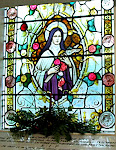
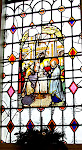
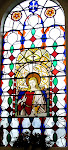
Finally he was became very ill and when he knew he was dying, sent for Cadoc ,his son and Dyfrig (St Dubritius) the Archbishop, who came to comfort him in his last hours. Dyfrig heard his confession and gave him the last Holy Communion (Viaticum)so he would die with Christ. He was buried at a spot which was situated immediately above the entrance to the present tunnel which penetrates Stow Hill. So Gwynlliw is buried underneath the present St Woollos Cathedral (dedicated to Gwynlliw) and the present beautiful Catholic Church of St Mary is also sited nearby and has a stained glass window dedicated to Gwynlliw as well as David .Gwynlliw was regarded as a Saint, because he was a reformed sinner and had devoted his life to Christ.He had been obedient to God’s message by the angel and, like Mary, had been obedient to God’s Will and had done what God had commanded.

ORIGINAL CHURCH BUILDING

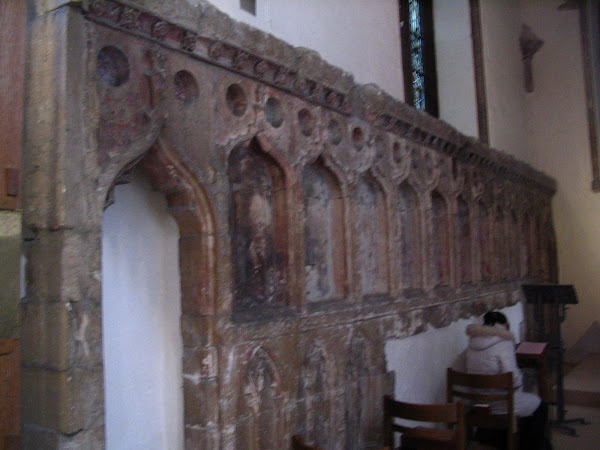
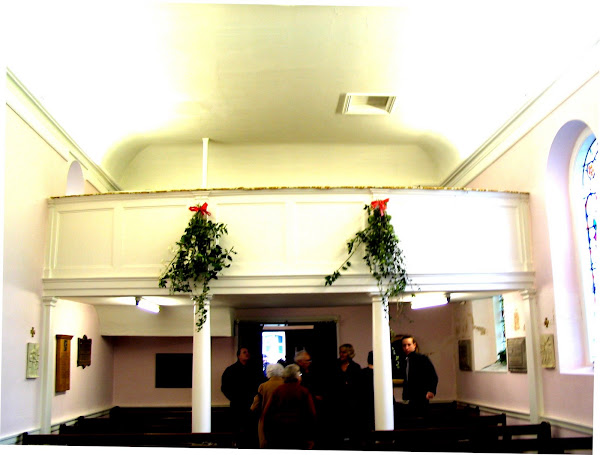
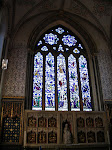
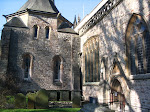
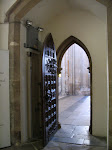
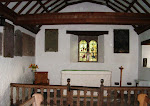
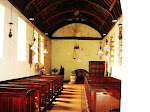
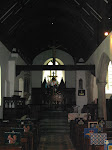
The original Cathedral was built of ‘boards and rods’ and was built in the sixth century .This was known as ‘mud and wattle’. The little Chapel to St Mary (Llanfair) nestles between the tower of the cathedral and the nave of St Woolos (St Gwynllw). The sixth century building was replaced by a stone chapel, part of which probably survives in the stone of the walls. Fred Hando says ‘From the ancient chapel the view of the Norman nave is magnificent , seen through a semi-circular arch .This arch was never an exterior doorway and is itself unique , in that its detached pillars have a Roman character and may have been brought from Caerleon.

St PETER's ABBEY, GLOUCESTER

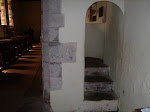
Two steps lead down to the nave. St Gwynlliw’s has, from earliest times had a close connection with St Peter’s Abbey and now Cathedral at Gloucester.and it may be that Benedictine monks from Gloucester raised the first beautiful arcades in the Newport Cathedral. Of one thing I am certain, no man who has ever attended service in summer under those grand old arches will ever forget them

THE LEPER WINDOW

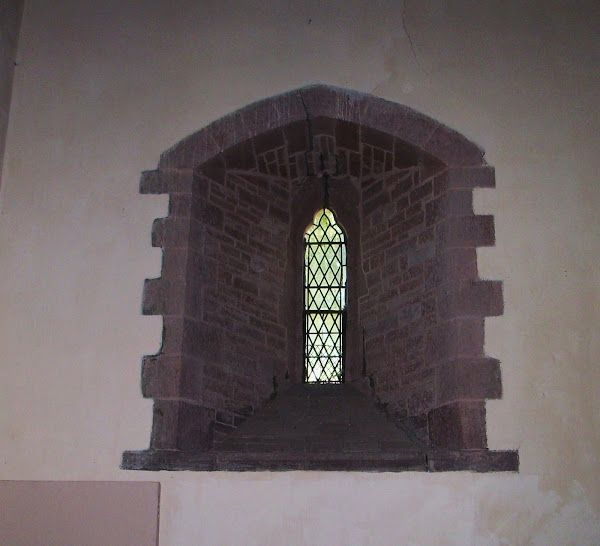
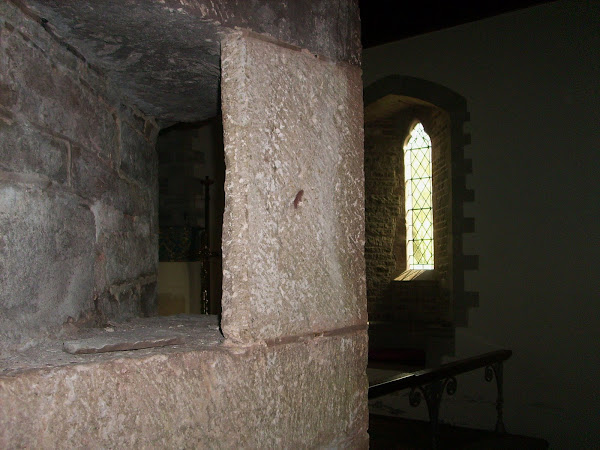
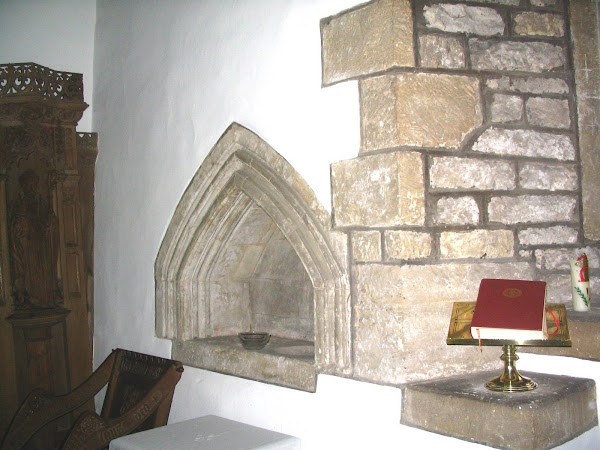
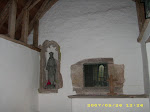
Fred Hando also mentions that from the rising floor of a chancel is an ancient window, still called the Leper Window so that through the open window, lepers could take part in the Masses and Prayers of the Hours. Lepers were, however sadly forbidden entrance to churchyards and this was a ‘sacring’ window and the sanctus (holy) bell was rung at the consecration of the host, at the hours and at the Angelus so that all the people working in the fields would stop and pray facing towards their church.

ST WOOLOS AND HAROLD GODWINSON

The ancient church of Our Lady and St Gwynlliw on the hill served as a beacon for King Harold and his Saxon brothers, his mother sister and daughter had viewed it during the twelve long months refuge on the Holmes. William the Conqueror and William Rufus had looked on the church: outside the walls the solders of Rufus had camped and then knelt inside. Henry II had travelled past on at least two occasions.

GWYNLLIW SITES AROUND NEWPORT

Gwynlliw was named after his kingdom From this name comes, as I have said ‘Pill Gwenlly’(Pill), Wentloog (Gwynlliwg-gwinn-thloog) (The area around the ‘Lighthouse’ Peterstone and Church of St Brides)Wentwood (Coed Gwynlliw) ‘Gwynlliw’s wood’(situated to the left of the A48 if you are travelling to Chepstow. There is ‘Netherwent’ as in St Bride’s Netherwent-Lower Gwent. Even the Royal Gwent Hospital is named for St Gwynlliw. The legacy of Gwynlliw is all around and he recently gave his name to the Welsh medium secondary school in Pontypool.

The County called Monmouthshire was created because it was attached to the Oxford court circuit (assizes)in the time of Henry VIII, who was also trying to 'extirpate 'Wales '. It should me mentioned again, that large tracts of Gwent were owned and colonised by Saxons (English ) before the Norman invasion of William the Conqueror as seen in the deeds of the monasteries who, in turn took their lands. The charters of Bassaleg names –Kenered, Wilfrid, Kadmor, bear testimony that there were established Saxons wielding power in the twelfth century, since Harold Godwinson’s Saxons had conquered most of lower Gwent by the time of the Battle of Hastings.

We shall return to St Woolos again, as it contains many treasures from later times, but it was a monk of St Peter’s Abbey in Gloucester who wrote down the details of the Life of Gwynlliw, and we must be grateful for that.

Harold Godwinson attended Mass here.

Gwynlliw married the glorious Gwladys of Brecon, one of the holiest families in Wales , decended from the family of Joseph of Arimathea. His son, Cadoc was one of the three Grail Guardians and one of the greatest monastics and saints of Wales.His children , Maches (martyred) Cynydir and many others I have written about here. St David probably visited here on the way to see Dyfrig/Dubricius at Caerleon.

This hill saw Gwynlliw’s ‘bull’ vision, where he had to build his church of Our Lady.

It was from here the Angelus prayer would be rung by morning and evening to people working in the fields from earliest times, and to tis building they would turn in their prayer.

Here existed a long standing llan, an early monastery , founded by Gwynlliw and tended for hundreds of years by successive monks and clergy. Here Mass would be offered and St Woolos part of a network of such ‘llans ‘ where the early holy saints of Wales moved around and on route to Rome and Jerusalem. Cadoc made 7 separate journeys to Rome during the time of 7 Popes.

Gwnlliw’s bones became holy relics and a shrine emerged in Mediaeval times, where many implored the help of the Soldier Saint for help with their prayers, where they left flowers and votive offerings and candles.

SHRINE OF TE RELICS OF GWYNLLIW STILL AT ST WOOLOS

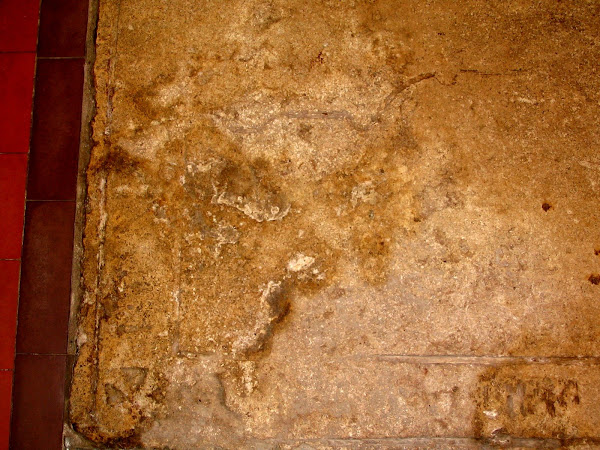
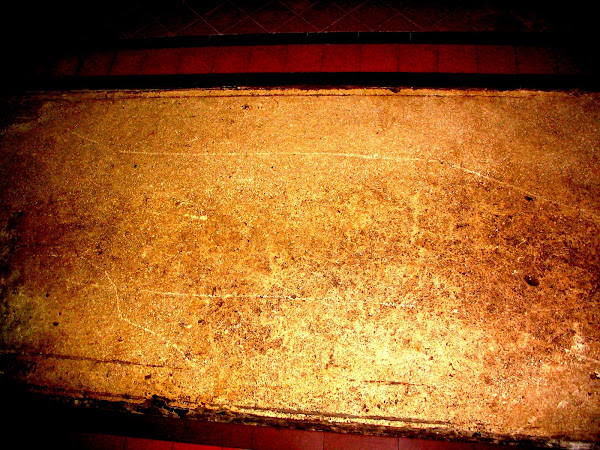
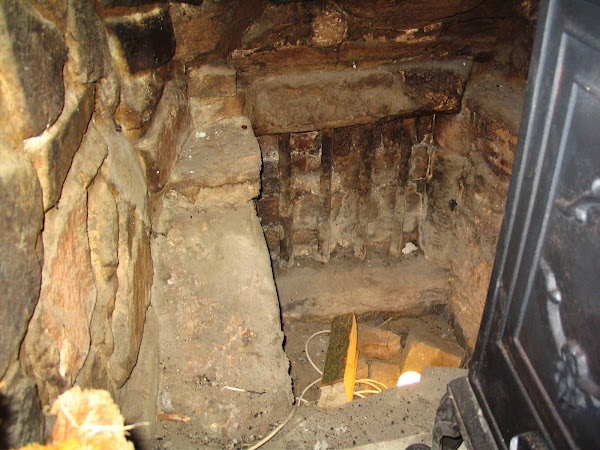
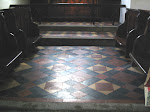
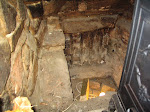
All this was, of course smashed up during the sixteenth century, but it seems the relics of Gwynlliw were thankfully kept and buried under the floor of the nave (see picture above)

ST GWYNLLIW's WELSH SECONDARY SCHOOL

This is a Welsh medium school in Pontypool.

Today the podcast ‘Praystation Portable’ carries all the morning and evening prayers right into your iPod, as well as the Rosary. Good to sit up at St Woolos and pray the Rosary, a meditaion on the life of Christ , or the Liturgy of the Hours. The Benedictines cared for St Woolos until the sixteenth century, and were responsible for the buildings.Interestingly there is a lot of evidence of stone and columns and pillar being brought from Roman Caerleon. A Knight of the Crusades lies buried here. There is much to enjoy and an excellent Guide Book. St Woolos now belongs of course to the Church in Wales. It was extended with stone from Kemys Inferior Church, in the 1960s I think and is very interesting to view.

Monday, August 4, 2008

Saint Gwladys a Saint of Newport - and Gellligaer

St Gwladys of Newport and Gelligaer


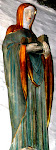
St Cadoc Stained Glass Window from St Mary's Catholic Church on Stow Hill, Newport.

This post is best read in connection with 'Big Bad Gwynlliw'-the post about how this great Newport Sinner and King became a saint of the Church by repenting and giving himself to God.

Saint Gwladys we know, was one of the family of Brychan Brycheiniog. Brychans family descended from Irish and from the descendents of Joseph of Arimathea.He had many children and grandchildren,of which many became saints of Wales.

Gwladys was said to have been very air and beautiful and Gwynlliw, Chieftain of Glwyssing and Gwent fell deeply in love with her. Under the post about the real Arthur, we find that Gwynlliw carried her off and ran into Arthur, Kai and Bedwyr. Arthur wanted to carry her off himself but his companions restrained him. It seems Arthur was an adopted brother of his companions but did not understand the customs of that land or that Gwynlliw outranked him.

Gwladys no doubt was forced into marriage, according to one hagiographer but the account of the Monk of Gloucester ,who wrote another hagiography in later times, there is no mention of this. However, we know that with her saintly son, who became one of the great saints of Wales, and Guardians of the Grail, that this must have been the Will of God. It is possible that Gwynlliw married Gwladys on the way back to the Newport area from Talgarth where the Brychan family had their HQ and there is no doubt at all that Gelligaer became important to Gwladys, either because she knew it as a child or because it had some special significance for her. Al(who has sent me some information and some fab pics) says it feels the place where Capel Gwladys was built was a the top of the mountains at Gelligaer.

There is another post 'The Children of Gwynlliw' in this blog series which tells of Gwladys Children Cadoc, Cynydir, Cyfiw, Maches etc. There is no doubt she had much heartache with the death of her daughter Maches by Saxons at Llanvaches. Her remains are in the Church of St Tathan(and Stephen) in Caerwent parish church.

She remained at Llanfair (the little Church of Our Lady on Stow Hill)following Gwynlliw's conversion to the faith following his dream. She had Cadoc catechised Gwynlliw who repented of his bandit ways and settled down as a monastic, while he supervised his brothers who were all ruling different areas of Gwent. It is interesting to know that the little church at Michelston y Fedw near Castleton contains an ancient font today, from this time and that the font in Llanhilleth church dates from this time too. Might Cadoc have been baptised in a similar font? Details of Cadoc's baptism are in posts about him.

Gwladys' Story

Gwladys is a central strong woman in the centre of the profiles of all her children and her husband. We know that Gwynlliw loved her. She and Gwynlliw used to bathe naked in the cold water of the River Usk to curb their desires. In the early years of the church Chstity was a strong part of the message-in fact even amongst married people who had ceased having children. For a while she and Gwynlliw lived together as religious at Llanfair on Stow Hill in Newport(not called that then)where he had seen his vision and been comanded to build his chapel. This Chapel is still part of St Woolos Cathedral today after you enter the tower, you can see the original church , which has been upgraded through the ages and even houses the effigy of a Knight of the Holy Sepluchre and a Crusader in more recent times.Gwnlliw's burial site is also still there as well now in the nave.

The whole story of St Woolos is still to come in a Soundeseeing tour of St Woolos in Newport.

At some point, Cadog seems to have suggested that his Mother retire to Pont Ebbw at Bassaleg and retuire with her ladies to the life of a nun.People believed Jesus was coming soon and this might have been why, but also Gwynlliw may have developed a disease of some kind and it may not have been safe for her to stay. No matter, she retired to her little monastery at the foot of the Hill at which Bassaleg Church now stands.


Following the death of Gwynlliw (St Cadoc and Dubricius being in attendance)Cadoc it is believed retired to Gelligaer where another Church and 'llan' no doubt built in her memory. Here she died but it is believed her body returned to Newport to be buried at her church at Bassaleg. A Capel y Bedd existed at Gwladys Church at Bassaleg until fairly recent times. Sir Richard Hoare is meant to have sketched it, and Sir Joseph Bradney mentioned it.

Below see Al's stunning pictures (copyright)of Capel Gwladys at Gelligaer


____________________


St Gwladys Dedication of the Catholic Church in Rogerstone. Risca

The influence of this kindly and much loved saint and mother is the patron of the newer Catholic Church at Risca which has been dedicated to her and Masses said each week.A woman who made the best of the bad event, an abduction, turned her husband around, brought many children up, not only in the Christian faith but as great saints, converted her husband out of love,embracing the life of a religious and finally creating a new chapel and dying in the faith at Gelligaer. Truly an inspirational saint for the people of Rogerstone and Risca-and Newport and the rest of Gwent/Monmouthshire.She is one of the 'Holy Women' of the Church.

Wednesday, June 11, 2008

Some insights into the Holy Grail, St Peter and the Family of Brychan

_


St Joseph of Arimathea by Pietro Perugino


-

Brychan'Brycheiniog,holiest family in Wales

-----------------

In 71AD: Joseph "Ha-Rama-Theo", the desposynic prince, one of Jesus’ kinsmen (Mt. 13:55), was given an estate in Britain by the British King Arvcviragus (brother of Caractacus) that comprised 160 acres of land [= “one hide”] surrounding an old hill-fort as his residence, which estate was raised in status to a kingdom, Garthmadrun, by the Roman Emperor Maximus in AD 383. What makes this more credible is that Joseph accompanied the Roman Emperor Vespasian during his British campaign, and was given an estate in Britain by the British King Archiviragus, which came to be called "Garthmadrun", and, his descendants are called in the Welsh "Triads" one of the "three holy families" of Britain.

Joseph was a successful dealer in tin and spent a great deal of time in Cornwall, importing it) Whilst leaving with this kinsmen and women, he would have had this property available after Christ’s Crucifixion, Resurrection and Ascension, and probably left a colony at Garthmadrun. Joseph was Mary’s Uncle and so it is reasonable to suppose the family could be ancestors of some of our Welsh saints, particularly Gwynlliw and Cadoc, David and Padarn as well as Cybi.Then there is Madrun (Materiana)of Gwent and Cornwall, and Ishow (Welsh for Esau)

Did twelve hermits go off and found Glastonbury?


William of Malmesbury writing in mediaeval times, did write that Joseph and his family arrived via Wales to found the Kingdom in Britain at the behest of St Philip and St Peter. Joseph had provided the tomb for our Lord after the Crucifixion. They would have arrived with wives and family and extended family and probably left these under the protection of some elders at Garthmadrun while they went on to found Glastonbury. If they came to Wales, they probably arrived at Caerleon, the flourishing Roman fort at this time, right next to Caractacus’ hill fort, which gave Romans such a problem later on.


What is true is that this family of Joseph was particularly revered, because of its links with Mary’s family. In the genealogies there are many Jewish names, and in the lives of the Saints for example.Gwynlliw (and hence Cadoc) is meant to have some of the blood of the kinsmen of Christ according to Cybi’s pedigree, who lists Fallach, son of Eugien son of Erddolen, Avillad, Amlech,Belim, Anna-the cousin of the Virgin Mary.

When I first red this, I smiled. It seemed the holy monks of the eleventh century wanted to give a glorious pedigree to Wales’ greatest saints. Then I discovered the chronologies of these kings. Records show Joseph did die in Britain.The cluster of Jewish names in the Welsh records might lend credence to this, although it has always been held in legend.

In fact there is even a source that Christ’s Apostle Simon the Zealot was martyred in Britannia in 74AD, but I am trying to trace this at the moment.

St David and St Patrick in Glastonbury

St Patrick visited Glastonbury (Ynys Witrin) and set up a ‘llan’ there as the original twelve had remained hermits and Patrick was newly trained and ordained. Interestingly St Patrick was the Son of Sucatus, also of this line of Joseph of Arimathea.He set up the foundation again, according to the developing church. He was also a literate man, and wrote Latin, whereby we have some texts from this period. St David also arrived there later.
St David died at St David’s but Patrick may have been buried at Glastonbury. Obviously the place where the first Church in Britain had been built was sacred and remained so. So where did all the other disciples go? They probably did go to Talgarth (Garthmadrun) . Joseph’s direct line became extinct in the male-line in AD 481, and his family was replaced in official Welsh records by the descent-line of Joseph of Arimathea.

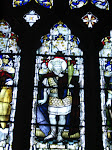
St Gwladys of Newport (glass from St Woolos Cathdral)

__________________________________________


Here is a family tree I found for Brychan

02. Jasna "Piliste" [his nickname refers to his place of origin in "Palestine"], son, bro of Josue El-Harami
03. Sarclotus, son
04. Emanuel "Erise", son
05. Enciede (Encride) "Ere", son
06. Othrac, son
07. Maxime, son
08. Llebryn (Luibuirne), son
09. Kornodd (Cornuithe), son
10. Mouric, son

11. Ottaviano, son
12. Marchudd, son
383 AD 13. Gwrthryw, 1st King of Garthmadrun (383), son, bro of Oidisse (Odissus), father of Photaighe (Potitus), father of Calpinn (Calpurnius), father of Succat[us],

( aka Saint Patrick, Apostle of Ireland 457-493)

14. Gwraldeg (Gwroldeg), son
15A Morfydd (Morvitha), dau, heiress & co-ruler
15B Teithfall (Teichfallt; Teithwalch ; Taith[w]al) (Tudwal), husband, co-ruler
16. Teuduric (Teithrin), son
17A Marchell, dau, heiress & co-ruler
17B Anllach, husband, co-ruler
Yr 481: Brychan, 1st King of Brecon [Brycheiniog; Brecknockshire]
son of Prince Anllach of Galloway [whose mother was an Irish princess] and Marchell of Garthmadrun, its heiress; succeeded his grandfather as King of Garthmadrun but re-named the kingdom after himself as Brycheiniog, also called Brecon.


The Holy Grail


The early history of the Grail is intimately connected with the story of Joseph of Arimathea. When he is cast into prison by the Jews, Christ appears to him and gives him the vessel, through which he is miraculously sustained for forty-two years, until liberated by Vespasian. The Grail is then brought to the West, to Britain, either by Joseph and Josephes, his son (Grand St. Graal), or by Alain one of his kin (Robert de Boron). Peredur locates it, achieves the quest; and after the death of its keeper the Grail vanishes.

It was conceived as the most precious relic,the cup which had contained the life blood of the Lord Jesus. Of course it was held to have miraculous powers (probably the vision of the Kingdom of Heaven, only given to the pure in heart, which Peredur was meant to be)
The legend was that The angels who remained neutral during the rebellion of Lucifer were its first guardians; then it was entrusted to Joseph who brought it to Britain-Glastonbury, and possibly-the Abbot Collen brought it to Castell Dinas Bran for safekeeping, rather than let it fall into Saxon hands.

-

This is a wooden chalice such as it may have appeared, but is of more modern date.

Wolfram von Eschenbach calls this mons salvationis or silvaticus (Munsalwaesche in Middle High German)and this would definitely fit the bill at Castell Dinas Bran, an old Iron Age Hill fort in a remote area of Wales, well protected and later fortified even more.

The Grace of God meant that ancient Britain was converted to the Christian Faith and the family’s input very strengthening to Christianity in Wales particularly, which for many years was spared the rampages of the Saxons of the pagan type-though later they became exemplary Christians.
There are, in the stories some Celtic cultural emblems and symbols as you would expect in a tradition not written down until much later. The Catholic encyclopaedia says of it, that the Catholic Church at the time had nothing to say about Joseph’s arrival in Britain. The story is, after all contained not in Apostolic written material, but the apocraphal Gospel of Nicodemus which was popular in Britain in the 12th century. The Church had an uphill struggle in maintaining the consistant biblical teaching of the Apostolic times .


The Catholic Church had decided on the books of the Bible and what sould be included was only what was in the experience of Jesus twelve apostles themselves, see Catechism of the Catholic Church (paperback from Amazon)

Why the Church did not Comment on the Grail stories

So the Church has not endorsed this as part of the canon of the Bible and it is not 100% reliable, but remains a source of tales and legend. We know more facts now now. That there was a first century mud and wattle church at Glastonbury for instance, as I believe St Patrick alluded to it. The monks at Glastonbury had revered it, and bewailed the fact it had been burnt down.

Blessed Sacrament- a holy relic to be revered

The religious element in the story is fundamental. We read how Joseph, whom the Jews had imprisoned, is miraculously fed by Christ Himself (the Holy Blood). The food vessel can be explained in the holy consecrated bread, later to be a wafer which gives the Body and Blood to the Faithful .Joseph escapes sails for Wales by St Peter and Philip from Jerusalem. Joseph had been there before we believe with Vespasian and had dealt in tin in Cornwall and Wales and had land there. Legend has it St Patrick was buried at Glastonbury and so was Arthwr and Gwenhwyfar his wife, his tombstone being discovered there in the twelfth century.


Saint Collen of Glastonbury is relocated with the brothers to Llan-Gollen because of Civil War and Saxon Threat.


In 519 AD, under the military leader, Arthur’s protection, the community of the descendents of Joseph were relocated from Garthmadrun north to a more secure place, namely Castell Dinas Bran in North Wales at Llangollen. Interestingly St Collen, who was their pastor and Bishop was also Abbot of Glastonbury, itself threatened by Caelin at this time, the Saxon Prince.

Many British kings seemed unable to get their act together and possibly Arthur (the real one, not the lengendary one!) thought they would be more secure here. Joseph and his descendents were known as ‘Grail Kings’ in Wales’ and Cadoc himself was one of the Guardians.


Unity in the Church upon St Peter whom Christ appointed to be the custodian of his Church.


Why it is not mentioned or commented on by the Church in the interests of Unity.
It is plausible that the Grail too-if Joseph had it- was removed for safekeeping during this troubled time and then kept in a secret place in Wales near Llan-gollen by Guardians responsible for its safety. No clerical authors mention it. Unfortunately all the fantastical and magical tales which had been woven around it had sensationalised it contained unchristian symbols and symbolic magic of which the church could not approve.
Druids connected it with the ‘Cauldren of Anwyn’ the amazing source of all visions. Yet Lewis Spence, in his book ‘The Mysteries of Britain’ goes on to say:that later members of the bardic classes were mostly Christians, who had accepted the Body and Blood of Christ as the highest development of Druidism, giving the worthy believer direct access to heaven, just as the Cauldron of Anwyn would give them visions of heaven.

The Central Message of the Kingdom must not be obscured.

In my book, actually achieving heaven by the receiving into your body of the Body of Christ and becoming an adopted son or daughter of God himself and an heir to paradise was more satisfying and something which made life worthwhile. The Druids themselves had always believed in an Otherworld after death, so Christ’s promise was an extension of that, and included all the strength of family life of the ancient Britons, (the ‘llans’ or ‘clans’-families as the building blocks of the Mystical Body of Christ) The important thing for the Church was the building of the Body of Christ, by its members, joined together by the Mass, the celebration of the Body and Blood of Christ and establishment of the Kingdom of Heaven on earth.
The holy cup was undoubtedly a treasured relic of the church and subject of veneration, however.
The issue of Unity-would this create a gulf between Rome and its British arm?

The importance of Peter among the Apostles and to Christ as the leader of the Church.

There was an issue of the importance of the Unity of the Church, which was founded on St Peter, not St Joseph of Arimathea, who had, in obedience, been sent to Britain by St Philip and Peter. In the interests of unity these amazing hair raising stories should not detract from the even more amazing supernatural central truth , the growth of the Kingdom of Heaven in the Body of Christ growing upon the efforts of St Peter and the Church Christ founded upon him .

Among the Twelve Apostles, Peter became conspicuous.

Though of irresolute character, he clings with the greatest fidelity, firmness of faith, and inward love to the Saviour; rash alike in word and act, he is full of zeal and enthusiasm, though he is endearingly human and easily scared, sometimes bewildered. The more prominent the Apostles become in the Bible narrative, the more conspicuous Peters appear as the first among them. In the list of the Twelve on the occasion of their solemn call to the Apostolate, not only does Peter stand always at their head, but the surname Petrus given him by Christ is especially emphasized (Matthew 10:2): "Duodecim autem Apostolorum nomina haec: Primus Simon qui dicitur Petrus. . ."; Mark 3:14-16:

Jesus said 'You are Peter and upon this Rock I will build my Church and the gates of Hell shall not prevail against it.

What did Jesus say?

Jesus asked his apostles : "Whom do men say that the Son of man is?" The Apostles answered: "Some John the Baptist, and other some Elijah, and others Jeremiah, or one of the prophets". Jesus said to them: "But whom do you say that I am?" Simon said: "Thou art Christ, the Son of the living God".

And Jesus replied: "Blessed art thou, Simon Bar-Jona: because flesh and blood hath not revealed it to thee, but my Father who is in heaven. And I say to thee: That thou art Peter [Kipha, a rock], and upon this rock [Kipha] I will build my church [ekklesian], and the gates of hell shall not prevail against it. And I will give to thee the keys of the Kingdom of Heaven. And whatsoever thou shalt bind upon earth, it shall be bound also in heaven: and whatsoever thou shalt loose on earth, it shall be loosed also in heaven". Then he commanded his disciples, that they should tell no one that he was Jesus the Christ (Matthew 16:13-20; Mark 8:27-30; Luke 9:18-21).

Peter-Simon's new name , was Petros-The Rock

By the word "rock" Jesus cannot have meant himself, but Peter, as is so much more apparent in Aramaic. He wishes to make Peter the head of the whole community of those who believed in Him as the true Messiah; that through this foundation (Peter) the Kingdom of Christ would be unconquerable; that the spiritual guidance of the faithful was placed in the hands of Peter, as the special representative of Christ.
This meaning becomes clearer when we remember that the words "bind" and "loose" are not metaphorical, but Jewish legal terms. It is also clear that the position of Peter among the other Apostles and in the Christian community was the basis for the Kingdom of God on earth, that is, the Church of Christ. Peter was personally installed as Head of the Apostles by Christ Himself. This foundation created for the Church by its Founder could not disappear with the person of Peter, but was intended to continue and did continue (as actual history shows) in the primacy of the Church and its bishops to Benedict today.

______________________________

This was why in the early days the Grail is not commented upon by Church writers. Unity was the most important thing of all to the church. There was no internet, no telephone, no satellites. It was important the Faithful should focus on the Truth of the real message of the Kingdom. The original teaching of Christ had to reach through the centuries intact.


Extract from Peter’s First Letter to early Christians


As Peter writes his instructions in his first letter to the churches, Bishops and Priests,

+From Peter,
Apostle of Jesus Christ ,
to all those aliens (means ‘temporary citizens of the world)living among gentiles of Pontus, Galatia, Capadocia,Asia and Bithynia, who have been chosen, by the foresight of the father, to be made holy by the Spirit, obedient to Jesus Christ and sprinkled by his blood. Grace and peace be yours in abundance.

I urge the presbyters among you (priests)as a fellow Presbyter and witness of the sufferings of Christ, and as one who is to have a share of the glory to be revealed, give a shepherd’s care to the flock of God that is entrusted to you, watch over it, not simply as a duty , but gladly as God wants, not for sordid money, but because you are eager to do it

Do not ‘lord it’ over the group in your charge, but be an example to the flock .When the Chief Shepherd appears, you will be given the unfading crown of Glory’.In the same way, younger people,be subject to the elders. Humility towards one another must be the garment you all wear constantly, because God opposes the proud but accords his favour to the humble. (*Compare here the words of the Virgin:’he has brought down the mighty from their seat and has exalted the humble and meek’(Magnificat-St Luke 2) Bow down now, then before the power of God, so that he may raise you up in good time.

Unload your burdens on to him, since he is concerned about you. Keep sober and alert, because your enemy is the devil and on the prowl on earth like a roaring lion , looking or something to devour. Stand up to him, strong in faith and in the knowledge it is the same kind of suffering that the community of brothers throughout the world is undergoing. You will have to suffer only for a little while. The God of all grace who called you to eternal glory in Christ will retore you, he will confirm, strengthen and support you, his power lasts forever and ever. Amen
I write these words to you to encourage you and attest that this is the true grace of God. Stand firm in it!

Greet each other with the kiss of Peace.
Pax to you all who are in Christ.
Peter


The Grail and its amazing stories is a precious holy relic, which held the blood of Christ. But we, who drink the precious Blood in the Eucharist have it whenever we partake of it. It is present to us now, today. That is AMAZING!

Monday, April 14, 2008

Saints of Newport-Children of Gwynlliw-St Maches of LLANVACHES St Cynydir, St Bugi


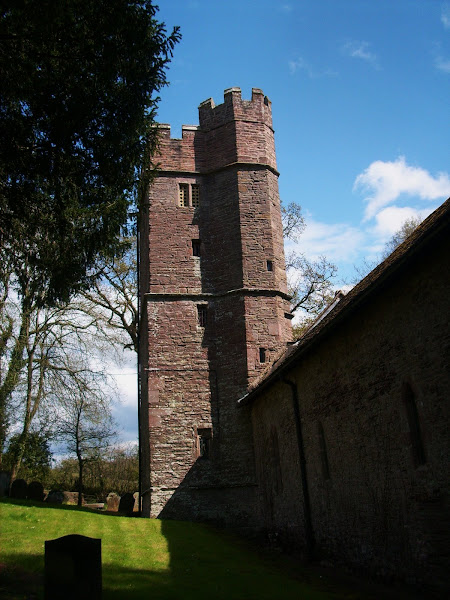
This beautiful stained glass window is to be found in St Dubricius (Dyfrig's)Church at Llanvaches (The-Holy-Place-of Maches) Curiously earlier known as Merthyr Maches.This Church is not dedicated to Maches, because it was actually founded by St Tatheus is memory of her. It is to be found north of the A40 road going from Newport to Chepstow.Interestingly, the tower also contains a beehive.The presnt Church is Norman, but is now quite plain, although very ancient. Nearby is the oldest non-conformist Chapel anywhere, actually on the Chepstow Road, near the turn off to Llanvaches. The pastor of this church was a former Vicar of Llanfaches church who had left because of his doctrinal differences. He had, however stripped all sacramentals of Catholic interest out of the church which have left it quite plain. Its antiquity is undeniable, however, and the stained glass window showing St Maches very beautiful.
I was told bypeople in the church, who were preparing it for a wedding, that Maches was actually killed a bit further away under a tree commemorating the murder near the village pub. Testained glass window of Maches is to be found in the church of her father, St Gwynlliw (Woolos the Warrier) in Newport, and the image next to her is of Gwynlliw Farfog (Gwynlliw the Bearded) the pirate himself. The other images are of the altar (a) and nave(b) to the tower of St Dubricius Church, Llanvaches.The Latin form of her name is 'Machuta'


---------------------------------------------------------------------------------------------------

Gwaldys, saintly daughter of King Brychan Brycheiniog after which Brecon is named.She was married to Gwynlliw the Pirate.They soon had a son, the famous Saint Cadoc the Wise. To celebrate his son's birth Gwynllyw went on another raid stealing cattle from Tatheus at Caerwent. When Saint Tatheus came courageously to demand the return of a cow, the King was so impressed he decided in return to send his son to Tathyw at Caerwent to be educated. Gwynllyw supposedly had other children also saints Cynidr,Maches, Bugi and Egwine.

We have heard about Gwynlliw and Gwladys and there was a whole podcast about St Tatheus (Tathwyn) of Caerwent, the famous Irish educator, and grandson of King Meurig of Gwent, King Tewdrig's son and benefactor of Caerwent College. He was succeeded by Maegwyn educated at Caerleon. When her brother was so impressed with Tatheus and begged to go back to the monastery with him, they often all talked about the things which Tatheus had told them. They were told about the Scriptures, the Apostles and Church and the Holy Wafer, which would bring them Christ, also how St Peter had organised the church, according to Christ's instruction. Even then there were severe fines for dropping the Eucharist on the floor. Maches was obverjoyed to hear the Good News -that Life is unending, death is not an end, but a beginning. She began to yearn , like her mother for the ife of a religious, or hermit. It was decided she was as yet too young and shoulod study when she came of age. In recompense Tatheus gave her a small farm near Caerwent, where she could study and pray and look after the sheep as well.She tended some of the beasts of particularly a valuable three year old ram.While she kept te sheep and lived tranquilly and in a most holy way. However two brothers who were thieves arrived in her little settlement. This was in the area of what is now the small hamlet of Llanvachesa small hamlet just north of the pub in Llanvaches, north ofthe A4 from Newport to Chepstow. Maches the young giel was dragged protesting in the forest and they decided to silence her, rather than let her talk. They bent her over and beheaded her. They also killed the stolen ram and took it home. The sheep wandered back to Caerwent by themselves and st Tathwyn was worried because the flock hed returend without her.He and Cadoc her brother grieved tremendously with Cadoc and Gwynlliw and Gwladys and prayed for help.
On the first night, they wondered what hade become of her, when she did not visit her parents. The two murderers became wracked with remorse and came to the monastery to do confession. They found the church and Tatheus said they should confess their sin for fear of their immortal souls and do penance. A search party including Tatheus found the body of the martyred girl. .A churh was built on the site near her martyrdom and although she is commemorated inside, the dedication is to their bishop, St Dyfrig -Dubricius. Maches was carried back to Caerwent to be buried. to the great grief of parents and the court.A sad story this. The sorrowing Tatheus, who blamed himself had her body brought back to Caerwent, where she was buried and where she bacame a saint because she was a martyr. Her relics are still at St Stephen's Church in Caerwent.
Maches is aommemorated i beautiful stained glass windows at St Woolos (Gwynlliw's) cathedral in Newport. All mourned beautiful Maches whose life had been 'snuffed out' at a vary early age and wom Gd ad taken to be one of his own.

CYNYDIR a son of Gwynlliw.

Although Cynidir no longer has a church dedicated to him in Herefordshire, Kenderchurch preserves his name (the church here is now dedicated to St Mary). Cynidir, like Clydawg, was the grandson of the King of Brycheiniog and founded several churches in Breconshire, including Glasbury, where he was buried.
P340 Married Goleu daughter of Brychan for wife.

Cynidir established a hermitage on an island in the river Wye near Winforton (only 9 miles down river from Glasbury). In 1675 Blount wrote that 'Walter, a Canon of Wormsley Priory, betook himself to an Life of a hermit in a little island on upon the river Wey (sic)... wherein he built a Chappel (sic) dedicated deo beatae Mariae, beato Kenedro - .
Vita Cadoci

Dispute between Saint Cadoc and King Arthur

All assembled when the sone of Elliman offended king Arthrwys and took sanctuary with Cadoc who did not fear Arthwys-He thought 'Fear not those who kill the body as they canot hkill the soul'. Cadoc hid the sons for seven years in Gwent. They were then betrayed to King Arthur by someone and Arthur came o the River Usk with a large force with the idea of laying a legal claim because he did not dare to violate the sanctuary of Cadoc. St David, St Teilo and St Oudoceus agreed to be judges, and Cynydir a Son or grandson of Brychan and brother of Cadoc met together on the banks of the Usk. They disputed for a time and then the judges agreed that Arthur should receive 3 oxen for every one of this three dead men-others fixed that one hundred cows should be given and Arthur would only accept those with a certain colouring. A miracle occurred when they magically turned into the correct colours. When Bedwr and Kai tried to drive them through the water thaey became ferns and the village became known as the Town of Ferns Trefredinauc, possibly Tredunnock, which also contains the relics of St Julian. Cynydir seems to have formed a monastery on the Wye and near Brecon, probably because he was close to his mother's family and the land there much more beautiful and remote (see location above)


Egwine

There is little about Egwine. He either became a warrior and looked after the Kingdom for his father and brother, as we have no special details about him, perhaps he did not embrace a saintly career.He may, however, as a younger son have simply joined his brother's monastery. There are no records of a marriage.

Bugi

Bugi, another son of Gwynlliw was also obviously grandson of Brychan and was offered land on which to live in Powys. He married Beren, daughter of Llawden. The records said they lived quietly and were inoffensive to all and their lives were virtuous, They kept the commandments of God in all ways as far as they were able and no one ever accused them of anything. They had no son to be their heir and were in their forties and they no longer had relations, as they had passed the greater part of their lives. One evening they were sitting and talking when an angel came and told them they would have a son if they slept together.He said 'Be merry and joyful for God has heard your prayer. The angel said ' tonight your wife will become with child if you sleep with her and from that pregnancy a son will be born to thee and he will be honourable with respect to God and man'. Indeed nine months later a child was born to them. He was baptised locally and the Child's name was Beino-also a child who became a great saint. When Beuno was old enough, they sent him to Tatheus school at Caerwent, although Tatheus had died by then and was replaced by Tangusius, a former scribe and great teacher at Caerleon College.He learned the Holy Scripture and the Sacraments and the Rules of the Church(Canon Law). St Beino grew up, albeit moved to North Wales.Beuno was important in the Life of St Winefriede of Wales. near Holywell in Fflint.Since St Winifride's (Gwenfrewi)Well (Holy-well) was a major place of pilgrimage fro people all over Wales (and later by Saxons, because the Benedictines of Shrewsbury removed some of her remains from Gwytherin to Shrewsbury Abbey-see the ITV series of 'Cadfael'-A Morbid Case for Bones) I will deal with her a bit later on.During the times of persecution even in the sixteenth century the money collected at St Winefrides was so plentiful, Henry's Commissioners left it alone, and it is one of the few mediaeval pilgrimage sites left in Britain. It is still, with Our Lady of the Taper in Cardigan, and possibly now Our LAdy St Mary of Tintern one of the three important shrines in Wales

It is said that Ynyr Gwent himself, in his old age, granted Beuno lands in Ewyas (North Gwent) and that Ynyr became his disciple. This is now Llanfeuno, a chapelry under Clodock, near Longtown in Herefordshire. Whilst there, Beuno heard that his father,Bugi, was ill so he committed his foundation in Ewyas to three of his disciples, and hurried back to Powys, where, "his father, after receiving the Eucharist, making his confession and rendering his end perfect, departed this life." Beuno made founded a monastery there and planted an acorn by his father's grave. It grew into a mighty tree of which one branch curved down to the ground and then rose again "and there was a part of this branch in the soil, as at present; and if an Englishman should pass between this branch and the trunk of the tree, he would immediately die; but should a Welshman go, he would in no way suffer."(Life of St Beino)
All photographs are by Christopher Tottle, Photograqpher with permission.
The Church of Llangynydir is to be found near the Talybont Reservoir in South Breconshire, and area still named for Brychan Brycheiniog, Bugi, Egwine, Cynydir, Maches and Cadoc's grandfather through Gwladys (Latin Claudia) their mother.

Sunday, March 9, 2008

Last Sunday in Lent- Spring is coming!

On Sundays in Lent, we do not need to fast because Sunday is always a Catholic celebration of the Resurrection of the Lord and a great celebration. Today we are having a special lunch in our house to celebrate. The days are lengthening . The crocuses are out as are the golden daffodils. The busy rhythm of the year starts again. You can smell the grass and the freshness of the trees.

This is the last full week of work before the Easter Celebration break and I am preparing a new podcast about Gwynlliw and his family. The best known saints of Newport. I am calling the podcast 'Big Bad Gwynlliw' because he was truly a great sinner-a pirate who used to keep his boat moored at Pillgwenlly (pill-water inlet,gwenlly(of Gwynlliw) and raid all the merchant ships coming up the Bristol Channel groaning with goods, and kill the merchants. The story of his conversion is interesting. Again there are problems. Anglo Saxon invaders (such as King Harold-with-the-arrow-in-his-eye of Hastings later) could not say Gwynlliw (Gwinn-thlew)and the name got corrupted to St Woolos. A monk of Gloucester (to which Benedictines Gwynlliw's church was given after the Norman Conquest)is to be congratulated for writing down the old legends concerning Gwynlliw and his family. The Saintly and very beautiful Princess Gwladys of Brecon whom he married, his famous son, St Cadoc of Caerleon after whom the parish church is dedicated and Cynydyr of Llancynydr and St Maches (Llan-vaches)who was buried at Caerwent. Again Gwynlliw and Gwladys and their children were contemporary with St Dyfrig/Dubritius.So more of that later.

Rest in Peace little Marie Luz Cortez. Once again a murdered child. So sad, a child named 'Mary Luz' -the Light of Mary.May she rest in eternal pece and may perpetual light shine upon her.

Psychics are predicting there will be a break through in the Madeleine McCann case-I certainly hope so.This has been an exhausting and long haul and you can only worry that she has been affected by her time away from her parents.Keep praying everyone.I keep feeling she is out there some where-just a gut feeling.

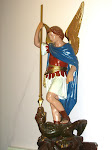
Yesterday there was a rally of abused people outside Haut de la Garenne Children's home. Shows you the scars never go away, and the very real existance of evil in the world.St Michael pray for us all.