












































__________________________________________________________________________
Llantwit Major and the Great Theological College and School at Llanlltyd Fawr
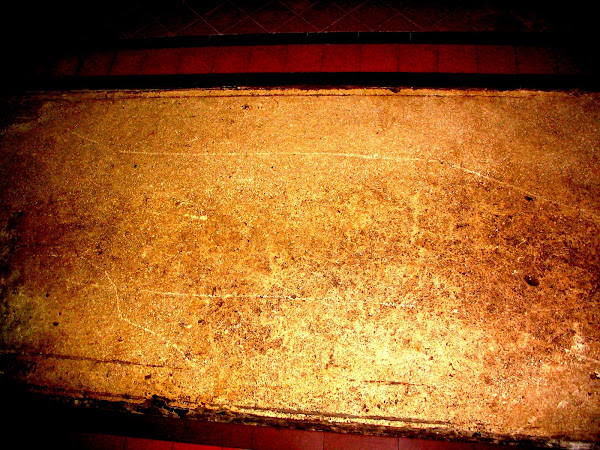
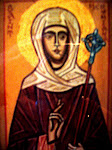
I posted extensively about the life of St Illud of Wales last year and also recorded a podcast -look for the link on the left hand boxes .The life and ministry of Illtud after his conversion by Cadoc was to become one of the great educators and teachers of the Church in those times. The normal regime will have been followed and one of the students was St Hernan mentioned as founder of Lanherne in Cornwall.Llantwit Major (Llan-Illtud Fawr(major)became one of the greatest centres of Christianity in sixth century Britain. The students were divided into twenty four groups , each responsible for one hour's worship each day, so that prayer and praise ascended to heaven to God Continually. Tradition tells us there were only three centres in Britain which practised this unceasing praise 'LAUS PERENNIS-Old Sarum near salisbury, GLASTONBURY (YNYS WITRIN) and LLANTWIT MAJOR. The significance is indicated in the stone memorials which are grouped together in the west church. He was a Catholic pioneer of the Early Church and his memorial is here, just as he is with the saints of Heaven. His Feast Day , according to the Roman Calendar is on November 6th. The monks of the early church were buried under what is now the west Church.
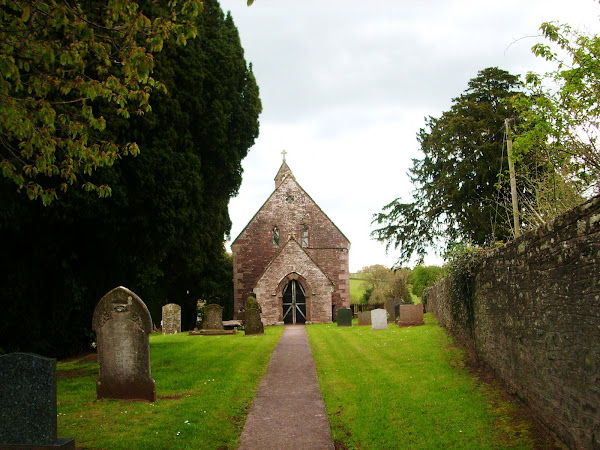
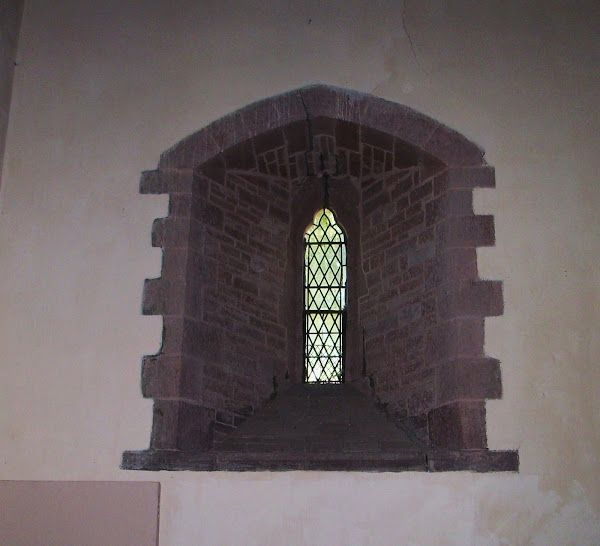
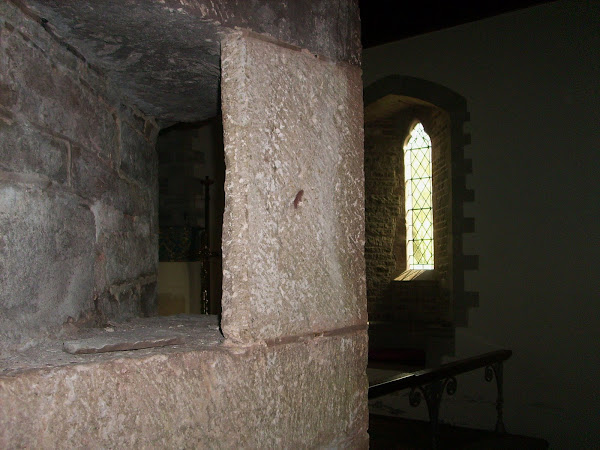
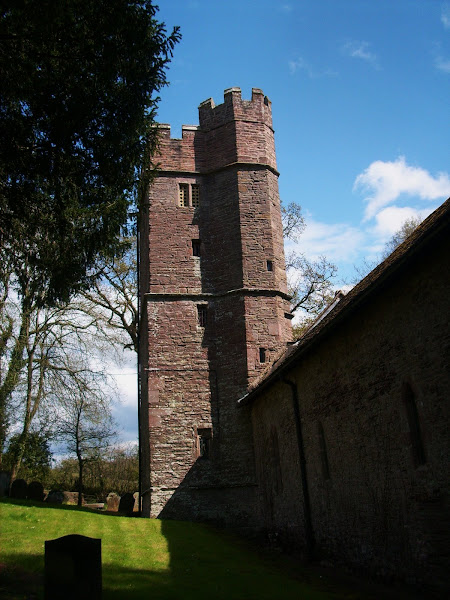
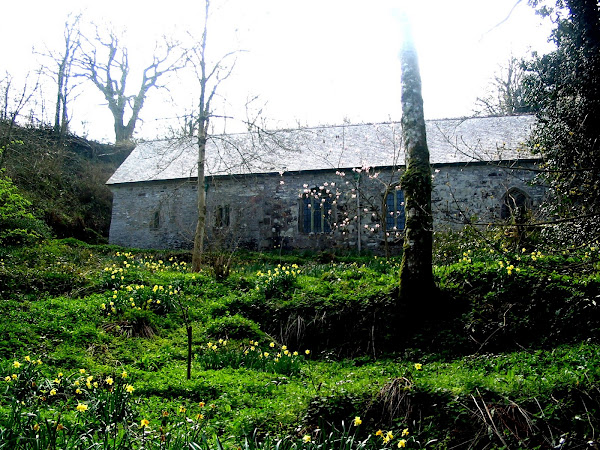
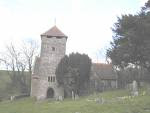
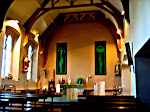
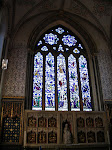
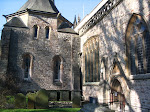
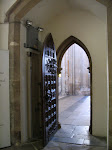
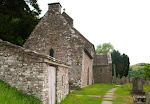
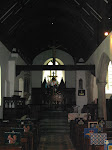
The church you see today is not Illtud's original foundation. What remains is the 'island' structure .In the 11th century, after the Conquest by William of Normandy South Wales was gradually taken over by the Normans.We have already discussed the squabbling among the Welsh princes which led to this. The local Lord had his base in Cardiff, but kept Llantwit Major in his own hands to supply his garrison with grain (lying as it does in rich farmland).Fitzhamon built the Abbey at Tewkesbury and in 1102 he gave the church at Llantwit Major to Tewkesbury with its tithes.It became an ordinary church rather than a theological college at some point.Obviously the church was properous during the Middle Ages and the church was also rebuilt.The original Celtic site, probably stood on the grounds of the West Church and this was rebuilt by Normansaround 1100, although the only Norman remains are the archway over the south door and some fragments of masonry.In the thirteenth century the East Church was built, the south aislle extended the full length of the church . A tower was built and the church twice raised.Also two squints were added.So there were also two piscinas. The Roof on the older West Church was rebuilt in the fifteenth century.
The MEdiaeval Church would have been very different from the present day one
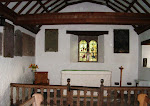
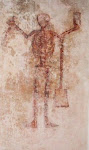
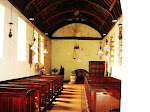
The West Church was the Parish Church and the Canons worshipped in the East Church. The floor was of beaten earth and there were no pews,only the elderly and sick sat on the stone benches around the wall.(cf. the saying 'The weakest go to the wall')The Church had its wall paintings and its rood over the chancel arch , although they were limewashed by the ever zealous puritans who also removed, altars, statues and ornaments.
John Wesley even preached here on 25th July 1777 He wrote (courtesy of Vivian Kelly in the Guildebook)
About eleven I read prayers and preached in Llantwit Major church to a very numerous congregation. I have not seen so large or so handsome a church since I left England. It was sixty yards long, but one end of it now in ruins. I suppose it has been abundently the most beautiful as well as the most spacious church in Wales.'
Various other changes were also made by the Anglican authorities, until the present day.
The Galilee Chapel
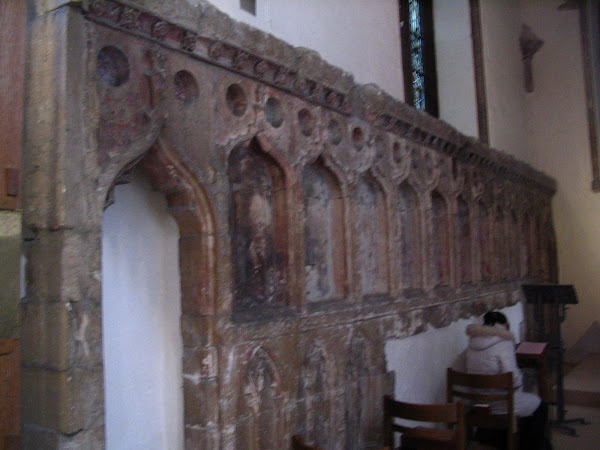
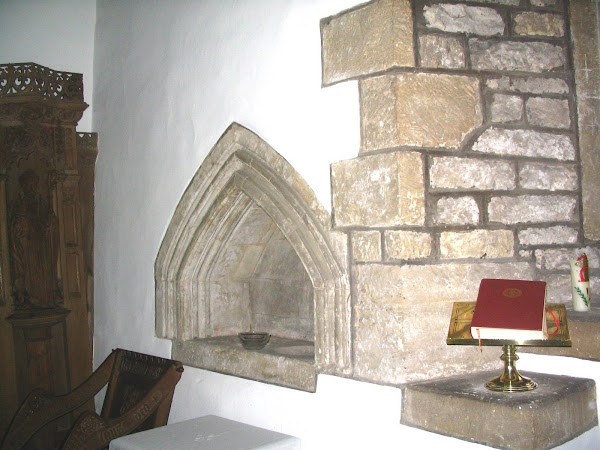
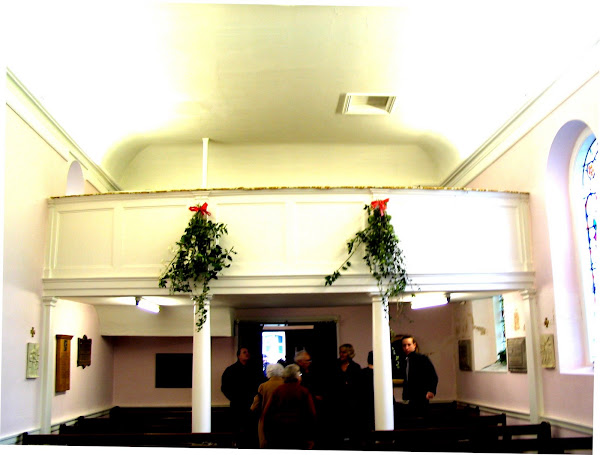
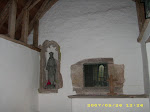
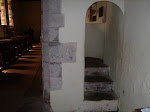
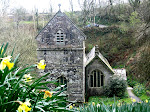
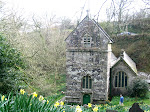
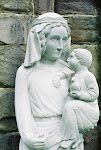
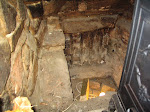
Right at the back is a Chantry, called the Galilee Chapel.This was originally a two storey building and the remains can be seen of two staircases.The lower storey was used as a crypt and the uppwer storey is a chapel. In the east side of the chapel are two niches one of the 14th century, one of the 15th century . There are reports of a tree of Jesse being in one (and probably Our Lady in another. Sir Hugh Raglan endowed the church as a chantry. Every day, the priestwould say prayers for the sould of the dead, principally the benefactor and his family. An act of 1545 dissolved the chantries (Henry VIII and his followers) so it ceased to function and the church fell into decay.
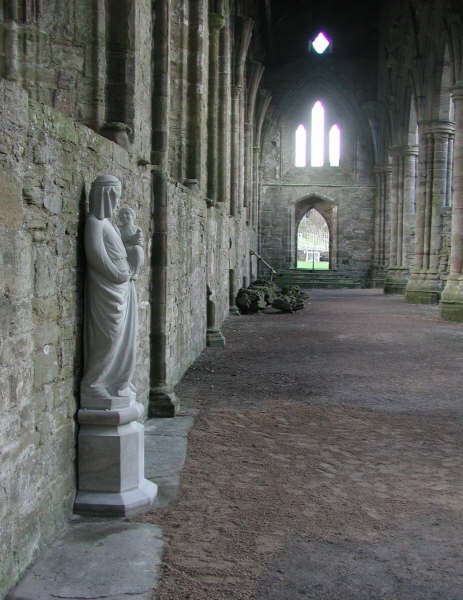
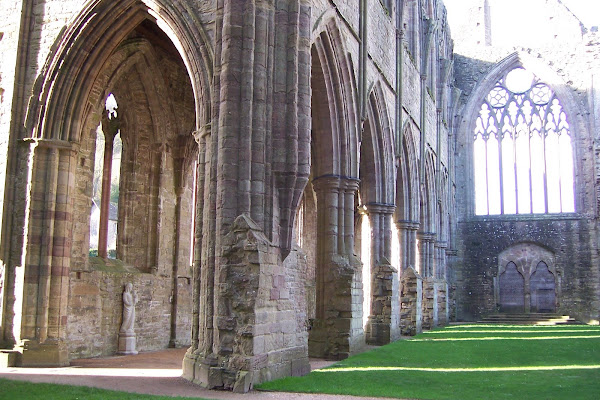
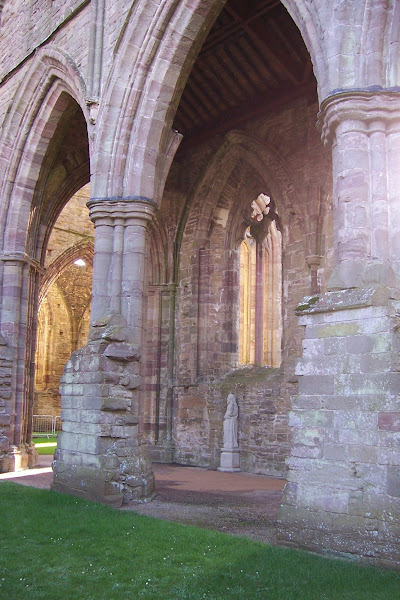
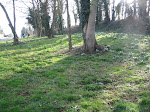
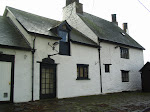
The former chantry priest's house lies derelict next to a garden of remembrance for Cremated people and the church seems to be in three parts.
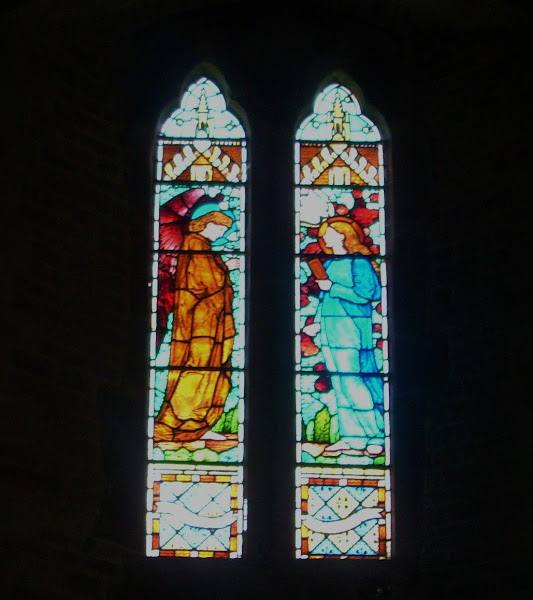
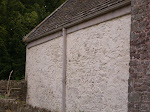
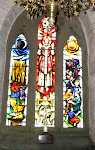
In 1940, the building had been destroyed by a bomb which destroyed it and also blew out the windows in the south aisle of the church.On the hill overlooking the Abbey are the remains of the old monastery buildings , and among them the remnants of a large grange or farm, belonging to Tewkesbury Abbey.Excavations in 1037 found the remains of a farm house, dairy,, bakehouse, brewhouse, stables, a cowshed,an orchard and a number of fields.The entrance to the grange, sitauted in the Monastery Field and the Bishop's Palace Fieldwas through the Gate House, a 13th century building of two storeyswith an outside staircase-the farm entrance can be seen in the masonry of the wall.The Tithe Barn was 36 metres long ,built of stone with an oak roof and large doorways in the North and South Walls. It was also 13th century. After 1836, tithes could be paid in cash rather than produce so its use diminished and it fell into decay and was demolished in 1880, when the new vicarage was built. In the Great Ley Field near the site of the Tithe Barn , stands a mediaeval circular dove cote , made of limestone blocks, coeval with the Gate House. The Grange was occupied for five hundred years until 1539 when it was taken by Henry VIII and his followers.

______________________________________________________________________________
I found this place to be very special. It was the starting place of study for so many of the early Christian Saints of what is now Wales, Cornwall and Britanny.An I am sure I will return. Don't forget to check out the podcast of St Illtyd. The link is right at the bottom of the blog page, and also in one of the boxes to the left.(listen Online) Or download the series free from iTunes as 'Mary in Monmouthshire'
If you missed the original posts, here is a short catch up:
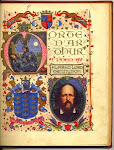
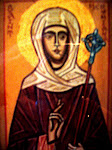
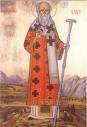
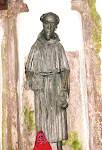
Illtyd was one of the most revered saints of the early Breton/ Welsh Church, by tradition a cousin of the fabled King Arthur of the Britons. He was of the family of Wales and , he and his wife Tyrnihild lived as members of a Glamorgan chief’s army until they became hermits near the river Nadafan. Illtyd then studied with St.Dyfrig and founded the great abbey of Llanilltud Fawr in Glamorgan, Wales. He was a reportedly converted from his soldier’s life by St. Cadoc, son of Gwynlliw of Newport. According to one Welsh source , Illtyd was one of the three Knights of the Holy Grail. He died in Brittany. Many churches were dedicated to him, chiefly in South Wales. Born in Armorica, of Bicanys and Rieniguilida, sister of Emyr Llydaw, he was a greatnephew of St. Germanus, Bishop of Auxerre. According to one account he crossed to Britain and joined King Arthur's Court, and later went to Glamorgan, where he was miraculously converted by St. Cadoc at Llancarfan (still to come). These details, however, rest on a late life of the saint (Cottonian manuscript, Vesp. A XIV).
He was reputedly ordained by St. Dubricius, Bishop of Llandaff, and with the assistance of Meirchon, a Glamorgan chieftain, to have built a church and a monastery, which became a centre of learning, one of the three great monastic schools in the Diocese of Llandaff. Among the scholars who flocked thither were Sts. Gildas, Samson, and Maglorius, whose lives, written about 600 ("Acta SS. Ordinis S. Benedicti", Venice, 1733), constitute the earliest source of information on St. Illtyd
Llantwit Major (Llanilltyd Fawr)
According to these sources, his theological college was situated on a small waste island, which, at his intercession, was miraculously reunited with the mainland, and was known as Llantillyd Fawr, the Welsh form of Llantwit Major, in South Wales. The story of the miracle may have been inspired by the fact that the saint was skilled in agriculture, for he is supposed to have introduced among the Welsh better methods of ploughing, and to have helped them reclaim land from the sea.
The legendary place of his burial is close by the chapel dedicated to him in Brecknockshire, and is called Bedd Gwyl Illtyd, or the "grave of St. Illtyd's eve", the old custom of having been to keep vigil there on the eve of his feast, which was celebrated 7 February. There is still to be seen in Llantwit Major a cross, probably on the ninth century, bearing the inscription: SAMShortcuts: press Ctrl with: B = Bold, I = Italic, P = Publish, D = Draft more
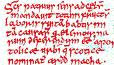
SON POSUIT HANC CRUCEM PRO ANIMA EIUS ILITET SAMSON REGIS SAMUEL ERISAR.(See above)
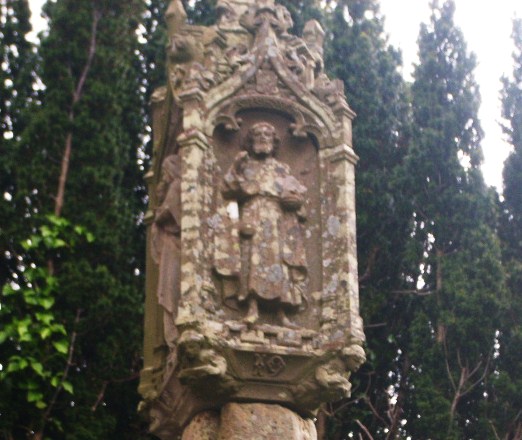
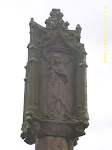
The Houselt Cross,
also in the Church is 1.9m high.Has the insignia
(I)N NOMINE D(EI) PATRIS EST
(S) PERETUS SANTDI ANC
(C) RUCEM HOUELT PROPE
(R) ABIT PRO ANIMA RES (P)ATR
ES EUS. (I the Name of the Father and SOn and Holy Ghost ,Houslet prepared this cross for the soul of Rees, his father)
Hywel, son of Rhys was probably Hywel ap Rhys who was king of the land between the Tawe and the Usk in the ninth century.
There is also
The Pillar of Samson
IN NOMINE DI DUMMI INCIPIT CRUX SALVATORIS QUAE PREPARAVIT SAMSONI ABATI PRO ANIMA SUA ET PRO ANIMA IUTHAHELO REX ET ARTMALI ET TECAN.
In the Name of the most high God begins the cross of the Saviour which Samson the Abbot prepared for his soul, and for the soul of Iuthahelo the King and Arthmael and of Tecan.
Iuthahelo was ITHEL (brother in Lae of St Materiana of Boscastle and Tintagel)
He died in 846.AD
last stones date from the ninth and tenth centuries and there is a suggestion that there ws a flourish sculpture tradition at that time in the monastery, before the Normans.The Normans probably converted the monastic settlement into an Augustinian one, but it probably was just a grange of Tewkesbury Abbey, and staffed by their monks.