



Showing posts with label St Illtyd. Show all posts

Friday, April 17, 2009

Sixth Century Britain and St Illtud's today


__________________________________________________________________________

Llantwit Major and the Great Theological College and School at Llanlltyd Fawr

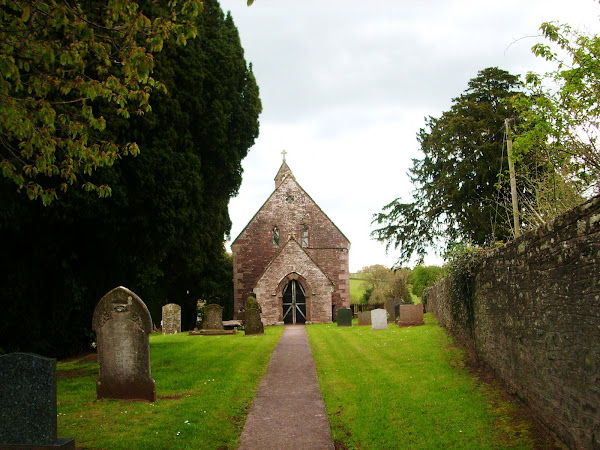
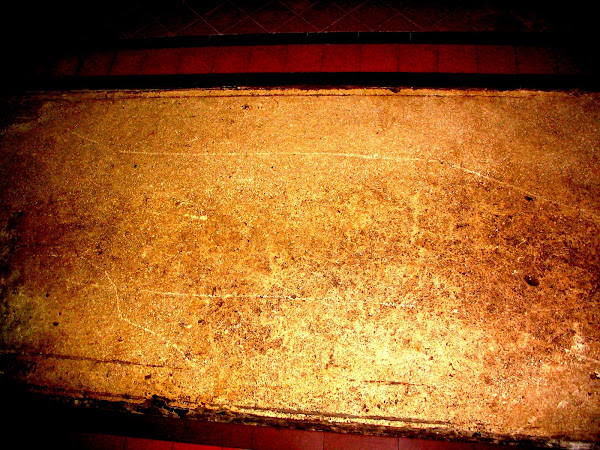
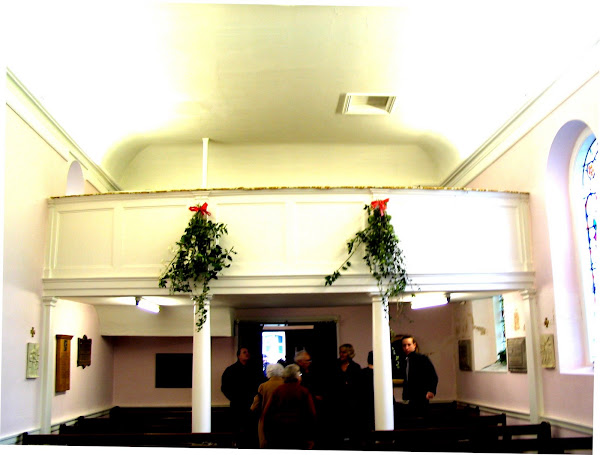
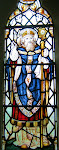
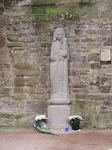
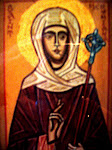
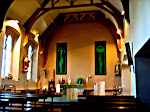
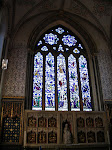
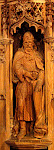
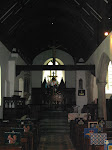
I posted extensively about the life of St Illud of Wales last year and also recorded a podcast -look for the link on the left hand boxes .The life and ministry of Illtud after his conversion by Cadoc was to become one of the great educators and teachers of the Church in those times. The normal regime will have been followed and one of the students was St Hernan mentioned as founder of Lanherne in Cornwall.Llantwit Major (Llan-Illtud Fawr(major)became one of the greatest centres of Christianity in sixth century Britain. The students were divided into twenty four groups , each responsible for one hour's worship each day, so that prayer and praise ascended to heaven to God Continually. Tradition tells us there were only three centres in Britain which practised this unceasing praise 'LAUS PERENNIS-Old Sarum near salisbury, GLASTONBURY (YNYS WITRIN) and LLANTWIT MAJOR. The significance is indicated in the stone memorials which are grouped together in the west church. He was a Catholic pioneer of the Early Church and his memorial is here, just as he is with the saints of Heaven. His Feast Day , according to the Roman Calendar is on November 6th. The monks of the early church were buried under what is now the west Church.

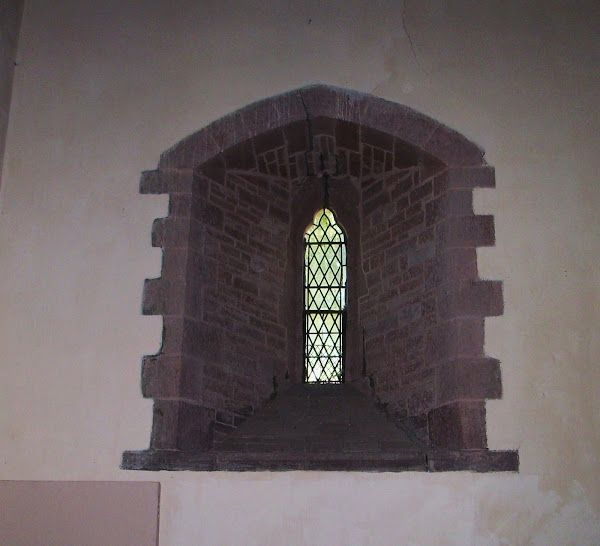
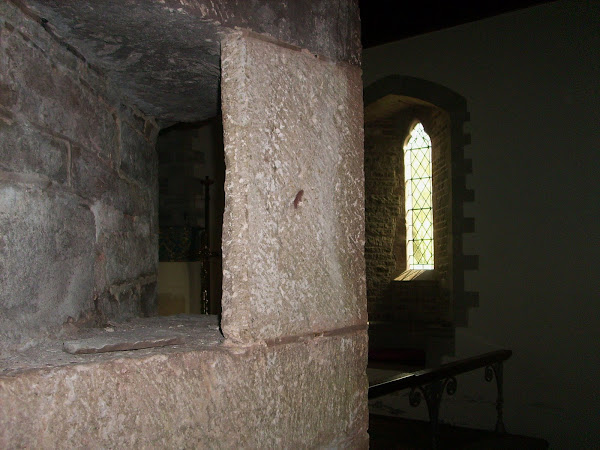
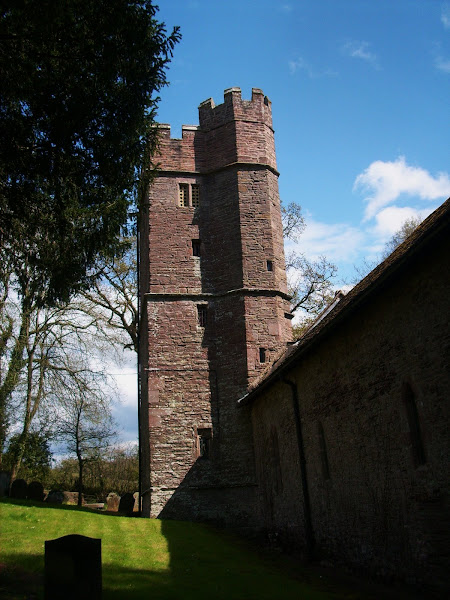
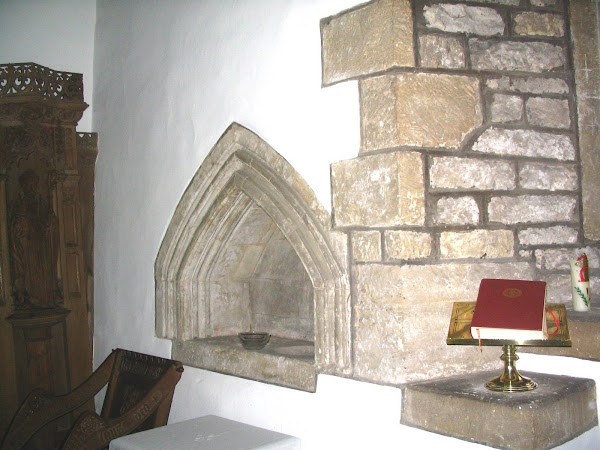
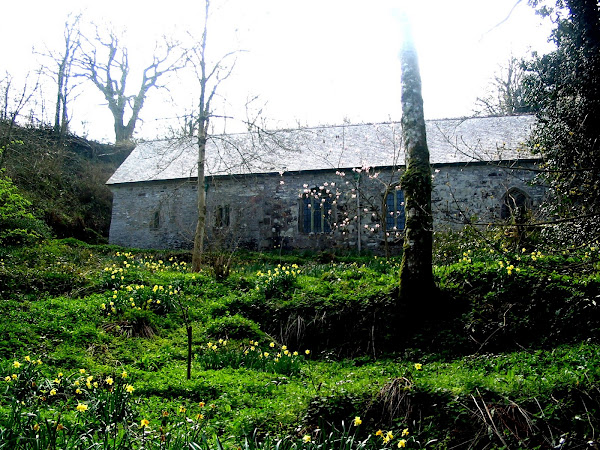
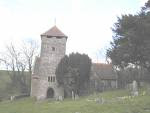
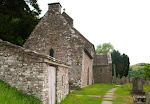
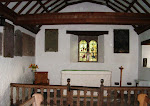
The church you see today is not Illtud's original foundation. What remains is the 'island' structure .In the 11th century, after the Conquest by William of Normandy South Wales was gradually taken over by the Normans.We have already discussed the squabbling among the Welsh princes which led to this. The local Lord had his base in Cardiff, but kept Llantwit Major in his own hands to supply his garrison with grain (lying as it does in rich farmland).Fitzhamon built the Abbey at Tewkesbury and in 1102 he gave the church at Llantwit Major to Tewkesbury with its tithes.It became an ordinary church rather than a theological college at some point.Obviously the church was properous during the Middle Ages and the church was also rebuilt.The original Celtic site, probably stood on the grounds of the West Church and this was rebuilt by Normansaround 1100, although the only Norman remains are the archway over the south door and some fragments of masonry.In the thirteenth century the East Church was built, the south aislle extended the full length of the church . A tower was built and the church twice raised.Also two squints were added.So there were also two piscinas. The Roof on the older West Church was rebuilt in the fifteenth century.

The MEdiaeval Church would have been very different from the present day one

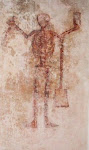
The West Church was the Parish Church and the Canons worshipped in the East Church. The floor was of beaten earth and there were no pews,only the elderly and sick sat on the stone benches around the wall.(cf. the saying 'The weakest go to the wall')The Church had its wall paintings and its rood over the chancel arch , although they were limewashed by the ever zealous puritans who also removed, altars, statues and ornaments.

John Wesley even preached here on 25th July 1777 He wrote (courtesy of Vivian Kelly in the Guildebook)

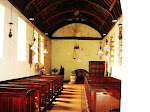
About eleven I read prayers and preached in Llantwit Major church to a very numerous congregation. I have not seen so large or so handsome a church since I left England. It was sixty yards long, but one end of it now in ruins. I suppose it has been abundently the most beautiful as well as the most spacious church in Wales.'
Various other changes were also made by the Anglican authorities, until the present day.


The Galilee Chapel

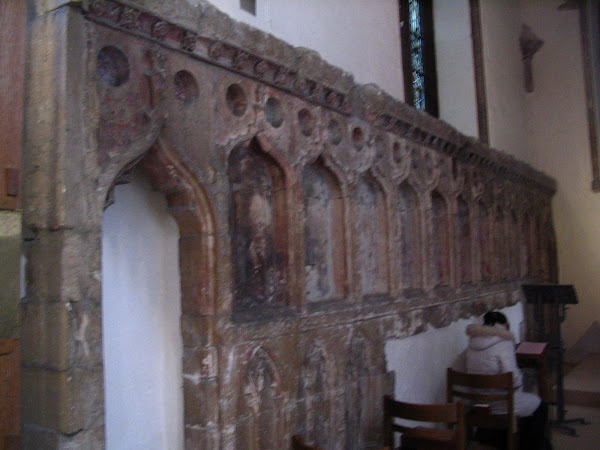
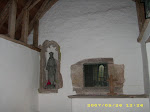
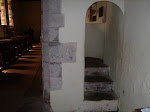
Right at the back is a Chantry, called the Galilee Chapel.This was originally a two storey building and the remains can be seen of two staircases.The lower storey was used as a crypt and the uppwer storey is a chapel. In the east side of the chapel are two niches one of the 14th century, one of the 15th century . There are reports of a tree of Jesse being in one (and probably Our Lady in another. Sir Hugh Raglan endowed the church as a chantry. Every day, the priestwould say prayers for the sould of the dead, principally the benefactor and his family. An act of 1545 dissolved the chantries (Henry VIII and his followers) so it ceased to function and the church fell into decay.

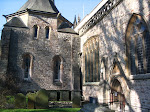
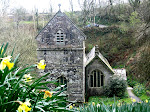
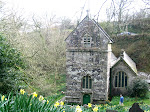
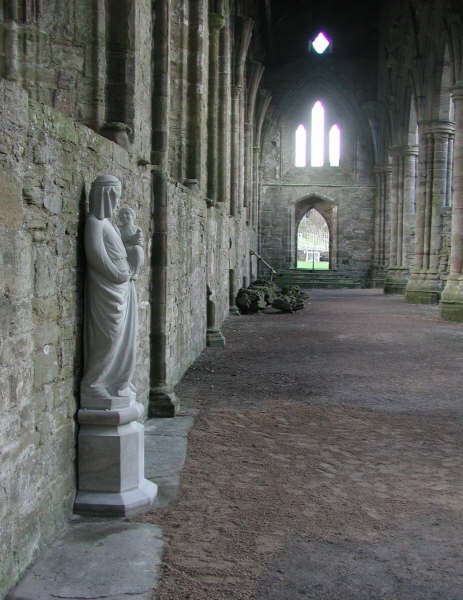
The former chantry priest's house lies derelict next to a garden of remembrance for Cremated people and the church seems to be in three parts.

In 1940, the building had been destroyed by a bomb which destroyed it and also blew out the windows in the south aisle of the church.On the hill overlooking the Abbey are the remains of the old monastery buildings , and among them the remnants of a large grange or farm, belonging to Tewkesbury Abbey.Excavations in 1037 found the remains of a farm house, dairy,, bakehouse, brewhouse, stables, a cowshed,an orchard and a number of fields.The entrance to the grange, sitauted in the Monastery Field and the Bishop's Palace Fieldwas through the Gate House, a 13th century building of two storeyswith an outside staircase-the farm entrance can be seen in the masonry of the wall.The Tithe Barn was 36 metres long ,built of stone with an oak roof and large doorways in the North and South Walls. It was also 13th century. After 1836, tithes could be paid in cash rather than produce so its use diminished and it fell into decay and was demolished in 1880, when the new vicarage was built. In the Great Ley Field near the site of the Tithe Barn , stands a mediaeval circular dove cote , made of limestone blocks, coeval with the Gate House. The Grange was occupied for five hundred years until 1539 when it was taken by Henry VIII and his followers.


______________________________________________________________________________


I found this place to be very special. It was the starting place of study for so many of the early Christian Saints of what is now Wales, Cornwall and Britanny.An I am sure I will return. Don't forget to check out the podcast of St Illtyd. The link is right at the bottom of the blog page, and also in one of the boxes to the left.(listen Online) Or download the series free from iTunes as 'Mary in Monmouthshire'

If you missed the original posts, here is a short catch up:

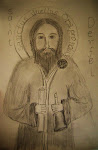
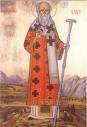
Illtyd was one of the most revered saints of the early Breton/ Welsh Church, by tradition a cousin of the fabled King Arthur of the Britons. He was of the family of Wales and , he and his wife Tyrnihild lived as members of a Glamorgan chief’s army until they became hermits near the river Nadafan. Illtyd then studied with St.Dyfrig and founded the great abbey of Llanilltud Fawr in Glamorgan, Wales. He was a reportedly converted from his soldier’s life by St. Cadoc, son of Gwynlliw of Newport. According to one Welsh source , Illtyd was one of the three Knights of the Holy Grail. He died in Brittany. Many churches were dedicated to him, chiefly in South Wales. Born in Armorica, of Bicanys and Rieniguilida, sister of Emyr Llydaw, he was a greatnephew of St. Germanus, Bishop of Auxerre. According to one account he crossed to Britain and joined King Arthur's Court, and later went to Glamorgan, where he was miraculously converted by St. Cadoc at Llancarfan (still to come). These details, however, rest on a late life of the saint (Cottonian manuscript, Vesp. A XIV).

He was reputedly ordained by St. Dubricius, Bishop of Llandaff, and with the assistance of Meirchon, a Glamorgan chieftain, to have built a church and a monastery, which became a centre of learning, one of the three great monastic schools in the Diocese of Llandaff. Among the scholars who flocked thither were Sts. Gildas, Samson, and Maglorius, whose lives, written about 600 ("Acta SS. Ordinis S. Benedicti", Venice, 1733), constitute the earliest source of information on St. Illtyd

Llantwit Major (Llanilltyd Fawr)

According to these sources, his theological college was situated on a small waste island, which, at his intercession, was miraculously reunited with the mainland, and was known as Llantillyd Fawr, the Welsh form of Llantwit Major, in South Wales. The story of the miracle may have been inspired by the fact that the saint was skilled in agriculture, for he is supposed to have introduced among the Welsh better methods of ploughing, and to have helped them reclaim land from the sea.

The legendary place of his burial is close by the chapel dedicated to him in Brecknockshire, and is called Bedd Gwyl Illtyd, or the "grave of St. Illtyd's eve", the old custom of having been to keep vigil there on the eve of his feast, which was celebrated 7 February. There is still to be seen in Llantwit Major a cross, probably on the ninth century, bearing the inscription: SAMShortcuts: press Ctrl with: B = Bold, I = Italic, P = Publish, D = Draft more

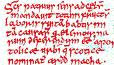
SON POSUIT HANC CRUCEM PRO ANIMA EIUS ILITET SAMSON REGIS SAMUEL ERISAR.(See above)


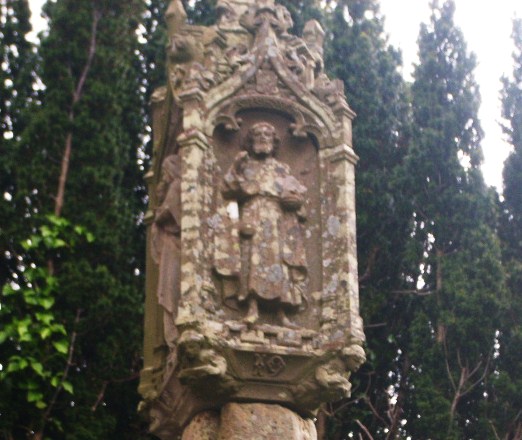
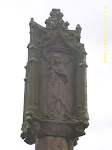
The Houselt Cross,
also in the Church is 1.9m high.Has the insignia

(I)N NOMINE D(EI) PATRIS EST
(S) PERETUS SANTDI ANC
(C) RUCEM HOUELT PROPE
(R) ABIT PRO ANIMA RES (P)ATR
ES EUS. (I the Name of the Father and SOn and Holy Ghost ,Houslet prepared this cross for the soul of Rees, his father)

Hywel, son of Rhys was probably Hywel ap Rhys who was king of the land between the Tawe and the Usk in the ninth century.

There is also


The Pillar of Samson

IN NOMINE DI DUMMI INCIPIT CRUX SALVATORIS QUAE PREPARAVIT SAMSONI ABATI PRO ANIMA SUA ET PRO ANIMA IUTHAHELO REX ET ARTMALI ET TECAN.

In the Name of the most high God begins the cross of the Saviour which Samson the Abbot prepared for his soul, and for the soul of Iuthahelo the King and Arthmael and of Tecan.

Iuthahelo was ITHEL (brother in Lae of St Materiana of Boscastle and Tintagel)
He died in 846.AD

last stones date from the ninth and tenth centuries and there is a suggestion that there ws a flourish sculpture tradition at that time in the monastery, before the Normans.The Normans probably converted the monastic settlement into an Augustinian one, but it probably was just a grange of Tewkesbury Abbey, and staffed by their monks.

Monday, May 12, 2008

The Warrior Saint with the Huge Mind. Part ! St Illtyd and Llanillted,Mamhilad Monmouthshire

Sun rising over Ty Canol Cwmbran. Below ancient Celtic Warriors.St Illtyd Chapel, Caldey Island


-----------------------------------------------------------------------------------

Today we are looking at the Warrior Saint, St Illtyd of Llanilltyd Fawr. Many areas in South East Wales are connected with St Illtyd , especially even the hamlet St Illtyd and the wonderful little church at Mamhilad. The site of one of his special monasteries. There is also a connection with St Cadoc, Gwynlliw’s son. I will begin by the account of his birth in his Vita, his life.

With many of these saints, which have been greatly loved by the people, we see that subsequent attempts to write down their lives have sought to provide miracles and fancy elaborate detail. There had been a substantially oral tradition of handing own stories and legends. The Book of Kells does testify that the monks and the people in these settlements could indeed write Latin, but there was no widespread attempt to write history. The effort of monks went largely to producing books of prayers, Holy Scriptures and such. When the largely Norman monks of the 11 to 13th centuries began to write down these legends, they assimilated all the tales that could be found about them. What is true is that they really were great saints of the church, travelling around their monasteries, around Cornwall and Armorica (the Breton area of France, roughly) These areas shared a joint Brythonic Celtic heritage.

It is to Armorica, to Brittany we go for the beginning of Illtyd’s story.

Letabia, a rich and victorious providence, powerful in arms, than which no one was more eminent in warlike reputation, derived its origin from its British mother. Being instructed by the mother, the daughter was always victorious; the British princes were full of vigour and their leaders were noble, but the most noble inheritors of the ;and were formerly disinherited and they lost their property as if they were foreigners. Of these, Bicca, a very celebrated soldier and illustrious in race and military affairs was eminent. All his family proceeded from the chief princes, no one of his predecessors was inferior to him such as were the first, and so the last. Therefore being eminently descended and exalted from such persons , he ought to rejoice who proceeded from such noble parents. He distinguished himself and excelled in warfare and was loved by the King and Queen , for universal fame spoke handsomely of him.

So the Life begins firmly in what is now Northern France. Now Bicca wanted to marry as the life of a soldier was always uncertain and he wanted to establish his line.He wanted to marry the daughter of the King of Britain (Anbland) and her name was Rieinguled (Ree-in-gee-ledd)or ‘Modest Queen’ in English. The life says she deserved this name because she was not yet betrothed, stayed with her mother and never played-which I think is rather sad. She was very obedient. She acted completely as she was told and could always converse about anything. There was no one suitable enough for her to marry and when Bicca wanted to marry her, she was sent to Brittany and married there.She conceived and bore her first child. The Life goes on

In the catechism of the boy and at his baptism , this infant was named Illtyd. Illtyd means ‘One who is innocent of any crime’. He was says the life blameless throughout his life. His parents wanted him to be learned and as we have learned from many of the other Welsh saints, he was instructed in the seven sciences, but having completed his education as well as the knowledge of elementary science. He did not go on to study literature at this point but strangely decided to become a warrior.

Just to remind you about the Seven Sciences . These were grammar, rhetoric, and dialectic, in other words, the sciences of language, of oratory, and of logic, better known as the artes sermocinales, or language studies, there was also arithmetic, geometry, astronomy, and music. In language studies, of course, Latin was important as all the subjects taught in the light of Philosophy and Theology. We also know the monasteries taught Greek and often some Hebrew. Remember Tailor, David and Padarn actually preached in Jerusalem, where the Patriarch ordained them bishops.
Illtyd had a great love of learning and had a prodigious memory, retaining huge amount of information about philosophy and Theology and had a wonderful memory. This training of the memory is so important in real learning.

However Illtyd had to be trained as a soldier. Although the church was now established in Britain, there were, as we have seen, considerable dangers, as there were always the incursions of the Irish pirates and soon the Anglo Saxons were to become a real menaces. Quarrels also sometimes broke out between different kingdoms over real or imagined slights, or people would begin to challenge an ageing King.Illtyd seems to have been very learned but nevertheless did seem to have flaws as well.

Arthrwys or Arthur the British King was a kinsman of Illtyd. Arthrwys much have currently resided somewhere in the Gwent area-possibly at his centre in Caerleon, still the most important town and port carrying on fro its Roman glory . He visited Arthrwys and was very well received and given many gifts and then carried on travelling. With his wife Trinihyd he came to Paulinus’s settlement .Paulinus was King of Glamorgan but was also a learned man. Paulinus was fond of Illtyd, whom he treated as a son and allowed some aspect o the government of the area of Morgannwg or Glamorgan (and remember Gwent was joined to Glamorgan at this time) Paelin (or Paulanus) would love to hear him recite the gospels. His Life says he was outwardsly a soldier but inwardly one of the most learned people in Britain at that time. He became the leader of all thesoldiers, because of his mental ability which was huge.

Meeting with St Cadoc

Cadoc, Gwynlliw’s son was sittig in his chair teacing te students at his monastery in Llancarfan and then he received a message from the soldiers of Poul Pennychen. There were about figfty solders and the message was that they needed board and lodging for he nights and if they did not comply they would take it by force.They had been out hawking.

Cadoc was a very holy man and though the tone of the message was very improper, he instructed they should be fed with bread pork and ale.All this was assembled and taken down to Medgard where they were. The pig was carved, but the soldiers would not eat until St Illtyd had arrived (because Illtyd did not send the message).According to the legend, when Illtyd appeared, the ground opened up and swallowed all the men, leaving the food on the top of a mound.This was probably because the soldiers had defiled God by so rudely demanding of his house. Illtyd realised what had happened and prostrated himself in front of Cadoc begging forgiveness. Illtyd was so affected and frightened, but Cadoc would not speak to him until he had taken his warrior’s outfit off and then begged of Cadoc that he would give him the monastic habit. He begged Cadoc to shave his head and beard according to the custom. He formally renounced his weapons of war and after instruction from Cadoc , he made his profession and consecrated himself to God forever ’The earth has covered them never to return to the world’ as Cadoc used to say of his monks. He therefore exchanged his crown for a higher crown or a monk and continued with Christian life under Cadoc.Rather sadly , he had to leave his wife and presumably family, whom he left with his protector as he decided he could not look upon her without desiring her with passion . He got up early after making this sad decision, and travelled to the Valley of Hondnant, called the Fruitful valley. There was an open fertile plain and a thick wook with a stream . He had previously been visited by an angel who had told him to seek out the stream.There was a grove of trees with the centre open to the sun. It was the most beautiful of places.
Visit to Dyfrig of Llandaff

When had had been received as a monk he visited the Bishop Dubricius or Dyfrig of Llandaff nd asked permission to found his monastery. This being done, he consecrated his crown as an adopted son of God and a burial place was set first at his monastery. The Oratory in the monastery was consecrated by Dyfrig to the Holy and Undivided Trinity. We are told this church was rectangular and had a ditch around it or drainage. Illtyd fasted and prayed without ceasing. He washed himself with cold water constantly .He studied the scriptures and spent all his time in divine service trying to atone for his past misdeeds.
King Merichion and the Stag and the Fish

The King Merichion had gone hunting and the stag who had been excited by the dogs ran to Illytyd’s monastery and Merchion followed it there. Illtyd would not give upthe stag and kept it. The King was very angry indeed He was angry to find Illtyd had set up the monastery there without his leave. The stag had become tamed by Illtyd and the King, watching and speaking with the Holy Illtyd became less and less angry and then friendly. Illtyd’s monks had caught a huge fish and put it in front f the king, who would not at first eat is as Illtyd had no salt and bread to go with it, not less ale. But after many prayers we aretold he tasted the fish and tastled bread and salt and in the water the ale he did not really have.

The image of the stag has appeared again, strong in the Celtic psyche. Often used as a symbol for Christ in bardic terminology in early British times. The story could have thepoetic meaning that Meirchion was a warlike king of little religion , persecuting the monks of the settlements and harassing them and then himself leading the King to the monastery, where he reeived his conversion.
And indeed we are told that Meirchion had a marvellous dream and a heavenly angel came to him when speaking and told him he had been a very wild and wicked king if he thought it was better for wild beasts to live there rather than holy men of God. If he did not mend his ways ,he would never have children so he shold give him permission to stay there without more ado.The Vita said ‘Who will dare to offendand expel from its desirable situation the man who is very religious and lives in the catholic manner? God has chosen him and sent him to live here as a hermit. The Abbot is venerable, magnificent ad exalted and who ever injures him will perish forever.’ Hoever Meirchion seems to have initially capitulated, sadly Illtyd had far more problems with him, even causing Illtyd to run away and hide at one point.

Illtyd’s monastery became a great meeting place and was known as Llanilltyd Fawr (the Great and Holy Place of St Illtyd.)Kings listened to him . Many people sought his advice and it became a huge and important place of learning where scholars appeared from all over Britain. He fed the poor clothed the naked, comforted widows and orphans and appointed farming workmen for the fields of agriculture. God told him to do it, realising that when people were not hungry they were not so warlike. He also himself tilled in the fields. He visited people who were imprisoned. His settlement was indeed lare, of one hundred people and as many more poor people desperate for food. He was a humble man, and never denied hospitality to anyone who came. Gildas came there to study with him as well as Samson, Paulinus (Paelin)and the great David himself. He also shared everything he had amongst his canons, when he was made Abbot.

Illtyd and Flooding

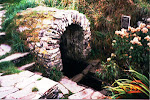
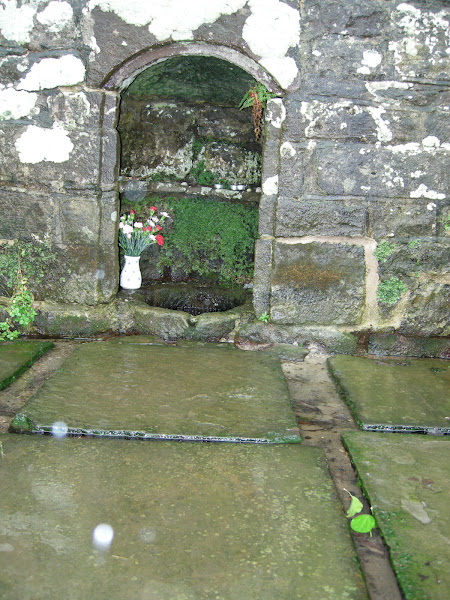
Where he lived at Llanylltyd Fawr he had a problem with frequent flooding and caused a huge embankment to be built to keep out the sea.The sea broke through it the first time , the second and third time it was rebuilt, but an angel of God told him not to leave that place, even though he was dispirited and wanted to go, being absolutely fed up.When he left the Church the next day he was to take his staff and admonish the sea and tell it to hold back. He did so and when the beach was dry, he struck it with his staff and a fountain sprang up, which was beneficial for curing diseases , and amazingly it was not salt but pure spring water.

When this was done ‘the Very blessed Illtyd, kneeling, prayed to the heavenly Lord, saying’I request of thee, supreme creator and the giver of all good, who dost confirm what though givest abundantly, that this land be a boundary of the sea and that it will not return to where I have my settled habitation nor injure nor disthad been urb; here may it rest and here may it return as a harbour for ships’. The marsh became dry land and could be cultivated and there was plenty of meadow land and pasture for catle there.

St Samson and the Corn

During daily life at Llanilltyd, St Samson was left to watch the corn which had been plucked dry by birds and the monks were powerless to stop them. Finally Samson let them fly into the rainstore and they remained there until the corn had been harvested and then the soft hearted St Illtyd let them go free.Later this corn was taken to Brittany to help when there was a famine there.

Samson is Elevated

Samson after this great miracle was chosen to be Bishop of the Area of Dol in Brittany where he had helped with the famine. He was very sorry to go. Remember he was the brother of Treddin of Trevethin, and the martyred Tegfedd of Llandegfedd. From his many tears a fountain sprang forth. He ordered that after his death his body should be brought back to his beloved monastery and his blessed teacher.Illtyd took Samson to Dyfrig at Llandaff to receive holy orders and his bishop’s consecration. It was said that at his ordination a white pigeon appeared on the shoulder of the young man, whose body was indeed brought home after his death.St Illtyd was devasted and buried St Samson in the appointed place.

Visit of Illtyd’s Wife

Illtyd’s wife came to visit him. She missed him and wanted to see him, but was shocked at his appearance . He was hairy and dirty and not the elegant soldier she had married. Illtyd did not want to see her at all, but she asked to have speech with him/ Unfortunately she also lost her sight when she visited him. Illtyd did restore her sight to her but she left, realising he had become a different person.

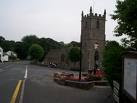
There is however a remembrance of their early love for the romantics..At Llanrhydian is a church dedicated to both of them (OS grid 497923)This small monastic settlement was Illtyd’s original one as there was once a small inscribed stone in the area. Rhidian is probably a corruption of 'Tryrulhid', who was St. Illtyd's wife. The present church itself is 13th century with the present chancel and tower added in the 14th century. A large stone block named 'the Parson's block' tops the massive west tower. This structure was originally a fire beacon to give warning of enemies approaching by land or sea. In the porch is the mysterious 'leper -stone' bearing representations of human and animal figures.

This was discovered near the tower and is dated back to the 9th or 10th century. It might have Viking origins and could possibly be a hogback tombstone. On the green outside are the remains of an 11th century wheel cross known as the 'Pillory' (or whipping) stone. (Key from Heron's Way Service Station all year) On a clear day, you can see lots of sheep and wild ponies grazing on the marsh. Llanrhidian is located on the North Gower coast and benefits from many spectacular views over the estuary and salt marshes. Once upon a time you would have been able to see workers loading cockles onto the backs of donkeys, and although the.
Marshes have long been used for common grazing and cockling, donkeys are no longer employed.

Soon we will have the end of St Illtyd’s Story.