Showing posts with label Llangibby. Show all posts

Wednesday, May 6, 2009

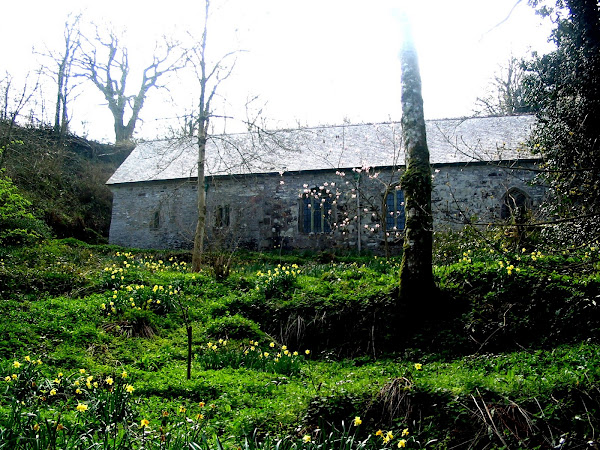
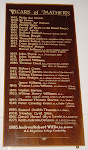
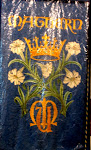
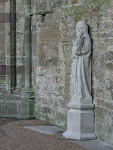
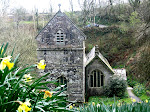
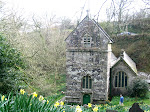
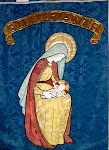
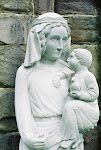
Church of the Virgin at Panteg-a gift, St Cybi, the Miracle and the Well.

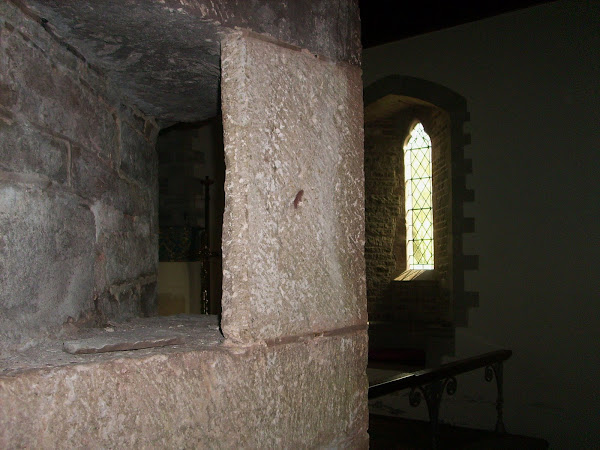
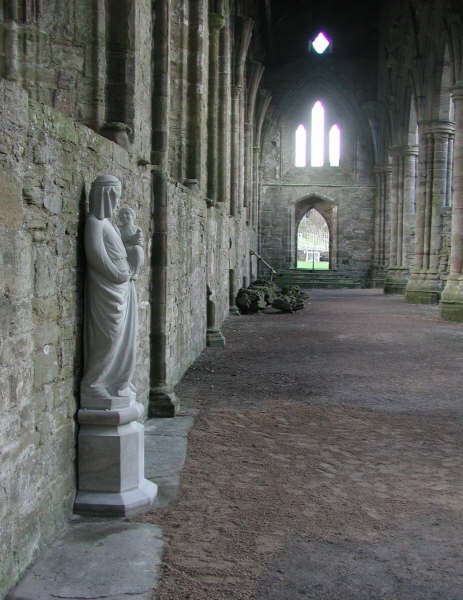
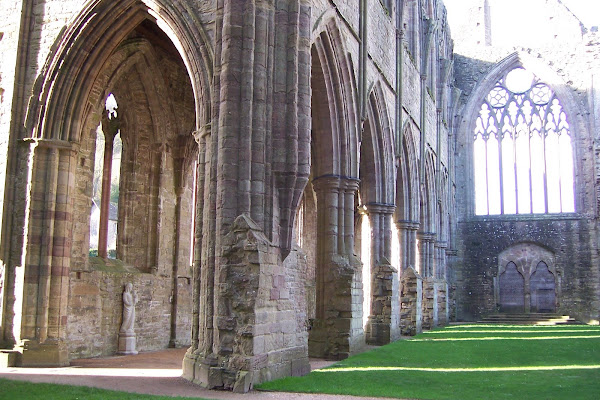
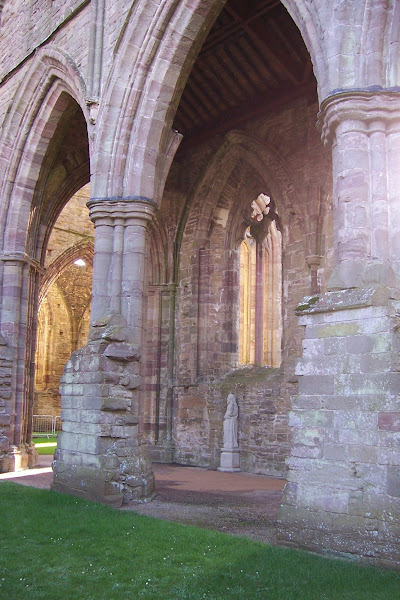
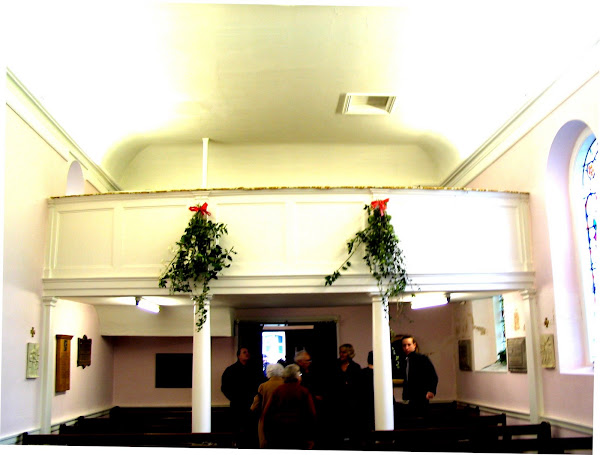
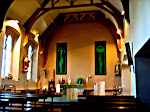
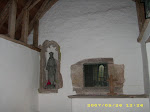
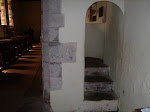
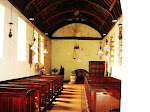
Apologies for he darkness of the pictures below. I took them in the evening and they are not as bright as I would have liked.


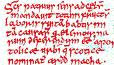
Scholars , such as W Rees who compiled the ‘Lives of the British Saints’ have placed the first reference to Panteg in the ‘Life of St Cybi’ where its early name was Llandaverguir., where the Blessed St Cybi himself left a small hand coloured bell. He left there to go to Menevia, city of St David and stayed there for three days.

Deinde Ethelic tribuit in perpetuo Sancto Kepio duas ecclesias, quarum una lankepi vocatur, altera autem Landaverguir , et ibi dimisit Kepius parvum digiti sui cimbalum varium. Tunc Sanctus Kepius benedicens Etherlic regem, egressus est inde ad vcivitatem Meneu Sancti David, et ibi moratus tribus diebus et tribus noctibus.Vita Sancti Kebii

The Church of St Cybi (same saint as St Cuby in Cornwall) is well known, but the parish of Panteg has an unknown patron (apart from the dedication to the Blessed Virgin, which was common to all churches )and is adjoining the parish of St Cybi and also of the land of the chieftain Ethelic.(who gave his name to Edlogan (Edelgynion) the Scholar A.r.Rees suggests the likely site to be the church parish next to St Cybi’s, that at Panteg. Llan is clear, but Da verguir -could point to an early tradition of the Saints name. Spellings were not standardised at this time, and mixtures of Welsh and Latin not uncommon as the Church at Pater Ishow's shows at Patrishow.Furthermore all services were held in Latin, and lay people instructed in the meaning of the Mass.Then there is Gwentian dialect as well, which altered spelling, so it is there to consider.

The Legend, the Miracle and the Holy well

We are told that when Cybi his monks and his soul friend, St Cyngar (of Llangefni)came to a small church where the church of Llangibby is now, he stopped travelling for a while with his companions , he laid a cloth on the floor and spread his tent. The Chieftain Ethelic saw them and sent a man down to find out what they were doing, and after finding out the man told Ethelic told him they were monks. Ethelic was furious and went to eject them from his land, but as he rode off in a temper he was thrown from his horse, and his horse immediately died, and worse , as a sign, Ethelic and all his men were struck blind. Then Ethelic prostrated himself on his face and gave his body and soul to God and to his servant St Cybi and he and all his men had their sight restored. Then St Cybi was given two extant Churches, the fair Church on the fair land Llandaverguir /Panteg and St Cybi, where a spring had sprung up on the site where Ethelic had prostrated himself before God. There follows the information that Cybi went from Panteg to St Davids (in Pembrokeshire) for three days and then sailed to Ireland.

Very Early catholic Catechesis?

This account by Iolo gives us more information still. That there were Church buildings here of some description from before the date of the visit of Cybi and his monks and the great miracle. This was probably the result of the missionary efforts of St Medwin (Medw of Michaelston le Fedw. Comments by Gildas and Tertullian attest to the fact that South Wales was Christianised from the very earliest times. (See the new scholarship:St Lucius of Britain by David J Knight.(2009)

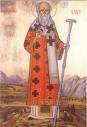
St Cybi of Llan-gybi-Some biographical details
Cybi was one of the great Cornish saints, the son of St Selevan of St Levan in Cornwall. Selevan is a Welsh / Cornish version of ‘Solomon’. St Cybi(nicknamed ‘The Tawny one’ also has a holy well at Duloe .He was born near Tregony , or Callington(now called ‘St Cuby’) but claims are made for Duloe near Looe, of whose church he is the original patron. He studied the Christian faith avidly in youth and at the age of 27 he made a pilgrimage to see Pope Symmachus at Rome, who was made a saint, because of his support, financial and spiritual for the northern Italians, who were being constantly attacked by Germanic tribes, and the amount of aid he sent with Christian brothers who took food and clothing to the African tribes, who were also being attacked and killed by Pagan tribes of Germania at the time. Following this Cybi visited the Patriarch Helliah I (494-516) at Jerusalem, an amazing journey at that time, yet many saints travelled to these places from this time onward. A surprising number of people went to Rome and Jerusalem at this time and we know later, under the Laws of Hywel Dda,in the Gwentian code, a criminal could remove a death sentence for a terrible crime and return to the community, if he made a pilgrimage to Rome and confessed it there. It must have been a huge undertaking, but it was Welsh Law. Cybi however, received more teaching and scholarship and then went on to visit Hellian, in the last century before it was overrun by Persian tribes.
Upon his return to his native Cerniw (Cornwall) Cybi began his Christian evangelisation in earnest. he made his ‘Martyrdoms’ constantly putting himself in the hands of God, travelling from Cornwall in his case. He travelled from one monastic settlement to another, baptising and creating new monasteries. Under the laws of ancient British hospitality, each llan was in duty bound to provide food and accommodation for such travellers, free of charge. From the moment he walked into a village with his coloured bell, rung to announce his arrival, (the arrival of a holy man) he would begin to tell people about the amazing plan of Salvation of God and the sacrifice of Christ. In Cybi’s case, he travelled from Cornwall to Wales and Ireland.
He established the Church at St Cybi (Llan-cybi-Llangibby) and has been called one of the MAKERS OF CHRISTIAN WALES. He established his largest monastery at Holyhead (Caer-Cybi—Caergybi)where he was Abbot.

Llandavergui llan da vergui (The Church of the Virgin? (Da Verga)/ Panteg

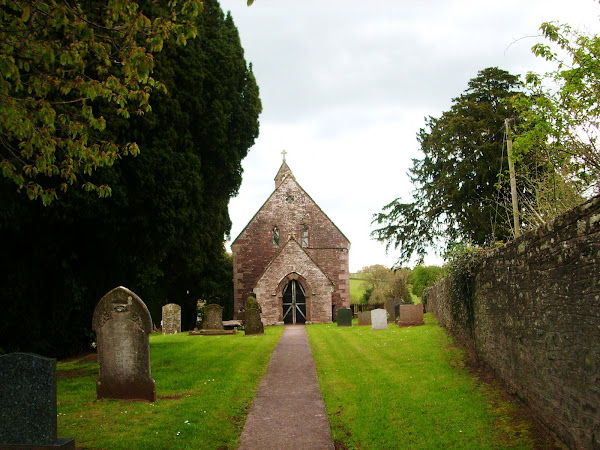
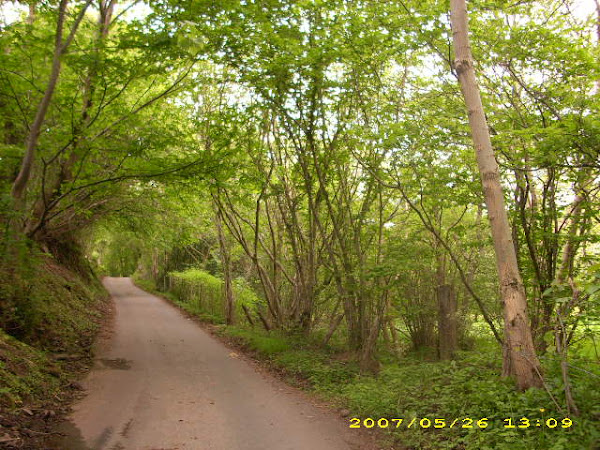
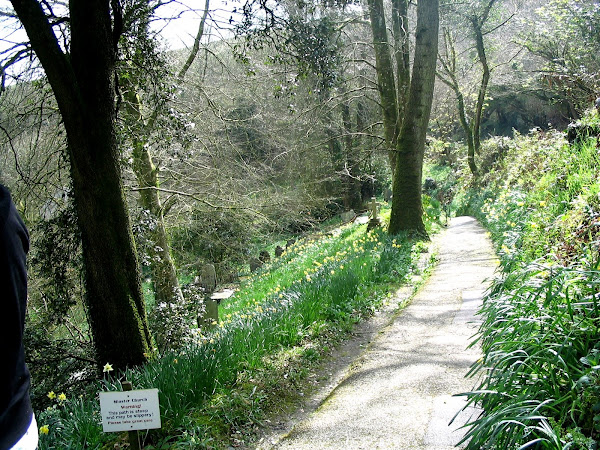
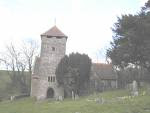
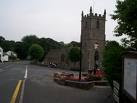
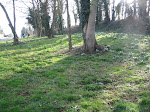
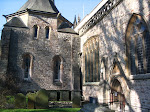
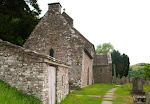
Panteg, or as shown on older maps Panteague, means "Fair Hollow". I found the church at the end of a long lane off the main road through the village of New Inn, and found it with part of its Welsh form of the Circular churchyard, which was the border of the place which was holy and separated it from outside world. It really is a beautiful place.

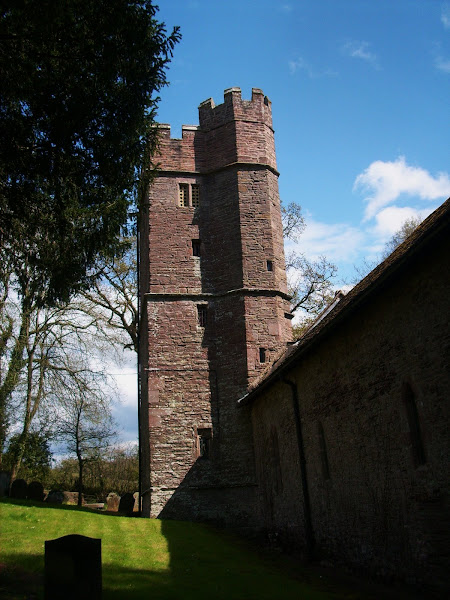
We presume it continued as a small Welsh Church, possibly built in stone in Saxon times .The next mention comes in the ‘Taxatio’ of the Pope Nicholas n 1254. This little church was considered too poor to pay tax to Rome , as it was rural (and still remains so today)It was dedicated to the Blessed Virgin and in Welsh would have been Llanvair under the Normans. The Normans will have extensively rebuilt the church and later, in the fifteenth century, a large square tower was built, possibly a defensive action at that time , to protect the people and goods against the constant onslaughts of Owain Glyndwr, who had attacked many religious establishments in the County, which they considered the property of the hated Norman usurpers. Goldcliff Benedictine Priory had been sacked as indeed had Llandaff itself, Llanthony and many other places. Weapons and food would have been placed in the tower.

The monk, Adam of Usk was the distinguished Parish Priest here for a while in later Mediaeval times.

Panteg Church changes

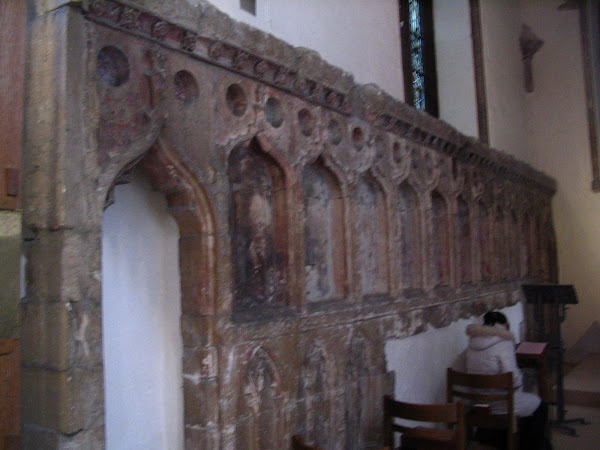
In the troubled times of the 16th century, it became an Anglican Church. TheRood screen was removed along with any works of art and statues.

Catholic Worship in Penal times

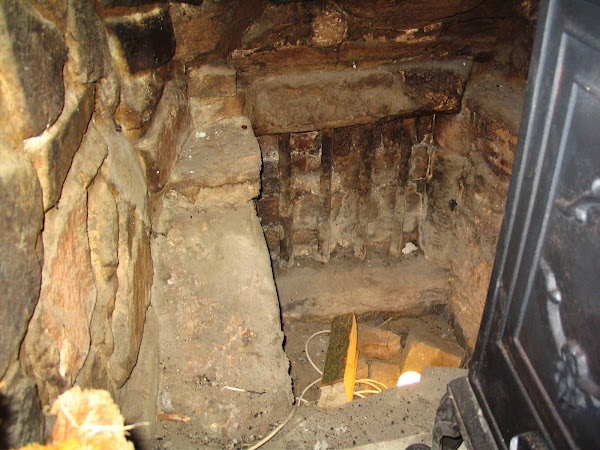
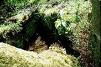
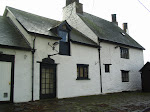
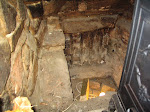
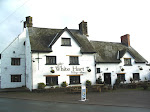
Catholic Mass continued to be provided from this time onwards at the Llangibby Public House, the White Hart Inn while the local priests had to keep a very low profile and people kept watch. There is still a priest’s hiding place in the Pub.(see photos at the bottom of this blog) This became the Mass Centre for the area.

The Church given to St Cuby became known as St Mary’s Parish Church.
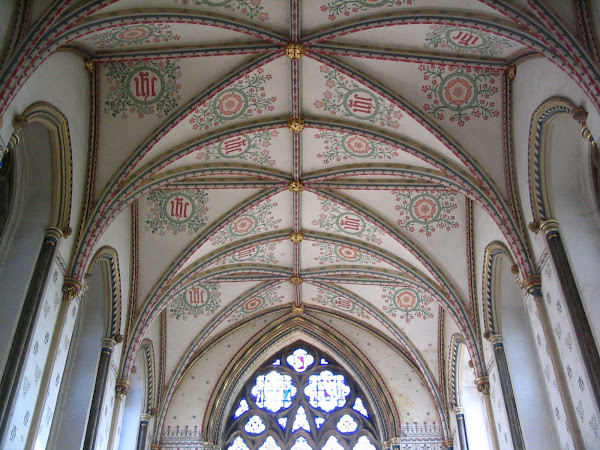
St Mary's, which has been greatly rebuilt and refurbished in the ensuing 450 years and and comprises a western tower, a nave, chancel, south porch, north aisle to the nave, a clergy vestry and choir vestry. There are 3 bells in the tower - all hung for full-circle ringing and there is no better sound as you approach for Sunday Service or a wedding, than to hear the bells ringing out as you walk through the beautiful old churchyard.

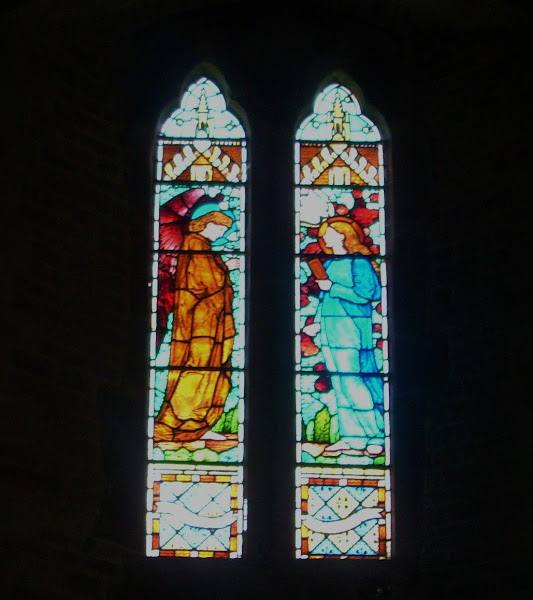
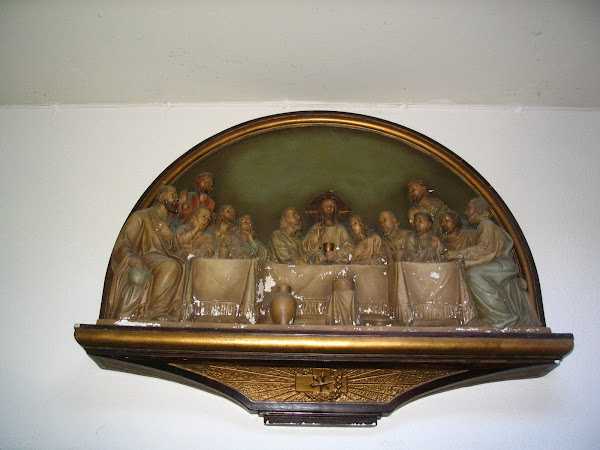
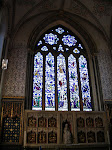
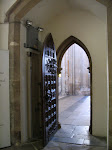
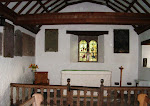
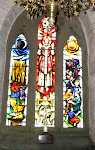
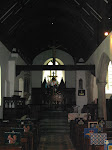
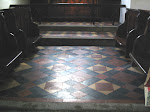
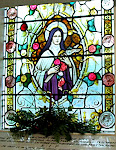
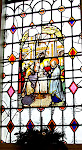
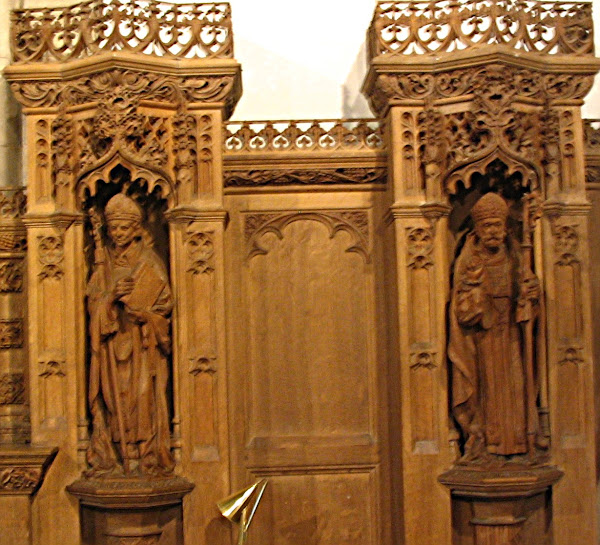
Inside, the walls are plastered, with a timber frame roof and there is an arcade of octagonal piers to the north aisle (a most unusual feature). There are plain wooden pews seating just over 200 people, a stone font with wooden cover, a wooden altar rail and pulpit all dating from the Victorian era of mid to late 1800s. A wooden choir screen was added in 1935 whilst the organ chamber was built around 1879. There are stained glass windows to the north aisle with a painted tryptych screen alter below a wonderful east window designed / made by O'Connor and Taylor. The enlargement of the church was completed in 1876 and one more bell added. In 1935 the Chancel screen was added to the Church.

Tithe Barn
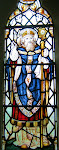
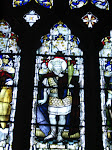
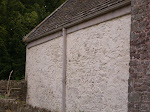
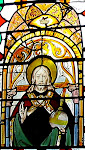
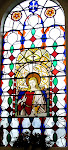
There is a tithe barn nearby , it was probably a grange belonging to Usk or Abergavenny Priory-more more research needs to be done. The Tithe Barn became a school in the nineteenth century . A Reverend James confirmed a great many people in the church. He and his wife built the school at Pontymoile as well during the 14 years he was there as clergyman, with his wife. He was greatly esteemed andd the great stained glass window was erected as a tribute to his memory by his friends.

Disestablishment of the Anglican Church 1920

Changes to the governance of the Church came in 1920 with the Disestablishment of the Anglican Church in Wales (before we had been part of the Church of England). The Diocese of Monmouth was newly formed and Panteg became one of its parishes.
Throughout its history, St Mary's has seen many changes and welcomed many people to worship. There have been many changes through all sorts of trials and tribulations, through financial crises and the development from a strictly rural area to that on the fringe of an industrial new town of Cwmbran. In its quiet and tranquil surroundings it remains loved and cherished by its congregation. I experienced some of that welcome when I arrived to take photographs during an evening when two friendly ladies were polishing every pew of the church and we had a warm conversation, while someone outside was mowing the lawn and tending the grounds.
The site has continued since the second century as a place of the worship of Christ and that is a survival story.

Friday, May 2, 2008

Remembering the Holy Wells of Gwent and connected with our saints


Good Morning!

Friendship Blessing of Early Britons

May there always be work for your hands to do
May your purse always hold a coin or two
May the sun always shine on your windowpane
May a rainbow be certain to follow each rain
May the hand of a friend always be near you
May God fill your heart with gladness to cheer you


Holy wells were and are very important to the people in Wales and Monmouthshire and these wells existed in quite large numbers. Druids regarded wells, springs, lakes and rivers as the abodes of gods. No doubt a range of ceremonies were associated with them and they remained part of the local culture.

In the year 601AD Pope Gregory instructed missionaries to destroy the idols of Britain but to purify existing temples. Ancient sites, including wells, gradually came to be associated with the early missionary saints, such as those we have been hearing about. Many of the wells were roofed and had small chapels with niches for statues of saints but over the centuries the upheavals in the religious life of Britain led to the desecration and destruction of many old shrines and most old well chapels disappeared, but can be seen at St Cleer near Davidstow in Cornwall and at Madron Well near St Buryan in Cornwall.

Our Lady of Penrhys

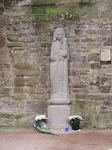
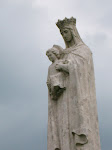
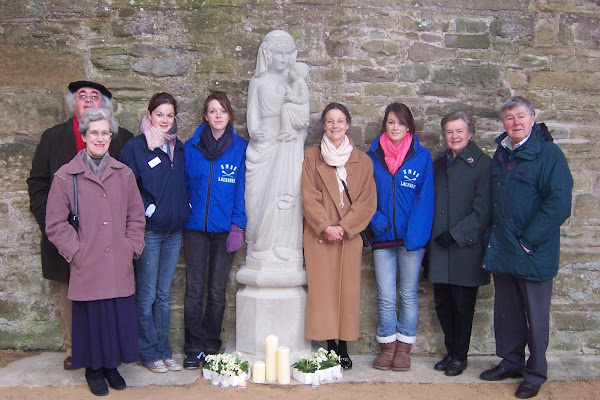
Ffynnon Fair Penrhys was a south Wales well belonging to Llantarnam Abbey at the time of the dissolution of the monasteries. In 1538 Thomas Cromwell, vicar-general to King Henry VIII, ordered that the effigy of the Virgin Mary be removed "as secretly as may be" and the "Image and her apparel" were sent to London to be burned. The country folk were not easily swayed by the reformers and intellectuals of London, however, and pilgrimages to holy wells continued. The statue has been replaced.

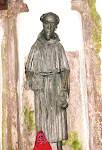
St Cybi’s Well (Picture on the right hand side of the blog

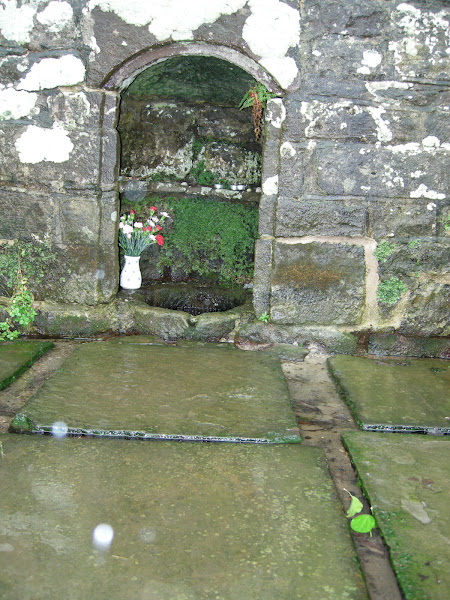
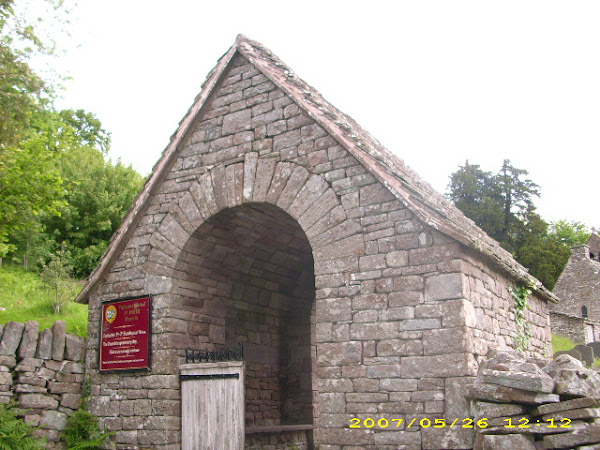
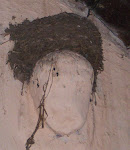
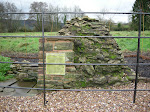
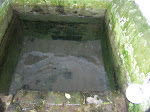
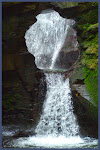
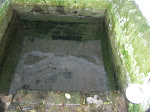
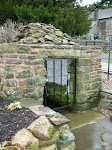
Next to the Church originally founded by St Cybi at Llangibby (Llangybi) a Cronish saint. This well has recently been refurbished .

St Tewdrig’s Well (Picture on the Right hand Side of the Blog)

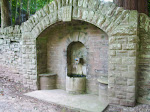
The Well at Mathern where St Tewdrig died. There is also a legend connected with it/

St Anna’s Well (Picture at the bottom of this blog)(The Virtuous)

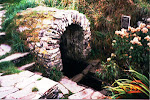
Saint Anna’s Well is to be found at Trellech, near Monmouth (also Brislington) Anna is a Chrstian name after the Mother of the Virgin Mary.
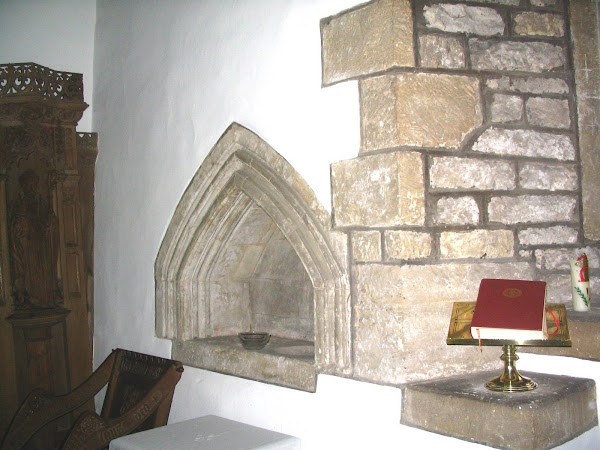
St. Anna Born c.AD 445) was a younger daughter, the King of Gwerthefyriwg - what is now Gwent, where she grew up. She married, , Cynyr Ceinfarfog They had six children and eldest was the famous Arthurian warrior, Cai (Kay) and another was St Non, mother of St David.(Th last picture of the wells is St Non's in Menevia, West Wales-patron and deicatee of Lantarnam abbey-Llan sant-Non)) After Myrddin or Merlin had made and agreement with Uther that his son should be brought up in secret, the family got a foster-son, the future High-King Arthur. (Arthrwys)
Anna is the mother of St. Samson, who was also from Gwent. Some time after Arthur's ascendancy to the British throne, Cynyr seems to have passed away and Prince Amon Ddu of Brittany asked Anna to marry him. After they married, Amon moved to Anna's Dyfed home and became a high-ranking official at the Talgarth in the Court of Brychan. They had three children, Samson, Tydecho or Treddin and Tegfedd, all of whom entered a religious life. Samson became an influential bishop at Dol in Brittany and eventually persuaded his parents to also enter the church. Treddin founded a Monastry at Tre-Vethin- a corruption of Tre Treddin (the dwelling of Treddin). Tegfedd also founded a monastery at Llandegveth and was martyred there by Saxons. (see my account of the church) Amon became a monk at Ynys Byr (Caldey Island), whilst Anna moved back to her native Gwent. The 'Virtuous' Holy Well at Trellech was dedicated to her; but she is better known for founding churches further east in what is now Gloucestershire, at Oxenhall and Siston. St Samson visited her at the former and dedicated both her foundations. The holy well of St. Anne in the Woods at Brislington may also be named after her.

St. Winifred's WellNorth Wales

This well at Holywell near Flint has survived with associated buildings intact. I am including it, because it was closely connected with Monmouth Priory, who sent an ancient crucifix and vestments and pyx to Holywell for safekeeping during the excesses of the zealots. The Well and Chapel were granted by the Countess of Chester to the monastery of St. Werburg in 1093. Later, possession reverted to the Welsh lords and in 1240 Dafydd ap Llewelyn granted it to Basingwerk Abbey. Kings Richard I and Edward IV are said to have made pilgrimages there and in 1439 the Countess of Warwick presented her "russet velvet gown" to the chapel (an early example of the present trend in which famous people donate garments for the benefit of favourite charities). Richard III paid for a priest at the well. The present architectural remains resulted from the generosity of Lady Margaret Beaufort, the mother of the future King Henry VII. It is possible that she prayed there for his success and when he was victorious at the Battle of Bosworth Field in 1485, the Tudor dynasty came to the throne. And this may be why the Well and chapel were not destroyed during the Reformation.
St Maughan’s Well (St Maughams near Monmouth)

After St Mawgan.(near Monmouth)a friend of Cadoc and Brioc (mentioned in Tecla post)and like them also known in Brittany.The church in the Vale on St Mawgan in Pyday (Lanherne) in Cornwall is a successor of a Celtic monastery dedicated or founded by St Mawgan(Morgan) It is divided only by a wall from Arundel House where Catholic worship was maintained and now Carmelite nuns have stayed there for the last two hundred years and maintained the monastic life of Cornwall. At St Maugham’s Church near Monmouth, during the time of persecution in the 17 and 18th centuries, Catholics were taken to this well at the dead of night and here they washed their loved ones and laid them out before taking them up to be buried at night in the local churchyards, when their brave priests would say their Requiem Mass, Two Jesuit priests are even buried in the Churchyard.

St Tecla’s Well (Llandegla near Ruthin)

The ritual for this healing is in my post in April’s post on St Tecla.

St Materiana’s Well at Minster in Boscastle, Cornwall
-photo at bottom of Blog

St Issui’s Well of Pater Ishow at Partrishaw (Picture in a January post?

Llanyronwy Well (Rockfield near Monmouth)by Rockfield
Dedicated to St Cenhadlon/ Churchwife of Arthfael ab Ithel,daughter of St Brioc/Braivel and granddaughter of Llwyarch ab Tudor. (or the Tudor family)Rockfield was called Corn Cenhedlon originally-her meadow.. Corn is a well known place name for a meadow of a river or brook, which is where the church stands.A range of meadows high up in the muntains there near Monmouth there are meadows still called the Cyrn Meadows. She was a saint, having put her settlement there, although her husband was a petty chieftain of Gwent/ Bishop Matthew Prichard is buried beneath the sanctuary at Rockfield , who was Vicar Apostolic for the whole of the Western area during the times of persecution.

Newport

There were wells at Eveswell and Baneswell One of these could have been the St Woolos (Gwynlliw’s) Well the story of which is given in his Life (Vita) compiled by a monk of St Peter’s abbey, Gloucester.Whilst two areas of Newport are known by this name-can anyone locate them? Another Well has recently been restored at Bassaleg, whilst called a spring and horse trough it may well have been St Gwlady’s well.


St Sannan's Well in Bedwellty (in gardens of a former pub, near the church.

These photographs are copyright to Al Evans.
It appears the earlier well had a Mediaeval style cover - but now the area has been cleared and a stone bench put near. A new wicker style cover put over the well, and it has been cleaned up.He is not sure, whether the inhabitants of the house are responsible for maintaining it or whether the landlord did it before the pub was sold-we are finding out!Al suggests it is time for well-dressing! What a great tradition! We should get some Derbyshire people down to revive this beautiful custom.


Links with the Past, however....


Some of the wells retained their ancient associations despite the religious and social upheavals of the centuries. Francis Jones notes the way in which wells often figure in the Lives of the Saints written down by monks from handed on accounts. The theme of a saint's battle with dark forces at the site of a well is commonly encountered. Giants, demons and other manifestations of evil were overcome by saintly figures with God’s help and the Lives confirm that even after the many hundreds of years in which Christianity had been the state religion, the wells were sometimes still associated with the ancient Druid culture.

If anyone has photos or interesting information about old wells of Christian significance in Monmouthshire,or South Hereford please can you email me at maryinmonmouth@googlemail.com ? I can then share them here and we can save them for posterity/


Haut de la Garenne

It is a rather horrible irony that Haut de la Garenne is French for ‘top of the warren’ –a warren being the home of rabbits. . The building is situated on Mont de la Garenne, a hill overlooking Mont Orgueil where rabbits were hunted. This varenne of the King was a perquisite of the Crown. No other news yet. Nor has the name of the arrestd person been given.


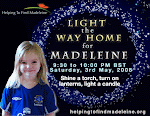
Where are you little Maddy?

Kate and Gerry McCann have said that if the police fail to find their missing daughter Madeleine they will carry on the search alone.
They told the Daily Mirror that they had been kept in the dark about thousands of leads which have been received by police. Gerry McCann said: 'We've got little bits of the jigsaw and huge gaps. We are saying, "You may have told the Portuguese police, but tell us". We need to know and we want to know. We will follow up every lead.'Thousands of leads came in through Crimestoppers and Leicestershire police. We have not had access to that information and we want it.'
He added: 'We aren't taking the law into our own hands... our investigation is independent.' The couple have launched what they described as a 'last chance' effort to find their daughter Kate and Gerry spoke of the 'torture upon torture' piled upon them during the last 12 months. They also acknowledged they could not keep up the intensity of their search and that the interest in their plight was bound to wane

It was on the 3rd of May last year, that Madeleine was snatched from her bed. The general concensus is that she is very much alive, and there has been rumour that she is now called Sarah Kandy from a poster who posted it on a web site.

<Madeleine McCann-Burglary in Pria di Luz from Martin Brunt on sky

‘I don't suppose it will distract them from their endeavours this weekend, but two of Kate and Gerry McCanns' closest friends in Praia da Luz have been burgled ahead of the Madeleine anniversary.

Anglican vicar Haynes Hubbard and his wife Susan have had a computer that contains personal and confidential email exchanges between the two couples.
The laptop also held notes on which Father Hubbard was basing his sermon about Madeleine at the weekendMrs Hubbard is concerned, too, about private telephone numbers stored on a mobile that was also stolen.

The Hubbards became great friends and comforters of the McCanns in the days after Madeleine's disappearance and have kept in touch since Gerry and Kate returned to the UK.’

Wednesday, March 26, 2008

The Miracle of Llangibby, St Cybi,Cubi, Kybi. The Martyred Priests, The murdered Family and The Government and Cloning

LLANGIBBY is a parish, on the river Usk, between Usk and Caerleon, in the hundred of Usk, union of Pontypool, county court district of Usk,Church in Wales rural deanery of Usk, archdeaconry of Monmouth and diocese of Llandaff. Catholic Diocese of Cardiff.Originally a Catholic Church it has been administered by the Anglican Church since the sixteenth century.

The church of St. Cybi, or Sanctus Kibbius is a building of stone, in mixed styles, consisting of chancel, nave, south porch and a western tower containing 6 bells. It seats about 200 people. The register of baptisms dates from the year 1679, marriages from 1754 and burials from 1678. The church is in the early English style.

What is very interesting is that this is the site of a Celtic miracle-the Miracle of St Cybi, one of the 'Makers of Christian Wales'.

Saint Cybi (Feast Day 8th November)

St Cuby (Kebi Cybi)is an unusual saint in that he was Cornish and born of a Cornish family. His father is said to have been saint Selevan (Selyf) (name is given for present St Lavan in Cornwall in written records.Selevan =Welsh and Cornish version of 'Solomon')Selevan appears in a hagiography as father of St Cuby and is the son of St Erbyn and grandson of St Saint Geraint.)Selevan's sister was St Silwen and brother was St Just.This was a Cornish royal family.In fact Cuby ticked all the boxes of a Celtic saint.Their line is given in the Pedigrees of the saints as Cystenyn Gorneu-a Cornish family and in English King Constantine of Cornwall.(although there is a possibility of a place in Herefordshire also called by this name)We know he was brought up at a monastic school, even though his father was a chieftain. He began to read when he was seven and remained in his own monastery for twenty years, so was 27 when he went on the journey to Jerusalem to worship at the Sepulchre at the Lord. There was no division in the Church at this time at all, just the one church. He remained and probably was ordained by Hilary, Bishop of POitiers, and was said to have achieved miracles, elping bline people to see . worked among and cured some lepers.He also worked in the healing ministry and was made a bishop by Hilary of Poitiers.
St Cybi's mother was Gwen, daughter of Gynyr of Caergwch; he was therefore first cousin to St David, although perhaps some years younger ; he was contemporary with Maelgwn which made them all saints of the sixth century whereas St Hilary was in Poitiers in the fourth century. However, it is possible the name of the Bishop was incorrect.
1)He was of royal blood (this was important, as monarchy was essential to most saints and hermits were) 2)Celtic saints, imitating the habit of St Augustine of Hippo, who had taken his Catholic followers into the desert in North Africa. Later incursions of Muslims brought them back into Europe, Italy and Spain. Celtic people who determined to praise God, therefore, embraked on 'White and green Martyrdoms'.They would give up their lives to God. A red martyrdom was obviously a blood martyrdom, still observed in the Catholic canon by the wearing of red vestments at Mass on the day of a martyred saint. A WHITE martyrdom was usually a sea journey of some kind. The sea in Christian symbolism usually associated with death.(Jonah ,Red Sea crossing,Noah etc) The saint would usually set sail on a small boat and sail over the sea. A GREEN martyrdom was finding a 'patch' or island, usually near a well, where they would set up a small monastery with their helpers and sometimes completely alone as hermits. They would be useful in the community , grow their own food (and be brought food) celebrate Mass (if qualified-St Patrick was, and St David was, Bishops usually ordained in Jerusalem and Rome)again long difficult journeys but recorded in the lives of the Welsh saints and other Welsh accounts. The likelihood is that Cybi was ordained. He was of a Christian house and celebrating the Mass was important in the early church, being as now the 'binding' element of early Christians.
Cybi was possibly born near Tregony, but some say Duloe, between the two branches of the Looe river as he is the original patron othat church. Most of the saints at that time were Welsh and going to Cornwall, like Saint Materiana and St Ceidio of Gwent (wife of Ynyr Gwent and son)who embarked as missionaries for Cornwall arriving in Boscastle to set up their green martyrdom. Cybi came the other way. Cybi journeyed to many places when he had returned as a Bishop from Poitiers. He received the call to return to his own country and stayed a short while. HE was asked to be the King of the Cornishmen, but would not accept temporal power.He set off with his ten disciples, who included Maelog, Libiau, Peulas, and Cyngar.

The Miracle of Llangybi

On arriving in Llangybi (then called Eddlogan or Etheliehaun) the found a certain king Etelic was king there. St Cybi went down into his meadows and put up his tent. The King sent his men to see who these people were who were trespassing on his land on the meadow. The returning men said they were monks and Etelic went down to evict them with his men, but as he approached he fell down from his horse and the horse died too and he and his men became blind. Etelic prostrated himself and gave his body and soul to God and St Cybi, and the attendants of Etelic and himself and horse were cured . Then Etelic gave to Cybi forever two churches one at Llan Gybi, and the other at Llande verguir (believed to have been the parish church at Panteg-now destroyed) Cybi left there a small multi coloured handbell. St Cybi remained there for a while and established his monastery and church.
Cybi, blessing King Etelic departed and went forther to the west to visit his cousin Saint David in Menevia, at his monastery and remained there a short while.
==
Cybi in Ireland

Cybi sailed to the Island of Arum, where he stayed four years and built a church there, too . He bought his older cousin Cyngar a cow and calf because he coul not take solid food and only milk, and his disciples bravely cultivated the land. There was an argument with a local landowner, Crubthir Fintam, who refused to let them cultivate the land .St Cybi and Finatm went to the local Abbot called Enna on the island and he made peace between them. Cyngar's cow is said to have strayed again onto Finatam's land an was tied up. St Cybi sent a message for it to be released as the cow would give no milk without her calf and Cyngar was nearly dead because he needed the milk. There was another recorded miracle as God somehow allowed the calf to be sent to its mother, dragging behind it the small tree and its roots.Fintam prayed to the Lord God to be rid of Cybi and his monks, but the account says, God loved Cybi and an angel came to Cybi in his sleep and said to him Go from this island to the Eastern side. To which Cybi said May God destroy Fintam from this island and the angel said So it shall be.
St Cybi then went to Mida, on the southern side of the island and stayed there a while, built a church, which is called to this day the great church of Mochup. Fintam followed him yet again, and said the land was his . Cybi fasted for three days so that God should show him what he should do. He was told to go east by the angel . Cybi did so and to the plain of Bregh and stayed there a week. Again Fintam complained. Again Cybi asked God what he should do, God told him again to move and he came to Vobyn, but Fintam came again and told him to begone over the sea. He did not want him there. Cybi became angry and said 'All thy churches are so deserted that there are not three to be found where there is singing at the altar (Mass was always sung at this time). Cybi sent his disciples to make a boat and begin cutting down the trees. Fintam said, if you are God's servants enter the boat without covering . Cybi replied to him 'God is wonderful in his saints, the God of Isrel himself, the Blessed God will give virtue and fortitude to his people'. Then he and the disciples set sail without the covering over the boat. A huge storm came and the disciples were frightened. Cybi prayed and they landed miraculously on the island of Mon (Anglesey) St Cybi struck the rock with his stick and water immediately flowed.
==
St Cybi at Caer-Gybi-Mon ,Anglesey)

St Cybi came to the place called Cyndaf and there remained some time and said to Caffo, one of his disciples to bring fire from the local smith Magwrn.When he found they were Christian missionaries, he said that he would not give him the fire unless he carried it next to his chest. Caffo did this but nothing was scorched or even singed when he arrived back.

The King of North Wales was Maelgwn.This is also entirely consistent with Cybi being a saint of the sixth century.Maelgwn was out hunting one day and saw a she goat, which he hunted and sent his dog to fetch it but the goat ran to Saint Cybi for protection . Cybi said to Caffo his disciple that he sould go, they could not be together(for his own protection, to escape the anger of the King) And Caffo came to a town now called Merthyr Caffo and the sheherds of Rosiwr killed caffo. St Cybi cursed them with their mistress. The goat found shelter with Cybi and the King told him to let it go but Cybi said 'not if you are going to kill it' . The king said, if you don't let it go, I will remove you from this country'. The blessed Cybi said 'It is not within your pwer to remove me from this land, but is in the power of God, but I will let it loose to you if you offer it to God and give me this land where your dog has been running'.The King agreed. Cybi let the goat go and the hound followed it all aroud there, and it returned to the house of Cybi.A big argument ensued between them but Maelgwn could not resist St Cybi's please and his holiness and granted his castle to Almighty God and holy Cybi slept there as an offering of perpetual charity and alms with Christ in great honour.

On the sixth day and Ides oF November, a 'multitude o Angels' came and took his holy soul to heaven, to be in te company of patriarchs and prophets, the Apotles and evangelists, martyrs and confessors, virgins and righteous saints in the unity of the Communion of saints, the heavenly church. There follows in account of heaven (P501) whichconcludes 'with twenty orders of angels, with the Father and the Son and the Holy Spirit, in peace and joy and in purity and health, without hunger and without nakedness, with abundance for the whole body, and without any evil about a youthful liberal fair and eternal king. Let us request of Almighty God that we may deserve to possess that blessedness through the intercession of the Blessed Cybi for ever and ever.Amen'(Vita Sancti Kepii-MSScespasian A XIV)

Another Claim to Christian Fame! The White Hart Inn and its Priests Hole.This involved among others two Gwent men put to death for the Faith.Father David Lewis and Father Philip (Captain) Evans. These men Iand John Lloyd and John Kemble in different parts of the country)were canonised by Pope John Paul II in 1970 as those of the 40 Martyrs of England and Wales. Father David was 63 and Father John over 80 when he was hung drawn and quartered. The Church at Monmouth makes an annual pilgrimage to his shrine.

The White Hart Inn is still the popular local hostelry and home of the famous Hunt.There are always roaring log fires and the place has changed very little in the last five hundred years. Warm and comfortable, it is a magnet for many people, and fulfils the function of an inn, offering coffee and tea as well as other more usual drinks. One of the rooms in the Inn was hired for a very interesting purpose and linked to two popular Welsh saints of the seventeent century, to say Mass.
After the dissolution of the monasteries by Henry VIII and the subecequent enforcement of the Church of England, by fines and even in some cases death ,even so many Gwent Catholics remained true to the older faith of St Cybi and others.Mainly because they believed in the Real Presence of the Eucharist and Apostolic succession.The Catholic cause had been dealt a severe blow by the hotheads taking part in the Gunpowder Plot, their sense have injustice having spilled into unwise action.

However , Sons of local believers went to Douai in France and to St Omer and became ordained like St Cybi, as priests returning secretly, ostensibly as sailors, hiding their true calling. It meant they could explain the lack of family.These priests came to sing Mass for the Catholics, to administer the sacraments and to preach One such was Father David Lewis, son of the Headmaster of Abergavenny School, who trained at St Omer under he name of Charles Baker. The church of St Cybi being closed to them Father David and his flock they hired a room in the White Hart Inn,for Mass and if soldiers came looking for them, Father David would hide in the small priest's hole behind the fireplace.

This can be viewed to this day in the White Hart, where it has been opened up to pilgrims and interested people and is even illuminated by the owners.St David Lewis (canonised by the Pope in the last century) was to be hung drawn and quartered at Usk in 1797 after being betrayed by the greed of some parishioners to the Priest Hunter Arnold of Llanfihangel Court.He was arrested near Llantarnam Abbey where he was preparing to say mMass for the Morgan Family. They were bribed to tell lies so they could arrest the priests, which Oates had claimed were 'spies' for Spain!?....) Father David was interrogated in London and then imprisoned in the former Franciscan Greyfriars building in Usk (then become the local jail)His last speech to the crowd at his execuion very moving.

Father David was greatly loved in Usk,Llangibby and all the surrounding countryside. He was a gentle soul and a good 'Confessor' and advisor.He was the author of a number of writings about Confession now in the National Library of Wales He gave all he had to the poor and was called 'Tad yr Oedolion' (Father of the Poor in Usk and Llangibby)Indeed he was so loved that as he was hung in a very botched execution,two Protestants held his hand to make sure he was dead before he was cut down and, with relief, because the local dignitaries loved him too, he was not drawn or quartered but carried off nobly on a bier to be buried at the graveyard of the Priory of Our Lady's Church nearby (now called St Mary's Parish Church) and buried with the holy nuns. In more recent times,the body was reburied outside the doorway of the parish church and the Society of Jesus (of which order Saint David Lewis was) make an annual pilgrimage and flowers are to be found on the grave every day of the year.Saint David Lewis was the Vicar Apostolic of the land of Wales and a worthy successor to St Cybi and St David his namesake. Father Philip Evans was also active in this region and was martyred in Cardiff, sadly hung drawn and quartered. Shortly after the martyrdoms, Titus Oates, who had told lies against Catholics in order to advance the cause of a specific Christian denomination , was found out and was exectuted in the same manner as the holy priests.Both Father David and Father Philip (also canonised as one of the Forty Martyrs of England and Wales by John Paul II in 1970)and both would have used the Priest's hole in the White Hart Inn.

And a sad story bringing notoriety-The Llangibby massacre

This took place in 1878, when Joseph Garcia,a Spanish sailor was convicted of murdering William and Elizabeth Watkins and their three youngest children living at home.Charlotte, 8 years)Alice (5 years) and Frederick.(4years old)
Period: 1878 . Place : Llangibby [Monmouthshire]

He was executed in 1878 in the Usk County Gaol.
Convicted Perpetrator: Joseph Garcia, a Spanish seaman, executed on 18 Nov 1878 at Usk County Gaol.
The 4surviving children were William III born 1861, Mary Ann born 1863, Catherine born 1864 and Arthur born 1866.

http://www.microwaredata.co.uk/murder-uk/bookhtml_g/garcia_j00.html

Details are given in Roger William's book THEIR DEADLY TRADE: MURDERS IN MONMOUTHSHIRE published by Gomer. Apparently this is a detailed if lurid account.

How very sad. I wonder what the story was there? When I get hold of the book I might find out. I always wonder what sort of a person could murder children? Shows we all need to pray for mercy and a turning around of hearts.

Gordon Brown and the Free Vote

About time!!! Can't he see the government (powerful as it is, and with such machinery has no right to create a sub species. This is totally off the wall and mentioned in no manifesto. I know he was interested since he has invested over a million of public money into genetic research. Yet what does the IVF extension entail? Cloning of babies?

Latest from Haut de la Garenne as far as we can tell there has been a further room found Chapmbers three and four, with some poitive finds. As yet the police are keeping it all fairly tight to their chests as you would suppose.

Nevertheless, the News of the World printed this article which would make anyone ill to read.Nevertheless here is the link:

http://www.newsoftheworld.co.uk/1603_jersey.shtml

http://www.mirror.co.uk/news/topstories/2008/02/27/jersey-children-s-home-hell-victims-of-haut-de-la-garenne-tell-their-story-89520-20333034/

The articles make disturbing readings, how care home staff allowed young children to be hired out as sex slaves on cruises and how children were treated from first hand accounts of victims.. They were told they were treats and then abused.Let us hope that justive prevails, in spite of some political leaders on the island trying to rid hemselves of the heroic police chief. There will be a Judgment on all of them, and some will spend their final years in prison. hopefully repenting their disgusting crimes.