



Tuesday, October 27, 2009

ST CYNFARCH, St Kynemark's Priory, Chepstow and The Desert Fathers and Welsh ‘llans’

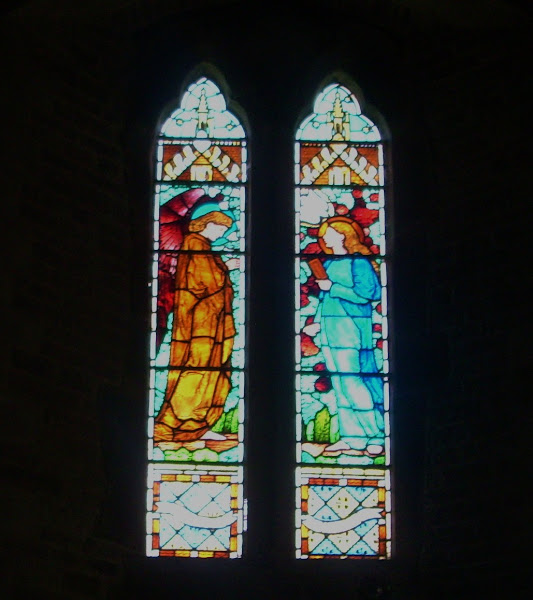
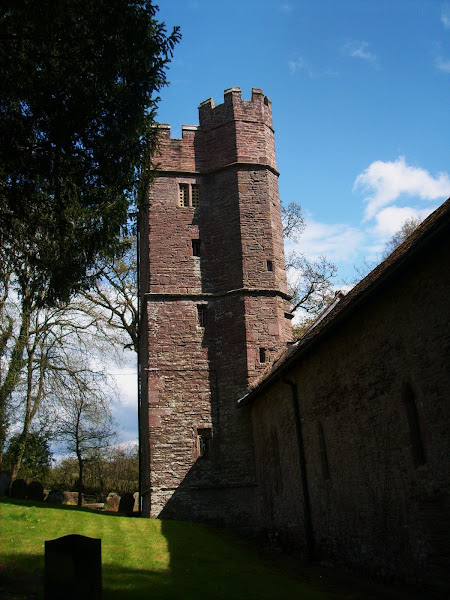
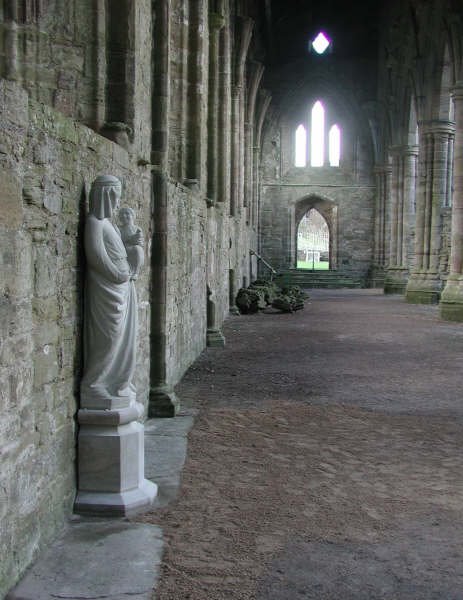
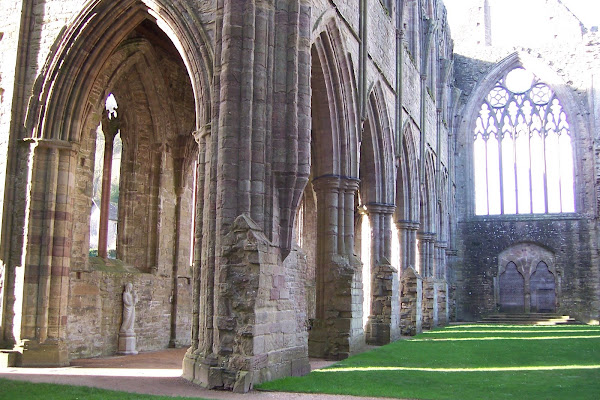
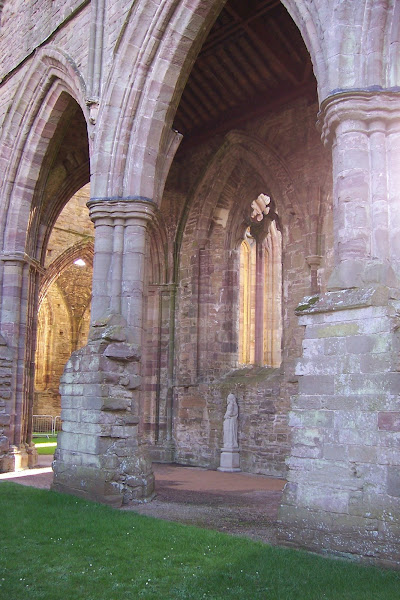
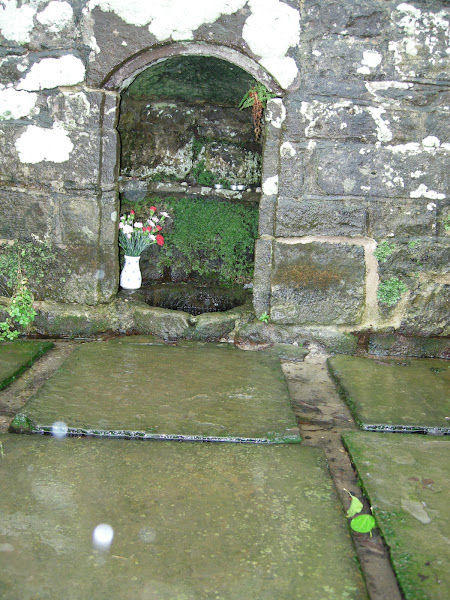
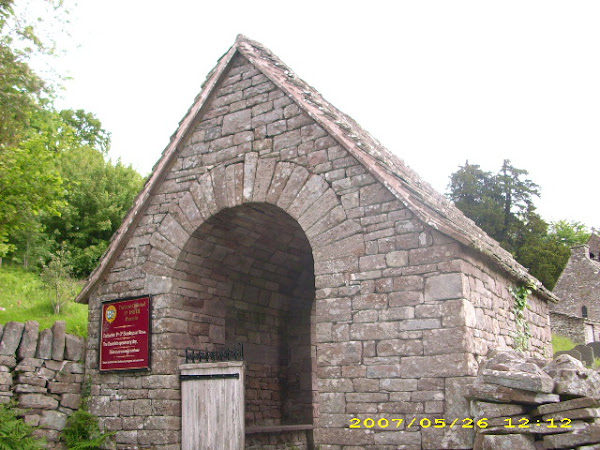
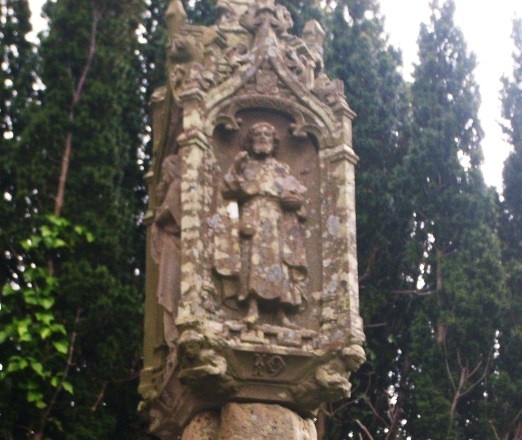
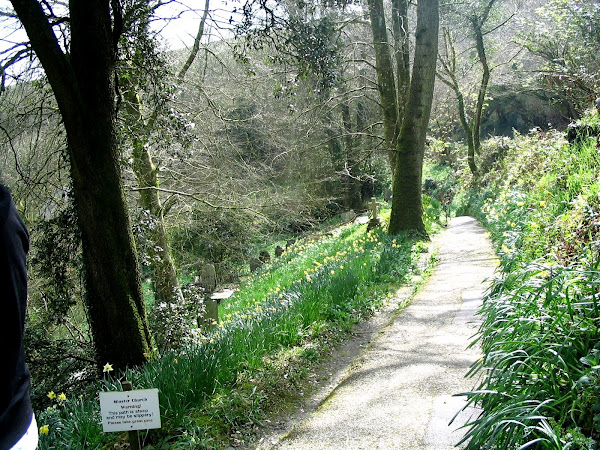
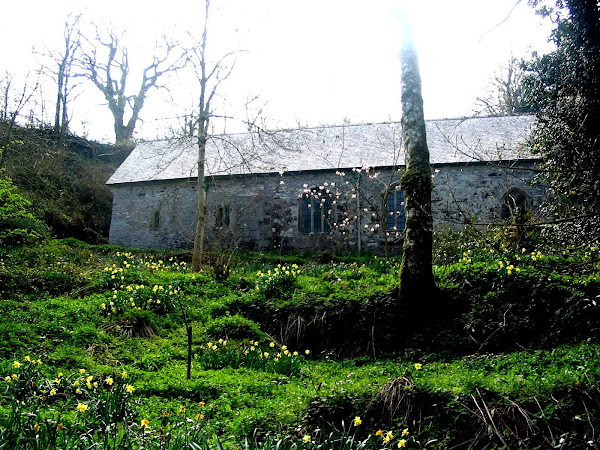
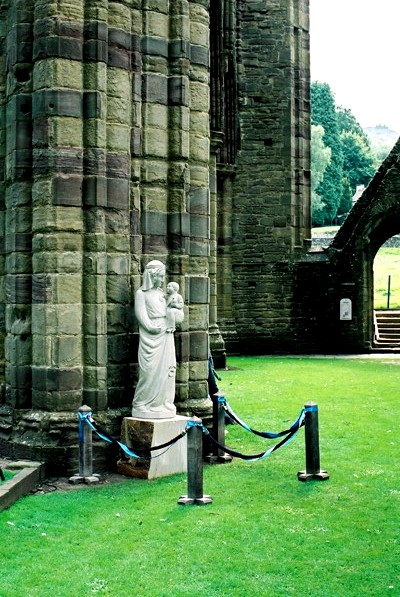
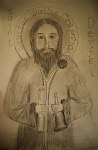
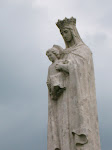
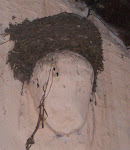
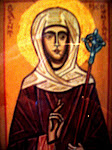
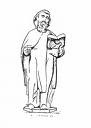
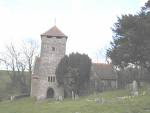
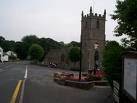
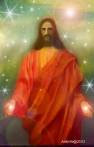
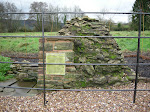
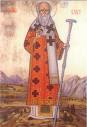
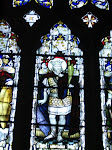
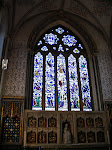
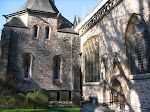
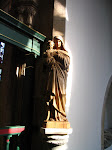
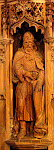
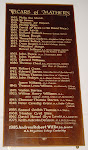
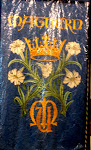
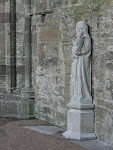
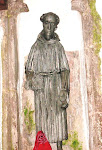
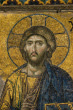
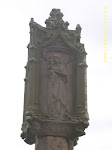
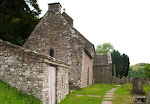
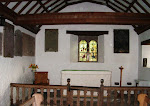
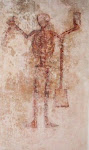
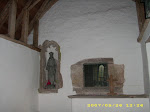
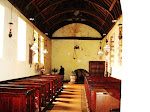
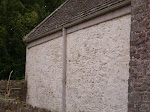
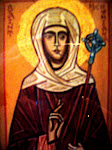
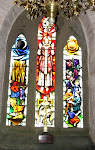
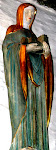
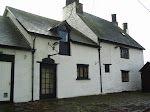
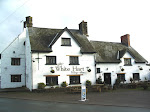
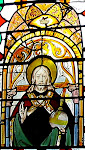
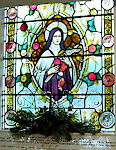
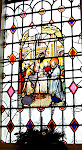
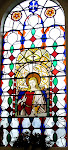
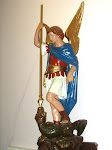
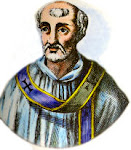
Here are pictures of St Antony of Egypt, one of the Desert Fathers and also of Penmon Priory-similar in size to St Kynemarks which is destroyed. Also some shards of stained glass showing St Cyngar and St Cynfarch at St Llanfair Cynfarch inClwyd (near Ruthin, North Wales)Tomorrow there is more detail about St Kynemark's priory from the scholarship of L.A.S.Butler of Leeds University. This is by way of introduction, exlaining the common origins of the Welsh 'Llan' monastic system and the 'Martyrdoms' and the original hermits -the desert fathers by St Anthony and various other Fathers of the Eastern Church who were the first to engage in the way of life of hermits. Tomorrow's post will consider what we know about St Kynemark's Priory near Chepstow.


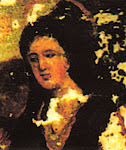
St Cynfarch.


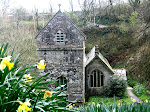
Penmon Augustinian Priory in Middle Ages-probably similar scale to St Kynemark's(Cynfarch's)

_________________________________________________________________________________


"This is the truth, if a monk regards contempt a praise, poverty as riches, and hunger as a feast, he will never die." Blessed Macarios of the Desert


Cynfarch Oer, King of North of England and Welsh Saint

Cynfarch's (Oer) has a strange title which means 'the Dismal'. He was the son of Meirchion Gul, the King of Greater Rheged in the North of what is now England and, upon his father's death, inherited the Northern portion of his Kingdom. Cynfarch lost the South of the country to his brother Elidyr but soldiered on in what is now Scotland. About AD 550, King Senyllt of Galwyddel seems to have been expelled from Galloway and was forced to seek refuge on his island stronghold of Ynys Manaw (Isle of Man). King Cynfarch is the most likely aggressor, especially as a number of places in the region are associated with him. Susan Mayes, however, to his possible identity of a saint and poet and a softer side to his personality, and his conversion to Christianity and founding of his ‘desert’ or White Martyrdom at the lower side of Offa’s Dyke at the area we know as St Kynemarks. One mile north of Chepstow.

She discusses on her web page the ‘Canu Heledd’, the song of Heledd (you remember we discussed her and her settlement at Llanheledd near Pontypool) Llanhilleth. The pagan Anglo Saxon Mercians pillaged and ravaged the kingdom of Powys and destroyed King Cynddylan. Susan suggests for various reasons, the poet may have been Cynfarch.? Possibly Cynfarch had been educated in one of Dubricius’ monasteries, as were so many of the Welsh saints, and we know he was a disciple of Dubricius (known as Dyfrig). Like King Tewdrig he had to follow his calling as King and but may have passed on his Kingdom when his son Urien reached his maturity and had the youth and strength to defend his people, as Tewdrig had done with Meurig. Cynfarch could have then dedicated himself to his love of history and poetry in his later years.)
Susan writes

‘Highly skilled in the Welsh poetic tradition, fond of contrast and irony, a keen observer, compassionate, acknowledging women within his cultural limits, a man who loved Powys: who and what was the poet?

An educated man of his era was almost certainly a trained bard, a churchman or a member of the ruling elite. It may be that the Canu Heledd poet was of privileged rank, associated with a royal house of Powys in the ninth century and formally trained as a professional poet. It is not impossible that he was Cyngen's historian and the writer of the Elise's Pillar text, Cynfarch. ‘ (This Pillar and its poetry is to be found at Valle Crucis Abbey near Llangollen in North Wales.)

This is her website, but you will have to c and p

http://www.castlewales.com/canuhel.html

Ystafell Gyndylan ys tywyll heno Cynddylan's hall is dark tonight.
heb dan heb wely. without fire, without a bed.
wylaf wers. tawaf wedy. I will weep a while, be silent later.
Ystafell Gyndylan ys tywyll y nenn. Cynddylan's hall, dark its roof
gwedy gwen gyweithyd. after its fair company.
gwae ny wna da ae dyuyd. Alas not to do good as it comes.

The Welsh 'Martyrdoms' and the Desert Fathers

St Cynfarch’s ‘llan’ or religious settlement on the banks of the Wye, probably followed all the previous foundations of ‘llans’ which I have written about before (the preparation of the land, the fasting, the delineation of the wall in separating the earth from heaven within etc) and when Cynfarch’s son, Urien took over from him as monarch, the older King lived out his life in his special monastery in peace and tranquillity. If Susan Mayes hunch is correct, it might be that the Canu Heledd was written here. We learn that at some time, possibly as a child,but not certainly so, as he may have discovered a vocation late, he became a pupil of St Dubricius-perhaps at one of the saints many monasteries. The early Welsh (romanised Britons) designated the finding of their plot of land for their ‘desert island’ as a Martyrdom-giving their life to God. Red Martyrdom was literally giving their lives for Christ with God and Blue or Green Martyrdom was actually the life spent on that special site, dedicated to the service of God. King Cynfarch seems to have been proclaimed a saint at this very early time, possibly because of the wars against the Saxon Mercians
and then retiring to a life of holiness after a lifetime of battles, in early life as a soldier and young king and in later life, being forced to defend his kingdom.

The Desert Fathers,St Anthony and St Augustine

"Sit in thy cell and thy cell will teach thee all." Father Moses,

We have recently learned how the Augustinian Friars of Newport and elsewhere in Britain admired the Fathers of the desert and sought to copy their hermit existence. The ‘Desert Fathers’ were Hermits, Ascetics and Monks who lived mainly in the Scetes desert of Egypt, beginning around the third century. They were the first Christian hermits, who abandoned the cities of the pagan world to live as hermits. These original desert hermits were Christians fleeing the chaos and persecution of the Roman Empire's Crisis of the Third Century. They were men who did not believe in letting themselves be passively guided and ruled by a decadent state. Christians were often scapegoated during these times of unrest, and near the end of the century, the Diocletianic Persecution was more severe and systematic. In Egypt, refugee communities formed at the edges of population centres, -far enough away to be safe from Imperial scrutiny.

Fasting and Abstinence

In 313, when Christianity was made legal in Egypt by Diocletian's successor Constantine I, a trickle of individuals, many of them young men, continued to live in these marginal areas. The solitude of these places attracted them because the privations of the desert were a means of learning self-discipline. Such self-discipline was modelled after the examples of Jesus' fasting in the desert and of his cousin John the Baptist (himself a desert hermit). These individuals believed that desert life would teach them to eschew the things of this world and allow them to follow God's call in a more deliberate and individual way.

Thus, during the fourth century, the empty areas around Egyptian cities continued to attract others from the world over, wishing to live in solitude with a reputation for holiness and wisdom. In its early form, each hermit followed more or less an individual spiritual program, perhaps learning some basic practices from other monks, but developing them into their own unique (and sometimes highly idiosyncratic) practice. Later monks, notably St Anthony, developed a more regularized approach to desert life, and introduced some aspects of community living (especially common prayer and meals) that would eventually develop into monastic hermit style life Many individuals who spent part of their lives in the Egyptian desert went on to become important figures in the Church and society of the fourth and fifth century, among them Athanasius of Alexandria, John Chrysostom, and John Cassian. Through the work of the John Cassian and Augustine of Hippo the spirituality of the desert fathers, emphasizing an ascent to God through periods of purgation and illumination that led to unity with the Divine, deeply affected the spirituality of the Western Church and the Eastern Church. For this reason, the writings and spirituality of the desert fathers are still of interest to many people today.

We can therefore see that both the Celtic Spirituality of the Martyrdoms and that of the desert fathers led by St Anthony (Athanasius) and others had their root in the same tradition. Losing themselves in the love and worship of God, becoming closer to him by separating themselves from a wicked world . In Welsh practice, marking out the area of their heaven by means of a wall, which contained their piece of the desert, by fasting and prayer for forty days and nights.

Menace of the Pagan Saxons

There is no doubt at all that the initial Saxon onslaught left people shaken. Meurig had managed by endless battles and the help of the Wyche and Dean Forests, which the pagan Saxon feared, so that only certain Roman roads had to be defended, to keep them out of Monmouthshire, after his father the Blessed King Tewdrig had been martyred by those who had been attacking his llan at Tintern (Ty-nderyn-the ‘House of the King’).Monmouthshire (or the Gwent kingdoms as they were then) received a great many refugees from over the border and much of it remained free from Saxon interference until well into the seventh and eighth centuries so it’s Christian basis was safe there, possibly why Cynfarch chose to come to comparative safety here. Much of this remains conjecture, as we have few records, many having been destroyed throughout the years, but safety is surely a very good reason for founding a desert settlement or llan dedicated to a peaceful existence and end. Moreover the settlement of St Cynfarch above Chepstow seems to have had privileged or special status even into Norman times.

Reform and restructuring by the Normans of the llans within the original faith of the Desert Fathers and St Augustine.

When the Normans arrived the Benedictines arrived with them to found the priories in Monmouthshire, but they also began to regularise the Welsh monastic settlements they found there. This was not a kind of ‘Jack boot’ measure destined to shoehorn Welsh monasticism into a Norman understanding, but rather perhaps to reform Welsh practices which over the centuries had deviated somewhat from the original doctrines of St David and the early Welsh saints. There were Druid practices in some places, and what was important for the whole universal church was that the teachings of Christ were adhered to and not mixed with more ancient heresies and, in truth, the Normans did this by reminding them of the spiritual leadership of their inspiration, the Desert fathers, and through them to St Augustine of Hippo, a giant Church teacher, who had written a Rule based on these hermit practices and St Anthony.

St Augustine, therefore , became the pattern for the host of different Welsh ‘llans’ and these communities were helped to build stone churches, if they did not have them already, but had proper priors and a hierarchy, responsible for the upkeep of buildings and souls in the area. The other Order which arrived in Wales and were enthusiastically received by them was that of the Cistercians, of whom we shall speak later. The Cistercians, a more austere Benedictine Order ,worked physically for a living, sought out remote places to worship,live and work and had as a spiritual father the saintly Bernard of Clairvaux. They left a deep impression on Gwent (including Welsh Herefordshire) from their communities at Tintern, Grace Dieu, Llantarnam and Dore.More about them later.

The Augustinians took over the administration of the following places in Wales:

In North Wales: Bardsey Abbey, Gwynedd
Beddgelert Priory, GwyneddPenmon Priory, Anglesey, Puffin Island Priory, Gwynedd, St Tudwal's Island Priory, Gwynedd


In Mid Wales: Carmarthen Priory, Dyfed, Haverfordwest Priory, Pembrokeshire

In South Wales:

Llanthony Prima Priory, Monmouthshire, St Kynemark Priory, Gwent, and Peterstone, St Peter’s Priory, formerly St Arthfael’s, Monmouthshire. (West of Newport)
St Kynemark’s (Cynfarch’s)Priory- Llangynfarch’

We have discussed some of the larger Benedictine Priories in Monmouthshire, and then some of the Augustinian foundations. The Augustinian canons who settled in Llanthony , then their later order of Austin Friars of Newport. We now come to a third. About one mile north of Chepstow lie the remains of another small monastic house. St Kynemark, Kinmarchus, Kinmarch seem to be Norman corruptions of ‘Cynfarch’ as some sort of approximate pronunciation, and this house was the one situated a mile North of Chepstow, but was not a church administered from Chepstow Priory.
It lies on the road from Chepstow , but the church lay on high ground.

The ridge reaches a height of 250 feet above sea level providing extensive views over the lower Wye and the Bristol Channel. To the North is Chepstow Park and to the wet the view is blocked by St Lawrence’s Hill and by Cophill. Butler says in his excellent paper for the Historical Journal of The Church in Wales, that the priory lies close to the cliffs bordering the Wye and the head of a steep side valley from the river;It also commands the head of a more gentle valley sweeping down into Chepstow from springs near Kynemark farm, which was built with many of the ruined building stone.

There is a Church dedicated to Cynfarch at Llanfair Dyffryn,Clwyd,which used to have a ‘Sanctus Kynvarch’ represented in a stained-glass window (Benedictine Records, Farmer).Smashed up in the ravages of the 17th century, precious shards have been put together and replaced in the window. There is another church dedicated to St Cynfarch at the Hope Parish at Flint in North Wales.

Disputed Dedication

St John the Baptist is said to have been the dedicatee of St Cynfarch’s Priory and as a hermit himself, living on what God provided in the mountains, plus the fact that most priories became Augustinian Canons, this would seem the most likely dedication. The Catholic Encyclopedia, however, insists that the Priory at some stage became ‘Premontensian’ or Norbertine. We know that from time to time, however, different orders took over different houses, or even that a new order might be given a lease on some of the buildings to commence in an area, but there seem to be no records of the White Canons to substantiate this, unless it was a very ‘ad hoc’ arrangement, as it often was with mendicant Greyfriars or even the Carmelites. Around 1491 the Priory was in financial difficulties and it may be when perhaps a small Norbertine cell may have moved in .The historian Willis Bund described it as Norbertine or Premontensian after considering it similar to Talley in France, and so in the later 15th century, it is possible that the younger order moved in and cared for the older Augustinians there. It is confusing, but there was clearly input from both orders there, overwhelmingly Augustinian, but perhaps the anglicising to Kynemark implies some imput from the monks of the Holy Norbert of Xanten. We may never know. At any rate in the early middle ages St Kynemark or Llangynfarch was a deeply holy place and the Prior seemed to be on a level with the Abbot of Tintern and the Prior of Chepstow in resolving disputes.

My next post will consider how St Cynfarch/Kynemark’s would have looked and its subsequent history.

Petition for the Intercession of St Cynfarch

Seeing that many were brought to Christ by the radiant example of thy virtuous life/ and thy missionary labours, O holy Cynfarch,/ pray that we too may follow thee/ in the service of our Saviour, that our souls may be saved. AMEN

Friday, October 23, 2009

NEWPORT JUST BEFORE THE SEIZURE OF THE FRIARY ca 1500


This is a conjectural Map of Newport ca 1500 using a later map, which,however still shows the wharf, the 'pill' and also the site of the 'Friars'.If you double click it, you can see more detail!

It is quite sad, that only the St Woolos and St Trioc's Benedictine Priory at Malpas remain of all the churches-St Thomas, St Lawrence, the Old Parish Church, St Nicholas at the Priory and the priory itself have gone.
The remains of the Newport Preaching cross, where Archbishop preached the Crusades in 1188 are in St Woolos Churchyard, (Base)and also at Newport Museum (top) which was knocked off by vandals of Oliver Cromwell smashing up crosses and even churches everywhere they went. I understand that a new cross to the original design has been installed in the precinct behind the King's Head Hotel. Note the Westgate Hotel actually stood on the West gate of the town.

Tuesday, October 20, 2009

The Newport Friars and 'Friars' Walk'. Last Prior was Father Richard Batte

This is Ann Leaver's amazing picture of ho she thinks Newport wuld have looked. Click on it to see a larger version....You can see the whole brilliant Early History of Newport here


http://www.newportpast.com

You may have to c and p if the link does not work!


________________________________________________________________________

Henry Greene's drawing as still seen in 1891 of one of the remaining buildings of the Newport Friars-now demolished.

Here is a friary, perhaps similar to the Newport building juding by the remains observed in 1859.

___________________________________________________________________________

There are no remains left of the Austin Friars in Newport, but the new Friars Walk Shopping Mall will be located over the old site and the bus station was the site of their Fields, which were given for their upkeep by the Earls of Stafford. There is a map to come which shows the sites of four Churches of 'Novus burgo'(Newport) of the sixteenth century. Here there is a photo of a still existing Augustinian Priory, and there are photos of 'black canons' or Augustinians, who took a vow of poverty and ministered to the poor of Newport, fed and looked after their needs. This was an order based on the teachings of Augustine of Hippo and the desert fathers, hermits who originally lived n the dsert of North Africa and spent their lives in the service of God. When they were overrun by Vandals and Visigoths, they fled to Italy and from there all over Europe. The Order is still a strong force in the world today.

Above is Clare Priory ,a house of similar age to Newport's priory,although it has been added to and improved a great deal since itsfoundation. Clare Priory is one of the oldest religious houses in England; situated in the shadows of Clare Castle on the banks of the River Stour, Suffolk.
Established in 1248 at the invitation of Richard de Clare it was the first house of the Austin (or Augustinian) Friars in England.

Following its taking over by Henry VIII in 1538, the house passed through many hands and uses until the Augustinian Friars purchased the house in 1953 and returned to their origins in England.Clare Priory today acts as a Parish and as a Retreat Centre.It is the home of a mixed community of Augustinian friars and lay people, open to both men and women, seeking to live the Christian life according to the Rule of St. Augustine.
The Rule of St. Augustine emphasises the need to search for God together in order to achieve oneness of mind and heart.There are a number of friaries in England and also there is the new Augustinian Youth Ministry with events and pilgrimges and conferences all over England.

The Newport House will never be seen again. It's story is given below and you have to see how three of the five churches in Newport disappeared in Tudor Times. St Lawrence and St Thomas the parish church also disappeared. The Priory Mill is only remembered by its name-Mill Street.The Earl of Stafford built Newport Castle the same time as he built the Priory, which would have been on a smaller scale than say, Tintern. St Woolos and Our Lady and St Triocus, the Benedictine Cell of Montacute Abbey are all that remain of that time and both are now Anglican parish churches.I hope, that i getting together wha cab foud out about the Austin Friary in Newport, it ll contribute to the interest in the Austin Friars and the Friars Walk, as e remember howany of these Friars died looking after people in the plague.


________________________________________________________________________


AUSTIN FRIARS OF NEWPORT

It seems that many of the Friars were very learned men, some of whom were themselves priests, and no doubt served the Mass at the Church of St Nicholas and possibly the mysterious church of St Thomas (Becket) also a new saint for this parish church, St Woolos belonging to the Benedictines of Gloucester and the brothers serving this priory. During this period, it is also the case that St Woolos remained a place of pilgrimage for the shrine of St Gwynlliw (Gundleius in Latin) which also helped the upkeep of that Church. In the thirteenth century therefore, there was still the old church of Gwynlliw (St Woollos), St Thomas’s Parish Church for the town,St Lawrences in the harbour area, and that of St Nicholas Tolentino. The last two both dedicated to recent saints of great faithfulness and witnessing to Christ’s teaching and mission.

The Friars did not involve themselves in politics. They paid their dues to the Benedictine Church on St Gwynlliw’s hill (now Stow Hill) and the great Cross of the Friars Preacher (The Dominicans who travelled out from Gloucester) Spiritually the people of Newport were well served. The Austin Friars provided valuable services for the people. They lived amongst poverty, in spite of the valuable gifts used to set the Friary up, for most of its time, funds were sparse. The remains of the priory show that this was not a huge priory, and its possessions at its seizure were very sparse. The Augustinians took their vows seriously. They nursed the sick, tried to clothe the naked, provided food or dole for the hungry and took care of widows, orphans and prisoners. It was not long before they were put to the test

The Great Plague of 1349

The Bubonic plague, which swept across the British Isles in 1349 , was as pitiless in Wales. We have already learned of the devastating effect on the brothers and priests in the Benedictine Priories at Monmouth, Abergavenny, where only two or three monks were left.

. At Whitchurch, an inquest into the death of one John le Strange revealed that John had died on 20th August 1349. His oldest son, Fulk, died 2 days before the inquest could be held on 30th August. Before an inquest could be held on Fulk's estate, his brother Humphrey was dead too. John, the third brother, survived to inherit a shattered estate, in which the 3 water mills which belonged to him were assessed at only half their value 'by reason of the want of those grinding, on account of the pestilence.' His land was deemed worthless because all its tenants were dead 'and no-one is willing to hire the land.'

The Welsh poet, Jeuan Gethin, paints a vivid picture of the fear the plague engendered in its victims:

‘A rootless phantom which has no mercy or fair countenance’
'We see death coming into our midst like black smoke, a plague which cuts off the young, a rootless phantom which has no mercy or fair countenance. Woe is me of the shilling in the arm-pit; it is seething, terrible, wherever it may come, a head that gives pain and causes a loud cry, a burden carried under the arms, a painful angry knob, a white lump. It is of the form of an apple, like the head of an onion, a small boil that spares no-one. Great is its seething, like a burning cinder, a grievous thing of an ashy colour. It is an ugly eruption that comes with unseemly haste. It is a grievous ornament that breaks out in a rash. The early ornaments of black death.'


(Jeuan Gethin died in March or April 1349.)

We can only imagine what happened in Newport, especially so close to the river. The first Prior of Newport was Thomas Leche and he probably came from the Austin Friar’s Friary at Stafford. The number of friars at Newport is not definitely known, but generally six was considered a workable number , along with lay brothers, devout men employed by the Abbey (often men who presented themselves for employment. They lived according to the Augustinian Rule (Regula Augustini) and in exchange for their food and lodging and necessities, they worked around the Friary and in the Friary parcels of land. It was a good system, for dealing with unemployment, orphans, widows and all the vulnerable. The Plague did its work. It seems a large part of Newport actually was given for the upkeep of the Friary, which did such good service, and no doubt many of the Friars, in their work of keeping the Last Rites actually died, as did many of the lay brothers. It is possible that this began the decline of the Friary, unable to collect rents or work the land for a generation or so.

1933 Argus Reports of Skeletons,who had been buried under the nave

The only archeological recording carried out on the site of the Austin Friars was in 1933, when workmen laying a pipe beside the new Kingsway Road, discovered seven skeletons. These were lying in a supine position with extended limbs and their heads to the West (they were facing East towards Jerusalem) The bodies could be part of the Friars’ graveyard, or, since most Friars were at that time buried under the nave of the church , it could be this was the site of this holy place. Apparently one piece of Stone from the Austin Friary is in Newport Museum, but not on display.

Burials at the Austin Friars

From evidence of the Austin Friars at Hull and at Leicester (more of these places are extant) citizens of all walks of life and brothers and priests were all buried together in the church in mediaeval practice. The Nave of the church (the ship in which the Faithful were kept safe from danger and ‘sailed’ to salvation, as Noah had done in his ark)was the safe place, and rushes were placed over. It is possible, however, that large numbers were buried outside because of the smell. The dead wore their ‘Sunday Best’ and from archeological finds at other place, many people seem to have worn woollen or tweed type clothes. All the coffins seem to have been made of Baltic oak-possibly even reused-but Baltic oak grows faster, straighter and is easier to work than English oak. So it is possible that in these parcels of land there may have been a forestry project somewhere local. Some of the coffins in Hull were hurriedly put together with planks roughly nailed like a packing crate, points to haste around the plague years and round about this time, it seems that coffin burials were replaced completely by shroud burials, allowing more to be packed in under the nave of the church.

Health of People in later Middle Ages

There seemed to have been a great deal of minor ill health in the skeletons found buried at Hull, which would have been ‘normal’ for the people of 14th century Newport too. There were examples of fractures and infections of the long bones and two skulls with caries. Almost a third of the Skeletons examined suffered from arthritis.

Innovations of the Austin Friars

Many Mediaeval Dominican and Franciscan Friaries taught the wonder of God by huge high naves and buildings. The Austin Friars had something similar to a largish parish church, and preferred to preach from the Preaching Cross on Stow Hill and other public places. This may have even been extant before the arrival of the Austin Friars in 1377. Thus they got to be an institution in the town, a ready source of help for the Community, and a serving church close to the people. Benedictines and Cistercians prayed around the clock for the world. They had their work and charisms, writing gospels and books for people to use, and Cistercians lived in remote areas and worked at keeping the farms and Granges going, feeding everybody and maintaining the buildings. However, the Austin Friars had reverted to the Hermit practices of St Augustine himself. There had been confusion in the early days of the order.

Augustine had started his order in the sands of the desert at his home in Carthage (morocco)However the Vandals overran the area in the middle of the 6th century, he took his monks from their tents and they crossed to Italy and safety. Around 570, St Donatus, rounded Augustinian Orders in Spain and a form of Augustine’s Rule was used to help reform other monasteries and cathedral chapters, and refocus the lives of the Clergy on poverty and the lives of Christ in the 11th century. The Augustinian Rule was also adopted by St Dominic for the Dominicans, who seem to have worked together at Newport. The Dominican Vespers are always very beautiful, for example, as afterwards the Friars would leave the Choir and enter the nave to talk to the people, wishing them a restful night. However the monks at Llanthony were ‘Canons’ and those of Newport were the newer ‘friars’ a mendicant Order. Although they had a means of support, they were dependent on what they were given and did not own property in the sense that the land in Newport (60 land parcels out of a possible 242 or so)perhaps testifying to the fact it was a fairly modest town and that the Lord Hugh Stafford, realised people would be happier having these services and being prepared to work on his ‘New Castle’ – one of the newer ones in Wales.

Owain Glyndwr attaks the Castle

C Maylam says in his paper for the GGAS, the Friary may have also been damaged in 1402 by the supporters of Owain Glyndwr, when he and his men captured the town. A report of 1403 is in existence which says there was little damage to Newport itself, but the English Royal Commissioner who compiled the report did not cross the channel! There may have been a little damage, except to the castle.

Library and possibly a school

Because of the love of learning and the commitment of the Augustinian Order to Schools, it is possible, that the Friars had a school, trained choristers to sing the Mass, Latin and theology and prepared boys for holy orders. In an age where life was hard it was a good option to dispense love to your community. There would have been a library as well. However after the Plague, all would have had to work in the fields for basic survival and the people themselves were allowed to charge higher rates for work, there being so few people, and we all know about the Peasants’ Revolt in the ensuing years when Lords tried to make the people slaves or ‘villeins’ again with disastrous results.

Austin Friars in Hull

We have learned so much from the practices of the Mediaeval Austin Friars in Newport from the excavations in different parts of the country. Hull is perhaps quite similar to Newport being near the sea as well. At the peak of their success there were only 39 Friaries in the whole of England and one in Wales at what was now called ‘New Castle’ after Hugh’s new castle was built much later than those of the Marcher Lords. This is still the name by which it was known in Welsh ‘Cas Newydd’.The Monastic Gardens were the first to go after Henry the VIII seized the lands of these holy men for building etc. However in Hull, the Friary continued to be used as a private house and garden until the mid 17th century which seems to have preserved a lot of the finds. It was a large rectangle divided by pathways and four rectangular plots, with a path around the edge and a large central feature in the middle. Some of the plots were further subdivided into beds for vegetables and herbs and fruits. A conveyancing deed of 1627 gives the dimensions of the monastic gardens as measuring 49 yards by 23 yards-dimensions accurate to within a foot. This would have likely been the scale of our Newport garden, also measured out in similar way.

Food and Monastic Diet

Fish was found to be plentiful and abundant and a major foodstuff, although butchery marks remain on bones found from cattle, pigs and sheep.Ducks would also have been reared as there were wing bones from the animals found as well. This probably points to a fish and duckpond being present in the walls of the Friary. Fish were flatfish and thornback ray.remains of domestic goose were also found. A few deer, hare, snipe and woodcock remains were also found as well as barn owls and even a single crane. Some of these would probably have been festival meals held on saints’ days and major Church Feasts. Generally what is known is that many men carried their own plate with them-possibly a piece of dough, baked hard with a rim-a ‘trencher’ and that food would be put into this. It was probably not hygienic at all, but convenient. Bread was often baked in the oven of a local baker for a small amount of money as were meals, if there was no oven or spit in a poorer house. Rabbits and chicken were plentiful and thus probably cheap to produce. Oyster shells and goat bones were also found as well as hedgehogs!

Buildings

The church building would have been rectangular and from the very small Friary at Austin Friars in Hunscote, Leicester there may have been a tower. Shards of stained glass were also found there, so St Nicholas would have been very beautiful. The roof would have been of slate rather than lead, plentiful in Wales as in Leicester.In Leicester there were burn marks around the window indicating a fire at one time.A ‘parchment pricker’ was also found in the church area as you would expect as one scribe friar would have used this to mark out lines and spaces on parchments to prepare for illuminated manuscripts.

Remains at Newport

This friary seems to have been completely eradicated by the Newport authorities over the years. When Henry the VIII’s minister, the ‘King’s Lord Visitor to the Friars’ , Richard Ingworth a new apostate Bishop of Dover on 8th September 1538. It was in their interest to do this as quickly as possible, as the Friary, although run down after the plague years, was the major source of help, a social services in the lives of ordinary people and their problems.

Father Richard Batte-the Last Prior

Father Richard Batte surrendered the Friary and it is noted he did not sign the Act of Supremacy. It was unusual as priests could be executed for not bowing to the King’s wishes, but it was normal for all to sign this document. It may be that indeed very few Friars remained by this time. There was also no inventory of possessions, possibly because there were so few. We know the land now went to a wealthy person for his own use . The land was now given to a Mr Maurice Baker and that he paid the king 14 shillings and 4 pence in rent-a very low rental, which is probably all the king could get for it. The king was not concerned with the well being of the people after all. The site of the buildings were valued for the king’s coffers at 3shillings and 4 pence as compared with Franciscans in Cardiff at 13 shillings and 4pence and the Dominicans at 10 shillings and four pence. So no doubt the buildings were in a poor state of repair by 1538.

Friars Close

These six acres of arable land called ‘Friars Close’ valued at 1539 at 10 shillings probably represents all the 60 parcels of land given to the Friary for its upkeep and service to the people, and these were never exploited for buildings.

In 1543, the land of the Austin Friars was sold to Sir Edward Carne for £453 18shillings and one and a halfpence along with the English manor of Colwinston and then the Newport land was sold off at a knockdown price to Giles Morgan in 1544.


‘Archdeacon Coxe’ s Visit 1801

Archdeacon Coxe, an Anglican Clergyman visited Newport in 1801 and described what he saw, which remained of the Austen Friars.

‘The Remains consist of several detached buildings containing comfortable apartments, and a spacious hall, with gothic windows neatly finished in free stone; the body of the church is dilapidated, but the northern transept is a small and elegant example of Gothic architechture. It is now occupied by a cider mill and the press is placed by a small recess which was once a small chapel (!) separated from the transept by a bold and lofty arch. The gardens are enclosed within the original walls’.
(Coxe:A Historical Tour Through Monmouthshire. 1801)

In the Scrapbook of William Henry Greene (6th August 1891) we can still see sketches of the remains of the Austen Friars and Friars’ Cottage.(now kept by Torfaen Museum Trust).Before 1859, there was also a drawing by Edward Lee, showing the buildings in a dilapidated conditions. Mr C Neil Maylam suggests it was drawn from the South East and shows ‘part of the cloisteral range’ (where the friars often went for prayer or recreation, or even to wash.

In 1851 in a map drawn for Newport Corporation, the drawings by Lee are referred to as ‘Cornwall and Devonshire House’ which was used by then as a pub. Using Lee’s drawing and Coxe’s description, it is says Mr Maylan in his 1966 report ‘possible to interpret the remaining buildings as the crossing of the church and part of the cloister. This enables a plan of the complex to be drawn.

The surviving buildings were demolished between 1833 and 1902 when the area was used as a timber yard. The area had become a car park before 1933 and apart from the constructions of air raid shelters during the second world war, it continued to be a car park until it became a bus station. Ordinance survey maps also show the wall alongside ‘Friars Road’ as the original close wall so the boundary walls of 1851 are the precinct walls for the monastic close.’

Austin Friars at Newport

Mr Maylan also writes about Leicester, where the remains were more plentiful. The Precinct of the Friary would have been enclosed by a wall, the eastern wall marked in the ordinance survey map. The Southern side would have been close to Commerial Street, the western wall following Corn Street (that in OS map being wrong) and the Northern side was probably the river.

Cloister at St Nicholas's

Inside was more difficult.It seems most Friaries had a cloister a rectangular in shape with a garth or garden in the middle , which was covered and often glazed.The cloister would have been on the south side of the Church if Lee’s drawing is accurate. It would form a three sided cloister with the fourth side being the church. The Friars arrived late in Newport, which would account for the strange layout of the roads, which were in existence before. And the requirement of the church to be placed facing Jesrusalem in the East would produce this odd relationship.

The distance of the street from the central area of the close would be due to the position of the Chapel of St Nicholas from which the church was extended.Auxiliary buildings would therefore be on the eastern sideof the precinct . OS maps have marked a building as a refectory on the eastern side by Mr Maylan doubts this and says it may have been a tithe barn.

The Friary was surrendered to Ingworth on 8th September 1538. He got a good clutch of money for King Henr on that trip.At Chester in August15th, North Wales for five days, August 27th South Wales, Dominicans of Brecon were relieved of their friary on August 29th, Greyfriars (Franciscan) in Ceredigion (Camarthen on the 30th) Dominicans in Haverfordwest September 2nd, Cardiff December 6th (four years after he had told them tha if they accepted Henry VIII as head of his new church, hey would be permitted to stay) and he Newport 8th September.

He had a set procedure for doing his 'visitation'. He rang the bell outside the Austin Friary, assembled the brothers in the hall in the King's name which served as a chapter house (although we know it was a smallish building and very delapidated)The Warden of the Friars would stand there with the brethren and then Ingworth would address them. He would explain he had come to 'reform' them not supress them . He read out certain injuctions about their order and Rule. Why were they not living like the hermits in the desert, perhaps? Here they of course lived in a wet and cold climate and had builigs to maintain and other people to feed and care for. It was all of course nonsense but then Ingworth told Father Batte, that if he acceeded to his demands and recognised Henry as the ne head of a brand new church, tey could remain there. Father Batte and the Brothers could not be bullied and refused to sign the 'Act of Supremacy'.Certainly no signatures were found. Possibly the Friars left their home and went to France or to Italy to other houses of their order, or if old, were taken in by those whom he himself had looked after.To deny the Church and Peter was too serious thing for them. With one fell swoop the town of Newport was denuded of its valuable resource and left as a piece of waste ground and to decay, with little or no provision left for the poor.

Tomorrow a Devotion to St Augustine of Hippo, before I go on with the Augustinian Order in Monmouthshire at the Monastery founded in Norman Times from te Celtic monastery of St Arthfael, laer called 'PETERSTONE' after St Peter, the First Pope and Apostle of the Lord Jesus Christ

Monday, October 19, 2009

Austin Friars of Newport-More Augustinians! Now Newport Bus Station

The gatehouse of another Augustinian Friary, and (below) the coat of arms of the Earl of Stafford, who built the new castle at Newport and also made the gift of the Friary to the people of the town, for all their needs.


________________________________________________________

There are no pictures of Augustinian Friary in Newport, which has been completely demolished . This is Part One of this fascinating story of this large and important of Religious Houses in Newport, and with the help of various reports, scholars like Mr C Neil Maylan's report to the Gwent and Glamorgan Archeological Society have tried to 'piece together what we know'. Tomorrow I will also show some 19th century remains. It is to be hoped that te 'Friars Walk' shopping centre will pay tribute in some works of art to these friars, who laboured among the poor of Newport, nursed them through the plague, schooled them, took care o the hungry, terminally ill etc until Henry VIII decided to turn it into money to fill his coffers and turned his back on the people. The Friars were not meant to be supressed, because they earned very little and Henry in his spite and rage damaged and destroyed sacred places around Britain. Fines and increased taxes for a few years, finally closed those who could have survived. Calling precious relics 'fakes' and superstition was dsigned to turn people against the church, andt was so successful as 'spin' thatmuch of it has lasted to the present day.We will talk aboutRichard Ingworth apostate priest and created a bishop in Henry's very on church had accompanied Dr Hilsey to Cardiff in 3rd July 1534. He was himself a Dominican -a Prior of Langley Regis the richest Dominicans in the country, which had a hue income of £125 per year .Henry and his henchaman Thomas Cromwell tol him to 'visit and vex' what had been his fellow priors. Most Dominicans had headed for Edinburgh which lay outside Henry's realm but the Austin Friars were his victims. He had the power to sepose and suspend 'corrupt superiors' (those who woud not comply) and to go to the friars, take their keys, turn them out and take away thei possessions and make inventories and indentures so that the clerks could see how much money coud be made for the king , from often very poor lands.He removed their seals. Of course it was the poorest people who suffered most.

No mention of suppression ws initially made, but the intention was clear. There had been a visitation four yearsearlier, followed by endless fines and taxes and the friars could no go on pleading poverty. People were told not to give them donations either. Even the chantry chapels were suppressed.


___________________________________________________________________________________

THE AUSTIN FRIARS OF NEWPORT-PART ONE
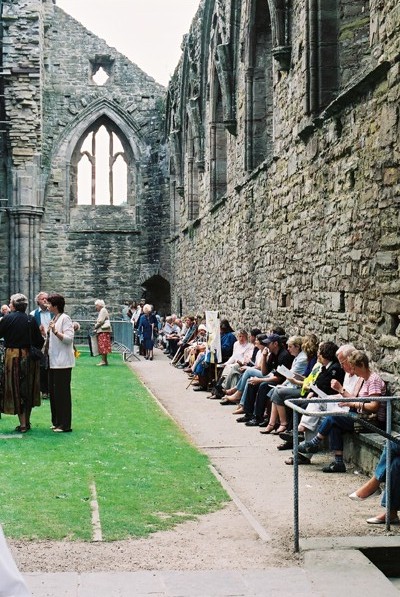
Newport had steadily taken over from Caerleon during the early middle ages and the area around Gwynlliw’s church of Our Lady was growing intoi a bustling town. Caerleon had, after all been ravaged by Saxons, Normans, Irish, Welsh and Danes and there was a new motte and bailey castle established by the lord of Wentllwch. The name itself refers to the estuary of the Usk . The castle would protect inhabitants . Harold, last of the Saxons had viewed the old church of Gwynlliw from Flat Holme, where Gildas had earlier passed his days, and later worshipped after his brief conquest. Soldiers of William II (Rufus) had camped around this church in Norman times and had prayed and attended the Holy Mass there.Henry II stayed at Newport for a short time and then in 1887-8 Baldwin Archbishop of Canterbury arrived in Newport to recruit soldiers for the Crusades, to take back the Holy Lands from the invading Turkish Mohammedans.

After the death of the Dispenser, Wentllwch was restored to Hugh to Anderley and his wife Margaret. The countess died in 1342 and the lordship went to Margaret de Anderley, wife of Ralph, Lord Stafford. He was created Lord Stafford in 1351. assisted Edward III in the war with France and supplied 50 men to go with him, and 50 men with lances had to go from Newport and Caerleon to Crecy, and also Ralph became Earl of Hereford and appointed Lieutenant and Captain General of the Duchy of Aquitaine.

He was succeeded by his son Hugh Stafford who granted the first Charter of Incorporation to the Burgesses of Newport dated 13th April 1385-Mayor and Bailiff.
It was Hugh Stafford who founded the friary in Newport. This was a new Order only recently pulled together out of a diverse group of the Augustinian Order founded according to the rule of St Augustine. I have already mentioned Llanthony, founded by Augustinian Canons. Ralph, his father, had already founded a monastery for the Augustinian Friars (Austen Friars) at Stafford. Leland writes in Tudor times:

, "Hermits of Saint Augustine."

They claimed as their founder the saint himself, not the apostle of the Anglo Saxons, but the eminent African Bishop, and Father of the church, who is said to have instituted the order about the year 388, in the neighbourhood of his native town of Tegasté in Numidia. The order became extinct on the invasion of Africa by the Vandals, but was revived in Europe in the 18th century, and introduced into England about 1250. Their dress in the house was white, but in the choir, or when they went abroad, they wore over all a long black gown with wide sleeves and a hood, and a girdle of black leather fastened with a pin of bone or ivory. The Staffords were great patrons of this order;
Ralph, Earl of Stafford, the first Lord of Newport and Wentllwch of the family, founded a house for them at Stafford in 1344, and some of the family, another at Shrewsbury. From a document in the possession of Sir Thomas Phillipps, Bart: of Middle Hill, a transcript of which is in the collection of our President, it appears that this house at Newport was founded in the year 1377 by Hugh, son of Ralph, who succeeded his father as second Earl of Stafford, and Lord of Newport and Wentllwch, in 1372. It may be that it was considered as a cell to the house at Stafford; at all events the probability is, that the first of the order who were established at Newport, came from that place.
Leland also mentions the ‘House of Preachers’ under the Bridge-but this is more correctly the Dominican House out of Gloucester or Cardiff, as Dominicans were known as ‘Friars Preachers’ and spent most time out evangelising on foot.

Austin Friars is Founded in Newport 1377

In 1377, Hugh , Earl of Stafford gave the Prior and Brethren of ‘Hermits of St Augustine 31 burgages or parcels of land within the Parish of Newport on which to build an oratory or house for the promotion of Divine Worship and Contemplation. For this reason it was necessary to obtain a license from the Parish Priest and Rector of St Woolos and also Thomas, Abbot of St Peter’s in Gloucester, who was responsible for St Woolos monastery, now a Priory of Gloucester.At the same time, land owned by the Abbot and convent were given to the Austin Friars for the site of the Church they built for their church dedicated to St Nicholas. It would be tempting to think this St Nicholas was our Nicholas of Myra, but in fact this was a St Nicholas ,a first proclaimed saint of the Augustinian order, St Nicholas of Tolentine, as the Order was a new one at this time.

_____________________________________________________________________________

St Nicholas of Tolentino

Nicholas Gurrutti was born in the village of Sant'Angelo in Pontano, Italy in 1245. His parents, middle-aged and childless, made a pilgrimage to the shrine of Saint Nicholas of Bari, their special patron, to ask his intercession on their behalf. Shortly thereafter, a son was born to them whom they named Nicholas out of gratitude. At an early age Nicholas was greatly moved by the preaching of the Augustinian, Father Reginaldo di Monterubbiano, prior of the monastery of Sant'Angelo, and requested admission to the community He was accepted by the friars and made his novitiate in 1261. Nicholas directed his efforts to being a good religious and priest, and soon became renowned for his charity toward his confreres and all God's people. His religious formation was greatly influenced by the spirituality of the hermits of Brettino, one of the congregations which came to form part of the "Grand Union" of Augustinians in 1256, whose communities were located in the region of the Marche where Nicholas was born and raised.

The Hermit Friars had impressed Hugh Stafford with their practices Characteristic of these early hermits of Brettino was a great emphasis on poverty, rigorous practices of fasting and abstinence and long periods of the day devoted to communal and private prayer. As Nicholas entered the Order at its inception he learned to combine the ascetical practices of the Brettini with the apostolic thrust which the Church now invited the Augustinians to practice. At times, Nicholas devoted himself to prayer and works of penance with such intensity that it was necessary for his superiors to impose limitations on him. At one point he was so weakened though fasting that he was encouraged in a vision of Mary and the child Jesus to eat a piece of bread signed with the cross and soaked in water to regain his strength. Thereafter he followed this practice in ministering to the sick himself.

In his honour the custom of blessing and distributing the "Bread of Saint Nicholas" in continued by the Augustinians in many places today. Nicholas was ordained to the priesthood in 1271. He lived in in several different monasteries of the Augustinian Order, engaged principally in the ministry of preaching. In 1275 he was sent to Tolentino and remained there for the rest of his life.

Nicholas worked to counteract the decline of morality and religion which came with the development of city life in the late thirteenth century. He ministered to the sick and the poor, and actively sought out those who had become estranged from the Church. A fellow religious describes Nicholas' ministry in these words: "He was a joy to those who were sad, a consolation to the suffering, peace to those at variance, refreshment to those who toiled, support for the poor, and a healing balm for prisoners." Nicholas'reputation as a saintly man and a worker of miracles led many people to the monastery of Tolentino.

Proclamation as Patron Saint of the Souls in Purgatory 1884

When in 1884 Nicholas was proclaimed "Patron Saint of the Souls in Purgatory" by Pope Leo XIII, confirmation was given to a long-standing aspect of devotion toward this friar which is traced to an event in his own life. On a certain Saturday night as he lay in bed, Nicholas heard Fra Pellegrino of Osimo, a deceased friar who Nicholas had known. Fra Pellegrino revealed that he was in purgatory and he begged Nicholas to offer Mass for him and for the other suffering souls so that they might be set free. For the next seven days, Nicholas did so and was rewarded with a second vision in which the deceased confrere expressed his gratitude and assurance that a great number of people were now enjoying the presence of God through Nicholas' prayers As this event became known, many people approached Nicholas, asking his intercession on behalf of their own deceased relatives and friends

Nicholas died in Tolentino on September 10th, 1305. He was declared a saint in 1446 the first member of the Augustinian Order to be canonized. Saint Nicholas' body is venerated in the basilica in Tolentino which bears his name. His feast is celebrated by the Augustinian family on this day each September.

We have no idea what the church looked like, but there is no doubt it was similar to other Austin Friars’ churches of the Period.

Back to the Austin Friars at Newport

In case the Abbot of St Peters in Gloucester, or St Woolos should suffer from the loss of tithes or donations on account of the loss of the parcels of land and tithes given to them,an annual pension of £13.4p in four quarterly instalments was to be paid to the Prior of St Woolos by the prior or Guardian of the House of Brethren. Should additional lands and tithes be given to the Order, this could be renegotiated. The Prior of the Austin Friars was sworn to keep these agreements and undertook that subsequent friars would also be bound by this. Humphrey, Hugh’s son did give 22 parcels of land to the prior and brethren before 1448 and Henry Stafford , next lord of Wentllwch gave them six more in 1482. In 1809 the remains of the House of Friars were still standing, near the River (in the space approximately of the Newport Bus Station) and consisted of several detached buildings ;

The Fratry, with its windows, had pointed arches and the Northern transept of the church, though small was a neat specimen of the style of original building. By then it was used for a cider business, the press being placed in a recess which appeared to have been a holy sepulchral shrine (to St Nicholas of Tolentino perhaps. They would have possibly had a relic for the altar in the church) The gardens of the priory remained enclosed within its original walls.

I will come back to the Austin Friars of Newport in the next post and discuss the Augustinian Order further. In the meantime, here is more from St Nicholas.

Prayer asking for the intercession with God of Saint Nicholas

O God, source of strength and courage, you gave your beloved preacher,
Saint Nicholas of Tolentino the conviction of faith to the very end.
Grace us with the abilityto translate your teaching into action,
remain patient amid hardship, serve the poor and those who suffer,
and live as your true and faithful servants.

Saint Nicholas of Tolentino, pray for us
That we may be worthy of the promises of Christ.

I In Nomine Patris….

Amen

Friday, October 16, 2009

TRELLECK, GRANGE of TINTERN ABBEY, Church of St Margaret of Antioch,

The blessed saint, Margaret of Antioch patron of Childbirth, shown during her imprisonment before her execution for being a Christian and a consecrated Virgin.St Margaret was a popular Saint in the Middle Ages, but there seems little documented evidence, except tradition.


_________________________________________________________________________________________________________________________


Trellech Grange

Trellech Grange 9Ecclesia Mainuon, Ecclesia
Trylec, Lann Mainuon or Villa Guicon)

The fact that this name (Villa Guicon (Gwykon?Gwion?) seems to be Latin, may indicate, that like a lot of early settlements, it was based around a Roman villa. Possibly originally a local chieftain became a Christian, a room in the house being used as a meeting room, and then, during the Age of the Saints, became a monastery by the efforts of the holy priest Meinion.We need to take his name on trust. It seems to be the only thing we definitely know, because the settlement was named after him.

This settlement, still surrounded by farm buildings , one or two housing the monks who came to administrate here, is on high ground, and at the centre of one of the most fertile hundreds of land in Wales, that is the Hundred of Raglan. Everywhere are farm buildings and fields, sheep and cattle, and it seems in its heyday at Victorian times, it fed the whole of Tintern Abbey and the ancillary workers.

St Meinion

In later times it was a Grange on the site of the original monastery founded around 755 (although possibly even earlier) by a holy priest called Meinion. Meinion may have been one of the priests educated at the college at Caerwent ,or Michaelstone y Fedw (established in Roman times) who had come to this beautiful area to found a Llan.Of course, he may not have been a priest of course, but like St Gwynlliw of Newport, a chieftain who had turned to God . He was clearly well known as there is a mention of ‘Meinion’s Fields’ at Bedwellty and it is probable that he was a priest and an itinerant preacher, possibly even one of the Brycheiniog family come to do a Green Martyrdom and end his days in the little patch of heaven he had created,devoting himself to the praise and service of God..

The brushwood on the site would have been cleared. Then the all important wall built to divide the space and holy ground of heaven inside the monastery and the World outside the monastery and the ground sanctified by 40 days of fasting and constant prayer.

Finally the church would have been built and then the surrounding huts. It seems plain that there was a farm here, or that farming was begun here by the fledgeling community. Life no doubt continued in a quiet pastoral way for two centuries or so until the Saxon raids. There is a stream for water, water springs and a mill further down the valley (a short drive) where the Churchwarden low lives.

When the Normans came, the Grange was first selected as a grange for the Benedictine monks at Chepstow, who had the responsibility of appointing a priest , or sending one of their own who had been suitably qualified. For many years the monks of Chepstow had sway, being directed and empowered by William FitzOsbern. FitzOsbern’s time in Gwent was brief and he died in a battle in France.He was a steward of a more powerful family, but indispensable to William the Conqueror, who awarded him Chepstow and the means to build a castle to keep out the Welsh, and the Priory, who did his administration.

FitzOsbern and his family also helped the monks of Tintern to build the abbey. The Cistercian monks, when they came to Trellech (a short distance away 4 miles) were excellent farmers part of whose charism was, they did not mind hard physical work. These followers of Bernard of Clairvaux knew a great deal of food would be required for the monks now living at the abbey, and in fact, Trellech Grange produced most of the food for Tintern Abbey until Henry VIII took it from them.

Richard , Earl of Pembroke gives the Settlement to Tintern Abbey

It was, in fact, Richard Earl of Pembroke, the powerful patron of Tintern Abbey who granted the Welsh chapel and the farmlands to the Abbey. They transformed the lands into one of their model farms or granges and the chapel they built here, was probably a rebuild of the Celtic site. Perhaps it was first a timber building if the original may have been mud and wattle, but when in 1224 William Marshall, the new Earl of Pembroken gave the monks ‘all things needful for the abbey and grange of Trellech, and stone for building, in the Forest of Wentwood’, the chapel was undoubtedly refashioned in stone- as was growing practice of the Cistercian site at the time. It can then be confidently assumed that the basic fabric of the church dates from the early 13th century.The Pembroke family were all interred in the abbey with monuments which have disappeared.

Original dedication to St Margaret of Antioch

According to Professor David Williams offer such clues that there are in the records show the church to have been dedicated to St Margaret. St Margaret was a huge source of devotion back in the Middle Ages, and while documented historical evidence in the form of documents is thin, but St Margaret also had a shrine at the church in Caerwent, to which many people came on pilgrimage (from the notes in the ‘Lives of the Cambro British saints) A wall painting like the one above would commonly have appeared on the wall. Margaret (in Pisidia), virgin and martyr, is celebrated by the Roman Catholic and Anglican Churches on July 20 and July 17 in the Eastern Church.; Lack of written documentation meant she was declared apocryphal by Pope Gelasius I in 494, but devotion to her revived in the West with the Crusades and miracles occurred. She was reputed to have promised very powerful indulgences to those who wrote or read her life, or invoked her intercession; and these helped the spread of devotion to her.]

According to the ‘Golden Legend’, she was a native of Antioch, daughter of a pagan priest named Aedesius. She was scorned by her father for her Catholic Christian faith, and lived in the country with a foster-mother keeping sheep. Olybrius, the praeses orientis, offered her marriage at the price of her renunciation of Christianity. Upon her refusal, she was cruelly tortured, during which various miraculous incidents occurred.She bore her torture and died to this world bravely to be taken up to the martyrs. She is the patron saint of Childbirth by popular acclaim.

Unfortunately these were embroidered and more made up! She was martyred in 304 AD. St Margaret was the patron saint of pregnant women and greatly loved by women in childbirth. There were many Margaret dedications as Childbirth was a dangerous affair in the middle ages. She is also the patron of dying people and of people who have kidney problems, peasants, exiles and falsely accused people. So she had a great deal of scope to produce her miracles. The dedication to St Margaret would have reflected the New Norman order at the 1130’s the Norman saint having indicated this. There would have been an wall painting of St Christopher too, the saint who carried Christ in his arms. Legend dictated who ever looked at an image of him whislst dying would be granted eternal life.

Animal Husbandry and Export

The monks took their produce down to Tintern. Other monks tended the sheep and spare produce which would keep. Like sheep were always herded down to Sudbury near Chepstow and here they set sail for Bristol and exported both the sheep, but especially the wool to the West Country and also further afield.

Even working in the field along side the labourers, at given times the bell would ring as it does in many Catholic areas today 12 noon the Angelus bell, during which the monks would recall the message of the Incarnation by an angel. Bell at 3 for nones, a short 15 minute series of prayers and psalms, 6pm Vespers or Evening prayers (called ‘Evensong’ its old name by Anglicans) and at 9pm Compline, when the monks would say their night prayers, finishing with the ‘Salve Regina’.Then they would be up for Mattins at 2am and again at 6 for Lauds, 8 for Mass and 9 for Prime. The Angelus would be followed by prayers and psalms called the ‘Terce’. The sounding of the church bell once to signal to all those in the field that the hour had come, meant they all turned towards the church at that time, and prayed the same prayers. The bell was a signal from heaven. It also rang at the moment of consecration during the Mass, and rang three times at 12 and six. This practice would have continued at Trellech Grange, keeping the monks and lay brothers and sisters in unity with their brothers at Tintern Abbey.___________________________________________________________


_________________________________________________________________________________________________________________


When Henry VIII took the church lands and sold them off at knockdown prices, often to the very agents he sent in to do the deed, the chapel became a parish church for the small farming area. Indeed by 1600 the Earls of Pembroke had once again become the patrons of the land around Trellech, perhaps part of their reward for not objecting to the ruination of what had been wonderful buildings at Tintern.No doubt one of the monks remained as parson at Trellech, after which the now Anglican diocese appointed vicars up to the present day. I am most grateful to the Vicar of Llanishen, the Reverend Derek Owen for making it possible for me to look around the beautiful chapel and Mrs Gwen Owen, who came out on a rainy day to take me round. It was very kind of them.

On the day I arrived, the church had just been brightly decked out for the Harvest Festival,the previous weekend and whilst some of the displays were not as fresh as on the previous Sunday, the effect was obvious. Coloured leaves and flowers were everywhere. The white font inside the church door was lively with flowers, and I was told children were beginning to return to the village, although incomers coming in and out meant there was a certain amount of instability. Because of its historic nature (it is the only Cistercian religious building of that mediaeval period still in use in Wales)CADW have insisted on expensive and authentic repairs, costing £60,000, impossible for the local community to find as they are not being allowed to carry out the work themselves. The deep suited instability of the community and lack of interest in local affairs is at the root of this, plus lottery funding all going to the Olympic Games. In the nineteenth century,(1848) the Duke of Beaufort owned all 1805 acres of Trellech Grange. There was stone quarrying there (indeed the church and local surrounding farm buildings seem to be made of the same stone) and possibly the stone for the abbey came from here.The Glebe alone was of 85 acres. Probably , as it was his church, and he appointed the vicars, he also carried out some renovations at this time.

The Stained Glass Window

This, depicting the crucified Christ, and the dead soldier was designed by Queen Mary and chosen to commemorate the two local men who died in the Great War, John Edward Davies and Ralph Mortimer Bagley.

Trelleck Grange can be accessed by taking the Trellech Road to Llanishen and then taking a LEFT turn before driving up the hill on the other side. Curiously, the signpost to Trelleck Grange can only be observed driving the other way(!) so turn left at the small road after the white cottages. On the Left Hand Side.

Monday, October 12, 2009

Autumn Colours, rushing stream and Mounton, Grange of Chepstow


____________________________________________________________________________________

I have begun to blog about the great Augustinian foundations and am soon continuing with St Kynemark, near Chepstow and also the Austin (Augustinian) Friars Minor at Newport.Last Friday, however, I was fortunate to be taken by Anthony Utting and the Vicar of the parish Revd Julian White, in whose parish Mounton lies. I had already visited Mathern some time ago when mentioning it as the church which houses the (still existing) relics of St Tewdrig, who died from wounds whilst defnding th Christian faith against the paganSaxons in the sixth century and is buried in the church. His son was the 'Meurig' of Pwll-Meyrick(-Meurigs pool or well)who buried his father in the holy Tatheus' Church in the old Roman town. So I thought, asMountain was a Grange of Chepstow, I would post this now whilst preparing the next post. Hope you enjoy the visit!

History of the Norman Abbey Foundation & St Pierre of Cormeilles

Between 1035 and 1066 the new Norman aristocracy had founded many abbeys in Normandy. Countess Lescaline and her son Robert , Count of Eu, was responsible for the abbey of St Pierre sur Dives. Count Robert set up the abbey at St Michel de Treport. Herluin, Vicomte de Conteville ,his wife Herleve and his son Robert, Count of Mortain founded the abbey of Grestain.

FitzOsbern was the favoured Son of a Steward,ennobled by William the Conqueror by doing his bidding

William Fitz Osbern, son of Duke Robert’s steward, in the same way and around the same time, established the monastery at Lyre and then followed this up with a similar foundation at Cormeilles. In Upper Normandy, the House of St Victor en Caux was set up by Roger Mortimer as a Priory of Saint Ouen. William FitzOsbern made substantial and lavish gifts to the Abbey of St Ouen as well as supporting his own abbies (Lyre and St Pierre at Cormeilles)Most of these houses were in central Normandy and also encompassed Holy Herluin’s House at Le Bec (to whom the Priory at Goldcliff was given)

The Monks School and Theological College and Scriptorium at Chepstow (now under the car park opposite Priory church)

It was significant, therefore, that many of these Norman priories were built close to land which was to be colonised. The Benedictine Priory at Chepstow also had a small school, where it taught boys and the young monks theology, singing, writing and copying, philosophy and rhetoric. This school or college did its work so well that gradually local boys became monks and these becoming Welsh or ‘denizen’ gradually became less susceptible to closure during the various French Wars during the later Middle Ages.

It would be wrong to suggest that the monks of the Norman monasteries were not devout. The reforming spirit of the monks of Cluny was already spreading up towards Normandy. The Houses built at this time probably owed most to the Abbey of St Ouen at Rouen (R-ouen)The first five abbots of Holy Trinity ,Rouen came from St Ouen and Holy Trinity passed on the succession by supplying the first abbots for William FitzOsbern’s monastery of St Pierre at Cormeilles

St Adoenus (Saint Ouen of Rouen)Dedication of this Church

So who was ‘St Adoenus?’ (Lit ‘To Owen’ad Oenus) This was the most beloved saint of the Benedictine Normans. St. Owen was bishop of Rouen, France in the 7th century. He was born in Sancy, near Soissons, about 600 AD of a Frankish family. While he was still a child, his family housed and entertained the exiled St. Columban, who greatly influenced his early education. In his youth Owen was sent to the court of St. Clotaire II where he became an outstanding student. He gained the favour of the King and his son, who appointed him chancellor. While in office, Owen steadily opposed the then prevalent practice of simony (paying for holy relics or offices-something abhorred by Pope Leo IX who declared it a mortal sin).

Owen, a nobleman, at a corrupt court, began to see the size and shape of the struggle to keep the light of Christianity burning. He became a monk and priest and a monastery builder in 636AD. He was made bishop of Rouen in Normandy in 641, and built monastery after monastery, for he clearly saw that only through these centres of Catholic living and learning could Europe be saved from darkness. He kept up his court connections, advising the weak Merovingian kings. A sort of French Dubricius, he laid the foundation for all the Norman abbey building in later times.

As a layman, St. Owen, with his zeal, piety and learning, was considered equal to any of the bishops. He gained a reputation for assisting the poor and homeless and did the Will of God generally, caring for widows and orphans throughout Armorica (Celtic Gaul-Brittany and Normandy)

He died on August 24, 684, and is buried near the main altar of St. Owen Church in Rouen.

May we rejoice and be inspired by the great qualities of the Patron. We ask for his blessings and pray for his guidance in the years ahead for the Community of St. Owen in this Valley in Monmouthshire.

My Visit 9.10.09

It may now be seen why the little church at Mounton(Monks’ Town), and the small chapel at St Pierre, were named after the foundations at home. The dedication of the monks’ town being to St Ouen (Ando-enus) and St Pierre the dedicatee of almost all the Norman Abbies. William FitzOsbern, builder of The Priory Church of Our Lady at Chepstow also first built the castle, as the most important priority in this strategic marcher area. He also granted money later to help the Cistercian monks at Tintern with stone and materials for building that abbey. In turn various churches and chapels were given to the French monks and Mounton, a grange, had its own accommodation (now known as ‘Monks’ Rest’-now a private house), a beautiful running stream and also its mediaeval track road, down which Farmer Bob travels at speed with his huge tractor! The south door looks to the track and then to the great wooded cliff face opposite, beautiful in the autumn sun. the small brook gurgles down the valley under a tiny bridge, where you could almost 'imagine' a monk with his fishing rod or even reading his office.

On the other side of the brook, more mountains loom and isolated farm houses appear between them, perhaps the descendents of the early farm, which provided food for monks and for sale to the castle and others. The air is still apart from Farmer Bob’s tractor and his accompanying dog, barking excitedly chasing it. On the other side of the road is a small churchyard.

Accompanied by the Vicar Julian and Churchwarden Anthony Utting, I walked into the little church, which has had a Victorian restoration. The rood is removed of course, but the piscina is still there, although on the other side of the chancel/sanctuary area. The priest’s door has also disappeared in the renovation. Yet the spirit of the place remains, the holiness and veneration. The early relic of St Ouen seems to have disappeared during the ecclesiastical upheaval in the sixteenth and seventeenth centuries and the altar is replaced with a beautifully carved wooden table. The church is, in reality a small chapel and its restoration has left the walls sparkling white .

There are a number of beautiful stained glass windows of modern date. The window on the East side depicts the earthly death of Christ in the tomb and then the Resurrection. The South Wall has windows depicting Our Lady, the Child Jesus and the Baptist in striking mediaeval ochre tones and there is a wonderful window dedicated to a parishioner (perhaps the player of the small electric organ in the church in praise of God’s gift to music.

The West door has its font(19th century?) in situ currently colourfully decorated for the Harvest Festival . There are also windows in the North Wall ,one depicting St Francis of Assissi, one of the most loved saints and in the same window, the Blessed Mother. We remarked now that the monks’ church would have been a great deal darker than the present church. There would have also been wall paintings lit with candles. Candles were still everywhere on the window sills of the ancient thick walled church.


_____________________________________________________________________________
____________________________________________

ST OUEN, Bishop of R-ouen . Patron of Mounton Church

There was also , next to the altar a citation for a soldier commended for bravery and awarded a VC during the second world war. I do not have permission to publish his name here, but his bravery was attested to by the men under his command who made him a cross on the field of battle, which they brought back to Mounton.He is buried in the churchyard. There are some ancient tombstones-one dated 1680 by the vestry door and another nearby of the same age. Monks and laity were usually buried under the floor of the church, but often in a separate graveyard near the church after the plague era. The Churchyard was often kept for mirth, holidays, even Eisteddfods, Christmas dancing and fairs as well as processions on Festival Days. The great hymn ‘Festa Dies’-‘Hail thee Festival day’ in plainsong was sung by all in the churchyard on the great feast days of the church, before a large procession would enter the sacred space for the great battle against evil that is the Mass.

Life at Mounton during Benedictine Times

Mounton remains a pretty church, simple and stark and will no doubt have buried many parishioners under its flagstones, those who were once baptised in the font.The French monks would have had no problems communicating in Church, since the language was still Latin from Celtic times.

The monks would have kept the Opus Dei, the Angel’s Prayer or Angelus Bell would have rung at 6 to wake people up and and 12 lunchtime and at 6 at night and probably once at the Hours of Lauds (6.am) Mattins,(7am) prime(9am), terce,(12 noon), nones, (3pm) vespers(6pm) compline(9pm)which closes with the haunting ‘Salve Regina’ and mattins (2am) The hours would vary according to the time of year. These are the same hours as being sung today. Mass would be at nine.

Mediaeval People understood what the Mass was and what was being said and sung as they were taught for their first Communion and Confirmation, and there was always an element of catechesis or teaching during the sermon or homily in English. The pathway outside the front of the little church is an ancient trackway leading to Chepstow and to Tintern, st Kynemark’s and Trellech and Trellech Grange.

Roger Shrewsbury, Last Prior of Striguil

It is about 40 minutes walk to Trellech or Chepstow from Mountain. The stillness , the birdsong and the marvels of God’s creation were with me as I left. I could almost hear the voice of Father Roger Shrewsbury, the last prior calling me back!Monkstown had a stipend or donation of £10 a year for the church, which reverted to Henry VIII after he had taken the abbies and priories and their churches. The little chapel became a parish church after the disturbances of the sixteenth century, when its furnishings, rood screen, altar, relics everything ripped out and destroyed and the whole became much plainer in obedience to the new King Edward’s orders and later those of Elizabeth.

Catholics from this time for two hundre years, met in secret places to carry on their faith and perhaps even in places like this. Luckily we are in a time of healing and respect now and almost all will recoil at the level of destruction of beautiful works of art that are irreplaceable, although in many cases church furniture was hidden and then restored in more clement times.£4 4s 6d was what the priory fetched for Henry VIII and often the shells of the buildings when everything had been stripped out, were given to the very people who had carried out the destruction, so he did not need to pay them for the ‘work’.It is also wrong to say all the monks had pensions. Most of them and all the nuns did not and either made for familes, for France or starved or died of cold if they could find no shelter.This was the time when the Catholic nobles of Wales, like the lord of Raglan Castle, and Herberts and Morgans at Llantarnam began to receive covert priests and hold masses in their homes, trying to potect the Faithful and see to their interests.

Monks’ Rest

We walked up to the accommodation for the monks – a small cottage now much improved and extended , known as the ‘Monks Rest’. There are remnants of the original stonework on the South wall. The garden is very pretty and beautifully kept.

Paper Mills

Anthony Utting also told me about the paper mills which once provided employment for the area (100 at one time in the nineteenth and twentieth century) Luckily the numbers have grown again in the area not far away, where a new estate of houses has been built, which has given the pretty church a new lease of life.

Hando's MountonFred Hando' Sketch from 1944 shows a large house opposite the church, which no longer seems to be there, unless Iam looking from the wrong angle...
__________________________________________________________
_________________________________________________________________________________
Hando wrote of Mounton in 1944 in his own wonderful poetic wayin his wonderul book 'The Peasant Land of Gwent' published by Johns of Newport.Oten for sale onEbay.

When you step over the stile at the New Inn at Pwllmeryic you take a field path that runs close to the mountain brook. The water in the brook is crystal clear. The country is open. But as you walk onward, the wooded hills close in on both sides. You are now in Mounton Valley.Great trees rise ahead.

Between two of these trees you get your first view of the village. Thrown into high relief by the trees and the brown cliff are a little church and a cottage with dormer windows. A poplar, superbly placed rises like grey smoke into the heavens;a pretty footbridge crosses the brook. Cows stand deep in the water .All sounds, except for water and the bird song are hushed.

You walk between cottages set between gardens overflowing with colour. Even the walls grow flowers in Mounton. High hills soar ahead and on both sides, and the scented air is warm and still. Beyond the village the stream flows though flat meadows and the valley widens . On the banks are ruins of buildings of unusual form.

Mounton, the ancient Monkstown , for the land was owned by the Priory at Chepstow-knew industrial prosperity a century ago (19th century-MM) . Its three mills, with names as beautiful as the brook –Lady Mill,Lark Mill and Linnet Mill –produced carpets and paper, and for some time the paper used for the Bank of England notes was made here.

Now the mills are picturesque ruins and the wheels of industry are stilled. From the ancient markstone near the church to the house at the far end of the village,the eye rests with pleasure on the works of nature and of man.

Where the road forks above the village,the road to the right leads you to a narrow valley (accessible by car-MM-)The brook rushes swiftly along .You pass a couple of cottages, one approached by a bridge over the brook and then the road ends.

The valley now widens. Great trees stand above you on the sun lit hillside; others lie recumbent on the slopes and the valley bed; and the wooded hill on the left rises in mysterious shadow. The only sound now is the allegretto dance rhythm of the brook. Here , many years ago, were laid several of the scenes in the film version of ‘Ivanhoe’. In my opinion Puck and Ariel are more to be found here than the spirit of any Plantagenet.

Mounton has been a well kept secret. Cars scream past Bankhead the head of the Valley; unceasing traffic roars through Pwllmeyric at the other end.No tourist dreams of turning northward (Left from Newport Right fro Chepstow) from Pwllmeyrick, for Mounton is no show place, but for us, at any season of the year is a home of peace and beauty.

We love it best at the height of Autumn. We choose the time of our visit so that the trees, still heavy with leaf, shall glow at their brightest. ON our last visit in early November , many flowers still bloomed in the gardens, and at the church we stayed a while and looked upwards. Never shall we forget the pattern of gold and daffodil, of peach and berry red, of leaf green and bronze, flaked by the leaves against a pale sapphire sky. Nor shall we forget a recess, carved like a little shrine in the hillside opposite, in which a young fir tree stood ensconced’


Travels at home are cheap and safe. Salvation
Comes mounted on the wings of meditation
He that doth live at home, and learns to know
God and himself, needeth no further go’.


(Excerpt from Anglican George Herbert’s ‘Travels at Home’ (1633)

So nothing much has changed here since 1944 or probably from the times of the Monks, who are probably still looing down on thislittle acre of paradise....