



















































http://www.newportpast.com
You may have to c and p if the link does not work!


 ________________________________________________________________________
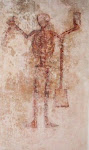
Henry Greene's drawing as still seen in 1891 of one of the remaining buildings of the Newport Friars-now demolished.
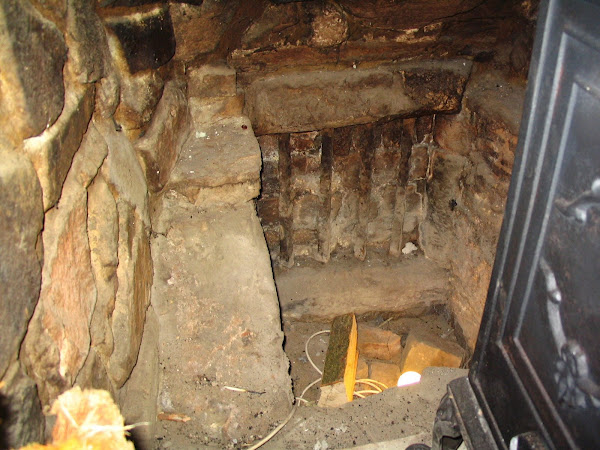
Here is a friary, perhaps similar to the Newport building juding by the remains observed in 1859.
 ___________________________________________________________________________
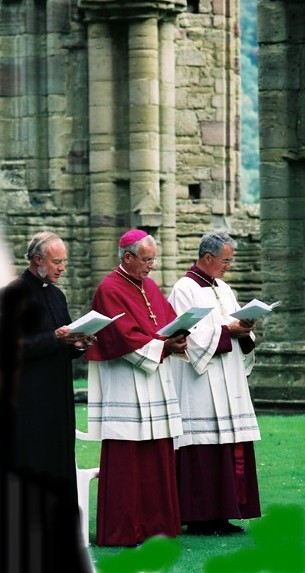
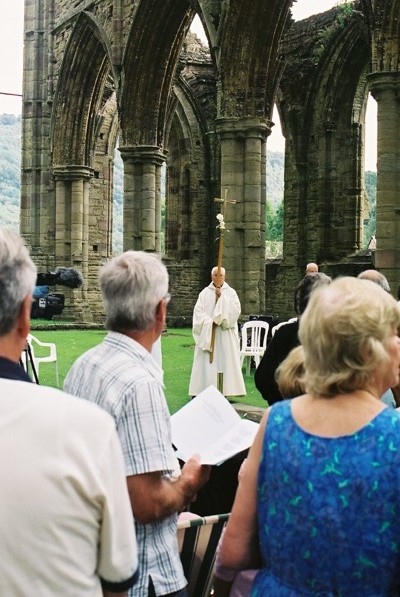
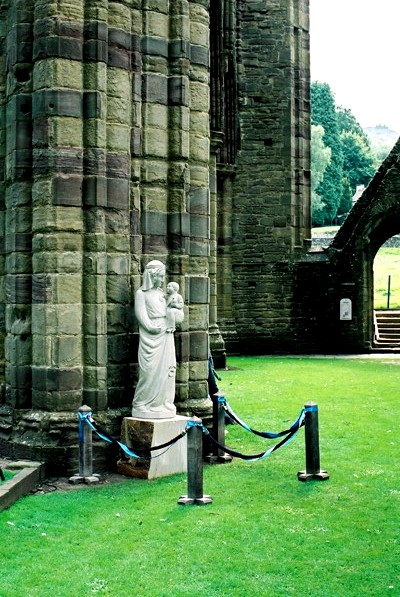
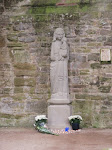
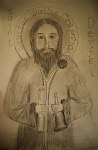
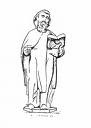
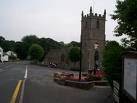
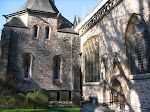
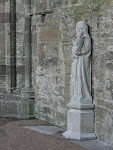
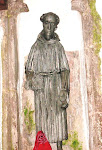
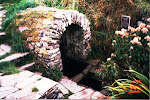
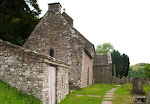
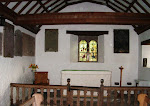
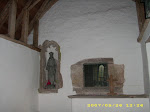
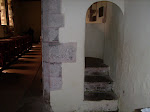
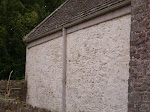
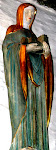
There are no remains left of the Austin Friars in Newport, but the new Friars Walk Shopping Mall will be located over the old site and the bus station was the site of their Fields, which were given for their upkeep by the Earls of Stafford. There is a map to come which shows the sites of four Churches of 'Novus burgo'(Newport) of the sixteenth century. Here there is a photo of a still existing Augustinian Priory, and there are photos of 'black canons' or Augustinians, who took a vow of poverty and ministered to the poor of Newport, fed and looked after their needs. This was an order based on the teachings of Augustine of Hippo and the desert fathers, hermits who originally lived n the dsert of North Africa and spent their lives in the service of God. When they were overrun by Vandals and Visigoths, they fled to Italy and from there all over Europe. The Order is still a strong force in the world today.
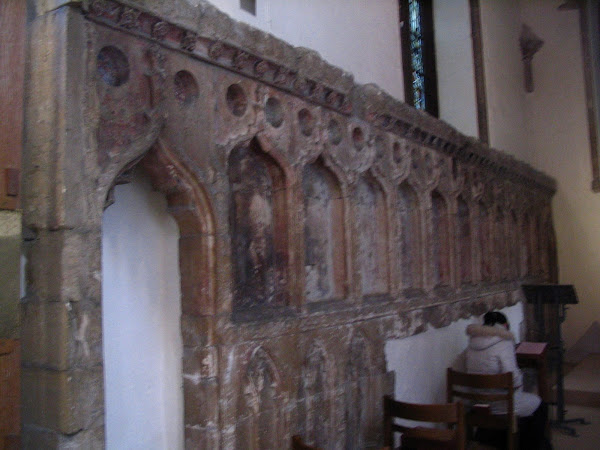
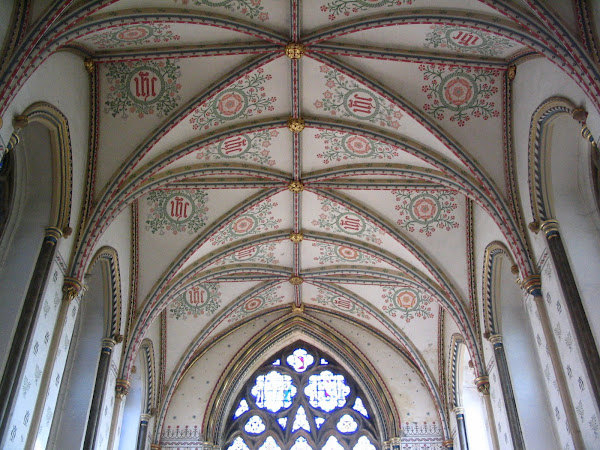
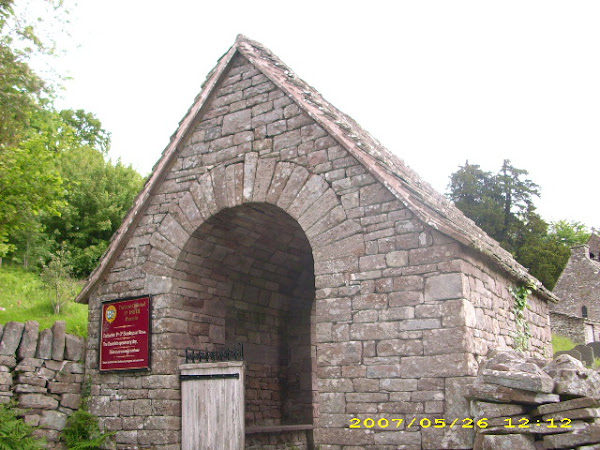
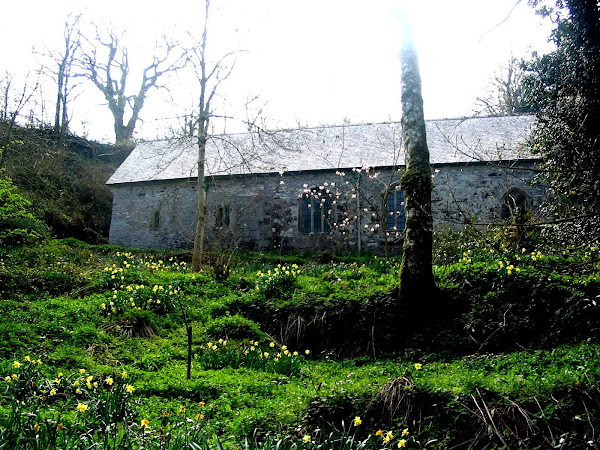
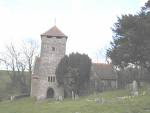
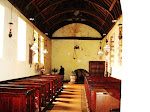
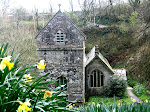
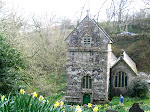
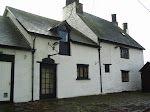
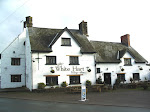
Above is Clare Priory ,a house of similar age to Newport's priory,although it has been added to and improved a great deal since itsfoundation. Clare Priory is one of the oldest religious houses in England; situated in the shadows of Clare Castle on the banks of the River Stour, Suffolk.
Established in 1248 at the invitation of Richard de Clare it was the first house of the Austin (or Augustinian) Friars in England.
Following its taking over by Henry VIII in 1538, the house passed through many hands and uses until the Augustinian Friars purchased the house in 1953 and returned to their origins in England.Clare Priory today acts as a Parish and as a Retreat Centre.It is the home of a mixed community of Augustinian friars and lay people, open to both men and women, seeking to live the Christian life according to the Rule of St. Augustine.
The Rule of St. Augustine emphasises the need to search for God together in order to achieve oneness of mind and heart.There are a number of friaries in England and also there is the new Augustinian Youth Ministry with events and pilgrimges and conferences all over England.
The Newport House will never be seen again. It's story is given below and you have to see how three of the five churches in Newport disappeared in Tudor Times. St Lawrence and St Thomas the parish church also disappeared. The Priory Mill is only remembered by its name-Mill Street.The Earl of Stafford built Newport Castle the same time as he built the Priory, which would have been on a smaller scale than say, Tintern. St Woolos and Our Lady and St Triocus, the Benedictine Cell of Montacute Abbey are all that remain of that time and both are now Anglican parish churches.I hope, that i getting together wha cab foud out about the Austin Friary in Newport, it ll contribute to the interest in the Austin Friars and the Friars Walk, as e remember howany of these Friars died looking after people in the plague.


 ________________________________________________________________________
AUSTIN FRIARS OF NEWPORT
It seems that many of the Friars were very learned men, some of whom were themselves priests, and no doubt served the Mass at the Church of St Nicholas and possibly the mysterious church of St Thomas (Becket) also a new saint for this parish church, St Woolos belonging to the Benedictines of Gloucester and the brothers serving this priory. During this period, it is also the case that St Woolos remained a place of pilgrimage for the shrine of St Gwynlliw (Gundleius in Latin) which also helped the upkeep of that Church. In the thirteenth century therefore, there was still the old church of Gwynlliw (St Woollos), St Thomas’s Parish Church for the town,St Lawrences in the harbour area, and that of St Nicholas Tolentino. The last two both dedicated to recent saints of great faithfulness and witnessing to Christ’s teaching and mission.
The Friars did not involve themselves in politics. They paid their dues to the Benedictine Church on St Gwynlliw’s hill (now Stow Hill) and the great Cross of the Friars Preacher (The Dominicans who travelled out from Gloucester) Spiritually the people of Newport were well served. The Austin Friars provided valuable services for the people. They lived amongst poverty, in spite of the valuable gifts used to set the Friary up, for most of its time, funds were sparse. The remains of the priory show that this was not a huge priory, and its possessions at its seizure were very sparse. The Augustinians took their vows seriously. They nursed the sick, tried to clothe the naked, provided food or dole for the hungry and took care of widows, orphans and prisoners. It was not long before they were put to the test
The Great Plague of 1349
The Bubonic plague, which swept across the British Isles in 1349 , was as pitiless in Wales. We have already learned of the devastating effect on the brothers and priests in the Benedictine Priories at Monmouth, Abergavenny, where only two or three monks were left.
. At Whitchurch, an inquest into the death of one John le Strange revealed that John had died on 20th August 1349. His oldest son, Fulk, died 2 days before the inquest could be held on 30th August. Before an inquest could be held on Fulk's estate, his brother Humphrey was dead too. John, the third brother, survived to inherit a shattered estate, in which the 3 water mills which belonged to him were assessed at only half their value 'by reason of the want of those grinding, on account of the pestilence.' His land was deemed worthless because all its tenants were dead 'and no-one is willing to hire the land.'
The Welsh poet, Jeuan Gethin, paints a vivid picture of the fear the plague engendered in its victims:
‘A rootless phantom which has no mercy or fair countenance’
'We see death coming into our midst like black smoke, a plague which cuts off the young, a rootless phantom which has no mercy or fair countenance. Woe is me of the shilling in the arm-pit; it is seething, terrible, wherever it may come, a head that gives pain and causes a loud cry, a burden carried under the arms, a painful angry knob, a white lump. It is of the form of an apple, like the head of an onion, a small boil that spares no-one. Great is its seething, like a burning cinder, a grievous thing of an ashy colour. It is an ugly eruption that comes with unseemly haste. It is a grievous ornament that breaks out in a rash. The early ornaments of black death.'
(Jeuan Gethin died in March or April 1349.)
We can only imagine what happened in Newport, especially so close to the river. The first Prior of Newport was Thomas Leche and he probably came from the Austin Friar’s Friary at Stafford. The number of friars at Newport is not definitely known, but generally six was considered a workable number , along with lay brothers, devout men employed by the Abbey (often men who presented themselves for employment. They lived according to the Augustinian Rule (Regula Augustini) and in exchange for their food and lodging and necessities, they worked around the Friary and in the Friary parcels of land. It was a good system, for dealing with unemployment, orphans, widows and all the vulnerable. The Plague did its work. It seems a large part of Newport actually was given for the upkeep of the Friary, which did such good service, and no doubt many of the Friars, in their work of keeping the Last Rites actually died, as did many of the lay brothers. It is possible that this began the decline of the Friary, unable to collect rents or work the land for a generation or so.
1933 Argus Reports of Skeletons,who had been buried under the nave
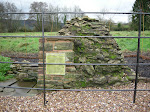
The only archeological recording carried out on the site of the Austin Friars was in 1933, when workmen laying a pipe beside the new Kingsway Road, discovered seven skeletons. These were lying in a supine position with extended limbs and their heads to the West (they were facing East towards Jerusalem) The bodies could be part of the Friars’ graveyard, or, since most Friars were at that time buried under the nave of the church , it could be this was the site of this holy place. Apparently one piece of Stone from the Austin Friary is in Newport Museum, but not on display.
Burials at the Austin Friars
From evidence of the Austin Friars at Hull and at Leicester (more of these places are extant) citizens of all walks of life and brothers and priests were all buried together in the church in mediaeval practice. The Nave of the church (the ship in which the Faithful were kept safe from danger and ‘sailed’ to salvation, as Noah had done in his ark)was the safe place, and rushes were placed over. It is possible, however, that large numbers were buried outside because of the smell. The dead wore their ‘Sunday Best’ and from archeological finds at other place, many people seem to have worn woollen or tweed type clothes. All the coffins seem to have been made of Baltic oak-possibly even reused-but Baltic oak grows faster, straighter and is easier to work than English oak. So it is possible that in these parcels of land there may have been a forestry project somewhere local. Some of the coffins in Hull were hurriedly put together with planks roughly nailed like a packing crate, points to haste around the plague years and round about this time, it seems that coffin burials were replaced completely by shroud burials, allowing more to be packed in under the nave of the church.
Health of People in later Middle Ages
There seemed to have been a great deal of minor ill health in the skeletons found buried at Hull, which would have been ‘normal’ for the people of 14th century Newport too. There were examples of fractures and infections of the long bones and two skulls with caries. Almost a third of the Skeletons examined suffered from arthritis.
Innovations of the Austin Friars
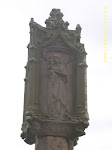
Many Mediaeval Dominican and Franciscan Friaries taught the wonder of God by huge high naves and buildings. The Austin Friars had something similar to a largish parish church, and preferred to preach from the Preaching Cross on Stow Hill and other public places. This may have even been extant before the arrival of the Austin Friars in 1377. Thus they got to be an institution in the town, a ready source of help for the Community, and a serving church close to the people. Benedictines and Cistercians prayed around the clock for the world. They had their work and charisms, writing gospels and books for people to use, and Cistercians lived in remote areas and worked at keeping the farms and Granges going, feeding everybody and maintaining the buildings. However, the Austin Friars had reverted to the Hermit practices of St Augustine himself. There had been confusion in the early days of the order.
Augustine had started his order in the sands of the desert at his home in Carthage (morocco)However the Vandals overran the area in the middle of the 6th century, he took his monks from their tents and they crossed to Italy and safety. Around 570, St Donatus, rounded Augustinian Orders in Spain and a form of Augustine’s Rule was used to help reform other monasteries and cathedral chapters, and refocus the lives of the Clergy on poverty and the lives of Christ in the 11th century. The Augustinian Rule was also adopted by St Dominic for the Dominicans, who seem to have worked together at Newport. The Dominican Vespers are always very beautiful, for example, as afterwards the Friars would leave the Choir and enter the nave to talk to the people, wishing them a restful night. However the monks at Llanthony were ‘Canons’ and those of Newport were the newer ‘friars’ a mendicant Order. Although they had a means of support, they were dependent on what they were given and did not own property in the sense that the land in Newport (60 land parcels out of a possible 242 or so)perhaps testifying to the fact it was a fairly modest town and that the Lord Hugh Stafford, realised people would be happier having these services and being prepared to work on his ‘New Castle’ – one of the newer ones in Wales.
Owain Glyndwr attaks the Castle
C Maylam says in his paper for the GGAS, the Friary may have also been damaged in 1402 by the supporters of Owain Glyndwr, when he and his men captured the town. A report of 1403 is in existence which says there was little damage to Newport itself, but the English Royal Commissioner who compiled the report did not cross the channel! There may have been a little damage, except to the castle.
Library and possibly a school
Because of the love of learning and the commitment of the Augustinian Order to Schools, it is possible, that the Friars had a school, trained choristers to sing the Mass, Latin and theology and prepared boys for holy orders. In an age where life was hard it was a good option to dispense love to your community. There would have been a library as well. However after the Plague, all would have had to work in the fields for basic survival and the people themselves were allowed to charge higher rates for work, there being so few people, and we all know about the Peasants’ Revolt in the ensuing years when Lords tried to make the people slaves or ‘villeins’ again with disastrous results.
Austin Friars in Hull
We have learned so much from the practices of the Mediaeval Austin Friars in Newport from the excavations in different parts of the country. Hull is perhaps quite similar to Newport being near the sea as well. At the peak of their success there were only 39 Friaries in the whole of England and one in Wales at what was now called ‘New Castle’ after Hugh’s new castle was built much later than those of the Marcher Lords. This is still the name by which it was known in Welsh ‘Cas Newydd’.The Monastic Gardens were the first to go after Henry the VIII seized the lands of these holy men for building etc. However in Hull, the Friary continued to be used as a private house and garden until the mid 17th century which seems to have preserved a lot of the finds. It was a large rectangle divided by pathways and four rectangular plots, with a path around the edge and a large central feature in the middle. Some of the plots were further subdivided into beds for vegetables and herbs and fruits. A conveyancing deed of 1627 gives the dimensions of the monastic gardens as measuring 49 yards by 23 yards-dimensions accurate to within a foot. This would have likely been the scale of our Newport garden, also measured out in similar way.
Food and Monastic Diet
Fish was found to be plentiful and abundant and a major foodstuff, although butchery marks remain on bones found from cattle, pigs and sheep.Ducks would also have been reared as there were wing bones from the animals found as well. This probably points to a fish and duckpond being present in the walls of the Friary. Fish were flatfish and thornback ray.remains of domestic goose were also found. A few deer, hare, snipe and woodcock remains were also found as well as barn owls and even a single crane. Some of these would probably have been festival meals held on saints’ days and major Church Feasts. Generally what is known is that many men carried their own plate with them-possibly a piece of dough, baked hard with a rim-a ‘trencher’ and that food would be put into this. It was probably not hygienic at all, but convenient. Bread was often baked in the oven of a local baker for a small amount of money as were meals, if there was no oven or spit in a poorer house. Rabbits and chicken were plentiful and thus probably cheap to produce. Oyster shells and goat bones were also found as well as hedgehogs!
Buildings
The church building would have been rectangular and from the very small Friary at Austin Friars in Hunscote, Leicester there may have been a tower. Shards of stained glass were also found there, so St Nicholas would have been very beautiful. The roof would have been of slate rather than lead, plentiful in Wales as in Leicester.In Leicester there were burn marks around the window indicating a fire at one time.A ‘parchment pricker’ was also found in the church area as you would expect as one scribe friar would have used this to mark out lines and spaces on parchments to prepare for illuminated manuscripts.
Remains at Newport
This friary seems to have been completely eradicated by the Newport authorities over the years. When Henry the VIII’s minister, the ‘King’s Lord Visitor to the Friars’ , Richard Ingworth a new apostate Bishop of Dover on 8th September 1538. It was in their interest to do this as quickly as possible, as the Friary, although run down after the plague years, was the major source of help, a social services in the lives of ordinary people and their problems.
Father Richard Batte-the Last Prior
Father Richard Batte surrendered the Friary and it is noted he did not sign the Act of Supremacy. It was unusual as priests could be executed for not bowing to the King’s wishes, but it was normal for all to sign this document. It may be that indeed very few Friars remained by this time. There was also no inventory of possessions, possibly because there were so few. We know the land now went to a wealthy person for his own use . The land was now given to a Mr Maurice Baker and that he paid the king 14 shillings and 4 pence in rent-a very low rental, which is probably all the king could get for it. The king was not concerned with the well being of the people after all. The site of the buildings were valued for the king’s coffers at 3shillings and 4 pence as compared with Franciscans in Cardiff at 13 shillings and 4pence and the Dominicans at 10 shillings and four pence. So no doubt the buildings were in a poor state of repair by 1538.
Friars Close
These six acres of arable land called ‘Friars Close’ valued at 1539 at 10 shillings probably represents all the 60 parcels of land given to the Friary for its upkeep and service to the people, and these were never exploited for buildings.
In 1543, the land of the Austin Friars was sold to Sir Edward Carne for £453 18shillings and one and a halfpence along with the English manor of Colwinston and then the Newport land was sold off at a knockdown price to Giles Morgan in 1544.
‘Archdeacon Coxe’ s Visit 1801
Archdeacon Coxe, an Anglican Clergyman visited Newport in 1801 and described what he saw, which remained of the Austen Friars.
‘The Remains consist of several detached buildings containing comfortable apartments, and a spacious hall, with gothic windows neatly finished in free stone; the body of the church is dilapidated, but the northern transept is a small and elegant example of Gothic architechture. It is now occupied by a cider mill and the press is placed by a small recess which was once a small chapel (!) separated from the transept by a bold and lofty arch. The gardens are enclosed within the original walls’.
(Coxe:A Historical Tour Through Monmouthshire. 1801)
In the Scrapbook of William Henry Greene (6th August 1891) we can still see sketches of the remains of the Austen Friars and Friars’ Cottage.(now kept by Torfaen Museum Trust).Before 1859, there was also a drawing by Edward Lee, showing the buildings in a dilapidated conditions. Mr C Neil Maylam suggests it was drawn from the South East and shows ‘part of the cloisteral range’ (where the friars often went for prayer or recreation, or even to wash.
In 1851 in a map drawn for Newport Corporation, the drawings by Lee are referred to as ‘Cornwall and Devonshire House’ which was used by then as a pub. Using Lee’s drawing and Coxe’s description, it is says Mr Maylan in his 1966 report ‘possible to interpret the remaining buildings as the crossing of the church and part of the cloister. This enables a plan of the complex to be drawn.
The surviving buildings were demolished between 1833 and 1902 when the area was used as a timber yard. The area had become a car park before 1933 and apart from the constructions of air raid shelters during the second world war, it continued to be a car park until it became a bus station. Ordinance survey maps also show the wall alongside ‘Friars Road’ as the original close wall so the boundary walls of 1851 are the precinct walls for the monastic close.’
Austin Friars at Newport
Mr Maylan also writes about Leicester, where the remains were more plentiful. The Precinct of the Friary would have been enclosed by a wall, the eastern wall marked in the ordinance survey map. The Southern side would have been close to Commerial Street, the western wall following Corn Street (that in OS map being wrong) and the Northern side was probably the river.
Cloister at St Nicholas's
Inside was more difficult.It seems most Friaries had a cloister a rectangular in shape with a garth or garden in the middle , which was covered and often glazed.The cloister would have been on the south side of the Church if Lee’s drawing is accurate. It would form a three sided cloister with the fourth side being the church. The Friars arrived late in Newport, which would account for the strange layout of the roads, which were in existence before. And the requirement of the church to be placed facing Jesrusalem in the East would produce this odd relationship.
The distance of the street from the central area of the close would be due to the position of the Chapel of St Nicholas from which the church was extended.Auxiliary buildings would therefore be on the eastern sideof the precinct . OS maps have marked a building as a refectory on the eastern side by Mr Maylan doubts this and says it may have been a tithe barn.
The Friary was surrendered to Ingworth on 8th September 1538. He got a good clutch of money for King Henr on that trip.At Chester in August15th, North Wales for five days, August 27th South Wales, Dominicans of Brecon were relieved of their friary on August 29th, Greyfriars (Franciscan) in Ceredigion (Camarthen on the 30th) Dominicans in Haverfordwest September 2nd, Cardiff December 6th (four years after he had told them tha if they accepted Henry VIII as head of his new church, hey would be permitted to stay) and he Newport 8th September.
He had a set procedure for doing his 'visitation'. He rang the bell outside the Austin Friary, assembled the brothers in the hall in the King's name which served as a chapter house (although we know it was a smallish building and very delapidated)The Warden of the Friars would stand there with the brethren and then Ingworth would address them. He would explain he had come to 'reform' them not supress them . He read out certain injuctions about their order and Rule. Why were they not living like the hermits in the desert, perhaps? Here they of course lived in a wet and cold climate and had builigs to maintain and other people to feed and care for. It was all of course nonsense but then Ingworth told Father Batte, that if he acceeded to his demands and recognised Henry as the ne head of a brand new church, tey could remain there. Father Batte and the Brothers could not be bullied and refused to sign the 'Act of Supremacy'.Certainly no signatures were found. Possibly the Friars left their home and went to France or to Italy to other houses of their order, or if old, were taken in by those whom he himself had looked after.To deny the Church and Peter was too serious thing for them. With one fell swoop the town of Newport was denuded of its valuable resource and left as a piece of waste ground and to decay, with little or no provision left for the poor.
Tomorrow a Devotion to St Augustine of Hippo, before I go on with the Augustinian Order in Monmouthshire at the Monastery founded in Norman Times from te Celtic monastery of St Arthfael, laer called 'PETERSTONE' after St Peter, the First Pope and Apostle of the Lord Jesus Christ