Showing posts with label Benedictines. Show all posts

Monday, October 12, 2009

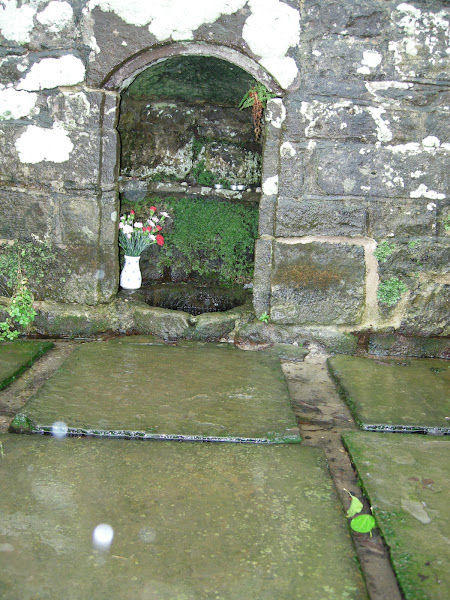
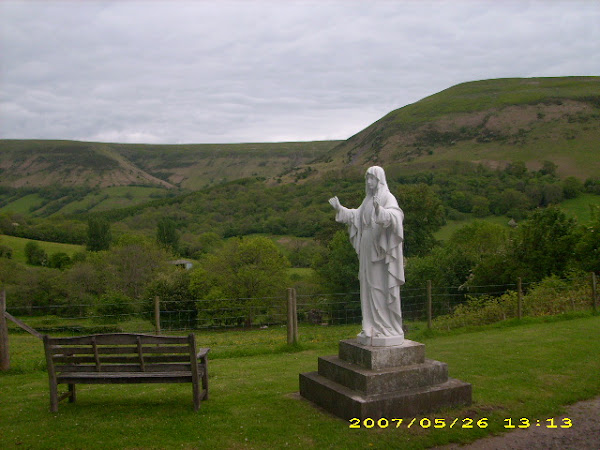
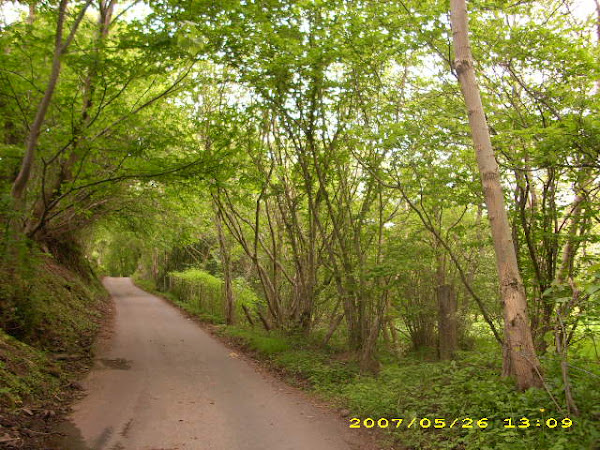
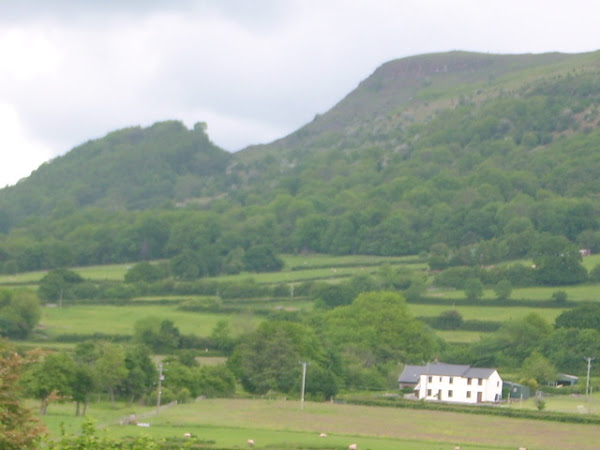
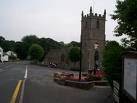
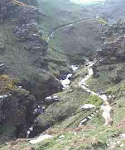
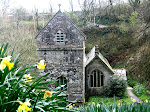
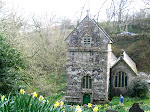
Autumn Colours, rushing stream and Mounton, Grange of Chepstow


____________________________________________________________________________________

I have begun to blog about the great Augustinian foundations and am soon continuing with St Kynemark, near Chepstow and also the Austin (Augustinian) Friars Minor at Newport.Last Friday, however, I was fortunate to be taken by Anthony Utting and the Vicar of the parish Revd Julian White, in whose parish Mounton lies. I had already visited Mathern some time ago when mentioning it as the church which houses the (still existing) relics of St Tewdrig, who died from wounds whilst defnding th Christian faith against the paganSaxons in the sixth century and is buried in the church. His son was the 'Meurig' of Pwll-Meyrick(-Meurigs pool or well)who buried his father in the holy Tatheus' Church in the old Roman town. So I thought, asMountain was a Grange of Chepstow, I would post this now whilst preparing the next post. Hope you enjoy the visit!

History of the Norman Abbey Foundation & St Pierre of Cormeilles

Between 1035 and 1066 the new Norman aristocracy had founded many abbeys in Normandy. Countess Lescaline and her son Robert , Count of Eu, was responsible for the abbey of St Pierre sur Dives. Count Robert set up the abbey at St Michel de Treport. Herluin, Vicomte de Conteville ,his wife Herleve and his son Robert, Count of Mortain founded the abbey of Grestain.

FitzOsbern was the favoured Son of a Steward,ennobled by William the Conqueror by doing his bidding

William Fitz Osbern, son of Duke Robert’s steward, in the same way and around the same time, established the monastery at Lyre and then followed this up with a similar foundation at Cormeilles. In Upper Normandy, the House of St Victor en Caux was set up by Roger Mortimer as a Priory of Saint Ouen. William FitzOsbern made substantial and lavish gifts to the Abbey of St Ouen as well as supporting his own abbies (Lyre and St Pierre at Cormeilles)Most of these houses were in central Normandy and also encompassed Holy Herluin’s House at Le Bec (to whom the Priory at Goldcliff was given)

The Monks School and Theological College and Scriptorium at Chepstow (now under the car park opposite Priory church)

It was significant, therefore, that many of these Norman priories were built close to land which was to be colonised. The Benedictine Priory at Chepstow also had a small school, where it taught boys and the young monks theology, singing, writing and copying, philosophy and rhetoric. This school or college did its work so well that gradually local boys became monks and these becoming Welsh or ‘denizen’ gradually became less susceptible to closure during the various French Wars during the later Middle Ages.

It would be wrong to suggest that the monks of the Norman monasteries were not devout. The reforming spirit of the monks of Cluny was already spreading up towards Normandy. The Houses built at this time probably owed most to the Abbey of St Ouen at Rouen (R-ouen)The first five abbots of Holy Trinity ,Rouen came from St Ouen and Holy Trinity passed on the succession by supplying the first abbots for William FitzOsbern’s monastery of St Pierre at Cormeilles

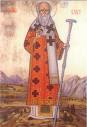
St Adoenus (Saint Ouen of Rouen)Dedication of this Church

So who was ‘St Adoenus?’ (Lit ‘To Owen’ad Oenus) This was the most beloved saint of the Benedictine Normans. St. Owen was bishop of Rouen, France in the 7th century. He was born in Sancy, near Soissons, about 600 AD of a Frankish family. While he was still a child, his family housed and entertained the exiled St. Columban, who greatly influenced his early education. In his youth Owen was sent to the court of St. Clotaire II where he became an outstanding student. He gained the favour of the King and his son, who appointed him chancellor. While in office, Owen steadily opposed the then prevalent practice of simony (paying for holy relics or offices-something abhorred by Pope Leo IX who declared it a mortal sin).

Owen, a nobleman, at a corrupt court, began to see the size and shape of the struggle to keep the light of Christianity burning. He became a monk and priest and a monastery builder in 636AD. He was made bishop of Rouen in Normandy in 641, and built monastery after monastery, for he clearly saw that only through these centres of Catholic living and learning could Europe be saved from darkness. He kept up his court connections, advising the weak Merovingian kings. A sort of French Dubricius, he laid the foundation for all the Norman abbey building in later times.

As a layman, St. Owen, with his zeal, piety and learning, was considered equal to any of the bishops. He gained a reputation for assisting the poor and homeless and did the Will of God generally, caring for widows and orphans throughout Armorica (Celtic Gaul-Brittany and Normandy)

He died on August 24, 684, and is buried near the main altar of St. Owen Church in Rouen.

May we rejoice and be inspired by the great qualities of the Patron. We ask for his blessings and pray for his guidance in the years ahead for the Community of St. Owen in this Valley in Monmouthshire.

My Visit 9.10.09

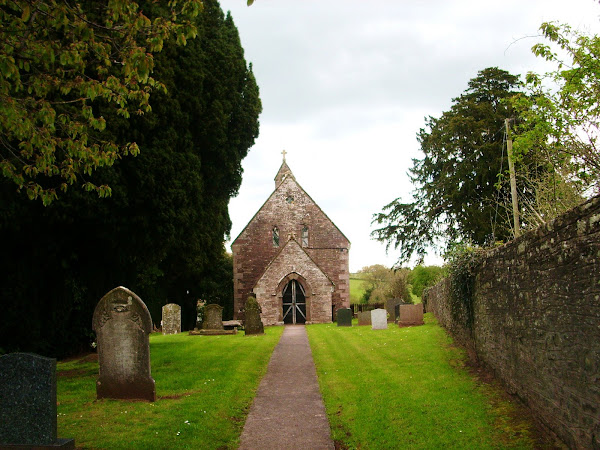
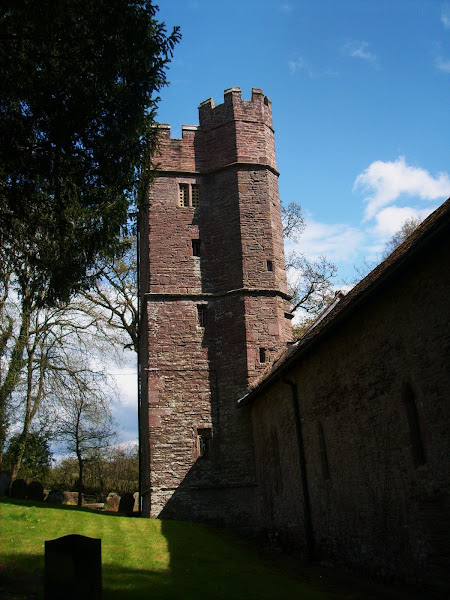
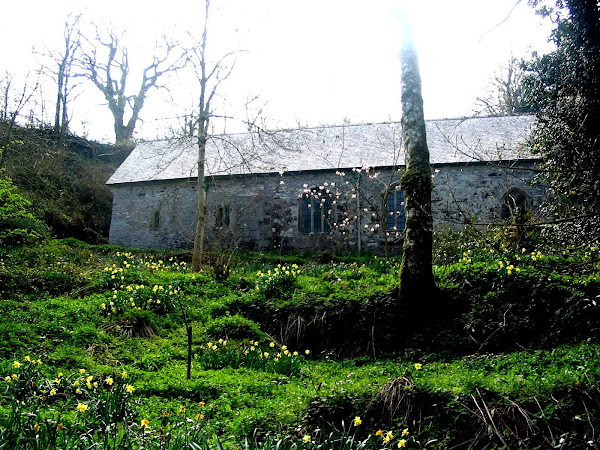
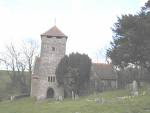
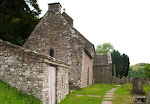
It may now be seen why the little church at Mounton(Monks’ Town), and the small chapel at St Pierre, were named after the foundations at home. The dedication of the monks’ town being to St Ouen (Ando-enus) and St Pierre the dedicatee of almost all the Norman Abbies. William FitzOsbern, builder of The Priory Church of Our Lady at Chepstow also first built the castle, as the most important priority in this strategic marcher area. He also granted money later to help the Cistercian monks at Tintern with stone and materials for building that abbey. In turn various churches and chapels were given to the French monks and Mounton, a grange, had its own accommodation (now known as ‘Monks’ Rest’-now a private house), a beautiful running stream and also its mediaeval track road, down which Farmer Bob travels at speed with his huge tractor! The south door looks to the track and then to the great wooded cliff face opposite, beautiful in the autumn sun. the small brook gurgles down the valley under a tiny bridge, where you could almost 'imagine' a monk with his fishing rod or even reading his office.

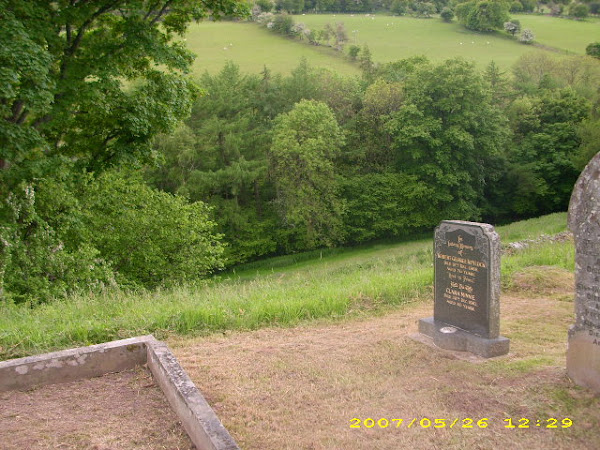
On the other side of the brook, more mountains loom and isolated farm houses appear between them, perhaps the descendents of the early farm, which provided food for monks and for sale to the castle and others. The air is still apart from Farmer Bob’s tractor and his accompanying dog, barking excitedly chasing it. On the other side of the road is a small churchyard.

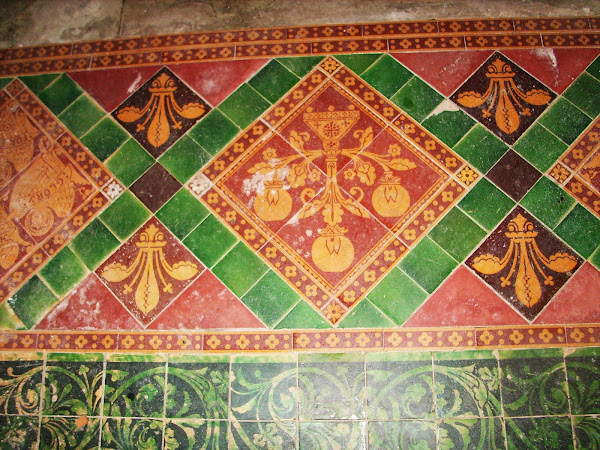
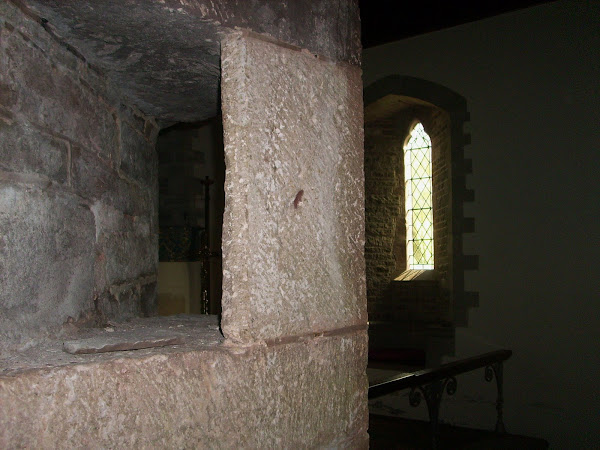
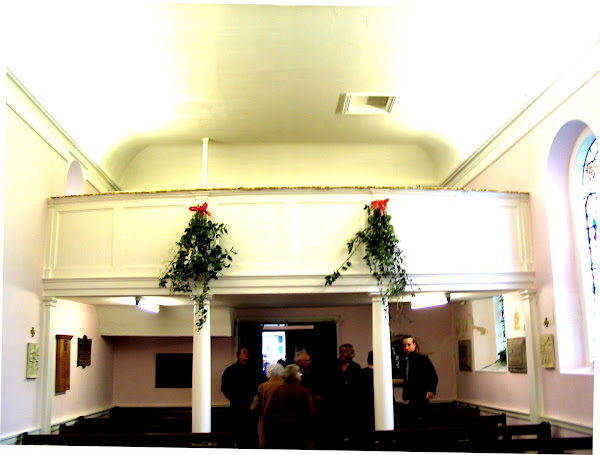
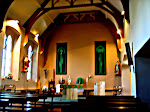
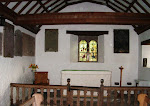
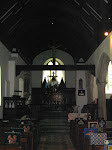
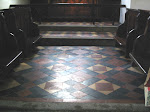
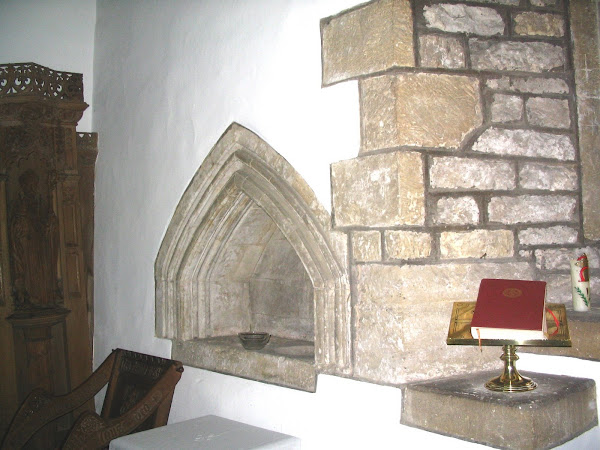
Accompanied by the Vicar Julian and Churchwarden Anthony Utting, I walked into the little church, which has had a Victorian restoration. The rood is removed of course, but the piscina is still there, although on the other side of the chancel/sanctuary area. The priest’s door has also disappeared in the renovation. Yet the spirit of the place remains, the holiness and veneration. The early relic of St Ouen seems to have disappeared during the ecclesiastical upheaval in the sixteenth and seventeenth centuries and the altar is replaced with a beautifully carved wooden table. The church is, in reality a small chapel and its restoration has left the walls sparkling white .

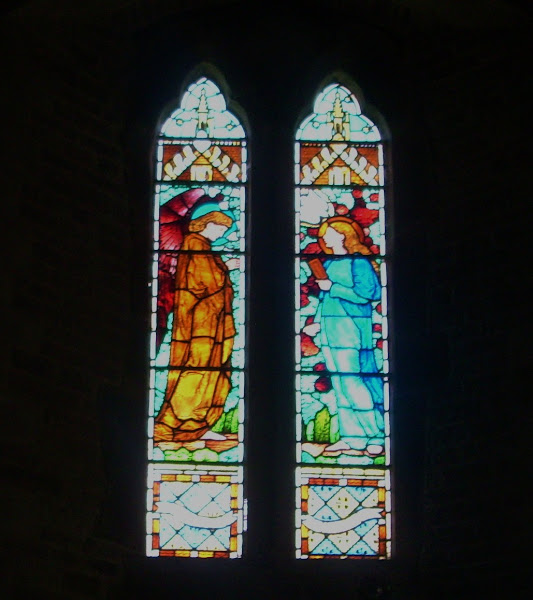
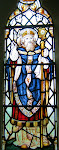
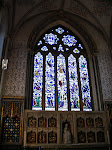
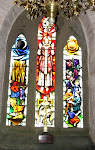
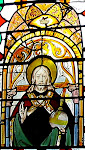
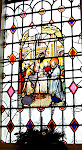
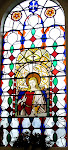
There are a number of beautiful stained glass windows of modern date. The window on the East side depicts the earthly death of Christ in the tomb and then the Resurrection. The South Wall has windows depicting Our Lady, the Child Jesus and the Baptist in striking mediaeval ochre tones and there is a wonderful window dedicated to a parishioner (perhaps the player of the small electric organ in the church in praise of God’s gift to music.

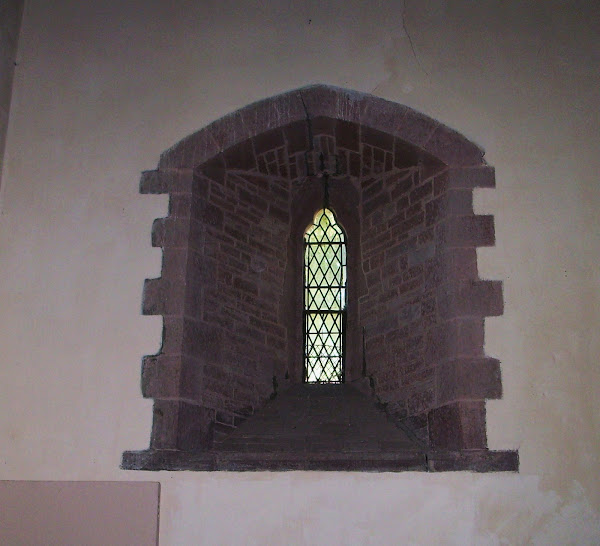
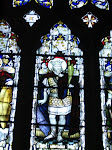
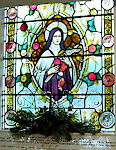
The West door has its font(19th century?) in situ currently colourfully decorated for the Harvest Festival . There are also windows in the North Wall ,one depicting St Francis of Assissi, one of the most loved saints and in the same window, the Blessed Mother. We remarked now that the monks’ church would have been a great deal darker than the present church. There would have also been wall paintings lit with candles. Candles were still everywhere on the window sills of the ancient thick walled church.


_____________________________________________________________________________
____________________________________________

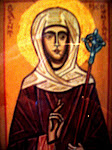
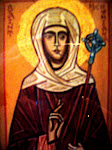
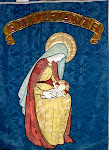
ST OUEN, Bishop of R-ouen . Patron of Mounton Church

There was also , next to the altar a citation for a soldier commended for bravery and awarded a VC during the second world war. I do not have permission to publish his name here, but his bravery was attested to by the men under his command who made him a cross on the field of battle, which they brought back to Mounton.He is buried in the churchyard. There are some ancient tombstones-one dated 1680 by the vestry door and another nearby of the same age. Monks and laity were usually buried under the floor of the church, but often in a separate graveyard near the church after the plague era. The Churchyard was often kept for mirth, holidays, even Eisteddfods, Christmas dancing and fairs as well as processions on Festival Days. The great hymn ‘Festa Dies’-‘Hail thee Festival day’ in plainsong was sung by all in the churchyard on the great feast days of the church, before a large procession would enter the sacred space for the great battle against evil that is the Mass.

Life at Mounton during Benedictine Times

Mounton remains a pretty church, simple and stark and will no doubt have buried many parishioners under its flagstones, those who were once baptised in the font.The French monks would have had no problems communicating in Church, since the language was still Latin from Celtic times.

The monks would have kept the Opus Dei, the Angel’s Prayer or Angelus Bell would have rung at 6 to wake people up and and 12 lunchtime and at 6 at night and probably once at the Hours of Lauds (6.am) Mattins,(7am) prime(9am), terce,(12 noon), nones, (3pm) vespers(6pm) compline(9pm)which closes with the haunting ‘Salve Regina’ and mattins (2am) The hours would vary according to the time of year. These are the same hours as being sung today. Mass would be at nine.

Mediaeval People understood what the Mass was and what was being said and sung as they were taught for their first Communion and Confirmation, and there was always an element of catechesis or teaching during the sermon or homily in English. The pathway outside the front of the little church is an ancient trackway leading to Chepstow and to Tintern, st Kynemark’s and Trellech and Trellech Grange.

Roger Shrewsbury, Last Prior of Striguil

It is about 40 minutes walk to Trellech or Chepstow from Mountain. The stillness , the birdsong and the marvels of God’s creation were with me as I left. I could almost hear the voice of Father Roger Shrewsbury, the last prior calling me back!Monkstown had a stipend or donation of £10 a year for the church, which reverted to Henry VIII after he had taken the abbies and priories and their churches. The little chapel became a parish church after the disturbances of the sixteenth century, when its furnishings, rood screen, altar, relics everything ripped out and destroyed and the whole became much plainer in obedience to the new King Edward’s orders and later those of Elizabeth.

Catholics from this time for two hundre years, met in secret places to carry on their faith and perhaps even in places like this. Luckily we are in a time of healing and respect now and almost all will recoil at the level of destruction of beautiful works of art that are irreplaceable, although in many cases church furniture was hidden and then restored in more clement times.£4 4s 6d was what the priory fetched for Henry VIII and often the shells of the buildings when everything had been stripped out, were given to the very people who had carried out the destruction, so he did not need to pay them for the ‘work’.It is also wrong to say all the monks had pensions. Most of them and all the nuns did not and either made for familes, for France or starved or died of cold if they could find no shelter.This was the time when the Catholic nobles of Wales, like the lord of Raglan Castle, and Herberts and Morgans at Llantarnam began to receive covert priests and hold masses in their homes, trying to potect the Faithful and see to their interests.

Monks’ Rest

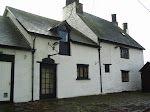
We walked up to the accommodation for the monks – a small cottage now much improved and extended , known as the ‘Monks Rest’. There are remnants of the original stonework on the South wall. The garden is very pretty and beautifully kept.

Paper Mills

Anthony Utting also told me about the paper mills which once provided employment for the area (100 at one time in the nineteenth and twentieth century) Luckily the numbers have grown again in the area not far away, where a new estate of houses has been built, which has given the pretty church a new lease of life.

Hando's MountonFred Hando' Sketch from 1944 shows a large house opposite the church, which no longer seems to be there, unless Iam looking from the wrong angle...
__________________________________________________________
_________________________________________________________________________________
Hando wrote of Mounton in 1944 in his own wonderful poetic wayin his wonderul book 'The Peasant Land of Gwent' published by Johns of Newport.Oten for sale onEbay.

When you step over the stile at the New Inn at Pwllmeryic you take a field path that runs close to the mountain brook. The water in the brook is crystal clear. The country is open. But as you walk onward, the wooded hills close in on both sides. You are now in Mounton Valley.Great trees rise ahead.

Between two of these trees you get your first view of the village. Thrown into high relief by the trees and the brown cliff are a little church and a cottage with dormer windows. A poplar, superbly placed rises like grey smoke into the heavens;a pretty footbridge crosses the brook. Cows stand deep in the water .All sounds, except for water and the bird song are hushed.

You walk between cottages set between gardens overflowing with colour. Even the walls grow flowers in Mounton. High hills soar ahead and on both sides, and the scented air is warm and still. Beyond the village the stream flows though flat meadows and the valley widens . On the banks are ruins of buildings of unusual form.

Mounton, the ancient Monkstown , for the land was owned by the Priory at Chepstow-knew industrial prosperity a century ago (19th century-MM) . Its three mills, with names as beautiful as the brook –Lady Mill,Lark Mill and Linnet Mill –produced carpets and paper, and for some time the paper used for the Bank of England notes was made here.

Now the mills are picturesque ruins and the wheels of industry are stilled. From the ancient markstone near the church to the house at the far end of the village,the eye rests with pleasure on the works of nature and of man.

Where the road forks above the village,the road to the right leads you to a narrow valley (accessible by car-MM-)The brook rushes swiftly along .You pass a couple of cottages, one approached by a bridge over the brook and then the road ends.

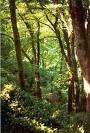
The valley now widens. Great trees stand above you on the sun lit hillside; others lie recumbent on the slopes and the valley bed; and the wooded hill on the left rises in mysterious shadow. The only sound now is the allegretto dance rhythm of the brook. Here , many years ago, were laid several of the scenes in the film version of ‘Ivanhoe’. In my opinion Puck and Ariel are more to be found here than the spirit of any Plantagenet.

Mounton has been a well kept secret. Cars scream past Bankhead the head of the Valley; unceasing traffic roars through Pwllmeyric at the other end.No tourist dreams of turning northward (Left from Newport Right fro Chepstow) from Pwllmeyrick, for Mounton is no show place, but for us, at any season of the year is a home of peace and beauty.

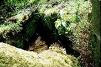
We love it best at the height of Autumn. We choose the time of our visit so that the trees, still heavy with leaf, shall glow at their brightest. ON our last visit in early November , many flowers still bloomed in the gardens, and at the church we stayed a while and looked upwards. Never shall we forget the pattern of gold and daffodil, of peach and berry red, of leaf green and bronze, flaked by the leaves against a pale sapphire sky. Nor shall we forget a recess, carved like a little shrine in the hillside opposite, in which a young fir tree stood ensconced’


Travels at home are cheap and safe. Salvation
Comes mounted on the wings of meditation
He that doth live at home, and learns to know
God and himself, needeth no further go’.


(Excerpt from Anglican George Herbert’s ‘Travels at Home’ (1633)

So nothing much has changed here since 1944 or probably from the times of the Monks, who are probably still looing down on thislittle acre of paradise....

Tuesday, August 11, 2009

BENEDICTINE PRIORY AT LLANGUA/LLANKYWAN


____________________________________________________________________________


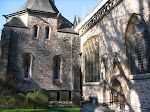
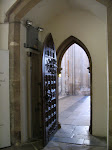
The rear of the ancient Church, with the pre Norman font and Devon Screen, ancient walls, oak beams and bell rope


We know, that during Earl Harold’s conquest of the Hereford and Gwent lands, prior to the Norman Conquest, it was possible that this peaceful community was scattered and fled to Britanny or France or Armorica as Gaul was then known. Constant warfare between the retaliating Welsh and English put an end to peaceful life. Generally, however, it is possible that the Saxons built an early wooden church on this site. Possibly the mud and wattle earlier buildings so popular with the Celts may have been destroyed. The late Dr Pickford pointed out that some of the stones are of older date than those put there by the Normans (Possibly Saxon?). Following the Conquest, William’s generals, his barons took large areas of the country to subdue.

In this area that Baron, as we have learned was primarily William FitzOsbern, who had his headquarters in Bristol (Bretueil) named after a place in Normandy. The late Dr Pickford also believed the monks accommodation would have been closer to the church than the castle.
So who were the Normans who supervised the building of the little Church of the Priory Cell?
Above Pre Norman font

The Church has recently been restored and saved by an organisation . It is only open every Sunday morning at 8.45 for a Church of England Service and every Sunday afternoon in August. Refreshments are available. It lies just on the road south of Belmont Abbey in studding countryside by the river.


Above note the early 14th Century Devon Screen, which the parish are hoping to have professionally restored There are four panels showing Our Lady and the Child Jesus. There are four panels altogether, which came from a ruined catholic chapel near Seaton Junction Station at Whitford . It was donated by the owner of the property to the newly restored French Urseline Nuns at St Monica’s Priory at Spittisbury. After a while the screen was sold and aquired for Llangua. It is perfectly in keeping with the church’s age and tradition.The Images are of the Virgin Mary, Our Lord, King Edmund, Martyr and a bishop.

It is described and illustrated by Frederick Bligh Bond and Dom Brede Camm in Roodscreens and Roodlofts Vol II pp 212-213.

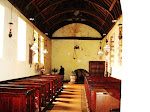
Nave and Chancel of the Priory Church of St James. Unusual to see the chancel part on the same level as the nave, but it appears the floor has been raised several times to cope with flooding. Notice the barrel roof (although bosses are Victorian!)The Priory Church can only be lit by candlelight.

The manot and priory were given to the Abbey of Lyre before 1183. A cell of Benedictines (black monks) were placed here. The Abbey of Lyre was built in the beautiful Risle Valley in Normandy, which you travel over via a big viaduct on the Motorway to Le Mans.There is no knowledge of what the name means. However, there are some interesting stories to come out of Lire .

Abbaye de Notre Dame, Lire, Normandy

Lire Abbey, Risle Valley,Normandy, drawing and woodcut
Early Eighteenth Century
This was founded by Robert de Beaumont, 2nd Earl of Leicester (1104 – 5 April 1168). The surname "de Beaumont" is given him by genealogists, in fact the only known contemporary surname applied to him is "Robert son of Count Robert". Henry Knighton, the fourteenth-century chronicler notes him as Robert "Le Bossu" (meaning "Robert the Hunchback" in French).

He was Justiciar of England 1155-1168.
Robert was very generous to his Abbey at Lire In addition to the abbey of St. Mary de Pré, in Leicester, the earl founded in England the Cistercian abbey of Garendon in 1133, the Fontevraldine priory at Nuneaton between 1155 and 1160, the priory of Luffield, and the hospital of Brackley. He refounded the collegiate church of St Mary de Castro as a dependency of Leicester abbey around 1164, after suppressing it in 1139. Around 1139 he refounded the collegiate church of Wareham as a priory of his Norman Abbey of Lyre.

His principal Norman foundations were the priory of Le Désert in the forest of Breteuil and a major hospital in Breteuil itself. He was a generous benefactor of the Benedictine abbey of Lyre, the oldest monastic house in the honor of Breteuil. The Breteuil was the name taken by the son of William FitzOsbern after this Knight’s untimely demise in Normandy! We have seen that Fitzosbern himself had a big part in the foundation of Chepstow Priory. By 1068 FitzOsbern had gifted six priories to Lire. The property belonged to Lire for almost a hundred years before the priory was built on the site of the earlier foundation founded by Ciwa.

According a charter (ca 1070AD), Lyre owned in Landaff's bishopric The manor of Larquewen(Llankywan) and the tithes of Grosmont's forest, half of the tithe of tollgate of Strigueuil, one half of the tithe of between Waie (Wye) et Ousche(Usk-), namely cows, pigs, feathers, fish, honey and cereals. So we can see here what was produced in the surrounding lands.

Eventually, I believe the area involved was too far from the established centres at Monmouth and at Abergavenny to make for easy administration from Grosmont. In addition the Lord of Grosmont, was happy to allow the small number of monks possibly only two achieve a stone building on the site of the present Church. The original Celtic Church buildings, possibly any Saxon building was built upon. The monks were useful for all sorts of reasons. They could supervise the fishing rights on the Monnow and administrate the Mill, collect the rents and tithes, make accounts and records.

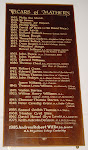
Hilaire de Llankywan was the prior in 1196 Prior Peter Maunsell was the Prior in 1268 at the time of Henry III and Brothers Robert and Thomas Turberville and Gilbert Talbot were also the monks at that time and it is unlikely that there were ever any more than two or three. During Mediaeval times, there would have been considerably more people in the Llangua area, since most people were then involved in architecture.

Secret Catholic Associations,Recusancy and St James as a Mass Centre?

An early record of Llangua Church also mentions ‘a blocked priest hole.’ This is very important as the land was owned by one of the most extreme Catholic haters in the entire country. In the the chapter ‘Dangerous Times for Catholics’ you can see the terrible persecution of Catholic Christians that went on from the time of Elizabeth until the first of the Relief Acts.
Llangua Priory Church from the Mill
John Scudamore obtained the lands and priory building from Shene at the time Henry VIII seized the Abbeys and was anxious to keep them. He and John Arnold hunted down priests all over the county and were zealous in their desire to kill priests. There was a political dimension to all this too, but in the case of the three Monmouthshire and one Herefordshire Martyrs, they were simply the sons of local people who had been led by the spirit to train and minister in the ways of the faith from the time of the Apostles. David Lewis (linked with Llantarnam) John Lloyd (linked with Trivor ) and Philip Evans (linked with Abergavenny and the Gunter’s House) were the Gwent Martyrs . After the priory was attached to Shene and later sold to Scudamore, I suspect little was done to improve the fabric of the church. From the time of Richard Gwyn, (during the reign of Elizabeth I) young local boys went off to St Omer and Douai to train as priests and come back to be pastors to their flocks.

Two things happened to panic the general population:
1.A group of desperate young men, became terrorists and persuaded Guy Fawkes to try and blow up parliament, hoping there would be an end to the persecution with a change of King! It was an act of God that this did not happen , since Guy Fawkes had packed enough explosives into the cellar of the House of Commons to blow up half of London, and the loss of life would have been terrible. It was a disaster for the Catholic population as regards public relations.

2.In the time of Charles II, Titus Oates told terrible lies and stories against Catholics, particularly priests. The fear of Spain could no longer be used to turn people against Catholics This was the time when the Anglican Church itself was under attack by Puritans and Presbyterians following the legacy of Cromwell. .The people were ‘spooked’ by these lies about ‘foreign spies’. Evidence shows that Charles II never believed any of it, especially as he remained a secret Catholic all his life, although living as an Anglican. Titus Oates was later found to be lying and was executed, but not before 120 priests had perished by hanging, drawing and quartering as well as many lay people , By the seventeenth century perhaps the Scudamoresno longer took a very great interest in the church, because to have a priest hole in the church itself meant that the Holy Mass must have been offered there, in the Church for many years by priests willing to’ lay down their lives for their sheep’. To be fair many Anglican clergy were becoming uncomfortable about the treatment of Catholics and Catholic priests and faithful.They often buried Catholics at night in their churchyards after their Requiem Masses. St Maugham’s Church was not far away and two Catholic priests were buried there-Francis Dormer (who died in 1770) and John Williams (died 1793).Perhaps they offered secret Mass at Llangua in later years, whilst Father Kemble or Fathers Lewis,Evans or Lloyd must have at one time

What other changes did the monks make?
&
The Gwent Saint Iago Shrine!!St James the Apostle

Well it seems they actually rededicated the Gwent Shrine to the Apostle James. We know St James as being in the inner circle of Christ. He was one of the the first disciples that Jesus called after Peter and Andrew with his brother John. Jesus called them ‘Sons of Thunder’ so perhaps they were a bit loud and bombastic but also courageous. James is there throughout Jesus life but takes no special role and does not become an intimate friend of Jesus like his brother John, yet receives some great insights. James is there at the Transfiguration. Jesus went up to a high mountain and sood there praying and suddenly he becomes completely filled with a bright light, the glory of God. This frightens the disciples, but they see, once and for all the Divinity of Christ. One minute he is walking and eating with them , the next he is shown to them as God. Next to him appear Elijah and Moses, Old Testament prophets who have been promised in personal contacts with God that they will see the Saviour

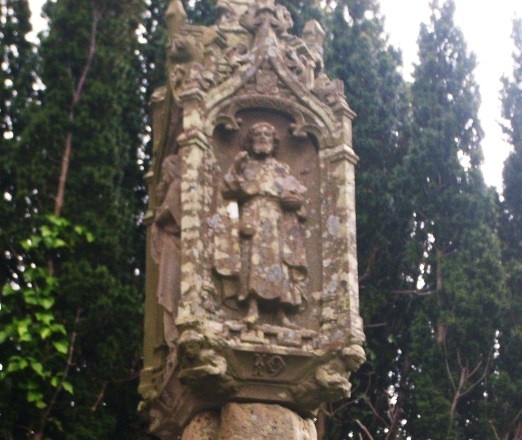
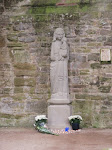
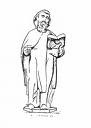
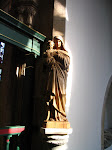
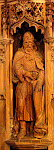
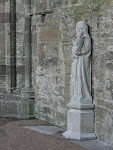
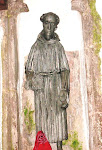
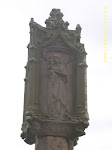
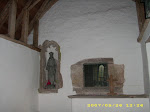
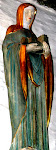
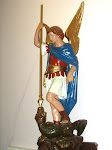
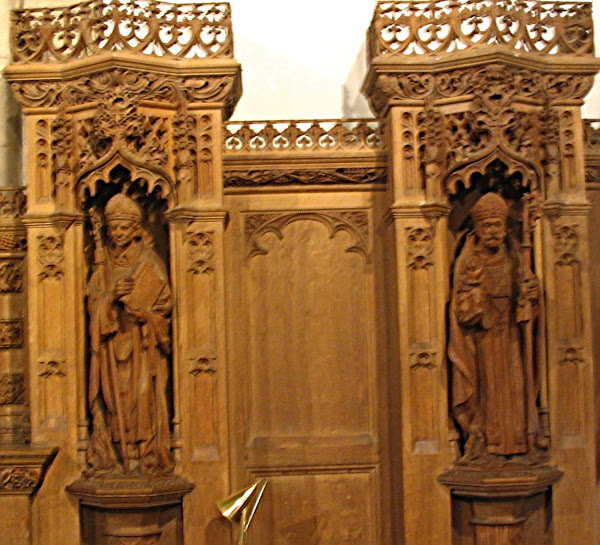
Above:.This statue,beautifully crafted, is of St James, himself dressed as a pilgrim on the way to Compostella. He wears the shell pilgrims badge on his hat and carries the pilgrim’s staff. St James would not have been carrying a Bible of Course, as he could not read and the Bibe was not written for some time after Jesus death. He was carrying a lantern, however, a symbol of Light, the Light of Christ.

Again, James is present at the Ascension of Jesus into heaven. These events absolutely convince the Apostles of Jesus claim to be God and remain with them for the rest of their lives. There are also James and John were present at the healing of Peter's mother-in-law (Mark1, 29), and at the raising of Jairus's daughter (Mark 5, 37; Luke 8, 51). They are described in private conversation with Jesus on the mount of Olives (Mark 13, 3) There are some letters in the Bible written by James in the New Testament. In the Acts of the Apostles written by Luke in the New Testament, he attended the ‘Council of Jerusalem’ when all the Disciples, Apostles and Peter and Paul met to discuss whether non Jewish (Gentile) converts to Christianity needed to conform to Jewish Law such as Circumcision, where Peter and Paul argued forcefully against this. (This was the first of the many Councils of the Church)

Their mother Salome - or they themselves - asked Jesus to accord them places on his right and his left when he came into his kingdom (Matthew 20, 20-28; Mark 10, 35-45), when they also declared themselves ready to drink from the same cup as Jesus - i.e. to accept martyrdom. Finally, the sons of Zebedee are specifically mentioned as present at one of the post-resurrection appearances (John 21, 2), on the lakeshore of Tiberias; and among those gathered in the upper room after the ascension (Acts 1, 13). The only certain fact recorded of James afterwards is his martyrdom (Acts 12, 1-2) at the hands of Herod Agrippa I (r. 41-44 A.D.).

He is known as James the Great to distinguish him from James the Less, or James the brother of the Lord (also called by Eusebius James the Just) who became a pillar of the Jerusalem community, and is thought to have been the first bishop of Jerusalem (Galatians 1, 19 and 2, 9).

After the Martyrdom of James
http://www.csj.org.uk/ for details of this pilgrimage A cathedral of Ammonite Catholics marks the spot where his body fell and these brothers say they have the remains and relics there. But there is also a different story-that at least part of his body or relics were taken to Galicia in Spain. This was said to have been done by the inspiration of an angel. The relics were taken inland to Isla Padron and then disappeared out of sight.

According to tradition there were miracles all along the way. Life was still dangerous for Christians during the various persecutions and the secret guardians hid his relics well. His relics were much travelled.. In the7th and 8th century documents (i.e. prior to the discovery of the tomb) refer to the belief that James spent a number of years preaching in Spain before returning to Jerusalem, and martyrdom.

His followers are believed to have carried his body down to the coast and put it into a stone boat, which was carried by angels and the wind beyond the Pillars of Hercules (the straits of Gibraltar), to land near Finisterre, at Padrón, on the Atlantic coast of northern Spain. The local Queen, Lupa, provided the team of oxen used to draw the body from Padrón to the site of the marble tomb (Arca Marmorica), a little way inland, which she had also provided. The saint was believed to have been buried with two of his own disciples, Athanasius and Theodore.

St James of the Field of Stars (Compo=stella)

The site of his tomb was forgotten for some 800 years. Then in the ninth century he was discovered by a hermit Pelayo, who saw strange lights in a field and when he went to the location, he found a stone box with the relics of Saint James , identified by its markings. The field where the box was found is called ‘Saint Iago(James) in the Field of Stars.’ When the Apostles divided the known world into missionary zones, the Iberian peninsula fell to James. There is nothing intrinsically implausible about this: Spain was already a well-established part of the Roman world, and Paul, writing in 56 or 57 (Romans 15, 24 & 28), is clear about his own desire to make a missionary journey to Spain. (On the other hand, Paul was generally reluctant to visit places that had been evangelised by others, preferring to found churches of his own, so his reference might be taken as evidence against James having preceded him to Spain ... )
The local Bishop verified them as the bones of St James. A huge 12th century Cathedral was built over the Field of Stars and every year many thousand people travel the route, through France and the ‘English’ route from Bordeaux to arrive at Compostela on St James Feast Day, the Day of his martyrdom -25th July. A book was produced at the same time as the Cathedral was built Liber sancti Jacobi-(Hymns and songs of St James and his, liturgy )Pilgrims from the Middle Ages carrying the Staff and wearing the scallop shell. Pilgrimage is the idea of freeing the body spiritually.. Modern pilgrims want the same thing. Over 100,000 people make the this pilgrimage every year . Friendships and companionships are made.
St James (Iago) of Compostella in Northern Spain
-Welsh starting point of a pilgrimage


People come off the treadmill of modern life. Pilgrims come from 90 different countries all around the world. The route is legendary and pilgrims are not drawn not just from religious people, but also people who want purpose in their life and who try to find their faith-they ‘knock on the door’ by doing this pilgrimage. Which is an ancient Channel of civilisation. They walk on average 20 miles per day, stopping at the shelters. Volunteers work there to help the pilgrims and offer-breakfast and help with blisters . Support of other pilgrims on the route is special, and necessary because many people embark on the pilgrimage , having no experience of walking! People may ride, or cycle or even come by wheelchair, but not by car.Christians make such a pilgrimage as a symbol of our journey through life to heaven and the spiritual insights received,bringing them closer to God and away from the concerns of the world. It is the descendant of the ‘White Martyrdom’ of the Celts, which is why there should be some discomfort! Many pilgrims say that St James himself has helped them and appeared to them along the way urging them on.

Iago is Spanish for ‘James’and the Invasion of the Islamic Moors

The Hostel de St Marcos in Compostella was used to house the Spanish Order of Benedictines of St James. The Order was charged with protection of Christian Pilgrims against the Moors. This is politically incorrect today but the Moors were aggressors and they were being invaded and there developed a sacred struggle against Islam, until the advent of ‘El Cid’ and the struggle of Ferdinand and Isabella , which pushed them out again. When pilgrims arrive at Compostella, they place their hands on the Pilgrims Hand on the doorway and then go to meet the Apostle behind the altar. A huge crozier with incense swings in the Abbey Church (originally to cope with the smell of the pilgrims!) This , from all who have done it, has been one of the most special and beautiful journeys of their lives.The Image and Symbol of the Journey is a powerful tradition of the earliest years after our Lord had ascended into Heaven. When pilgrims reach Compostella, they go further to the end of the land at Cap Finisterre and burn their clothes as a symbol, that they have been inwardly changed, born again and resolve to do better, before the long and uncertain trip home. When they return home is when their new life, the inward journey begins.

The Image of St James at Llangua is of wood and would have been brightly coloured. It shows St James, himself traditionally garbed as a pilgrim to Compostela holding the pilgrims staff and wearing the typical straw hat. In his right hand he holds the book of the gospel (even though of course, none of the Apostles or disciples had Bibles and he could not read anyway)It is the pilgrims dress he wears and may have been brought back by a parishioner who had done the Camino Walk to Compostella , perhaps the best known pilgrimage in the world, others being Rome, where many Welsh people went. Cologne in Germany (Shrine of the Magi) and Jerusalem, where at least three of our Welsh saints were consecrated as Bishops, David, Teilo and Padarn. The original statue was made to hold a lamp, but looks extremely good quality. On his head, he wears the hat with a scallop shell.

Next:A word about the Abbey of Lyre!