



Saturday, January 22, 2011

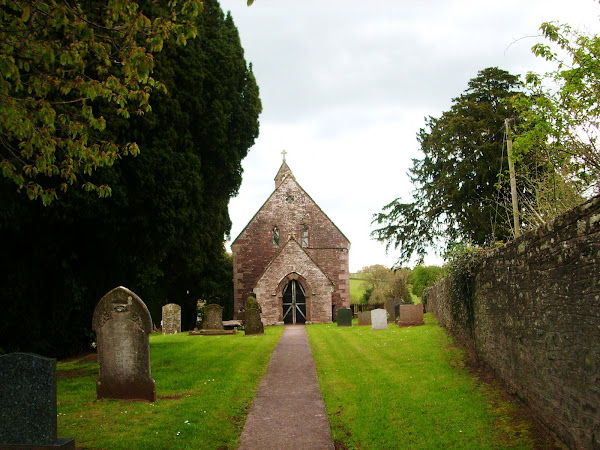
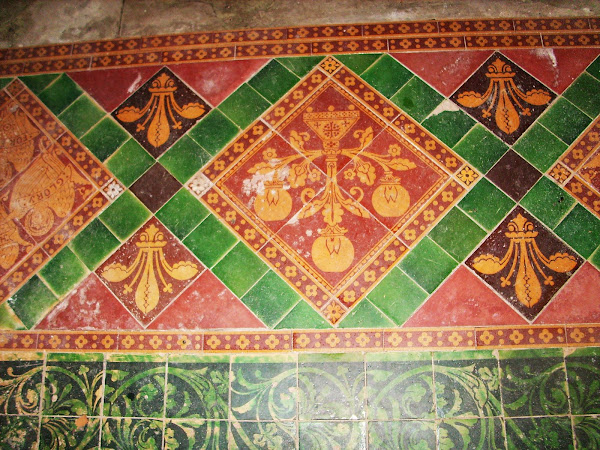
ST CURUG’S CHAPEL, CATSASH AND PRIEST HOLES!

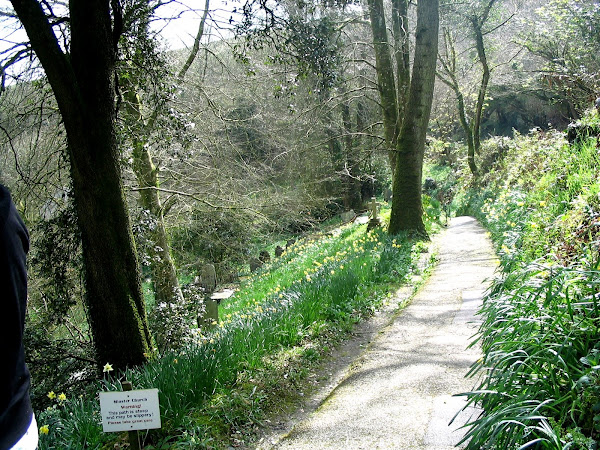
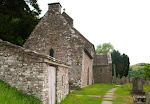
A Roman Villa, ancient Church and Mass Centre West of Christchurch on Roman Road on way to Llanbedr.
The church and later in were raised at the junction of two ancient roads, both used by the Romans. The Ridgeway came from Trellech heights through Wentwood , while the Chepstow Road came via Penhow and Llanbedr. Part of the original road, The Ridgeway can still be seen leading of the road to Abernant, a short distance from the junction. There are no existant records of this Inn as an inn, but there is strong folk memory of this inn and another at Goldcliff, a Benedictine Priory who owned and served Eglwys y Drindod at Christchurch.
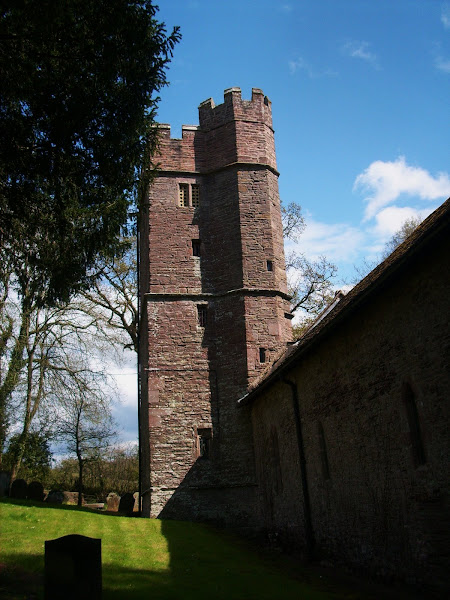
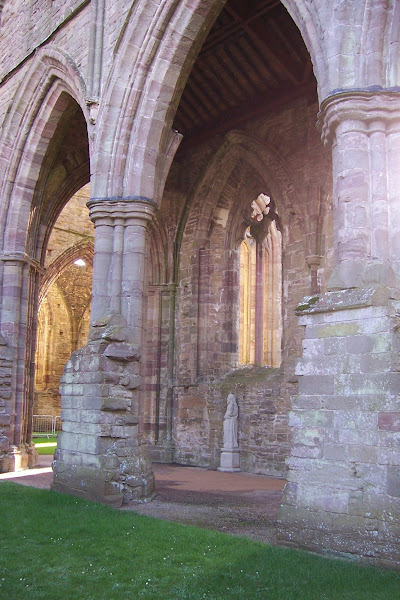
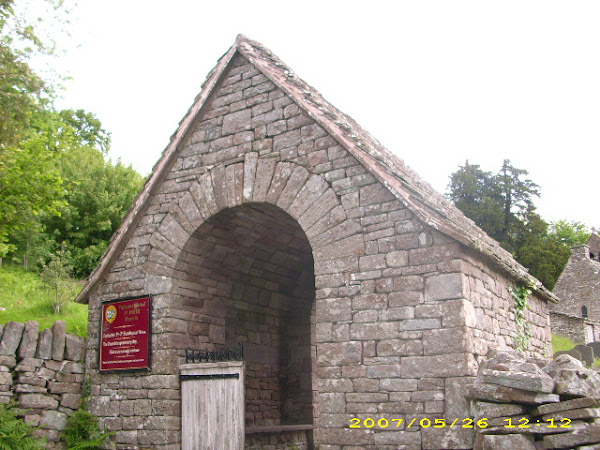
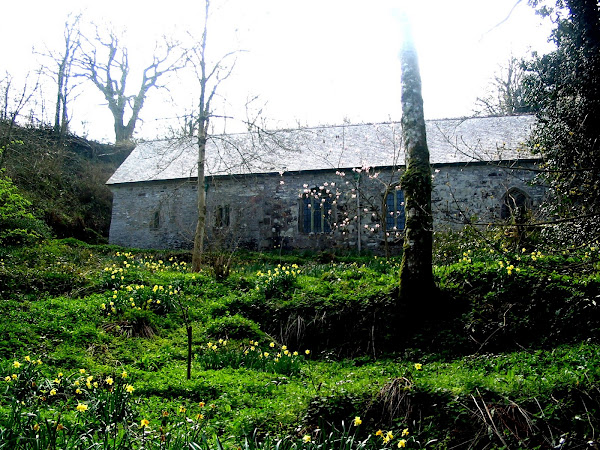
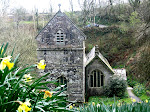
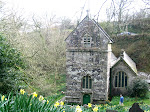
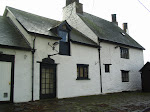
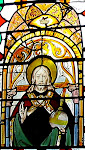
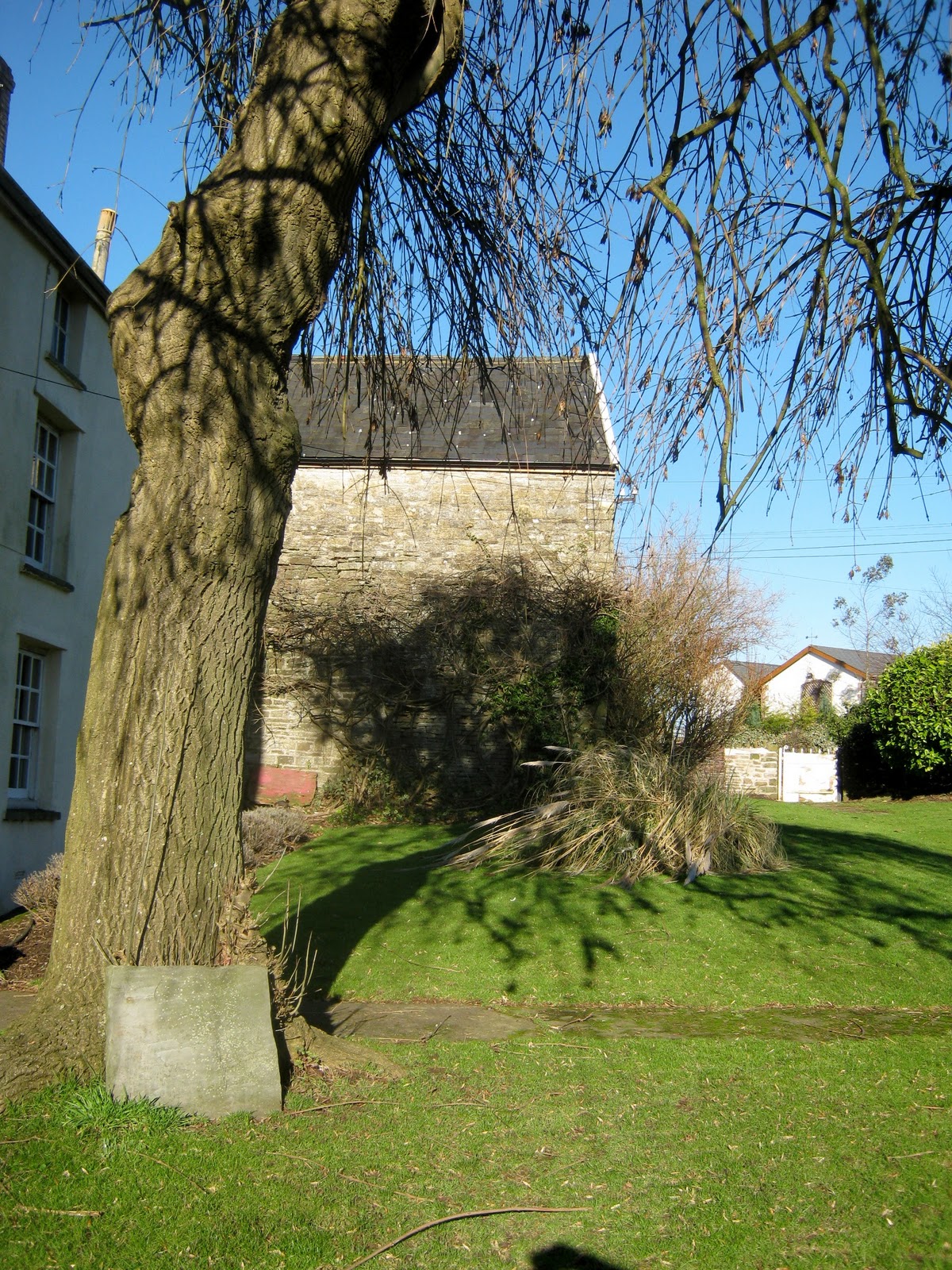
 Every so often I become really enchanted, when Monmouthshire throws up an unexpected gem. The thought that so many saints are standing all around us, urging us on, in a county that has traditionally been so faithful is quite fascinating and encouraging. However, a ‘tip off’ from a friend led me last Friday to a wonderfully interesting place. This was Catsash on the ancient Roman road-villa Julia, which comes out at Christchurch. The interesting mediaeval window had caught a friends eye and he was anxious I should investigate. I decided to find it for myself and I found a mediaeval chapel, where Henry II, after having St Thomas Becket murdered had made a pilgrimage to St Davids, and reputedly stopped a while here in Monmouthshire at the small Capel Curig next to the original Roman road and prayed, reflecting his crime. Both the church and the inn, however, were to yield many more secrets, than even I dreamed, thrilled to discover another gem of a chapel, where it seems wartime dances were held, and the only place large enough to house activities for the hamlet.In fact it is possible the whole farm and original inn was built on the foundations of the original villa,


 The church and later in were raised at the junction of two ancient roads, both used by the Romans. The Ridgeway came from Trellech heights through Wentwood , while the Chepstow Road came via Penhow and Llanbedr. Part of the original road, The Ridgeway can still be seen leading of the road to Abernant, a short distance from the junction. There are no existant records of this Inn as an inn, but there is strong folk memory of this inn and the one at Christchurch, where the monks from the Benedictine Priory at Goldcliffe (who owned and served Eglwys y Drindod (Church of the Holy Trinity) stayed when they said Mass there. These monks were originally from the Abbey of Bec in Normandy.


Saint Curig’s Church in a Roman Villa possibly renamed for St Cyricus by Normans


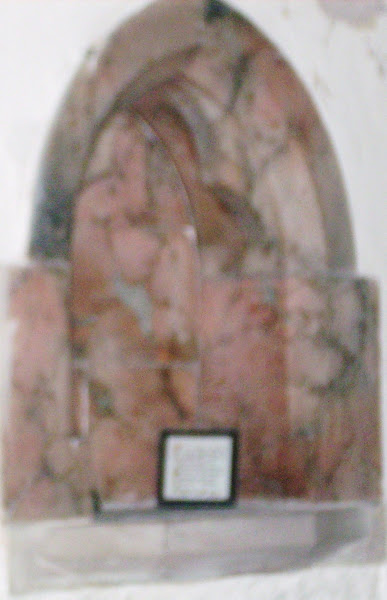
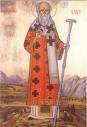
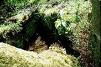
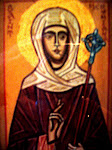
On the face of it, St Curig is a strange saint for Gwent. St Curig, Curig the Blessed was a sixth century Bishop of Llanbadarn-very close to Aberystwyth in Dyfed. Capel Curig also houses a church dedicated to him, possibly because he was born in the area and is commemorated there, and it is possible a small mud and wattles church was erected and dedicated to him. There often seems to be a ‘mirror effect’ with a church dedicated to a saint in North Wales practically ‘twinned’ with one in South Wales as happens with so many. However Wales was part of the one world wide universal church and by 1066, the Normans took advantage ,perhaps of the similarity of their names to change Curig for Saint Cyricus. His mother was JULITTA (and there is a church near Boscastle dedicated to her)In the 4th century ,the Diocletian persecution was raging. Julitta was sidowed with a three year old son. Her life was too dangerous and she decided to leave with her son from Iconium in central Turkey.     Entrance to Priest Hole

So she fled to Saleucia and she found that the governor there, too was persecuting Christians. The four runaways travelled on to Tarsus but they were recognised and arrested. Julitta was tried with her young son and refused to say anything about her life,e xcept she was a Christian. They decided to put her on the rack and beaten. The guards leading her away frightened the child separated from his mother and Alexander in order to pacify him to ok him on to his knee but the child kicked and scratched him and the governor, furious hurled the toddler to the ground killing him with a fractured skull.Julitta did not weep, instead she tahanked God and went cheerfully to torture and death. Her son was martyred. This made the governor angier and he decided Julitta should be disembowelled and then beheaded.Julitta and cyricus were flung outside the city on a heap of criminal corpses but maids rescued the corpses and buried them in a field nearby.


So runs the Life of St Julitta and St Cyricus, martyrs and if the original chapel was dedicated to St Curig, it is possible during the Norman re-organisation that the saint being commemorated was St Cyricus, someone they knew something about and could pass off as similar to the Welsh saint and bishop.The Normans were not unsympathetic to the Welsh church, but could not speak Welsh, nor pronounce the names of he ancient saints, many of whom were retained in the place names if not in the dedication of the church. This was policy of the conquerors, not of the church as an organisation.
 The Chapel of St Curig, Bishop of Llanbadarn, or St Cyricus of Iconium.

This Chapel , at the side of the Roman road, Via Julia was once a Roman Villa and mentioned in the Book of Llandaff as the Villa Cathouen. In the time of Trychan, bishop of Llandaff in the fifth century, it was given to the See by someone called Erbig and described as the Villa of Carhouen, the son of Hundu (hindee) and built along site of the Dowlais brook. It means, (in common withMichaelstone-le-Fedw, St Medwyn’s church west of Newport), it was possibly originally church on an old Roman site, and possible even a Roman ‘house’ church, so common in early British Christianity. Of course, when Romans left, local British owners either lived in them or had no use for them and in this case, the building was handed over to Llandaff shortly after they left . It also may mean that the original church was actually a Roman villa, dedicated to a Welsh saint and in Norman times given the dedication of St Cyricus. In fact there was widespread devotion to both him and Julitta, with churches dedicated to her in Cornwall, but Staircase leading to the loft of the church and blocked the original dedication likely to have been Welsh.
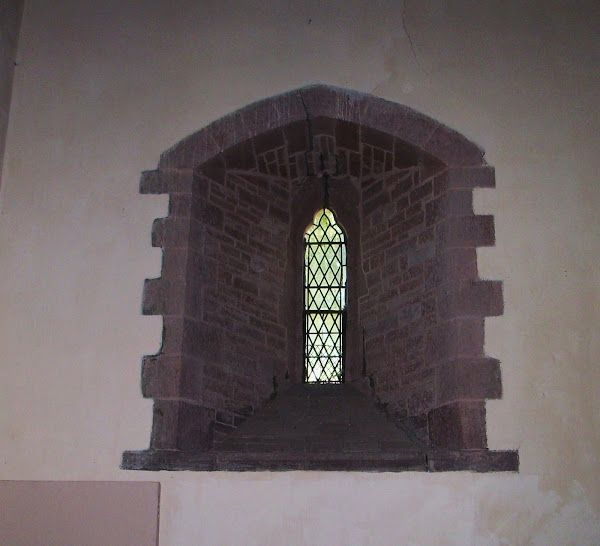
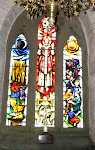
Decorated window, in what is now a wood store.

Outside of the baking oven                    Elizabethan doorways


Add caption

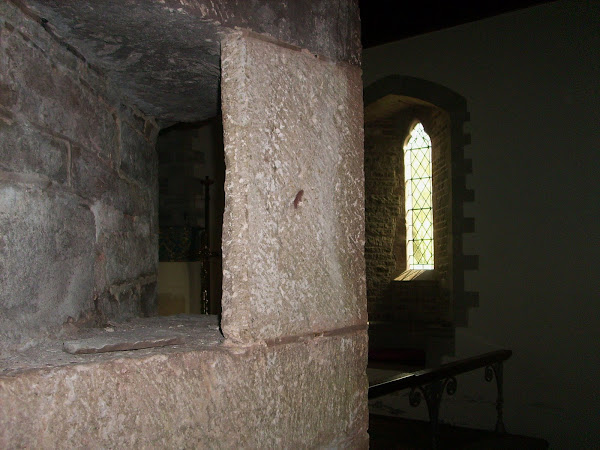
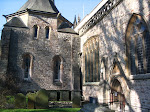
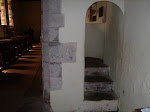
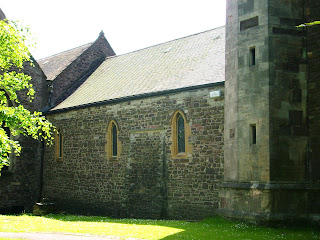
Extra window added to North aisle of church, next to a secret spiral staircase.
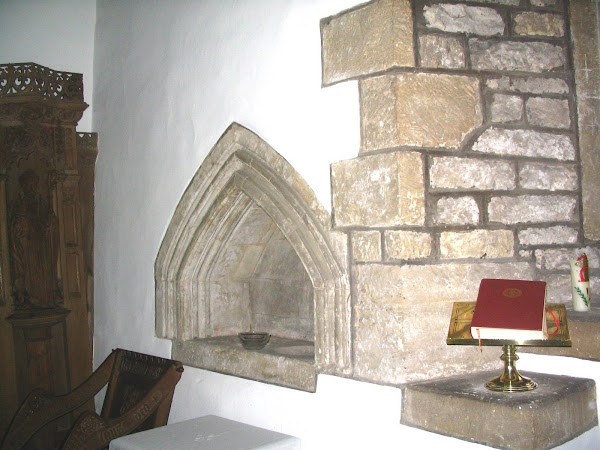
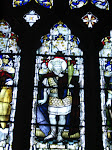
The decorated window, which had first attracted attention in the Eastern wall of the church was dated to the fourteenth century, so it seems, it was rebuilt in Norman times, when it probably gained its new dedicated. Above the window are the coping stones which indicate the original roof lines of an even earlier building. By the thirteenth century, from Erbig’s ‘Villa Calhouen’ it had become Cattisaisshe by 1536, the year of the dissolution of many of the monasteries, a fascinating document had been drawn up (quoted by Sir Joseph Bradney). This was where William Morgan of Pencoed let to Morgan ap Einion for 99 years ‘the old chapel at Caiche Ashe’ in which’ prayers were to be said for his soul by the parson of Langstone’. He left one shilling yearly for four masses ‘for the fowles of his auncestrices, his fowle and his wiff fowle and all that cu’mys of his body’ and £5 for ‘repairs to the walls, windows and roof of the chapel’. Indeed this was the only church between Christchurch and Llanbedr, as I wrote before, many travellers will have stopped here for rest and recuperation, as well as , it seems Henry II on his pilgrimage to St Davids (Tydewi)

The Church and the Inn
Interestingly the Inn at St Curigs was joined to the church, probably at some point after ther Reformation. The church was probably sold off to a publican at some stage, and by 1604 a John Thomas had built a fine Inn next door .There is a shield over the door ,bearing what looks like and alpha and omega mark with John Thom written over it. At the rear of the house are barns , which used to be stables where the horses were kept when it was an inn, and it seems there was also a sign on the house where there was once a sign with a cat sitting in an ash tree.
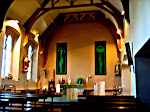
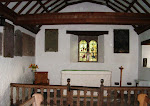
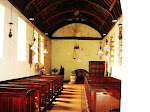
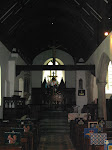
The chapel is approximately 34 feet by 17 feet with a blocked in window of which the coigns remain. Mr and Mrs Rosser, the charming owners of the property were so kind to show me round and the floor of the chapel is used to store wood .It seems an upper floor has been built, with a staircase at the altar end (sanctuary-where the Blessed Sacrament would have been kept).

A Recusant Hideaway (‘secret Catholics’)

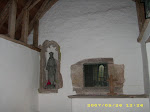
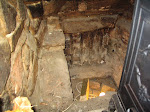
Upstairs , however, there was something which spoke of the history of this interesting chapel. In the wall of the chapel was a small door, wide enough for a slim person to get through, this was leading into the space upstairs. I was told, there was a ‘secret room’in there about 4 feet by 4 feet. Also the windows were of more recent date on the north side, giving a good vantage point. It seems, we had a priest hole, which means, almost certainly the secret masses were said at St Curig’s even after the ‘ Reformation’. Mr Rosser told me there was another priest hole in the house and all the house’s original features were still there, albeit enclosed .


When the middle aged Henry VIII had ‘divorced’ his wife of 35 years Blessed Catherine of England in order to marry the ambitious Anne Boleyn, faithful Catholics were forced to attend Henry’s Church on pain of heavy fines. Going without their sacraments grieved them and many would meet quietly in remote chapels, farmhouses and inns, posting ‘lookouts’ for soldiers and ‘priest hunters’ out to catch priests. These priests were often sons and daughters of devout people of the areas, who trained in Northern France, or even Rome or Spain to be priests, and then put their lives on the line to return to Monmouthshire to serve their flocks. The break with Apostolic succession meant they did not acknowledge the new church, but while outwardly conforming and attending services in what were now parish churches of the new faith, they continued to attend Mass, where priests could be found. The whole business of sending out priests initially was masterminded from Raglan Castle, where the Earls of Pembroke were devout Catholics, and received and sent out priests. When the castle fell to Fairfax following the stay of King Charles I and its subsequent support for the royalist cause, the priests founded their own college at the Cwm farmhouse another remote place near Monmouth, who were led by the blessed saint David Lewis, the ‘Father of the Poor’ a fluent Welsh speaker and son of the headmaster of Abergavenny School.
Other Centres of Catholic Recusancy in Monmouthshire
These heroic priests had a hard life travelling from one place to another, often at night, sleeping in hedgerows and barns for safety . The interesting thing about Monmouthshire was its faithfulness. The nobility of Monmouthshire, with two notable exceptions, stayed true to the old faith, especially the heroic Herbert family, descendants of the Earls of Pembroke.The nobility and others had houses built all over the country which contained places priests could be hidden, should soldiers come. Also inns and farmhouses contained such hiding places and remote churches and chapels. Generally they are in North Monmouthshire, notable examples being at Abergavenny, in the Gunter House, Blackbrook House near Skenfrith, Llanrothal, Bettws Newydd , a priest hole at the old Benedictine Priory Church at Llanciwa Inow Llangua) priest holes at Treowen ,the Joneses being another offshoot of the Herbert family. If priests were kept there, there were often marks around the door, which told other faithful Catholics that it was a Catholic household. These were often the ‘tools of the crucifixion’ nails, hammer etc. and the origin of the phrase ‘five for the symbols at your door’ in the ‘secret catechism’ Green grow the Rushes –O.’

Survival of the Old Faith in spite of the ‘Gunpowder Plot’of 1605

Catholicism managed to survive in North Monmouthshire because of the Welsh language and what is interesting is that in the English –speaking south of the county there were fewer such places , notable examples being the large ‘hen house’ at Llanarth Court near Usk, which kept a priest and a chapel disguised as a hen house throughout the ‘penal times’ , and one at Cafn Mabley between Newport and Cardiff. Since there were so few, it was exciting to find another at Capel Curig here at Catsash, near Christchurch, where our brothers and sisters worshipped at great danger to themselves and where William Thomas himself may have been a faithful Catholic, as such secret passages and priestholes would have had to have been built into that original Inn in 1604, during the reign of James I. Interestingly too this was the year before the Herford rebellion of Catholics in Hereford, over a Catholic woman being refused burial in the local churchyard, when a whole Herefordshire villiage rebelled and fled into Monmouthshire and the summary death of poor, frail father Ainsworth of Skenfrith who was unable to escape. It was also a year before the ‘Gunpowder plot’ where a group of desperate young Catholics tried to blow up the Houses of Parliament. This ‘plot’ never had any chance of succeeding, being managed from the first by the government. James I in deference to his mother was determined to be tolerant of both Catholics and Puritans forced to flee England (as Wales had by now , according to Henry VIII ceased to exist (1536) and the wealthy men in government, grown rich on the lands and the monasteries, which they had made into nice homes for themselves, were determined the Church should not be tolerated and worked hard at ‘spin’ against Catholics which was highly effective , and still exists to this day in some quarters.
Life at Capel Curig during Recusant times
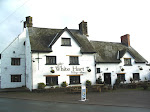
In fact only the government had gunpowder and so Lord Burleigh knew about it all along and encouraged the ‘rebels’ knowing such a plot would alarm Londoners so that they would know that Catholics were evil and traitors and procured horrible lingering deaths for all these men, who would not have been driven to this extreme except for the raft of about twenty eight laws passed against people of the original faith of these islands. In spite of this, the county remained faithful, because of the support of the local aristocracy who protected their priests and people as far as they could, and sought for the welfare of the faithful, even though they had to attend the parish church on Sundays to escape punitive fines, some families fleeing to France for a hundred years and returning when the persecution ended. Yet the county remained staunch in its support for the Old Faith, and whilst it was disappointing all these secret places at Capel Curig were boarded up, it was warming to know that here was a place where John Thomas had kept a priest pr at least maintained one and masses were said, people were buried, others were christened and married and where the faithful gathered on dark nights secretly and the old Bishop Curig of Llanbadarn had nodded in approval. Lookouts would warn of soldiers and the priest pushed into his hole and hidden, whilst worshippers pretended to be patrons at the pub. Another such inn in South Monmouthshire is the White Hart at Llangibby (Llancybi) where a priest hole can still be seen displayed behind a fireplace. After the death of the beloved Father Lewis (now ‘Saint David Lewis’ of Usk, though he and his priests served the whole of the county,the community lost heart, but within a short time, Franciscans and other priests returned to take over where they had left off, proving that as Christ had promised Peter, the ‘gates of hell would never prevail against the Church’-the mission would go on.
Original Features Enclosed
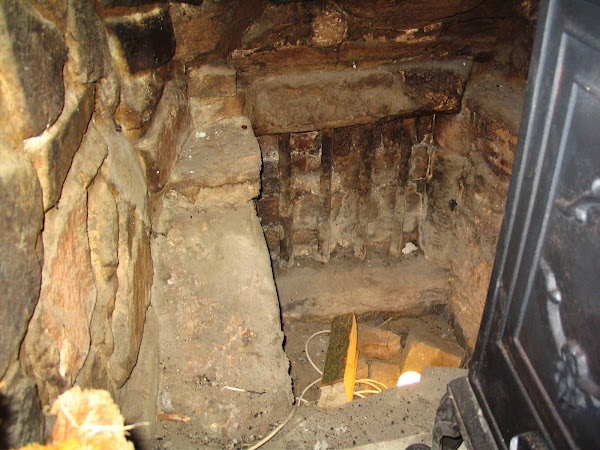
A big bake oven from the original inn was still there at the extreme south of the inn and the large inglenook fireplace in the centre of the inn, was also enclosed. I saw large spacious rooms and some Elizabethan black oak doorways and passageways. Then Mr Rosser told me too, that there was a second priest hole in the house, leading from another enclosed spiral staircase. There are heavy oak ceiling beams. Fred Hando, writing in 1957 said he had heard of a secret staircase at Catsash Inn and Mrs Rosser produced a note written by Lady Watson, wife of Sir Thomas Watson, who owned the house. He said the letter contained the following words:

Catsashe secret stairs starts from passage going in cellar in the body of a wall-spiral stone staircase goes up two floors-small place about 4 feet square in wall of the bedroom, oiver th dining room facing the lawn on the first floor Told to Sir Thomas Watson by Parfitt(builder)14 May 1900.

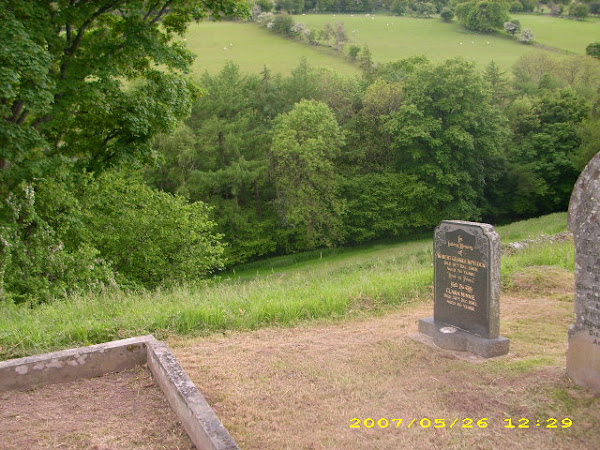
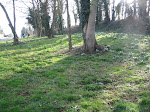
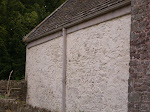
One one of the photos, the ‘bulge’ with the staircase may be seen. These ‘bulges’ were not afterthoughts but considered planning for a staircase or fireplace built to give more room in the house. I was also shown part of the garden he had grassed over, originally a churchyard, which he reverently pointed out,

Mr Rosser is one of those unsung heroes who has maintained and repointed the chapel to preserve it at his own expense without any help from grants from anyone, simply to preserve our heritage, which is what all loyal men of Monmouthshire do.He loves the old chapel and its heritage and it has remained a place of worship and Mass centre for much longer than the age of the church. I would like to thank him and his wife for his kindness to me and the enthusiasm with which I was shown around.The stables were still there where the Ostlers would change horses and were Catholics would ride in for Mass and a jar afterwards! This is very much a listed private property and I am very grateful for seeing.it

Thursday, January 20, 2011

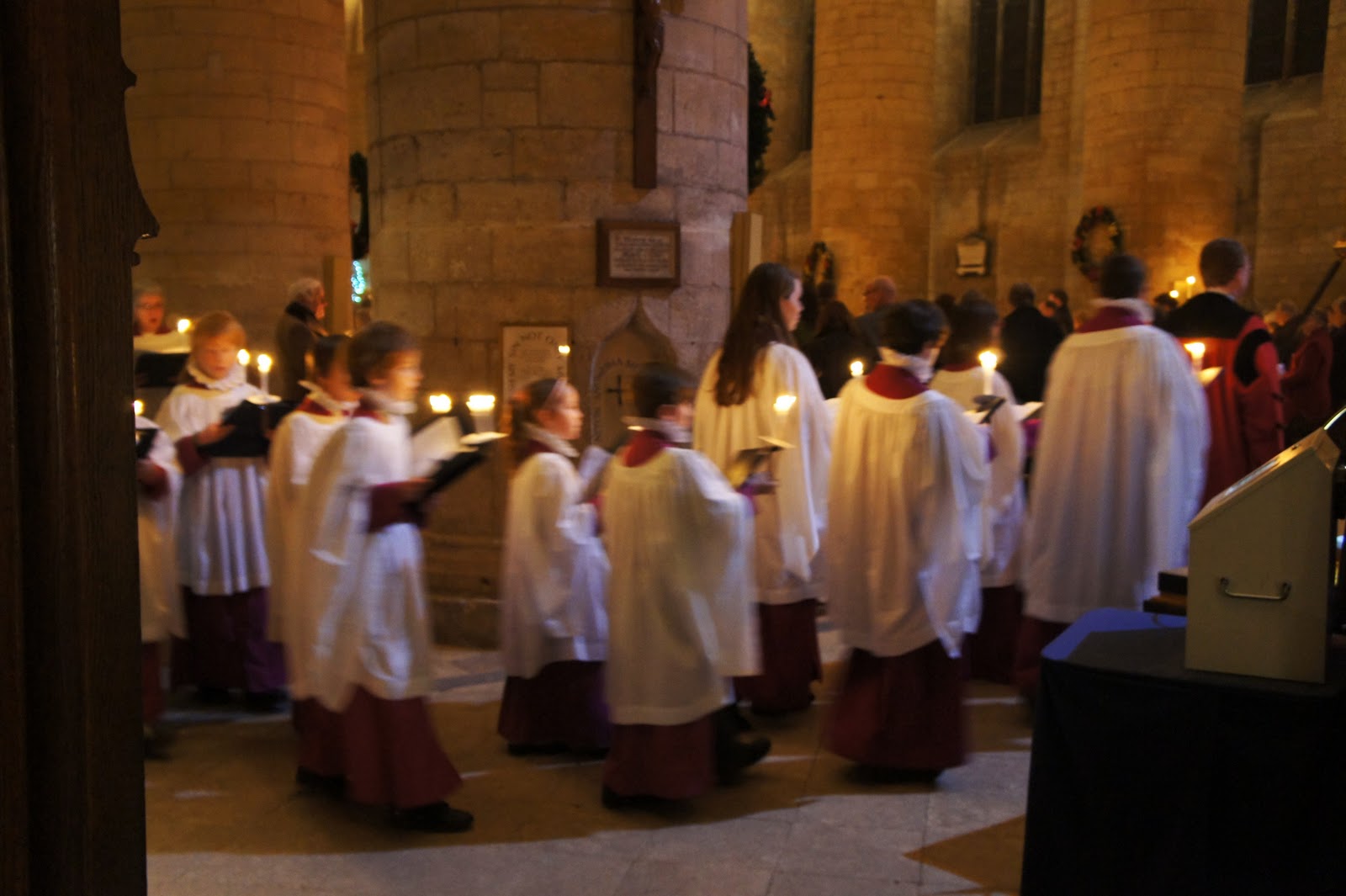
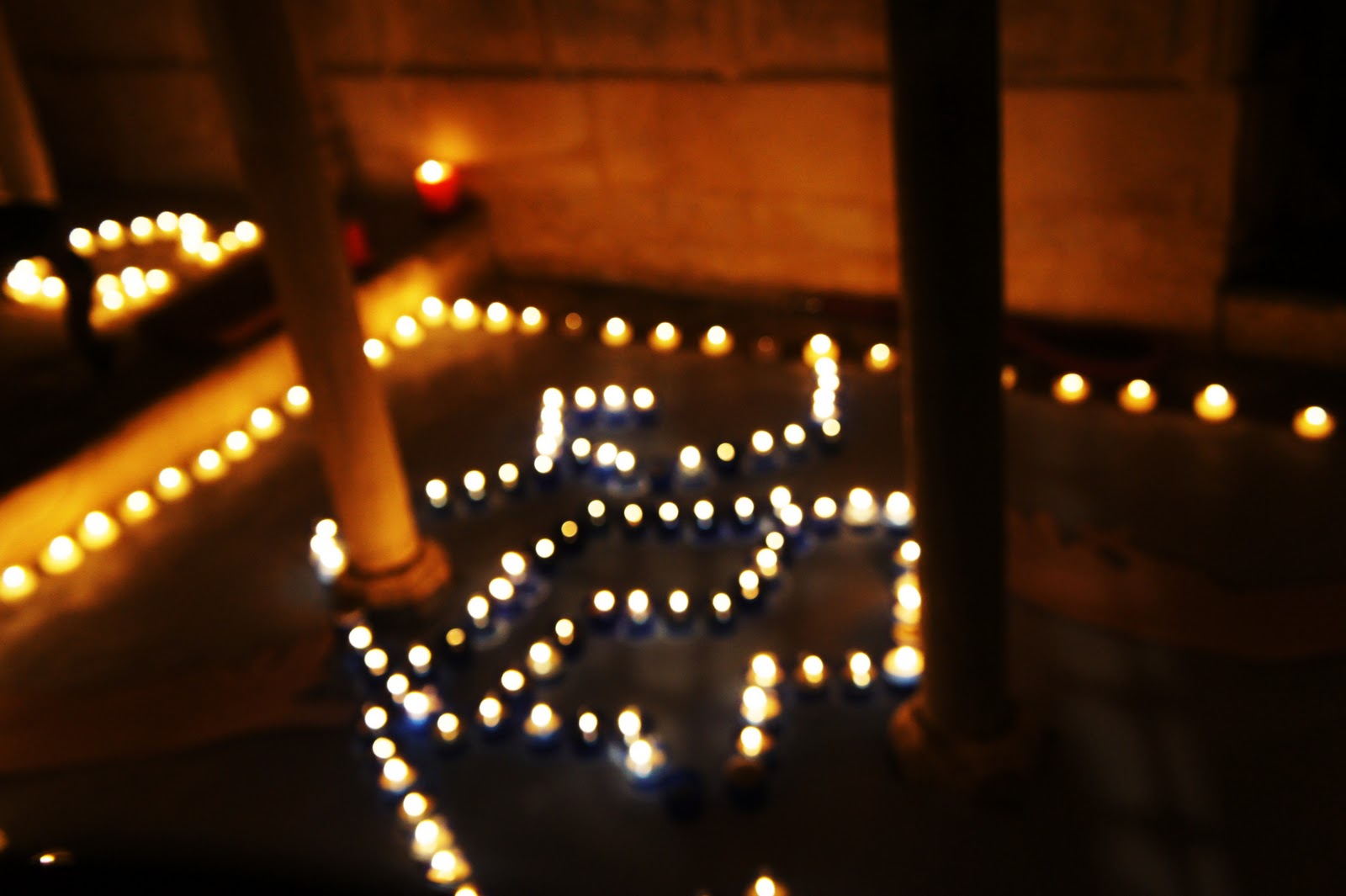
EPIPHANY AT TEWKESBURY ABBEY-Festival of 1000 Lights!

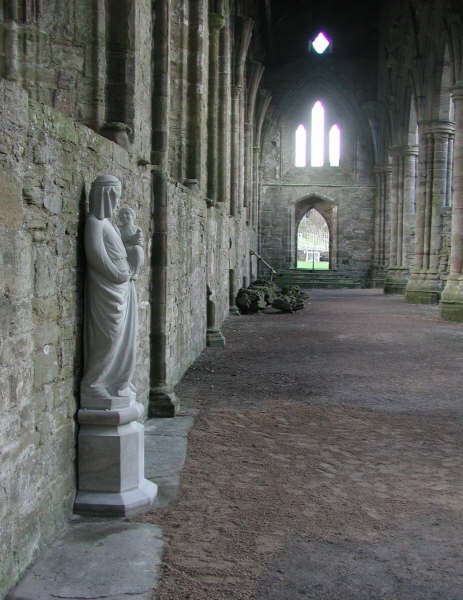
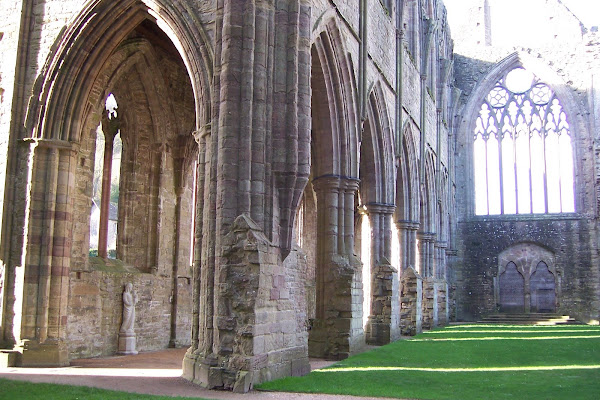
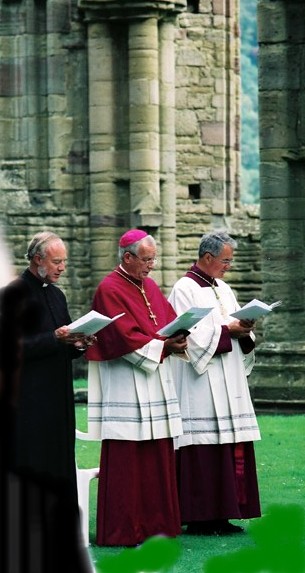
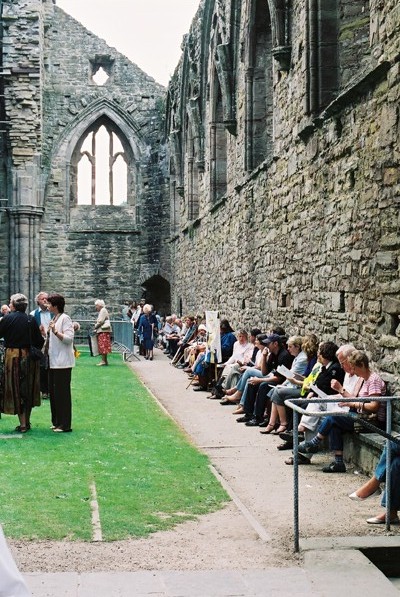
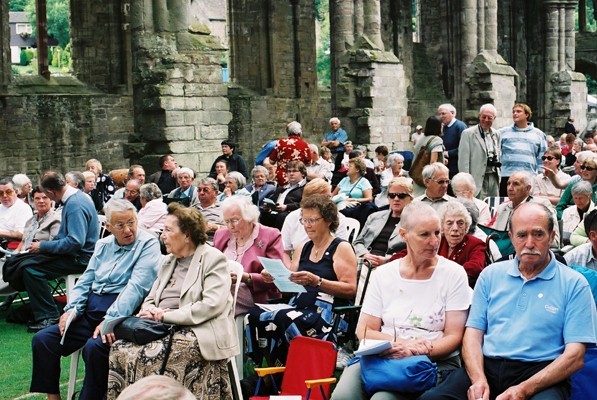
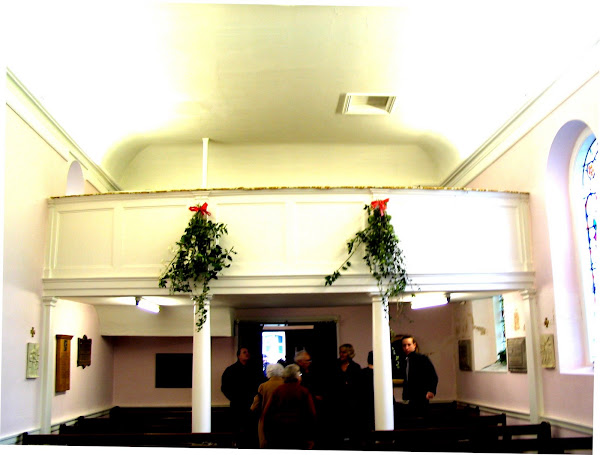
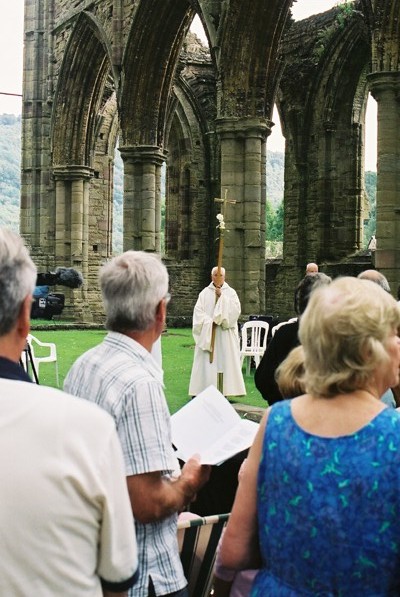
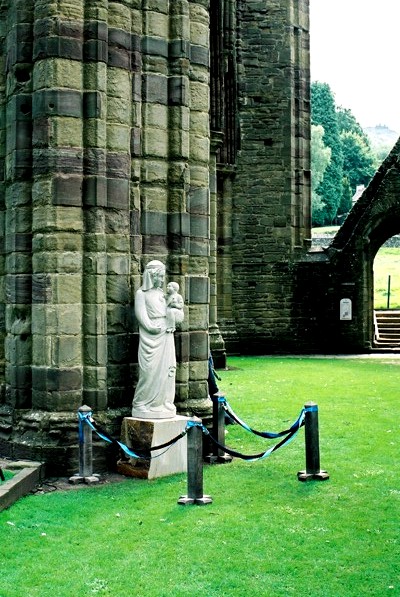
On the Feast of the Baptism of the Lord, an Epiphany  Carol Service (complete with mulled wine and mince pies was held at beautiful Tewkesbury Abbey) This former (now Anglican)Benedictine Abbey has a very close connection with Gwent, as its monks once inhabited Goldcliff Abbey and served it, as the monks of Gloucester were granted St Gwynlliw's (Woolos') monastery in Newport and administered it. This included Marshfield church near Peterstone and various other churches including Bassaleg. The singing of Lullay mine lyking by Holst and many other wonderful carols in the spaces around the abbey church was stunning and a worthy tribute to Carlton Etherington, Choirmaster and Benjamin Nicholas the superb organist. Choirs from all over the Anglican spectrum in the area joined together to promote an audio visual feast. The singing of Bethlehem of Noblest Cities and The First Noel, complete with choir kings and full organ was very inspiring as was the work of hundreds of volunteers, providing all the candle displays and mince pies. It was very happy and ecumenical occasion, as many Catholics attended, complete with Christians of all Protestant denominations! At the end chalk was blessed and each Christian given a piece of chalk to draw over the lintel of their house , proclaiming it to be Christian.A wonderful evening enjoyed by many, and much credit must be given to Rev Paul Williams the vicar and all his team for organising it for the whole community!


Wednesday, January 5, 2011

PREACHING THE CRUSADES IN GWENT!-Part TWO-PATRISHOW, USK, CAERLEON, NEWPORT
PATRISHOW
After leaving Llanthony, Archbishop Baldwin and Prior Gerald made their way, along with their recruits to the next port of call. This was the highly popular pilgrimage site and healing well at Patrishow. Here St Issui the Martyr had met his end tending to a homeless stranger. You can search this blog to find the rest of the story. The bridge over the stream still is said to  contain a small cross incised by the visitors of 1188

 St Issui (Welsh for Esau) off the family of Brychan, rapidly gained a growing entourage of pilgrims visiting the Martyr's grave. By Norman times, a stone building had been erected, and in addition the martyr's hovel transformed into a room adjoining, and other buildings. The Bishop of Hereford had declared Issui a saint, so it became popular. Here , under the powerful lantern cross Baldwin preached the sermon.
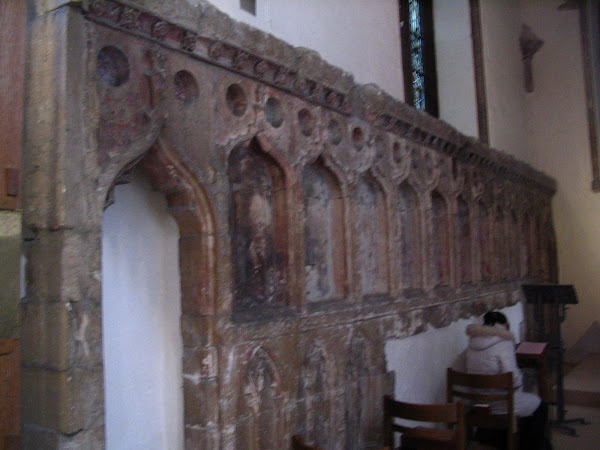
Beautiful Mediaeval Rood Screen still there
  Asking the saint for his intercession in order for the local people to find the bravery to come forward, incense wafting around the Archbishop, people began to come forward, embracing the Cross held by Gerald. An indulgence was attached to the pilgrimage. All those who were without sin, had attended confession and Mass on that day were entitled to a full uindulgence of all their mortal sins if they went on the Pilgrimage. In addition, perhaps, villeins, who would be only to happy to take the chance of a new life away from the drudgery they endured working on the farm.

Pilgrims in the Church at Patrishow
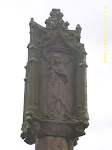
Gerald and Baldwin preached at the foot of this cross

ABERGAVENNY

Preaching Cross near Priory, Abergavenny

We are told the meeting was held at the castle, but the Square was not far away and probably orginally held the old Preaching cross before its destruction by the Protestant authorities.


USK/ Wsg


From Abergavenny, Archbishop Baldwin and his retinue passed by on his way to Newport by way of Usk and Caerleon.’ At the castle at Usk , a multitude of people , influenced by the archbishop ‘s sermons and by the good and worth Bishop of Llandaff were signed with the cross. It is remarkable’ Gerald continues that ‘many of the most notorious murderers, thieves and robbers of the neighbourhood were here converted, to the astonishment of the spectators!’.


CAERLEON
Archbishop Baldwin at Caerleon

 At Caerleon, we may have expected the Crusade preachers would have met with a tremendous reception. Gerald however, seems to have forgotten their mission in his eagerness to describe the ancient city.His comments can be seen in Chapter One. ‘Caerleon Means The City Of Legions, Caer, In The British Language, Signifying A City Or Camp, For There The Roman Legions, Sent Into This Island, Were Accustomed To Winter, And From This Circumstance It was styled The City Of Legions

This city was of undoubted antiquity, and handsomely built of masonry, with courses of bricks, by the Romans.

Many vestiges of its former splendour may yet be seen; immense palaces, formerly ornamented with gilded roofs, in imitation of Roman magnificence, inasmuch as they were first raised by the Roman princes, and embellished with splendid buildings; a tower of prodigious size, remarkable hot baths, relics of temples, and theatres, all inclosed within fine walls, parts of which remain standing. You will find on all sides, both within and without the circuit of the walls, subterraneous buildings, aqueducts, underground passages; and what I think worthy of notice, stoves contrived with wonderful art, to transmit the heat insensibly through narrow tubes passing up the side walls.

Julius and Aaron, after suffering martyrdom, were buried in this city, and had each a church dedicated to him. After Albanus and Amphibalus, they were esteemed the chief protomartyrs of Britannia Major. In ancient times there were three fine churches in this city: one dedicated to Julius the martyr, graced with a choir of nuns; another to Aaron, his associate, and ennobled with an order of canons; and the third distinguished as the metropolitan of Wales. Amphibalus, the instructor of Albanus in the true faith, was born in this place. This city is well situated on the River Usk, navigable to the sea, and adorned with woods and meadows.

The Roman ambassadors here received their audience at the court of the great king Arthur; and here also, the archbishop Dubricius (Dyfrig) ceded his honours to David of Menevia, the metropolitan see being translated from this place to Menevia, according to the prophecy of Merlin Ambrosius.

"Menevia pallio urbis Legionum induetur." "Menevia shall be invested with the pall of the city of Legions."

Not far hence is a rocky eminence, impending over the Severn, called by the English Gouldcliffe or golden rock, because from the reflections of the sun's rays it assumes a bright golden colour:

"Nec mihi de facili fieri persuasio posset, Quod frustra tantum dederit natura nito rem Saxis, quodque suo fuerit flos hic sine fructu."

NOVUS BURGO-(NEWPORT) (Newboth/Casnewydd)

Leaving Caerleon, the party passed on to Newport where they spent the night. The enthusiasm for the Crusade was aroused by their indignation at the peril of the Church in the Holy Land. The archbishop arrived in Newport followed by all the recruits from Usk and Caerleon, many of whom were known personally to the Newport people. So the crowd were very excited. At the ale houses, the castle entrance of the Motte and Bailey Castle and anywhere where people could gather together interested men discussed the topic of the day. Among those converts, whose enthusiasm for the cause had brought them into town, a crowd of anxious listeners assembled, eager to obtain any information which they could give. Silently they listened to the accounts given by the archbishop of the witnesses to the sack of Jerusalem and the Archbishop’s dignified bearing and authority.

The following morning there was a scene of extraordinary commotion at an early hour. People from the outlying districts made their way into town, and an immense crowd gathered around the castle ,long before the Archbishop was expected to address the assembly. This is not the present castle.

At last the procession came forth . The Archbishop was attended by William de Salso Marisco , Bishop of Llandaff, Alexander, Archdeacon of Bangor, the learned Gerald and many of the clergy of the neighbourhood. The Chief Normans of the district held places of importance, side by side with many of the native nobility. Behind the archbishop the soldiers of the party were drawn up.

Gerald does not tell us, whether the archbishop preached to the assembly from the castle green, from the churchyard or from the cross, the remains of which can be seen built into the wall at the corner of Havelock Street and Stow Hill. However the exact spot where the sermon was preached is not important .The eloquence of the archbishops preaching roused a great enthusiasm in the listeners and many Newport men enrolled in the Crusades to make the holy places accessible to pilgrims again.
Cardiff
The party then passed out of Gwent to Cardiff, where they spent the night at the Castle before continuing on their journey.

Gerald’s View of the Quality of the Welsh men as fighters and bowmen.
Gerald gives a full account of the Welsh and their habits. They were, he said, light and active, hardy rather than strong and entirely bred up in the use of arms.
They lived on the herbs and the product of their hunting and paid no attention to commerce, shipping or manufactures. Their love of hunting was so great that in times of peace, the young men went out early and did not return until late. Going into the deep forests of Wentwood for example, they learned to endure fatigue and acquired the act of fighting by accustoming themselves to the use of weapons.

Their chief activity was the defence of their country and their liberty, for which they fought, underwent hardships and willingly sacrificed their lives. When the trumpet sounded the alarm, or the warning beacon burst into flames, the husbandman rushed eagerly from his plough as the courtier from the court. Though unarmed they dared to attack an armed foe; through on foot, they defied cavalry and by their activity and courage generally proved victorious.

The men of Gwent were more accustomed to war, more famous for valour, and more expert in archery than those of any other parts of Wales. Their bows were not made of horn or yew, but fashioned from elm , unpolished and rude, but stout’ Giraldus Cambrensis/Gerald the Welshman 1188.


1. Many thanks to the Library Museum and Art Gallery, Newport for getting out the head of the original preaching cross . Gerald and Baldwin would have preached beneath this very cross.

2. Newport have included a new Replica of the original cross for the High Street.

3. The base of the Original Cross is in St Woolos (Gwynlliw's) Churchyard, and its original stite was half way up Stow Hill.

4. The Chapel that Gwynlliw built or Our Lady is still part of the St Woolos(now) Anglican Cathedral.

Tuesday, January 4, 2011

PREACHING THE CRUSADES IN GWENT!-Part ONE-LLANTHONY


Gerald of Wales and Archbishop Baldwin arrive in Llanthony
Many people use the term ‘Crusades’ to beat the Catholic Church with the broom of intolerance and bigotry. Sadly these people either completely ignore the facts or have their own agenda, because no historian ,who is an expert on these times agrees with the idea that Christians made war on peaceful Muslim people.The Media in general is also unschooled and ignorant of the facts. Dr Thomas Madden, Professional Historian and Professor of History and Media Studies at the Centre for Renaissance and MMediaeval Christianity of St Louis University, USA has written several books ‘The Fourth Crusade, the Fall of Constantinople’ and ‘A Concise History of the Crusades’. He is Editor of The Crusades magazine . In fact ,Professor Madden says that no serious solid scholarship supports this comonly held but skewed view. Even  non Christian scholars say such a view is nonsense. The 'Crusades' were no act of barbarism among  peaceful Muslims but a response to the aggression of the Selkjuk Turks who swept across Asia Minor, taking the whole of Turkey from the Christians, and either forcing conversion or killing or making life very difficult or those who would not become Muslims. Even Arabs of other faiths received this treatment.
                                                          
THE CRUSADERS AND CHURCH DID NOT USE THE WORD 'CRUSADE'. It was a Pilgrimage to defend and relieve their Christian brothers and sisters.They called themselves 'Pilgrims'.‘Crusader’ is a modern term.Sadly at times, groups of pilgrims did break off the main pilgrimages on the way to the Holy Land and become bandits. In the Rhineland, many Jews fled to the Bishops' palaces as men set about robbing Jews. Mankind is sinful and these bandits were no exception. The act, in some cases, they even attacked Bishops protecting the Jews, speaks volumes as to their true intent. Some people will always use popular causes to line their pockets.

Pilgrims 1095-Council of Clarimont.


Knight Pilgrims liberate Christians
 After more attacks by Muslims, the Emperor of Contantinople sent an urgent request for help to Rome. The lands which had been brutally conquered were the very ones evangelised by St Paul’ . The Emperor pleaded with the Western Church to come as an act of Brotherly love and solidarity with Christians there to defend them from Muslims and expel them from his lands.. The Muslims waged ‘Jihad’-(holy war) against Christians to force conversions.The crusaders could not travel by sea because they did not own the ports in the Middle East. The journey took them from France, through Italy, through Eastern Europe and down through what is now Turkey. The journey was long, and deadly. Factors such as weather, disease, and supplies slowed down the crusader’s journey. Many crusaders died before ever reaching Jerusalem. Those that reached Jerusalem were so greatly weakened that they did not have much strength left. By 1097, 10,000 men had gathered to fight. There was no commander of the crusades. Bishop Adbeaner was appointed leader, but he preferred to let others lead. The first target for the crusaders was Nicea. Then they went after Antioch, which took seven months to defeat. Then the crusaders targeted Jerusalem. The first initial attack of Jerusalem failed because of lack of supplies. From eyewitness reports (a monk named Fulcher), we know that once the crusaders got over the Jerusalem wall the Muslim defenders ran

In 1076, Muslims took Jerusalem and there was nothing left of Eastern Christian Church,evangelised by St Paul Pilgrims were killed. Turks tore down churches and robbed and killed Christians. All this built up to calling of the Great Pilgrimage, NOWADAYS called First Crusade.Pope Urban and the saintly Bernard of Clairvaux called an armed pilgrimage to help them. Armed pilgrimages were not unknown in the Middle ages.
                                                                                    The first pilgrimage was an act of Penance.Sin had
                                                                                    to be forgiven. On their clothing the pilgrims wore a
Third Crusade -The Crusade of Kings
    On their clothing, they wore the sign of the cross the Christus stigmatus. Thus they were visibly a pilgrim .They would, as such receive hospitality along the way. This was always going to be military. They expected trouble and the pope forbade women, children or non combatants. This was only a defence of the lands overrun from Christians by Muslims. In fact in the Thirteenth Century, this was codified in Canon Law-such an armed pilgrimage could ONLY happen in response to aggression and as an act of defence.


Liting of Siege of Antioch
2nd Crusade was  a reponse to Attack on the Christian City of Odessa in 1144

3rd Crusade: Conquest of Jewish/Christian City of Jerusalem 1187AD.
4th Crusade: Unhappy ‘Childrens’ Crusade with disastrous consequences.


There were conventionally five crusades but it is-just a convention. There were many of them and they went on for centuries. St Francis of Assissi participated in 5th Crusade. He was not a kind of mediaeval hippy. In Egypt, he tried to convert the Muslims to Christianity then there would be no more bloodshed as lands would be returned to Christians. Francis was a pacifist. He tried to convince everyone to stop fighting. He felt the Christian cause was just in protecting Christian and the Churches St Paul had evangelised.There were certainly no critics of Crusades in the Middle Ages. The Poor Knights of Christ and the Pilgrims were clearly doing God’s work. The Sultan made an offer to Crusaders so they would to leave Egypt. St Francis was allowed into the Sultan’s tent to plead for peace but was not killed so that the negotiations would be harmed.

The rest of the ‘Crusades’ were to defend Europe itself from Muslim ‘Jihad’. This culminated in the threat from a Muslim fleet on Rome at Lepanto, where Don John of Austria with a much smaller fleet of hastily gathered boats, sailing under the Ensign of the Virgin Mary , and the Entire Western church praying the Rosary that Day , conquered and dispersed a much larger Muslim fleet.

Also the Second Siege of Vienna 1683

The Vast Muslim army returned again to lay siege to Vienna. The city had refused the Muslim army entrance and before the battle King Jan of Poland had placed his army under thepersonal protection of the Blessed Virgin Mary. A Polish army and other Christian armies arrived to put the Muslims to flight. They had delayed their attack on the suffering city, where many were dying of hunger, and not expected a combined Christian fight back.The feast of the Holy Name of Mary is celebrated on 12 September on the liturgical calendar of the Church in commemoration of the victory in this battle of Christian Europe over the Muslim forces of the Ottoman Empire. After the battle Pope Innocent XI, wishing to honor Mary, extended the feast to the entire Church. This battle ended the hopes of the Ottomans to make Europe a Muslim country.
Such then is the actual history of the situation regarding ‘Crusades’ until the seventeenth century, recently it seems, and sadly revived
In Monmouthshire Archbishop Baldwin and Gerlad of Wales 'preach' the Great Pilgrimage.


In spite of the efforts of the ‘Poor Knights of Christ’, a religious military order set up to defend pilgrims, by 1187 news had reached Gwent that the Turkish leader Salah’ddin had attacked and captured Jerusalem, with its treasures and relics ,the Temple of Jerusalem and attacked Christian pilgrims trying to reach the Holy Places. The people of Christian Europe were outraged by this, as the conquerors refused to allow Christian pilgrims access to the temple, the Church of the Holy Sepulchre and the Church of the Nativity in Bethlehem, as well as all the other places where Jesus walked.


Preparations were made to defend the faith and restore the take holy places. Henry II proclaimed the Third Pilgrimage Crusade, and sent Archbishop Baldwin of Canterbury to preach it in Wales for recruits to protect and save the Holy Places. Geraldus Cambrensis (Gerald the Welshman ) was born in Manorbier near Tenby schooled at St Peter’s Abbey at Gloucester, which long had an association with educating Welsh nobles, studied theology in Parisand throughout his life fought strenuously for he Welsh Church and at St David’s. The Welsh King Llewellyn gave him great praise for all his efforts:


Many and great wars have we Welshmen waged with England


But none so fierce and great as his who fought the king and the Archbishops


And withstood the might and the whole clergy and people of England


For the honour of Wales!


Gerald fought hard to make St David’s an archbishopric, free from the influence of the English Church and the control of Canterbury. He was also frustrated in his attempt to become Bishop himself. The King probably chose Gerald to go on the Great Pilgrimage preaching because he was known as a defender of the Welsh Church and spoke Welsh, which everyone did.This would have removed any prejudice against an English archbishop. Gerald wrote an account of the journey around Wales which gives a great deal of information to us of these colourful times.

Loft walls of Llanthony Priory
Llanthony Priory was repeatedly attacked by the Welsh
 Llanthony Priory the first Stop to Recruit for the Third Crusade-that of the Lionheart.
Baldwin and Gerald and his party entered Wales near Hereford and then went on to Brecon. Passing through the wild pass of Coed Grono , they reached Abergavenny. Near at hand in a narrow valley stood the monastery of Llanthony.He wrote:
The beautiful columns o Llanthony Priory
In the deep vale of Ewyas, which is about an arrow-shot broad, encircled on all sides by lofty mountains, stands the church of Saint John the Baptist, covered with lead,and built of wrought stone; and, considering the nature of the place, not unhandsomely constructed, on the very spot where the humble chapel of Dewi, the bishop, had formerly stood decorated only with moss and ivy. A situation truly calculated for religion, and more adapted to canonical discipline, than all the monasteries of the British isles.(Capel Dewi is part of St David's Church opposite the Abbey ruins and may be visited)
 It was founded by two hermits, in honour of the retired life, far removed from the bustle of mankind, in a solitary vale watered by the river Hodeni.(Welsh Honddu) From Hodeni it was called Lanhodeni, for ‘Lan’ signifies an ecclesiastical place. This derivation may appear far-fetched, for the name of the place, in Welsh, is Nanthodeni. Nant signifies a running stream, from whence this place is still called by the inhabitants Landewi Nanthodeni, {59} or the church of Saint Dewi upon the river Hodeni. The English therefore corruptly call it Lanthoni, whereas it should either be called Nanthodeni, that is, the brook of the Hodeni, or Lanhodeni, the church upon the Hodeni.
Owing to its mountainous situation, the rains are frequent, the winds boisterous, and the clouds in winter almost continual. The air, though heavy, is healthy; and diseases are so rare, that the brotherhood , when worn out by long toil and affliction during their residence with the daughter, retiring to this asylum, and to their mother's lap, soon regain their long-wished-for health. For as my Topographical History of Ireland testifies, in proportion as we proceed to the eastward, the face of the sky is more pure and subtile, and the air more piercing and inclement; but as we draw nearer to the westward, the air becomes more cloudy, but at the same time is more temperate and healthy.
Underneath the cloister arches....


 Here the monks, sitting in their cloisters, enjoying the fresh air, when they happen to look up towards the horizon, behold the tops of the mountains, as it were, touching the heavens, and herds of wild deer feeding on their summits: the body of the sun does not become visible above the heights of the mountains, even in a clear atmosphere, till about the hour of prime , or a little before. A place truly fitted for contemplation, a happy and delightful spot, fully competent, from its first establishment, to supply all its own wants….


It seems worthy of remark, that all the priors who were hostile to this establishment, died by divine visitation. William, who first despoiled the place of its herds and storehouses, being deposed by the fraternity, forfeited his right of sepulture amongst the priors. Clement seemed to like this place of study and prayer, yet, after the example of Heli the priest, as he neither reproved nor restrained his brethren from plunder and other offences, he died by a paralytic stroke. And Roger, who was more an enemy to this place than either of his predecessors, and openly carried away every


thing which they had left behind, wholly robbing the church of its books, ornaments, and privileges, was also struck with a paralytic affection long before his death, resigned his honours, and lingered out the remainder of his days in sickness
Beauty of Llanthony and its holiness

In the reign of King Henry I the fame of such a religion attracted hither Roger, bishop of Salisbury. He loved virtue, even in another man, and a great proof of innate goodness to show a detestation of those vices which hitherto have not been avoided. When he had reflected with admiration on the nature of the place, the solitary life of the fraternity, living in canonical obedience, and serving God without a murmur or complaint, he returned to the king, and related to him what he thought most worthy of remark; and after spending the greater part of the day in the praises of this place, he finished his panegyric with these words: "Why should I say more? the whole treasure of the king and his kingdom would not be sufficient to build such a cloister." Having held the minds of the king and the court for a long time in suspense by this assertion, he at length explained the enigma, by saying that he alluded to the cloister of mountains, by which this church is on every side surrounded.

But William, a knight, who first discovered this place, and his companion Ervistus, a priest, having heard, perhaps, as it is written in the Fathers, according to the opinion of Jerome, "that the church of Christ decreased in virtues as it increased in riches," were accustomed often devoutly to solicit the Lord that this place might never attain great possessions. They were exceedingly concerned when this religious foundation began to be enriched by its first lord and patron, Hugh de Lacy, and by the lands and ecclesiastical benefices conferred upon it by the bounty of others of the faithful: from  their predilection to poverty, they rejected many offers of manors and churches; and being situated in a wild spot, they would not suffer the thick and wooded parts of the valley to be cultivated and levelled, lest they should be tempted to recede from their
heremitical mode of life.
His Comparison with Llanthony Secunda ,Gloucester……
But whilst the establishment of the mother church increased daily in riches and endowments, availing herself of the hostile state of the country, a rival daughter sprang up at Gloucester, under the protection of Milo, earl of Hereford; as if by divine providence, and through the merits of the saints and prayers of those holy men


(of whom two lie buried before the high altar), it were destined that the daughter church should be founded in superfluities, whilst the mother continued in that laudable state of mediocrity which she had always affected and coveted. )
Let the active therefore reside there, the contemplative here; there the pursuit of terrestrial riches, here the love of celestial delights; there let them enjoy the concourse of men, here the presence of angels; there let the powerful of this world be entertained, here let the poor of Christ be relieved; there, I say, let human actions and declamations be heard, but here let reading and prayers be heard only in whispers; there let opulence, the parent and nurse of vice, increase with cares, here let the virtuous and golden mean be all-sufficient. In both places the canonical discipline instituted by Augustine, which is now distinguished above all other orders, is observed.....

The mountains are full of herds and horses, the woods well stored with swine and goats, the pastures with sheep, the plains with cattle, the arable fields with ploughs; and although these things in very deed are in great abundance, yet each of them, from the insatiable nature of the mind, seems too narrow and scanty. Therefore lands are seized, landmarks removed, boundaries invaded, and the markets in consequence abound with merchandise, the courts of justice with law-suits, and the senate with complaints. Concerning such things, we read in Isaiah, "Woe unto them that join house to house, that lay field to field, till there be no place, that they be placed alone in the midst of the earth."

It is a remarkable circumstance, or rather a miracle, concerning Lanthoni, that, although it is on every side surrounded by lofty mountains, not stony or rocky, but of a soft nature, and covered with grass, Parian stones are frequently found there, and are called free-stones, from the facility with which they admit of being cut and polished; and with these the church is beautifully built. It is also wonderful, that when, after a diligent search, all the stones have been removed from the mountains, and no more can be found, upon another search, a few days afterwards, they reappear in greater quantities to those who seek them. With respect to the two Orders, the Cluniac and the Cistercian, this may be relied upon; although

the latter are possessed of fine buildings, with ample revenues and estates, they will soon be reduced to poverty and destruction. To the former, on the contrary, you would allot a barren desert and a solitary wood; yet in a few years you will find them in possession of sumptuous churches and houses, and encircled with an extensive property. The difference of manners (as it appears to me) causes this contrast.
The first of these Orders, at a time when there was a deficiency in grain, with a laudable charity, not only gave away their flocks and herds, but resigned to the poor one of the two dishes with which they were always contented. But in these our days, in order to remove this stain, it is ordained by the Cistercians, "That in future neither farms nor pastures shall be purchased; and that they shall be satisfied with those alone which have been freely and unconditionally bestowed upon them." This Order, therefore, being satisfied more than any other with humble mediocrity, and, if not wholly, yet in a great degree checking their ambition; and though placed in a worldly situation, yet avoiding, as much as possible, its contagion; neither notorious for gluttony or drunkenness, for luxury or lust; is fearful and ashamed of incurring public scandal, as will be more fully explained in the book we mean (by the grace of  God) to write concerning the ecclesiastical Orders.
In these temperate regions I have obtained (according to the usual expression) a place of dignity, but no great omen of future pomp or riches; and possessing a small residence near the castle of Brecheinoc, well adapted to literary pursuits, and to the contemplation of eternity, I envy not the riches of Croesus; happy
and contented with that mediocrity, which I prize far beyond all the perishable and transitory things of this world.’

Gerald the Welshman:A Journey through Wales

Tomorrow-on to Patrishow, Usk and Newport!