

Showing posts with label Llanthony. Show all posts

Tuesday, January 4, 2011

PREACHING THE CRUSADES IN GWENT!-Part ONE-LLANTHONY


Gerald of Wales and Archbishop Baldwin arrive in Llanthony
Many people use the term ‘Crusades’ to beat the Catholic Church with the broom of intolerance and bigotry. Sadly these people either completely ignore the facts or have their own agenda, because no historian ,who is an expert on these times agrees with the idea that Christians made war on peaceful Muslim people.The Media in general is also unschooled and ignorant of the facts. Dr Thomas Madden, Professional Historian and Professor of History and Media Studies at the Centre for Renaissance and MMediaeval Christianity of St Louis University, USA has written several books ‘The Fourth Crusade, the Fall of Constantinople’ and ‘A Concise History of the Crusades’. He is Editor of The Crusades magazine . In fact ,Professor Madden says that no serious solid scholarship supports this comonly held but skewed view. Even  non Christian scholars say such a view is nonsense. The 'Crusades' were no act of barbarism among  peaceful Muslims but a response to the aggression of the Selkjuk Turks who swept across Asia Minor, taking the whole of Turkey from the Christians, and either forcing conversion or killing or making life very difficult or those who would not become Muslims. Even Arabs of other faiths received this treatment.
                                                          
THE CRUSADERS AND CHURCH DID NOT USE THE WORD 'CRUSADE'. It was a Pilgrimage to defend and relieve their Christian brothers and sisters.They called themselves 'Pilgrims'.‘Crusader’ is a modern term.Sadly at times, groups of pilgrims did break off the main pilgrimages on the way to the Holy Land and become bandits. In the Rhineland, many Jews fled to the Bishops' palaces as men set about robbing Jews. Mankind is sinful and these bandits were no exception. The act, in some cases, they even attacked Bishops protecting the Jews, speaks volumes as to their true intent. Some people will always use popular causes to line their pockets.

Pilgrims 1095-Council of Clarimont.


Knight Pilgrims liberate Christians
 After more attacks by Muslims, the Emperor of Contantinople sent an urgent request for help to Rome. The lands which had been brutally conquered were the very ones evangelised by St Paul’ . The Emperor pleaded with the Western Church to come as an act of Brotherly love and solidarity with Christians there to defend them from Muslims and expel them from his lands.. The Muslims waged ‘Jihad’-(holy war) against Christians to force conversions.The crusaders could not travel by sea because they did not own the ports in the Middle East. The journey took them from France, through Italy, through Eastern Europe and down through what is now Turkey. The journey was long, and deadly. Factors such as weather, disease, and supplies slowed down the crusader’s journey. Many crusaders died before ever reaching Jerusalem. Those that reached Jerusalem were so greatly weakened that they did not have much strength left. By 1097, 10,000 men had gathered to fight. There was no commander of the crusades. Bishop Adbeaner was appointed leader, but he preferred to let others lead. The first target for the crusaders was Nicea. Then they went after Antioch, which took seven months to defeat. Then the crusaders targeted Jerusalem. The first initial attack of Jerusalem failed because of lack of supplies. From eyewitness reports (a monk named Fulcher), we know that once the crusaders got over the Jerusalem wall the Muslim defenders ran

In 1076, Muslims took Jerusalem and there was nothing left of Eastern Christian Church,evangelised by St Paul Pilgrims were killed. Turks tore down churches and robbed and killed Christians. All this built up to calling of the Great Pilgrimage, NOWADAYS called First Crusade.Pope Urban and the saintly Bernard of Clairvaux called an armed pilgrimage to help them. Armed pilgrimages were not unknown in the Middle ages.
                                                                                    The first pilgrimage was an act of Penance.Sin had
                                                                                    to be forgiven. On their clothing the pilgrims wore a
Third Crusade -The Crusade of Kings
    On their clothing, they wore the sign of the cross the Christus stigmatus. Thus they were visibly a pilgrim .They would, as such receive hospitality along the way. This was always going to be military. They expected trouble and the pope forbade women, children or non combatants. This was only a defence of the lands overrun from Christians by Muslims. In fact in the Thirteenth Century, this was codified in Canon Law-such an armed pilgrimage could ONLY happen in response to aggression and as an act of defence.


Liting of Siege of Antioch
2nd Crusade was  a reponse to Attack on the Christian City of Odessa in 1144

3rd Crusade: Conquest of Jewish/Christian City of Jerusalem 1187AD.
4th Crusade: Unhappy ‘Childrens’ Crusade with disastrous consequences.


There were conventionally five crusades but it is-just a convention. There were many of them and they went on for centuries. St Francis of Assissi participated in 5th Crusade. He was not a kind of mediaeval hippy. In Egypt, he tried to convert the Muslims to Christianity then there would be no more bloodshed as lands would be returned to Christians. Francis was a pacifist. He tried to convince everyone to stop fighting. He felt the Christian cause was just in protecting Christian and the Churches St Paul had evangelised.There were certainly no critics of Crusades in the Middle Ages. The Poor Knights of Christ and the Pilgrims were clearly doing God’s work. The Sultan made an offer to Crusaders so they would to leave Egypt. St Francis was allowed into the Sultan’s tent to plead for peace but was not killed so that the negotiations would be harmed.

The rest of the ‘Crusades’ were to defend Europe itself from Muslim ‘Jihad’. This culminated in the threat from a Muslim fleet on Rome at Lepanto, where Don John of Austria with a much smaller fleet of hastily gathered boats, sailing under the Ensign of the Virgin Mary , and the Entire Western church praying the Rosary that Day , conquered and dispersed a much larger Muslim fleet.

Also the Second Siege of Vienna 1683

The Vast Muslim army returned again to lay siege to Vienna. The city had refused the Muslim army entrance and before the battle King Jan of Poland had placed his army under thepersonal protection of the Blessed Virgin Mary. A Polish army and other Christian armies arrived to put the Muslims to flight. They had delayed their attack on the suffering city, where many were dying of hunger, and not expected a combined Christian fight back.The feast of the Holy Name of Mary is celebrated on 12 September on the liturgical calendar of the Church in commemoration of the victory in this battle of Christian Europe over the Muslim forces of the Ottoman Empire. After the battle Pope Innocent XI, wishing to honor Mary, extended the feast to the entire Church. This battle ended the hopes of the Ottomans to make Europe a Muslim country.
Such then is the actual history of the situation regarding ‘Crusades’ until the seventeenth century, recently it seems, and sadly revived
In Monmouthshire Archbishop Baldwin and Gerlad of Wales 'preach' the Great Pilgrimage.


In spite of the efforts of the ‘Poor Knights of Christ’, a religious military order set up to defend pilgrims, by 1187 news had reached Gwent that the Turkish leader Salah’ddin had attacked and captured Jerusalem, with its treasures and relics ,the Temple of Jerusalem and attacked Christian pilgrims trying to reach the Holy Places. The people of Christian Europe were outraged by this, as the conquerors refused to allow Christian pilgrims access to the temple, the Church of the Holy Sepulchre and the Church of the Nativity in Bethlehem, as well as all the other places where Jesus walked.


Preparations were made to defend the faith and restore the take holy places. Henry II proclaimed the Third Pilgrimage Crusade, and sent Archbishop Baldwin of Canterbury to preach it in Wales for recruits to protect and save the Holy Places. Geraldus Cambrensis (Gerald the Welshman ) was born in Manorbier near Tenby schooled at St Peter’s Abbey at Gloucester, which long had an association with educating Welsh nobles, studied theology in Parisand throughout his life fought strenuously for he Welsh Church and at St David’s. The Welsh King Llewellyn gave him great praise for all his efforts:


Many and great wars have we Welshmen waged with England


But none so fierce and great as his who fought the king and the Archbishops


And withstood the might and the whole clergy and people of England


For the honour of Wales!


Gerald fought hard to make St David’s an archbishopric, free from the influence of the English Church and the control of Canterbury. He was also frustrated in his attempt to become Bishop himself. The King probably chose Gerald to go on the Great Pilgrimage preaching because he was known as a defender of the Welsh Church and spoke Welsh, which everyone did.This would have removed any prejudice against an English archbishop. Gerald wrote an account of the journey around Wales which gives a great deal of information to us of these colourful times.

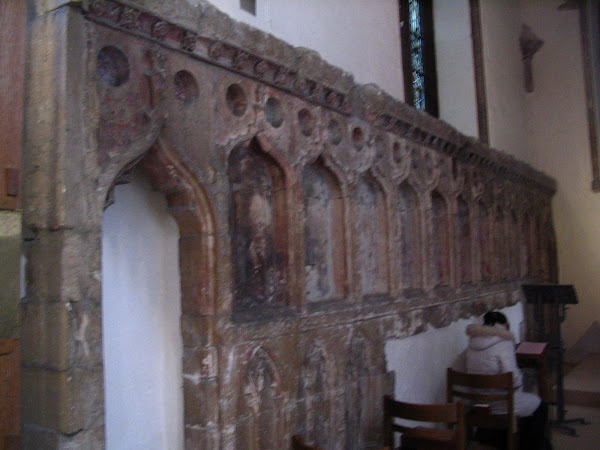
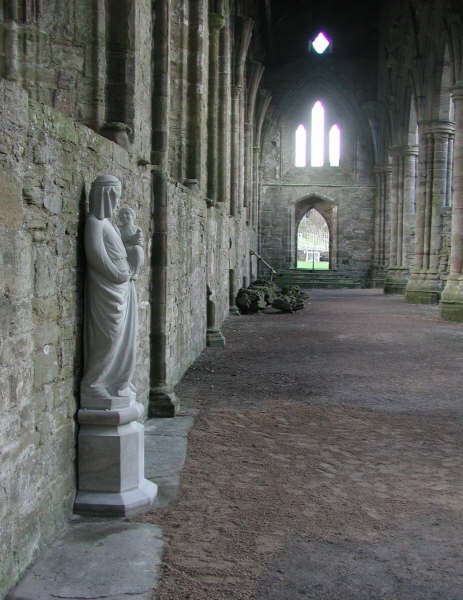
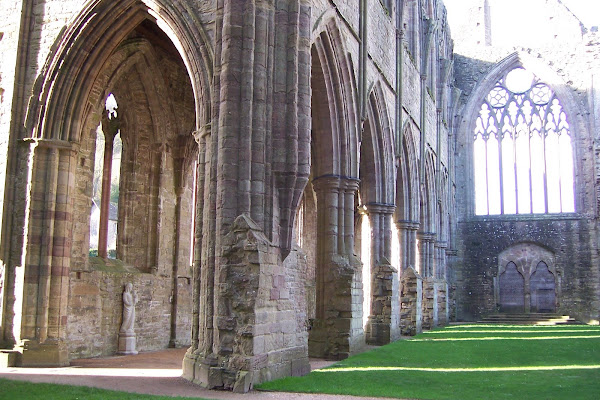
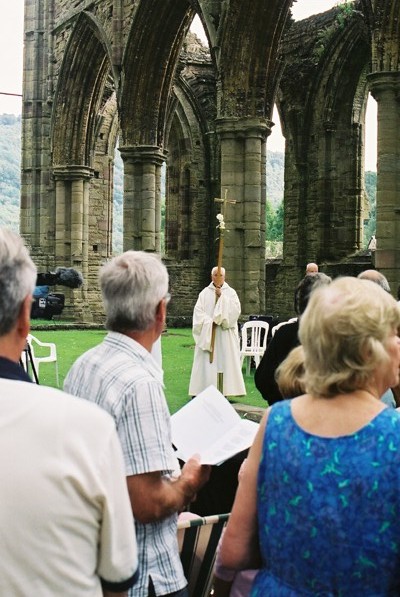
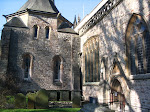
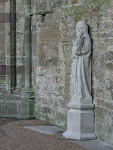
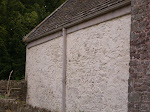
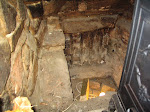
Loft walls of Llanthony Priory
Llanthony Priory was repeatedly attacked by the Welsh
 Llanthony Priory the first Stop to Recruit for the Third Crusade-that of the Lionheart.
Baldwin and Gerald and his party entered Wales near Hereford and then went on to Brecon. Passing through the wild pass of Coed Grono , they reached Abergavenny. Near at hand in a narrow valley stood the monastery of Llanthony.He wrote:
The beautiful columns o Llanthony Priory
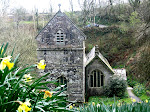
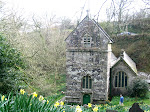
In the deep vale of Ewyas, which is about an arrow-shot broad, encircled on all sides by lofty mountains, stands the church of Saint John the Baptist, covered with lead,and built of wrought stone; and, considering the nature of the place, not unhandsomely constructed, on the very spot where the humble chapel of Dewi, the bishop, had formerly stood decorated only with moss and ivy. A situation truly calculated for religion, and more adapted to canonical discipline, than all the monasteries of the British isles.(Capel Dewi is part of St David's Church opposite the Abbey ruins and may be visited)
 It was founded by two hermits, in honour of the retired life, far removed from the bustle of mankind, in a solitary vale watered by the river Hodeni.(Welsh Honddu) From Hodeni it was called Lanhodeni, for ‘Lan’ signifies an ecclesiastical place. This derivation may appear far-fetched, for the name of the place, in Welsh, is Nanthodeni. Nant signifies a running stream, from whence this place is still called by the inhabitants Landewi Nanthodeni, {59} or the church of Saint Dewi upon the river Hodeni. The English therefore corruptly call it Lanthoni, whereas it should either be called Nanthodeni, that is, the brook of the Hodeni, or Lanhodeni, the church upon the Hodeni.
Owing to its mountainous situation, the rains are frequent, the winds boisterous, and the clouds in winter almost continual. The air, though heavy, is healthy; and diseases are so rare, that the brotherhood , when worn out by long toil and affliction during their residence with the daughter, retiring to this asylum, and to their mother's lap, soon regain their long-wished-for health. For as my Topographical History of Ireland testifies, in proportion as we proceed to the eastward, the face of the sky is more pure and subtile, and the air more piercing and inclement; but as we draw nearer to the westward, the air becomes more cloudy, but at the same time is more temperate and healthy.
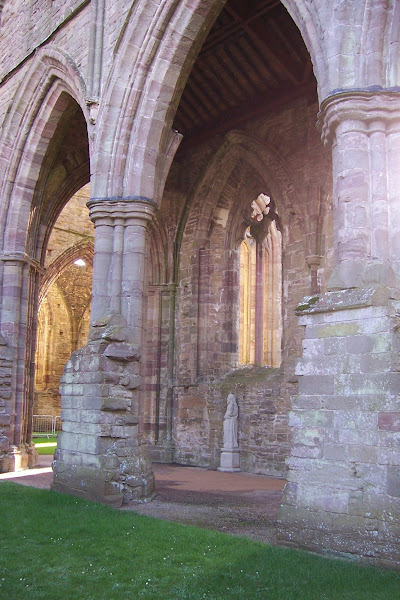
Underneath the cloister arches....


 Here the monks, sitting in their cloisters, enjoying the fresh air, when they happen to look up towards the horizon, behold the tops of the mountains, as it were, touching the heavens, and herds of wild deer feeding on their summits: the body of the sun does not become visible above the heights of the mountains, even in a clear atmosphere, till about the hour of prime , or a little before. A place truly fitted for contemplation, a happy and delightful spot, fully competent, from its first establishment, to supply all its own wants….


It seems worthy of remark, that all the priors who were hostile to this establishment, died by divine visitation. William, who first despoiled the place of its herds and storehouses, being deposed by the fraternity, forfeited his right of sepulture amongst the priors. Clement seemed to like this place of study and prayer, yet, after the example of Heli the priest, as he neither reproved nor restrained his brethren from plunder and other offences, he died by a paralytic stroke. And Roger, who was more an enemy to this place than either of his predecessors, and openly carried away every


thing which they had left behind, wholly robbing the church of its books, ornaments, and privileges, was also struck with a paralytic affection long before his death, resigned his honours, and lingered out the remainder of his days in sickness
Beauty of Llanthony and its holiness

In the reign of King Henry I the fame of such a religion attracted hither Roger, bishop of Salisbury. He loved virtue, even in another man, and a great proof of innate goodness to show a detestation of those vices which hitherto have not been avoided. When he had reflected with admiration on the nature of the place, the solitary life of the fraternity, living in canonical obedience, and serving God without a murmur or complaint, he returned to the king, and related to him what he thought most worthy of remark; and after spending the greater part of the day in the praises of this place, he finished his panegyric with these words: "Why should I say more? the whole treasure of the king and his kingdom would not be sufficient to build such a cloister." Having held the minds of the king and the court for a long time in suspense by this assertion, he at length explained the enigma, by saying that he alluded to the cloister of mountains, by which this church is on every side surrounded.

But William, a knight, who first discovered this place, and his companion Ervistus, a priest, having heard, perhaps, as it is written in the Fathers, according to the opinion of Jerome, "that the church of Christ decreased in virtues as it increased in riches," were accustomed often devoutly to solicit the Lord that this place might never attain great possessions. They were exceedingly concerned when this religious foundation began to be enriched by its first lord and patron, Hugh de Lacy, and by the lands and ecclesiastical benefices conferred upon it by the bounty of others of the faithful: from  their predilection to poverty, they rejected many offers of manors and churches; and being situated in a wild spot, they would not suffer the thick and wooded parts of the valley to be cultivated and levelled, lest they should be tempted to recede from their
heremitical mode of life.
His Comparison with Llanthony Secunda ,Gloucester……
But whilst the establishment of the mother church increased daily in riches and endowments, availing herself of the hostile state of the country, a rival daughter sprang up at Gloucester, under the protection of Milo, earl of Hereford; as if by divine providence, and through the merits of the saints and prayers of those holy men


(of whom two lie buried before the high altar), it were destined that the daughter church should be founded in superfluities, whilst the mother continued in that laudable state of mediocrity which she had always affected and coveted. )
Let the active therefore reside there, the contemplative here; there the pursuit of terrestrial riches, here the love of celestial delights; there let them enjoy the concourse of men, here the presence of angels; there let the powerful of this world be entertained, here let the poor of Christ be relieved; there, I say, let human actions and declamations be heard, but here let reading and prayers be heard only in whispers; there let opulence, the parent and nurse of vice, increase with cares, here let the virtuous and golden mean be all-sufficient. In both places the canonical discipline instituted by Augustine, which is now distinguished above all other orders, is observed.....

The mountains are full of herds and horses, the woods well stored with swine and goats, the pastures with sheep, the plains with cattle, the arable fields with ploughs; and although these things in very deed are in great abundance, yet each of them, from the insatiable nature of the mind, seems too narrow and scanty. Therefore lands are seized, landmarks removed, boundaries invaded, and the markets in consequence abound with merchandise, the courts of justice with law-suits, and the senate with complaints. Concerning such things, we read in Isaiah, "Woe unto them that join house to house, that lay field to field, till there be no place, that they be placed alone in the midst of the earth."

It is a remarkable circumstance, or rather a miracle, concerning Lanthoni, that, although it is on every side surrounded by lofty mountains, not stony or rocky, but of a soft nature, and covered with grass, Parian stones are frequently found there, and are called free-stones, from the facility with which they admit of being cut and polished; and with these the church is beautifully built. It is also wonderful, that when, after a diligent search, all the stones have been removed from the mountains, and no more can be found, upon another search, a few days afterwards, they reappear in greater quantities to those who seek them. With respect to the two Orders, the Cluniac and the Cistercian, this may be relied upon; although

the latter are possessed of fine buildings, with ample revenues and estates, they will soon be reduced to poverty and destruction. To the former, on the contrary, you would allot a barren desert and a solitary wood; yet in a few years you will find them in possession of sumptuous churches and houses, and encircled with an extensive property. The difference of manners (as it appears to me) causes this contrast.
The first of these Orders, at a time when there was a deficiency in grain, with a laudable charity, not only gave away their flocks and herds, but resigned to the poor one of the two dishes with which they were always contented. But in these our days, in order to remove this stain, it is ordained by the Cistercians, "That in future neither farms nor pastures shall be purchased; and that they shall be satisfied with those alone which have been freely and unconditionally bestowed upon them." This Order, therefore, being satisfied more than any other with humble mediocrity, and, if not wholly, yet in a great degree checking their ambition; and though placed in a worldly situation, yet avoiding, as much as possible, its contagion; neither notorious for gluttony or drunkenness, for luxury or lust; is fearful and ashamed of incurring public scandal, as will be more fully explained in the book we mean (by the grace of  God) to write concerning the ecclesiastical Orders.
In these temperate regions I have obtained (according to the usual expression) a place of dignity, but no great omen of future pomp or riches; and possessing a small residence near the castle of Brecheinoc, well adapted to literary pursuits, and to the contemplation of eternity, I envy not the riches of Croesus; happy
and contented with that mediocrity, which I prize far beyond all the perishable and transitory things of this world.’

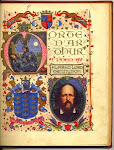
Gerald the Welshman:A Journey through Wales

Tomorrow-on to Patrishow, Usk and Newport!

Wednesday, May 21, 2008

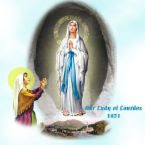
August 1880 and a Vision of Our Lady in Monmouthshire at Capel y ffin.Was it real?


In the Month of May (and of October we remember particularly Mary, Mother of God. Mary was mother of Jesus Christ, son of God and hence became known as Mother of God.
After digging around at Abergavenny museum in an extensive range of documents, I read about this Marian Apparition. The monastery concerned was an anglican foundation,inspired by the Oxford Movement of the nineteenth century, which accentuated the Catholic basis of the Church of England. Unfortunately Joseph Lyne's fiery love of God and desire for a monastic life within the confines of this church was ahead of its time, and he found it hard to get ordained and get money for his vision. This is such an interesting story, I plan to outline it in greater detail when I blog about the Oxford movement. The story of the Apparition of Our Lady of Capel y ffin, is then , a private revalation to the choristers and later monks at Llanthony and its aftermath. Unfortunately (unless I am mistaken) there has been no private investigation into this apparition, because he was not a Catholic nor, strictly speaking a priest, yet hundreds of people in coaches arrive every year to do the pilgrimage walk on the Saturday of the bank holiday. Hymns are sung and sandwiches shared. Churches from all over Gwent and Mon arrive-Newport, Cwmbran, Abergavenny Monmouth, Chepstow.

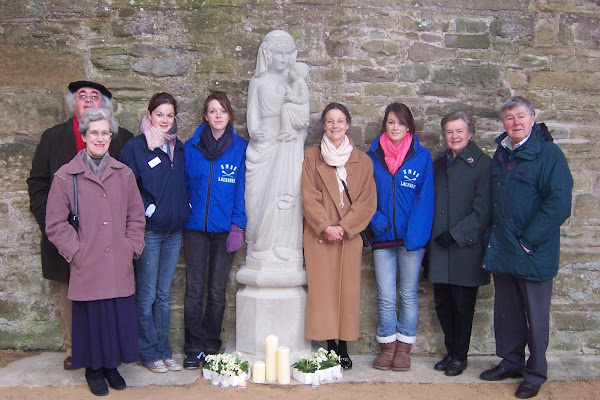
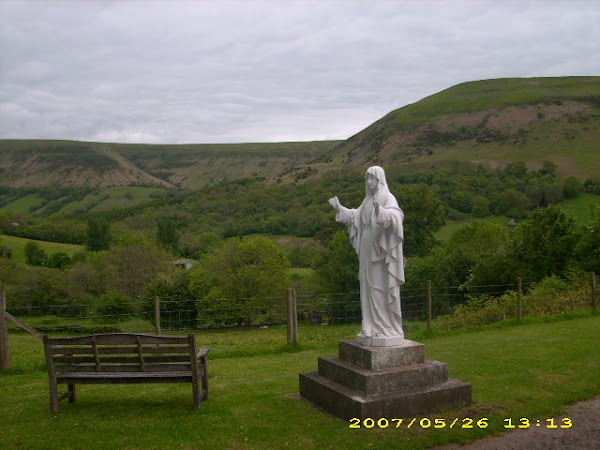
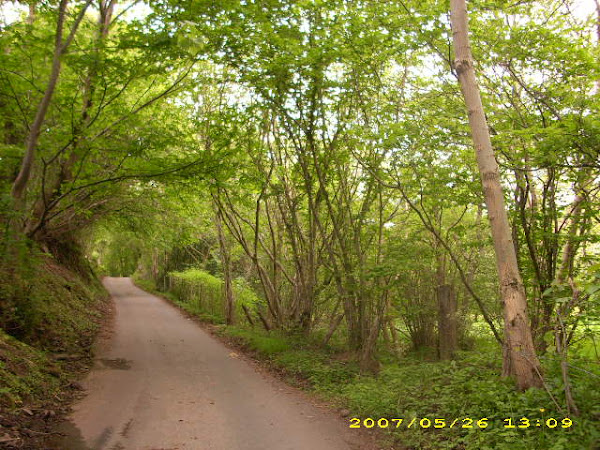
There was a Catholic Mass in the oratory of the monastery, but this has now been closed because it needs £20,000 worth of work on the roof. The Anglicans have a service at St David's Church (his orgiginal cell)in Llanthony.Some walk up but parking is provided by a local landowner. Catholics and Anglicans thenwalk up the pilgrimage Way to the Wayside Calvary and to the statue commemorating the event of the Apparition. The Pilgrimage is organised by the Fr Ignatius Memorial Trust.


Directions


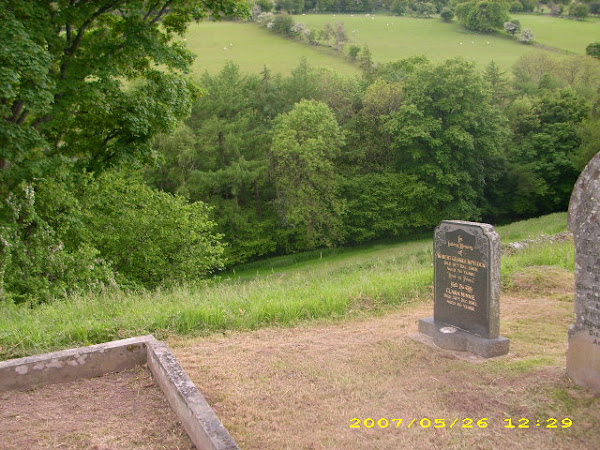
The event this year takes place on Saturday August 23rd 2008 but please check their website as to the particulars.This is a predominantly Anglican pilgrimage but a very moving one and a number of Catholics attend every year too. The apparition was to children in the first instance. Here is Father Ignatius own account. Before dismissing him as a Victorian eccentric, there was no doubt of his love for God and valiant attempt to live a monastic life, with little support from his own church, just a lot of criticism about the excesses of the monastic life, remarked on by Rev Francis Kilvert, a local vicar and famed writer.

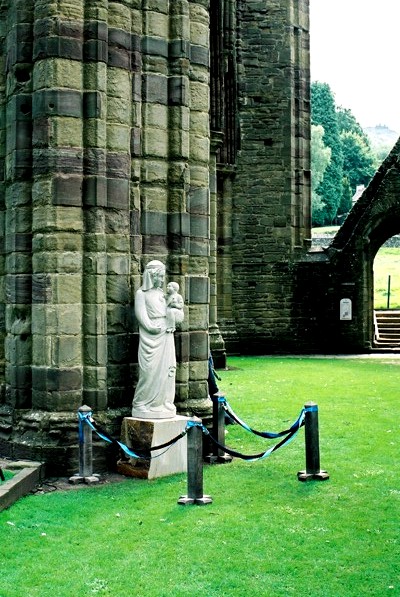
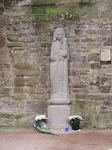
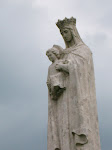
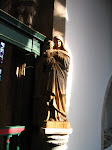
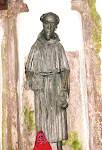
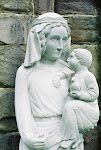
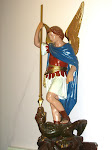
After the vision a statue was commissioned by Ignatius which is now kept at the Parish Church of Ewias Harold nearby. Ignatius is buried in the ruined chapel, cared for by the Trust.A photo of this statue, which conforms to what he saw is below, courtesy of the Abergavenny Museum, as are all the other original photos.

Father Ignatius' account of the Apparitions August 1880

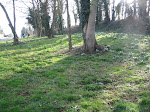
In the evening after Vespers, the choir boys were in the meadow playing and having a very noisy game. All at once, the noise of the game stopped and in a very short time, one of the boys came running up to my cell, soon followed by the others saying ‘Father, we have seen such a beautiful spirit in the meadow’. The eldest boy, who was fifteen years old, said he was certain that what they had seen was the Blessed Virgin Mary, As he was waiting for his turn to run in the game, he was looking towards some old ruined hut, and he saw a bright light over the hedge ,and the figure of a woman with hands upraised, as if in blessing and with a veil over her face coming towards him. He stood still and was much astonished and alarmed . The figure came almost up to him , and she passed close enough to him, to see the material of the garments that she wore. The figure passed off at right angles and stood in a bright light in a bush about fifty feet from the boy. The bush was all illumined in a phosphorescent light. The figure passed through the bush; and the light was there for some little time after the form had disappeared. The rest of the boys saw and described the same appearance.

I had all the boys in church, where I spoke solemnly to them and told them what an unlikely story it really was and that no-one would believe them, but they still maintained that what they had said was true, and a friend of mine, a lawyer staying in the neighbourhood, who interrogated them, said he was quite sure the boys believed they were telling the truth’

On Saturday night, September the 4th , the boys were out playing as usual, when all at once, the same bush became illuminated with a very bright light. For some little time they watched the light and then ran into the monastery to call out an elder brother, as I was away at the time.

Meanwhile a junior brother had come out, knelt down before the bush and had begun to say prayers and hymns. The boys were indignant because he was saying collects, which had nothing to do with what they considered the Apparition to be , and they said ,’Do not say those prayers,but say a ‘Hail Mary’ because we are certain it was the Blessed Virgin’. If we do, Our Lord will perhaps let the vision appear again!’.

When the senior brother came up, he agreed they should sing the ‘Ave Maria’. That instant the vision flashed again in a cloud of light in the same place where the boy had seen it on Monday. As they sang, the figure in the bush sent out rays of light , sometimes appearing behind and sometimes in front of the hedge , and sometimes coming straight up to the illuminated bush. When they came to the words ‘Blessed is the fruit of thy womb Jesus’ they saw the second figure of a man in a loincloth appearing in the light with his hands stretched out.

The boy who first saw the vision said he saw a cross behind the hands and saw the face distinctly ; whereas the brothers said there was a mist over the face and they could not discern any features, The face of he female figure was veiled as the boys had seen it on the Monday..

After this they watched for her and on several times they saw the same figure. I returned to the monastery on Tuesday September 14th and watched but saw nothing. On the 15th, between 8 and 8.15am we watched again. It was so damp that we watched from the monastery porch. Sister Janet, who was not allowed to come to the Monastery door went out into the meadow.

The boys were standing on the front step. I was standing on the top step. One brother was at my left, another at my right. Two farmers were behind in the back if the porch and an undergraduate of Keble College, Oxford. a little behind me to the right.

I suggested we should sing three’ Hail Marys’ in honour of the Blessed Trinity. Between them we were all amazed at some very curious flashings of light which we saw in all directions in the meadow, like the outlines of figures. I then said ‘Let us sing a Hail Mary’ in honour of the Virgin herself!’


Directly we began to do so, I saw a great circle of light flash out over the whole heavens, taking in the mountains, the trees, the enclosure, the Monastery and everything. The light flashed upon our feet, upon the steps and on the buildings, and from that one great circle of light, small circles bulged out and in the centre of the circles stood a gigantic figure of a human being, with hands uplifted standing sideways.
In the distance, this figure appeared to be about sixty feet in height, but as it descended, it took the ordinary size of a human. I saw distinctly the outlines of the features against the bright light, and also the exact form of the drapery from the sleeves of the upraised arms, as clearly as if it is possible for me to express.

It was all stamped with a most marvellous kind of reality, but I determined to say nothing of what I had seen to those about me, but to ascertain what they had seen.

After the vision had passed, I turned to the brother on my left amd said ‘Did you see anything?’. Yes indeed Father, he said. I said ‘Now tell me exactly what you saw’. He told me and it confirmed exactly what I had witnessed. The brother standing before me also confirmed what he had seen.

Sister Janet's Confirmation

A few minutes afterwards, Sister Janet came from the meadow towards the gate and beckoned to us. I went to her and asked what was the matter. ’O Reverend Father!’ she said ‘I have seen the most glorious vision of any yet’. She then described precisely , without a word being said by us, what she had witnessed and it was exactly what had been seen by us.

Miracles

From that time on no further visions appeared. A few days later on the 21st September, I sent to each of our nuns in Slapton in Devonshire, as memorials of God’s wonders among us, pieces of wild rhubarb leaf, which had stood up dark against the dazzling garments of the Apparition as it appeared at the bush.

Among our nuns was a middle aged lady who had been a cripple thirty eight years. She had suffered from abscesses on the hip joint and from a contracted knee and she had never been able to raise her limb without lifting it with her hand. On the morning of the day when this leaf arrived, the Sisters’ mediation had been ‘According to you faith, be it unto you. Now this nun had been born a dissenter among the Moravians and her brother is a dissenting minister. She had always had a prejudice against out devotion to the mother of our Lord ; though she wore a rosary, out of obedience to my wishes. She had never with her whole heart practised devotion to the Mother of Our Lord as we do this. I say this to show that she was rather prejudiced against paying honour to the Mother of the Mother of Jesus.

But all through the day, the word seemed to haunt her ‘according to your faith be it unto you’ until at last she said ‘Yes Lord, I know that; but I have no faith’. She meant that she had not faith in the leaf, because, in her own mind, she had been thinking of applying it to her wounds. When she went to her cell after Compline, she was suffering more than usual; for on the feast of St Ignatius the 31st July some fresh abscesses had appeared and some pieces of bone had passed through them. On Tuesday September 21st, 1880 just seven days after the last apparition, she was quivering from head to foot with pain. She was going to lie down-but she never could lie down without lifting her diseased limb with the other foot on to the bed-when she was prompted to use the leaf, which she had put in an evelope in her pocket. She took the Rosary and said ten ‘Hail Marys’ and she took the leaf and laid it on these painful abscesses. The very instant this happened the abscesses closed up and the discharge ceased; he knee was loosened at the joint, her foot was on the ground and she was cured instantaneously. When Mother Cecilia was going to raise her limb upon the bed, she found there was no need for it; because she could put that limb up as well as the other, which for thirty eight years she had not been able to do.’

The Apparitions of Our Lady of Llanthony in collection of essays ‘Building up the Waste Places’in archive of the Abergavenny y Museum Archive (MS)


Tuesday, March 4, 2008

Wales-The Life of the Holy David by Rhygfarch


Today I began the serialisation of the podcast of the Life of the Holy David of Wales written by Rhygfarch a tenth century monk. This was obviously a Life rich in legend with amazing miracles, but must be listened to with great love and faith. Very interesting were the Celtic animal symbols and the gifts which foretold the birth of David. The Bees , the Stag and the Fish and the Serpent, who always caused trouble.
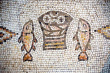
The Stag generally speaking, espeically a white stag symbolised Christ,then bees symbolised Paradise, as Hywel Dda the great King, who wrote Welsh Law and visited Rome to have it ratified writes in the Old Gwentian Law books:the 'Origin of bees is in Paradise, and on account of the sin of man, they came from thence; and God conferred this blessing on them, and Mass cannot be sung without the beeswax.' We also find in the Black Book of St David's that many tenants paid their rents in beeswax!!' The Fish (and especially the salmon-king of fish) was a symbol of Insight and great knowledge, and to eat it would transfer these credits to the person eating it.The story of David mentions Teilo and the symbol of the Pelican seen all over Llandaff, gorgeously gilded. The Pelican is a symbol of the Eucharist. It scratches and tears at its own chest to take flesh and blood for its young, and the analogy with St John 6 is obvious.

Other animals I read about, the snake and dragon symbols of infertility and always causing trouble, negative and unproductive, and yet-some missionaries used the symbol of the snake shedding its coat periodically to explain the resurrection. The Peacock too was a sign of resurrection, because after death, there is a very long time before putrefaction sets in,so perfect is the meat.

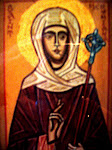
Interesting is the Gwentian link with St Non, mother of David. Llan-sant-Non became corrupted into the English Llantarnam, where the magnificent Abbey still remains a Convent for women. Did St Non come here? Well St David did spend a lot of time in his hermitage on retreat,and it was to this remote place (and it is still heavenly there!)that Deiniol from North Wales and Dyfrig of Caerleon came to him to beg him to come with them to Brevi in Ceredigion (Camarthen) and like Germanus before hin refute the teachings of Pelagius.

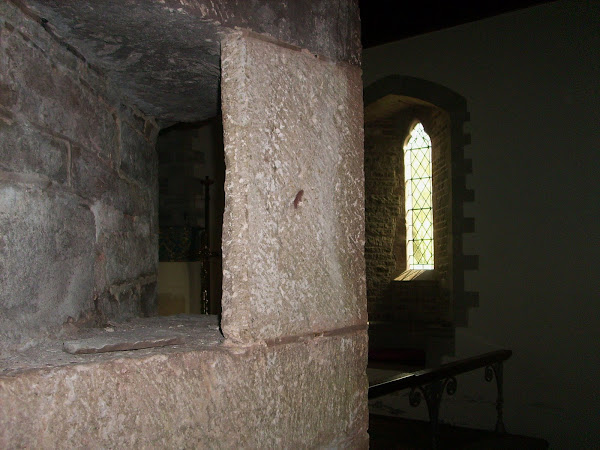
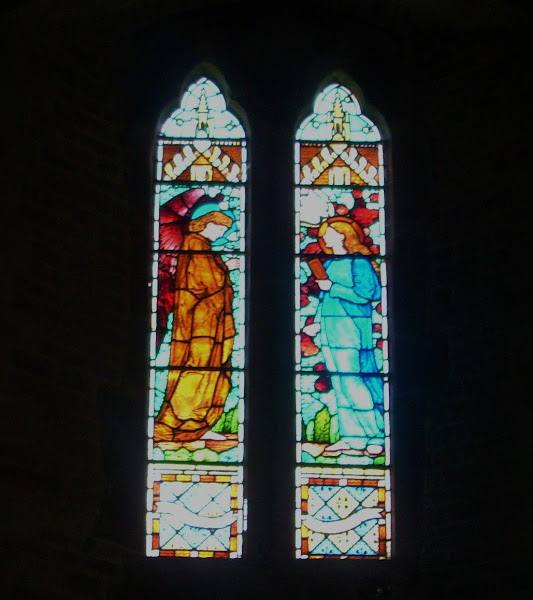
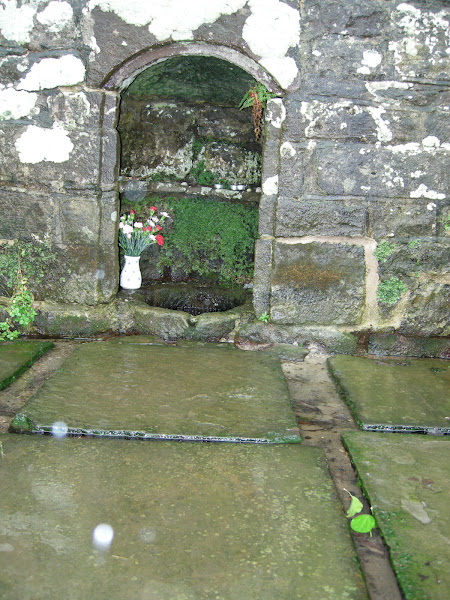
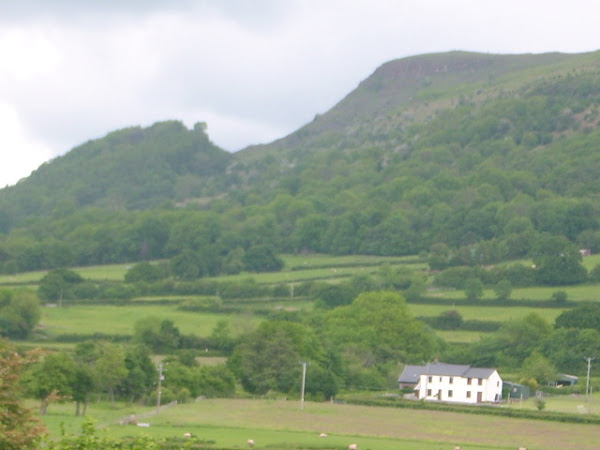
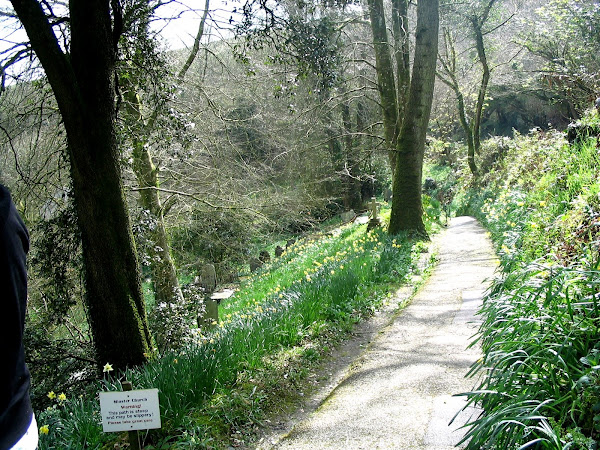
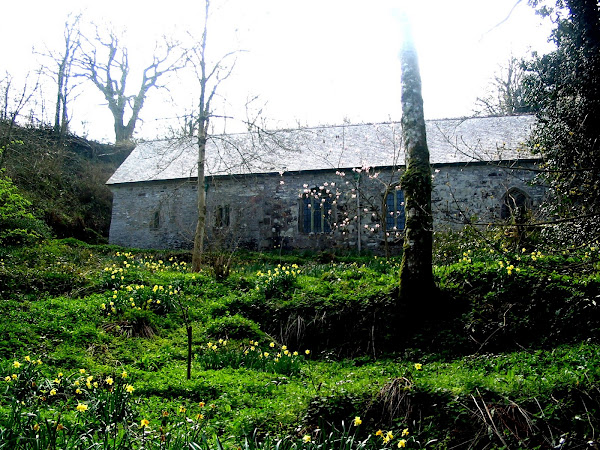
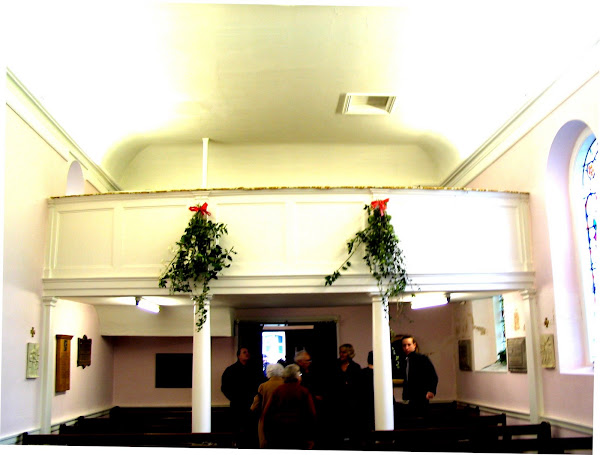
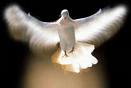
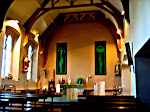
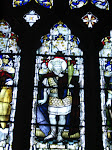
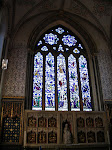
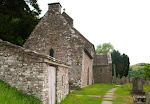
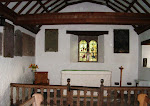
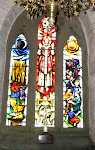
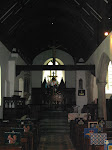
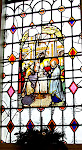
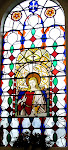
The site of David's cell at Llanthony is -especially in Spring and Autumn one of the most lovely and spiritual places in Gwent. Close to the Skyrrid, the Holy Mountain, David's cell was surrounded by hills. The small cell was incorporated into the larger church when the Abbey at Llanthony (an Augustinian foundation after the Norman Conquest) was built. The small original cell was reserved then taken over by the Anglican church in the sixteenth century who now administer it. Yes the cell can still be seen as a small part of the larger church. The Stained glass s modern commemorating Dewi's white dowve which landed on his shoulder at Llandewi Brefi.It still lies in the midst of glorious countryside.the area is a haven for ramblers, anglers, horse riders, and if they travel on up the valley they come over to one of the highest spots in Gwent, where they can see the whole county down to the silver streak in the distance which is the Severn. People jump off the highest mountains wearing parachutes and I must say you have the feeling you are on top of the world. The inscription on the window of the local Anglican Chapel is engraved with the beginning of Psalm 121 I will lift mine eyes unto the hills from whence cometh my help!

If you take the road North from Aberganny to Hereford, (the fast road) you turn off at Llanfihangel Crucorney, pass the Skirrid Inn, then turn left, following the signs to Llanthony Abbey. To see it at its best, go in Autumn or Spring. It is magical.

Hope all you Welsh in Patagonia had a Happy and Blessed St David's Day!