




































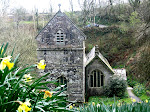
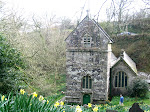








St Brigid’s Church at St Brides Gwynllwg or 'Wentloog'
A few weeks ago I travelled down to the Gwenllwg levels. This is the flat coastal land to the wet of Newport and eventually coming into the Rhymney area just outside Cardiff. This was land originally gifted as we shall hear in a later podcast to the monks of Bassaleg Priory, The Normans named Gwynllwg as Wentloog as they could not pronounce it when they arrived after 1066, having beaten King Harold at Hastings.
This small area of St Brides leads me to think that it was a sister British monastic settlement to Coedkernew not far away. This church chould not be examined as it has been sold and is now someone’s house. The sparse population in this farming area could not support 5 churches and indeed this St Bridget’s Church was also recently in danger of being sold. The heroic parishioner who saved it was a stonemason by profession, able to prove the building to be structurally sound-and following a grant from the National Lottery Millennium fund was able to refurbish the church, include a kitchen and a toilet and restore many original settings.
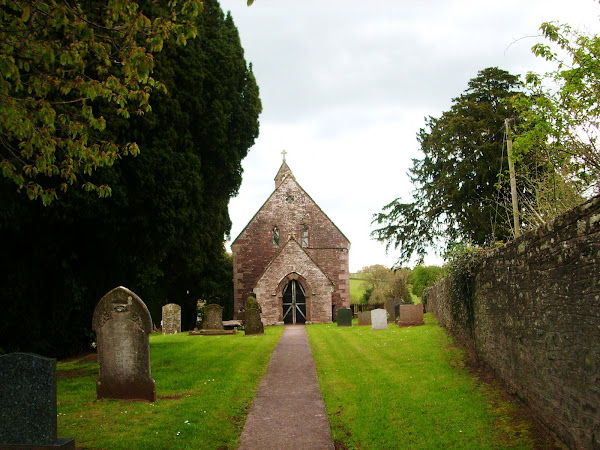
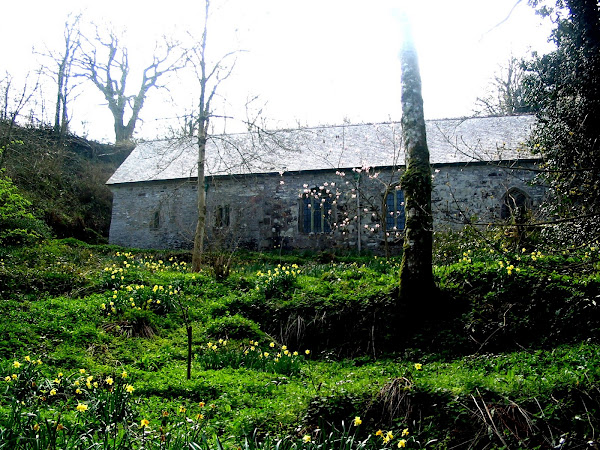
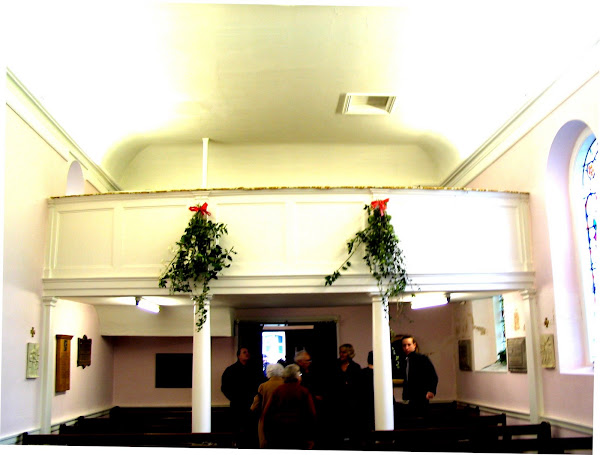
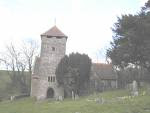
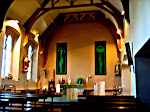
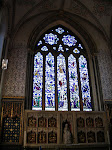
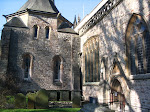
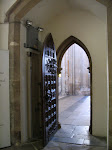
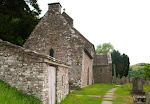
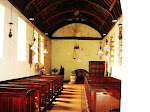
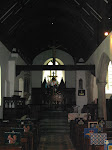
At the village of St Brides, a brown sign now directs you to this important church, another Llan sant ffraed down a tiny country lane half way along. It was hot, the stonemason and his son in law and a party of friends were doing some work on the church as I arrived and his wife and daughter in the kitchen. As I walked up, I notice the entrance was no longer via the porch, but through the kitchen. What amazed me was the size of the church.
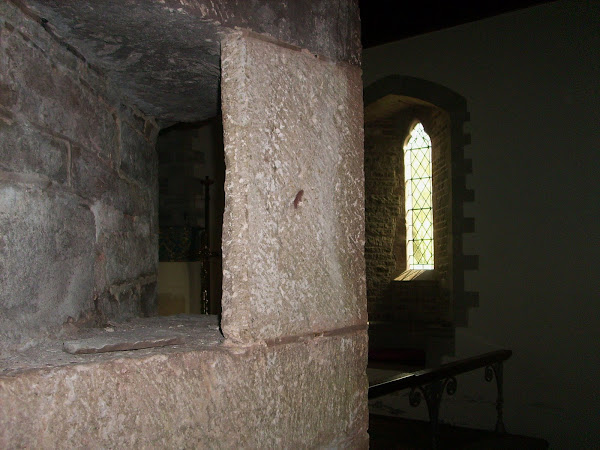
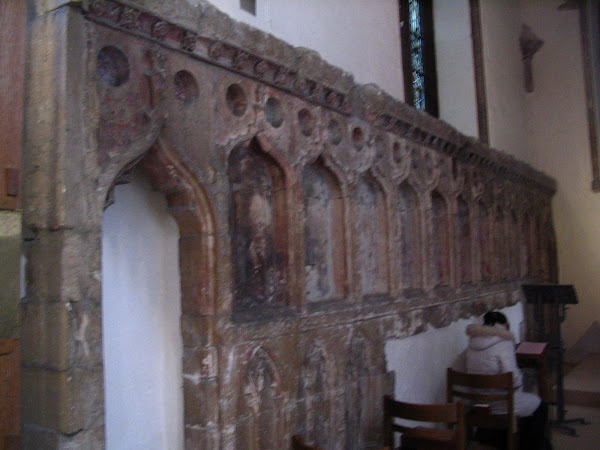
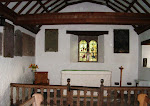
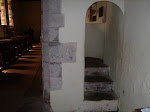
The Victorians had to partition it to be able to afford to heat it. The Kitchen area, I later found was in half of the Lady Chapel and a small door led to a staircase which would have led to the rood loft. The rood had of course been removed, possibly in the times when such churches were attacked.
I could not say whether this was a llan. The graveyard was rounded, although I would say the name gives it away. It is also unlikely the Normans would have built a church here so far away from Bassaleg if there had not been one here previously. In Saxon and Early British times, farmers would have worked the surrounding land and no doubt fishing would have also been an occupation which involved many and until the Black Death many more people lived on the land.
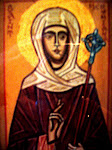
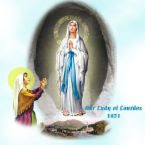
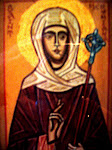
Now Diane Brook does not give it as a llan in her excellent paper’The Early Church in Monmouthshire’.. so it may simply be a Norman Grange for Bassaleg (just as Skenfrith was the Church for the Castle at Skenfrith)Question is why would Norman Clergy dedicate a church to a scarcely known Irish Saint?. I believe that the cult of Brigid started with her travels around Wales. She was one of the great teachers of Irish Christianitym apparently baptised by Patrick himself and there are many other instances of St Brigid dedications. In addition it is claimed that Tenby was an Irish Colony in British times and also six Ogham standing stones have been found in Brecon, itself a mixture of the line of Joseph of Arimathea and Irish immigrant celts.
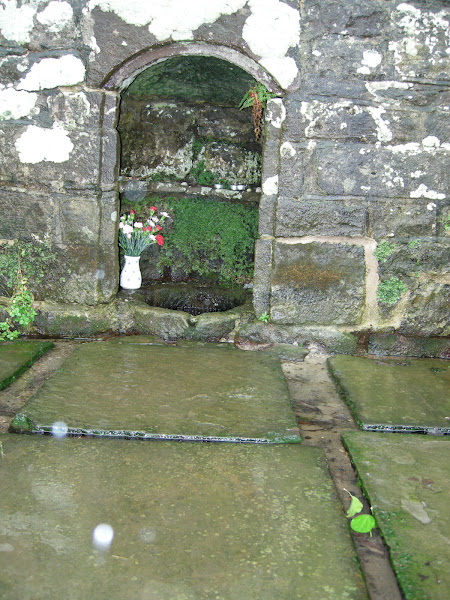
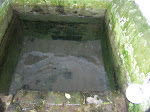
The Vicar says he has not yet found a well, however this may be close, it may have been discarded, overgrown or even filled in. I have to say here, that a great deal is not known about this churchm except its early dedication to St Brigid of Kildare/
We do know Harold overran Newport just be fore Hastings and alighted at Portskewett, He had been banished by Edward the Confessor for a while and his wife and family were still left behind on Flat Holme or Ynys Echni.
What we don’t know is-whether the church became (like Llanhilleth Church in North Gwent) a Stone church, either at the time of the British Silurian times after the Age of Saints, as I don’t believe the Saxons would have had th time. This was probably a much smaller affair,
The Church is missing from the deeds of Bassaleg Priory, although this does mention Coedkernew its sister Church as being a gift to the Priory. The Question is whether St Brides became an important Grange to the Cluniac Benedictine Monks. Glastonbury Abbey was taken over by the monks of Cluny following the Norman Conquest, just as Cluniac monks from Montacute Priory in the West Country built a Priory at Malpas. The Church still stands as a Parish Church.(Anglican)
Walter fitzhamon who founded the Great Abbey at Tewkesbury gave Bassaleg to Robert de la Haye . Robert and his wife, Cecilia founded the Abbey at Bassaleg with monks from Glastonbury. The Abbot of Glastonbury was then Rector of all the churches under his command (from Henllys in Gwmbran to Mynyddislwyn etc.)All these churches being given to the great Cistercian Abbey at Llantarnam for safe keeping.
The Attacks by Owain Glyndwr
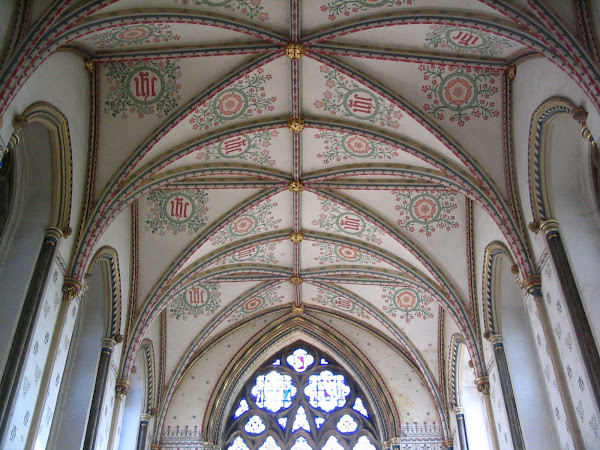
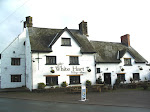
St Brides may have had another name but it has only ever been called St Brides and no doubt Robert had the small Church improved and built big and grand, which huge arches and the roof timbers supported by monks’ heads, still showing their colours. Next door is a large pub which might interest people but again it is possible the origin of this building may have been the grange, where monks lived and did the daily work of the Priory, working on the fields and keeping the small rhyns clear so that the water could drain away. However the location is quite far from any central fortified aream good in times of peace but not when it was small priory church the property of a Norman lord and supporting his workers.
The monks at Goldcliff Priory were very active in working at the protective sea wall to prevent the high tides sweeping over the land and here they would have been no different. Beef and dairy cattle are important here as are fertile fields of corn, maize and barley. The levels are a complete contrast to the high mountains of the North at Bedwellty, itself a grange of Bassaleg and then Llantarnam Abbey, which became one of the wealthiest in Wales.
In 1831 the King issued letters of Protection and support to the Prior of Goldcliff and the Earl of Norfolk was appointed Keeper of the Priory there. An old priest Father William was beaten up by seventeen welsahmen at Morburne bear Gldcliff., They kidnapped him and took him to Usk Castle for seven days and ransomed him back for 100 marks. Also they stole horses and cattle from Glodcliff’s lands at the coldra, Morburnbe and Nash as well as other things. Relations with the Welsh got worse.. In May 1322, there were still ten Welsh robbers and they even broke the locks in the priory where the Great Seal was kept, The King had expelled the French Benedictines during the war with France, and put in Monks of his own from Tewkesbury Abbey, but these had to flee for their lives, as during 1445-1447 Owain Glyndwr himself rode in to Monmouthshire and attacked Goldcliff and St Brides and Coedkernew and razed them to the ground. They were utterly destroyed , There was much tension between them, mainly as the Cistercians at Llantarnam and other abbeys always supported the Welsh, Llantarnman was the foundation of a Welsh King.
Rebuilt in the Fifteenth Century
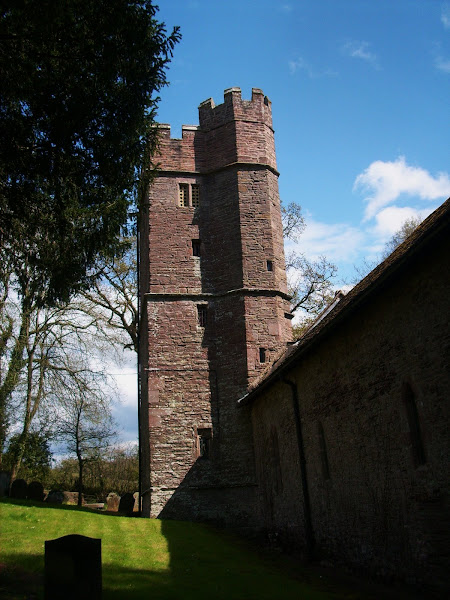
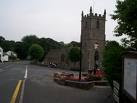
The authorities vowed to rebuild as they did and St Brides was rebuilt exactly as the original in the early gothic style. What could be retrieved, like perhaps the monks heads were cleaned and restored, and the only difference, apparently lay in the new figures on the bell tower. This was impossible to see with the naked eye, but they would no doubt have included the Apostles. The bell tower is a large construction (slightly lean-to) And the first level of the tower is an owl sanctuary and the second level a dove cote. No one at present knows anything concrete about the bells, but on examination of other churches of similar age, most have at least one original mediaeval bell-though perhaps not as old as the ancient Bell of St Bride’s Netherwent.
When it was rebuilt in 15th century it was as an exact copy-even to the carved oak leaves and acorns in the arches of the Lady Chapel which are emblems of St Bridget. I think it is a sign of the importance of this church that it was rebuilt in this way-perhaps it was a retreat house of Llantarnam, where monks came in the summer.
Destruction of the Catholic elements during the time of Henry VIII
Sadly the elaborate rood loft, also built in the church at that time was also pulled down and smashed
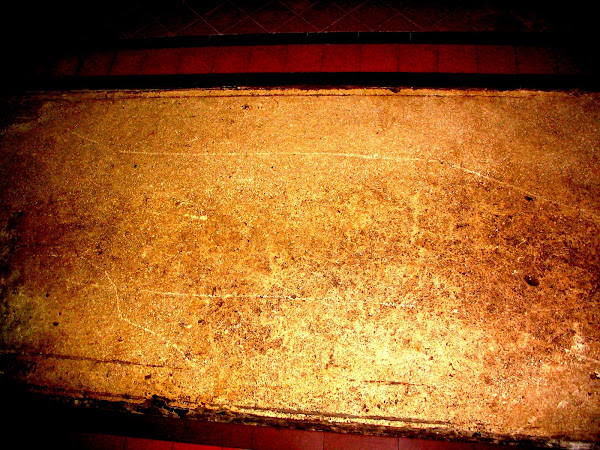
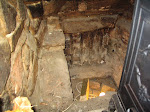
The supports and stairs to the Musicians Gallery were still there, uncovered by Cadw. Aghast,at learning their fate, the monks quickly buried the altar and its precious relic below an oak table before it could have been smashed by the agents of Henry VIII men.
17th and 18th Century
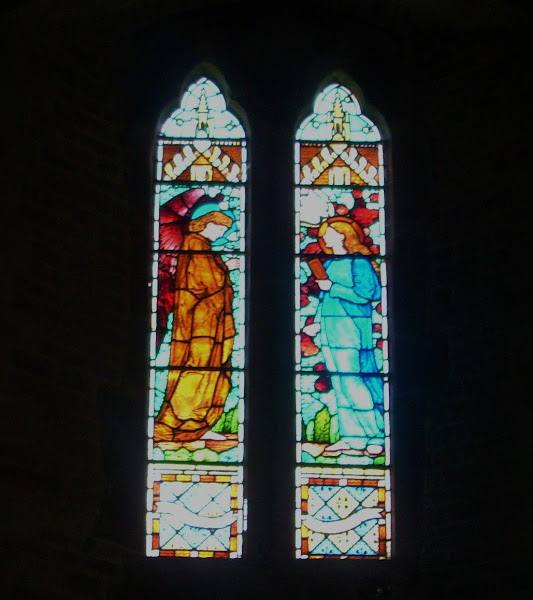
Oliver Cromwell’s men under Fayrfax also went rampaging around the country smashing up the churches and stained glass. It was a terrible time, which did not get any better for many years. Nothing much is heard from it after the sixteenth century. The reason once again could have been the Black Death depopulating the workers and the church just being used as a parish church. Farming life continued except undr new landowners who became rich on the proceeds of the church lands, but did none of the social community work tha bbeys had prviously done. Perhaps the house became the pub and the church became a parish church.There is a real dearth of any facts or dates in the 17th and eighteenth century. This was when after cruel persecutions of the Welsh Catholics, and violent fines and penalties, many Welsh still protesting about the English Church and its prayer books turned to their own Welsh non conformity in many ways,saving dsome doctrines, having a remarkable emotional ‘pull’ to the Holy Wounds and such things. If you have any accounts or documents about the church in the 17th century or know of some, please let me know. This blog is meant to be a resource for all our early Catholic Churches.
A wonderful video about all the Irish Saints by Aidan
The Oxford Movement
In the nineteenth century with the influence of John Henry Newman at Oxford in the Catholic basis of the Anglican thought , the church seemed to have been rediscovered and the Church renovated, with its many Catholic features still installed. This would have been the time of the partitioning of the church.
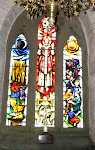
It seems to have been open in the 1950’s when Fred Hando visited it and then closed down for a while in the 1990s-again no one can give me dates, but re-opened after 2000 after extensive refurbishment, This is when the altar was rediscovered, but it needs money to put it back in its rightful place. It would be wonderful to see a rood loft up there again as well! I wonder if present day carpenters could actually do make an exquisite thing like that. The church lighting was rather strange-I was told they came from the Houses of Parliament and were better than trying to rig up electric lights from a high ceiling.
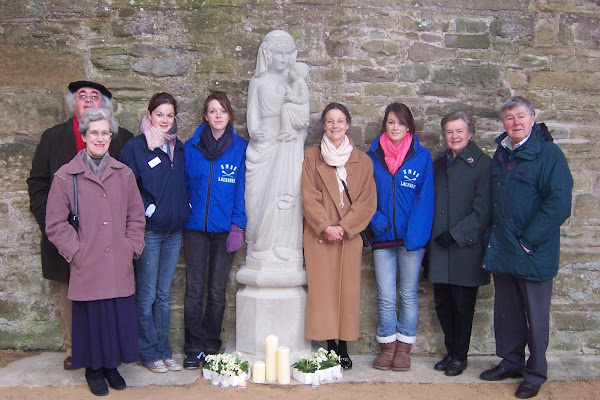
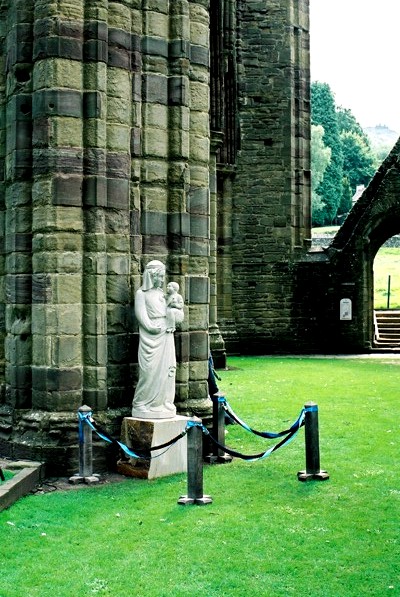
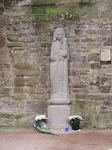
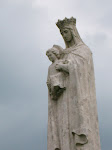
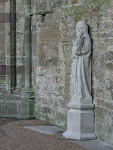
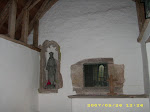
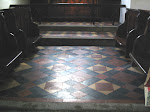
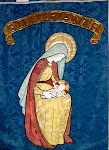
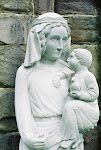
The area between the Lady Chapel and Nave is still partitioned off but the acorns and leaves still visible and they are trying to find a statue of Our Lady for the Lady Chapel.
So as Diane Brook says about pre Norman history in Gwent-that there are many possibilities for more information here
If anyone out there has any more information about this most interesting church I would love to hear it and place it here.
Fred Hando adds wome other items of interest:
In the ninettenth century, three great men were born in Gwent. William Henry Davies W. H.Davies the poet was born in the Church House Inn, Newport.. Lyn Harding (a famous 19th century actor) was born in the Church House Inn, St Brides,and Arthur Machen, another well known writer was born -a son of the Church -in Caerleon.'
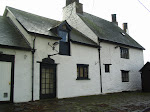
Now this could well suggest that thse 'Church Houses' were originally priory accommodation attached to the church. Hando says 'This is as it should be, for churches and inns rub shoulders in every town and village in the land'.(p38 'In Lyn Harding's Country' from The Pleasant Land of Gwent (1944)
'Lyn Harding confesses too that his heart burns within him as he recalls his boyhood at St Bride's on the flat lands of Wentloog. What kind of village is it that gave our great tragic actor his infant nurture?'
' A sea wall protects the plain from the tides. The land itself is intersected with sea ditches, which we call reens, and by roads which run parallel to the reens. Which came first, the reens or the roads? The good Saint Bridget may have known, but to arrive at her shrine you will turn many a time to all points of the compass. Herein lies part of the charm of the plain, for you will see scores of lovely things and then doubling your tracks, see them again in a new and euqally lovely setting.
'Like the Dutch the people of Saint Brides live under great skies. Wentloog (Gwynllwg) is a land bathed in light, and its days, longer than those of the dales, are fairest at early morning in Spring or at evening in Autumn.'
'The men of St Brides work on the land. They love their village. They are proud of their church with its singularly elegant tower and its porch tablet, breat high which reads:
Whenever these great men of Gwent fell on hard times they turned by instinct to their home county.
'Machen wrote of a sad year in his life
.....and every herb of the fields, and all the leaves of the wood and the waters of all wells and streams were appointed for my healing' (in Hando PLG)
WH Daviews wrote of Alteryn in Newport:
"...There was not the least change; there were the same few cottages as I had seen when a boy. The place seemed to smile at me......'It will be the same, thought I, when I am dead'"
"And to Lyn Harding, the sight of the Severn Sea, and the vigiousrous work on the old farm, were also appointed for his healing. At intervals he has returned to the village , and through an unbroken career of triumphs he has never, at Christmas time, forgotten the old folks at St Bride's'."
Fred finishes with this (1943-44)in his own inimicable poetic style:
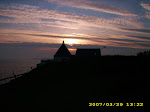
"When I was last at St Bride's it was hay making time, and the hedgeros gave forth the scent of Meadowsweet. As I left the village a great grey cloud in the western sky lifted and the primrose bar on the horizon suddenly blazed with sunset gold. St Bridget's tower, with its attendant trees, became silhouetted against the gathering grandeur . Then the sun sank, the birds ceased to sing and the upper heavens bloomed forth into an unspeakable glory of crimson and gold and purple."
Yes that is St Brides as I knew it as a child, when we used to go to the sea wall at St Brides, where another inn stands near the wall. Walking up there we played on the grass on those endless summer days. We had picnics and ate ice creams, even paddled in the severn when the tide was up, and used to enjoy sinking in the mud.All was right with the world. And as W. H Davies said it would be like this when he was no longer there, and I can tell him today, it is almost exactly as when I was a girl too and I imagine the early monks who made the sea wall and shored it up saw exactly the same. In fact the village of St Brides has remained unchanged since then-just as small as the Welsh Llan it developed from I wouldn't mind betting, and the Holy St Bridget a fitting patron saint for this farming community.