Showing posts with label Netherwent. Show all posts

Tuesday, January 25, 2011

The Lost Templars of Monmouthshire and the Marches - Ancient Traces I

The Knights Templars were the earliest founders of the military orders, and are the type on which the others are modelled. They are marked in history by their humble beginning, their marvellous growth, and by their tragic end.


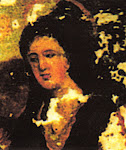
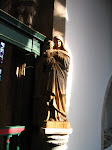
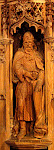
Knight of the Holy Sepulchre,Monument at St Woolos Cathedral (St Gundleius Abbey) The other knights are to be seen in the fragment above, praying for his soul.
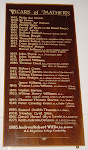
Sir John Morgan 1493 .See below)


‘Poor Knights of Christ’, protecting pilgrims to the Holy Land from Muslim invaders.
Immediately after the deliverance of Jerusalem, the Crusaders, considering their vow fulfilled, returned in a body to their homes. The defense of this precarious conquest, surrounded as it was by Mohammedan neighbours, remained. In 1118, during the reign of Baldwin II, Hugues de Payens, a knight of Champagne, and eight companions bound themselves by a perpetual vow, taken in the presence of the Patriarch of Jerusalem, to defend the Christian kingdom. Baldwin accepted their services and assigned them a portion of his palace, adjoining the temple of the city; hence their title "pauvres chevaliers du temple" (Poor Knights of the Temple ). Poor indeed they were, being reduced to living on alms, and, so long as they were only nine, they were hardly prepared to render important services, unless it were as escorts to the pilgrims on their way from Jerusalem to the banks of the Jordan, then frequented as a place of devotion.

The Templars had at this stage no distinctive habit nor rule. Hugues de Payens journeyed to the West to seek the approval of the Church and to obtain recruits. At the Council of Troyes (1128), at which he assisted and at which St. Bernard of Citeaux was the leading spirit, the Knights Templars adopted the Rule of St. Benedict, as recently reformed by the Cistercians. They accepted not only the three perpetual vows, besides the crusader's vow, but also the austere rules concerning the chapel, the refectory, and the dormitory. They also adopted the white habit of the Cistercians, adding to it a red cross.

Notwithstanding the austerity of the monastic rule, recruits flocked to the new order, as we have described last week, with Bishop Baldwin and Gerald of Wales going all around Monmouthshire recruiting.There were comprise four ranks of brethren:
• the knights , equipped  the heavy cavalry of the Middle Ages ;
• the serjeants , who formed the light cavalry;
and two ranks of non-fighting men:
• the farmers , entrusted with the administration of temporal (physical needs-food etc)
• and the chaplains , who alone were vested with sacerdotal orders , to minister to the spiritual needs of the order.

From then on, the Templars heroically protected the Christian pilgrims, who were armed and encouraged to go on such a pilgrimage to the Holy Places, Jerusalem and Bethlehem. They became rich and powerful and successfully in the main managed to reclaim some lands from the conquering Moslems.In the end however, the Richard I, the Lion Heart treated with Salahaddin. He was poised to take back Jerusalem but realised that the Moslems had conquered all the surrounding lands,with the sword and forced conversions to that faith, which was on a mission to take over all the middle east and Europe. It would clearly need huge resources to hold the city in the future. A treaty was made with Salahaddin to allow Christian pilgrimage and the Templars returned home.

The tragic conclusion of these brave knights was a complete muddle of an evil king wishing to rob the Templars of their wealth and a weak pope, unable to stop him. There was a Commission of Philip the Fair, where various allegations were made against the templars and ennabled him to have them arrested and executed and fill his coffers. Some 'confessed to guilt' which was not there and many of these brave and valiant knights went to their death on cooked up trials after suffering terrible torture by Philip’s men, to extract bogus confessions.
By the time of the papal inquiry, they found that many of the accusations had been made up, although some abuses had occurred because of the secrecy with which the order conducted itself, some abuses had crept in, including some unsavoury ones, including murder and devil worship and sodomy in a sacred place, but these really were very much in the minority and truly unequal to the task, the pope decided to disband the Order and give their lands to the Hospitallers, another order of military Knights, but sadly he acted so slowly that some knights still met their terrible ends after giving their lives to protect pilgrims and Christian lands in the Holy Land.
In England,the following is recorded in the Book of Prisoners in the Tower of London
1307 KNIGHTS TEMPLAR Robbery, murder and "shocking habits". Order dissolved. Goods assigned to Knights of St John of Jerusalem. All members sent to other monasteries.

Left:
These fragments of alabaster are the only remainsof a mmonument, which once stood in the body of the Church,erected as the arms denote, to the memory of Sir John Morgan of Tredegar +++Knight of the Holy Sepulchre+++who died 1493 andhis wife, daughter and heiress of David Matthew of Llandaf

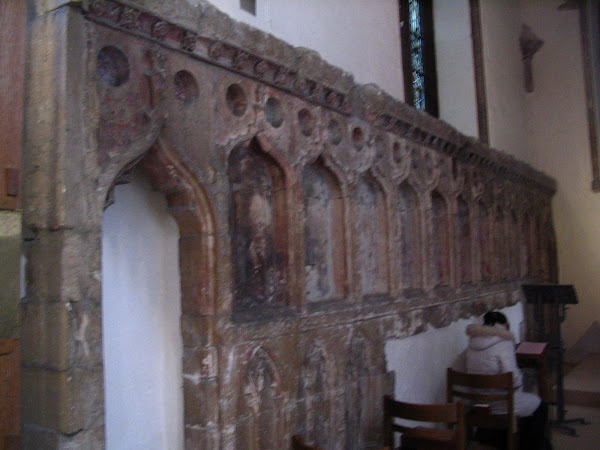
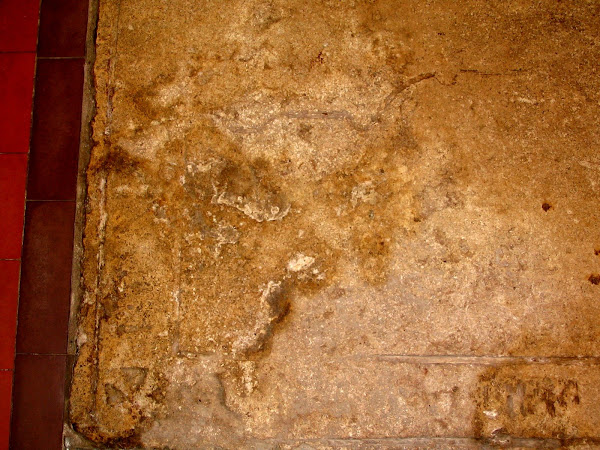
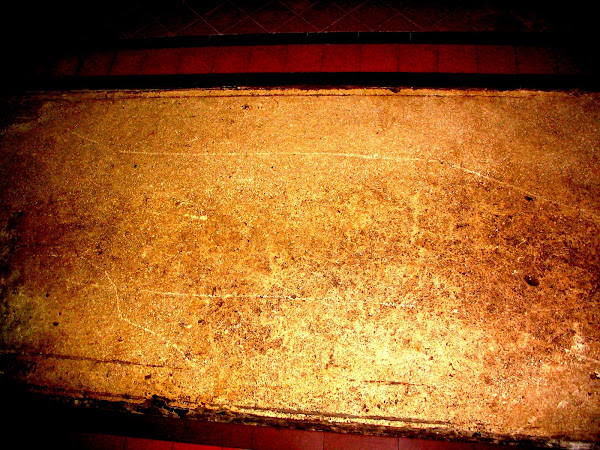
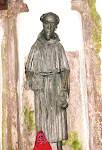
There is scant evidence of this Templar involvement, but there are some sacred places. Such as St Brides Netherwent-Sant y Brid. It seems the Lord had Templar connections, for there is in that beautiful little church (Ave Maria bell of 1295) a templar tombstone brought in from the churchyard, or more probably kept as a monument of the church. Nothing seems to be known about the person commemorated now as desecrations subsequent to the Reformation or Cromwell have removed the identity, but the person it did commemorate was a Poor Knight of Christ. .
Templar Tombstone at St Brides, Netherwent an abandoned Mediaeval village.

What is sad about it, is that this was a living , breathing human being who went all the way to the Holy Land to protect pilgrims and defend the Holy Places and, grateful it was preserved, who was he? Was he a de Huntley of the local manor. Probably as such a stone looks like worldly status.

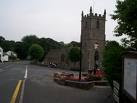
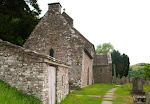
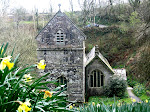
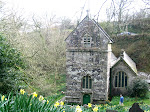
 St Bride's Netherwent
 Sant y Brid

On a Llan site, next to a redundant Mediaeval village.Has a thirteenth century 'AVE MARIA' bell.
 Church at Moccas


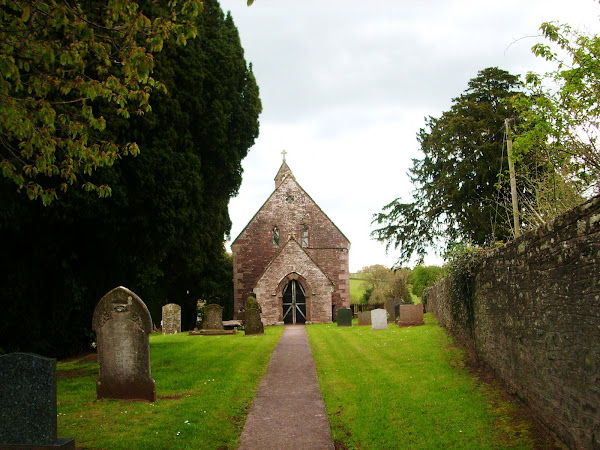
Looking at this church, with its great apse, immediately struck me as a Templar Church and I was not disappointed. I had become interested in this church because it was an ancient Christian llan or monastic settlement of the great St Dyfrig when Ergyng and Gwent were neighbouring kingdoms and this area still part of Wales. I was not disappointed when I entered the church, which you have to approach through private land, though a right of way is afforded at normal times.


The Knight Templar is
believed to be Richard de Fresne, with his legs crossed to show he has been on Crusade lies facing the altar of his Lord. The Apse has been rebuilt in Victorian times, but in a similar style and there are interesting stained glass windows of Victorian age. The Choir stalls are unusually constructed in a kind of box formation in the chancel around the 'sleeping' crusader.


Apse
 The apse at the end, which has been rebuilt gives a Templar feel to the whole setting of the monument of Richard de Fesne and box pews are all around in a square, facing it. The Altar is in the apse.


 All Saints Kemys Commmander, a Commandery or Perceptory of the Templars. a nearby cottage is still called 'Templar Cottage'.I visited in 2009.

In the Report of Prior Philippe de Thame to the Grand Master Elyan de Villanova for AD 1338, not so long after the take over from the Templars, it seems to have been just land and a church-and village.
The Report and account on Kemys Commander is:

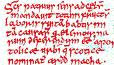
Est ibidem unum mesagium quod valet
ijsItem CXX acre terre, pretium acr
ijjd        Summa xxxs   (30 shillings
Et ecclesia ibidem in proprios usus valet per annum    1 s (shilling)

So the villagers' tithes were not worth as much as the fields being farmed.

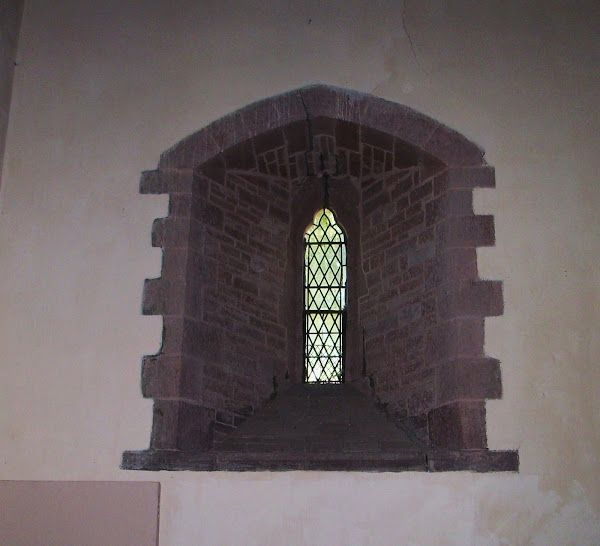
 An early window in the church, which originally would not have had much natural light and been lit by candles.

Interestingly, Garway is included as the head quarters of the Welsh Templars in the Hospitallers' Report.
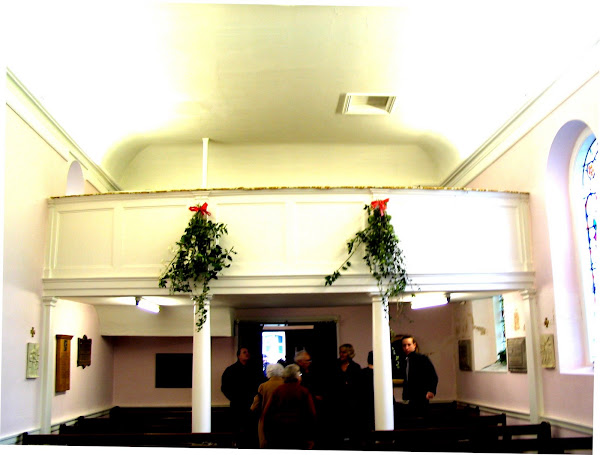
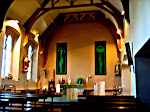
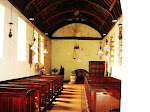
 Simple Church with a barrel roof, sanctuary and chancel and nave. Most of the furnishings in the church are modern.
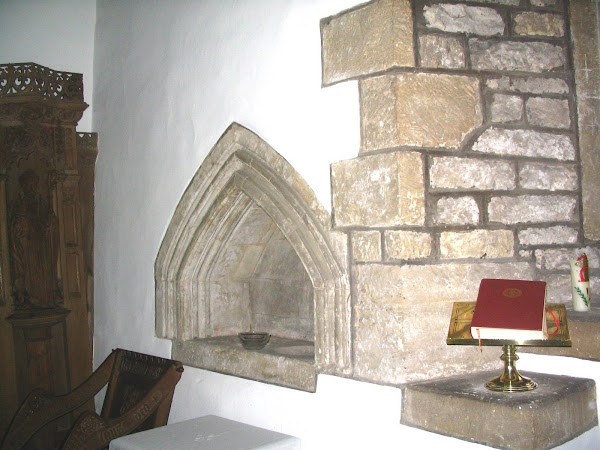
Piscina, where the remains of the precious Blood and any crumbs from the Sacrament are sent back to the earth. These were often blocked up by Protestants, although Anglo Catholic churches often kept them.


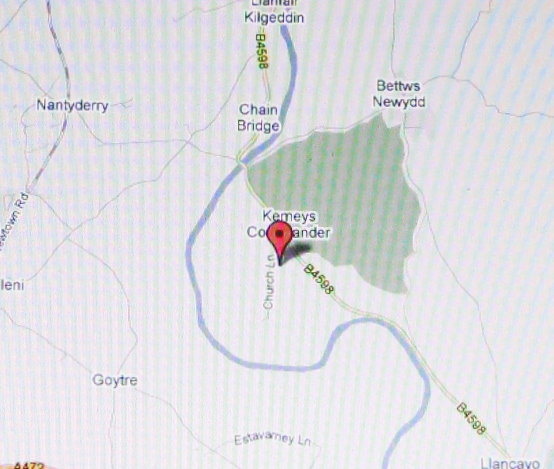
  Tried to upload a link to google maps, but for some reason was unsuccessful-however here is a small detail of the location of Kemys Commander.


Llanmadoc Church near Swansea (dedicated to St Madoc) was the other Templar /Hospitaller Preceptory or Commandery in Wales.

The present churrch of St Madoc in  Llanmadoc, (LB 11532 II) dates to the twelfth century. When the Saxons and Normans conquered the area, the church was given to the Knights Templar in 1156 by Margaret, Countess of Warwick and, after the suppression of the order imposed by Pope Clement V in 1309, to the Knights Hospitallers of St John of Jerusalem. In turn the church was seized from the Church by the officers of Henry VIII so he could benefit from the proceeds during the Dissolution of the Monastery. The Church building was renovated by Revd J D Davies, a local historian, who spent  £500 on the restoration of the building which was finished in 1866, and the nave, tower and chancel were partially rebuilt. All the windows were restored. The eastern window to the south of the chancel  may be the original medieval east window relocated.

St Wulfstans Hospital (near Worceter)
 This was founded by a Templar known only as Walter, who began the hospital on his return from the Holy Land. It is now open to the public as a museum with Mediaeval exhibits and others. It was a wonderful hospital supported by the Knights Templar and subsequently by the Hospitallers, although the Bishop had to step in at times, as it became financially profitable too, and he needed to make sure the money ended up with the poor and sick. Henry VIII closed the hospital and turned out these people.

Tomorrow I will look at Temple Grafton and at Garway, the largest and most influential of all the Templar properties.

Tuesday, July 29, 2008

Sant y Brid -St Bride's Netherwent and the Ave Maria Bell 1290


____________

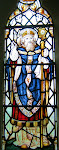
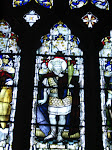
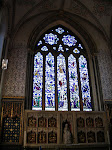
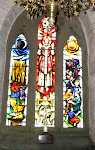
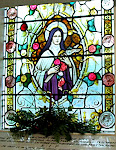
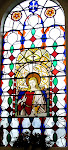
The Stained Glass Window of St Brigid of Kildare.A Jewel of a Window!

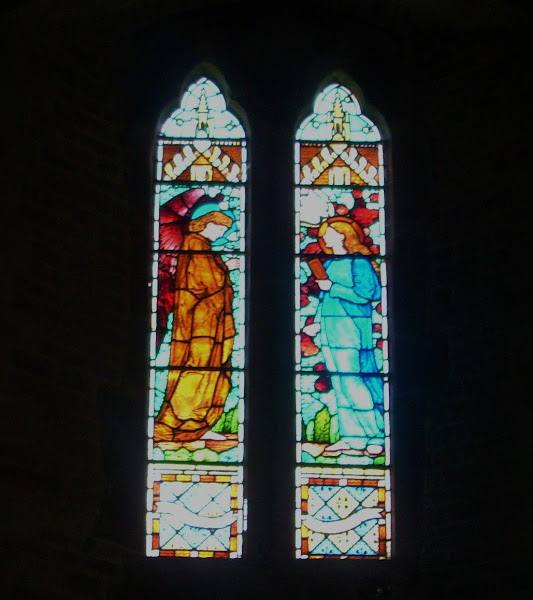
This is really a beautiful window and there are several other stained glass windows of excellent quality, though from the 20th century. There is no other emblem or symbol of St Brigid left in the church that I could see.
I first read about this little Church in Fred Hando's book 'Journeys in Gwent' and i have never had more pleasure out of a book than this one, which I got in a jumble sale and have reverently kept it safe all my life. This morning I am recovering from yesterday's heat!!!! and my eighteenth Wedding Anniversary. My husband took me out to a little restaurant by the river, called the Fleet Inn at Twyning near Tewkesbury. It had been a dreadful day. The ratchet on my clutch pedal had gone in a really awkward place and we were subjected to constant abuse i'e'_'Silly ******! What a place to park!' etc and the RAC (Royal Automobile Club) had taken nearly 3 hours to find us. I had been to the vet and found my dog might need an expensive course of treatment and so I was screaming inside. It was so hot and the air conditioning had folded up. I could not have it fixed because I had to pay £89 for a blood test for the dog!!So I roasted.

When the breakdown van came and towed me to the garage I was so grateful to cool down in the van. Above all I was grateful to my son, who was wonderful, took the dog out for a walk, walked a mile to the nearest supermarket to get a sandwich , cold drink and some calippos which were still reasonably cold when they arrived and kept me sane, and the dog, who was hanging out of the window, her problems being related to excessive drinking and hmn you know what I mean. The RAC man was so kind as well and dropped my son of at the railway station. Inside I was screaming then I calmed down and did a rosary and something told me to ring RAC again, yes they had sent the man to the wrong place (don't know how!) but they took a fix on the phone.When I got home I went to bed for a few hours with some paracetamols, thanking God for my deliverance.

My husband was very sympathetic but when we got to this 16th century inn, the Fleet Inn at Twyning there was a thunderstorm. It was wonderful that all cooled down and I thinked God the pressure had burst.We laughed hysterically at the rain (and if you know Tewkesbury it always makes you nervous) and we had a lovely meal. Today it is like a bad dream. The dog, Kandi has to go back for another blood test Wednesday for 'Cushings ' which will involve supplements. Whilst serious I hope she will be ok.

St Brides Netherwent

I quote from Hando's book p58 (sadly no longer in print, I believe)

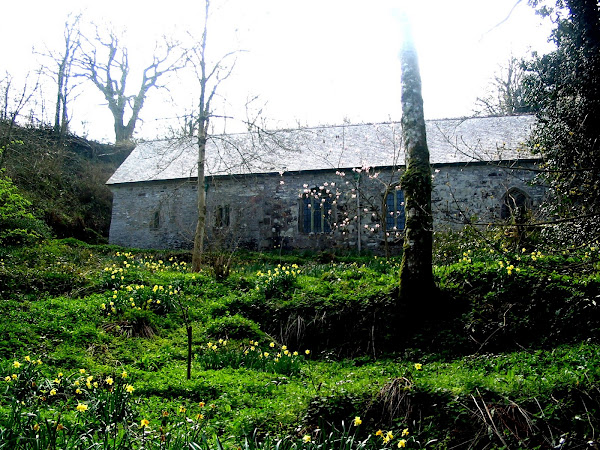
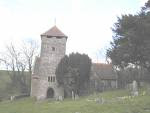
Another bend in the lane and we reach our journeys end, for accross a flat meadow we see the church of St Bride . Small, serene, set sweetly in its stone-encircled island of green, and guarded by tall trees, the grey sanctuary with its brown roof is in perfect harmony with the landscape. We lean on the roadside gate, and watch, and meditate.


Fred's Drawing

______________________________________________

" I remember said my friend," at a Church in Wales Convention years ago, a Welsh parson prayed that while God would doubtless answer the prayers of the great guns of the city, He should also listen to the petitions of the little 'pistols' of the Monmouthshire valleys" That was a good opening for our talk. We had travelled thus far to see a little church; in other days we had journeyed to St Pauls and Notre Dame.Could it be that the Mighty Creator was as accessible from St Brides as from Notre Dame? Was the voice that spoke the thunder also the 'still small voice'?

As we talked, the western sky changed to daffodil yellow charged with crimson, and over the deep hillside shadows floated a pale blue haze-the haze of the wood fire-the blue of Mary's robe.

"O yes" came the quiet voice of my friend, " I am satisfied that Godliness is compounded not only of goodness and grandeur, but also with an equal portion of simple goodness. That little church, with its good lines is just as effective in expressing man's love(of God) and man's need, as is the majesty of a cathedral".


The dusk now descended. The colours slowly faded. Yet as we turned for home, the grey stones of the church glowed as with an inner radiance. Strange you may say, to find Welsh Churches dedicated to an Irish saint. Who was St Bride? What brought her to Gwent?In the Lives of the Saints we find the answer.

St Brigid was the pure and stainless Virgin of Kildare. Her father wished her to marry a wild chieftain of the neighbourhood , and when she refused, he threatened to force her into marriage, whereupon the saint made her eyes drop out to the ground. Her father shrieked with horror and fled. Calmly Brigid took up her eyes , washed them , inserted them into their sockets , and made her way to to the sea shore , where she cut little sods of earth and using them as boats sailed to Cambria (the area of Wales known in Roman times. She seems to have travelled all over Britain spreading the gospel and a real devotion for the prayers of this lady ensued.She is reported as changing stones into honey, of shes into butter , of rushes into smelts, but she also changed the Lord Mayor of London into a horse!"


________________________________

So wrote Fred Hando, Headmaster of Hatherleigh School, and prominent local historian in his poetic prose and flair for entertainment. Of course this was in a book published in 1951. I have to say the area is unchanged. I first came with my son in May and I recognised it from Hando's illustration in the book. It was sunny, the birds trittered quite shrilly in the little island on which the church lay. It seems to be square nowadays, but I understand a considerable Mediaeval village lies buried behind the chuch, with many of the bodies of the villagers buried under the nave of the church. We have no idea what killed the village off, but in 1835 just one small cottage remained lived in by William Pewtrifs and he was married here in the church according to the registers as obviously this church too is adminsitered by the Anglican Church in Wales. From the tithe map we see he kept a neat orchard behind his cottage.

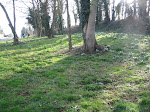
Today nothing can be seen of the tenth century except the church, except a few grassy house sites and a hollow that marks the sunken village street. At the end of this street was the gushing St Bride's brook. It could have been the Black Death in the Middle Ages, It could have been the Great Plague in the seventeenth century, It could have been the enclosure of the land my local land owners, forcing the people out and into the towns in the eighteenth century. Until the site is excavated (the field has never been ploughed by order)we shall have few new clues.

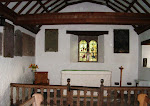
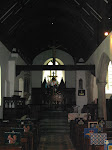
Inside St Bride's Netherwent


I was met at the church by the energetic and enthusiastic Vicar's wife Mrs Heales,who was kind enough to show me around the church's treasures. You can drive into the field where the church is located through the gate and park near the church in the shade, which I was glad of since the AC has gone in the car!

The location of the church makes it highly likely is was also a Llan in early British times, but that the churchyard wall has been 'rationalised' wspecially as the tenth century town was clustered around it.It clearly became an estate church built up by the de Huntleys for their manor. It still remains walled off in a more square way from sheep and cattle to save them from the poisonous yew trees , that were grown in this area-usually in churchyards. The purpose of this was as the parish leaflet says, was to "make longbows for the archers of Gwent" There was a rustic style stone gate ,(see the stone gate for St Materiana's in Tintagel)which has been replaced with a modern wrought iron gate.

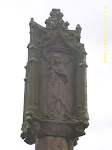
The ancient Mediaeval Preaching Cross

_________________________________________________________

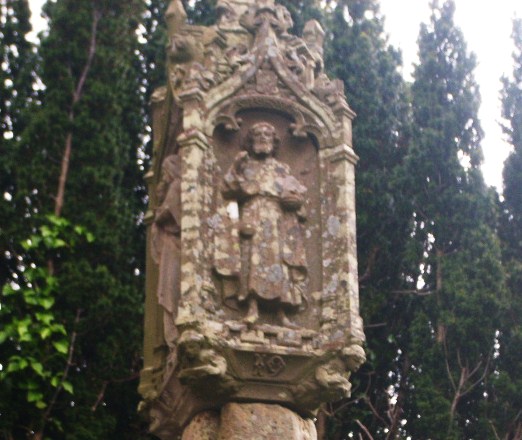
This Cross (damaged as we have said in the 17th century) was heavily repaired to commemorate the Jubilee of Queen Victoria in 1887. You can see the whole cross on the top pictre. The headstones are all quite recent mostly 19th century, the earlier sould being buried under the nave of the Church, where they felt they would be nearer Christ and the Blessed Sacrament prior to the changes in the 16th century.In 19th century towns John Henry Humphries, agent to the Perry-Henrick Estate which maintained St Brides, chose to be buried in the church " So that the hounds could run over my grave". The parish leaflet goes on 'Again in the parish leaflet " Certainly on a crisp winter's morning he might still hear the haunting music of the hounds drawing the dark coppices of the Salisbury Woods behind the church and site of the Mediaeval village.

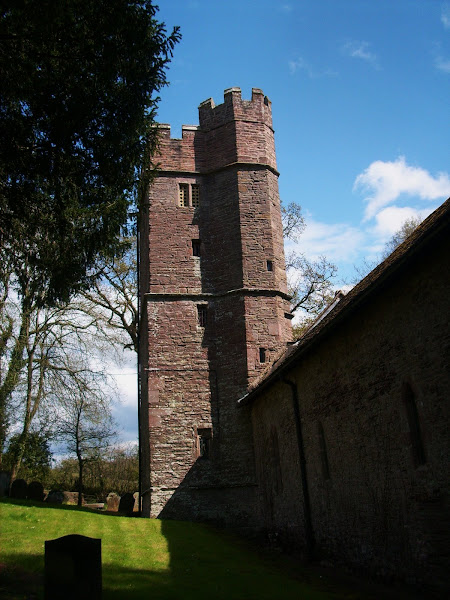
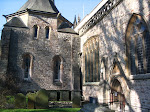
Only the tower of the church, looking on the outside is really ancient. It's thirteenth century saddleback roof is very French and it has three early lancet windows on the North side. A worn carved stone head is set into the church itself and is evidently from the mediaeval nave or chancel-sanctuary that was so ruinous by 1848 that they were pulled down and rebuilt. A note in the records shows that a northern side had fallen down before 1790 and that in 1812 , the southern aisle collapsed . With little population and its village gone, the church was rebuilt simply, but lost its aisles.

The little Norman Church, was probably served by a nearby priory such as at Chepstow for example, and was rebuilt during the Norman reorganisation by Lord of the Manor-Lord de Huntley, no doubt granted by William Fitz Osbern of Chepstow Castle one of William the Conqueror's stalwart barons.
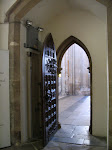
The door for the priests entrance into the Sanctuary still remains and is covered by a blue velvet curtain.

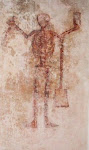
The Black Death


The death of the mediaeval village, possibly during the Black Death village caused problems all over Britain as the disease ran its course and as the monks(there were few secular priests then) helped most with the dying and dead, many of them died as well. Only two monks remained at Abergavenny after the Black Death from 20 before.William Fitzosbern, Lord of Chepstow died early and although the land passed to his son, Roger de Bretuil after whom Bristol must have been named perhaps, chose to live there and the Prior and monks of Chepstow had a job to establish themselves securely, having few monks, unlike the greater numbers of Cistercians at Tintern Abbey, who arrived later.I think the Death is more likely than the Plague of the `1660s which was confined more to the London region.The Black Death, or the Black Plague, was one of the deadliest pandemics in human history, widely thought to have been caused by a bacterium named Yersinia pestis (Bubonic plague),[]

It is thought to have begun in Central Asia or India and spread to Europe during the 1340s. The total number of deaths worldwide is estimated at 75 million people; approximately 25-50 million of which occurred in Europe and killed 30% to 60% of Europe's population. It may have reduced the world's population from an estimated 450 million to between 350 and 375 million in 1400.This visit of the Death seems to have been far more devastating than the later outbreak, although did not seem to penetrate the mountains in North Gwent, largely isolated at that time.


No doubt the inhabitants of the village died at the same time as the monk-oriests were running out of people to serve the churches.Chepstow Priory seems the likely supplier of the priests.These were Norman French in origin(as was the syle of this building and no doubt accounts for the style of the roof of the church.There would have been a barn somewhere in the village near the church to collect the tithes.

'Lady Sophia Perry Herrick'

Moving to the nineteenth century,during Anglican times, the parish leaflet tells us that 'Lady Sophia Perry Herrick would attend a service here with her servants and tenants and was a great benefactress of this church. In her zeal for temperance she had closed down all the local pubs (bet that made her popular)She was a current 'Lady of the Manor'. it seems.She appointed a priest of her choice.

Lady Sophia and her patronage ended their days in 1915. Mrs Healy recounted the tales of Lady Sophia as they had been related to her and also recalled a Mrs Baker who was the wife of a man named George Baker, who knew and accompanied Fred Hando on his rambles in Gwent.Her enthusiasm for all the church 'characters' in the past history of the church was infectious and very interesting.It seems a George Baker was 89 when he died and had been a church warden for 48 years! "His sprightly form leaning over the gate at Manor Farm will long be remembered in these parts - and was the last of the Old time farmers'.(Parish Leaflet)(There is a monument to his grandfather in the church who died in 1813 two years before the Battle of Waterloo.There are other 19th century inscriptions and monuments as well as the Mediaeval Templar tombstone.

The altar Chair


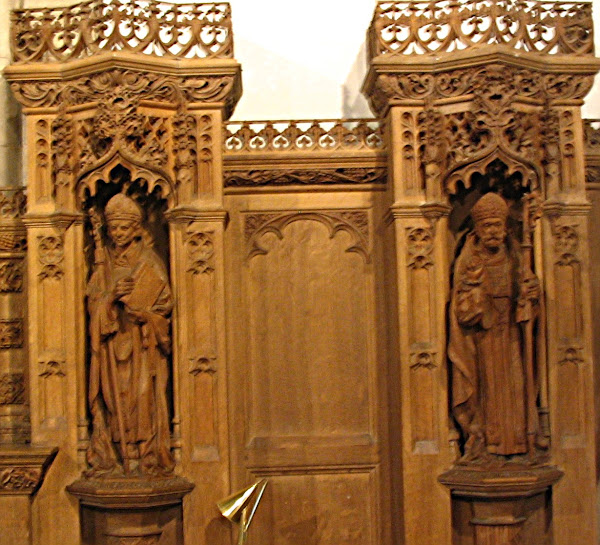
By the altar is a fine old altar chair which may have survived from the earlier church, like some of the memorial tablets.This chair is also made of oak and it is worth remembering in Druid times the oak meant Stability, Nobility,Strength and Endurance and is the emblem of St Bridget of Kildare.


_________________________

The grounds and church are beautifully kept, The piscina has vanished here completely, possibily in the rebuilding of the 'Chancel'. we used to call it the Sanctuary where a light was kept shining at the Blessed Sacrament, where the true Body, Blood, Soul and Divinity of Christ' was kept. This I found was obviously missing. I did, however find something else.

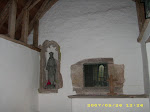
A Templar's Tombstone has been found in the Church(see photo)

The Great Bell of St Bride's Natherwent-The Ave Maria'

The Church leaflet writes of this bell, that it is the smaller of the two bells in the bell tower. I was not able to see or photograph it . The bell has a diameter of 22 inches and is considered the most interesting bell in Gwent , the earliest inscribed one in the whole of the United Kingdom (how it escaped the vandals' desecration is a miracle!) possibly as it was the only bell at that time. There are only six other such bells in the UK.

It is incribed in Latin +AVE MARIA GRATIA PLN+ and dated 1290

This is the beginning of the Hail Mary,Full of Grace, the Lord is with Thee. Blessed art thou among women, and blessed is the fruit of thy womb Jesus.Holy Mary, Mother of God, pray for us snners now and at the hour of our death.

We call Mary 'Mother of God' (Theotokos) because she assented to be the cause of our Salvation and gave birth to God in the form of Jesus.And so is the ikon of the Body of Christ (The Church or Christ in the world)

I think it is wonderful to note, that in the dedication of the Blessed Virgin of Kildare, a woman dedicated to Christ's service in the world, and then this Bell which has vcalled the faithful to worship for centuries,named for another human woman, Mary the Mother of Our Lord should continue to call worshippers, even in an almost covert way, through all the times of terrible persecution for Catholics when the only places of worship were lonely ruined Abbeys, the top of The Holy Mountain, the Skyrrid and in back rooms in pubs and private houses.There were many recusants in Gwent and the King's Commissioner complained to Henry 'That the county of Monmouthshire hath always been esteemed to have been a true daughter of Rome'. Many fulfilled their obligations to the English church in order not to have to pay the hefty fines payable for non attendance at the English church.The language of the recusant church was Welsh and signals and meetings were arranged though this medium wherever possible.


Now the bell of 1290 was of French influence. In casting such a beautiful bell (which is slightly oval in shape, also a rarity, the parish leaflet says "was a long and difficult procedure in the thriteenth century and we must think of the de Huntleys (lord of the Manor) as having some wealth to equip their parish church with such an object. Today the bell is even more precious - and all the more wonderful that it can still be heard on Sundays calling the faithful to worship There is no more beautiful sound on an early Spring morning, when the mist still lingers on the flat water meados where once was the long vanished village, than the soft muted voice of this bell. Like the church itself, the sound is simple, rustic and exquisite."

Planning to Visit?

If you have a moment to visit this ancient church, go to the Church in Wales Website and put in St Bride's Netherwent and you will find Rev Healey's Contact details.Othersise a key is held at 'The Glen'600 yards north of the Church on St Bride's Lane.

Tomorrow I will move on to the third of our St Bride, Bridget,Briodhe,Brigid Churches at Skenfrith. The Welsh version of the name of Church and town is 'Pure Virgin' and seems to bear testament to a much older religious settlement on the site, also dedicated to the Holy Virgin of Kildare. This church is larger, again the chapel of the Castle at Skenfrith owned by the Norman Lords and has more original Catholic features as well as one 'special treasure'.

A Millenium Prayer for Intercession of St Brigid of Kildare

+In the Name of the Father and of the Son and of the Holy Spirit. Amen

Holy St Bridget from your place of glory, pray for us sinners to the Lord our God. Help us by interceding for us with God the Father as we make our prayers. Pray with us Holy Lady and join us in asking God, whose blessed Son became poor that we through his poverty might be rich: help us keep to the things that really matter-the virtues of Faith, Hope and Charity.Help us always to keep eternity in mind and not be sidetracked by what is not important .Help us to recognise evil and what is evil.You used your leadership skills wisely in the Great Abbey of Kildare, teaching your nuns to seek holiness, purity chastity and self giving Love. Help us to find holiness in all things, especially the poor in spirit, so that, following the Way of Our Lord Jesus, we can fix our path on God and look for the promised riches and happiness of the next world.

Our Lady Mary of Penrhys Pray for us
Our Lady of the Taper Pray for us
OUr Lady of Tintern Pray for us
Saint Bridget of Kildare Pray for us
St Winefride Pray for us
St David our Patron Pray for us.

Pray for us O Holy Mother of God, that we may be made worthy of the promises of Christ.
Praising the Holy and Blessed Trinity one God forever and ever in the Name of the Lord Jesus Christ.

Amen

Tuesday, July 22, 2008

St Bridget of Kildare, Bride of Ireland and Four Gwent Churches. Feast Day February 1st

_______________________________________
Bridget was born at Faughart, near Newry Co. Down (d 525) to a Druid named Dubhtach and his bondwoman, who was soon sent away after her birth. Bridget’s father raised her in Druid symbolism and "according t o the Rennes Dinnsenchus, she was a ban-druÍ, a female Druid, before she converted to Christianity" .Her 'lives' were written in the seventh century and are a series of miracle stories with a strong nature worship theme.However the advancement of female Christian nuns and their strong tradition of learning and above all kindness and munificence of the Christian ethic won many to the Christian ideal and Irish monks and nuns were at the forefront of missionary work carrying the gospel overseas.Latin was the spoken language of Church and liturgy and monks and nuns like St Tatheus also came to Gwent . Tatheus ounded the monastery at Caerwent which became a great seat of learning where St Cadoc of Newport studied.It is reasonable that he, and other monks who came with him would have recounted te stories of the miracles of St Bridget of Kildare.

Bridget first studied under Bishop Ibhair. He had prophesied that the Virgin Mary would appear in his church, however, on the chosen day, she did now appear, but Bridget appeared. He called her ‘Mary of Gael,’ and soon after she gave up her possessions and life to join the church as a nun. In Kildare, in Gaelic cill dara meaning 'Church of the Oak Tree', she founded a monastery. Soon Kildare grew into a cathedral city of learning and piety.

Some time later, to avoid a suit with the King of Leinster, she studied under Mel, the Bishop of Ardagh, son of the important abbess Darerca, sister of St Patrick, by whom Bridget was actually said to have been baptised.

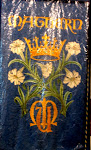
The Oak Tree and Oak leaf emblem (borrowed from the pagan goddess Bride?

Her first monastic foundation overlooked the Liffey and was placed within the shade of an oak tree. She called her monastic church, "the church of the Oaks," which was also near the pagan fortress of Dún Ailinne. According to the Life of Bridget written by a monk in her following in 650 AD, it was a 'conhospitae' as both men and women were abundant in the community.The spirit of Bridget was kept alive through her memory as a Christian saint

---------------------------

The flame at the shrine in Kildare burned through its transition into a Christian nunnery until 1220 AD when Archbishop Henry of Dublin ordered it to be extinguished (Jones, p.102). At the time of its conversion into a nunnery, the Christian order dedicated it only to the Christian nun known as St Bridget.

Bridget's contribution was far ranging.Like Mother Theresa, she used her position to clothe the naked and feed the hungry.The Christian tradition too ad elevated the status of women too. They could choose whether to marry or take the veil if they were wealthy enough as dowries were still paid to the convents.Her conversion like many others contributed to the fall of Druidism.Hpspitality was the watchword of the convent and the poor were always welcome. St Bridget is a great ikon of prosperous Irland of today. The Brehon laws which regulated vil law in her time, stipulated that a free man had to give food and shelter to any man equal to or lower than his own rank. Bridget made a virtue of this law, seeing in the reflection of Christ's word, that whatever we do to the least of our brothers and sisters, we do to him.

Condlaed, Bridget's Chaplain

Bishop Condlaed, Bridget's chaplain had recently bought some fine new vestments over from Brittany. One day, when the bishop was not looking, Bridget cut them up to clothe the poor.Emeritus Professor E.G. Bowen remarks jovially :'We are left to imagine some Irish lad with angels embroidered on his pants being teased by his mates and possibly chased by the Bishop'.

Professor Bowen continues: 'And legend further says' She sailed from Ireland to Anglesea on a green sod of earth and instantly upon landing became a firm hillock and was afterwards called HOLY HEAD (Holyhead'. Acorns and oak leaves are the special emblems of St Bridget who is usually depicted with a holy flame over her head. Theseemblems can be seen over the churches. It is worth saying that the Wentloog levels were popular landing places for Irish-especially pirates and it may be some stayed in the area, bringing their local saints with them. Netherwent is also not so far from the Severn Channel , close to where Tatheus would have landed.

Bridget's father wanted to force Bridget into marriage with a wild chieftain of the neighbourhood, and when, like so many olthers, Tecla, Winefride etc she refused he threatened to force her, whereupon - and wait for it = the saint is said to have made her eyes fall out of their sockets. Her father (understandibly) shrieked with horrow and fled . Calmly, Bridget took up her eyes and inserted them back into the sockets and made her way to the sea shore where she cut little sods of turf and using them as boats sailed to Wales (or Britannia as it was then without England) Her miracles included the changing of stones into honey, or ashes into butter and rushes into smelts.


The Normans in Kildare
When the Normans reached Kildare in the twelfth century, thedy foiund a flame still alight on her shrine.Dedications to St Bridget (or St Bride) continued in the Middle Ages.She was a special favourite of Wales

Four Churches in Gwent have dedications to St Brigid. These are (in Welsh


1. St Bridget's Church, near Usk Llansantffraed (the Holy Place of St Bride)near Llanarth.This can be found in the grounds of the gorgeous Llansantffraed Court Hotel, a country house hotel with amazing views.This parish is the smal;lest in the county,consisting only of some 290 acres with its boundary excluding even the lodge at the entrance from the main road, which is in the parish of Llanarth.

2. St Bride's Wentloog Llansantffraed Gwynllwg (St Bride's Wentloog)
oS ST292823 This Church stands at the Mouth of the River Usk by the Britsol Channel off the B4239 south of Newport. The present church is 15th century and was restored in the 1990's.

3. St Bride's Netherwent. Llansantffraed Iscoed. OSST 428895
This charming little church has not changed since the days of Fred Hando who described it in the Pleasant Land of Gwent in 1951. The church is located near St Bride's Brook in a tiny hamlet just north of Junction 23 a on the M4. To the West of the church is the site of an abandoned Mediaeval village, which may have had more than ten houses. To the north is the site of Bride's mill.

4.Llansantffraid Ynys Gynwraidd (The Maiden's Island) St Bride's Skenfrith )OS S)4 56203)Maiden means 'Virgin' here-the Virgin of Kildare.It is possible that there was an ancient Celtic foundation here before the Norman Church, because of the translated name.

This Church stands next to the River Monnow(afon Mynwy) close to the border with England. Present building dates from 1207 AD. Acorns, oak leaves and flames can be seen in the sanctuary and there is an ancient head of a nun over the porch which is said to represent Briget. The tower dates from the time when this border country was often raided by the English and was a protective keep as well. The walls of the tower are five feet thick. St Fraed's Well (Bridget's Well) is marked on the OS map in nearby woods. (SO 462203)

A fifth dedication just south of Brecon on the Usk (Llansantffraed juxta Usk)is ouside Brecon and outside the county boundaries. (OS SO123235)A church on the site is mentioned in 1254 but was in ruins by 19th century.The gothic style building is from 1885 (during Oxford Movement and contains some stone and features rescued from the mediaeval church including a3th century font.