Showing posts with label Relic of the Skull of St Teilo. Show all posts

Friday, April 17, 2009

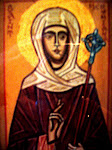
Pope Eluetherius' Envoy to the British, St Fagan, and St Teilo's Church, Talybont rebuilt at St Fagans


____________________________________________________________________________


ST FAGAN AND ST TEILO


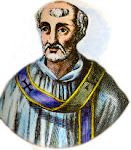
Pope (c. 174-189). The Liber Pontificalis says that he was a native of Nicopolis, Greece. From his contemporary Hegesippus we learn that he was a deacon of the Roman Church under Pope Anicetus (c. 154-164), and evidently remained so under St. Soter, the following pope, whom he succeeded about 174. While the condition of Christians under Marcus Aurelius was distressing in various parts of the empire, the persecution in Rome itself does not seem to have been violent. De Rossi, it is true, dates the martyrdom of St. Cecilia towards the end of this emperor's reign; this date, however, is by no means certain. During the reign of Commodus (180-192) the Christians enjoyed a practically unbroken peace, although the martyrdom of St. Appollonius at Rome took place at the time (180-185). The Montanist movement, that originated in Asia Minor, made its way to Rome and Gaul in the second half of the second century, more particularly about the reign of Eleutherius; its peculiar nature made it difficult to take from the outset a decisive stand against it (see MONTANISTS). During the violent persecution at Lyons, in 177, local confessors wrote from their prison concerning the new movement to the Asiatic and Phrygian brethren, also to Pope Eleutherius. The bearer of their letter to the pope was the presbyter Irenæus, soon afterwards Bishop of Lyons. Eventually the Pope took a stand and declared against Montanists, Gnostics and others.

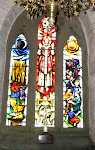
The ninth-century "Historia Brittonum" sees Lucius as a translation of the Celtic name Llever Maur (Great Light), says that the envoys of Lucius were Fagan and Wervan, and tells us that with this king all the other island kings (reguli Britanniæ) were baptized (Hist. Brittonum, xviii). Thirteenth-century chronicles add other details. The "Liber Landavensis", for example (ed. Rees, 26, 65), makes known the names of Elfan and Medwy,(a stained glass window at Llandaff Cathedral dedicated to Elfan and I posted last year about St Medw, a physician, whose church at MICHAELSTONE Y F(m)EDW was built inside a Roman fort near Newport-tying it to the S Wales area) the envoys sent by Lucius to the pope, and transfers the king's dominions to Wales. "Liber Pontificalis" is authority for the statement that Eleutherius died 24 May, and was buried on the Vatican Hill (in Vaticano) near the body of St. Peter. His feast is celebrated 26 May.

Southamption University Press is publishing a new book in May, Called 'King Lucius of Britain'. Recent research by a recent scholar and archeologist, who argues that Lucius was the first Christian King of Britain and deserves far greater recognition. He is not to be confused with Sankt Luzius of Chur who was a completely different saint and martyr. Our King Lucius was Llefer Mawr who has a tomb in St Mary de Lode in Gloucester.


http://www.soton.ac.uk/mediacentre/news/2008/may/08_84.shtml">

Amazon UK Link

http://www.amazon.co.uk/gp/offer-listing/0752445723/ref=sr_1_olp_1?ie=UTF8&s=gateway&qid=1240902118&sr=8-1

So Saint Fagan was a Roman missionary , who came to Britain and porbably baptised. with Elfyn and Medw the chieftains and nobility of Britain.This is also affirmation, that when Julius and Aaron and Alban were persecuted there was already a thriving Christian Church in Caerleon-whether it was Bede's 300 persons we cannot know, but we are certain it was in the 2nd century not the third when the persecution happened, which ties in with the Julian Julianus stone in Tredunnock, which has been authenticated as second century.

Fagan set up in the Cardiff area and founded his church there, and his small monastery of the Romano-Celtic type, which attracted other Christians, although nothing like a big monastery of the later type. He was a missionary, and possibly the centre of his mission the very fields on which he Museum of Welsh Life is situated. In common with St Julius Julianus, he gives his name to a whole area of the town of Cardiff, which is a good indication of a solid presence connected to the land itself. Elfyn and Medw also set up their centres, and it is possible the unnamed Amphilabus (the 'cloaked one') and Bishop of the Silures who initially escaped the persecution, and fled to Alban actually trained and studied under one of these saints. He later became a martyr, being stoned to death at Verulanium (Now St Albans) Plainly his influence was wide, if details about him are scanty, in a curious way his name lives on, not only in the Great Communion of Saints, but also in the name of the Museum of Welsh Life.

ST TEILO's CHURCH, TAL-Y-BONT

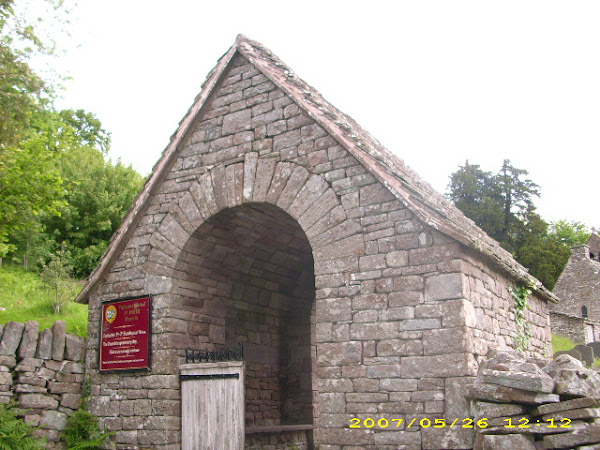
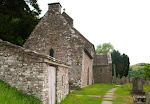
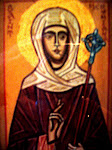
The Museum of Welsh Life (Amgueddfa Werin Cymru) lies just outside Cardiff, in a beautiful setting near the River Taff. I wrote all about St Teilo in a previous post last year, and about the colourful transition of his relic all around the world.If you look at the boxes on the LHS, you can scroll down to all the archives from last year, and I believe it was in an April or June page.There is also a Podcast on Mary in Monmouthshirelink to all the programmes in the left hand side boxes)

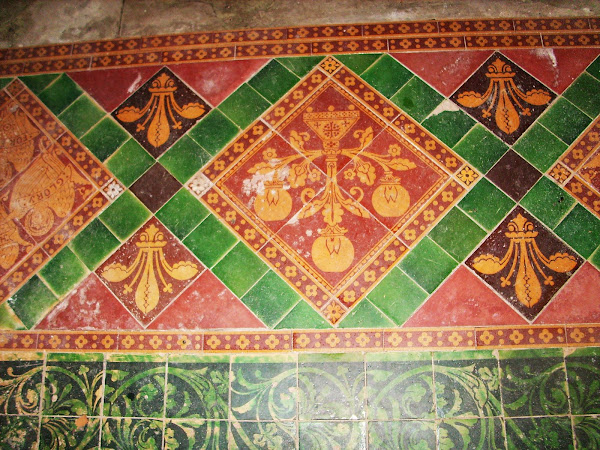
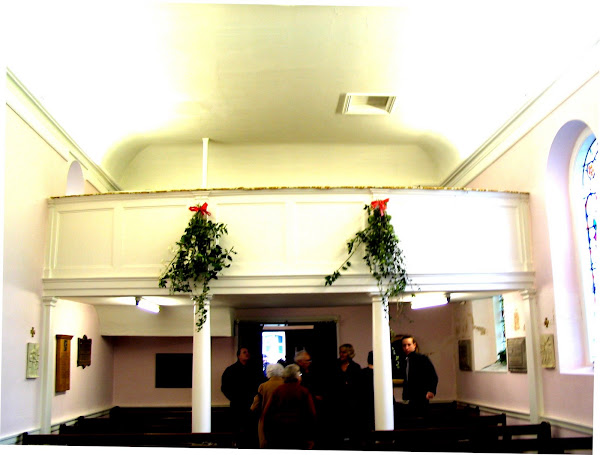
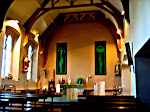
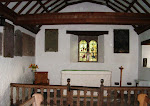
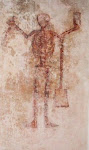
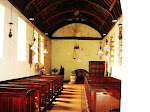
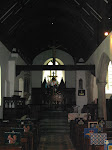
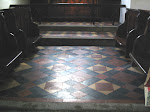
In 1508, Michaelangelo was painting the ceiling of the Sistine Chapel. Ten years later, another craftsman was painting the walls of another church, Llandeilo (the Llan or holy place of St Teilo)at tal y bont. We will never know his name, but what he did has been re-erected and repainted from exact copies as it has been reproduced exactly as it would have been in the 1520's before the time of trial when all such lovely things were limewashed, which in fact preserved them over centuries, as the Welsh were unhappy about the wrecking of the beauty of the churches. All the surviving original materials have been used in the complete reconstruction of the churc and its oil paintings, and missing items have been researched by experts. Floor tiles and glass , altar furnishings and furniture have been meticulously re-created. A new, hand-carved rood screen was made and decorated. The Painting of the Doom over the Rood the most amazing as it the shock of seeing a church so brightly coloured and beautiful with paintings, and devoid of pews.The result is breathtaking. The Custodian said to me, that a woman had said to him, that if churches looked like this today they would be full, as just to gaze upon it was a vision of heaven.

St Teilos

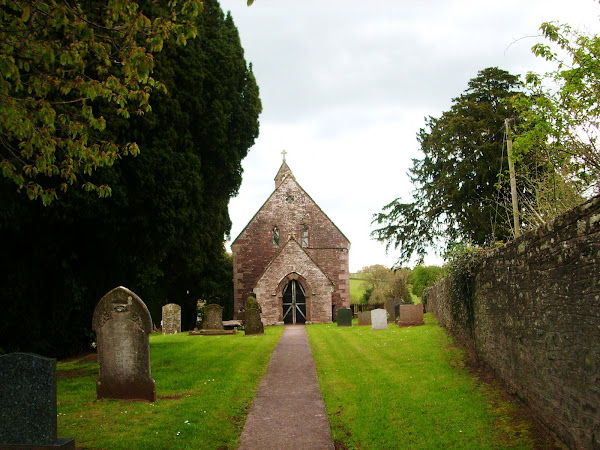
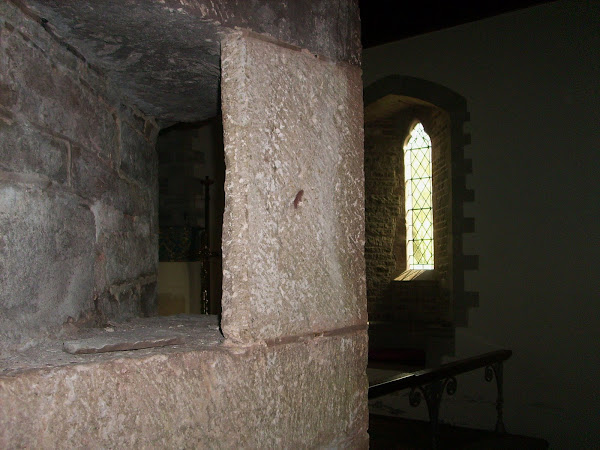
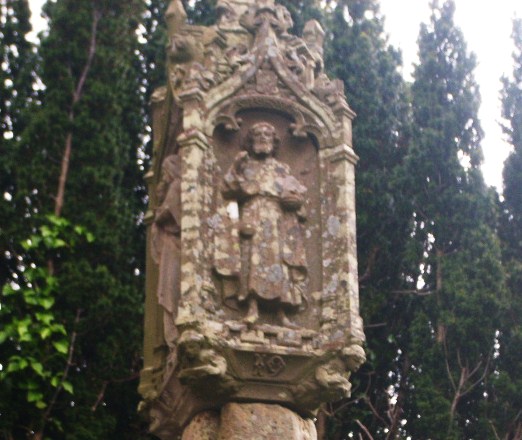
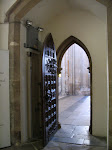
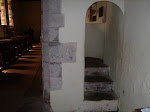
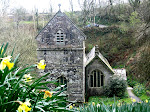
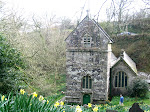
St Teilos was originally built on the banks of the River Llwchwr near Pontardulais. (The Old CHurch on the Marsh)as it was fondly called on its original site.The full translation of the Welsh name is 'The Holy place of Teilo by the crossing point of the River) There is no longer a bridge, but the church was at one time on one of the main routes through Wales, possibly for pilgrims on their way to St David's.Travellers entered the church to pray for safe passage accross the tidal waters of the River Llwchwr (TH-oo-thoor approx pron). A painting of St Christopher was always the first thing seen in a Mediaeval Church-associated with safe travel and pilgrimage. To die after seeing an image of Christopher was associated with immediate take up into heaven. Here at Talybont, is no exception. He is photographed through the door above.The Church was a central part of Mediaeval life and one of the only large meeting places available to the community.Eisteddfods, sports and festivals and fairs took place in the graveyard!
The church's rich decoration was a vision of heaven, acting as an audio visual backdrop for the Sarum Latin Mass, celebrated there on Sundays. Further visual stimulus was provided by symbols, images and messages, all woven into the theme.

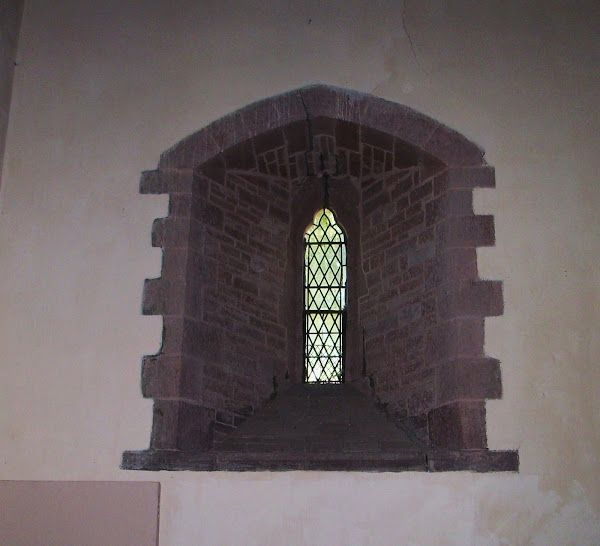
There was indeed an earlier clas or Llan established here from the sixth century, and indeed the present church (now rebuilt and restored at St Fagans) dates back to the twelfth and thirteenth centuries, as does the font. During the Fourteenth century, two chapels were built on to the church, creating a cruciform or cross shaped plan.It then formed an aisle during the fourteenth and fifteenth century. 1500-1540 it was again repainted with scenes from the Passion cycle together with popular saints, St Thomas Becket,St James and inevitably Margaret of Antioch, and finally the porch was built.It was completely stripped during the time of the 'reformation' and everything whitewashed. It ceased to function as a parish church in 1852 when a new St Teilo's parish church was built in nearby Pontardulais. The old church remained in use for burials and swerview but in 1073 these ceased and the church ell into decay. The roof tiles were stolen leaving the structure exposed and compromised and in 1982 the anglican Church in Wales offered the building to St Fagans for reconstruction.It had been in use for 800 years by Catholics and Anglicans.
At St Fagans a new bell was also cast by Taylor, Eayre and Smith, Bell founders of Loughborough.(cast Great Paul at St Pauls Cathedral)1881. The bell here is obviously more modest but uses all the ancient techniques and used as a model the 15th century bell at Llantwit Major (see previous blog).It has a prayer in Latin around the crown like so many mediaeval bells

SANCTE TELIAUE ORA PRO NOBIS(St Teilo pray for us)

CARVINGS

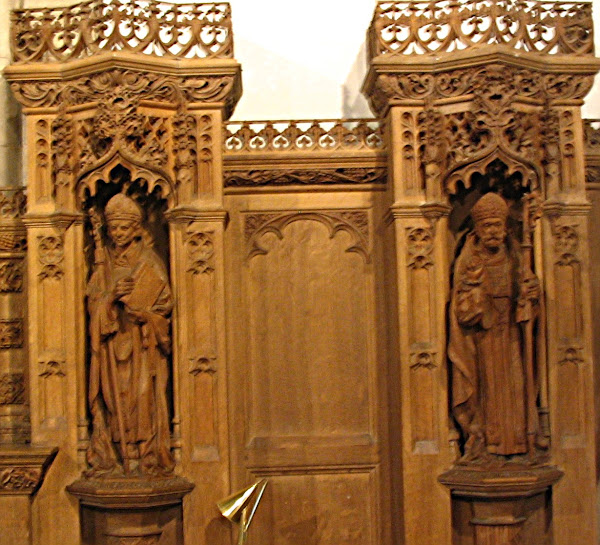
The Rood screen used to screen off the Sanctuary-the holiest part of the church, where the Blessed Sacrament was kept, and where the oly Sacrifice of the Mass is offered from the nave, where the ordinary people sat. The nave (meaning ship) provides the image of the protected people of God, in the ark of Noah, travelling to heaven. An image of Doom was provided above, but also the righteous climbing to heaven with Peter, and the Crucifix reminding the people of the Triumph of the Cross. Also there were the Blessed Mother, Our Lady, Mary, and Christ's favourite disciple John , representing the church. John was to look after Mary and Mary was now to be his mother.Very few of the rood figures remain because of the wholesale destruction during the 'reformation'and St Fagans is lucky to have two in the Collections in the Oriel Gallery no 1.

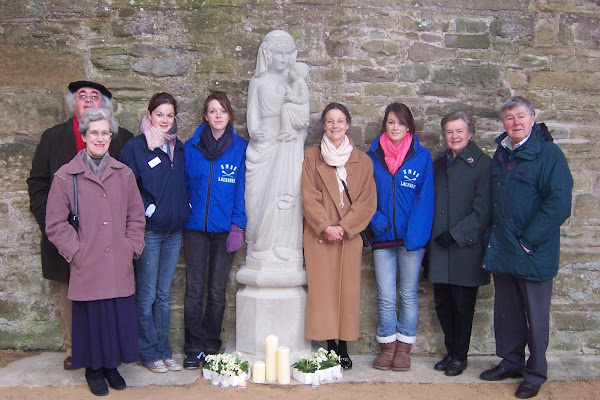
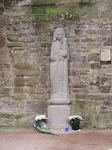
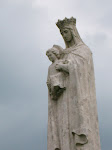
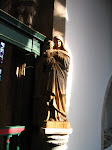
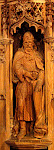
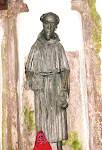
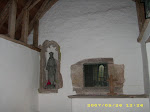
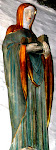
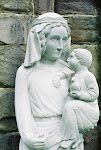
Master Carver Emyr Hughes carved the new figures of Our Lady and St Teilo from originals in Brittany.

There are many such remnants of rood screens found in various Churches around Monmouth, the most splendid (although no longer coloured) being at Llangwn Uchaf near Usk. this one is breathtaking. Again this was another original Old Welsh monastic settlement and I blogged about it in the summer of last year.A full booklet with the complete history and pictures of the reconstruction of St Teilos is available from the folk musieum. Entrance to the museum is FREE and car parking £2.50

This is a link for the Welsh Catholic History Society in Cardiff, who are at this time updating their website and when it is up again, you will be able to find out about the special Sarum Mass recreated for the opening of the Church at St Fagans. Currently there are no plans to license it for marriages and baptisms, but demand may eventually lead to that.

http://www.soton.ac.uk/mediacentre/news/2008/may/08_84.shtml">">

Friday, May 30, 2008

Llanarth Monastery and St Teilo-Llangarth


Tis was another Church which was closed, although there was a telephone number on the blog. I am using Celia Nash's excellent paper on Llanarth, which I got from the Catholic Chapel on Christmas Day. I will write more about that when I reach the sixteenth century. It seems the Celtic subject is so diverse it is like an open bucket, and you keep finding more and more evidence for our Catholic heritage. I arrived at Llanarth (St Teilo's Church)on an afternoon in early April and a man was working in the garden. Sadly I could not go in. The Man who was tending the graves, showed me the Catholic part of the cemetary, which housed the magnificent monuments of the Herbert family, which were quite stunning, and very lovingly tended. The Herbert family remained true to the Catholic Faith during all the times of the persecution, but more of that later.

My friend in the graveyard also told me with great joy of remembrance how he had gone to Lady Llanover's Christmas Party one year as a child and his face beamed when he recalled she had given him a large beautifully painted train set! Lady Augusta Hall, or Lady Llanover was an important figure in the reestablishment of the Catholic Church after the end of the persecution and restoration of the Church in 1851.She singlehandedly helped to bring dispossessed nuns over from Britanny to found new convents and Catholic Schools in Monmouth, Usk, Abergavenny, Pontypool, and Brecon and saw they had everything they needed. But again, more of that later.
Lets get back to this wonderful clas church and monastery and its story-it being a most important settlement in mid Gwent in the 6th century.

I am quoting from Celia Nash's work here."The name Llanarth could be taken to mean 'The Church on the ridge of the hill' but is more likely to indicate there was a sizeable monastic settlement here with a garth or cloister."And this is a pattern we have seen at Beddwellty, Caerwent, St Woolos (Gwynlliw's)and many other such settlements in Gwent in the sixth century. Celia goes on "The earliest mention of it is in the Liber Landavensis (The Book of Llandaff) wich tells us that King Iddon, son of Ynyr Gwent, for the exchange of the eternal kingdom, sacrificed one of his mansions, Llangarth and all its territories to Archbishop Teilo (without any earthly payment)to God and to the Church of Llandaff. St Teilo was Archbishop of Llandaff between 512 and 566. So there was a clas monastery here in the sixth century" and on the site of St Teilo's church.

What is there now is of course a Norman church, but if you look back at the arcives you will see loads of information about Teilo and Llandaff, and the other country retreat of the Bishops of Llandaff at Mathern (Tewdrig's Church of Martyrdom)We have met King Iddon before too. Ynyr Gwent his Father was killed in battle and his mother Queen Materiana (Madryn) of Gwent and brother Ceidio set of from Gwent on a White Martyrdom and ended up in a small 'island' a part of Boscastle called Minster and evangelised Tintagel and Boscastle, currently ruled from Tintagel by Gorlais and his wife Ygraine. The churches at Tintagel and Minster, Boscastle were both dedicated to St Materiana and there were Saxon and Norman buildings on both areas, the buildings remain until today.Iddon, King of Gwent as Arthur did after him (although we believe he was a petty king of Ercing but not a 'High King' but great military leader (see below)

It is impossible to tell whether Teilo himself came to this area to evangelise it, even though the land was given to him and to God and his Church, but it came from Roman Soldiers, from Glastonbury even earlier and Roman soldiers certainly controlled the ford across the Usk near here, which still has the Roman name Gobion.There are so many Christian settlements around here-the 'clas' churches with their resident priest (the word 'Llan' by this time meaning a church and priest. Llantilio Crosenny nearby also shows a link with St Teilo (Tilio) and Llandewi Rhydderch -(Clan dow-ee ruth-rch)perhaps St David had a house there.Llanfair Kilgeddin (definately worth a visit)and Llanfihangel Ystern Llwyn-all show the particular relationship with Our Lady and St Michael.Locally the church is overlooked by the majestic Holy Mountain-the Skirrid, with the ruin of the little Church above dedicated to St Michael, God's greatest protective Angel (mentioned in the book of Revelations)

Celia writes the following:"The Welsh Chronicles tell us that St Teilo, the Bishop of Llandaff was staying at his summer palace in Llanarth when King Iddon (pron Ithon--th as in the))came to ask his help to prevent the Saxons invading his realm."St Teilo thereupon ascended to the top of the mountain of Cresiny (Skirryd)and there stood, with outstretched arms, beseeching Amighty God to give the victory to the harassed Christians; and in consequence of St Teilo's powerful intercession, the Saxons were driven back accross the Wye'.
After his death, his name weas given to the Church on the hill at Llanarth. It is still dedicated to St Teilo and the property of the Diocese of Llandaff".(Anglican)

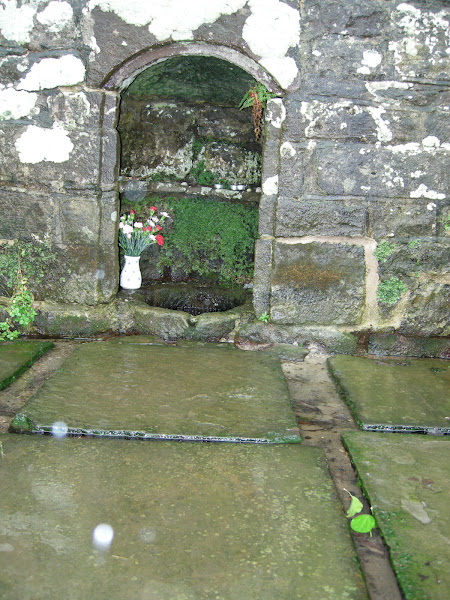
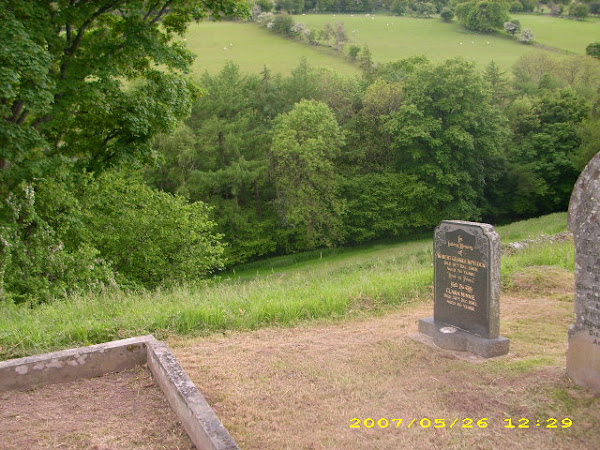
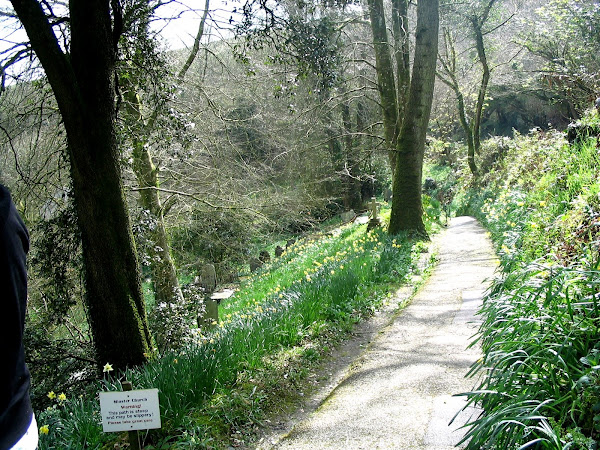
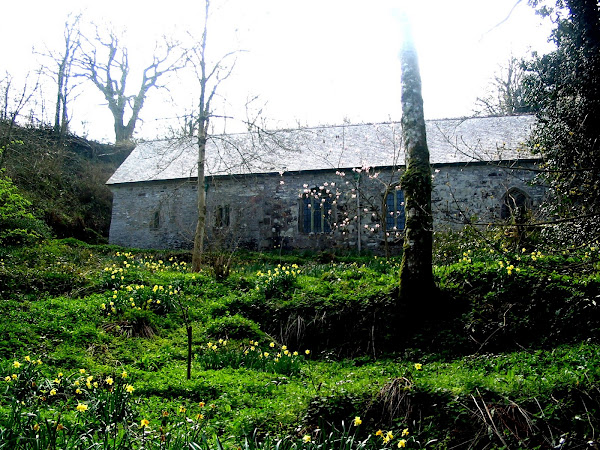
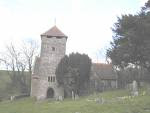
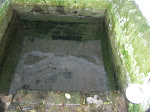
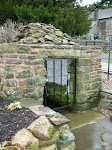
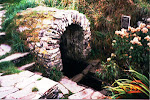
Entering the churchyard of St Teilos up on the hill, you can see that people are caring for it. IT is round and curved as you would expect. The holy well (at the bottom of the pictures) is a way off and nearer the site of Llanarth Court.It was recently renovated by the Herbert Family, who were descendants of the Earls of Worcester who owned Ragland Castle and held out for the Faith until the fall of Ragland Castle in the Civil War with Oliver Cromwell. It is easy to imagine that this whole village would have been cells and houses surrounding the church,containing the monks and priests, lay people and farmers and cooks who kept it all going. I have written in detail below about the hospitality of these clas churches so won't again. They all seemed to be high up, affording them a certain degree of protection.

I hope to be able to get into the church at some stage.

Wednesday, March 12, 2008

Cloning and abortion,New Podcast:Cool UK Catholics and the Eucharist

What sounds like cloning but does not say cloning? That's a good one my lord!Well might Percy have said this to Blackadder. So you have not read deeply into this Bill before parliament. The Labour Party are putting the whip on this forcing even their Catholic MPs to vote for it, although no other party is. Perhaps all the money which has already been spent on this (I believe over one million pounds) has something to do with it. However the Benedict XVI has declared that meddling with genetics is a grave sin, and actually for Catholic Labour MPs to abstain is ducking the issue. This Law does not mention cloning but implies it. 'Rescue siblings' flesh grown to order for purposes. Like the New Earth episode of Dr Who when all the clones live in small cells, even different illnesses are tried out on them. The question is when does human flesh cease to be human? All human bodies have souls. God knows them as soon as they are formed. He performed a miracle with Mary after all and all human souls belong to Him.

Why do we not know all about this? We know 8 human clones are reported to have been conceived in Holland in 2003, with parents refusing to be identified. The claim that making hybrid human/animal creatures will benefit man leads people to remain to be convinced. According to a TV programme I saw, the aids epidemic resulted from just such experiments with apes in Africa, the resulting disease spreading into the human population. This research is meant to obliterate killer diseases-this is the reason given for the cloning, and the government we have certainly wants to made Britain a world leader in this area.Other scientists say stem cells can be taken from umbilical cords of babies, however, and cures can be found by other means. But who is actually the driving force behind this legislation? The Bishops sent out a letter recently asking people to remonstrate with their MPs making their views known. Are we going to walk into a horror set up through an aromatherapy of lethargy? It is important you find out about this. The bill implies cloning but does not mention it, yet it will be neccessary for the Law to function. Very Clever.God help us if they succeed.

What do Catholics really believe about the EUCHARIST ('Lord's Supper')

I have put up a new podcast on Itunes. It deals with issues of interest and and we also have a segment @ask the Evangelist. This week someone is explaining, clearly Catholic Teaching about the Eucharist or the 'Lord's Supper.'This is one of the most superb preachers-a former Baptist minister who I find inspiring. Part two will be next time. He looks in detail at John Chapter 6 and compares it with what the disciples who were trained by Peter and Paul to take over after their martyrdoms said, ie what Peter and Paul taught them.I think he is worth a listen and to find out who it is, you will need to download the podcast.

Soundseeing Tour of Llandaff Cathedral

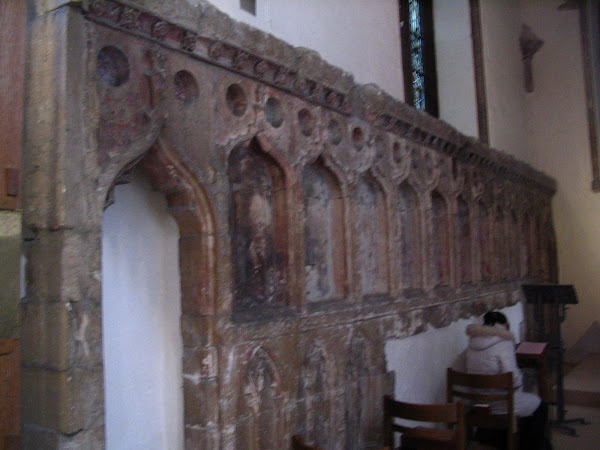
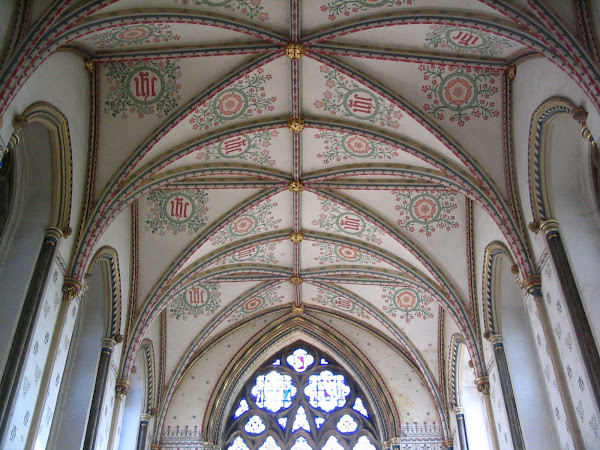
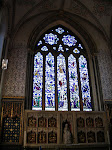
Also today on Mary in Monmouth, I have put together my Soundseeing Tour of Llandaff Cathedral in Cardiff-which developed from an early monastery founded by St Dyfrig/Dubricius,a picture of whose tomb is in the large picture at the bottom of this blog. This became the Abbey Church of St Dyfrig, St Teilo (Called Eluid in the 'Life of David' and St Oudoceus (known as Euddogwy in Welsh-Oy-thog-oo-ee) I go around inside picking out objects of interest. It was virtually deserted but I did not get all the recording levels right, nevertheless I describe the wonderful Lady Chapel, with the vaulted and coloured ceiling inscribed with the initials MR, the reredos-3O flowers in Welsh are named for Mary. The magnificent Jesse window, the stained glass windows depicting the Joyful Mysteries of the Rosary. There is a Dyfrig Chapel, with a glorious picture-oils on wood made for Teilo's Ecclesia which was painted over with lamp black for a long time to save it from being destroyed-indication that venerating Mary died hard-even with Cromwell and others ransacked the churches and cathedrals after the Tudors had done their worst. This painting has been magnificently restored and now is displayed in the chapel. The tomb of Dyfrig/Dubricius is in there (though the bones have disappeared) no doubt crushed under the foundations of the Cathedral.The Oudoceus Chapel is a place of prayer, but not beautiful. There is a StDavid Chapel, home of the Welsh Regiment.

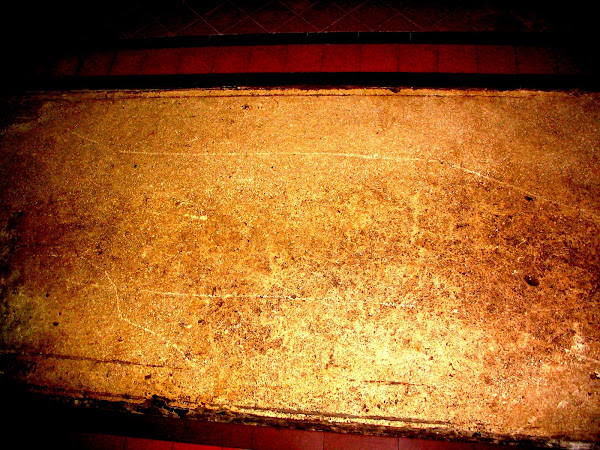
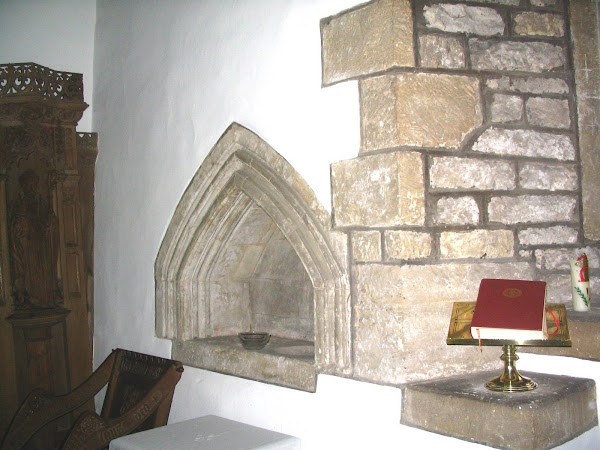
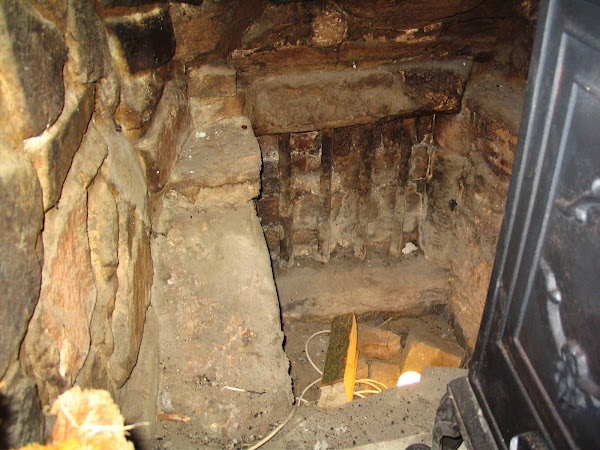
The real miracle is the return of the relic of St Teilo carefully guarded down the centuries which went to Australia even, was bought back to the UK from the family which originally owned it, and then was returned to the Cathedral, where it is held in a Reliquary in the Teilo Chapel. (Picture somewhere on the side bar.)This is in an Eastern Orthodox style reliquary built into the wall and is lit behind thick glass in a box lines with red felt.It was the most meaningful part of the tour, being so close to the actual skull of St Teilo. I said a rosary for him.

Greenfields Childrens Home-New Cruelty allegations

Children at a Jersey children's home were locked up in solitary confinement an employment tribunal has heard.Simon Bellwood is a former manager andsaid children at the Greenfields unit were referred to as 'inmates' and rooms were termed 'cells'.
This is another probmen home after police found the remains of a child's body in the Haut de la Garenne Home.It seems Mr Bellwood says he was dismissed after whistleblowing on the whole issue in the secure unit.He said there was a problem in Jersey with deficient practice, poor staff training, lack of external scrutiny of services and a 'Culture of Fear' preventing staff from speaking out.H was objecting to this being routine practice. Oh dear! Here we go round the Mulberry Bush!