











































-------------------------------------------------------------------------------------
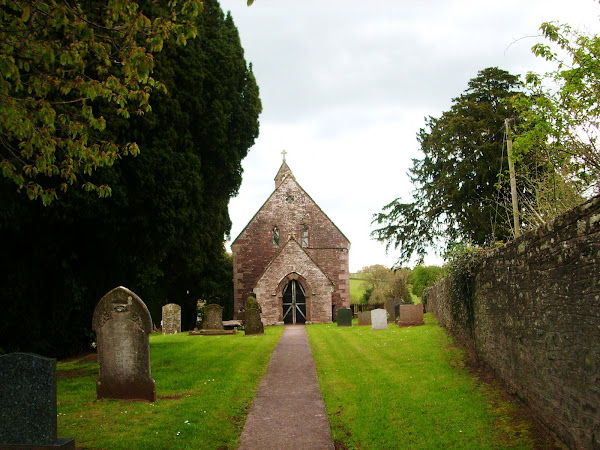
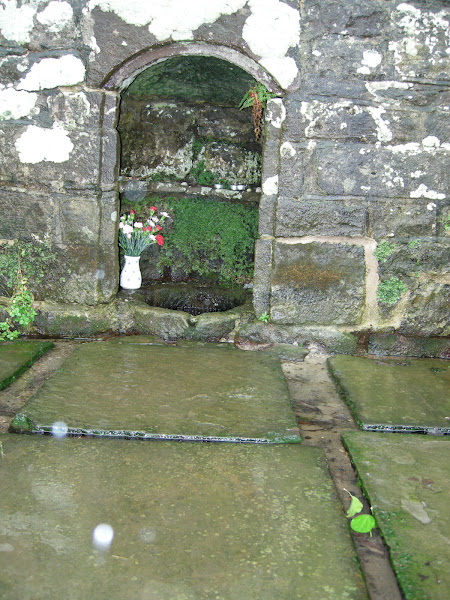
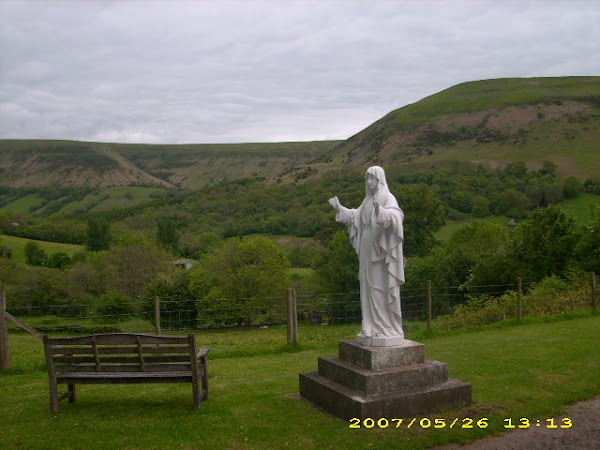
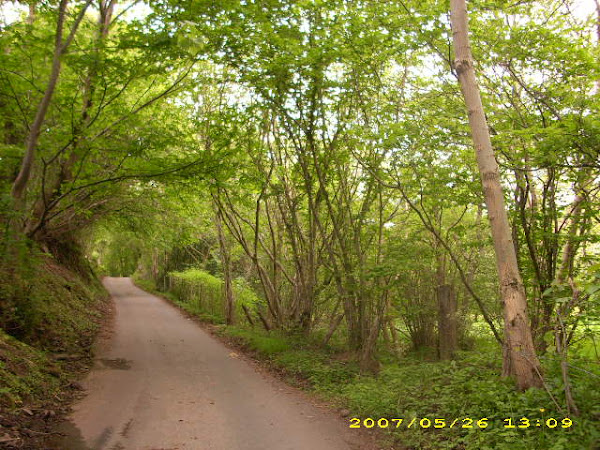
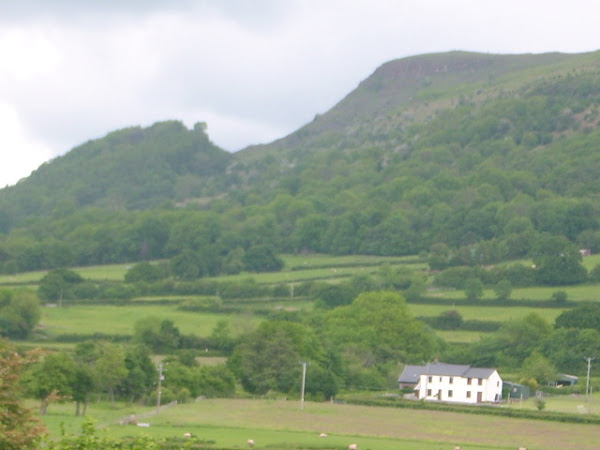
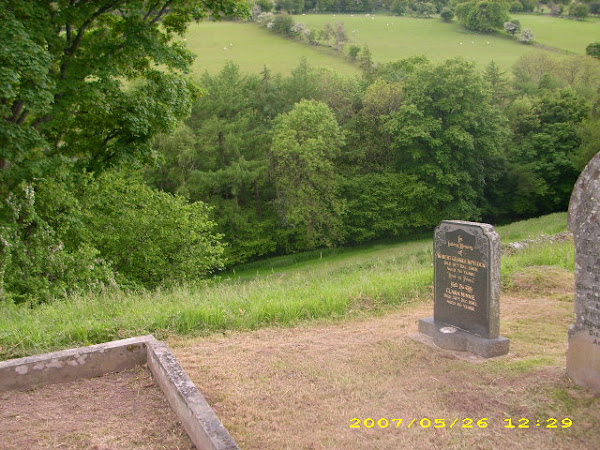
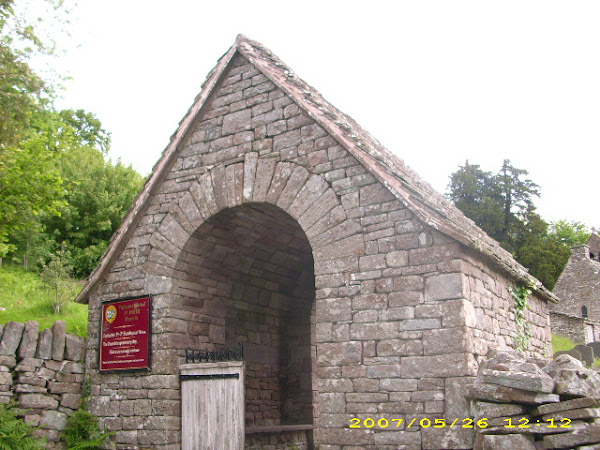
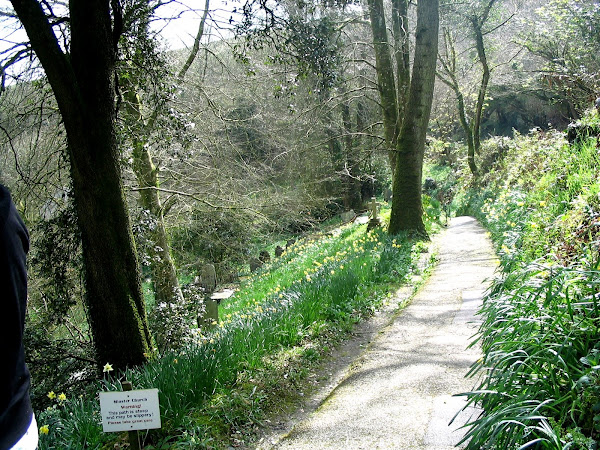
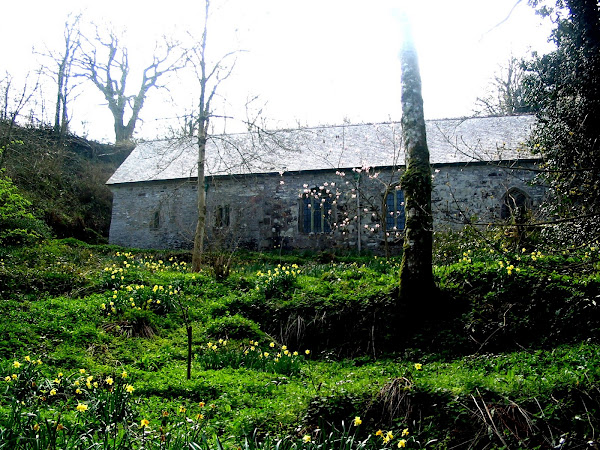
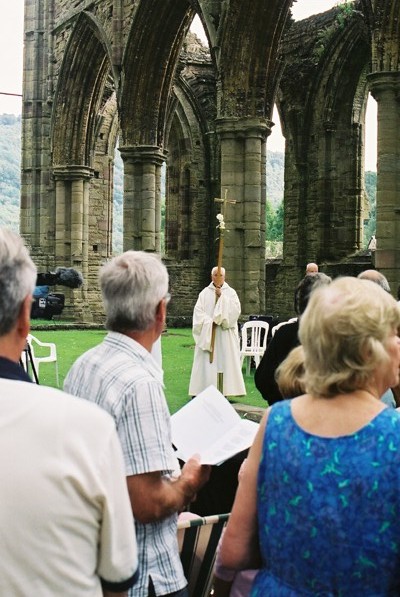
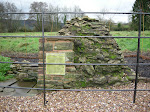
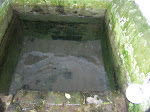
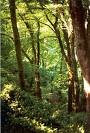
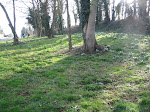
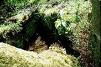
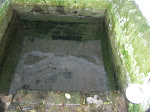
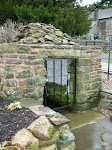
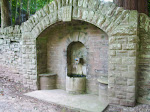
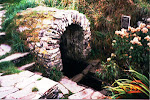
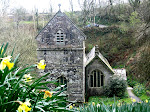
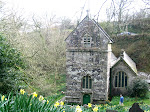
Spring on the land recovered from the sea by Romans and Benedictine Monks from Goldcliff Priory.
The Early Church and how it worshipped
Essential Elements
Jesus Tradition only gave us the essential elements of the Church’s prayers, the Eucharist and the Sacraments, and did not specify their practice or celebration. The essence of matter, form, and intention (found in every Sacrament) is drawn by the leading scholars of the Church (including the Pope of course) from what God has described in the Bible and from the way the earliest Christians and scholars worshipped. These essentials are not changeable by the Church. However, when the Apostles of Jesus’ time brought the Gospel to major cities, they adapted the Christian practices (Liturgy, fasting, etc.) into the culture of the area they were evangelising. The tradition of a particular way of celebrating a Sacrament is called a "Rite".
Form of the Early Rites, Common to all Christians including the Tradition brought to Britain
This evolved from a Hymn of Praise to God for the wondrous favour culminating into account of life and death of Jesus and the narration of the institution of the Body and Blood found in John Chapter 6. Sacramental ritual was sacred and conservative and other prayer books of the time (Bishop Seraphion’s Prayer Book) all contain similar things.Some people read the accounts of the people trained by the early disciples(Ignatius of Antioch, Polycarp, Justin Martyr,) but they do not take on board what the early church had been teaching.
Synagogue Services combined with the Mystery of the Holy Eucharist
In many ways early masses resembled synagogue service as you might expect. There was a reading from Scripture, (old Testament and an account of the life of Christ and when these had been written down later-the New Testament) , there were psalm(s) prayers, catechesis(instruction in what Christ had told them)
The Liturgy of The Word (Scripture) changed in second century to include hymns. The Passover, for example, would be explained in the light of the Christian message.
When the people of Israel were slaves in chains in Egypt, God sent a number of Plagues on Egypt as a sign to the Egyptians that they should let his people go! Finally he asked the Israelites to slaughter a sacrificial lamb around the doorways of their houses so that when the Angel of Death passed over the houses the firstborn sons of the Israelites would be spared, which is what happened. Finally the children of Israel were allowed to go to the Promised Land-the Land promised to Moses their leader.
In the Christian fulfilment of what happened, the sacrificial lamb was the Lamb of God , on whose back all the sins of the world were heaped in the form of scourging and torture. The Church teaches this as our suffering, our torture. Jesus knew this would happen and he had appeared to the world in a body made by his blessed mother, who supported him throughout his life. The final death of Christ on the Cross finally gave hope to mankind-Evil had been destroyed and with His Resurrection-a new Order-Jews and Gentiles together. We have been given the link from Earth to heaven.
A Computer Analogy for today-almost!
If you click on the button called ‘Jesus’ because you believe his promise, it brings you straight to him when you die. However he is the Way but when you are born again to him in Water and Spirit, by the Sacrament of Baptism-and later by Confirmation(an adult consecrating him or herself as having full responsibility for Church membership) you must try to live by the laws given by Christ and by the Commandments given to Moses-the basic ones. Important is, that these rules are given for all time, and are not to be changed by current fashions.
Dem bones…
Finally after the Instruction(now the Homily) there might be a further hymn, then prayers and then a dismissal after a Final Gospel. This was the beginning of doctrine, in essence the same as it is today. The reading of the Old Testament and account and essence of the teaching of the Apostles was always very important. Even today at the ‘Easter Vigil’ the beautiful service on the Eve of Easter there are no less than seven long readings from scripture of relevant chapters, for example the account of the ‘Dry Bones’ of Ezekiel, where he breathed on the dry bones and they came to life, in the same way as the Holy Spirit came upon the first Christians as they struggled out o their Roman Slavery and Persecution.
The Eucharist (the Bead and Wine become the Body and Blood!)
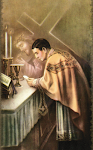
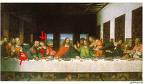
The Eucharistic prayer was the final revolution of the new , a mystery which only the illuminate could witness , only those who had crossed the red sea by the waters of Baptism and the supreme Eucharastic banquet could come into the full Promise of Christ. When new people wanted to be converted there was always a long period of instruction and these could not even witness this holy rite until they had been received. Unless you eat my flesh and drink my Blood you will have no life in you. Anyone who does eat my flesh and drink my blood has eternal life, and I shall raise that person up on the last day. For my flesh is real food, and my blood is real drink. Whoever eats my flesh and drinks my blood lives in me and I live in that person. As the Living Father sent me, and I draw life from the father, whoever eats me will also draw life from me. This is the Bread which has come down from heaven, it is not like the bread the ancestors ate. They are dead, but anyone who eats this bread will live forever.’ St John Chapter 6 53 to 58.
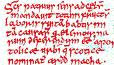
Ieuan ab Rhydderch writes:
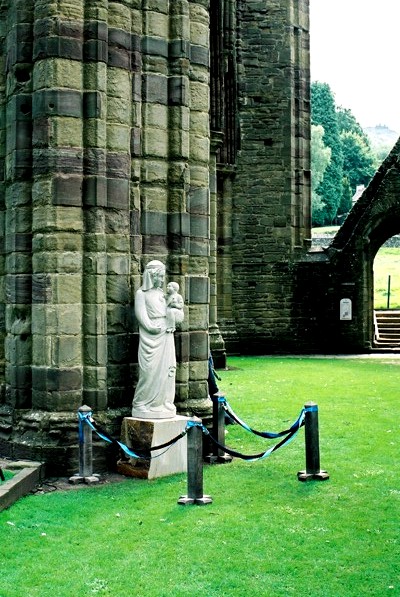
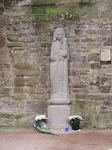
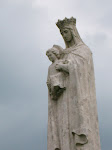
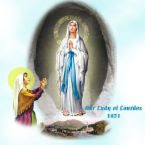
Mary is our trust against danger
Great privilege it is to obtain by her miracle
The Holy Body of God in the pure Church
And His blood from the Chalice
The Three Original Groupings
The original Rites had three major groupings:1 the Roman (including the whole of Latinised Europe including Britain and Eire),
2 that of Antioch (in Syria),
3 and of Alexandria (in Egypt).
In the 4th century, under the influence of St. Basil and St. John Chrysostom, the4 Byzantine Rite developed from that of Antioch. These 4 main Rites then created the over 20 Liturgical Rites present today in the Catholic and Apostolic Church, which is the body of Believers-the Body of Christ in the world today.
Catholic means Universal-but the Universal and unified Shows great Diversity!
This might bring to mind the question "But isn’t having all these rites being too diverse?” Isn’t this going to cause disunity in the Church? There has always been a problem . While it’s great to be diverse, it is important to keep to the essential tradition and teaching of the Church. This is important because the word ‘Catholic’ means ‘Universal’, and if the church, the Mystical Body of Christ can incorporate its basic teaching in rites which are appropriate to different cultures, then it is proving it is universal (all over the world) Catholic and unified in the essential teaching and rites..Pope Leo XIII wrote "Perhaps nothing, in fact, better proves the note of Catholicity in the Church of God than the singular homage paid by ceremonies (rites) which vary in form, which are celebrated in languages venerable by their antiquity, and which are still further hallowed by the use that has been made of them by the Apostles and Fathers of the Church"
Baby Church in Gwent-Apostle-One who is sent!
If you saw a picture of me as a baby and as I am now, there are big changes! I am still me , still essentially the same, but which people can recognise some of my features, as we get older and come to fruition we look different. Jesus went all over with his Apostles (those he was to SEND out to deliver his message all over the world) The Bible tells us that he explained in detail to is Apostles what he had taught in parables to a crowd.
When St Peter sent the Apostle Philip to Northern Europe and Joseph of Arimathea, (reputed to be Mary’s uncle to Britain from Gaul, Papal records tell us Joseph ended his days as a pastor in Britain),Britain was then a far outpost of the Roman World.It is likely that St Joseph had visited Britain before to trade for tin, which the Romans bought in great quantities. Travel was easy, after all in Roman times..
Christ himself and St Peter and St Paul had stressed the need for unity of doctrine, which was echoed by the teachings of Paul . Paul continually warned against false teachers.Oral Tradition was important to the Jewish people, particularly the Pharisees. ‘Deposit of Faith’ and ‘Hold fast to the Tradition you have been taught’ come out strongly in Paul’s letters.In 2 Timothy he wrote ‘There must be no wrangling about words, all this ever achieves is the distruction of those who are listening. Make every effort to present yourself before God as a proven worker, who has no need to be ashamed, but who keeps the message of God on a straight path. Timothy 2 14
Early Christian Foundations in Gwent
Looking then at the writings of Peter and Paul and of the Early Church Fathers and the Tradition they taught, there was a body of information transferred to the Faithful and the Missionaries which did not even come to be written until the Catholic Church formulated the Bible in the fourth century. There were many writings but only the testimony of the Apostles themselves found their way into the final book. The writings of the Early Church Fathers were, however, the writings of those who were taught by Peter and Paul and given first hand insights into what Christ had told them and what they had observed. Almost all the Apostles died a horrible death-unlikely they would be so convinced if they had not seen Jesus ascended into heaven or seen the Resurrection with their own eyes.
Joseph of Arimathea and Glastonbury
In the first instance, while Joseph of Arimathea and the Disciples arrived in Britain, the Faith was already arriving via Christianised Roman Soldiers. We already talked about St Maurice the other day and his whole legion of Christian soldiers who ended up being decimated and killed as they would not, in love attack their Christian brothers and sisters. St Julius Julianus, St Aaron of Caerleon and St Alban were the first recorded Soldier Martyrs, as I mentioned in my second podcast from Newport in the Mary and Monmouth Podcast (free from iTunes) However Joseph and his party and presumably anyone they had married made their way down to Glastonbury from Wales, a remote spot where they were not bothered. Bu the time the Saxons found Glastonbury, they were already Christianised and carried on the tradition. I would hazard a guess that the Welsh and British who had married into the Galilean families could well have been related to the families of our Lord as stated in the Welsh genealogies.
What is likely was that Caractacus and his family had been exposed to Christianity before being dragged to Rome when the Silures of Gwent were defeated.His daughter or foster daughter and son (born in Rome)Linus are mentioned in Timothy 2:21 by St Paul. Claudia was the name given to Caractacus’ daughter Eurgain and she was married to Lucius Pudens (whom she had converted to Christianity) and Linus her young brother. We know they were all friends of Peter and Paul and when the Nero persecution started, Claudia and her son Timotheus found their way back to Britain and set up a small Christian foundation at Winchester, where she died. It seemed Lucius had died and it could well be that the family came with them when Claudius had died and mad Nero taken over.
New from the BBC-Nero did not kill Christians....(no...really...?)
According to the recent rewriting of history by the BBC in the programme ‘Rome’ the episode on the Emperor Nero had not one single mention of the terrible martyrdom of vast numbers of Christians by this man. Strange considering that is what he is chiefly remembered for after setting fire to his own city of Rome to gain inspiration for the writing of his song! Yes there really is a blackout on Christianity in any positive light.
Old Welsh Monasteries in Gwent
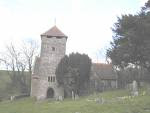
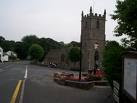
Churches grouped around Old Welsh monasteries –There were 14 in Gwent according to Diane Brook. Principal ones, with clusters of churches
Some of these are:
a)Llanarth (St Teilo)
b)St Maughams (St Mawgan)
c) Monmouth and Dixton (Our Lady, Llanfair)
c) Trellech Grange
d Llandogo (St Euddogwy,Oudeceus)
e) Mamhilad (St Illtyd)
f)Trevethin (St Treddyn-Brother of Samson)
d) Llandegveth (St Tegfedd-Sister of Treddyn and Samson)
e) Caerleon. (St Cadoc)
f)Llantarnum (Llan-sant-Non-St Non-Mother of David/Dewi)
I have already considered and written about St Tegfedd recently. St OUdeceus and Teilo featured prominently in what I wrote and spoke about at Llandaff and how Meurig (named after St Maurice) developed Dyfrig’s Church at Llandaff into a great headquarters for a Bishopric. St Non I have mentioned in the Podcast on St David and on the blog. (the whole of Rhygfarch’s Life of David is now on the podcast free from iTunes) Monmouth foundation became the great Benedictine Priory of St Mary in Norman times and the ancient and restored Mediaeval Priory still stands on the site today.Llantarnam was developed in mediaeval times by the Cistercians was rebuilt in Stuart times as a powerful house of the Catholic Faith during the time of the Persecutions in the sixteenth and seventeenth century when the heroic gentry held fast to the faith, housing and sheltering priests for the Faithful.
Appeal
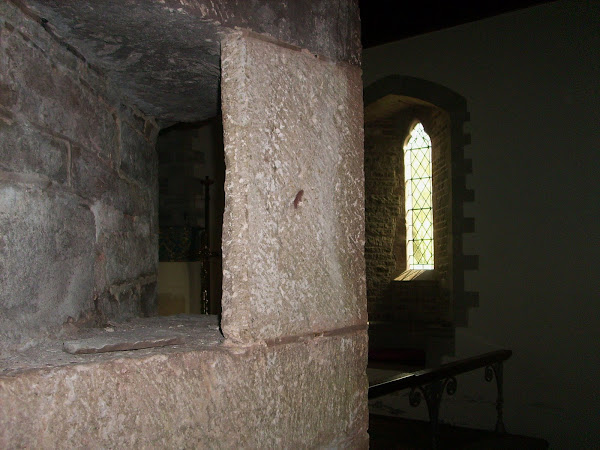
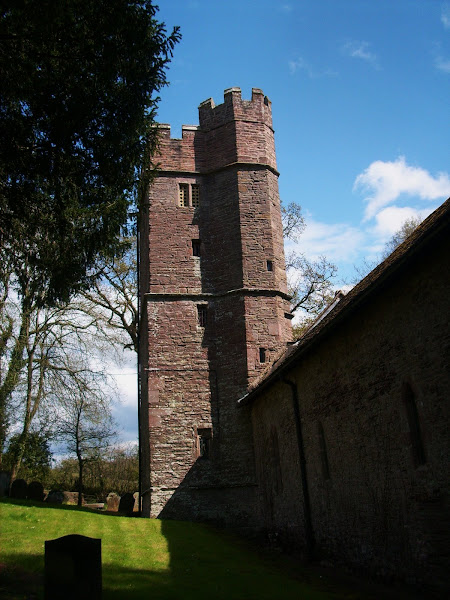
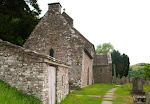
So we shall consider each of these other foundations. Excluding Monmouth . Dixton remains at the side of the Wye a way out of town, and I have some pictures of this.If anyone has any pictures of these churches and would like to see them on the blog-please send them to me via maryinmonmouth@googlemail.com. I shall acknowledge every one.
Haut de la Garenne-Update
There has been news today.Police arrested a 68-year-old man today as part of a probe into allegations of historical child abuse on the Channel island of Jersey, a force spokesman said.
The man, we don’t know his name, was answering questions about a number of alleged rapes and indecent assaults, although it was not directly related to claims of abuse at a former children's home. The new arrest took place early Tuesday morningand no further information was given by the police
The Jersey force said later that the arrest was not directly linked to the Haut de la Garenne probe, but was part of a wider historical abuse investigation
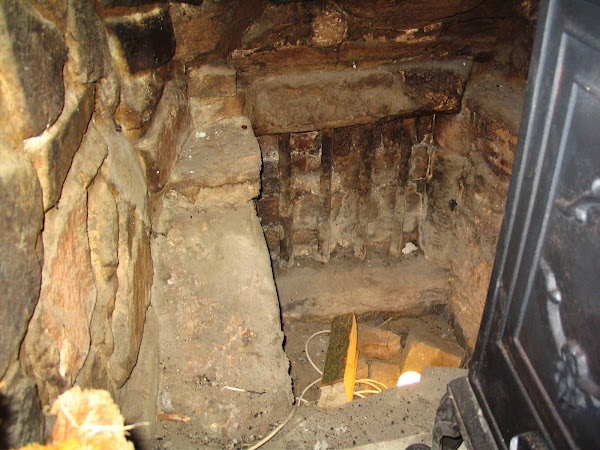
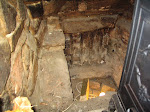
Some of the bones found in the bricked up cellars have been sent to London for further tests
Little Madeleine
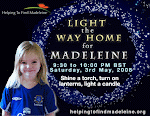
The Lord keep you safe Madeleine. I hope the new campaign (see 'Light the Way Home' will bear fruit as your father and Uncle John return to Pria de Luz .We all need to pray that little Madeleine will be returned to her parents and for the whole family. Please go to their website for details of the next camapign.