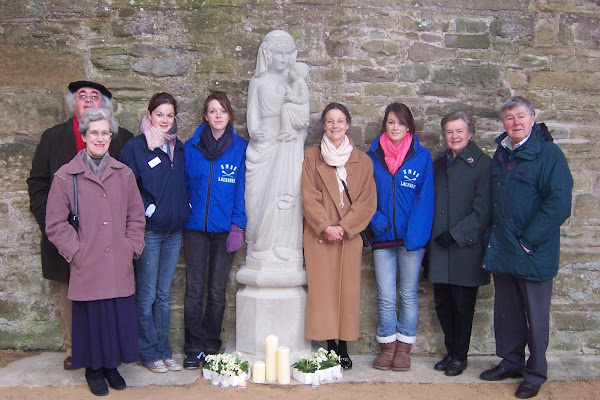
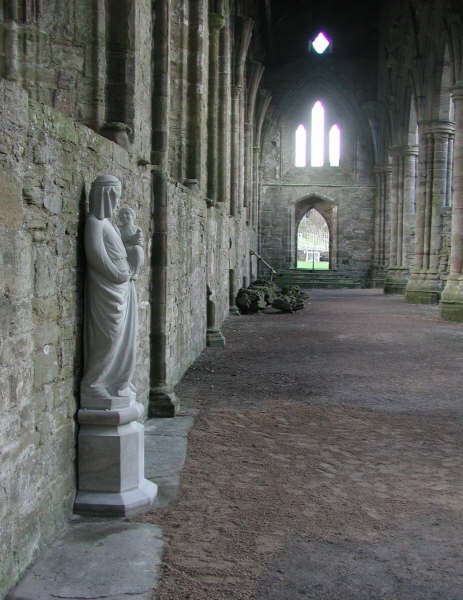
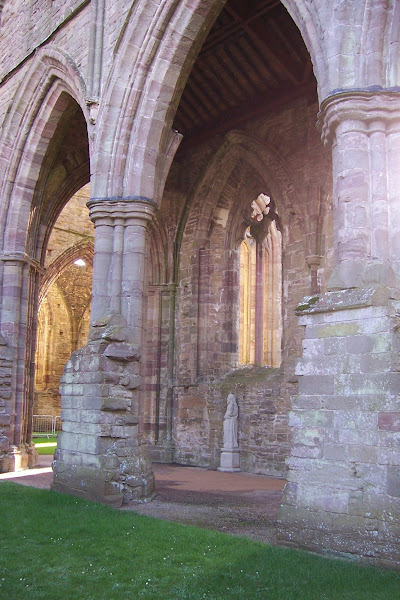
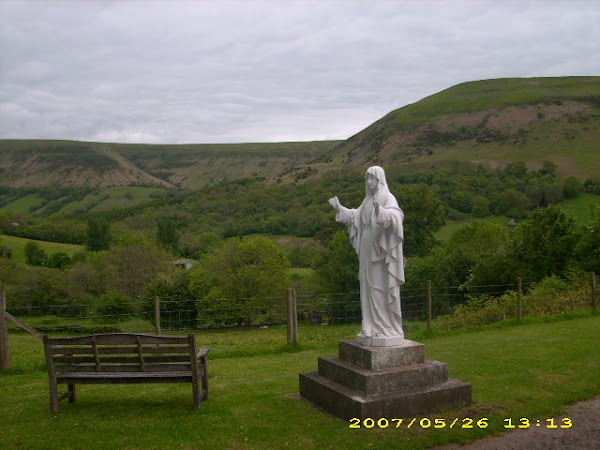
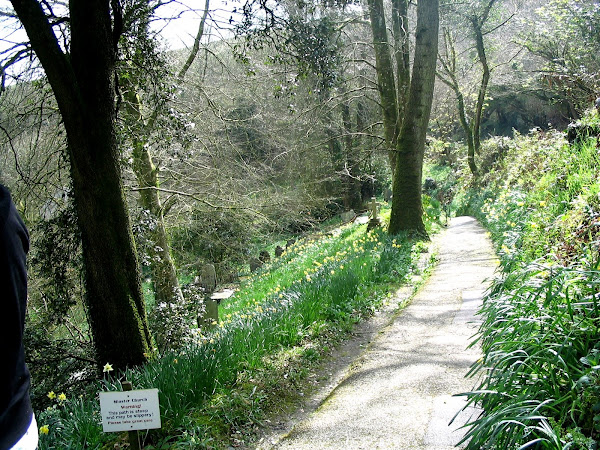
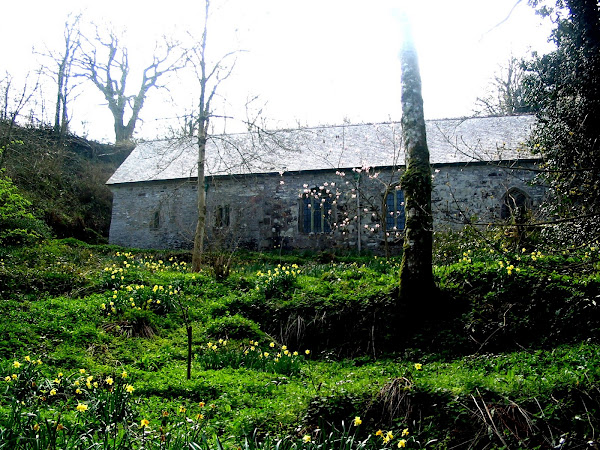
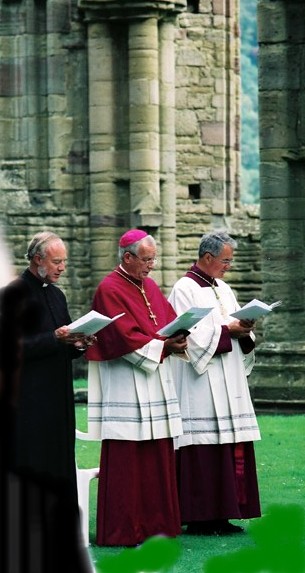
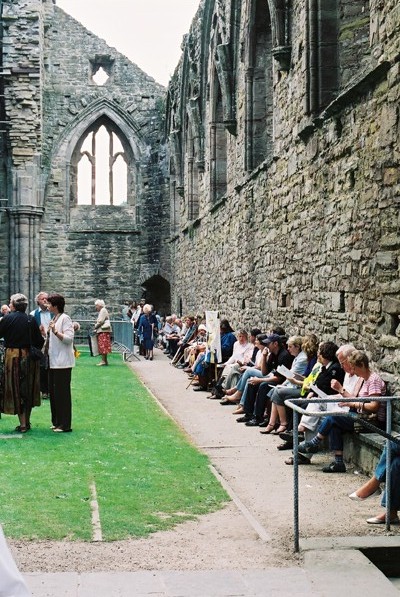
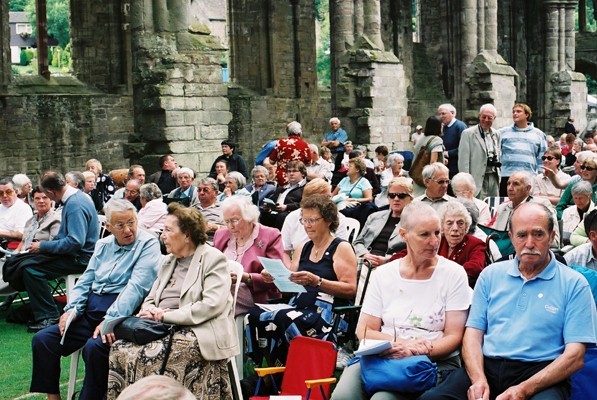
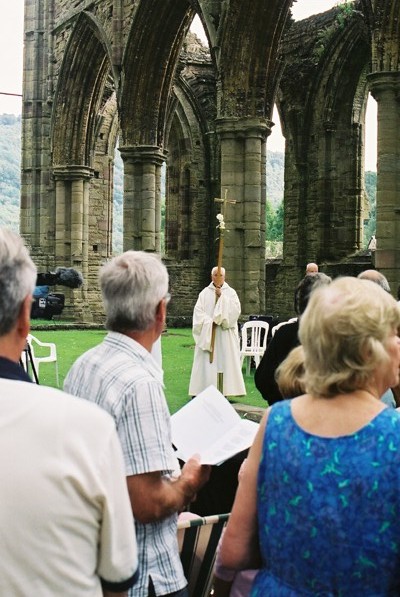
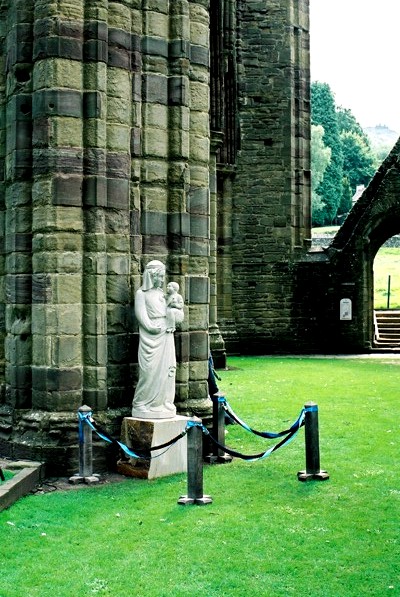
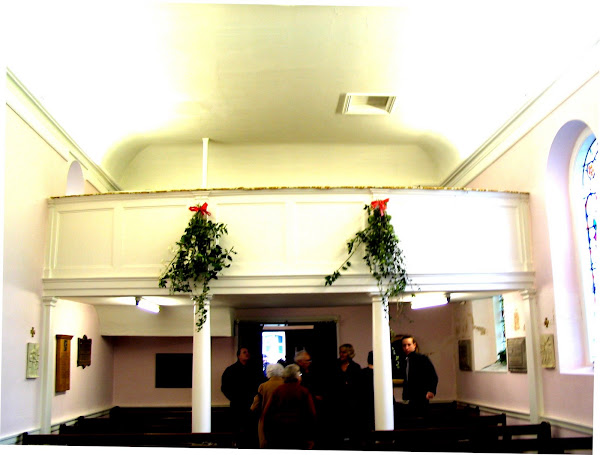
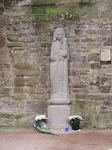
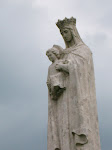
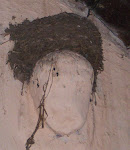
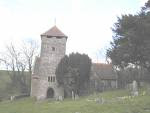
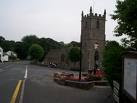
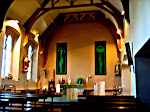
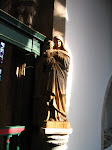
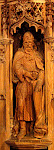
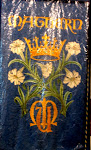
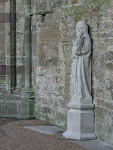
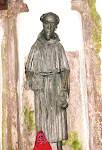
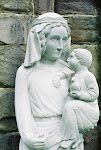
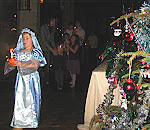
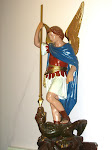
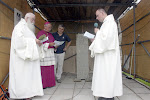
Last week at Tintern Abbey was a very precious afternoon, well attended and wellsupported by religious and laity and a large number of pilgrims. The weather threatened to get nasty all day, but by the afternoon it had still not rained, and as luck would have it, did not. Pilgrims came from Newport, Cwmbran, Pontypool, Chepstow, Monmouth , Abergavenny and North Gwent. In short there were even people from Cardiff and a handful from Bristol.What was great was the wholehearted singing of the hymns. Excerpts from the Vespers including Abbot Bellinger's stunning homily which he delivered with great authority are all published in the podcast on Tintern (my most recent one)Further to that , as the day came to a close or 'darkness falls upon the earth' as Abbot Bellinger put it, the candles and votives twinkling at the foot of Our Lady looked even more, beautiful, like the original might have looked in the chapel outside the western door, where te original statue stood, festooned with candles like the myriad stars which gave her honour. The pilgrims came to ask her to pray for a miracle for them. She kept the hope and faith alive in their hearts.It was easy to see why the Pope granted an indulgence for visiting the shrine. Now by the grace of God and the efforts of two herioc women who singlehandedly were led to have a replica handcarved by a leading mediaeval specialist, the Lady has returned,to testify to the world that she is still there. The statue is an outward sign to all who visit, that Christ is still there and that worshipping God still happens in the Abbey, so long after the innocent Cistercian brothers were forced to leave.
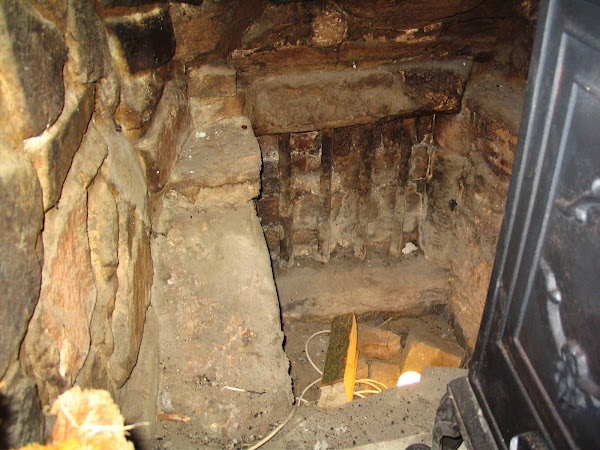
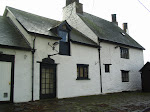
The ladies, and the group they formed The Friends of Our Lady of Tintern have need for more prayers for the project. Cadw have offered to refurbish a cottiage they own on the site as a Pilgrim Centre, where pilgrims can visit, have a cuppa, have lectures, visiting clergy can change and all the other things neccessary for pigrimage. This year a Pilgrim badge has been struck which is available from the Friends for £4 each and good quality. Such goods will also be found in the pilgrim centre and so they are asking everyone interested in this for their prayers and also to join the Friends of Our Lady of Tintern (www.ourladyoftintern.co.uk )for £15 per annum or $20 . This would give you an interest in the project of restoring a pilgrimage banned by the Tudor monarchs so long ago and they are Anglicans, Catholics and others who love our lady. Anything that can be afforded to this great work would be appreciated, but just joining the friends and enclosing your email address would be apreciated.(address on their website)
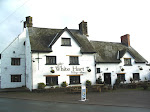
Next Sunday 21st September, there is a rosary service at the Shrine of Our Lady and singing of hymns with everyone off to the Anchor afterwards for a cream tea! I understand there is a torchlight carol service later on near Christmas. I need to find out about it. Please come and bring a chair if you can.
Anyway about the Triumph of the Cross, which is today's feast, our local priest gave a really good homily about how we are so accustomed to the cross we don't often realise how precious our Salvation is. Here is the explanation of the Feast from the Vatican's own website. I think the words are excellent!
When Faith Prevails
By Father Raniero Cantalamessa, OFM Cap
The readings for this Sunday is Numbers 21:4-9; St Paul to the Philippians 2:6-11; St John 3:13-17.
ROME, SEPT. 12, 2008 (Zenit.org).- The suffering of the Cross, its hard necessity in life, its reality as a way of following Christ is not presented to the faithful on Sunday, the feast of the Exaltation of the Cross. Instead the glory of the Cross, the cross
as a reason for boasting and not for weeping is given pride of place.Let us first say something about the origin of this feast. It recalls two events, distant from each other in time. The first is Constantine’s founding in 325 of two basilicas, one at the site of Golgotha and one over Christ’s sepulcher. The other event, in 628, is the Christians victory over the Persians, which led to the recovery of relics of the cross and their triumphal return to Jerusalem. With the passing of time, however, the feast came to take on a new meaning. It became a joyous celebration of the mystery of the cross,
which Christ transformed from an instrument of shame and judgment to an instrument of salvation.The readings reflect the latter significance of the feast. The second reading contains the celebrated hymn from St. Paul’s Letter to the Philippians in which the cross is seen as the cause of Christ’s “exaltation”: “He emptied himself, taking the form of a slave, coming in human likeness; and found human in appearance, he humbled himself, becoming obedient to death, even death on a cross. Because of this, God greatly
exalted him and bestowed on him the name that is above every name, that at the name of Jesus every knee should bend, of those in heaven and on earth and under the earth, and every tongue confess that Jesus Christ is Lord, to the glory of God the Father.” The Gospel too speaks of the cross as a moment in which the Son of Man is lifted up “so that everyone who believes in him might not perish but might have eternal life.”
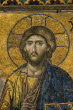
In history there have been two basic ways of representing the cross and the crucified. For the sake of convenience we will call them the “ancient” and the “modern.” The ancient way, which we can admire in the mosaics of the old basilicas and in the crucifixes of Romanesque art, is the festive way, full of majesty. The cross, often without a corpus, is spangled with gems and set against a starry sky with the following inscription below: “Salus Mundi” -- “Salvation of the World,” as one sees in the celebrated mosaic of Ravenna.
In history there have been two basic ways of representing the cross and the crucified. For the sake of convenience we will call them the “ancient” and the “modern.”
the Christ who is enthroned on the cross in royal and sacerdotal vestments, with eyes open, without a shadow of suffering but radiating rather majesty and victory, no longer crowned with thorns but with gems. It is the translation into visible form of the Psalm verse “God has ruled from a tree” -- “
regnavit a ligno Deus.” Jesus speaks of his cross in these same terms: it is the moment of his “exaltation”: “
When I am exalted I will draw all to myself” (St John 12:32).The modern way of representing the cross and the crucified begins with Gothic art. An extreme example is Matthias Grünewald’s depiction of the crucifixion in the Isenheim altar piece. The hands and feet are contorted around the nails like thorn bushes, the head is in agony beneath the crown of thorns, the body full of wounds. Even the crucifixes of Velasquez and Salvador Dalì and many others belong to this type.
Both of these ways of depicting the cross and the crucified shed light on true aspects of this mystery. The modern way -- dramatic, realistic, excruciating -- represents the cross in its crude reality, in the moment in which Christ dies upon it. It is the cross as symbol of evil, of suffering in the world and of the tremendous reality of death. The cross is represented here “in its causes,” so to speak, that which produces it: hatred, wickedness, injustice, sin.
The ancient way sheds life not on the cross’ causes but on its effects; not that which creates the cross, but that which the cross itself creates: reconciliation, peace, glory, security, eternal life. This is the cross that Paul defines as the “glory” or “boast” of believers. The Sept. 14 feast is called the “exaltation” of the cross, because it celebrates precisely this “exalted” aspect of the cross.
To the modern approach, the ancient should be united: rediscover the glorious cross. If when we were suffering it was helpful to think of Jesus on the cross in pain so that we could feel closer to him, it is now necessary to think of the cross in a different way. I will explain what I mean by an example. Suppose we have recently lost a loved one, perhaps after months of terrible suffering. It is good not to continue to think of her as she was then, torturing ourselves perhaps in our heart and mind, feeding a useless sense of guilt. All of that is over, it does not exist, it is unreal. If we continued in this way, we would only prolong the sufferingIt is good not to continue to think of her as she was then, torturing ourselves perhaps in our heart and mind, feeding a useless sense of guilt. All of that is over, it does not exist, it is unreal. If we continued in this way, we would only prolong the suffering and keep it alive artificially.
There are mothers (I don’t say this to judge but to help them) who, having accompanied a child for years in his or her Calvary, after the Lord has called the child to himself, refuse to live differently. In their house everything must be kept as it was when the child died; everything must speak of the child; there are constant visits to the cemetery. If there are other children in the family, they must adapt themselves to this muffled climate of death, and suffer grave psychological damage. Every display of joy in the house seems to be disrespectful. These are the people who are most in need of discovering the meaning of Sunday’s feast: the exaltation of the cross. It is no longer you who carry the cross the cross that carries you; the cross does not crush but exalts you.
We must now think of the loved one as he or she is now that “everything is finished.”
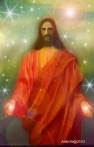
This is what those ancient artists did with Jesus. They contemplated as he is now: risen, glorious, happy, serene, seated on the throne itself of God, with the Father who has “wiped away every tear from his eyes” and has given him “all power in heaven and on earth.” He is no longer in agony and spasms of death. I do not say that we can always command our heart and stop it from hurting over what has happened, but it is necessary to let faith finally prevail. If you do not do this, what use is faith?
[Translation by Joseph G. Trabbic]
Father Raniero Cantalamessa is the Pontifical Household preacher.














































 _____________________________________________________________________________