












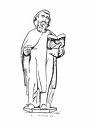










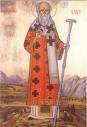

































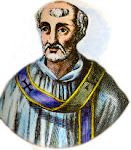


Boniface leads his band of Christian Warriors right into the heart of enemy territory
From a letter of St Boniface
"In her voyage across the ocean of this world, the Church is like a ship pounded by the waves of life’s different stresses. Our duty is not to abandon ship, but to keep her on course".
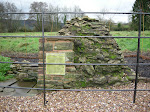
The Oak of Geimar.

----------------------------------------------------------------------------------
His objective was an ancient and massive oak tree at Geimar(possibly one near Fritzlar) The ancient tree had four trunks coming out of a central bole and was sacred to Thor, god of thunder and storm (known to Anglor Saxons as Thunor) and was at the heart of a cult. The crowd were really angry but Boniface lifted his axe and began to hack at the oak tree’s trunk. According to his biographer Willibald, he had not completed the first notch whe then it was ‘smitten by a divine blast from heaven and crashed to the ground, shattering its crown of branches as it fell. As if to confim the miracle the tree split into four parts now found to be of equal length without any future human work. Boniface ordered that the wood be used to build an oratory chapel.Further, since Boniface could see a small pine tree growing between the roots of the old tree, he introduced a new symbol. 'The wood of this modest tree serves for us to build our houses. Even in the darkest winter the needles remain green. So let Christ always be your light. The branches of the tree spread out wide to hold you in its arms and its tip points to heaven;Let Christ be your comfort and signpost to your Way'
Fulda, the Mission in Thuringia
Boniface went on into Thuringia.He and his pioneers were constantly hassled as well as the remote outposts of Christianity, some Irish monasteries and some of the German sees. Slowly, however there was progress . Ruined churches were repaired and made into centres of missionary activity again. Also they cleared land for a new monastery at Ohrdruf . His party occupied this, they grew crops and made their own clothes. In the end Wigbert took it over. He was from Dorset . He had a reputation for good discipline and had originally come out to be abbot of Fritzlar, on the Eder River which with the Fulda river later became an important trade route.
More recruits from England-Fulda St Sturmi
News of this work travelled back to England and ‘readers, writers and skilled men trained in other arts’ came to Ohrdruf. Geoffrey Hindley says it has been claimed that this depleted English resources of learned men and women. New converts to the faith from Fulda too were inspired by the example of Boniface and his English monks. When Boniface decided to build an Abbey at Fulda , he entrusted this to his Bavarian follower Strumi (St Sturm). His Christian parents had entrusted his education to Wigbert at Fritzlar. When Sturm was ordained as a priest, he retreated with some friends to lead the life of a hermit. They built huts with wood and tree bark. He was self sufficient, practical and determined, exactly what Boniface needed. The final goal was a Benedictine monastery completely self sufficient and devoted to the contemplative life. This happened and the monastery at Fulda became a haven and centre for culture and learning, when forest had been cleared.
After a false start and one abortive trip up river where they failed to find the selected spot, Boniface sent Sturmi up again and this time he set out alone on a donkey. By day he rode through the thick forest , looking at the land, quality of the soil and the drinking water sources and access to the rivers , By night he cut saplings and reeds to make an enclosure for the donkey using some sort of machete like sword. He was troubled by wild animals .On the bridge carrying the road over the river Fulda to Mainz .He came upon a party of slavs bathing in the river who jeered at him . Finally they tried to attack him but were ‘held back by God’, although the sword might have had something to do with it-as Geoffrey Hindley says.
Carloman and Eiloh
Eventually he found the spot near Eiloh ecause of the prayers of Boniface, who took over from Sturm and went to Carloman to get permission for the building of the monastery and having a gift of the land.
Carloman was a member of the Carolingian Family which was rising in importance in European affairs. Boniface repeatedly communicated with the Pope and also with the German princes. He always asked for advice and so as people flocked to the abbey, the influence of the Pope increased and the Catholic Faith, belief and English Diocesan organisation, carefully spread and sustained the growth. Also as Hindley says ‘The original Organisation of Provincial Churches was used again in Germany.’ This system had originated with Gregory and had come to England with Augustine.
The Eastern Franks had not called a synod or meeting for over 80 years.In April 742, Boniface convened one.Charles Martel had begged Boniface to call one. The English influence was very strong, and Martel promised to re-establish and reform the church government in the Frankish kingdom.April 742 Bonicace called the German Church Council under Carloman and this showed the English influence. The chief minister did not recognise any Merovingian king and the proceedings were written down in the method of Bede as ‘AD’ for the first time.They pioneered the very era in German usage.
Pope in difficulties
The Popes were in danger from the kings of Lombardy in Pavia, and concentrated on being Bishops of Rome, as subjects of a Lombard monarchy. They could not fulfil their obligations to the Catholic and Universal Church when threatened in this way, and as the success of Boniface meant support for the Pope was much stronger in Germany, they hoped for help from the German kings. The Merovingian monarces were there, but the actual kings weak and held up by powerful supporters (Childeric III) but the Carolingian Chief responsible for all the action (Pippin the Short) They retained their loyalty from the people with their long flowing hair and romance of the family and retained a right to polygamy from the pagan past.An individual might be removed but not the family, who were popular. Pippin wanted to get rid of Childeric who was hopeless-depose him. He felt it was important there should be strong king , especially to help the Pope in his hour of need, and all Pippin’s loyalty and help to Boniface was about to pay off as he sent a message to Rome to ask for authority to depose childeric. The messengers were Fulrad, Abbot of Saint Denis near Paris, and Bishop Burchard of Wurzburg and Anglo Saxon Mercian. They had to ask the Pope the following question ‘Which of two should be king, the man who had the title but no power, or the man who in these difficult times exercised the power but had no title?’ The Pope authorised Pippin to be king for the sake of stability and the church. The aftermath needed careful planning and Geoffrey Hindley in his book (see below) said it needed special magic.The former King Childeric was sent to the monastery of St Omer where he lived out his days.His son was kept restricted to a castle nearby.This ended the Merovingian dynasty.

____________________________________________________________________________________
In 750 AD the coronation of Pippin was arranged as King of the Franks at Soissons. In early autumn 751 ‘King Pippin’ who had been baptised by Archbishop Willibrord was anointed by another Englishman, Boniface, now Archbishop of Mainz and ‘Legate for Germany for the Catholic and Apostolic Church’ according to the Royal Frankish Annals. So the dynasty ot Charlemagne or Charles the Great king o the Franks, and which founded the later Holy Roman Empire was raised to royal status in consecration by an Englishman.

Boniface needed the support of King Pippin and the secular Frankish authorities
Without the help of the Frankish authorities, Boniface would have found it impossible to suppress pagan rites and idol worship would be impossible, discipline within the church would be impossible and the protection of the clergy difficult. All depended on stability which was provided by the palace. Boniface had his own allegiance to St Peter, the rock upon which the Church o Christ was founded, and also he had allegiance to the church itself manifested in those around him, a monarchical hierarchy and the Church Militant.
Eadburga , abbess of Minster in the Isle of Thanet prepares a book to be used in the Mission to the Germans
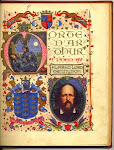
Boniface asked her to copy out for him in ‘letters of gold’ the Epistles of his lord, St Peter. Again Hindley writes ‘there was a lot to commend the books to non-Christian lords and rulars’. In the first place, Boniface’s rule had been pledged on the early relics of St Peter, the first lord of the Church Militant-something important in a world where the everyday life and loyalty was based on oaths of allegiance.
Secondly St Peter was no grey cleric but a married man, who like the polygamous rulers Boniface was dealing with had known the pleasures of marriage.
Thirdly the books were compact-just seven short chapters in total, but the glorious gold lettering and luxurious quality of the illuminated manuscripts Eadburge had done for him would ‘impress a reverence and love of holy Scripture on the minds of the unbelievers to whom I preach.’ He also says he is sending the costly materials for the work by a separate messenger.
Books and Conversions
Boniface loved books ‘as lamps….(of the word of God)…to guide the feet of one’s working…in these gloomy working places of the German people’.There was no library so Boniface had to check a basic date, like the year of Augustine’s arrival in England by sending a messenger to Canterbury.. He settles the technicalities of the validity of baptisms performed in German and encourages his monks always to keep to the true teaching of Peter and the Catholic Church. He petitions his Saxon friends and colleagues in England to pray for his mission and ‘remember the pagan Saxons’-‘people of the same blood and bone’ who could not come to the Heavenly Lord as they did not know Christ. Again and again he begged for prayer.
Bavaria/Bayern
Boniface appointed three new bishops here with the support of Duke Odilo. They divided Bavaria into four dioceses and so it remained for a thousand years afterwards.Pope Gregory rubber stamped it all and gave Boniface authority to attend the council to be held shortly on the banks of the Danube (Donau) as his successor.741-52 AD he established 3 further bishoprics, Erfurt, Wurzburg and Buraburg near Fritzlar (ancient meeting place for the Franks and the Saxons) He requested the Pope issue charters, confirming the foundations’ so that three ecclesiastical sees could be founded in Germany established by St Peter’s word and the command of the Apostolic see’and the Pope did this.
Reform in the German church was necessary. Many of the dioceses had come into the hands of laymen, some of whom said they were ordained, but as Hindley says behaved like members of a ‘warrior aristocracy’ often killing Christians with everyone else. Compromise was necessary as the higher authorities did these things and the teachings of peace needed to grow steadily in the minds of the people and their rulers as had happened in England.
Benedict of Nursia
(Pope Paul VI proclaimed the patron saint of all Europe to be St Benedict in 1964) He had founded Monte Cassino. The Rule was just and fair and spread all over Europe from the English foundations, such as the Abbey at Fulda , which had accepted it from the beginning. Charlemagne was so impressed by the Rule, that he asked the Abbot of Monte Cassino for an authentic copy. Today it can be bought anywhere from Abbey bookshops and online.Many English monks spent years at Monte Cassino , among the Willibald, Boniface’s biographer who lived there for ten years before he was appointed Bishop of Eichstatt (Oakstead). Willibald had led an action packed life before enclosure and his biography, by a nun visiting his brother Wynnebald’s abbey at Heidenheim opens a window on to the world of Islam which was new at that time.
Tomorrow-Final Instalment
Problems of Boniface in the church
Women’s Ministry in the German Mission-Saint Lioba(699-niece of Boniface)
Martyrdom in Friesland 5th June 754
This account of Boniface is inspired by the account in the brilliant book 'The Anglo Saxons' by Geoffrey Hindley ISBN -13 978-1-84529-161-1 by Geoffrey Hindley.(£8.99)
Madeline McCann-
BBC have apologised to the McCann family over a tasteless programme called Madeleine to be screened on the eve of her birthday, a programme wich was dropped at the last moment!Wherever you are, wherever you read this, pray she will be reunited with her parents and keep your eyes open for small children.She may be wearing glasses and have hear hair cut short-but the eye is unmistakeable! Watch the video.God Bless.