


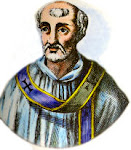
Monday, October 19, 2009

Austin Friars of Newport-More Augustinians! Now Newport Bus Station

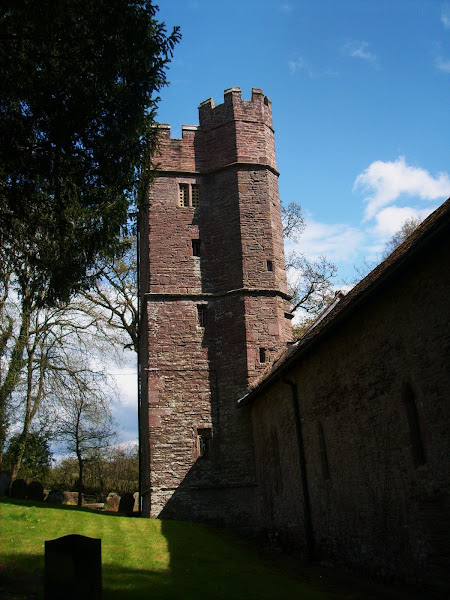
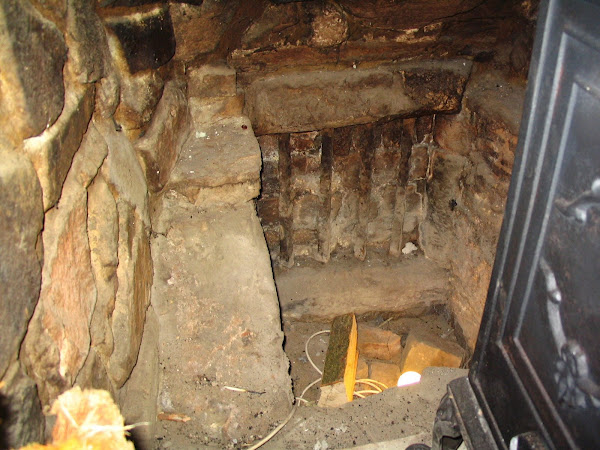
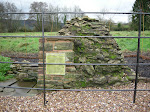
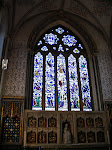
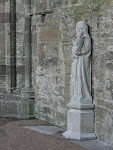
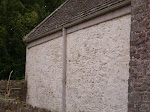
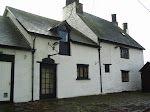
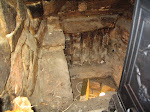
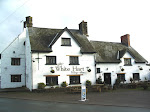
The gatehouse of another Augustinian Friary, and (below) the coat of arms of the Earl of Stafford, who built the new castle at Newport and also made the gift of the Friary to the people of the town, for all their needs.


________________________________________________________

There are no pictures of Augustinian Friary in Newport, which has been completely demolished . This is Part One of this fascinating story of this large and important of Religious Houses in Newport, and with the help of various reports, scholars like Mr C Neil Maylan's report to the Gwent and Glamorgan Archeological Society have tried to 'piece together what we know'. Tomorrow I will also show some 19th century remains. It is to be hoped that te 'Friars Walk' shopping centre will pay tribute in some works of art to these friars, who laboured among the poor of Newport, nursed them through the plague, schooled them, took care o the hungry, terminally ill etc until Henry VIII decided to turn it into money to fill his coffers and turned his back on the people. The Friars were not meant to be supressed, because they earned very little and Henry in his spite and rage damaged and destroyed sacred places around Britain. Fines and increased taxes for a few years, finally closed those who could have survived. Calling precious relics 'fakes' and superstition was dsigned to turn people against the church, andt was so successful as 'spin' thatmuch of it has lasted to the present day.We will talk aboutRichard Ingworth apostate priest and created a bishop in Henry's very on church had accompanied Dr Hilsey to Cardiff in 3rd July 1534. He was himself a Dominican -a Prior of Langley Regis the richest Dominicans in the country, which had a hue income of £125 per year .Henry and his henchaman Thomas Cromwell tol him to 'visit and vex' what had been his fellow priors. Most Dominicans had headed for Edinburgh which lay outside Henry's realm but the Austin Friars were his victims. He had the power to sepose and suspend 'corrupt superiors' (those who woud not comply) and to go to the friars, take their keys, turn them out and take away thei possessions and make inventories and indentures so that the clerks could see how much money coud be made for the king , from often very poor lands.He removed their seals. Of course it was the poorest people who suffered most.

No mention of suppression ws initially made, but the intention was clear. There had been a visitation four yearsearlier, followed by endless fines and taxes and the friars could no go on pleading poverty. People were told not to give them donations either. Even the chantry chapels were suppressed.


___________________________________________________________________________________

THE AUSTIN FRIARS OF NEWPORT-PART ONE

Newport had steadily taken over from Caerleon during the early middle ages and the area around Gwynlliw’s church of Our Lady was growing intoi a bustling town. Caerleon had, after all been ravaged by Saxons, Normans, Irish, Welsh and Danes and there was a new motte and bailey castle established by the lord of Wentllwch. The name itself refers to the estuary of the Usk . The castle would protect inhabitants . Harold, last of the Saxons had viewed the old church of Gwynlliw from Flat Holme, where Gildas had earlier passed his days, and later worshipped after his brief conquest. Soldiers of William II (Rufus) had camped around this church in Norman times and had prayed and attended the Holy Mass there.Henry II stayed at Newport for a short time and then in 1887-8 Baldwin Archbishop of Canterbury arrived in Newport to recruit soldiers for the Crusades, to take back the Holy Lands from the invading Turkish Mohammedans.

After the death of the Dispenser, Wentllwch was restored to Hugh to Anderley and his wife Margaret. The countess died in 1342 and the lordship went to Margaret de Anderley, wife of Ralph, Lord Stafford. He was created Lord Stafford in 1351. assisted Edward III in the war with France and supplied 50 men to go with him, and 50 men with lances had to go from Newport and Caerleon to Crecy, and also Ralph became Earl of Hereford and appointed Lieutenant and Captain General of the Duchy of Aquitaine.

He was succeeded by his son Hugh Stafford who granted the first Charter of Incorporation to the Burgesses of Newport dated 13th April 1385-Mayor and Bailiff.
It was Hugh Stafford who founded the friary in Newport. This was a new Order only recently pulled together out of a diverse group of the Augustinian Order founded according to the rule of St Augustine. I have already mentioned Llanthony, founded by Augustinian Canons. Ralph, his father, had already founded a monastery for the Augustinian Friars (Austen Friars) at Stafford. Leland writes in Tudor times:

, "Hermits of Saint Augustine."

They claimed as their founder the saint himself, not the apostle of the Anglo Saxons, but the eminent African Bishop, and Father of the church, who is said to have instituted the order about the year 388, in the neighbourhood of his native town of Tegasté in Numidia. The order became extinct on the invasion of Africa by the Vandals, but was revived in Europe in the 18th century, and introduced into England about 1250. Their dress in the house was white, but in the choir, or when they went abroad, they wore over all a long black gown with wide sleeves and a hood, and a girdle of black leather fastened with a pin of bone or ivory. The Staffords were great patrons of this order;
Ralph, Earl of Stafford, the first Lord of Newport and Wentllwch of the family, founded a house for them at Stafford in 1344, and some of the family, another at Shrewsbury. From a document in the possession of Sir Thomas Phillipps, Bart: of Middle Hill, a transcript of which is in the collection of our President, it appears that this house at Newport was founded in the year 1377 by Hugh, son of Ralph, who succeeded his father as second Earl of Stafford, and Lord of Newport and Wentllwch, in 1372. It may be that it was considered as a cell to the house at Stafford; at all events the probability is, that the first of the order who were established at Newport, came from that place.
Leland also mentions the ‘House of Preachers’ under the Bridge-but this is more correctly the Dominican House out of Gloucester or Cardiff, as Dominicans were known as ‘Friars Preachers’ and spent most time out evangelising on foot.

Austin Friars is Founded in Newport 1377

In 1377, Hugh , Earl of Stafford gave the Prior and Brethren of ‘Hermits of St Augustine 31 burgages or parcels of land within the Parish of Newport on which to build an oratory or house for the promotion of Divine Worship and Contemplation. For this reason it was necessary to obtain a license from the Parish Priest and Rector of St Woolos and also Thomas, Abbot of St Peter’s in Gloucester, who was responsible for St Woolos monastery, now a Priory of Gloucester.At the same time, land owned by the Abbot and convent were given to the Austin Friars for the site of the Church they built for their church dedicated to St Nicholas. It would be tempting to think this St Nicholas was our Nicholas of Myra, but in fact this was a St Nicholas ,a first proclaimed saint of the Augustinian order, St Nicholas of Tolentine, as the Order was a new one at this time.

_____________________________________________________________________________

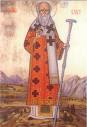
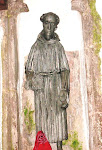
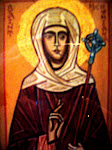
St Nicholas of Tolentino

Nicholas Gurrutti was born in the village of Sant'Angelo in Pontano, Italy in 1245. His parents, middle-aged and childless, made a pilgrimage to the shrine of Saint Nicholas of Bari, their special patron, to ask his intercession on their behalf. Shortly thereafter, a son was born to them whom they named Nicholas out of gratitude. At an early age Nicholas was greatly moved by the preaching of the Augustinian, Father Reginaldo di Monterubbiano, prior of the monastery of Sant'Angelo, and requested admission to the community He was accepted by the friars and made his novitiate in 1261. Nicholas directed his efforts to being a good religious and priest, and soon became renowned for his charity toward his confreres and all God's people. His religious formation was greatly influenced by the spirituality of the hermits of Brettino, one of the congregations which came to form part of the "Grand Union" of Augustinians in 1256, whose communities were located in the region of the Marche where Nicholas was born and raised.

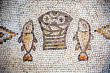
The Hermit Friars had impressed Hugh Stafford with their practices Characteristic of these early hermits of Brettino was a great emphasis on poverty, rigorous practices of fasting and abstinence and long periods of the day devoted to communal and private prayer. As Nicholas entered the Order at its inception he learned to combine the ascetical practices of the Brettini with the apostolic thrust which the Church now invited the Augustinians to practice. At times, Nicholas devoted himself to prayer and works of penance with such intensity that it was necessary for his superiors to impose limitations on him. At one point he was so weakened though fasting that he was encouraged in a vision of Mary and the child Jesus to eat a piece of bread signed with the cross and soaked in water to regain his strength. Thereafter he followed this practice in ministering to the sick himself.

In his honour the custom of blessing and distributing the "Bread of Saint Nicholas" in continued by the Augustinians in many places today. Nicholas was ordained to the priesthood in 1271. He lived in in several different monasteries of the Augustinian Order, engaged principally in the ministry of preaching. In 1275 he was sent to Tolentino and remained there for the rest of his life.

Nicholas worked to counteract the decline of morality and religion which came with the development of city life in the late thirteenth century. He ministered to the sick and the poor, and actively sought out those who had become estranged from the Church. A fellow religious describes Nicholas' ministry in these words: "He was a joy to those who were sad, a consolation to the suffering, peace to those at variance, refreshment to those who toiled, support for the poor, and a healing balm for prisoners." Nicholas'reputation as a saintly man and a worker of miracles led many people to the monastery of Tolentino.

Proclamation as Patron Saint of the Souls in Purgatory 1884

When in 1884 Nicholas was proclaimed "Patron Saint of the Souls in Purgatory" by Pope Leo XIII, confirmation was given to a long-standing aspect of devotion toward this friar which is traced to an event in his own life. On a certain Saturday night as he lay in bed, Nicholas heard Fra Pellegrino of Osimo, a deceased friar who Nicholas had known. Fra Pellegrino revealed that he was in purgatory and he begged Nicholas to offer Mass for him and for the other suffering souls so that they might be set free. For the next seven days, Nicholas did so and was rewarded with a second vision in which the deceased confrere expressed his gratitude and assurance that a great number of people were now enjoying the presence of God through Nicholas' prayers As this event became known, many people approached Nicholas, asking his intercession on behalf of their own deceased relatives and friends

Nicholas died in Tolentino on September 10th, 1305. He was declared a saint in 1446 the first member of the Augustinian Order to be canonized. Saint Nicholas' body is venerated in the basilica in Tolentino which bears his name. His feast is celebrated by the Augustinian family on this day each September.

We have no idea what the church looked like, but there is no doubt it was similar to other Austin Friars’ churches of the Period.

Back to the Austin Friars at Newport

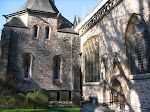
In case the Abbot of St Peters in Gloucester, or St Woolos should suffer from the loss of tithes or donations on account of the loss of the parcels of land and tithes given to them,an annual pension of £13.4p in four quarterly instalments was to be paid to the Prior of St Woolos by the prior or Guardian of the House of Brethren. Should additional lands and tithes be given to the Order, this could be renegotiated. The Prior of the Austin Friars was sworn to keep these agreements and undertook that subsequent friars would also be bound by this. Humphrey, Hugh’s son did give 22 parcels of land to the prior and brethren before 1448 and Henry Stafford , next lord of Wentllwch gave them six more in 1482. In 1809 the remains of the House of Friars were still standing, near the River (in the space approximately of the Newport Bus Station) and consisted of several detached buildings ;

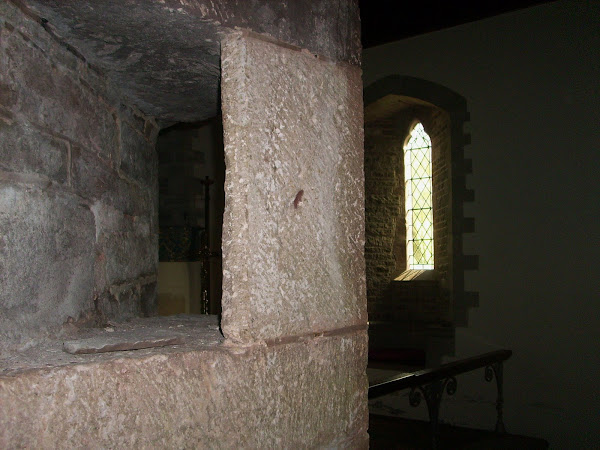
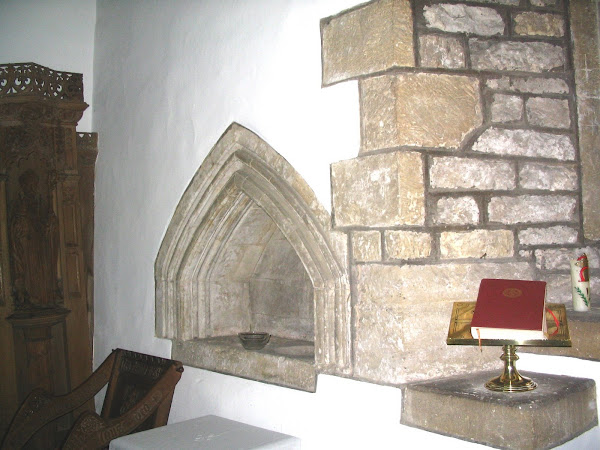
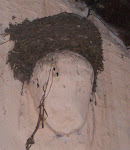
The Fratry, with its windows, had pointed arches and the Northern transept of the church, though small was a neat specimen of the style of original building. By then it was used for a cider business, the press being placed in a recess which appeared to have been a holy sepulchral shrine (to St Nicholas of Tolentino perhaps. They would have possibly had a relic for the altar in the church) The gardens of the priory remained enclosed within its original walls.

I will come back to the Austin Friars of Newport in the next post and discuss the Augustinian Order further. In the meantime, here is more from St Nicholas.

Prayer asking for the intercession with God of Saint Nicholas

O God, source of strength and courage, you gave your beloved preacher,
Saint Nicholas of Tolentino the conviction of faith to the very end.
Grace us with the abilityto translate your teaching into action,
remain patient amid hardship, serve the poor and those who suffer,
and live as your true and faithful servants.

Saint Nicholas of Tolentino, pray for us
That we may be worthy of the promises of Christ.

I In Nomine Patris….

Amen

Friday, October 16, 2009

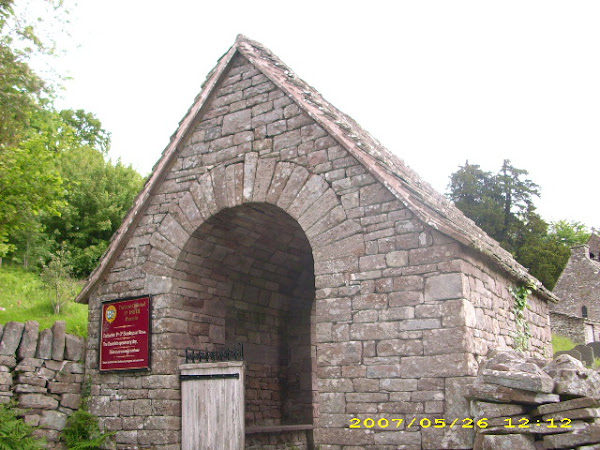
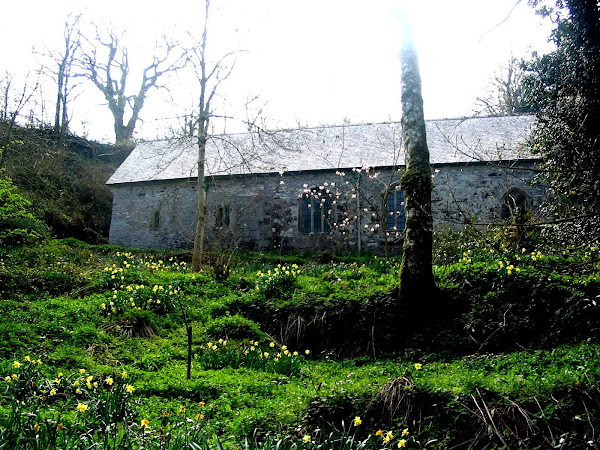
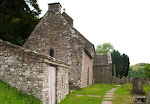
TRELLECK, GRANGE of TINTERN ABBEY, Church of St Margaret of Antioch,

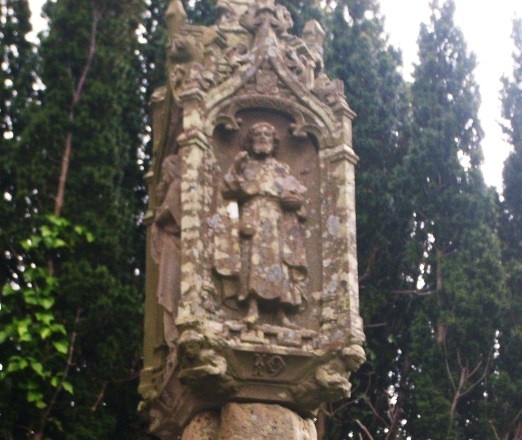
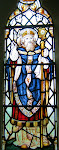
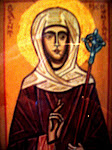
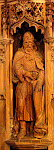
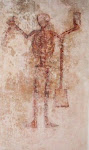
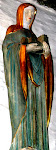
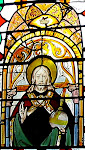
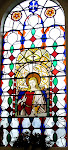
The blessed saint, Margaret of Antioch patron of Childbirth, shown during her imprisonment before her execution for being a Christian and a consecrated Virgin.St Margaret was a popular Saint in the Middle Ages, but there seems little documented evidence, except tradition.


_________________________________________________________________________________________________________________________


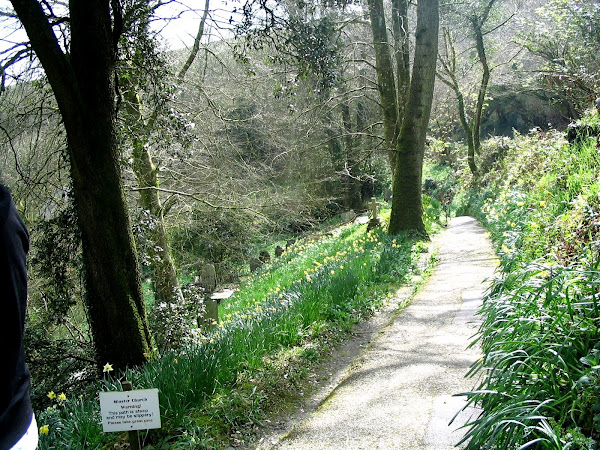
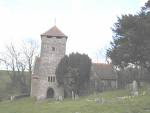
Trellech Grange

Trellech Grange 9Ecclesia Mainuon, Ecclesia
Trylec, Lann Mainuon or Villa Guicon)

The fact that this name (Villa Guicon (Gwykon?Gwion?) seems to be Latin, may indicate, that like a lot of early settlements, it was based around a Roman villa. Possibly originally a local chieftain became a Christian, a room in the house being used as a meeting room, and then, during the Age of the Saints, became a monastery by the efforts of the holy priest Meinion.We need to take his name on trust. It seems to be the only thing we definitely know, because the settlement was named after him.

This settlement, still surrounded by farm buildings , one or two housing the monks who came to administrate here, is on high ground, and at the centre of one of the most fertile hundreds of land in Wales, that is the Hundred of Raglan. Everywhere are farm buildings and fields, sheep and cattle, and it seems in its heyday at Victorian times, it fed the whole of Tintern Abbey and the ancillary workers.

St Meinion

In later times it was a Grange on the site of the original monastery founded around 755 (although possibly even earlier) by a holy priest called Meinion. Meinion may have been one of the priests educated at the college at Caerwent ,or Michaelstone y Fedw (established in Roman times) who had come to this beautiful area to found a Llan.Of course, he may not have been a priest of course, but like St Gwynlliw of Newport, a chieftain who had turned to God . He was clearly well known as there is a mention of ‘Meinion’s Fields’ at Bedwellty and it is probable that he was a priest and an itinerant preacher, possibly even one of the Brycheiniog family come to do a Green Martyrdom and end his days in the little patch of heaven he had created,devoting himself to the praise and service of God..

The brushwood on the site would have been cleared. Then the all important wall built to divide the space and holy ground of heaven inside the monastery and the World outside the monastery and the ground sanctified by 40 days of fasting and constant prayer.

Finally the church would have been built and then the surrounding huts. It seems plain that there was a farm here, or that farming was begun here by the fledgeling community. Life no doubt continued in a quiet pastoral way for two centuries or so until the Saxon raids. There is a stream for water, water springs and a mill further down the valley (a short drive) where the Churchwarden low lives.

When the Normans came, the Grange was first selected as a grange for the Benedictine monks at Chepstow, who had the responsibility of appointing a priest , or sending one of their own who had been suitably qualified. For many years the monks of Chepstow had sway, being directed and empowered by William FitzOsbern. FitzOsbern’s time in Gwent was brief and he died in a battle in France.He was a steward of a more powerful family, but indispensable to William the Conqueror, who awarded him Chepstow and the means to build a castle to keep out the Welsh, and the Priory, who did his administration.

FitzOsbern and his family also helped the monks of Tintern to build the abbey. The Cistercian monks, when they came to Trellech (a short distance away 4 miles) were excellent farmers part of whose charism was, they did not mind hard physical work. These followers of Bernard of Clairvaux knew a great deal of food would be required for the monks now living at the abbey, and in fact, Trellech Grange produced most of the food for Tintern Abbey until Henry VIII took it from them.

Richard , Earl of Pembroke gives the Settlement to Tintern Abbey

It was, in fact, Richard Earl of Pembroke, the powerful patron of Tintern Abbey who granted the Welsh chapel and the farmlands to the Abbey. They transformed the lands into one of their model farms or granges and the chapel they built here, was probably a rebuild of the Celtic site. Perhaps it was first a timber building if the original may have been mud and wattle, but when in 1224 William Marshall, the new Earl of Pembroken gave the monks ‘all things needful for the abbey and grange of Trellech, and stone for building, in the Forest of Wentwood’, the chapel was undoubtedly refashioned in stone- as was growing practice of the Cistercian site at the time. It can then be confidently assumed that the basic fabric of the church dates from the early 13th century.The Pembroke family were all interred in the abbey with monuments which have disappeared.

Original dedication to St Margaret of Antioch

According to Professor David Williams offer such clues that there are in the records show the church to have been dedicated to St Margaret. St Margaret was a huge source of devotion back in the Middle Ages, and while documented historical evidence in the form of documents is thin, but St Margaret also had a shrine at the church in Caerwent, to which many people came on pilgrimage (from the notes in the ‘Lives of the Cambro British saints) A wall painting like the one above would commonly have appeared on the wall. Margaret (in Pisidia), virgin and martyr, is celebrated by the Roman Catholic and Anglican Churches on July 20 and July 17 in the Eastern Church.; Lack of written documentation meant she was declared apocryphal by Pope Gelasius I in 494, but devotion to her revived in the West with the Crusades and miracles occurred. She was reputed to have promised very powerful indulgences to those who wrote or read her life, or invoked her intercession; and these helped the spread of devotion to her.]

According to the ‘Golden Legend’, she was a native of Antioch, daughter of a pagan priest named Aedesius. She was scorned by her father for her Catholic Christian faith, and lived in the country with a foster-mother keeping sheep. Olybrius, the praeses orientis, offered her marriage at the price of her renunciation of Christianity. Upon her refusal, she was cruelly tortured, during which various miraculous incidents occurred.She bore her torture and died to this world bravely to be taken up to the martyrs. She is the patron saint of Childbirth by popular acclaim.

Unfortunately these were embroidered and more made up! She was martyred in 304 AD. St Margaret was the patron saint of pregnant women and greatly loved by women in childbirth. There were many Margaret dedications as Childbirth was a dangerous affair in the middle ages. She is also the patron of dying people and of people who have kidney problems, peasants, exiles and falsely accused people. So she had a great deal of scope to produce her miracles. The dedication to St Margaret would have reflected the New Norman order at the 1130’s the Norman saint having indicated this. There would have been an wall painting of St Christopher too, the saint who carried Christ in his arms. Legend dictated who ever looked at an image of him whislst dying would be granted eternal life.

Animal Husbandry and Export

The monks took their produce down to Tintern. Other monks tended the sheep and spare produce which would keep. Like sheep were always herded down to Sudbury near Chepstow and here they set sail for Bristol and exported both the sheep, but especially the wool to the West Country and also further afield.

Even working in the field along side the labourers, at given times the bell would ring as it does in many Catholic areas today 12 noon the Angelus bell, during which the monks would recall the message of the Incarnation by an angel. Bell at 3 for nones, a short 15 minute series of prayers and psalms, 6pm Vespers or Evening prayers (called ‘Evensong’ its old name by Anglicans) and at 9pm Compline, when the monks would say their night prayers, finishing with the ‘Salve Regina’.Then they would be up for Mattins at 2am and again at 6 for Lauds, 8 for Mass and 9 for Prime. The Angelus would be followed by prayers and psalms called the ‘Terce’. The sounding of the church bell once to signal to all those in the field that the hour had come, meant they all turned towards the church at that time, and prayed the same prayers. The bell was a signal from heaven. It also rang at the moment of consecration during the Mass, and rang three times at 12 and six. This practice would have continued at Trellech Grange, keeping the monks and lay brothers and sisters in unity with their brothers at Tintern Abbey.___________________________________________________________


_________________________________________________________________________________________________________________


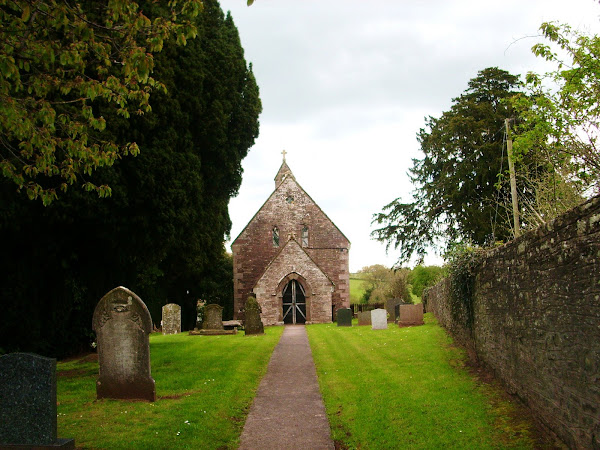
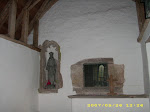
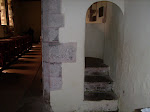
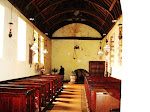
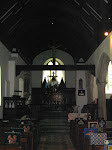
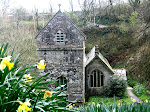
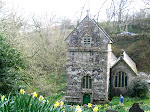
When Henry VIII took the church lands and sold them off at knockdown prices, often to the very agents he sent in to do the deed, the chapel became a parish church for the small farming area. Indeed by 1600 the Earls of Pembroke had once again become the patrons of the land around Trellech, perhaps part of their reward for not objecting to the ruination of what had been wonderful buildings at Tintern.No doubt one of the monks remained as parson at Trellech, after which the now Anglican diocese appointed vicars up to the present day. I am most grateful to the Vicar of Llanishen, the Reverend Derek Owen for making it possible for me to look around the beautiful chapel and Mrs Gwen Owen, who came out on a rainy day to take me round. It was very kind of them.

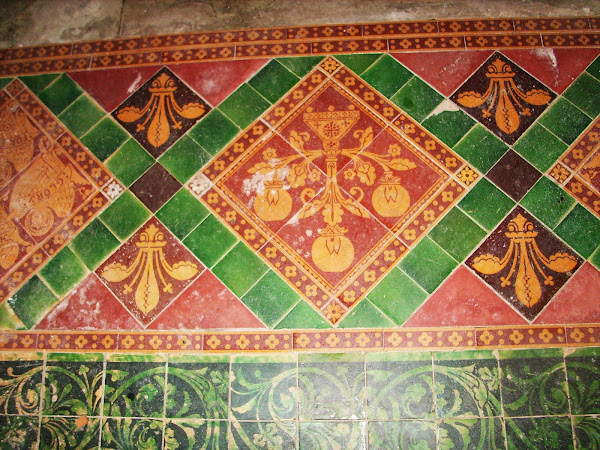
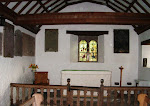
On the day I arrived, the church had just been brightly decked out for the Harvest Festival,the previous weekend and whilst some of the displays were not as fresh as on the previous Sunday, the effect was obvious. Coloured leaves and flowers were everywhere. The white font inside the church door was lively with flowers, and I was told children were beginning to return to the village, although incomers coming in and out meant there was a certain amount of instability. Because of its historic nature (it is the only Cistercian religious building of that mediaeval period still in use in Wales)CADW have insisted on expensive and authentic repairs, costing £60,000, impossible for the local community to find as they are not being allowed to carry out the work themselves. The deep suited instability of the community and lack of interest in local affairs is at the root of this, plus lottery funding all going to the Olympic Games. In the nineteenth century,(1848) the Duke of Beaufort owned all 1805 acres of Trellech Grange. There was stone quarrying there (indeed the church and local surrounding farm buildings seem to be made of the same stone) and possibly the stone for the abbey came from here.The Glebe alone was of 85 acres. Probably , as it was his church, and he appointed the vicars, he also carried out some renovations at this time.

The Stained Glass Window

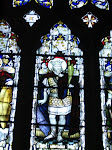
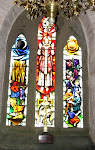
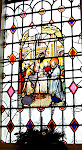
This, depicting the crucified Christ, and the dead soldier was designed by Queen Mary and chosen to commemorate the two local men who died in the Great War, John Edward Davies and Ralph Mortimer Bagley.
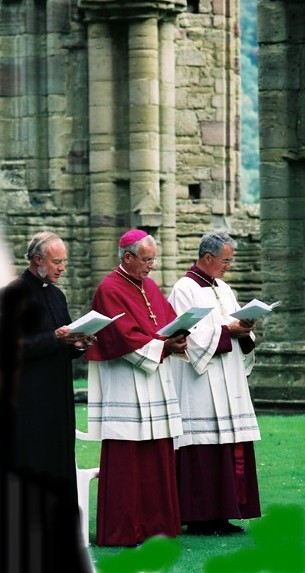
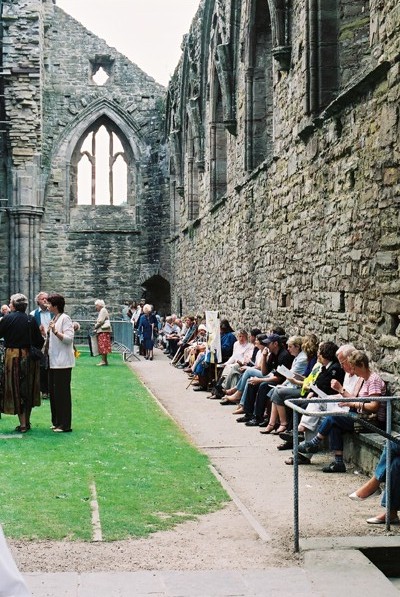
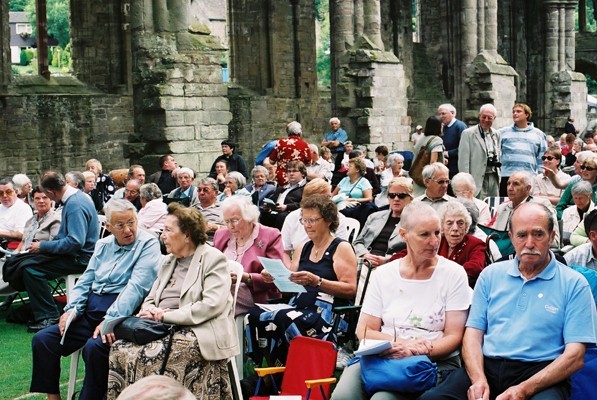
Trelleck Grange can be accessed by taking the Trellech Road to Llanishen and then taking a LEFT turn before driving up the hill on the other side. Curiously, the signpost to Trelleck Grange can only be observed driving the other way(!) so turn left at the small road after the white cottages. On the Left Hand Side.
Monday, October 12, 2009

Autumn Colours, rushing stream and Mounton, Grange of Chepstow


____________________________________________________________________________________

I have begun to blog about the great Augustinian foundations and am soon continuing with St Kynemark, near Chepstow and also the Austin (Augustinian) Friars Minor at Newport.Last Friday, however, I was fortunate to be taken by Anthony Utting and the Vicar of the parish Revd Julian White, in whose parish Mounton lies. I had already visited Mathern some time ago when mentioning it as the church which houses the (still existing) relics of St Tewdrig, who died from wounds whilst defnding th Christian faith against the paganSaxons in the sixth century and is buried in the church. His son was the 'Meurig' of Pwll-Meyrick(-Meurigs pool or well)who buried his father in the holy Tatheus' Church in the old Roman town. So I thought, asMountain was a Grange of Chepstow, I would post this now whilst preparing the next post. Hope you enjoy the visit!

History of the Norman Abbey Foundation & St Pierre of Cormeilles

Between 1035 and 1066 the new Norman aristocracy had founded many abbeys in Normandy. Countess Lescaline and her son Robert , Count of Eu, was responsible for the abbey of St Pierre sur Dives. Count Robert set up the abbey at St Michel de Treport. Herluin, Vicomte de Conteville ,his wife Herleve and his son Robert, Count of Mortain founded the abbey of Grestain.

FitzOsbern was the favoured Son of a Steward,ennobled by William the Conqueror by doing his bidding

William Fitz Osbern, son of Duke Robert’s steward, in the same way and around the same time, established the monastery at Lyre and then followed this up with a similar foundation at Cormeilles. In Upper Normandy, the House of St Victor en Caux was set up by Roger Mortimer as a Priory of Saint Ouen. William FitzOsbern made substantial and lavish gifts to the Abbey of St Ouen as well as supporting his own abbies (Lyre and St Pierre at Cormeilles)Most of these houses were in central Normandy and also encompassed Holy Herluin’s House at Le Bec (to whom the Priory at Goldcliff was given)

The Monks School and Theological College and Scriptorium at Chepstow (now under the car park opposite Priory church)

It was significant, therefore, that many of these Norman priories were built close to land which was to be colonised. The Benedictine Priory at Chepstow also had a small school, where it taught boys and the young monks theology, singing, writing and copying, philosophy and rhetoric. This school or college did its work so well that gradually local boys became monks and these becoming Welsh or ‘denizen’ gradually became less susceptible to closure during the various French Wars during the later Middle Ages.

It would be wrong to suggest that the monks of the Norman monasteries were not devout. The reforming spirit of the monks of Cluny was already spreading up towards Normandy. The Houses built at this time probably owed most to the Abbey of St Ouen at Rouen (R-ouen)The first five abbots of Holy Trinity ,Rouen came from St Ouen and Holy Trinity passed on the succession by supplying the first abbots for William FitzOsbern’s monastery of St Pierre at Cormeilles

St Adoenus (Saint Ouen of Rouen)Dedication of this Church

So who was ‘St Adoenus?’ (Lit ‘To Owen’ad Oenus) This was the most beloved saint of the Benedictine Normans. St. Owen was bishop of Rouen, France in the 7th century. He was born in Sancy, near Soissons, about 600 AD of a Frankish family. While he was still a child, his family housed and entertained the exiled St. Columban, who greatly influenced his early education. In his youth Owen was sent to the court of St. Clotaire II where he became an outstanding student. He gained the favour of the King and his son, who appointed him chancellor. While in office, Owen steadily opposed the then prevalent practice of simony (paying for holy relics or offices-something abhorred by Pope Leo IX who declared it a mortal sin).

Owen, a nobleman, at a corrupt court, began to see the size and shape of the struggle to keep the light of Christianity burning. He became a monk and priest and a monastery builder in 636AD. He was made bishop of Rouen in Normandy in 641, and built monastery after monastery, for he clearly saw that only through these centres of Catholic living and learning could Europe be saved from darkness. He kept up his court connections, advising the weak Merovingian kings. A sort of French Dubricius, he laid the foundation for all the Norman abbey building in later times.

As a layman, St. Owen, with his zeal, piety and learning, was considered equal to any of the bishops. He gained a reputation for assisting the poor and homeless and did the Will of God generally, caring for widows and orphans throughout Armorica (Celtic Gaul-Brittany and Normandy)

He died on August 24, 684, and is buried near the main altar of St. Owen Church in Rouen.

May we rejoice and be inspired by the great qualities of the Patron. We ask for his blessings and pray for his guidance in the years ahead for the Community of St. Owen in this Valley in Monmouthshire.

My Visit 9.10.09

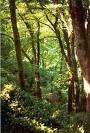
It may now be seen why the little church at Mounton(Monks’ Town), and the small chapel at St Pierre, were named after the foundations at home. The dedication of the monks’ town being to St Ouen (Ando-enus) and St Pierre the dedicatee of almost all the Norman Abbies. William FitzOsbern, builder of The Priory Church of Our Lady at Chepstow also first built the castle, as the most important priority in this strategic marcher area. He also granted money later to help the Cistercian monks at Tintern with stone and materials for building that abbey. In turn various churches and chapels were given to the French monks and Mounton, a grange, had its own accommodation (now known as ‘Monks’ Rest’-now a private house), a beautiful running stream and also its mediaeval track road, down which Farmer Bob travels at speed with his huge tractor! The south door looks to the track and then to the great wooded cliff face opposite, beautiful in the autumn sun. the small brook gurgles down the valley under a tiny bridge, where you could almost 'imagine' a monk with his fishing rod or even reading his office.

On the other side of the brook, more mountains loom and isolated farm houses appear between them, perhaps the descendents of the early farm, which provided food for monks and for sale to the castle and others. The air is still apart from Farmer Bob’s tractor and his accompanying dog, barking excitedly chasing it. On the other side of the road is a small churchyard.

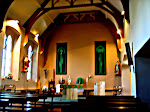
Accompanied by the Vicar Julian and Churchwarden Anthony Utting, I walked into the little church, which has had a Victorian restoration. The rood is removed of course, but the piscina is still there, although on the other side of the chancel/sanctuary area. The priest’s door has also disappeared in the renovation. Yet the spirit of the place remains, the holiness and veneration. The early relic of St Ouen seems to have disappeared during the ecclesiastical upheaval in the sixteenth and seventeenth centuries and the altar is replaced with a beautifully carved wooden table. The church is, in reality a small chapel and its restoration has left the walls sparkling white .

There are a number of beautiful stained glass windows of modern date. The window on the East side depicts the earthly death of Christ in the tomb and then the Resurrection. The South Wall has windows depicting Our Lady, the Child Jesus and the Baptist in striking mediaeval ochre tones and there is a wonderful window dedicated to a parishioner (perhaps the player of the small electric organ in the church in praise of God’s gift to music.

The West door has its font(19th century?) in situ currently colourfully decorated for the Harvest Festival . There are also windows in the North Wall ,one depicting St Francis of Assissi, one of the most loved saints and in the same window, the Blessed Mother. We remarked now that the monks’ church would have been a great deal darker than the present church. There would have also been wall paintings lit with candles. Candles were still everywhere on the window sills of the ancient thick walled church.


_____________________________________________________________________________
____________________________________________

ST OUEN, Bishop of R-ouen . Patron of Mounton Church

There was also , next to the altar a citation for a soldier commended for bravery and awarded a VC during the second world war. I do not have permission to publish his name here, but his bravery was attested to by the men under his command who made him a cross on the field of battle, which they brought back to Mounton.He is buried in the churchyard. There are some ancient tombstones-one dated 1680 by the vestry door and another nearby of the same age. Monks and laity were usually buried under the floor of the church, but often in a separate graveyard near the church after the plague era. The Churchyard was often kept for mirth, holidays, even Eisteddfods, Christmas dancing and fairs as well as processions on Festival Days. The great hymn ‘Festa Dies’-‘Hail thee Festival day’ in plainsong was sung by all in the churchyard on the great feast days of the church, before a large procession would enter the sacred space for the great battle against evil that is the Mass.

Life at Mounton during Benedictine Times

Mounton remains a pretty church, simple and stark and will no doubt have buried many parishioners under its flagstones, those who were once baptised in the font.The French monks would have had no problems communicating in Church, since the language was still Latin from Celtic times.

The monks would have kept the Opus Dei, the Angel’s Prayer or Angelus Bell would have rung at 6 to wake people up and and 12 lunchtime and at 6 at night and probably once at the Hours of Lauds (6.am) Mattins,(7am) prime(9am), terce,(12 noon), nones, (3pm) vespers(6pm) compline(9pm)which closes with the haunting ‘Salve Regina’ and mattins (2am) The hours would vary according to the time of year. These are the same hours as being sung today. Mass would be at nine.

Mediaeval People understood what the Mass was and what was being said and sung as they were taught for their first Communion and Confirmation, and there was always an element of catechesis or teaching during the sermon or homily in English. The pathway outside the front of the little church is an ancient trackway leading to Chepstow and to Tintern, st Kynemark’s and Trellech and Trellech Grange.

Roger Shrewsbury, Last Prior of Striguil

It is about 40 minutes walk to Trellech or Chepstow from Mountain. The stillness , the birdsong and the marvels of God’s creation were with me as I left. I could almost hear the voice of Father Roger Shrewsbury, the last prior calling me back!Monkstown had a stipend or donation of £10 a year for the church, which reverted to Henry VIII after he had taken the abbies and priories and their churches. The little chapel became a parish church after the disturbances of the sixteenth century, when its furnishings, rood screen, altar, relics everything ripped out and destroyed and the whole became much plainer in obedience to the new King Edward’s orders and later those of Elizabeth.

Catholics from this time for two hundre years, met in secret places to carry on their faith and perhaps even in places like this. Luckily we are in a time of healing and respect now and almost all will recoil at the level of destruction of beautiful works of art that are irreplaceable, although in many cases church furniture was hidden and then restored in more clement times.£4 4s 6d was what the priory fetched for Henry VIII and often the shells of the buildings when everything had been stripped out, were given to the very people who had carried out the destruction, so he did not need to pay them for the ‘work’.It is also wrong to say all the monks had pensions. Most of them and all the nuns did not and either made for familes, for France or starved or died of cold if they could find no shelter.This was the time when the Catholic nobles of Wales, like the lord of Raglan Castle, and Herberts and Morgans at Llantarnam began to receive covert priests and hold masses in their homes, trying to potect the Faithful and see to their interests.

Monks’ Rest

We walked up to the accommodation for the monks – a small cottage now much improved and extended , known as the ‘Monks Rest’. There are remnants of the original stonework on the South wall. The garden is very pretty and beautifully kept.

Paper Mills

Anthony Utting also told me about the paper mills which once provided employment for the area (100 at one time in the nineteenth and twentieth century) Luckily the numbers have grown again in the area not far away, where a new estate of houses has been built, which has given the pretty church a new lease of life.

Hando's MountonFred Hando' Sketch from 1944 shows a large house opposite the church, which no longer seems to be there, unless Iam looking from the wrong angle...
__________________________________________________________
_________________________________________________________________________________
Hando wrote of Mounton in 1944 in his own wonderful poetic wayin his wonderul book 'The Peasant Land of Gwent' published by Johns of Newport.Oten for sale onEbay.

When you step over the stile at the New Inn at Pwllmeryic you take a field path that runs close to the mountain brook. The water in the brook is crystal clear. The country is open. But as you walk onward, the wooded hills close in on both sides. You are now in Mounton Valley.Great trees rise ahead.

Between two of these trees you get your first view of the village. Thrown into high relief by the trees and the brown cliff are a little church and a cottage with dormer windows. A poplar, superbly placed rises like grey smoke into the heavens;a pretty footbridge crosses the brook. Cows stand deep in the water .All sounds, except for water and the bird song are hushed.

You walk between cottages set between gardens overflowing with colour. Even the walls grow flowers in Mounton. High hills soar ahead and on both sides, and the scented air is warm and still. Beyond the village the stream flows though flat meadows and the valley widens . On the banks are ruins of buildings of unusual form.

Mounton, the ancient Monkstown , for the land was owned by the Priory at Chepstow-knew industrial prosperity a century ago (19th century-MM) . Its three mills, with names as beautiful as the brook –Lady Mill,Lark Mill and Linnet Mill –produced carpets and paper, and for some time the paper used for the Bank of England notes was made here.

Now the mills are picturesque ruins and the wheels of industry are stilled. From the ancient markstone near the church to the house at the far end of the village,the eye rests with pleasure on the works of nature and of man.

Where the road forks above the village,the road to the right leads you to a narrow valley (accessible by car-MM-)The brook rushes swiftly along .You pass a couple of cottages, one approached by a bridge over the brook and then the road ends.

The valley now widens. Great trees stand above you on the sun lit hillside; others lie recumbent on the slopes and the valley bed; and the wooded hill on the left rises in mysterious shadow. The only sound now is the allegretto dance rhythm of the brook. Here , many years ago, were laid several of the scenes in the film version of ‘Ivanhoe’. In my opinion Puck and Ariel are more to be found here than the spirit of any Plantagenet.

Mounton has been a well kept secret. Cars scream past Bankhead the head of the Valley; unceasing traffic roars through Pwllmeyric at the other end.No tourist dreams of turning northward (Left from Newport Right fro Chepstow) from Pwllmeyrick, for Mounton is no show place, but for us, at any season of the year is a home of peace and beauty.

We love it best at the height of Autumn. We choose the time of our visit so that the trees, still heavy with leaf, shall glow at their brightest. ON our last visit in early November , many flowers still bloomed in the gardens, and at the church we stayed a while and looked upwards. Never shall we forget the pattern of gold and daffodil, of peach and berry red, of leaf green and bronze, flaked by the leaves against a pale sapphire sky. Nor shall we forget a recess, carved like a little shrine in the hillside opposite, in which a young fir tree stood ensconced’


Travels at home are cheap and safe. Salvation
Comes mounted on the wings of meditation
He that doth live at home, and learns to know
God and himself, needeth no further go’.


(Excerpt from Anglican George Herbert’s ‘Travels at Home’ (1633)

So nothing much has changed here since 1944 or probably from the times of the Monks, who are probably still looing down on thislittle acre of paradise....

Wednesday, October 7, 2009

AUGUSTINIAN FOUNDATION AT LLANTHONY ,WILLIAM DE LACEY AND ERNISIUS


Our Visit

Last Autumn, I drove to Llanthony with my son. We drove through some stunning countryside and at the village of Llanfihangel Crucorney on the Abergavenny to Hereford Road and turned into one of the most heavenly places in a shy county and turned off to the wonderful village of Llanthony with its 12th century Priory, also boasting the hermitage of St David. The autumn leaves still hung heavy on the trees, reds, golds and browns, the berries were in stark relief across a blue sky. The mountain road is variable in width .Many walkers use it to climb the Black Mountains, which are dominated by three distinct mountains, the Blorenge, near Abergavenny, the Sugar Loaf and the Skirrid. In the tiny chapel further up the mountain known as Capel y ffin the words I will lift mine eyes into the hills are engraved into the sanctuary window. There is a really special feeling about this place.Since Norman times, too, there have been seven recorded private sightings of the Virgin Mary. I have always felt t to be forgotten by time. The valley is surrounded by old volcanoes, grassed over now and beautiful

Llanthony, the ‘Little Church on the Honddu brook’ in the sight of the Skirrid was the site of the hermitage of Dewi Sant, St David, the patron of Wales. The small cell, whitewashed (now Anglican) is attached to a larger nave of much later building. We always pay our respects to the memory of the saint who spent time in this beautiful place praising God and then rising by God’ grace to become our great defender of the faith against the heresy of Pelagius and , Archbishop and then Patron Saint of Wales after his canonisation by Pope Callixtus II in 1120.March 1st was held universally in Great Britain as a whole until Henry VIII began his own church in the 1530s.I have written extensively about St David in the Celtic posts.

The Mediaeval Priory at Llanthony

We moved over to the mediaeval priory. We saw many lovely things and my son and I were deeply moved. Above the Blorenge, Skirrid and ‘Sugar loaf’(named after the Siwgari tribe ) was pure cerulean with small tufts of cloud. Llanthony seems to sleep in the cradle of the hills. The rounded grace of the hills seemed to dip in salute to the priory. Was it the varied play of light and shade over the green valley? Was it the perfect design, with every line leading to the abbey? What was this intangible thing which made this place heaven on earth? We became forever part of the place.

Landor who had once owned the abbey ruins in the nineteenth century, wrote affectionately of Llanthony:-

I loved thee by thy streams of yore
By distant streams I love thee more!


Landor himself wanted to establish an ideal community at Llanthony, but his temper was awful and worse than his manners. The locals were not long suffering, so he threw in the towel, lived in the Lodge (Priory Guest House)and entertained his friends, including Southey.
My son and I found food there too, cawl (soup) and a roll and tea! In the sunshine afterwards, my son ran around photographing all areas of the ruins.)The Crypt restaurant is also open all day Sunday and most holidays and attached to the Prior's House, now a small hotel.
___________________________________________________________________________________

THE FOUNDATION OF THE NORMAN ABBEY

Indeed, Roger de Lacey, the Norman, whose son was so transformed by the power of the place, did not own the land at Ewias. The Domesday Book says:( Herefordshire X) :In the jurisdiction of Ewias Harold Castle, Earl William gave to Walter de Lacey 4 carucates of waste land. Roger de Lacey, his son holds them, and William of Osburn (hold of him). In demesne they have two ploughs, and four Welshmen rendering two sesters of honey and they have one plough. They have three slaves and 2 bordars. The land is worth twenty shillings. The same Roger has an estate called Longtown within the boundary of Ewias. The Land does not belong to the jurisdiction of the castle nor to a HUNDRED From this land Roger has 15 sesters of honey and 15 pigs when the men are there and pleas over them.

Llanthony Builds up again after the attacks-Bishop Herewald

Bishop Herewald, the saintly Bishop of Llandaff watched aghast after the Norman Conquest as the Normans did their worst, but when he died in 1108,his successor, Urban , a virile, dedicated energetic and determined cleric weilded with the help from the Pope a new and powerful influence. Under that influence, Llanthony and many other abbeys and priories rose up. They managed to convince the Normans that only by great gifts to the church could they atone for the horrible things they had done.These buildings were on sites already , like Llanthony blessed with menmories of holiness, of Dewi Sant, crosses, churches,and abbeys. Priories arose in Basseleg in 1110, at Goldcliff in 1115 and Abergavenny in 1128. Tintern Abbey dates from 1131.Their wealth increased, for Hugh de Lacey, the founder left them in 1186 sixteen churches, tithes in three places and lands in two others The canons built on beautiful transepts and chapels, added the nave with its lovely arches and built a great lantern tower two storeys above the crossing. No windows had its sill lower than fourteen feet from the ground. This was defensive
as there were many attacks by the Welsh, including Owain Glyn dwr.By the year 1200 the land was a bit more peaceful and some of the windows lower.-at four feet. It is easy to imagine the seclusion of those early brothers as they went about the rhythms of the Opus Dei, the daily work of prayer-praying the psalms.

The Foundation William de Lacey and Ernisius, Chaplain to Queen Matilda.

I was interested to read about the Augustinan Canons, (very much mendicant friars -'hands on'). It was during the reign of William the Conqueror that the Norman Knight, William de Lacey ,kinsman of Hugh de Lacey, Lord of Ewias lost his way during a hunting expediation into the thickly wooded valley. He came across the Blessed David's hermitage where he was moved to end his sinful waysand decided to sped he rest of his days in religious contemplation. Legend had it that he never again removed his armour as penance.In 1103, word of his self imposed penance reached the court of Henry I and inspired Ernisius, chaplain to Queen Matilda,daughter of Henry I to follow his example and follow William to this wild but heavenly valley in the Black Mountains. By 1008 the knight and Ernisius had gathered a band of followers, formed a monastic settlement , and built the first priory church, dedicated to John the Baptist and consecrated by the Bishops of Hereford and Llandaff. Hugh de Lacey provided the money and lands to sustain the community there.

Archbishop Dunselm of Canterbury had persuaded William de Lacey , Marcher Lord of the area and Ernisius to regularise the Celtic monastic practice of the time. It was felt Benedictines were too lax and Cistercians too greedy , an assumption which would amaze most Benedictines. It should be said that Celtic monasticism often drifted away from its original forms as taught by the early teachers Medwyn, Ffagan, Elfyn and the others, sent by Pope Eleutherius in the second century. The date of Easter was very often also the Druid Spring Festival, and it was necessary to keep the unity of the Church throughout the world.

The Order of St Augustines was Chosen

Finally the order of St Augustine was decided upon and were instructed by the canons of the Augustians of Merton, Oxford, London and Colchester. Henry and Matilda gave their consent, gifts and encouragement and Ernisius was appointed first Prior of the Augustinian order at Llanthony. They are popularly knows as Black Canons, by reason of the colour of their habits. These were not ordinary brothers but canons. Not enclosed, but fully ordained priests working in the community in medicine , preaching liturgical services, saying Mass*,(* means :The 'Mission' to go into all countries, baptising souls in the name of the Father, Son and Holy Ghost') and not given just to contemplation like most monks of the period. Llanthony's Augustinian house was the earliest of the order to be found in Britain. Over a hundred foundations subsequently adhered to the order, but only two followed in Wales, at Haverfordwest and Camarthen.40 canons were installed in all.

Robert of Bethune-Second Prior of Llanthony

Meanwhile Robert of Bethune came to be second prior of Llanthony and loved this leafy valley.and was really annoyed in 1131 when he head to leave the beauty and seclusion to become Bishop of Hereford. Five years later he gave shelter at Hereford to Robert de Bracci and the other Llanthony monks who were fleeing from the Bandits in the Black Mountains.

More Welsh attacks!

One Welsh tribal chief even took refuge there in the priory, brought his rude court and companions and desecrated the church with drunkeness, dancing and orgies! Two years later, Robert de Behune, Bishop of Hereford, transferred the canons to Llanthony Seconda at Gloucester, a far safer place. Robert de Behune longed for Llanthony but was closely embroiled in the Civil War between Stephen and the Empress Maud. He courageously sided with Stephen out of loyalty for Stephen's brother, Bishop of Wincheter.He suffered considerably because of it. He died suddenly at the Council of Chalons. His body was returned to Herefordsown in an ox hide to be interred in the cathedral.The turmoil which ensued during Stephen's reign all but stopped activity at Llanthony. Everything of value was removed to Gloucester. By the late 1150s, the de Lacy family had retaken their possessions . Gilbert de Lacy who died in the Crusades was succeeded by his son Hugh who earned great rewards from the King in return from his work in Ireland. He gave a great deal of money to the Priory, which still had some canons.

Under his patronage, Llanthony Prima once again became powerful and buildings were repaired and improved. Sadly in the last part of the 13th century, the area was plunged into lawlessness again and the canons were harrassed and one or two killed. Sometimes the Prior and Canons took the offensive, sallied out and set about a manor, destroying a weir in return for the infringement of their fishing rights. They carried off much booty.

Owain Glyndwr and his rebels were in the area during 1399 and trouble hit Llanthony again. Taxes were hard to collect and the house expensive to maintain, especially after Welsh attacks!

Benefices given to Llanthony Secunda at Gloucester

In 1481 the king granted all the remaining benefices to Llanthony by Gloucester for a fee of 300 marks (£200)Llanthony Prima was classed just as a cell until Henry VIII destroyed the priory in 1538 when Prior David and his remaining monks were given a pension. The priory was sold to Nicholas Arnside Chief Justice for Ireland for £160.In 1807 it went to the Landor Family (whose owner greatly loved Llanthony-but was not well liked by the locals)

LLANTHONY SECUNDA PRIORY IN GLOUCESTER - AND RECONSTRUCTION


________________________________________________________

Revd Joseph (Ignatius) Lyne and ‘Llanthony Tertia’

In the second half of the nineteenth century, Llanthony Priory was visited by The Reverend (Joseph) Ignatius Lyne.A more detailed post about Reverend Lyne will be given later as he is a most interesting character and had a huge influence in the area in the nineteenth century He was an Anglican Deacon who dreamt of restoring the propry and founding a Church in Wales Monastery. The Landor family refused and he had to build a new monastery up at Capel y ffin further up the valley known as Llanthony Tertia.He was disgusted by the pub and guest house desecrating the site, but the Landors would not sell. His Church of our Ladye and St Dunstan at Capel ye ffin. Sadly this also fell into disuse as Fr Lyne died and the money dried up. Other famous people visited Llanthony-The Reverend Francis Kilvert, diarist and curate visited .Eric Gill, Sculptor and type face designer and a community of artists, writers and craftsmen.

800 Year Celebration of Llanthony Prima 1975

In 1975 there was a commemoration of the 800 years of this monastery The Augustinian Prior of Bodmin took up residence for the period of the celebration, probably the first prior to do so since the dissolution.

Reading all this in the bar, I was completely overwhelmed by the activity the priory has seen. My son and I went down into the crypt guesthouse and enjoyed a bowl of broth and their home made rolls. The monks’ lodgings are now an hotel. Religious services are still heard at the priory. with the people still facing east and looking into the hills. The air is balmy-even for October! The trees are just turning to reds and golds but the sun is bright and the leaves still on the trees. The sky very blue with a few wisps of cloud.

Our little Maltese dog had a brief walk around and we really soaked in the silence and seclusion of the area. The hostelry had been full- full of people rambling up the mountain, and further up to the top of the table mountain where you can see seven counties and feels as if you are in heaven.

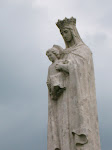
The mountain road is very narrow with few passing places and runs past Capel y ffin and Llanthony Tertia with its huge statue of Our Lady looking out looking over and protecting the valley. I looked at my son snapping away at the ruined abbey, still testifying to the presence of God in this secluded valley. Good it is a well kept secret for people who love quiet places. A place to remember in times of stress.A place to imprint on your heart and in your soul to remember when life is tough. Lovely, Lovely autumn
_____________________________________________
The Order of St Augustine Today

For interest, in the mean time,the Order of Saint Augustine is alive and well.
Two Priors General, Luciano Rubio and Agostino Trapè, took part in the Second Vatican Council, 1962-1965. In response to the council1s decree Perfectae caritatis and its call for the renewal of religious life, the Order celebrated a special General Chapter at Villanova, U.S.A. from August 28 to October 31, 1968. A thorough revision of the Constitutions was enacted in the light of a return to the sources of St. Augustine and the Order's mendicant tradition with the necessary adaptations to modern times.

In 1974 the intermediate General Chapter was celebrated in Dublin, Ireland. The chapter issued The Augustinian Order in the World Today describing Augustinian spirituality in relation to the concerns and aspirations of contemporary men and women.

The Institutum Patristicum Augustinianum was founded in 1969 by the Prior General, Agostino Trapè. It soon became the leading centre of patristic studies in the Church.

1975 saw the beginning of a series of encounters in Rome for members of the Augustinian Order. The latest studies on Augustinian theology, spirituality and history were presented by eminent scholars. Through these gatherings sisters and brothers of different cultures were able to meet and discover their common heritage.
Martin Nolan became first Irishman to be elected Prior General of the Augustinian Order in 1983.

Pope John Paul II

1986 was the 1,600th anniversary of the conversion and baptism of St. Augustine. Pope John Paul II issued an apostolic letter, Augustinum Hipponensem for the occasion. The Prior General, Martin Nolan, sent his letter, A cry from the heart: conversion and prayer today to each member of the Order. The Superiors General of all the Augustinians (the Augustinian Recollects, the Discalced Augustinians, and the Augustinian of the Assumptionist) collaborated on the letter The conversion of St. Augustine: light for our journey. It was addressed to the entire Augustinian Order.

An international Augustinian youth festival took place with the nuns of the monastery at Lecceto, near Siena, Italy.
Since 1986 the International Augustinian Youth Festival has been celebrated again in Lecceto, in La Vid, Spain and in Abbeyside, Ireland. Preparations are already under way for the next one. The spirituality of St Augustine is very interesting and at a recent Latin Summer School at Maryvale Institute in Birmingam, we translated one of his books. The spirituality of the Brothers at Llanthony can be seen in this novena by the Augustinian Bishop of Manila:

+In nomine Patris, filio et Spiritui sancto.

With St. Augustine we say ,You have made us for Yourself O Lord, for you alone our God, and our hearts are restless until they rest in you.?
As we begin our novena to our Father St. Augustine we pray for the grace to make his spirit our own, on our journey towards our inner self. We reflect on who we are and where we are going as Augustinian Religious and devotees in the context of our time. Move by the spirit of Augustine’s restless pursuit for truth.
What motivates me to continue searching for God?
Having found Him, how do I make Him alive in my relations to people with whom I live?
If there is one thing that Augustinian emphasizes over and over again in treating of the search of God, it is that we must begin by going with ourselves. The keyword is WITHIN. There will find truth, light, joy in Christ Himself. There we will be heard when we pray; there we will love and worship God. But while this within signifies the very depths of our being, this is only the first stage of the journey. Augustine urges us to keep moving on even to what is beyond ourselves, to the source of our inspiration and light to God Himself. Augustine would tell us, “Do not go outside yourself, but turn back within. Truth dwells in the inner man; and if you find your nature given to frequent change, go beyond yourself. Move on, then to that source where the light of reason itself receives its light.. (End of the reading – Some moments of silence).


LITANY IN HONOUR OF SAINT AUGUSTINE

Lord, have mercy on us? Lord, have mercy on us
Christ, have mercy on us. Christ, have mercy on us
God the Father of Heaven Have mercy on us
God the Son, Redeemer of the World Have mercy on us
God, the Holy Spirit Have mercy on us
Holy Trinity, one God Have mercy on us
Mary, Mother of Jesus. Pray for us
Mary, Mother of Consolation Pray for us
Mary, Mother of Good Counsel. Pray for us
St. Augustine, bright star of the Church. Pray for us
St. Augustine, filled with zeal for God’s glory. Pray for us
St. Augustine, dauntless defender of the truth. Pray for us
St. Augustine, the triumph of divine grace. Pray for us St. Augustine, on fire with the love of God. Pray for us
St. Augustine, so great and so humble Pray for us
St. Augustine, prince of bishops and doctors.Pray for us
St. Augustine, father of monastic life. Pray for us
St. Augustine, holiest of the wise and wisest of the holy Pray for us
Pray for us St. Augustine, That may become worthy of the promises of Christ.

ALL: You have made for yourself O Lord, and our hearts are restless until they rest in you. We ask you to bless our restlessness in our search for you will live in our lives, and in the events confronting us. Finding you, may we be faithful to you God of history, faithful to Christ our Lord and Saviour, faithful to the Church and her teaching and faithful to our particular state of life, which we have chosen to serve you. This we ask of you loving Father, through Christ our Lord and through the intercession of Saint Augustine, our Father.
Amen.

Sunday, October 4, 2009

Home | Tweet Catholic - The nest of the Catholic Twitter community

Home | Tweet Catholic - The nest of the Catholic Twitter community: "the"

Hello! Today I have Just loaded up a podcast , the sound files of the devotions of the church at the Metropolitan cathedral in Cardiff on the occasion of the visit of the relics of St Therese of Lisieux. The podcast uploaded today begins at the Angelus on 22nd September at Midday, and progresses through the Mass for Vocations and three addresses about St therese and her love and prayers for priests and for vocations.
Tomorrow I will upload the rest of the files, the Benediction and rosary followed by the arrival of the reliquary in the Cathedral , address of Archbishop Peter Smith followed by the Mass of Evangelisation. Would love to hear your impressions/

http://maryinmonmouthshire.libsyn.com/rss

You can save th file here or listen online, but as it is historic you might like to save it and burn it to disc.

Also you can download free from the iTunes store and other feeds