Tuesday, December 11, 2012

HOLY ADVENT and preparation for CHRISTMAS

http://www.cdbaby.com/cd/evelynnicholson

For all your favourite Christian Songs  Ave Maria, Schubert, Bach, Panis Angelicus, Our Father. Also available on iTunes!! Buy a track and give me a small Christmas Present!!!


This time of year is often one of reflection, looking back over the year and remembering the events and the people who have shaped the year.

Life is full of blessings and full of tragedies, looking at the terrible tragedy of the last week, the death of a 22 year old in a car crash. Hope in Salvation is a powerful joy, and all the things that make our lives worth living-family, our parents-even like my mother in a home with Dementia, to hold her hand and stroke her hair and see her smile is a powerful blessing. My sisters, my family and a growing list of good friends , old friends who have sent me Christmas cards and a good and loving husband and son! In fact life itself, its meaning is all wrapped up in whom we love and those who love us, a powerful gift of God, the God of Love and Christ, his love itself.

Wells

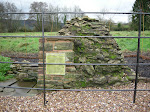
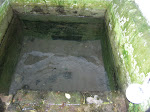
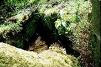
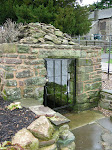
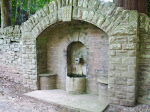
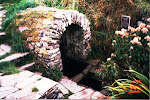
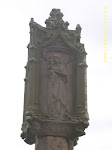
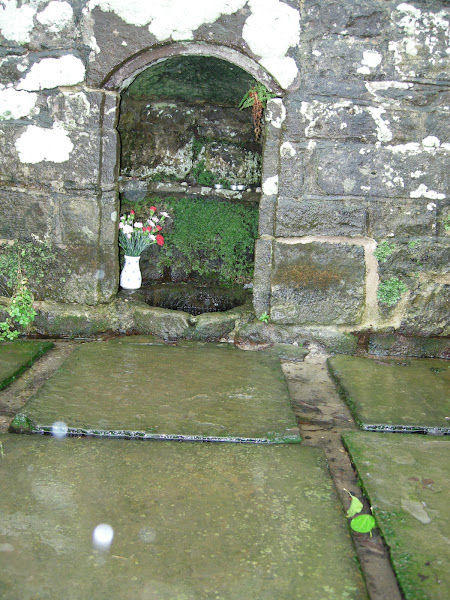
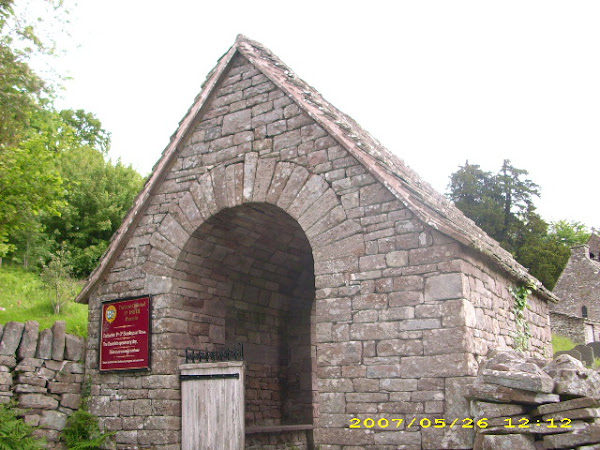
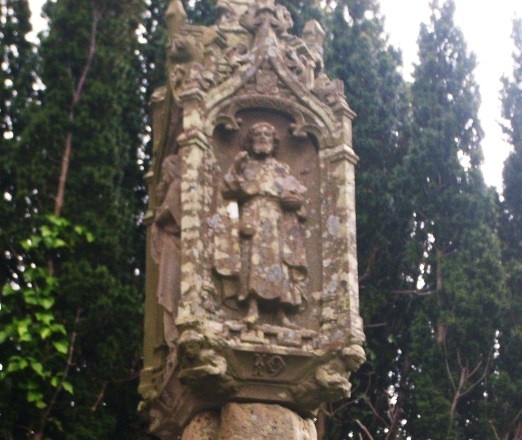
This year has seen several holy wells rediscovered and actively being refurbished. St Ffraed's at Skenfrith has yet to be dealt with. It has its own brown sign and pathway, but more of that in the new year. The Cope at Skenfrith, which was being used as a table cloth for a long time, has been sent to London for authenticating and and provenance  and the unfortunate Marian Priest John Aynsworth has been traced, who was martyred at the Priest's Well, now at the Sandhouse in Skenfrith. Piuctures are in the archive under Skenfrith. However BRYNGWYN -St Peter's Well has been found and will be restored as is St Teilos Well. Distinguished authoress on folk customs, Janet Bord asked me if I had ever found it and the Vicar  Father John Humphries found iut after talking to an 80 year old parishioner. Incidentally the head of the preaching cross at Llanarth, destroyed by Puritans was found in another well further down the road and was retrieved by Catholics in Llanarth, Paddy and Celia Nash and put on another plinth outside the Catholic Church. So interesting things going on there.

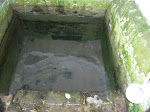
I also managed to find St Gwladys Well which was supposed to have been destroyed, It has not not been sensitively managed, in that the current owners did not know what it was. Finding St Gwladys Chapel (the mediaeval one on the site) was also very exciting. This was extremely strong as a string and was bath shaped, but now lined with black plastic pool liner and held down with two little pixies. Still I like to think St Gwladys would have approved!


Tuesday, November 27, 2012

'Popish' Rituals and Practices at Holy Wells'


Yesterday I talked about the 'popish practices' claimed by Protestants of the Faithful after the Reformation, watching Catholics  gathering together at Holy Sites in God's Creation-Holy wells, Holy Mountains and Shrines. You are led to believe their devotion is 'mumbo jumbo or magic spells', but they are actually straightforward the Catholic devotions we know today. We have not cut 'cut off ' the life of the spirit, God and Christ from our worship, because we still live in God and the spirit. This second post is concerning these 'popish' devotions we still have as sacred today.
Of course in the 'stations' described as sacred places where the penitents would pray, there would be other things-Easter Sepulchres in Churches or even crawling under the saints' altar


The Mass is for Christians the source and summit of their Christian Faith. It kept the people together, even when they outwardly performed what they needed to to escape the terrible fines and attended the local parish church , not taking the Communion offered there. The Mass, the same as today, consists of the Liturgy of the Word (Biblical readings and teaching from the OT, The Psalms, the Epistle and the Gospel for which the people all turn to the readers and the preacher signing the cross on the foerehead (God be in my Head and in my Understanding) on the lips (God be on my mouth and on my speaking) and on the heart (God be in my heart and in my thinking).This is in respect of the Words of the Gospel. The glory of the Word of the Lord is welcomed by the people who acclaim 'Alleliua! three times, at the end of the reading and the three fold Alleluia is the Homily, the teaching. The priest surrenders his voice to that of Christ to tie together the readings and psalms. The people rise and sing the beliefs of the Christians present in the Nicean Creed. Jesus shares fully in the Divinity of the Father-'God from God, Light from Light, True God from True God, begotten not made, consubstantial with the Father) Those who profess the one God, are standing firmly against idolatry ancient or modern) There follow the prayers to God...the Faithful call out 'Christe Audi nos'-Lord hear us and the response 'Lord graciously hear us'. The prayers are for the living and the dead saints of the Church and then the first part of the Mass-the Liturgy of the Word-where God speaks to us finishes.

The wine and bread and water which will become Christ's body are offered to the altar with a hymn. Bread and Wine are 'Wheat and Vine' and this implies Earth, Fire,Water Air Soil Wind and Sunshine-indeed the Cosmos itself. The small gifts are therefore representative of the Creation of the God of the Universe. There follows the Liturgy of the Eucharist.(Thanksgiving in English)In songs and responses we speak to him. There follows the Meal, which he himself prepares for us, the High Priest and the victim draws us to himself.In a world gone wrong, there is no intimacy without sacrifice, because sin has twisted us out of shape and so intimacy with God will mean a painful 'twisting back' -a sacrifice. In an animal sacrifice someone took one small aspect of God's creation and returned it to its source as an act of gratitude for the gift of his own existence. God has no need of these sacrifices - He does not need anything at all, but we need sacrifices (He knows our need)in order to reorder things with us and restore union with God , What is given back to God and sacrificed to Him breaks against the rock of Divine Self Sufficiency and returns for the benefit of the one who has made the Offering. Sacrifice produces Communion.

This is the distinctive meaning under the Liturgy of the Eucharist. All the angels and saints are called to be present.The Priest then begins the process of confecting the Communion as the Faithful sing the beatiful words of Isaiah 6: 'Holy Holy Holy Lord God of Sabaoth. Heaven and Earth are full of your glory! Hosanna in the Highest! and our Christian addition 'Blessed is He , who comes in the Name of the Lord'. Hosanna in the Highest. The people join themselves with the Angels and Saints .There follows the Eucharistic Prayer and the priest speaks the words of Jesus over the gifts and they become-as the Faithful stand there asks God to send down the Holy Spirit and transform the Bread and the Wine. The very words of Jesus are spoken: 'This is my Body', This is the Chalice of the new and Everlasting Covenant-the bread and wine are transformed into the body and blood of the Lord. -the whole Church organism around the world, sing AMEN with the angels and saints in heaven, and Christ becomes present in the Eucharist and every Communicant is fed by Him, who will be with us till the end of time. The Body of Christ is present actually on the altar. (Unless you eat (troge-gnawing in Greek) my Body and drink my blood you will have no life in you-St John Ch 6 v 53-58)
The vessels used in the feast are then cleaned while the Faithful enjoy their encounter with the Lord and finally the priest takes his leave from his people 'The Mass is Ended' ,'Go in Peace!' and the priest and deacons, altar servers, and others process out.People remain to pray, 'talk' to the saints or ask Our Lady for her prayers to her Son for something, and there is usually a gathering for refreshments and chat. What appears to be Bread and Wine have changed in its reality.God's work effects what it says: whether 'Let there be Light' or 'This is my Body'. What Jesus says -is.

Benediction usually follows thr Rosary, and is a thanksgiving for the Eucharist, which is placed in a beautifully decorated monstrance and with the consecrated Host (Sacrifice) inside, the people are blessed . The Tantum Ergo and O Salutaris Hostia , two beautiful ancient hymns are sung.

The Rosary (sometimes called Mary's Psalter in Wales) was a collection of Meditations on the life of Christ-Joyful ones Sorrowful Ones, Glorious Ones) as seen through the eyes of His earthly mother-little Mary of Nazareth.Like us, a small specimen of God's Creatures, raised by Him because of her obedience and freely given co-operation-to great things. Originally the Rosary were the 150 psalms, which could be said in turn by monks in a monastery. Ordinary non reading people had a rosary and in the time it took to say 10 Hail Mary prayers-(the address of the Angel Gabriel to Mary) the petitioner would reflect on and recall the visit of the Angel and her words to Mary-the use of the word 'Overshadowed' -his Divinity and so on. They would reflect this world had been used with reference to the Spirit of God entering the Tabernacle of David on Mt Zion in Jesusalem, where the Ark of the Covenant had been placed. All this would be contemplated. There would follow contemplations on the Visit to Elizabeth and the Magnificat, the Nativity itself and visit of the Shepherds and Wise Men, the Presentation of Jesus in the Temple to Simeon and the Finding ot the Child Jesus in the Temple. Whatever else, these were an illiterate person's prayer book and Bible and not a sheaf of 'magical mumbled prayers'.

'Stations' The devotion of the Stations of the Cross , popular across Christendom during lent had its origins in the 'stations' around the churches. The stations of the Cross follows the final walk of Jesus to the Cross in nthe local parish church rather than by actual pilgrimage to Jerusalem. Pilgrims would be there in spirit if not physically. Pilgrims in Catholic times, possibly en route to some famous pilgrimage site would often take in the Holy wells on the route and pray for strength. The Holy Well was often the last 'Station'. Other stations could be some site of special significance in the Llan or church, the memorial of the buried saint or statue, another smaller Church or chapel, a Celtic style Cross, a nun's house or Convent.Sometimes Station 1 would be the altar of the Church, Station 2 perhaps a small cairn of stones, and more stones would be deposited on it as a sumbol of the sorrow for sin. In Ireland there were often the 'grave beds' (there was one at Bassaleg Priory in the Middle Ages, dedicated to St Gwladys of Newport, wife of St Gwynlliw who was buried there'.Each community would work out its hallowed stations where prayers would be said and generally, the Our Father was said reverentially five times, the Hail Mary prayer also five times and the Nicean or Apostolic Creed (mentioned above) (This is about half a decade of the rosary for each station-although the Crees was only said once, usually before moving off) The Faithful would trace out the circle around these stations, and finally the well would be reached and would be also walked around ,and water drunk, cures implored, penance completed etc.They would kneel to pray after walking once around the 'station', whatever it was.

Pilgrimages
Such a pilgrimage also took place at Good Friday in some places and certainly on the Patronal Festival or 'Pattern' of the saints. There was often feasting and -in some lamentable occasions because of over indulgence of alcohol-fights.Some people felt every 'Pattern' had to have a fight and indeed at Welsh Weddings, this often appeared to be the case! This was not ideal. Unfortunately there are problems with popular piety and the twentieth century views of these things:
a)Abuse of the Holy Wells by superstitions and by pagans, witches and other such beliefs, which came out of the closet, and in large part re-invented rites with no ancient significance.Many clergy, Carroll believe actively discouraged the worship of the Trinity at Holy Wells during the late 19th and 20th centuries-as witness the number of holy wells fallen into disuse.They said less Masses there and also led less pilgrimages around stations.
b) More faith in scientific remedies than in the water cures which are reserved for the illnesses science has problems with.
c)Loss of faith because of bad catechesis-family breakdowns and loss of identity of some Catholic parishes displaced by other incoming faiths.
d) No teaching of local history in schools or even of the lives of the very saints who have given their names to the dedication of their church being given. Protestant insistance and criticism of statues and Communion of Saints making this unfashionable
e) Children addicted to the virtual computers, iphones, iPads etc. They have a feeling of being invincible with all these tinsels of the world. Children isolated ,in some cases, having no 'real' friends just virtual ones.When the real world crashes in, there is no fall back position, especially if the family is not strong.

Whilst The Mass itself connects us with the Triune God, I believe that local worship around the church (in an age rapidly becoming less analytical, and with less fluent readers for a long time) could benefit the young by reenforcing what the Mass is, as well as informing the Faithful about the life lived in God of their forgotten saint. It could breathe new life into penance and the patronal festival and make all of us more grateful for all the gifts and blessings of our creation in life giving springs and the 'real things of the earth in God's Creation''in which we are grown, whilst looking heavenward for our future. I would like to see parishes taking Children-especially out of urban areas for enjoyable days of contemplation and fun and doing some of these rounds and discussions of some of these things. They are the  Real Gifts and Blessings of God's Creation not fake ones .

Monday, November 26, 2012

Popular Piety!. Can our ancient holy places bring us even closer to God?

The video explores the finding of Ffynnon Bedr recently (St Peter's Well) and ancient Healing Well at Bryngwyn near Abergavenny, after many many years. The farmer and local churchwarden of the local Anglican Church are with me. We started to clear what looked like a muddy swamp and suddenly with a dressed stone-the water came through in a strong stream, every bot as strong as St Winifrides. The well will be restored in the spring and the community are very excited! The local Church is still dedicated to St Peter since pre Anglican times.


Michael P Carroll , in his book 'Irish Pilgrimage' Holy Wells and Popular Catholic Devotion, an excellently researched and thought provoking book-leaving aside perhaps the last chapter (Freudian theories) maintains that the practice of visiting holy wells and mountains was a Catholic devotion, based around the cult of a saint-usually and in Wales we had plenty. He said observances at Holy Wells and groves were a particularly Catholic idea and had various reasons and evolved throughout the ages of the church from the time of the earliest saints.He is deeply sceptical about these devotions having anything to do with Celtic observances, mainly because the evidence for that is thin (and you will have to read the bookto see how thin it is) However we do know that many ancient sites were Christianised at one point or another, but as Carroll points out, that other places became holy wells long after this time and can become so at any time in God's time. St Augustine, likewise was told to tear down idols and statues which might have appeared at these places, and many of the Yew trees associated with these sites still exist today.

The main question is-how were these holy wells used? Were they a kind of Welsh voodoo, a hybrid of Catholicism and a secret Celtic past? There are traditions that a 'sacred bath' was part of the inauguration ceremony of a Druid into the next stage of Enlightenment , but this 'bath' took place by royal persons and those joining the Druid movement at a secret site in a cave in Snowdonia, and had little to do with local wells. Of course the first function of a well is to provide water, neccessary for everyone, and in fact, part of the early fascination was of water bubbling up from the ground, especially with the purity and clarity of so many Welsh springs. Michael Carroll is talking of Irish Wells and pilgrimages to them, but the Welsh interest in Wells is as early,although four centuries of Roman rule had vastly changed the culture of Romano Britain. This was a country that spoke Latin as well as Welsh as the norm (as we speak English/Welsh today)The enterprising businessman had to speak Latin to advance his prospect and it was the language of the whole Empire. Caerleon was not a remote outpost of the Roman Empire. The grandeur of the Roman buildings at Caerleon were remarked on in 1188 AD when Gerald the Welshman accompanied Archbishop Baldwin of Canterbury from Llanthony, Patrishow, Monmouth,Abergavenny, Usk, and Caerleon on the way to Newport and Cardiff to collect people to save the Holy Places in Jerusalem from those who had conquered it and closed it off for Christian pilgrims.

'Llechs, and crosses'

Since Gerald was a Welsh speaker, he was able to help the Archbishop by speaking Welsh where needed and actually also commented on some of the low points of the faith of the Welsh. From his comments it can be seen that this Catholic faith, the older version of the Celtic saints, before the new mission sent by Pope Gregory via Augustine, was deeply embedded in the people. It was embedded in this earlier Catholic culture, which Carroll theorises about in Ireland. Many of the 'llechs' the 'special stones' often elaborately carved had been carved in Christian terms, and indeed many of the stones to be observed around Wales' whilst showing Ogham writings, also have Latin inscriptions, and some only Latin inscriptions, and many of Christian Faithful who had passed on. The incidence of large scale Crosses, elaborately carved to be seen throughout Ireland, Wales, Cornwall and Britanny as well as Scotland and other places witness the early faith of these brothers and sisters. Michael Carroll mentions the creativity of this ancient form of Catholicism. The Cross of Christ, carved with many symbols was joined together with the symbol of the sun, not now the sun as the dawning of the new day, but the 'Son of Righteousness'. Jesus Christ, who rose from the dead as the sun rises everyday. It did not make this pagan, it made it an interpretation.

The Skirryd
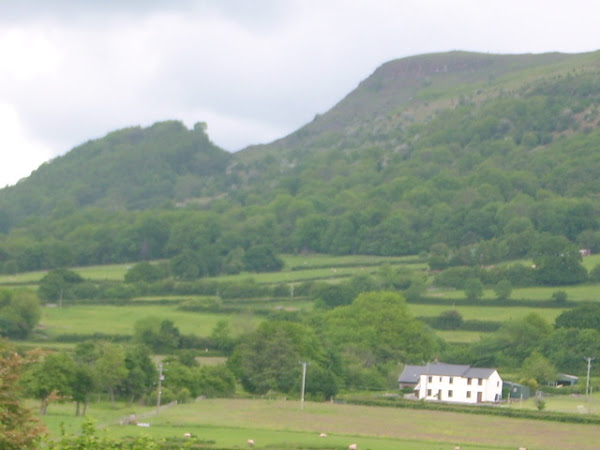
This mountain, one of the seven hills of Abergavenny, is climbed every year on the feast of St Michael and All Angels (Michaelmas) and on Good Friday, when the Cross is taken to the top. This devotion went on through two hundred years of terrible persecution of Catholics and Catholic priests, and the mountain is split in two -in legend at the very moment of the Crucifixion by the mighty sword of the Archangel Michael. The Priest climbs as well and sometimes Mass is held. The Welsh Shrine of Our Lady of Penrhys, is also on a high mountain and visited by thousands of pilgrims each year.

And what makes them all come?

Holy Wells

1) The Catechism of the Catholic Church contains a great deal about Water.

CCC 1218:Since the beginning of the world, water, so humble and wonderful a creature, has been the source of life and fruitfulness. Sacred Scripture sees it as 'overshadowed' by the spirit of God (Genesis 1:2) 'At the very dawn of Creation, your spirit breathed on the waters, making them a wellspring of all holiness.

2) SS David, Teilo, Cadoc and Illtyd and their priests all baptised their initiates into the Christian mysteries by baptising or Christening them in holy wells and more correctly 'Springs' fountains, or 'fontes'. Of course water later became brought into the church building into a specially carved 'font'. The reasons for this were obvious for wet and cold weather, and sanctification in the Church space.

3)Perhaps another clue to the veneration of a spring comes from the Catechism itself:

CCC 1220 If water springing up from the earth symbolizes life, the water of the sea is a symbol of death and so can represent the mystery of the cross. By this symbolism Baptism signifies communion with Christ's death.
 
Michael Carroll mentions how devotions at holy wells seem to have increased considerably after the Reformation. We know that Catholics continued to meet at these places, because Protestants have commented on their 'popish practices' and we can also get a real insight into devotion that went on there. Some such practices have continued and revived, for example at Walsingham. Being 'washed clean' in a holy site is part of the practical and tactile part of Catholicism, which I call 'Feeling' the gospel, being 'at one' with the faith, not in a purely cerebral, but in a physical way.
 
Being Washed clean of Sin (the Sacrament of Healing and penance) is the means of trying to be holy, trying to achieve holiness and this sacrament, perhaps is the closest to the early usage of the wells apart from Baptism itself. Holy wells were local, often enclosed in the Llans (religious enclosures) and easy to get to now. Of course the demography is different now, so the wells seems to be in inaccessible areas. The parish priest could ask a penance from someone involving a pilgrimage to a saint's well, Now there is a 'Double' site of holiness, The well used by the deisgnated holy saint, plu the natural symbolism of the water. Very often there would be 'rounding rituals'. People would walk around the well. The monastic 'llan' itself was round and perhaps the old ritual of 'beating the bounds of a parish' may have some connection here. But by the sixteenth century people commented and wrote down what people were doing in Ireland. Such practices had to be secret at that time.
 
'Rounding Rituals' were well known around the world but in 1644, a French traveller commented on a visit : There are many ruins of old churches...towards which the women have great reverence and come there in solomn procession.(were these the churches destroyed by Cromwell?)The Oldest march first and the others follow, then take three turns round the ruins , make a reverance to the remains , kneel and recommence theceremony many times, I notice them at this devotion for three or four hours' (carroll quotes Boulez le Gouz 1837 (1657) At St Patrick's Purgatory, however, the rituals have been documented since the 12th century. In Ireland the Holy Well formed an important part of the Patronal Festival, and an important part of that, was not just the feasting and rejoicing but also the penitential rites.Physical pain of some sort enhanced these penitential rituals-like walking barefoot up a rocky mountain (a parallel with the walk from the slipper chapel to Walsingham barefoot along a tarmack road perhaps...)In many Catholic cultures, there is also walking on the knees and injuries instensified the pain of the sin and penance and more perfectly joined the penitent to the sufferings of Christ- 'feeling' his pain and being sorry for it at the same time.
 
2) Healing is another and perhaps better known use of the Holy Well at a  time when there were less cures and certainly no cures at all in early times. Through the spa movement in the 18th century, we know now that many such wells actually contain minerals which are very good for you, often in high doses and bathing in them was probably a secular hangover from what went on in Holy Wells in the Catholic Community. Healing could mean salvation from sin or dis-ease with which a person was afflicted.  There were reports from Llangattock in Powys, that at St Mary's Well, infants with the croup orother ailments were bathed.-a spring now diverted because of a Golf Course.(!)

So how did the pilgrims use the Water? Healing of Body or soul or both!
 Basically by drinking it, or if it was large enough , bathing in it.All sorts of things were found in wellsas prayers. Candles were expensive, but braided bits from the fringe of a shawl, crockery and sometimes people brought things to the well as an oath-or the result of a vow, I will make a pilgrimage to St X's Holy Well in return for a cure or in thanksgiving for a cure.They would leave objects there which was meant to visualise the concept they wanted to separate themselves from the ailment or to bring closer what they wanted to achieve. Hair loss, would make a petitioner leave a lock of hair. In a similar way, they would want to alienate themselves from their fall from grace.Michael Carroll actually gives the prayer said at these sites: 'p 34 'Invoking this Lord, my ailments are deposited in this place'. A rag from the petitioner's clothes or shawl could be torn off, dipped in the Holy Well and then rubbed on the affected body part and hung over the well. As this rag disintigrated, it was believed that the Saint would reverse the progress of the ailment.These were also called 'clouties'. Blessed Water was (as is now) collected from the spring and taken home to be used as required. Perhaps the reason for the crockery found in these sprinks was because the drank the water out of them. Deep down then, spiritual and corporeal ailments were deposited on those rags.Devotees separated themselves also by drinking and bathing in the water.

'Popish Rituals' - a Catholic-hating term.
These are recorded in Carroll's book by many people hostile to Catholicism in the 17th century. With so many Catholic Churches turned over to the new Anglican religion, and others left in ruins with statues etc smashed and Catholic priests threatened with instant execution, it is small wonder that many of the faithful, began to rediscover the ancient outdoor sacred places, which were often very secret. In fact one reason the faith carried on in Skenfrith because the people retired and went secretly to Coed Anghred for Mass, a legendary Druid site. In fact the sacred rituals performed at Holy Wells and places in early times were the Mass and/or Rosary and Benediction. The clergy supported this worship and at very bad penal times when the eyes of the authorities were there all the time, a visiting priest was a great joy and what kept secrets in the Abergavenny area was the fact the priests spoke Welsh and instructions for the gathering be kept in Welsh. The local nobility and judiciary (bar two families-Scudamore and Arnold) stayed loyal to the faith and protected local Faithful.   The English vicars of the early years often accepted their livings but lived in England, thus the Faith never died out in some areas.

For Details of such rituals-see tomorrow's Mary in Monmouth.
 

Saturday, November 3, 2012

THE AUSTIN FRIARS IN NEWPORT- Part I

 The Friars were established by the Staffords early in the 14th century. I am wiring this as a 'follow up to my last post on Mediaeval Newport and thank James Matthews from Newport Public Library his limited edition book of 1910 'Historic Newport' with a chapter on The Friars.We probably never will know exactly which year, but 1347 would be a good date and would have been completed by December of that year, because St Augustine
Because their patron St Augustine of Hippo was consecrated by Bishop Aurelius of Carthage as co-ajutor to Bishop Valerius of Hippo in that month (Christmas 395AD) They dedicated their church to St Nicholas whose charism was his charity, being also one of the saints of the month of December, and honoured by seamen as their patron saint. So St Nicholas Churches are often found in seaports, as here, near the harbour. 372 churches have been named in his honour in Britain. The ‘Austin Friars Preachers’dedicated their first chapel and monastery to St Nicholas and it became the first sailors church in the port.

Old possible Carmelite Priory

The Old Priory in Belle View Lane (writing 1910) must not be confused with the chapels of St Nicholas and the Chapel of St Thomas the reason is they do not conform to the description being of by the ‘key (quay) beneath the bridge’.

When the Carmelite Friars occupied this Friary, a thick avenue of trees extended from the garden grounds to the present ‘Mountjoy Inn’(1910)and from there it ran down in a crescent form down the late Poplar Row to the precincts of the Friary near the River, to which those ancient religious wended their way , at the hour of prayer to the lower chapel of the Austen Friars.The planting of the sacred grove was the work of the Austen Friars, long before the agreement in 1377.

St Nicholas

The little community of Augustinians, after working and labouring among the indigent poor of Newport for upwards of thirty two years, found their work flagging through lack of support, and so the order became less and less efficient, for this reason alone.In addition, they were working in the aftermath of the most terrible placue ever to hit Britain, and the town needed a new lease of life.

Earl of Stafford gives Friars burgages and places it under the governance of St Peter’s Gloucester

The Staffords were great patrons of the Austen Friars, and it was about this time 1377, when their position was precarious, that Hugh the son of Ralph who had succeeded his father in 1372 as second Earl of Stafford and Lord of Newport and Wentllwch/Gwynllwch came to their assistance and gave them 32 burgages of meadow land and the site to build a new church , the site of their former building. Being aware the Brothers Hermits never accepted money, houses nor lands , owing to their charism, and at the same time understanding their function serving the poor had to be put on a sound financial footing, he gave the deeds over to the Benedictines of St Peter’s Abbey, Gloucester, in trust for them in the form of an agreement.The burgages were in the Parish of St Woolos and hence in the parish of Gwynlliw’s Church and the Abbot of St Peters was in charge of that Church.The Benedictines would be under no misapprehensions as to what the loss of the tithes from the St Woolos burgages would mean to the Church of which they were custodians.

As judicious managers of property , the monks of the Benedictine house had no equals . They were businesslike ,exact and prompt in their dealings and they required from their tenants and servants a just and faithful performance of their services and duties and at the same time were not harsh and ungrateful masters. This document was found by Messrs Wakeman and Morgan, and we mut be grateful to them for finding out this very early history,as it proves beyond doubt that the Austin Friars were established in Newport and existed as a free religious  body a considerable period after the treaty, which was drawn up at the earnest request , of Lord Hugh , Earl of Stafford .

Know all men, that it is settled and accordedand decreed among the reverend and religious men, Thomas Horton, by the Grace of God, Abbot of St Peter’s Abbey, Gloucester, and the Convent of the same place, appropriate Records of the Parish Church, Newport, in the diocese of Llandaff in Wales, and Brother Henry Tesdale Prior Provincial in England, of the Order of the Hermits of St Augustine , and Brother Thomas Locke the Prior, and bretherein of the same order at Newport’......

An annual payment of 13s and 4p was to be paid by the Brothers Hermits in quarterly instalments of 3s 4d to the Parish Church in compensation of the tithes from the lost burgages and oblations. Also the Prior and Brethren had to renounce all prescriptions, customs,papal rescripts of their order, devices, frauds, nullities, indulgences, appeals and all other abatements in law obtainable or to be obtained by which the agreement may be evaded. Prior Thomas was sworn to keep all the conditions of the agreement and undertook that his successor should take a like oath to the vicar for the time being. This was ratified by Bishop Roger Craddock of Llandaff  July 2 1377.
St Nicholas Friary
The new Friary was constructed on the site of the old delapidated house of the friars and Benedictines  were sent from Gloucester to facilitate matters but before eight years had passed (as seen in the Charter of 1385 the Brother Hermits were in trouble again, though their habit of giving everything away and possibly because of their improvidence and their lax discipline, in contract with the Benedictines, who had a stable rule and discipline.The Benedictines had to sort them out again and tried to institute a more rigid and economical management plan for them.
Laxity in the Rule
It is a recorded fact, that laxity among the religious orders in the latter part of the fourteenth century and the Benedictines had to sort their hermits out again. That there was a fall off in the austerity of the rule, among the Friars everywhere. Possibly people were becoming a little more affluent, and the orders got used to their work and were given more gifts.Decay was in many houses because of laxity. It is also possible that an eremitical lifestyle was simply not compatable with urban living as Newport got larger, and no doubt our own brothers suffered from this. The problem was so great, that there had to be change and severe pressure was brought to bear on the bretheren sometime between the years 1377 and 1385 , in order to save them from extinction.


Monday, October 22, 2012

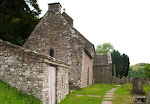
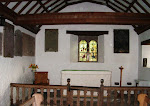
Unique Pre Reformation Catholic Chapel Longworth,in Herefordshire


This chapel, dedicated to St James, but commonly known as Longworth Chapel, was built in the late 1300’s and was used only for Catholic worship over 600 years. This also may mean the family in the Old Longworth Manor House (at the meeting of the rivers Frome and Lugg-not far away,  continued to practise their religion throughout penal times. So this ,like Holywell in North Wales is one of the few chapels which never lost their Catholic identity, throughout the centuries.At some time in the 17th century, however, it was replaced by the present Longworth Hall and built on higher ground. During the time of the recusancy-possibly-it suffered much, as it was dangerous to allow the authorities to find a Catholic chapel, so it was as in so many other cases, it was disguised and used as a barn, the gentry no doubt outwardly conforming to the new faith, whilse secretly practising their own. However, the severity of the laws at last broke through and forced the family into conformity, since no Catholic could own property, and many recusants were impoverished and forced to flee the country. No doubt some family member was more pragmatic. Emancipation did not come until the mid nineteenth century.

In any case in 1832 with the Roman Catholic Relief Act , Catholics were at last allowed to openly practise their faith. The Oxford Movement gave great respectability to the faith and many finally could come out and join the church. One such was a Mr Robert Biddulph Philipps, who owned the estate. In 1851, when the Hierarchy was being  re-established, and religious orders were being invited in to help set it up. Robert began the refurbishment of the chapel on its original site (where it had remained). His aim was to provide a place of worship for his wife and family who had followed him into the church, and to provide a grave chapel for them. Mass was publically celebrated again 150 years ago on 11th September 1859.
No doubt local Catholics also used it, since very few Mass centres existed when every thing was set up again. Nicholas’ daughter had joined a religious order in France, the Sisters of Our Lady of Charity of Refuge at Caen. It seems he then suffered a cruel blow, when his daughter of 21 suddenly died. He now had no heir, and since he wanted to give his goods to the church, he decided to build and provide for a Convent nearby for the French Order of his daughter, but the nuns wanted higher ground (the chapel stood on the original flood plain).Robert had wanted the Chapel to be associated with the Convent and provided for it to be moved next to the Convent, and desired to be buried in it, but died before anything could be done. Indeed at the cost of £547 the Chapel was taken down and rebuilt next to the convent. The Chapel was perhaps fortunate that the Convent was designed and built 1862-4 by E W Pugin.In 1863, Elizabeth Biddulph (sister Mary of St Peter) arrived from France to take up residence.

The chapel is mediaeval in style, but blended with Pugin’s work, very sensitively. The earthly bodies of Robert Philipps, his wife and youngest daughter were removed from where they had originally been buried and brought to lie in the chapel, where they rest.
The Convent remained for 130 years and their mission was as a refuge for young girls, who were deprived, physically, socially and spiritually. Sadly in 1993 the sisters had to sell . They had wanted to found a care village, but all sorts of problems prevented this. Sunday Mass continued to be offered and the St Richard’s Hospice also continued. Both St Anne’s Convent Chapel and  St James had to be closed in 1995 and the convent sold for development into luxury flats. In 1997, the diocese wanted to sell the chapel for development for a nominal sum, but this was not acceptable to the local congregation and the Charity Commission and the Historic Chapels Trust became involved. It became a Grade II listed building and it was recognised as a building of importance both on historical and on Religious grounds.

Unfortunately, there was vandalism and arson in the chapel and a great deal of damage was done, and a great deal of money needs to be found to restore it.December 2002 for example it was set on fire and the fire brigade were called. Half the floor was burnt out . An inner wall was built, separating the St Ann’s  Convent from the Chapel, which has survived and is in urgent need of funds.

The Historic Chapels  Trust, and English Heritage Grant and Severn Waste Grant, it can now be opened now and again, although much more work needs to be done, dealing with the nsmoke damage, badly damaged altar and reredos, work on the stained glass windows. Hopefully the people who visit and those who come to the masses will be able to eventually enjoy the vision of Pugin and the beauty of the Mediaeval Chapel. It is closely connected with the Hospice-many come here to pray and grieve, and will provide a quiet and peaceful place for the residents living locally.

Any donation towards the cost of the restoration of the chapel will be gratefully received.

OS Grid Reference: SO5684540595

Location:Longworth Chapel: 41 Frome Park, Bartestree, County of Herefordshire HR1 4DX
Visit http://www.facebook.com/#!/groups/6377571597/ if you have a Facebook account for more Mary in Monmouth.


Tuesday, September 25, 2012

Kyneburgha,Daughter of Penda and Holy Abbess, or Gloucester Saint?


St Kyneburgha was a female 7th century Mercian saint, daughter of the pagan King of  Mercia called Penda. She married King Ealhfrith, co-regent of Northumbria (who went to the Synod of Whitby  in 664AD but then she left him to establish an abbey at Castor,near Peterborough, Northamptonshire, of which she became the first abbess. She was buried in her church, but her remains were taken, before 972 to Peterborough Abbey. She had been one of the signatories, together with her brother Wulfhere of the founding charter of Burh Abbey, dated 664AD, according to DugdalesMonasticon.(Burh Abbey was later dedicated to St. Peter, becoming "Peterborough"). She was venerated as a saint by the monks of Peterborough, but there was another saint who was of Kyneburgha, the wife of King Oswald. A hymn to praise the life of Christ as lived in St Kyneburgha was found and restored in recent times along with her Festival.
The Latin and English texts of the chants comes from the literature accompanying a Compact Disc recording entitled “Chant in honour of Anglo Saxon saints”. The singing was by a group called Magnificat, directed by Philip Cave and recorded in Durham Cathedral in 1995. (CD ref is CGCD4004). The CD was produced by a firm called Griffin of Church House, St Mary’s Gate, Lancaster LA1 1TD. The music was transcribed from an original manuscript by David Hiley, who also wrote the foreword above. The text was translated by Davis Norwood. Philip Cave is a member of The Tallis Scholars and a layclerk at New College Oxford
Laudet dominum cum Petro sancto
Burgensis ecclesia in claris
lampadibus Kyneburgha et
Kyneswitha ac Tibba


Let the Burgensian church praise the Lord,
together with St Peter, and, with their bright torches,
 let Kyneburgha and
Kyneswitha and Tibba do likewise.

                                                                                                                                                                     In translatorem sanctarum
reliquiarum exorta est regis et populi
tempestas naufragosa sed mox
imperante domino facta est
tranquillitas magna. Nobis quoque
bene prosperetur trinitas benedicta
per nos, o beate Kyneburgha et
Kyneswitha ac Tibba.
Against the remover of the sacred relics
here arose a fierce storm from king and
people but, ere long, at the bidding of the  Lord,
 peace was fully restored
 
Gloriosa dispensatione dei interfector
regis et martyris Oswaldi, Rex Penda,
protulit gemellas rosas Christo de sua
spina – Christianissimas filias Christo
suscipiente de pagano parente.
Gloria patri et filio et spiritui sancto.
May we also
find good fortune, o blessed Kyneburgha,
Kyneswitha and Tibba, our blessed trinity.
By the wondrous contrivance of God
the slayer of Oswald, king and martyr, King
Penda, fathered two roses for Christ from
his own thorny stock and Christ received
these devotedly Christian daughters from
their pagan father.
Glory be to the Father and to the Son and to the Holy Spirit. Amen
 The Feast Of St Kyneburgha with St Kyneswitha and St Tibba was of this type being transcribed from a medieval manuscript. St Kyneburgha and her sister St Kyneswitha were daughters of the fearsome king Penda of Mercia. They converted to Christianity, Kyneburgha founded the convent of Castor in Northamptonshire and was succeeded as abbess by her sister. With their kinswoman Tibba they were later buried at Peterborough.
 
A later abbess also became a popular saint under the name of St. Kyneburga of Gloucester. Her date is uncertain, but her chapel was in use from 1147 until the Reformation; her feast day was June 25th, and her death was celebrated on April 10th. Her name survives in Kimbrose Way near Southgate Street in Gloucester. During the Three Choirs Festival of 1992 a play was performed at St. Mary le Crypt Church there entitled “Kyneburgh, Virgin of Gloucester”, which combined her story with that of Kyneburga of Castor.
Or was it the Tragic Princess?

In May 2010, following the discovery by workmen of two ancient buried coffins containing skeletons near Kimbrose Way, Gloucester, the local press published another version of the life of St Kyneburg - or possibly the story of a different Kyneburg, known as the Virgin of Gloucester. This according to William Hart's Historia et cartularium Monasterii Sancti Petri Gloucestriae i, pp. lxvi–lxviii
derives from a C15th manuscript, itself itemised as No.387 of the Lansdown Papers held in the British Museum. It said that she was a virgin of Royal Saxon descent who fled an arranged marriage by becoming adopted by a Gloucester baker. The baker's wife became jealous and killed Kyneburg, then threw her down a well, on the site of which the chapel was later built.The bodies were discovered in the vicinity of the chapel site on 4th.May 2010.This version may well be apocryphal, and sounds like many a tale contained within a mediaeval Lives of the Saints; though it is not the one given for St Kyneburg, nor is in the Rev. Alban Butler's authoritative work Lives of the Fathers, Martyrs and other Principal Saints published in 1866. Butler in volume 2, under "6th. March" relates the history of Kyneburg as a daughter of King Penda, as above related.
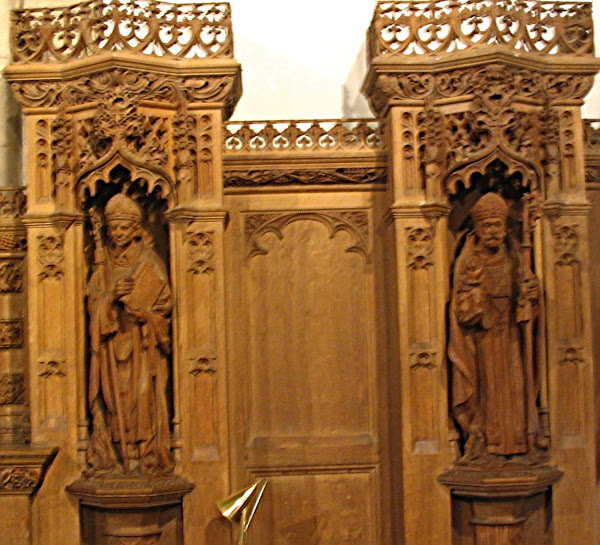
Chapel of St. Kyneburg at Gloucester
A chapel was established in early times at Gloucester dedicated to this saint, and was transferred with all its lands to Llanthony Secunda  Priory by Roger Earl of Hereford between 1143 and 1155. It was situated inside Gloucester's city wall at the south gate.The chapel was eventually demolished and the effigy taken to the Chapel of St Mary Magdalene in Gloucester, the site of the former leper colony at Wooton also known as the Hospital of Dudstone, which had been founded in the early 11s when it was rife. It was probably founded by Walter of Gloucester and in the early 1150's it had support from Roger, Earl of Hereford. His family was closely connected with Llanthony Secunda Priory and the canons there cared for the lepers at Wooton, However then the Priories were taken by the King, the Crown had to assume reponsibility for the hospital and the inmates, inmates being residents in the almshouses.1546 the revenue was £3.4s 8d and there is a record, that they had retained a reader and six poor men and women. By 1598 it was derelict. In 1614, however, the Governor was personally paying for 13 more incombents.
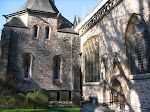
St. Mary Magdalene's (or Magdalen's) chapel is the chancel and Senctuary of the church which originally served the inmates of the former St Mary Magdalene's almshouses. It was here that the lepers chapel was situated, the saint being very beloved of the lepers. The original road ran to the north of the church but has been realigned on the south, cutting the church off from the original almshouses (which are now buried). It is built in the romanesque, or Norman, style of the 1100s. The rest of the church extended left from the facade on the picture, and had to be demolished in 1861. Outside the chapel there are carvings on the wall, considered to be linked with St Mary Magdalene, a very popular saint and patron of lepers, and there may have been pilgrimages here in the Middle Ages. The date of the chapel could be perhaps dated to the carving of the Aragon Pineapple on one of the columns.There are crosses and floral motifs. In our sceptical age there are those who do not believe the small effigy held in the chapel is that of St Kyneburgha and, even though it was in her chapel, tend to believe it was one of the young daughters of Humphrey de Bohun, a patron of Llanthony Secunda. A new oak door was fitted at the entrance of the chapel, now only a chancel.to replace that which had been vandalised.Repairs were carried out to the leaded windows at the same time.I was fortunate Gloucester History Week allowed me to get in to photograph the St Mary Magdalene Chapel and the effigy.

St Anselm wrote this beautiful prayer to St Mary Magdalene

St Mary Magdalene, you came with springing tears to the spring of mercy, Christ; from him your burning thirst was abundantly refreshed through him your sins were forgiven; by him your bitter sorrow was consoled.

My dearest lady, well you know by your own life how a sinful soul can be reconciled with its creator, what counsel a soul in misery needs, what medicine will restore the sick to health.It is enough for us to understand, dear friend of God, to whom were many sins forgiven, because she loved much. Most blessed lady, I who am the most evil and sinful of men do not recall your sins as a reproach, but call upon the boundless mercy by which they were blotted out.This is my reassurance, so that I do not despair; this is my longing, so that I shall not perish.

I say this of myself, miserably cast down into the depths of vice, bowed down with the weight of crimes, thrust down by my own hand into a dark prison of sins, wrapped round with the shadows of darkness.Therefore, since you are now with the chosen because you are beloved and are beloved because you are chosen of God, 1, in my misery, pray to you, in bliss; in my darkness, I ask for light; in my sins, redemption; impure, I ask for purity.

Recall in loving kindness what you used to be, how much you needed mercy, and seek for me that same forgiving love that you received when you were wanting it. Ask urgently that I may have the love that pierces the heart; tears that are humble; desire for the homeland of heaven; impatience with this earthly exile; searing repentance; and a dread of torments in eternity.Turn to my good that ready access that you once had and still have to the spring of mercy.

Draw me to him where I may wash away my sins; bring me to him who can slake my thirst; pour over me those waters that will make my dry places fresh. You will not find it hard to gain all you desire from so loving and so kind a Lord, who is alive and reigns and is your friend.  St Mary Magdalene, Pray for us.

St Anselm (Catholic) Archbishop of Canterbury, 1093-1109


Monday, September 10, 2012

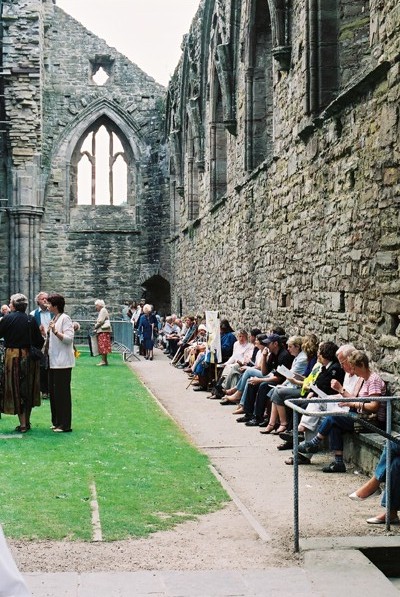
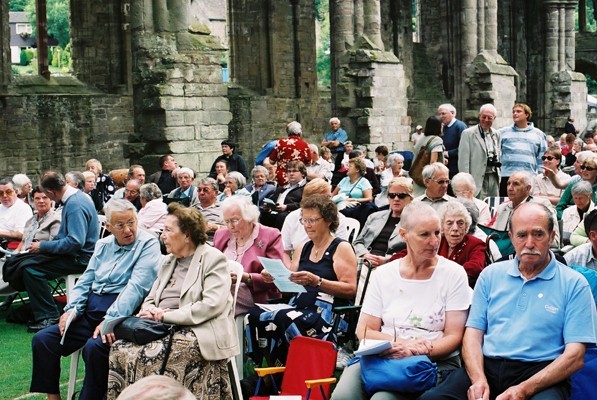
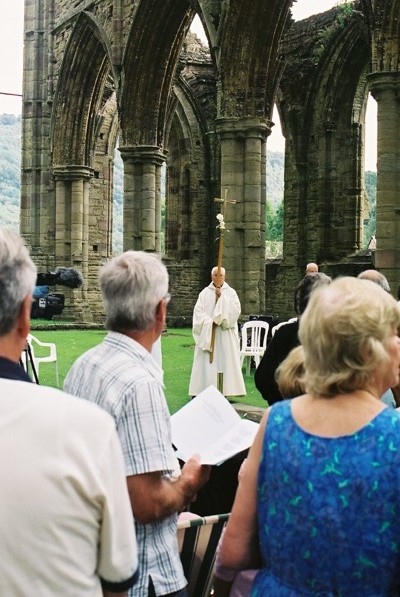
Tintern Abbey Vespers...a magical afternoon and a debut


                                                                                       September 8th is the day theat has been chosen by the Church to celebrate the birth of the Virgin Mary. It was Mary who co-operated with God, who had chosen her, a little Jewish girl of about 15 years perhaps to take the almighty task of providing the Saviour of the World. A  huge task for such a young woman. She acknowledges her stainless state by calling God her 'Saviour' and rejoices in  the faith and honour God has shown her faith and honour which have been shown to her, now, as she, living enjoys the Presence of God and her Son Jesus. Since all Christians, after their baptism, are united, as adoptive sons and daughters of God (cf The Kings and Queens of  Narnia are CS Lewis allegory in The Lion, the Witch and the Warderobe) Christ's mother is our Mother too, a mother we should call Blessed.....because the angel Gabriel said 'Blessed art Thou among Women' and Mary herself says 'Behold all generations shall call me blessed'.

So we have an enormous debt to little Mary for bringing us the Redeemer, the Saviour, He who conquered death for us and brought us Salvation. She gave Christ the flesh, which hung , to her enormous pain, on the Cross at Calvary, when the sword pierced her heart.

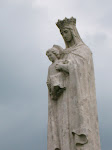
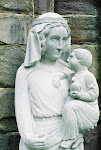
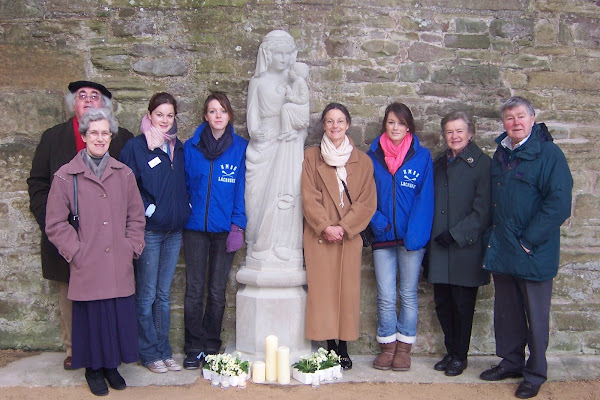
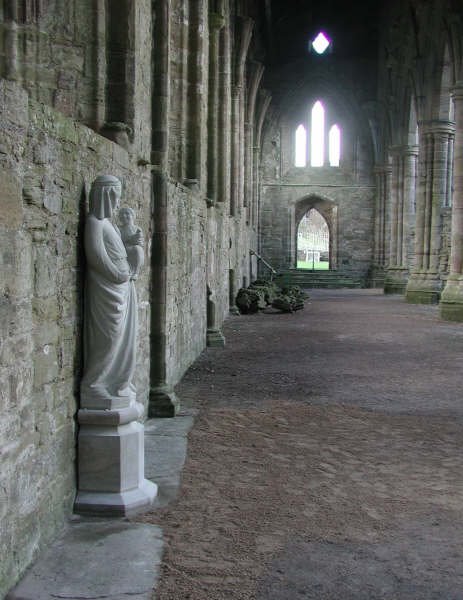
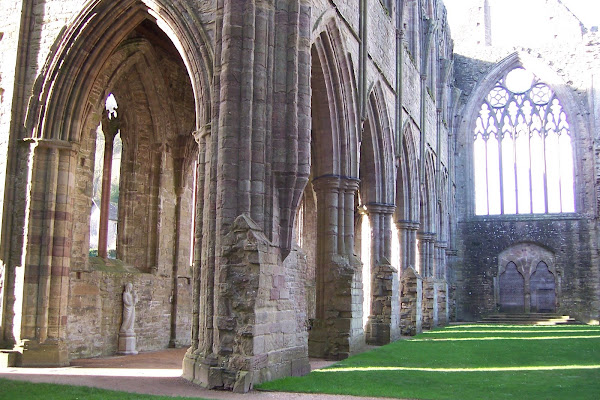
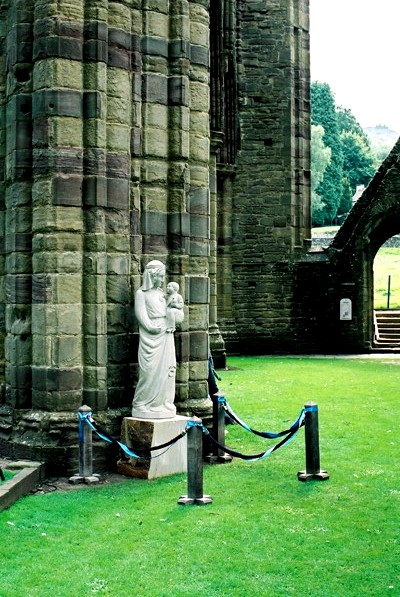
The Birthday of the Blessed Virgin Mary was celebrated with Mediaeval festivities as a holiday right through to 1535 when for some reason the Virgin was banned to being a 'receptacle'-a womb that God used to bring Our Lord into the world. Her honours and festivals ceased in Britain, even though both Luther and Calvin to their dying day,loved and honoured her. With the revival of honour being shown, underlined by John Henry Newman and Catholic Emancipation (the repeal of the harsh penal laws against Catholics) the honours were renewed and in recent years, the finding of the statue of Our Lady of Tintern, found in bits in the stone store and brilliant Sculptor Philip Chatfield's recreation from its pattern, found in Amiens Cathedral, there the original Sculptor
had fashioned it, it has been 'returned'.

 The stone was blessed, then the Sculptor and his tools in the traditional way by the Cistercian Abbot of Caldey, Daniel van Sandvoort  and Philip worked out of doors in the Abbey for the next year.It was consecrated by clergy (this is an ecumenical event) and Revd Archbishop Peter Smith on the 500 anniversary of the dissolution of the Abbey.
On Sunday 9th September 2007 the statue was blessed and dedicated in a moving ceremony conducted jointly by the Catholic Archbishop of Cardiff, Peter Smith, and by Bishop Dominic Walker of Monmouth, Church of Wales. A very large crowd gathered for the occasion – in the region of 800 people.
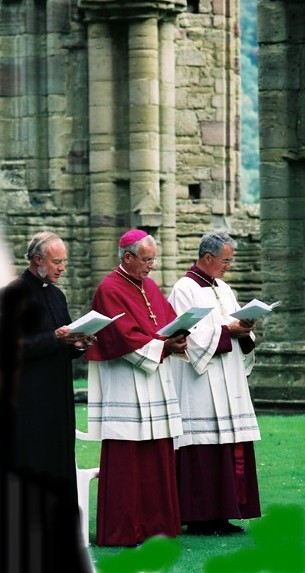
The dedication followed the now annual ecumenical service of Sung Vespers, which first took place again at Tintern in 2000, to mark the Millennium. The procession at that dedication included the Mediaeval re-enacters, who brought a banner, and flowers, which had been brought by many of the ecumenical assembly of Christians.Merchandise was produced to help pay for the enterprise. I also arranged for and brought two candle stands for use with the statue at Tintern for the ceremony, which appear to have been mislaid yesterday, which was regrettable.

Nevertheless the event was well attended. The Music , provided by the Choir of the ancient Priory in Monmouth were in stirling voice.Archbishop Stack, our new Archbishop seemed to not have been informed about the procession, but once the Vespers were underway, the whole was wonderful. The programme made the point about RR Terry's compilation of the 'Westminster Hymnal' first brought out 100 years ago..Terry's tune for AVE MARIS STELLA was sung  in  Edward Caswall's  English translation. The first hymn, 'Ye who own the faith of Jesus' was unknown to me, but sung to a well known tune 'Daily Daily sing to Mary'.The psalms had antiphons by Emma Joy and Susan Williams.Psalm 84 was preceded by 'On this day we honour the Virgin Mary; chosen by God, beyond all others blest' .Psalm  85 with Let us celebrate the birth of Mary, who brought forth for us the Saviour of the World!' Psalm 113 had  God has brought help to His people , O praise the Name of the Lord'  and  a canticle from Isaiah 61,10-11:62:1-2 was prefaced by 'You shall be a crown of Glory in the hand of the Lord'     The Scripture was from St Luke 1 v 39-56.

The new archbishop George Stack spoke strongly and firmly of the Tragedy of the building and what the stones would have said.He spoke well, and with a degree of emotion about the building, Tintern Abbey, mentioning how such buildings are magnets for tourists seeking something, and yet missing the inner unity possessed by the culture prior to the destruction of the  abbey.In quiet measured tones using the excellent sound system provided, he alluded to how modern technology,and music can bring some of it back, for example, during the Jubilee Celebrations, seeing Buckingham Palace swathed in light and sound as 'Madness' sang 'Our House' and the Crown or Light around Durham Cathedral celebrating the Lindesfarne Gospels. In the Tintern pilgrimages, he explained we have Footprints in the Sands of time, showing a continuation of worship throughout Christian time, and such buildings being an offering with which we worship God.

He went on to say 'If these stones could speak, what would they say?' Archbishop George remarked, the (original decapitated-) statue would speak of the turmoil of the time when political questions and allegiances were wrapped up in religious language. He said you only needed to watch the news to see no lessons had been learned in that direction.

He said Our Lady would speak of a stable, ordered Cistercian Community established around Wales,from Citeaux in 1098, a life centred in Prayer, orf WHOLE-ness, or HOL-iness, by extention going out to the good and well being of the surrounding parishes, contributing to the harmony of the life of the people, the building itself glorifying God in a beautiful God-given Creation in its surroundings. He quoted Eamon Duffy the historian, who in his excellent book 'The Voices of Morebath'  wrote of the social and political life of a small village in Devon called Morebath. He says the parish, the unity of the parish and by extension the Abbey was sophisticated and harmonious.

'There is a church sheep flock cared for in common but it is not a single flock but several,the proceeds of  which are dedicated to the different purposes of charities.'

The parish generally harmonious and sociable was gradually deconstructed throughout the Reformation and this social and religious life dismantled and its loss mourned. If the beautiful statue could speak, she would speak of the Rule of Benedict and the quiet rhythms of the days and years, the abbey its surroundings and parishes, a complete integrity of WHOLE-ness and HOL-iness. She would say you cannot separate the Grace of God from Nature , you can't see things in isolation, which is the tragedy of our present world, the lack of the inner UNITY at the Heart of Creation. Tintern Abbey was built, he said, as a reminder of that Unity of beautiful Creation and its heavenly Creator,the longing deep in the heart of every man and woman.

The Archbishop then turned to Beranrd of Clairvaux, the Cistercians'  greatest saint, who meditated on Mary's role , undoing the evil of Eve. He called her 'Rosa Mystica'; and this title has been given her in the Litany of Loreto. He said : 'Eve was a thorn, wounding , bringing death to all, in Mary we see a rose soothing people's hurts'.

Mary is indeed a rose
White for Maidenhood
Red for Love
White in Body
Red in Soul
White in seeking Virtue
Red in turning down Vice
White in cleansing our affection
Red in mortifying her flesh
White in her Love of God
Red in her comjpassion for her neighbour.  St Bernard

Finally he quoted Gerard Manley Hopkins the Jesuit poet, who saw the beauty of the Lord in' Dappled things.'
Is Mary that Rose then? Mary, the tree?
But the Blossom, the Blossom there, who can it be?
Who can her Rose be? It could be but One:
Christ Jesus, our Lord - her God and her Son.
In the Gardens of God, in the daylight divine
Shew me thy son, Mother, Mother of mine
A hushed moving silence followed the beautifully crafted and delivered homily.
There followed the 'Ave Maris Stella' in English of Edward Caswall, and the Magnificat,and prayers, the 'Our Father' in a modern English form did not seem  known by many, and the Glory be, had a different ending is now and ever shall be, World without end' does not , to me mean the same as is now and shall be forever....'as it leaves out the New World without End of the Bride and the Lamb, but no doubt, it has been modernised here.  The CENSING of the statue and beautiful floral display was evocative, the incense of the Orthodox monastery going up in clouds and swirling round the statue, giving honour to the Mater Dei , The Theotokos and the Panagia (All Holy).
The  Monmouth Priory Choir (whose Music Director is not named in the programme)samg a beautiful rendition of Orlando di Lasso's motet 'Sancta Maria, Ora pro nobis'. It is always difficult to mike so many singers, but the beauty of their singing greatly enhanced the procession to the statue.I especially liked this and the ensuing SALVE REGINA (Hail Holy Queen) sung with great gusto by the whole assembly of Christians  with numbers in the hundreds. There followed a prayer and blessing and final hymn 'Alleluia sing to Jesus' the old abbey ringing to the sounds of hundreds of voices upturned in praise.
Many people went up to venerate the statue and light some candles, sadly the candlestands were no-where to be found. I was just sad there was no rosary announced afterwards for those who wished it, and no informal Marian hymns. I saw few priests I knew at this year’s Vespers, but probably as they are all moving around this weekend to different parishes.Nevertheless on a sunny beautiful Autumn day, in a place of great beauty we once again gave thanks with equal beauty for Mary's gift to human kind in co-operation with God.


                                           Pilgrims at the end stay to honour Mary .