
Tuesday, September 25, 2012

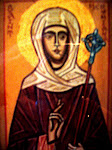
Kyneburgha,Daughter of Penda and Holy Abbess, or Gloucester Saint?


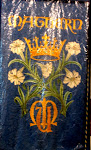
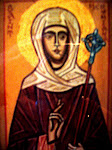
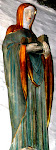
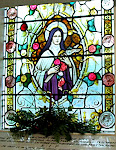
St Kyneburgha was a female 7th century Mercian saint, daughter of the pagan King of  Mercia called Penda. She married King Ealhfrith, co-regent of Northumbria (who went to the Synod of Whitby  in 664AD but then she left him to establish an abbey at Castor,near Peterborough, Northamptonshire, of which she became the first abbess. She was buried in her church, but her remains were taken, before 972 to Peterborough Abbey. She had been one of the signatories, together with her brother Wulfhere of the founding charter of Burh Abbey, dated 664AD, according to DugdalesMonasticon.(Burh Abbey was later dedicated to St. Peter, becoming "Peterborough"). She was venerated as a saint by the monks of Peterborough, but there was another saint who was of Kyneburgha, the wife of King Oswald. A hymn to praise the life of Christ as lived in St Kyneburgha was found and restored in recent times along with her Festival.
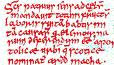
The Latin and English texts of the chants comes from the literature accompanying a Compact Disc recording entitled “Chant in honour of Anglo Saxon saints”. The singing was by a group called Magnificat, directed by Philip Cave and recorded in Durham Cathedral in 1995. (CD ref is CGCD4004). The CD was produced by a firm called Griffin of Church House, St Mary’s Gate, Lancaster LA1 1TD. The music was transcribed from an original manuscript by David Hiley, who also wrote the foreword above. The text was translated by Davis Norwood. Philip Cave is a member of The Tallis Scholars and a layclerk at New College Oxford
Laudet dominum cum Petro sancto
Burgensis ecclesia in claris
lampadibus Kyneburgha et
Kyneswitha ac Tibba


Let the Burgensian church praise the Lord,
together with St Peter, and, with their bright torches,
 let Kyneburgha and
Kyneswitha and Tibba do likewise.

                                                                                                                                                                     In translatorem sanctarum
reliquiarum exorta est regis et populi
tempestas naufragosa sed mox
imperante domino facta est
tranquillitas magna. Nobis quoque
bene prosperetur trinitas benedicta
per nos, o beate Kyneburgha et
Kyneswitha ac Tibba.
Against the remover of the sacred relics
here arose a fierce storm from king and
people but, ere long, at the bidding of the  Lord,
 peace was fully restored
 
Gloriosa dispensatione dei interfector
regis et martyris Oswaldi, Rex Penda,
protulit gemellas rosas Christo de sua
spina – Christianissimas filias Christo
suscipiente de pagano parente.
Gloria patri et filio et spiritui sancto.
May we also
find good fortune, o blessed Kyneburgha,
Kyneswitha and Tibba, our blessed trinity.
By the wondrous contrivance of God
the slayer of Oswald, king and martyr, King
Penda, fathered two roses for Christ from
his own thorny stock and Christ received
these devotedly Christian daughters from
their pagan father.
Glory be to the Father and to the Son and to the Holy Spirit. Amen
 The Feast Of St Kyneburgha with St Kyneswitha and St Tibba was of this type being transcribed from a medieval manuscript. St Kyneburgha and her sister St Kyneswitha were daughters of the fearsome king Penda of Mercia. They converted to Christianity, Kyneburgha founded the convent of Castor in Northamptonshire and was succeeded as abbess by her sister. With their kinswoman Tibba they were later buried at Peterborough.
 
A later abbess also became a popular saint under the name of St. Kyneburga of Gloucester. Her date is uncertain, but her chapel was in use from 1147 until the Reformation; her feast day was June 25th, and her death was celebrated on April 10th. Her name survives in Kimbrose Way near Southgate Street in Gloucester. During the Three Choirs Festival of 1992 a play was performed at St. Mary le Crypt Church there entitled “Kyneburgh, Virgin of Gloucester”, which combined her story with that of Kyneburga of Castor.
Or was it the Tragic Princess?

In May 2010, following the discovery by workmen of two ancient buried coffins containing skeletons near Kimbrose Way, Gloucester, the local press published another version of the life of St Kyneburg - or possibly the story of a different Kyneburg, known as the Virgin of Gloucester. This according to William Hart's Historia et cartularium Monasterii Sancti Petri Gloucestriae i, pp. lxvi–lxviii
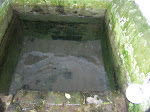
derives from a C15th manuscript, itself itemised as No.387 of the Lansdown Papers held in the British Museum. It said that she was a virgin of Royal Saxon descent who fled an arranged marriage by becoming adopted by a Gloucester baker. The baker's wife became jealous and killed Kyneburg, then threw her down a well, on the site of which the chapel was later built.The bodies were discovered in the vicinity of the chapel site on 4th.May 2010.This version may well be apocryphal, and sounds like many a tale contained within a mediaeval Lives of the Saints; though it is not the one given for St Kyneburg, nor is in the Rev. Alban Butler's authoritative work Lives of the Fathers, Martyrs and other Principal Saints published in 1866. Butler in volume 2, under "6th. March" relates the history of Kyneburg as a daughter of King Penda, as above related.
Chapel of St. Kyneburg at Gloucester
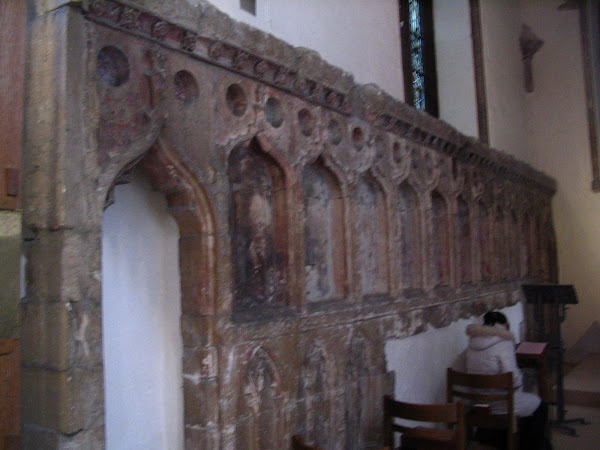
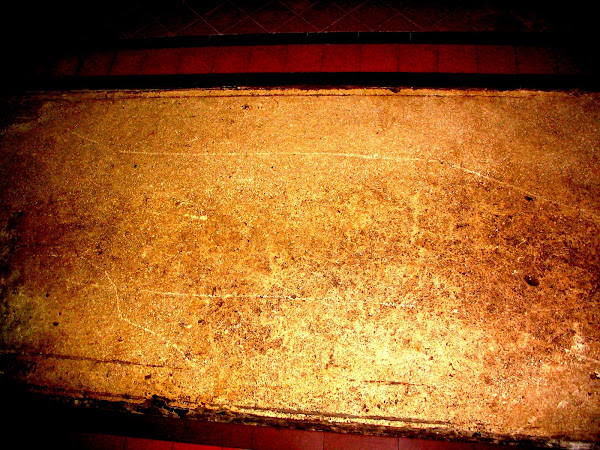
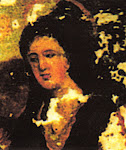
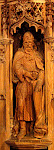
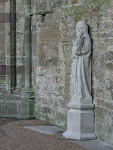
A chapel was established in early times at Gloucester dedicated to this saint, and was transferred with all its lands to Llanthony Secunda  Priory by Roger Earl of Hereford between 1143 and 1155. It was situated inside Gloucester's city wall at the south gate.The chapel was eventually demolished and the effigy taken to the Chapel of St Mary Magdalene in Gloucester, the site of the former leper colony at Wooton also known as the Hospital of Dudstone, which had been founded in the early 11s when it was rife. It was probably founded by Walter of Gloucester and in the early 1150's it had support from Roger, Earl of Hereford. His family was closely connected with Llanthony Secunda Priory and the canons there cared for the lepers at Wooton, However then the Priories were taken by the King, the Crown had to assume reponsibility for the hospital and the inmates, inmates being residents in the almshouses.1546 the revenue was £3.4s 8d and there is a record, that they had retained a reader and six poor men and women. By 1598 it was derelict. In 1614, however, the Governor was personally paying for 13 more incombents.
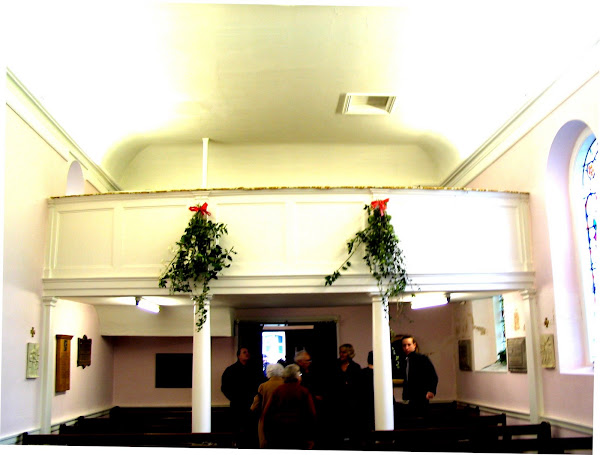
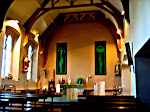
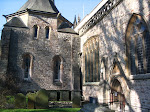
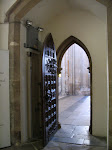
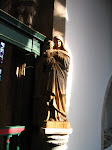
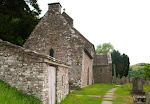
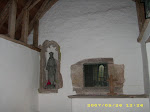
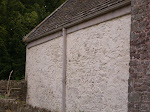
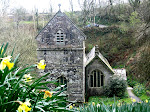
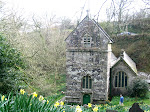
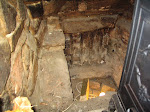
St. Mary Magdalene's (or Magdalen's) chapel is the chancel and Senctuary of the church which originally served the inmates of the former St Mary Magdalene's almshouses. It was here that the lepers chapel was situated, the saint being very beloved of the lepers. The original road ran to the north of the church but has been realigned on the south, cutting the church off from the original almshouses (which are now buried). It is built in the romanesque, or Norman, style of the 1100s. The rest of the church extended left from the facade on the picture, and had to be demolished in 1861. Outside the chapel there are carvings on the wall, considered to be linked with St Mary Magdalene, a very popular saint and patron of lepers, and there may have been pilgrimages here in the Middle Ages. The date of the chapel could be perhaps dated to the carving of the Aragon Pineapple on one of the columns.There are crosses and floral motifs. In our sceptical age there are those who do not believe the small effigy held in the chapel is that of St Kyneburgha and, even though it was in her chapel, tend to believe it was one of the young daughters of Humphrey de Bohun, a patron of Llanthony Secunda. A new oak door was fitted at the entrance of the chapel, now only a chancel.to replace that which had been vandalised.Repairs were carried out to the leaded windows at the same time.I was fortunate Gloucester History Week allowed me to get in to photograph the St Mary Magdalene Chapel and the effigy.

St Anselm wrote this beautiful prayer to St Mary Magdalene

St Mary Magdalene, you came with springing tears to the spring of mercy, Christ; from him your burning thirst was abundantly refreshed through him your sins were forgiven; by him your bitter sorrow was consoled.

My dearest lady, well you know by your own life how a sinful soul can be reconciled with its creator, what counsel a soul in misery needs, what medicine will restore the sick to health.It is enough for us to understand, dear friend of God, to whom were many sins forgiven, because she loved much. Most blessed lady, I who am the most evil and sinful of men do not recall your sins as a reproach, but call upon the boundless mercy by which they were blotted out.This is my reassurance, so that I do not despair; this is my longing, so that I shall not perish.

I say this of myself, miserably cast down into the depths of vice, bowed down with the weight of crimes, thrust down by my own hand into a dark prison of sins, wrapped round with the shadows of darkness.Therefore, since you are now with the chosen because you are beloved and are beloved because you are chosen of God, 1, in my misery, pray to you, in bliss; in my darkness, I ask for light; in my sins, redemption; impure, I ask for purity.

Recall in loving kindness what you used to be, how much you needed mercy, and seek for me that same forgiving love that you received when you were wanting it. Ask urgently that I may have the love that pierces the heart; tears that are humble; desire for the homeland of heaven; impatience with this earthly exile; searing repentance; and a dread of torments in eternity.Turn to my good that ready access that you once had and still have to the spring of mercy.

Draw me to him where I may wash away my sins; bring me to him who can slake my thirst; pour over me those waters that will make my dry places fresh. You will not find it hard to gain all you desire from so loving and so kind a Lord, who is alive and reigns and is your friend.  St Mary Magdalene, Pray for us.

St Anselm (Catholic) Archbishop of Canterbury, 1093-1109


Monday, September 10, 2012

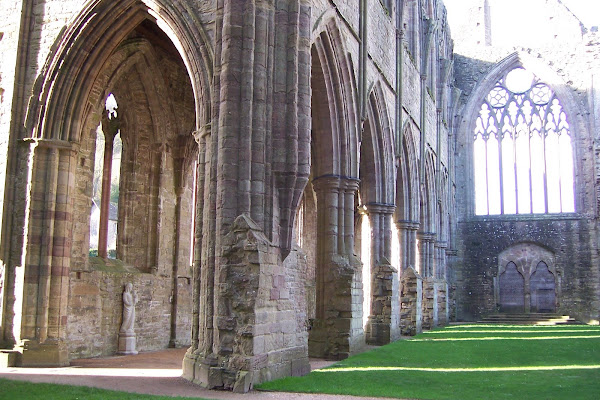
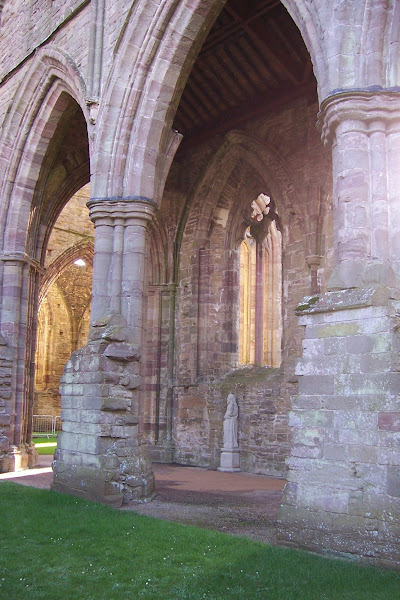
Tintern Abbey Vespers...a magical afternoon and a debut


                                                                                       September 8th is the day theat has been chosen by the Church to celebrate the birth of the Virgin Mary. It was Mary who co-operated with God, who had chosen her, a little Jewish girl of about 15 years perhaps to take the almighty task of providing the Saviour of the World. A  huge task for such a young woman. She acknowledges her stainless state by calling God her 'Saviour' and rejoices in  the faith and honour God has shown her faith and honour which have been shown to her, now, as she, living enjoys the Presence of God and her Son Jesus. Since all Christians, after their baptism, are united, as adoptive sons and daughters of God (cf The Kings and Queens of  Narnia are CS Lewis allegory in The Lion, the Witch and the Warderobe) Christ's mother is our Mother too, a mother we should call Blessed.....because the angel Gabriel said 'Blessed art Thou among Women' and Mary herself says 'Behold all generations shall call me blessed'.
So we have an enormous debt to little Mary for bringing us the Redeemer, the Saviour, He who conquered death for us and brought us Salvation. She gave Christ the flesh, which hung , to her enormous pain, on the Cross at Calvary, when the sword pierced her heart.

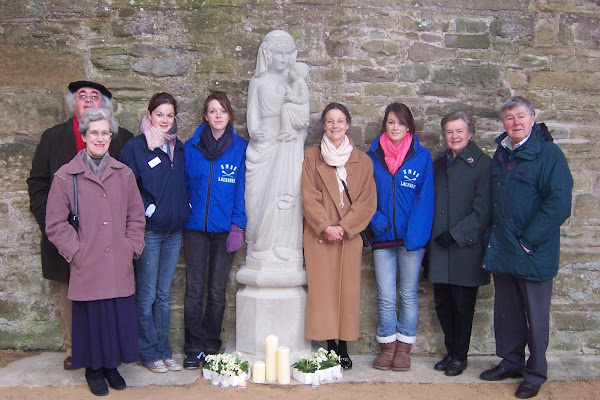
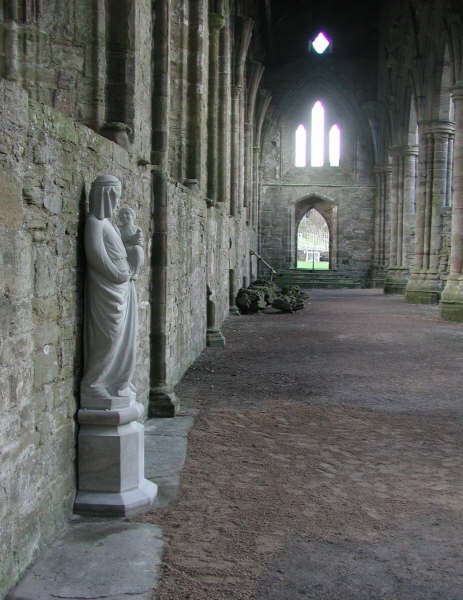
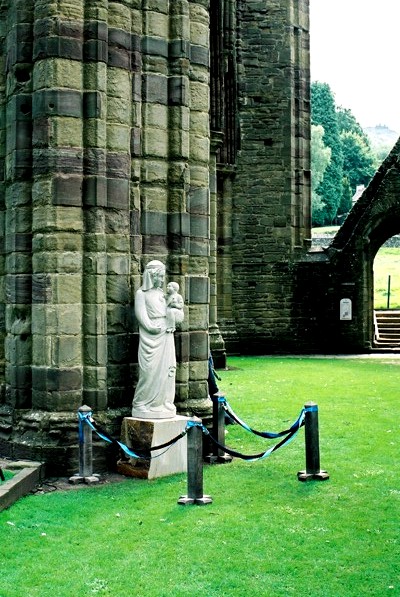
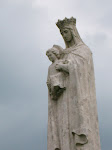
The Birthday of the Blessed Virgin Mary was celebrated with Mediaeval festivities as a holiday right through to 1535 when for some reason the Virgin was banned to being a 'receptacle'-a womb that God used to bring Our Lord into the world. Her honours and festivals ceased in Britain, even though both Luther and Calvin to their dying day,loved and honoured her. With the revival of honour being shown, underlined by John Henry Newman and Catholic Emancipation (the repeal of the harsh penal laws against Catholics) the honours were renewed and in recent years, the finding of the statue of Our Lady of Tintern, found in bits in the stone store and brilliant Sculptor Philip Chatfield's recreation from its pattern, found in Amiens Cathedral, there the original Sculptor
had fashioned it, it has been 'returned'.

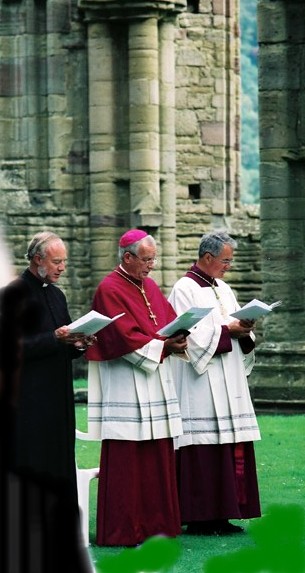
 The stone was blessed, then the Sculptor and his tools in the traditional way by the Cistercian Abbot of Caldey, Daniel van Sandvoort  and Philip worked out of doors in the Abbey for the next year.It was consecrated by clergy (this is an ecumenical event) and Revd Archbishop Peter Smith on the 500 anniversary of the dissolution of the Abbey.

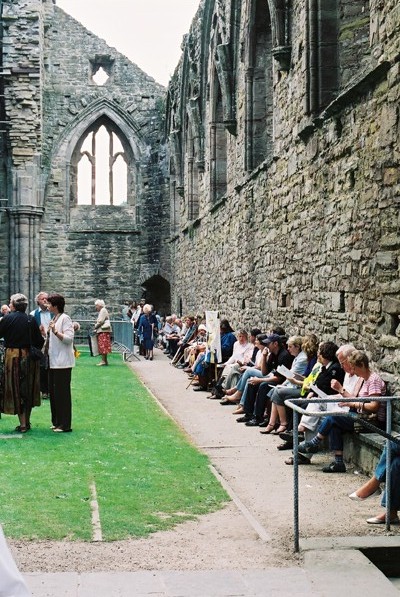
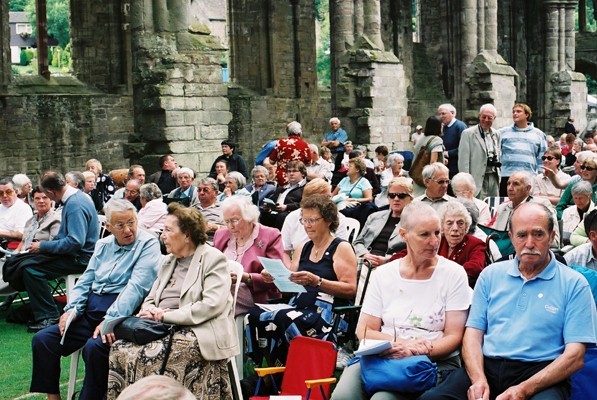
On Sunday 9th September 2007 the statue was blessed and dedicated in a moving ceremony conducted jointly by the Catholic Archbishop of Cardiff, Peter Smith, and by Bishop Dominic Walker of Monmouth, Church of Wales. A very large crowd gathered for the occasion – in the region of 800 people.
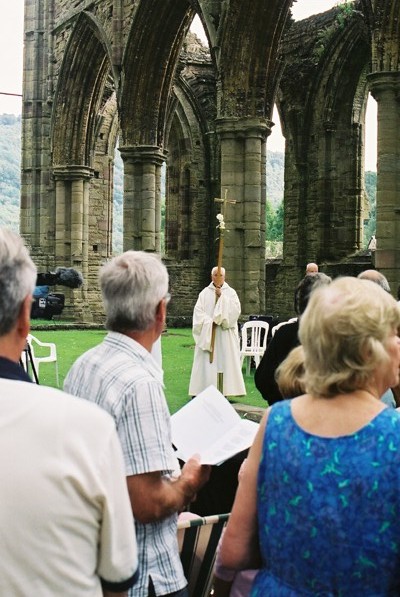
The dedication followed the now annual ecumenical service of Sung Vespers, which first took place again at Tintern in 2000, to mark the Millennium. The procession at that dedication included the Mediaeval re-enacters, who brought a banner, and flowers, which had been brought by many of the ecumenical assembly of Christians.Merchandise was produced to help pay for the enterprise. I also arranged for and brought two candle stands for use with the statue at Tintern for the ceremony, which appear to have been mislaid yesterday, which was regrettable.

Nevertheless the event was well attended. The Music , provided by the Choir of the ancient Priory in Monmouth were in stirling voice.Archbishop Stack, our new Archbishop seemed to not have been informed about the procession, but once the Vespers were underway, the whole was wonderful. The programme made the point about RR Terry's compilation of the 'Westminster Hymnal' first brought out 100 years ago..Terry's tune for AVE MARIS STELLA was sung  in  Edward Caswall's  English translation. The first hymn, 'Ye who own the faith of Jesus' was unknown to me, but sung to a well known tune 'Daily Daily sing to Mary'.The psalms had antiphons by Emma Joy and Susan Williams.Psalm 84 was preceded by 'On this day we honour the Virgin Mary; chosen by God, beyond all others blest' .Psalm  85 with Let us celebrate the birth of Mary, who brought forth for us the Saviour of the World!' Psalm 113 had  God has brought help to His people , O praise the Name of the Lord'  and  a canticle from Isaiah 61,10-11:62:1-2 was prefaced by 'You shall be a crown of Glory in the hand of the Lord'     The Scripture was from St Luke 1 v 39-56.

The new archbishop George Stack spoke strongly and firmly of the Tragedy of the building and what the stones would have said.He spoke well, and with a degree of emotion about the building, Tintern Abbey, mentioning how such buildings are magnets for tourists seeking something, and yet missing the inner unity possessed by the culture prior to the destruction of the  abbey.In quiet measured tones using the excellent sound system provided, he alluded to how modern technology,and music can bring some of it back, for example, during the Jubilee Celebrations, seeing Buckingham Palace swathed in light and sound as 'Madness' sang 'Our House' and the Crown or Light around Durham Cathedral celebrating the Lindesfarne Gospels. In the Tintern pilgrimages, he explained we have Footprints in the Sands of time, showing a continuation of worship throughout Christian time, and such buildings being an offering with which we worship God.

He went on to say 'If these stones could speak, what would they say?' Archbishop George remarked, the (original decapitated-) statue would speak of the turmoil of the time when political questions and allegiances were wrapped up in religious language. He said you only needed to watch the news to see no lessons had been learned in that direction.

He said Our Lady would speak of a stable, ordered Cistercian Community established around Wales,from Citeaux in 1098, a life centred in Prayer, orf WHOLE-ness, or HOL-iness, by extention going out to the good and well being of the surrounding parishes, contributing to the harmony of the life of the people, the building itself glorifying God in a beautiful God-given Creation in its surroundings. He quoted Eamon Duffy the historian, who in his excellent book 'The Voices of Morebath'  wrote of the social and political life of a small village in Devon called Morebath. He says the parish, the unity of the parish and by extension the Abbey was sophisticated and harmonious.

'There is a church sheep flock cared for in common but it is not a single flock but several,the proceeds of  which are dedicated to the different purposes of charities.'

The parish generally harmonious and sociable was gradually deconstructed throughout the Reformation and this social and religious life dismantled and its loss mourned. If the beautiful statue could speak, she would speak of the Rule of Benedict and the quiet rhythms of the days and years, the abbey its surroundings and parishes, a complete integrity of WHOLE-ness and HOL-iness. She would say you cannot separate the Grace of God from Nature , you can't see things in isolation, which is the tragedy of our present world, the lack of the inner UNITY at the Heart of Creation. Tintern Abbey was built, he said, as a reminder of that Unity of beautiful Creation and its heavenly Creator,the longing deep in the heart of every man and woman.

The Archbishop then turned to Beranrd of Clairvaux, the Cistercians'  greatest saint, who meditated on Mary's role , undoing the evil of Eve. He called her 'Rosa Mystica'; and this title has been given her in the Litany of Loreto. He said : 'Eve was a thorn, wounding , bringing death to all, in Mary we see a rose soothing people's hurts'.

Mary is indeed a rose
White for Maidenhood
Red for Love
White in Body
Red in Soul
White in seeking Virtue
Red in turning down Vice
White in cleansing our affection
Red in mortifying her flesh
White in her Love of God
Red in her comjpassion for her neighbour.  St Bernard

Finally he quoted Gerard Manley Hopkins the Jesuit poet, who saw the beauty of the Lord in' Dappled things.'
Is Mary that Rose then? Mary, the tree?
But the Blossom, the Blossom there, who can it be?
Who can her Rose be? It could be but One:
Christ Jesus, our Lord - her God and her Son.
In the Gardens of God, in the daylight divine
Shew me thy son, Mother, Mother of mine
A hushed moving silence followed the beautifully crafted and delivered homily.
There followed the 'Ave Maris Stella' in English of Edward Caswall, and the Magnificat,and prayers, the 'Our Father' in a modern English form did not seem  known by many, and the Glory be, had a different ending is now and ever shall be, World without end' does not , to me mean the same as is now and shall be forever....'as it leaves out the New World without End of the Bride and the Lamb, but no doubt, it has been modernised here.  The CENSING of the statue and beautiful floral display was evocative, the incense of the Orthodox monastery going up in clouds and swirling round the statue, giving honour to the Mater Dei , The Theotokos and the Panagia (All Holy).
The  Monmouth Priory Choir (whose Music Director is not named in the programme)samg a beautiful rendition of Orlando di Lasso's motet 'Sancta Maria, Ora pro nobis'. It is always difficult to mike so many singers, but the beauty of their singing greatly enhanced the procession to the statue.I especially liked this and the ensuing SALVE REGINA (Hail Holy Queen) sung with great gusto by the whole assembly of Christians  with numbers in the hundreds. There followed a prayer and blessing and final hymn 'Alleluia sing to Jesus' the old abbey ringing to the sounds of hundreds of voices upturned in praise.
Many people went up to venerate the statue and light some candles, sadly the candlestands were no-where to be found. I was just sad there was no rosary announced afterwards for those who wished it, and no informal Marian hymns. I saw few priests I knew at this year’s Vespers, but probably as they are all moving around this weekend to different parishes.Nevertheless on a sunny beautiful Autumn day, in a place of great beauty we once again gave thanks with equal beauty for Mary's gift to human kind in co-operation with God.


                                           Pilgrims at the end stay to honour Mary .

Thursday, August 30, 2012

VIDEO OF ST DVID LEWIS PILGRIMAGE 2012


Thank you David for this wonderful video of the procession through Usk to St Mary's Priory Church. God is glorious in his saints and martyrs, St David Lewis, Pray for us.

Monday, August 27, 2012

St David Lewis, Beautiful Weather Brought out the Usk Crowds


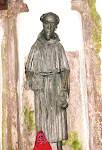
    Yesterday at Usk, glorious warm weather brought out the crowds for the annual pilgrimage for St David Lewis. These pilgrimages have taken place annually for over a hundred years and comemmorate the Martyrdom of  Father Lewis in 1697.Father Lewis was the son of an Abergavenny headmaster, who was a convert, studied in France and maintained his witness in South Wales, ministering to the many secret Catholics in South Wales. Infact the Abergavenny area was never without Catholics, many nobility and people never leaving the Church. It was said at the time of the Titus Oates lies, that Monmouthshire was a 'true daughter of Rome' and not 40 people attended Church of England services, while hundreds went to Mass in the Gunter House. There is also a small staue of the Saint in Abergavenny at Our Lady and St Michaels Church in Abergavenny. Father Tom  OSB was present at the Pilgrimage.I have told the story of St David Lewis on a previous blogspot, so I wont repeat again. If you type 'St David Lewis' in 'search' on the left hand search box, you should find the previous post.

Numbers were slightly down on recent years and there was a feeling of sadness. Unfortunately, no cndles were lit in the church, which gave a bleak feel, until the altar candles were lit. Father Julian of the Anglican Church said he was sad that the historic parish now no longer had a resident priest, and there was a slight feeling of something missing.However, there was joy in the beautiful traditional Benediction service. It was all led by Father Adrian Wiltshire, who sang confidently with his beautiful voice. It seemed clergy from other churches were also present. It was the first time, since I had been going that there was Benediction instead of Mass.

-----------------------------------------------------------------------------------------------------------------------------------

The procession left the Church, reciting the Glorious Mysteries of the Rosary for the benefit of the Soul of the saint, and  arrived at the grave side in glorious sunshine, Fr Adrian carrying the relic of St David Lewis.In his final speech from the hastily prepared gallows, Fr Lewis had quoted from theScriptures, from 1 Peter 3, about how to die for what is right .

 'Now who is there to harm you if you are zealous for what is right? But even if you do suffer for righteousness sake you will be blessed. Have no fear of them, nor be troubled, but in your hearts reverence Christhe Lord. Always be prepared to make a defence to any one who calls yu to account for the Hope that is within you, yet d it with gentleness and reverence, and keep your conscience clear, so that, when you are abused those who revile your good behaviour in Christ may be put to shame
 
For it is better to suffer for what is right, if that should be God's will, tan for doing wrong. ForCrist also died for sins once for all, he rightous for the unrighteous , that he might bring us to God, being put to death in the flesh but made alive in the spirit.
 
The botched execution caused more pain to Father Lewis, but finally two Protestants he had helped made sure he had died at the hanging, dragging at his hands, s there was no drawing and quartering,and the body was laid in the graveyard in the parish church, where it was later found during excavation and buried in a more prominent place at the Church door of the former priory, now Anglican Church.At he graveside, the relic was brought to each member of the congregation for veneration, as the Faithful sang 'Faith of Our Fathers'.Flowers had been placed on the grave and a photograph of a portrait of the saint, I think painted while he was in France as a youngish man. Father Adrian then knelt to venerate the gravestone, which all the other pilgrims also did. No 'Salve Regina' this time, sadly. In attendance were also the sisters of St Joseph of Annecy at Llantarnam, and some monks from Belmont. Father Adrian goes to Ledbury and Ross from Cwmbran, but I do hope that he keeps his association with the pilgrimage. After refreshments at the Parish Hall for some and The Three Salmons for others, people took their cars and coaches home, happy the saint had been venerated, thanked and remembered for another year, and he will continue to intercede for all those in the persecuted Church.
 
Hymn of St David Lewis
Holy Martyr David Lewis
Monmouth Martyr’s Glorious Saint
‘Father of the Poor’ they named you
When you lived and toiled in Gwent.
Priestly work was undertaken                        
Danger-fraught from dawn till dusk
Gladly still you served your people
‘Till you died for Christ at Usk.

From your capture at Llantarnam
Through your time in Monmouth gaol.
Threats and torture could not shake you
For your faith would never fail.
Bravely then you faced the gallows
Crudely fashioned for your death,
Further torment someone spared you
Till you drew your latest breath


Great and glorious David Lewis,
Staunch and steadfast in the strife,

Bless your people here in Monmouth,
Those for whom you gave your life.
Help us to be strong, courageous,
Loyal to our loving God,
To Him then will glory flourish,
In the places you have trod.

Tune :Hyfrydol (Welsh tune for 'Love Divine')

SEPTEMBER 9th VESPERS OF OUR LADY OF TINTERN


Wednesday, July 11, 2012

For all who have been enquiring about my recordings ...some popular Classics!

Evelyn Nicholson | Inspiration | CD Baby Music Store

I hope you will enjoy these. I am in a very busy period of work at the moment and will resume my posts after next week!

INSPIRATION  My Album

These are recent recordings made with Bredon Sound. Click to hear samples of the recordings and download as many as you want.

Songs Include

Ave Maria          (Bach-Gounod)
Ave Maria          (Schubert)
Our Father          (Malotte)
Panis Angelicus (Cesar Franck)
Ave Maria           (Mascagni)
Nun's Chorus       (Oskar Strauss)
Jesu Joy                (Bach)
and others

Thursday, May 10, 2012

Mary in May, The Night of 1,000 candles

Last night,i n spite of a very damp evening, nearly a thousand people turned up to Belmont Abbey for the famous May procession to honour Mary, the human mother of Our Lord, Jesus Christ. People met at Hedley Lodge, for an
 evening meal or tea and cake and then assembled at nine o'clock at the gates of the Abbey. People turned up in coaches, cars, minibuses and everywhere was packed. At the gates, people bought Lourdes candles and paper cups in which to shield them from the wind.

Abbot Paul Stoneham welcomed all the pilgrims , who had come from as far as Swansea, and also from Bromyard in Herefordshire and all joined in a rousing series of hymns thanking Mary for her 'Yes' to God's plan which overturned Eve's disobedience in the Garden of Eden. We were graced with the presence of the Lord Archbishop of Cardiff, whose birthday it was and who joined in the hymns with equal fervour to the Welsh, who were in good voice. The processional statue of Our Lady was borne aloft, decked with many different sorts of flowers, roses, carnations lilies many other varieties and was illumined. We walked around the huge garden, and recited the Glorious Mystery of the Rosary. In fact this carrying of the statue and the singing and prayer very much called to mind the Ark of the Covenant, the powerhouse of the ancient Israelites at the beginning of our Plan of Salvation, before whom David danced. Mary was of the House of David, and is often called the 'Tower of David' as one of that line's most glorious creations.

During a homily in the Abbey Church, Archbishop George gave an inspirational homily,recalling our 'journey' through the garden .He reminded us, that our Salvation had begun in the Garden of Eden. Eve too had been conceived without sin, because God had done this for Adam and Eve but, after Eve's disobedience, another woman,Mary in her immediate obedient  'yes' to the Angel Gabriel had brought the possibility of restoring us to Eden. The story of  Salvation, moved to a close in another garden, that of Gethsemene,where Jesus was arrested, before his death on the Cross for our Salvation.

The Angel called Mary 'Blessed' and so we call her Blessed Mary or 'Blessed Mother' and in fact Mary herself says 'All generations shall call me blessed' in her Song of Praise, the Magnificat.

In watching the procession move around, I was mindful of the Ark being carried by the Israelites.

It was made of gold  and was Ancient Israel's symbol of the Presence of God, as it contained
 The Ten Commmandments of the Law of Moses,
The Rod of Aaron, the High Priest
An Urn containing the Manna from Heaven ,
 which the ancient Israelites had been dropped from Heaven to physically eat in the desert to stay alive, when God saved them from starvation. Jeremiah had hidden the Ark from the invading Babylonians and said that the Ark would come back when the Tabernacle, which had been OVERSHADOWED by the Glory Cloud (Holy Spirit) it when it was set up would once again come down.
When King David brought the Ark to his new centre, Jerusalem, David greeted it and said "Who am I that the Ark of the Covenant should come unto me?" and then leapt in front of it with joy. (Compare Mary's cousin's greeting (Elizabeth)  'Who am I, that the Mother of my Lord should come unto me?', and the baby 'leapt' in her womb.
In the book of Revelation (means Apocalypsis-Unveiling) Chapter 11 John saw the Temple open and the Ark of the Covenant. The scene then reveals  the Woman clothed with the sun and twelve stars around her head, 12 Apostles, 12 Tribes-His Body on earth crowning Mary. The Woman was in Childbirth and giving birth to God's Son and the Beast was waiting to eat her child, but it was  taken back to heaven. The image of the crowning with stars is also similar to inside the Holies in the Temple where the Ark was kept, there was a curtain that depicted the sun, the moon, stars  to show God's temple was above the earthly Temple , which had been like a dim image in a mirror of the heavenly temple.
Mary made her long visit, (as probably a 15 year old girl,) from Nazareth (a town named after 'Nezzar'-'Shoot, 'A shoot shall spring forth out of the stem of Jesse' (Isaiah)to the town in Judea where Elizabeth lived. The Ark of the Covenant had also made its journey from the North of Judea to Jerusalem, which is in Judea.
The Shikenar Glory Cloud,(Holy Spirit) has now again descended and OVERSHADOWED the NEW ARK, as Archbishop George reminded us, which is one of Mary's titles-The Ark of the New Covenant.
 It OVERSHADOWED the Blessed Virgin Mary when she consented to do God's will and enthusiastically obeyed God's call, and made possible for us to have with us the Lord Jesus Christ. The word overshadowed only ocurrs in Greek on these two occasions in the Bible. God needs our co-operation to be present on earth and she is our most wonderful example of a saint, living out god's Life in her.. We venerate her as a unique human saint, alive in heaven with her Son.
The Queens of the House of David, were never the consorts or wives, always the Mothers of the present King (Solomon with Bathsheba), who are recorded in the House of David, along with the Kings. This Queen-Mother was called the 'Gabirah' and this is how early Jewish Christians would have understood the role of Mary, mother of the King. At the Wedding at Cana she said to Jesus, that the people needed wine and then 'Do whatever He tells you' to the servants .Little mortal human Mary, chosen by God for this important plan of Salvation loved God totally.
. Mediaeval writers called her the 'Spotless Rose' (from Isaiah) set to Music by Herbert Howells, this is a beautiful hymn.
Little human Mary was the NEW ARK.
Because Mary held in her womb and heart - JESUS, the Lord's anointed, as
1) The Word of God, the Wisdom of Christ
2)The True High Priest and Victim (he inaugurated the Lord's Supper and died for our sins on the Cross-once and for all.The Fourth Cup of Consummation of the Passover, was taken in the form of a bitter wine held on a sponge, after which he said 'It is accomplished'-(fulfilled'- You will be my People and I will be your God )
3) The Eucharist,the Thanksgiving Meal. Jesus was born in BETH-LEHEM (Town of BREAD) which was David's City. He is our physical food and is with us to the End of Time.He was laid in a feeding trough- a 'manger' (Fr 'to eat').
Inside the Abbey the statue was set up behind the altar, and lit up, just like the golden Ark, and everyone sang Hymns of Thanks and Praise to God for his gift of Mary providing a man's body for God in her Son. This Mystery of the Incarnation was observed in ancient poetry and texts of the ancient Welsh people, who called Jesus 'Mary's Son'.
Thank you Mary! for doing what you did!
After Archbishop George had preached, all turned to face the statue and give thanks in a hymn.At the end of the hymn 'Bring Flowers of the Fairest!' thousands of rose petals descended on the Statue representing Mary (New Ark).This was a wonderful moment.  The Old Pagan practice of the Queen of the May had been turned to a ceremony of Thanks, decking Blessed Mary with beautiful flowers and thanking her for her obedience, which has had a wonderful blessing for us all for the last 2,000 years.
Throughout the Veneration, the candles had been kept burning and the whole Abbey church shimmered.From everyone, a thank you for your words 'Ecce ancilla Domini'-behold the Handmaid of the Lord, Let it be done to me, according to your Word'. The little handmaid's words to us 'Do whatever he tells you....from the Book of John ask us to be obedient too....can we be as obedient as she is? We can only try.
At the end of the devotion, we all left and Archbishop George greeted us all singly  and went to the refectory for refreshments, after which I understand, the faithful sang 'Happy Birthday to You' to Archbishop George.
In spite of the dampish weather , we left with sounds of the hymns in our ears. We had a  SUPERB Organist who played Widor's Toccata at the Recessional and accompanied all the inside hymns fervently and with great 'hwyl' and verve-which added a great deal to the fantastic singing, the scent of the many flowers, the images of the hundreds and hundreds of glowing candles and the smiles on all the faces, the Sisters of Charity, the many priests nuns and other brothers and sisters who took part, all these were in our hearts and ears. I really felt little Mary was there amongst us joining in the fun and pointing us, as she always does to her son, our God and her God'.

Do whatever he tells you.......

Thanks from all the Pilgrims for the Faith and Catechesis through popular piety and in other ways,and an excellent retreat programme, to Abbot Paul and all the monks of Belmont for their service and care.


Wednesday, February 29, 2012

HAPPY ST DAVID'S DAY to ALL- MARCH 1st

Today is St David's day and there will be celebrations all over Wales. His defence of Catholic teaching earned him his canonisation by Pope Callixtus II.He lived for a while in Caerleon and also in Llanthony where he had a little hermit's cell. This is the article from the Old Catholic Encyclopedia.
(DEGUI, DEWI).

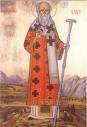
Bishop and Confessor, with St Winifred ,patron of Wales. He is usually represented standing on a little hill, with a dove on his shoulder. From time immemorial the Welsh have worn a leek on St. David's day, in memory of a battle against the Saxons, at which it is said they wore leeks in their hats, by St. David's advice, to distinguish them from their enemies. He is commemorated on 1 March. The earliest mention of St. David is found in a tenth-century manuscript Of the "Annales Cambriae", which assigns his death to A.D. 601. Many other writers, from Geoffrey of Monmouth down to Father Richard Stanton, hold that he died about 544, but their opinion is based solely on data given in various late "lives" of St. David, and there seems no good reason for setting aside the definite statement of the "Annales Cambriae", which is now generally accepted. Little else that can claim to be historical is known about St. David. The tradition that he was born at Henvynyw (Vetus-Menevia) in Cardiganshire is not improbable. He was prominent at the Synod of Brevi (Llandewi Brefi in Cardiganshire), which has been identified with the important Roman military station, Loventium. Shortly afterwards, in 569, he presided over another synod held at a place called Lucus Victoriae.(Llan-dewi brefi) He was Bishop (probably not Archbishop) of Menevia, the Roman port Menapia in Pembrokeshire, later known as St. David's, then the chief point of departure for Ireland St. David was canonized by Pope Callistus II in the year 1120.

This is all that is known to history about the patron of Wales. His legend, however, is much more elaborate, and entirely unreliable. The first biography that has come down to us was written near the end of the eleventh century, about 500 years after the saint's death, by Rhygyfarch (Ricemarchus), a son of the then bishop of St. David's, and is chiefly a tissue of inventions intended to support the claim of the Welsh episcopate to be independent of Canterbury. Giraldus Cambriensis, William of Malmesbury, Geoffrey of Monmouth, John de Tinmouth, and John Capgrave all simply copy and enlarge upon the work of Rhygyfarch, whilst the anonymous author of the late Welsh life printed in Rees, "Cambro-British Saints" (Cott. manuscript Titus, D. XXII) adds nothing of value. According to these writers St. David was the son of Sant or Sandde ab Ceredig ab Cunnedda, Prince of Keretica (Cardiganshire) and said by some to be King Arthur's nephew, though Geoffrey of Monmouth calls St. David King Arthur's uncle. The saint's mother was Nonna, or Nonnita (sometimes called Melaria), a daughter of Gynyr of Caergawch. She was a nun who had been violated by Sant. St. David's birth had been foretold thirty years before by an angel to St. Patrick. It took place at "Old Menevia" somewhere about A.D. 454. Prodigies preceded and accompanied the event, and at his baptism at Porth Clais by St. Elvis of Munster, "whom Divine Providence brought over from Ireland at that conjuncture", a blind man was cured by the baptismal water. St. David's early education was received from St. Illtyd at Caerworgorn (Llantwit major) in Glamorganshire. Afterwards he spent ten years studying the Holy Scripture at Whitland in Carmarthenshire, under St. Paulinus, (Pawl Hen), whom he cured of blindness by the sign of the cross At the end of this period St. Paulinus, warned by an angel, sent out the young saint to evangelize the British. St. David journeyed throughout the West, founding or restoring twelve monasteries (among which occur the great names of Glastonbury, Bath, and Leominster), and finally settled in the Vale of Ross, where he and his monks
lived a life of extreme austerity. Here occurred the temptations of his monks by the obscene antics of the maid-servants of the wife of Boia, a local chieftan. Here also his monks tried to poison him, but St. David, warned by St. Scuthyn, who crossed from Ireland in one night on the back of a sea-monster, blessed the poisoned bread and ate it without harm. From thence, with St. Teilo and St. Padarn, he set out for Jerusalem, where he was made bishop by the patriarch. Here too St. Dubric and St. Daniel found him, when they came to call him to the Synod of Brevi "against the Pelagians". St. David was with difficulty persuaded to accompany them; on his way he raised a widow'son to life, and at the synod preached so loudly, from the hill that miraculously rose under him, that all could hear him, and so eloquently that all the heretics were confounded. St. Dubric resigned the "Archbishopric of Caerleon", and St. David was appointed in his stead. One of his first acts was to hold, in the year 569, yet another synod called "Victory", against the Pelagians, of which the decrees were confirmed by the pope. With the permission of King Arthur he removed his see from Caerleon to Menevia, whence he governed the British Church for many years with great holiness and wisdom. He died at the great age of 147, on the day predicted by himself a week earlier. His body is said to have been translated to Glastonbury in the year 966.