


Tuesday, September 20, 2011

The Miracle of Mamhilad.

The Life of St Illtud, now in the British Museum in the Cott Manuscript mentions he was Breton and a great nephew of the holy Saint Germanus of Auxerre. (Vespasiab A XIV) \He was known to be very warlike and physical and heard a lot about Britain from his British mother. He resolved to go there and to join a war band, possibly of his kinsman Athrwys,He was given an excellent education in all seven sciences , was baptised and catechised and studied elementary science , but then he decided to go to war and break of his studies, appearing in Britain at the court of the chieftain Paulinus Paelin, and his war leader, Arthrwys.They treated him well, as he was a good companion , learned and a good governor. He was one of the most intelligent of all the solders and became a leader in King Paulinus' household.

One day King Paulinus took the royal household to hunt over the land belonging to St Cadoc, and he was rude enough to send a message to the Holy Abbot Cadoc, that if he did not provide them all with dinner, he would take it by force. Cadoc was surprised at the tone of the request, but nevertheless sent them all dinner. The household sat down to dine, but because of the sacrilege of their request, they were all taken ill and left but Illtyd escaped . He was far away with a hawk and knew nothing of it. Seeing the effect of the Kings disappearing household, Illtyd went to Cadoc to ask what had happened. St Cadoc told him to take of his secular dress and but on a clerical habit, and required that he serve the Creator God all his life so he could do penance for the misdeeds of his household, do God would deal leniently with him at the Judgement. Illtyd returned to King Paulinus and withdrew himself from secular services after that. He left the area and came to the River Daw in Glamorgan and left his wife after an angel commanded him to serve the King of kings, and he realised that he had to devote himself to God and gave up his wife in atonement for all those he had killed as a soldier.

He retired to the Hodnant valley. which was either at Llantwit on the sSevern or at Llanthony, named after the Hodnant in the Welsh.He became a great saint, and ended his days in Llantwit Major (Llanilltyd Fawr) This is a very interesting Church to visit, showing much early history.There is a project afoot to restore the Galilee Chapel from a ruin, to which it was reduced under Henry VIII. The land St Cadoc owned and had founded was based on his teacher , Tatheus (Meuthi-the Hermit) as Tre-feuthin-the Homestead of the Hermit.

Some time after the death of St Cadoc, he was returned to his principal monastery of Llancarfan, where his relics were revered and honoured by his sorrowing brothers.There were thirty six canons at llancarfan, like Llantwit Major a huge monastery and there were vast numbers of gardeners and also other lay brothers and sisters in his llan.

Llifris writes:
No one can relate the miracles performed by St Cadoc
It is because he is not here with his mode of speaking
Christ the Creator of the World will grant pardon
To him who write a Life with faults, named Llifris.

A powerful Saxon leader came from England, with a large body of men, intent on despoiling and pillaging in Wales . He arrived at the coast in a ship, but the clergy of Llancarfan, fled the monastery taking their treasure with them and fled from there with the reliquary of the Holy Man, and other relics , which they prayed would protect them from their pursuers and they hid themselves in a llan of St Illtyd, which readily gave protection and shelter to the followers of this holy saint. The name of the llan was St Illtyd's , in a place which became known as Mamhilad trans:The Place where the Coffin was Brought)When they had been there a short time, the Saxon raiders were also joined by Danes who had heard there were rich pickings in store.

When they saw the coffin with the Holy Saint in it at Mamhilad, they tried to lift it, first four men, then in the end many many men tried to lift it, but it would not budge, They were not able to move it at all. Then they became angry and one, more enraged than all the others, ran forward quickly and struck the coffin hard, and on being struck, it produced a loud bellowing noise like a bull, and greatly frightened the whol.e army and there was a great earthquake at Mam hilad. The coffin was deserted, the enraged soldier, induced by greediness cut of a gold pinnacle from the coffin of the Holy Man, which fell into his lap and immediately he felt as if fire was buirning his chest. Stupified and excited by the pain of the heat, he put the pinnacle back, and it firmy affixed to where it had been cut off, as if it had been soldered on safely. When he had done this the unhappy violator of the coffin died in front of the coffin, seemingly melting into the ground and the foreigners fled, and cceased to worry them.

The brothers decided to take Cadoc over the mountain to his old llan at Tre-Feuthin and here ie was safe from the maraudoing Saxons.Cadoc was lad to rest with great honour at the early site. Later many people were trained at his monastary.

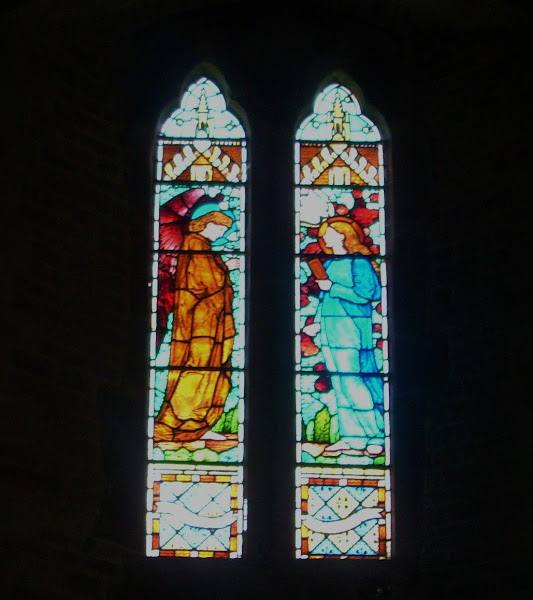
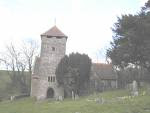
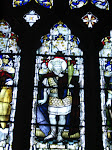
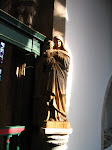
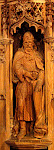
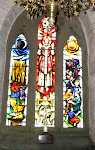
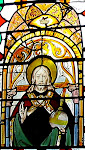
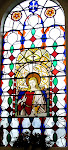
 St Illtyd and St David, appear in Stained glass in this ancient church.
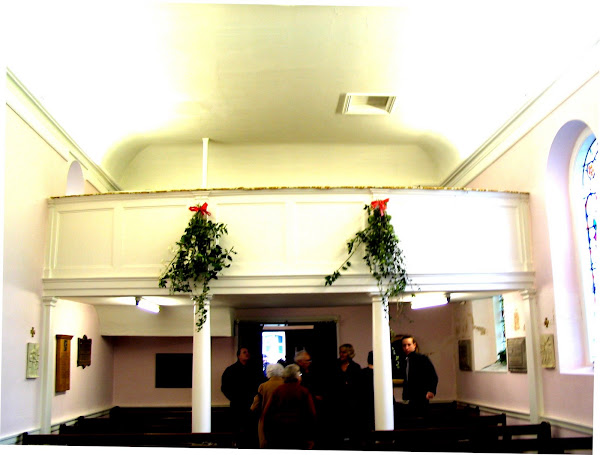
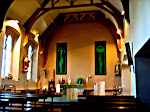
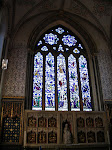
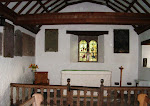
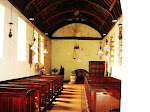
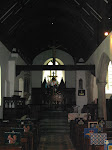
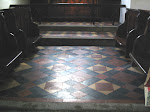
 The sanctuary area as seen from the nave. Originally the screen would have been erected over the arch, the rood (Crucifix would have been up there, with Blessed Mary and St John, and parishioners would have said their confessions before Easter under the rood.
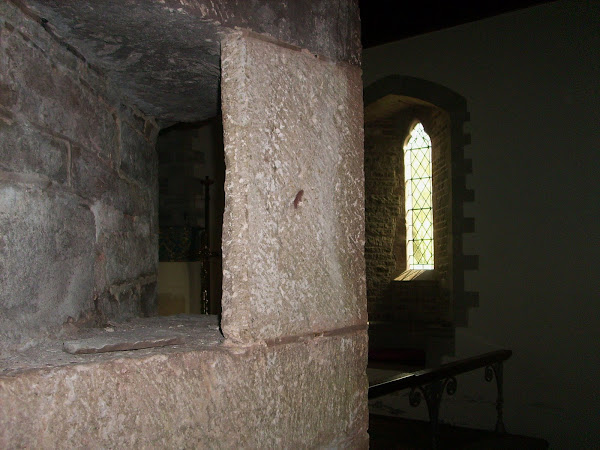
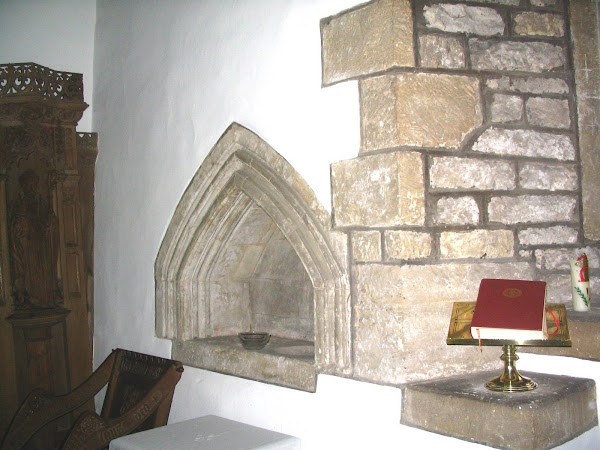
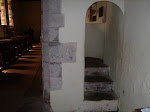
Priest's entrance into the former Sanctuary at St Illtyd's Church at Mamhilad/


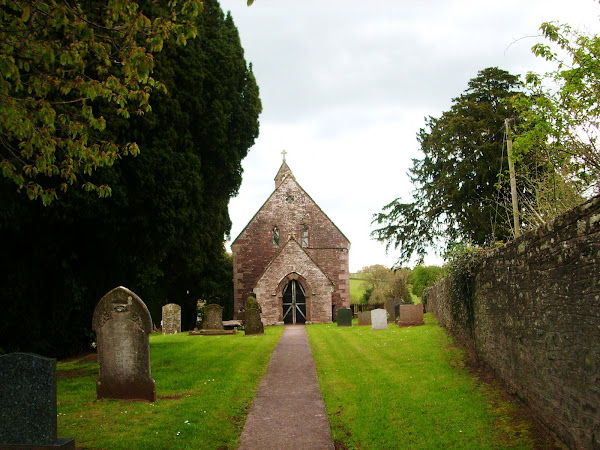
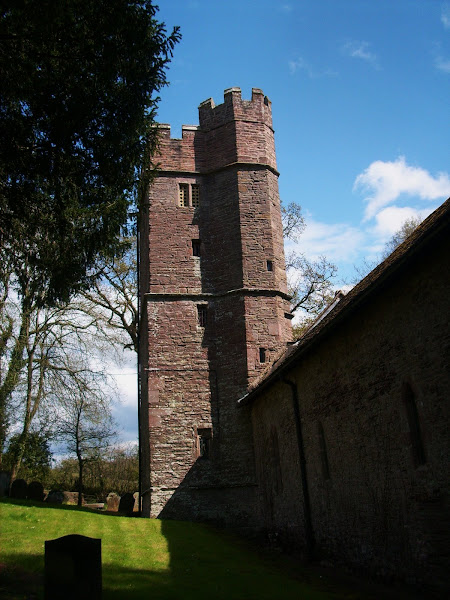
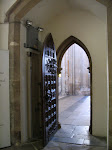
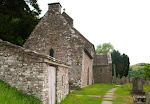
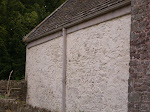
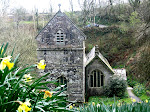
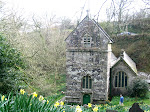
Entrance to porch at Mamhilad Church

The ancient font at St Illtyd's  
 The nave and Sanctuary at St Cadocs


Ancient print of St Illtyd's
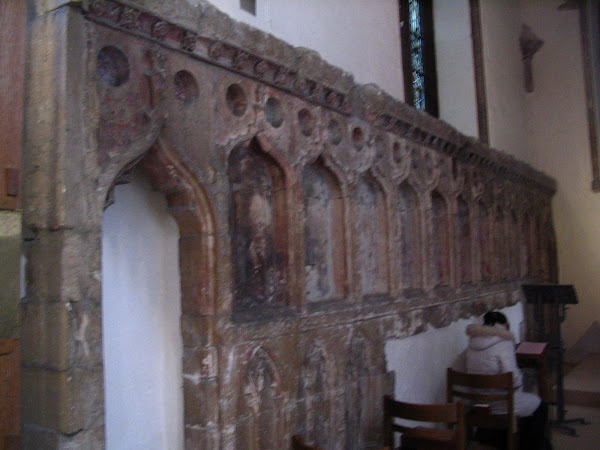
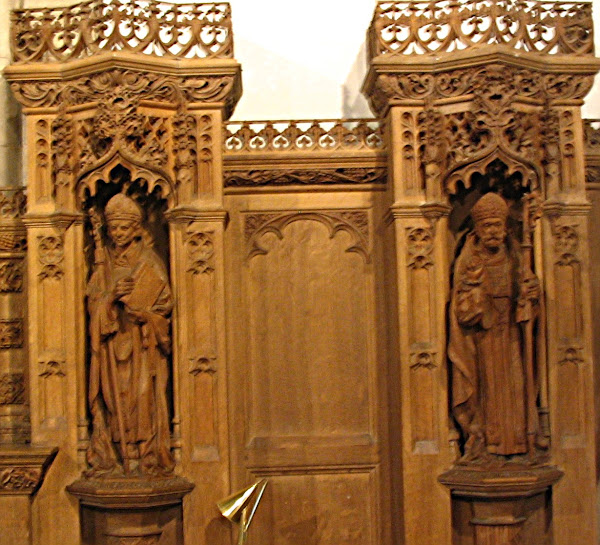
 The Ancient and beautiful rood loft, which was saved from Cromwell and the Tudor wreckers. Such screens were very expensive and usually donated by a wealthy parishioner. The screen has been put at the rear of the church


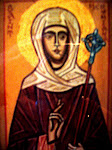
St Cadoc, ddoth. Born at Newport and trained and educated at Caerwent with St Tatheus, who retired to a hermits life at Tre-feuthin. St Cadoc was the son of  King Gwynlliw and Queen Gwladys, daughter of Brychan Brycheiniog. Both his parents took Holy Orders in Old Age. Cadoc's white martyrdom took him all over Britain, even to Scotland and to Southern England and South Wales,and he even went to France during the plague known as the Yellow Fever. St Cadoc is well known in France, where an island is named after him.

Thursday, August 25, 2011

Return from Germany and Saint Mary at Bethen in Cloppenburg

 http://www.stmarien-bethen.de/

If you would like to know more and use google translator

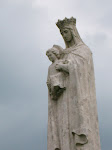
I spent the last ten days in Oldenburg, where I was born. My Mum was German and my father from South Wales. Notwithstanding my Mother being a German Lutheran, not in communion with the Catholic faith, I decided I would attend the church of Pilgrims in Cloppenburg, South of Oldenburg, which I found was buzzing with excitement because of the imminent visit of the Holy Father. At a time of such large scale apostasy in Europe, the visit of the successor of Peter was a sign of hope. The weather was terrible, but apparently on the major days of remembrance for Mary, many people walk from Cloppenburg to this site-also from Oldenburg I understand to thank her for co-operating with God to give our Saviour a human body. I was moved to wonder, whether Jesus looked like her.

Last Sunday was the Feast of the Assumption. Along with Enoch and Elijah, from the very earliest years of the Church was the tradition, that Mary, the Woman of Revelations 12 was taken body and soul into heaven to be with her Son, who loved her as we all love our Mothers. This Mother, who could have been stoned to death for agreeing to bear the Saviour whilst unmarried was the most Perfect Christian, giving God a body, then giving his Mother to be the Mother and Ikon of all His People. The Assumption was only made an official Dogma, after people started chipping away at this age old dogma.

On this day , there was a pilgrimage with all the people bringing herbs and wild flowers to the shrine. In German the words 'Heilkraut' are healing herbs, which the ladies brought there to give to Mary, to thank her for her role in giving birth to our Lord 'Behold the Handmaid of the Lord, Be it done to me according to Thy Word'. The priest told us, that Mary reminds us that we are flesh and blood humans, just as she was, and yet God can wreak enormous Love and Sacrifice from us too, and a call to Divinity, when we have Faith in and trust the Saviour and keep his Commandments in our struggle to be Holy and Members of His Body on Earth. It was also mentioned that Our Saviour loved us so much that he took on the frailty of our mortal bodies, nut he overcame it all to conquer death.

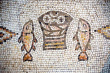
The Ark of the Covenant contained

The Torah-the Word of God
The Rod of Aaron-the symbol of the High Priest of God
The Manna -the physical food given to the Israelites in Canaan, when they were starving on the Way to the Promised Land.

Mary, the Ark of the New Covenant contained in our Blessed Saviour:

Jesus, the Word of God, in tradition of the early Apostles (St John tells us not all was written down about Jesus)

Jesus, the High Priest, King of all us Christians, called to be priests and evangelists of His Word.

Jesus, the Eucharist , who feeds us with his Body and Blood, when we are starving in the Wilderness of a world , living among some sinful and wicked people, who have turned away from Him and His teaching, and have renounced him and been led away from Truth.

Little Holy Mary, pray for us Sinners, that we may be made worthy of the Promises of Christ.Little, holy Mary may we all appreciate your tremendous act of Faith, and give us courage to carry on in our day to day lives, getting closer and closer to Jesus.
Podcast from St Maria Bethen Shortly.

Monday, August 8, 2011

MARY ON HOLIDAY--THE HIDDEN CISTERCIAN GEM OF NETLEY ABBEY

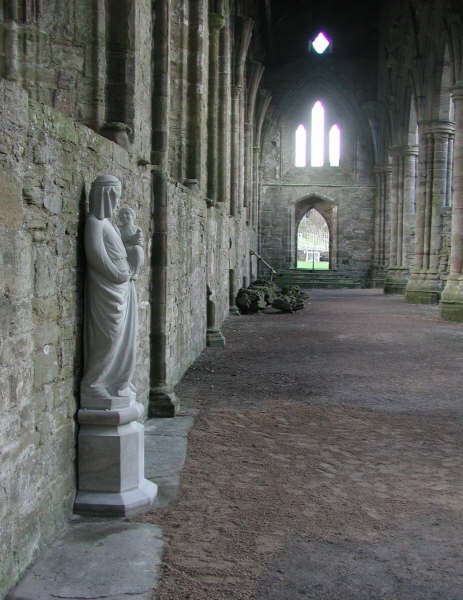
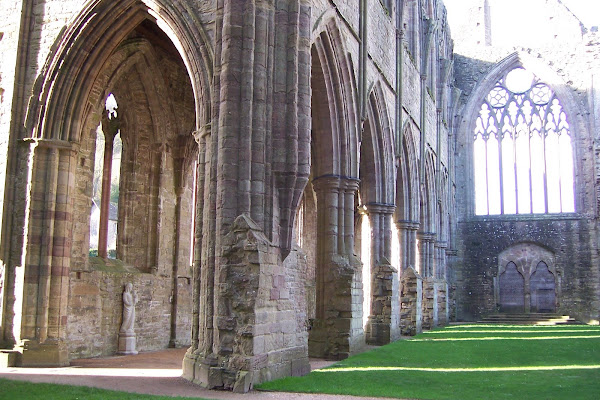
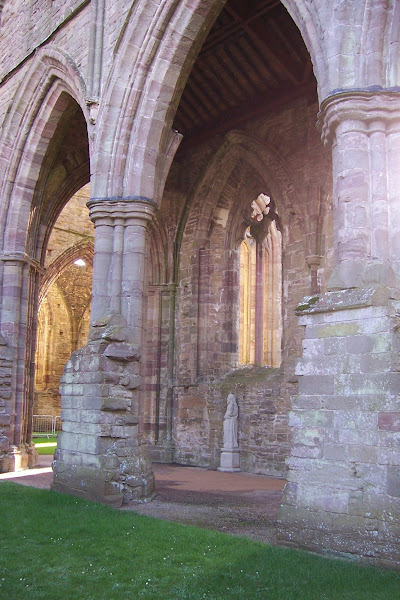
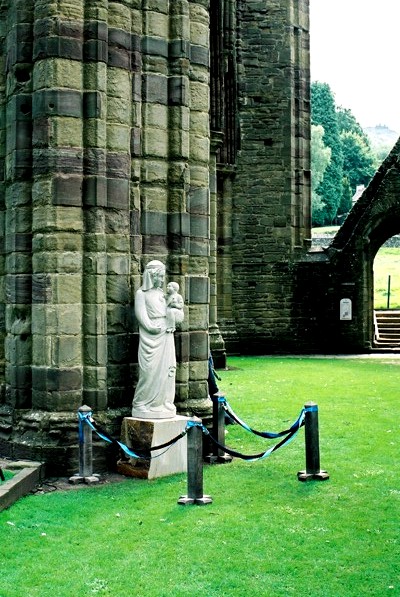
As a guest on a yachting holiday to Cowes, in the Isle of Wight, we stayed at a village called Netley Abbey. Actually finding it was tricky but we managed with the help of a satnav! The whole village once belonged to the Abbey and indeed Netley Abbey is the most complete, surviving Cistercian monastic ruin in England, and an unexpected hidden gem in the middle of a small village and estate.The ruins show the remains of 800 years of change, from a Cistercian house to a mansion for one of Henry VIII's henchmen and finally it was sold for masonry and became a Romantic ruin. The Cistercians must have enjoyed a wonderful life of prayer in this setting overlooking the Solent!Now there is a hedge and it is protected by English Heritage.

The Abbey was founded by monks from nearby Beaulieu Abbey by Peter des Roches the powerful Bishop of Winchester in 1238 and there were 15 monks, but 30 lay brothers and other employees, officials and labourers.

In the sad years, when the king wished to marry his mistress, the Abbey was closed and taken by the king and sold at a knockdown price to his supporter in this venture Sir William Paulet. Who built a Tudor Courtyard palace on the site, using the buildings that were there in 1536. By the 18th century, repairs became too costly and by 1704 the house was abandoned to provide stone for building but painters, poets and writers arrived there, taking inspiration from the spiritual nature of the building.The Abbey was only saved, when work demolishing the Abbey was stopped, when a worker was killed.

Horace Walpole, Jane Austen and many others visited the Abbey, inspired by its grandeur-even as a shell. Northanger Abbey may have been inspired here, so close to the coast.It was a popular place for people from the nearby area to come and have ginger beer and a party, but by the twentieth century, antiquarian interest stopped such things and admiration for the gothic masonry of the abbey, made them remove all the vestiges of the Tudor mansion, which had decayed and restored it. It is now cared for by English Heritage, and a hidden gem in the rural landscape.All was still there, the book room, the kitchen, the enormous church.

For its short tenure by Sir William Paulet,from 1536 to 1704 , the death of the demolition worker and the giving up of the house for masonry, you have to ask whether the theft of the monastery was worth it, even for the vanity of one of the people charged with closing these houses of prayer-which often incorporated hospitals.... A sad chapter in our history.

If you are around Southampton, visit Netley, and see the hidden gem!

Wednesday, July 27, 2011

Beautiful Tridentine Mass for martyred Welsh saints at Abergavenny.


This was a beautiful Tridentine Mass for the Martyred saints of Monmouthshire last week. St John Roberts, St David Lewis and St Philip Evans, administered to the Church for over thirty years in the Monmouthshire area. Fr David was arrested in Llantarnam and executed at Usk. Fr Philip Evans and Fr John Roberts  were painfully hung drawn and quartered at the Gallowfields in Cardiff, where they had been working and going about their priests business. This was all as a result of the Titus Oates plot

The Choir excelled singing the ancient Gregorian chant, which would have been known to the three martyred saints. Father Tom Regan sang the Mass and Abbot Paul from Belmont was in attendance from Belmont Abbey to read the special prayer for the saints,also invoking St David and St Winifride, the two patron saints of Wales to pray for the mission in Wales


Tuesday, July 12, 2011

With Mary at Abergavenny! Mary's Festival May 2011

 The annual Festival of Mary and thanksgving for her obedience and role at OL and St Michaels Benedictine Priory in  Abergavenny-really beautiful Celebration amid beautiful music!


Wednesday, June 15, 2011

Some Enchanting Welsh Holy Wells around Brecon, Cantref, Maen Ddu, Priory Well


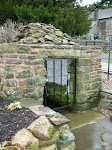
St Cynydr's Well, Cantref Church

National Grid Reference SO0533924929.
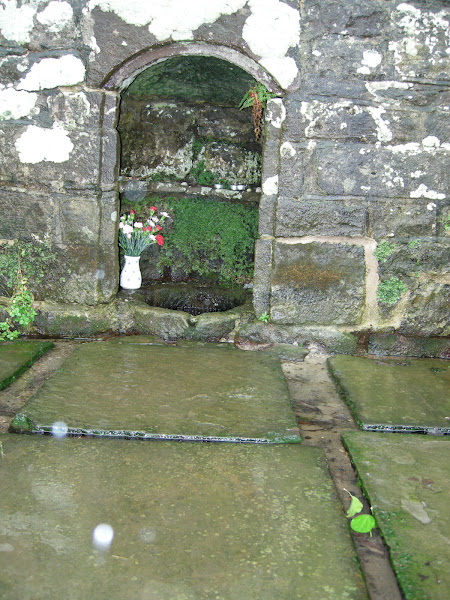
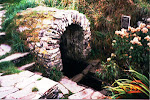
The Holy Well at Cantref Church, which was originally dedicated to Ecclesia Sancti Kenedri de Kantreff in the 1541 Harley Charter III D3, was therefore dedicated to St Cynydr, said to have been the grandson of Brychan through Ceingair , daughter of the saint., although it also seems through the Cotten MS  Domition 1) Gwynlliw (St 'Woolos' of Newport) was his father,  through the line of St Gwladys, Gwynlliw's wife..Most of their children became holy saints and built llans and churches. Cynydr seems to have been drawn to work in his mother's land and many churches and wells commemorate him there. Going into the church, turn right around the tower and walk down the small path to the well. Not an easy walk !

St Brynach was Brychan Brycheiniog's (King of Brecon's) priest. This well had healing properties and is maintained.There seems to have been a familial link between St Brynach and St Cynydr.
 St Cynydr's Well, Cantref
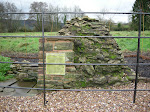
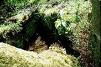
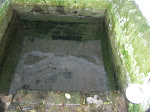
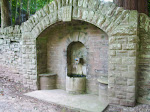
 Maen Ddu well in Brecon is maintained by CADW and lies in a beautiful little fairy like dell, at the centre of a former llan, it has a round circular shape and there is an imprint of a round possible bathing pool further down .
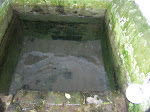
 The Water in Maen ddu-(Black Rock) the stones and sticks in here were disappointing.
 The well in the picturesque glade. The footpath from the small car park is maintained by CADW and also and easy walk.
The Priory Well in Brecon  is damaged and overgrown and its remains lie next to the main road on the opposite side to the former Benedictine Abbey of St Peter, now Brecon Anglican Cathedral..
     A weekend in Brecon was a very interesting time, reasearching King Brychan, visiting Talgarth (Garth Madrun) reputed lands of Joseph of Arimathea and visiting these wells, some of which were spectaular and some were disappointing, such as the Priory Well. I will post on the places we viited seperately as we visited St Brynach's own Llan at Llanfrynach as well! The weather was challenging, and I have already posted bout the Cathedral, but also have information about St Mary's Brecon, which now boasts a state of the art restaurant!!!!                                     

Wednesday, May 4, 2011

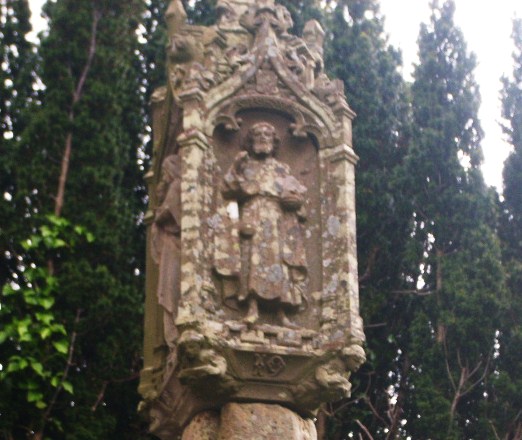
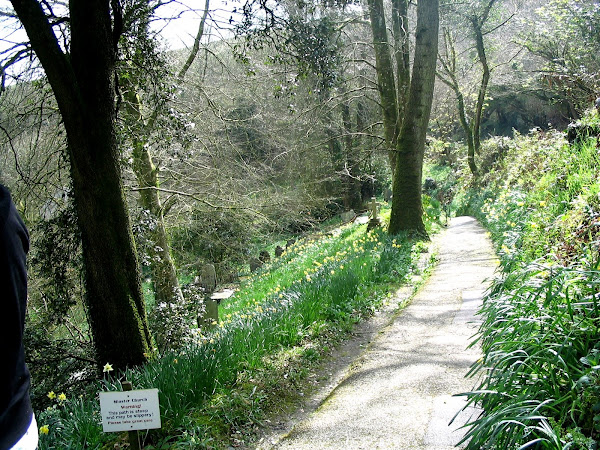
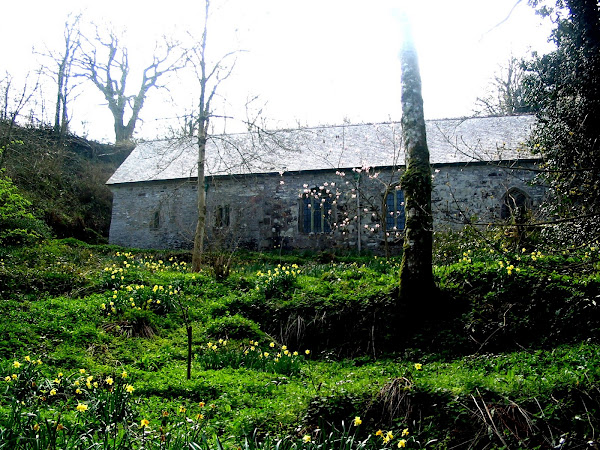
HOLY St Mabenna or Mabyn ,daughter of Brychan in Cornwall.

maryinmonmouth@googlemail.co.uk
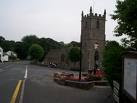
There was no time to look for the well, that will be for another time, yet if you are in the Bodmin area-the church is open daily and worth a visit!