

Wednesday, July 27, 2011

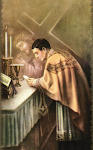
Beautiful Tridentine Mass for martyred Welsh saints at Abergavenny.


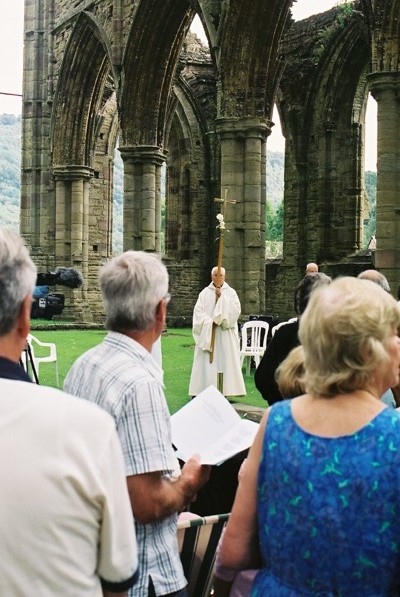
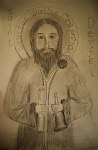
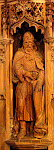
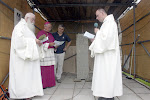
This was a beautiful Tridentine Mass for the Martyred saints of Monmouthshire last week. St John Roberts, St David Lewis and St Philip Evans, administered to the Church for over thirty years in the Monmouthshire area. Fr David was arrested in Llantarnam and executed at Usk. Fr Philip Evans and Fr John Roberts  were painfully hung drawn and quartered at the Gallowfields in Cardiff, where they had been working and going about their priests business. This was all as a result of the Titus Oates plot

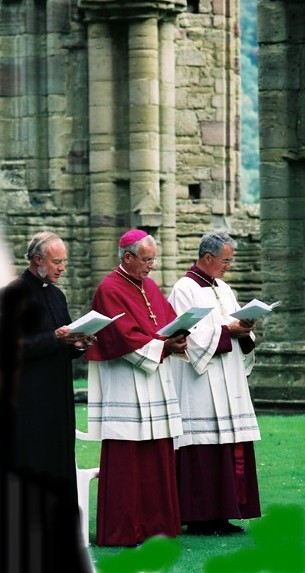
The Choir excelled singing the ancient Gregorian chant, which would have been known to the three martyred saints. Father Tom Regan sang the Mass and Abbot Paul from Belmont was in attendance from Belmont Abbey to read the special prayer for the saints,also invoking St David and St Winifride, the two patron saints of Wales to pray for the mission in Wales


Tuesday, July 12, 2011

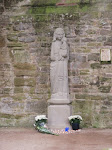
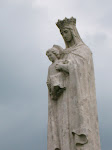
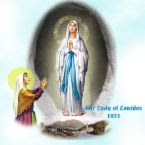
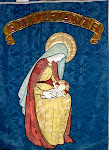
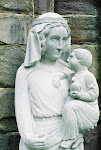
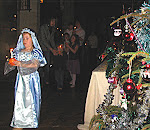
With Mary at Abergavenny! Mary's Festival May 2011

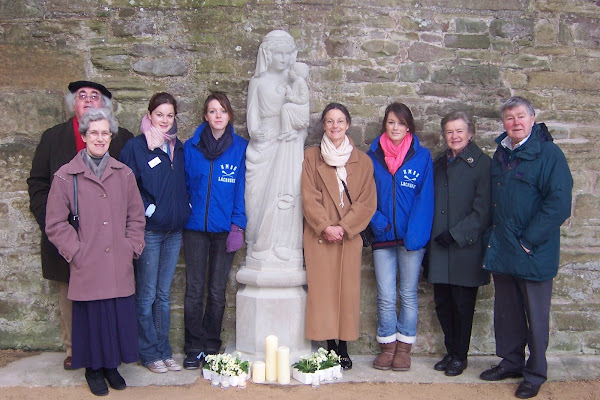
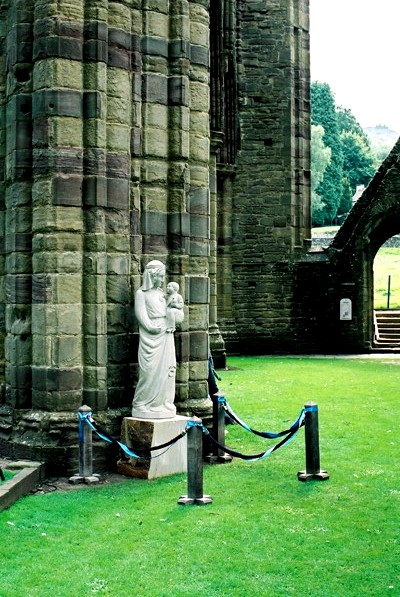
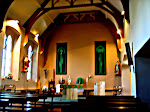
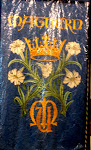
 The annual Festival of Mary and thanksgving for her obedience and role at OL and St Michaels Benedictine Priory in  Abergavenny-really beautiful Celebration amid beautiful music!


Wednesday, June 15, 2011

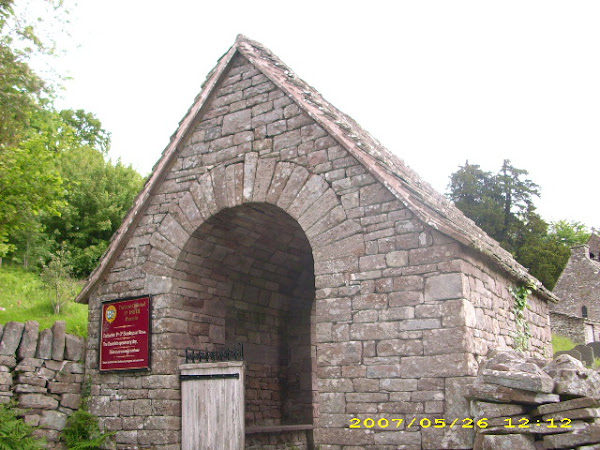
Some Enchanting Welsh Holy Wells around Brecon, Cantref, Maen Ddu, Priory Well


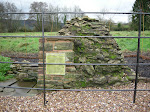
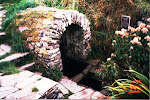
St Cynydr's Well, Cantref Church

National Grid Reference SO0533924929.
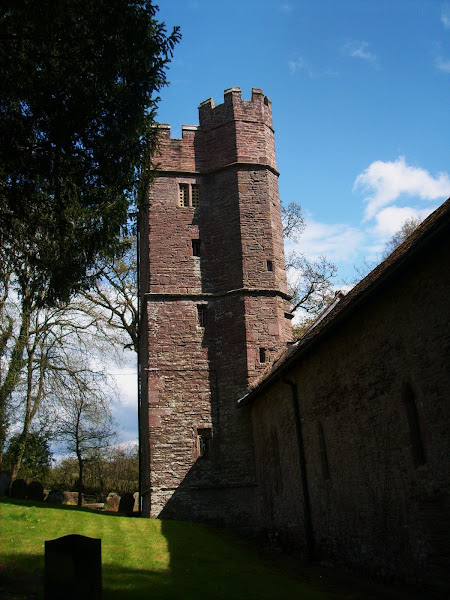
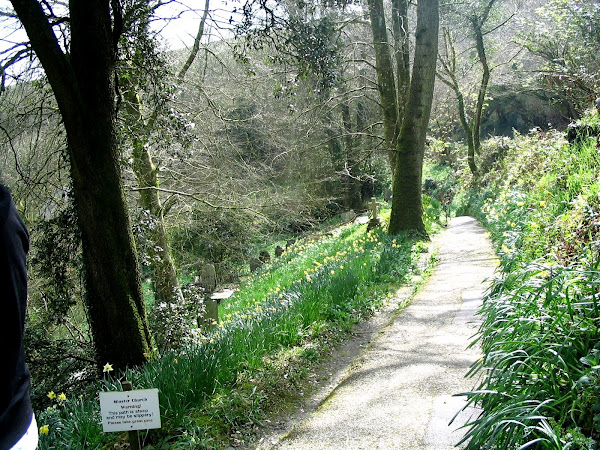
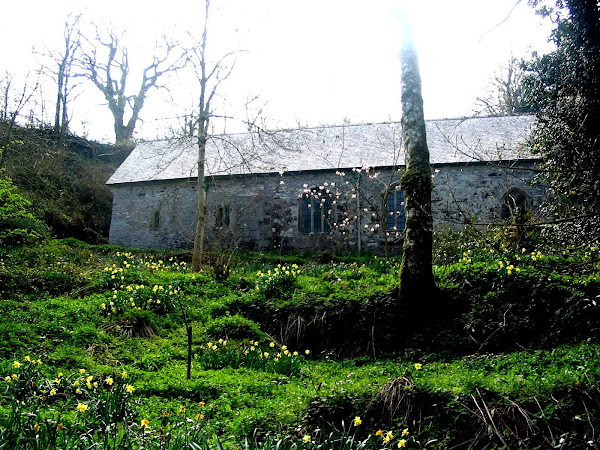
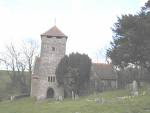
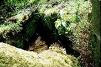
The Holy Well at Cantref Church, which was originally dedicated to Ecclesia Sancti Kenedri de Kantreff in the 1541 Harley Charter III D3, was therefore dedicated to St Cynydr, said to have been the grandson of Brychan through Ceingair , daughter of the saint., although it also seems through the Cotten MS  Domition 1) Gwynlliw (St 'Woolos' of Newport) was his father,  through the line of St Gwladys, Gwynlliw's wife..Most of their children became holy saints and built llans and churches. Cynydr seems to have been drawn to work in his mother's land and many churches and wells commemorate him there. Going into the church, turn right around the tower and walk down the small path to the well. Not an easy walk !

St Brynach was Brychan Brycheiniog's (King of Brecon's) priest. This well had healing properties and is maintained.There seems to have been a familial link between St Brynach and St Cynydr.
 St Cynydr's Well, Cantref
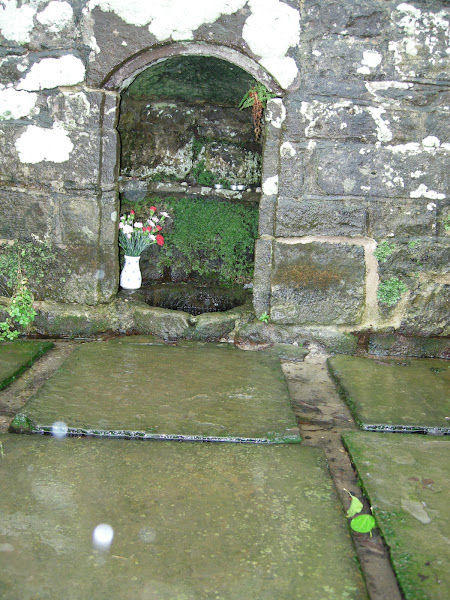
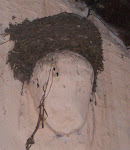
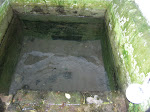
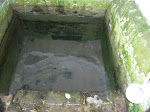
 Maen Ddu well in Brecon is maintained by CADW and lies in a beautiful little fairy like dell, at the centre of a former llan, it has a round circular shape and there is an imprint of a round possible bathing pool further down .
 The Water in Maen ddu-(Black Rock) the stones and sticks in here were disappointing.
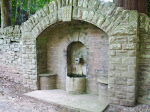
 The well in the picturesque glade. The footpath from the small car park is maintained by CADW and also and easy walk.
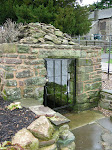
The Priory Well in Brecon  is damaged and overgrown and its remains lie next to the main road on the opposite side to the former Benedictine Abbey of St Peter, now Brecon Anglican Cathedral..
     A weekend in Brecon was a very interesting time, reasearching King Brychan, visiting Talgarth (Garth Madrun) reputed lands of Joseph of Arimathea and visiting these wells, some of which were spectaular and some were disappointing, such as the Priory Well. I will post on the places we viited seperately as we visited St Brynach's own Llan at Llanfrynach as well! The weather was challenging, and I have already posted bout the Cathedral, but also have information about St Mary's Brecon, which now boasts a state of the art restaurant!!!!                                     

Wednesday, May 4, 2011

HOLY St Mabenna or Mabyn ,daughter of Brychan in Cornwall.

maryinmonmouth@googlemail.co.uk

There was no time to look for the well, that will be for another time, yet if you are in the Bodmin area-the church is open daily and worth a visit!


Monday, February 14, 2011

RETURN TO THE FORMER BENEDICTINE PRIORY OF MALPAS, NEWPORT

I am sorry I can post no more photos on the blog as we are now being charged for uploading photos, but I am making enquiries.

http://maryinmonmouth.blogspot.com/2009/06/malpas-priory-newport-dedicated-to.html

In 2009, I wrote a post in the series of Benedictine Priories in Gwent and wrote about the later history of  St Triac (Brioc's) Clunaic (Strict Benedictine) Priories. More interesting still is the fact that it was a house of the Abbey of Monte Acuta (now 'Montacute House') and appeared in various records.


In 1132 Charter of Robert, earl of Gloucester, confirming the gift of Malpas Village etc to Montacute Priory. It also refers to Novo Burgo (Newport)  (-one of the earliest references to the existence of the town as a "New Borough")     See: Robert B. Patterson 'Earldom of Gloucester Charters' 1973. No.156 page 146.

1239 MALPAS there was an agreement between the abbot and convent of Gloucester and the Prior and convent of Montacute and the Prior of Malpas....the abbbot and convent of St Peter's Gloucester or their assigns, should receive, peacably and fully, all the tithes of Mendelgif and of all things of old belonging to the church of Newport, without hindrance or annoyance

Translated by James Conway Davies Episcopal Acts Relating to Welsh Dioceses 1066-1272 1948. Vol.II page 715.


Published in Latin by W.H. Hart Historia et Cartilarium Monasterii S. Petri Gloucestriæ 1863. Vol. II. No. DXXVII, pages 62-63.

So it seems from this time, that St Peter's Abbey Gloucester was entitled to oversight of all the tithes belonging to St Triac's Priory.I am grateful to Bob Trett who has researched this information, as it enhances the former post, although it seems by the time the Priory was seized, it was at least still collecting the tithes of Mendelgieff,  and the cattle.as it is mentioned in the accounts,

Saint Triac

St Triac was originally St Brioc or St Briavel or St Brieux in Brittany. Triac was born in Ceredigion around 440AD
St Germain of Auxerre leaves Ireland ti establish schools for the irish missions and is given Triac to train.450AD, so only ten years old.
454AD St German  re-founds Caer-wogorn and then departs with his pupils to Paris.
465 AD Returns to Ireland Brioc receives priests apostolic ordination and returns to Wales.
470AD Triac (aka Brioc) returns to Ceredigion, founds churches and assists St Germain, wherever he is, including the Western Isles.
475AD St Germain dies.
480AD troubles in Ceredigion because the sons of Cunedda invade and the Irish are expelled.
520AD Triac was compelled to leave -goes to Cornwall and then to Brittany.
526AD Returns to Wales. The fact he is mentioned at St Briavels (Briomagl) shows he had been there and also that he had founded the llan at Malpas. (Llanfriog) which can be observed from the large circular 'llan' outline of the churchyard wall.
On returning to his monastery at Saint Brieux he finds his nephew Tudwal in possession and unwilling to receive him (ingratitude!) He goes on to the land of Rouvre.
530AD He is recorded to have visited the court of King Childebert and has the grants made by Rhigual confirmed. He returned to Britanny and then died. The Body of St Triac was translated on July 23 1166 in the presence of Henry II of England and William, Bishop of Angers, where it had been taken in the tenth century, on account of the attacks of Vikings in the North of Brittany.
The only other surviving monasteries of St Triac (aka Brioc) are at Llandyfriog in Ceredigion (Rees gives Tyfriog (House of Brioc/Triac) ap Dingad-indicating that St Dingat was the father of Triacus (the Latin form of Brioc)Approximate date of the death of St Illtyd was 537AD.
There is also a Church dedicated to him in Cornwall-St Brioc near Wadebridge (I have posted on this church also)

In iconography, he is seen an an abbbot's robes, sometimes with a wolf at his feet.


Thursday, February 10, 2011

SUNRISE CANDLEMAS IN GWENT and ERGYNG February 2nd 2011 8pm

I left home at 6pm in complete darkness to attend this wonderful ceremony at Belmont Abbey.........


One of the most beautiful of the Christian Masses   celebrating the Presentation of the Lord, a Light to Lighten the Gentiles. There is an ommission in the 'Nunc Dimittis at the end,of the word  'Salvation'-a rather important word, but it takes a long time to upload a video so my apologies.

This is a ceremony from a wonderful
 and reverent Benedictine House, which does so much to support the Faithful in Monmouthshire.In spite of the 8am start, I was privileged to be present.

Thursday, February 3, 2011

GARWAY PICTURES AND TEMPLAR CARVINGS

 Templar Church of St Michael, Garway. Travel Directions are given in the last post.
Holy well, before restoration
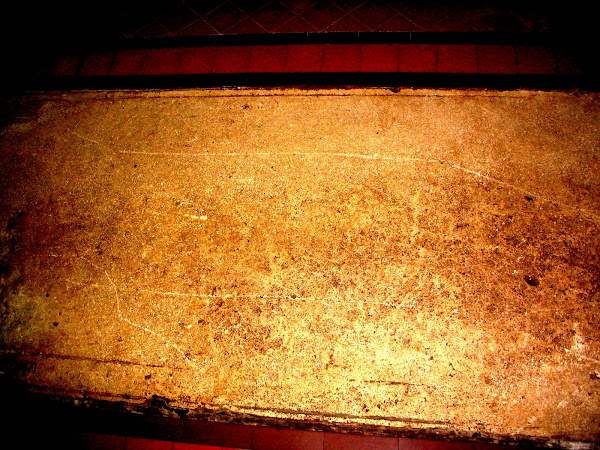
 Altar incisions from the date of the earliest stone church (Saxon or earlier)
Stoup, where the Templars and others rememmbered their baptism and ritually invoked the Father Son and Holy Spirit when entering and leaving church, exactly as today.

 Altar Incision, from consecration of altar in Catholic times.
A 'Green Man' Carving, for Christians denoting new life in Christ.
Cross inside the Garway Church

Norman arch in Garway Church
Carving outside the walls
Templar Carving outside the church on the Walls
Another Carving Knights Templar
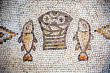
Fish -one of the earliest Christian signs, which Evelyn Lord, an acknowledged expert on the Templars, believes to have belonged to an earlier Church, the successor to St Dyfrig's (Dubricius) church which was laid waste by Vikings.
Blessed Sacrament above the piscina
A little unclear, but you can see the door into a previous ROUND nave, which can be traced outside into an ambulatory which seems to have gone around the outside-although I think I can see a much smaller, earlier Saxon church traced in the wall.
Outside the Nave
Beautiful Carving showing a Knight spurred on by angels.
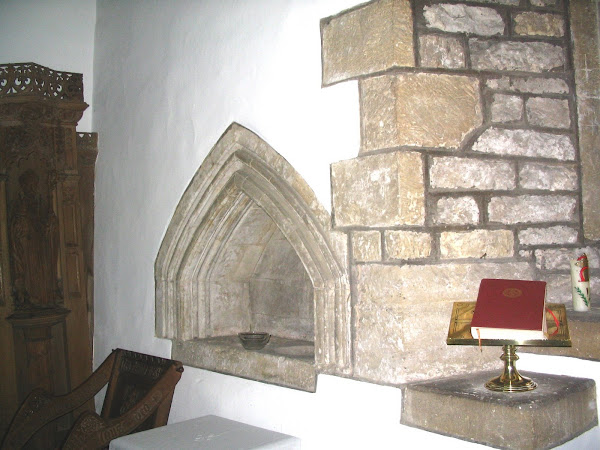
This looks like a niche for a statue-possibly of the 'Blessed' Mother. (words of Angel Gabriel)

Earlier carving in the church, but I am not sure, what it is!