Wednesday, January 20, 2010

Dreamy Llanrothal, Templar Connections, and a Ghost Story from Penal times


Information taking from Joan Fleming Yates' super book The River Running By'IBSN 1 905037058 published by IMPORESSIONS OF MMONMOUTH LIMITED. Also other information from
The Churches Conservation Trust
1 West Smithfield,
London EC1A 9EE 020 72130660 email central@tcct.org.uk Registered Charity.

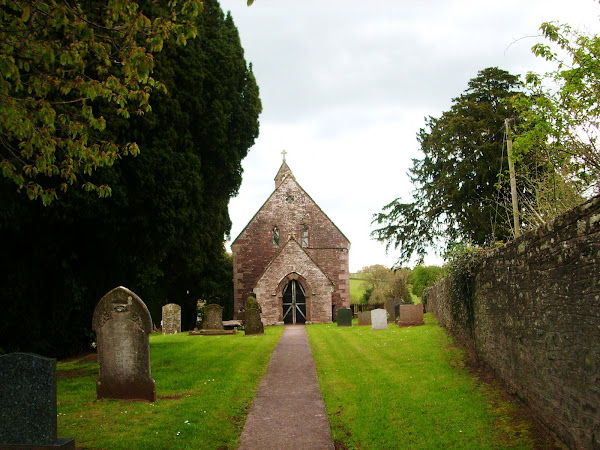
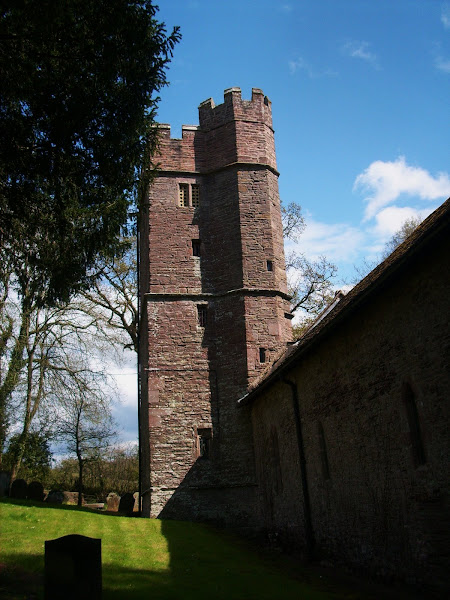
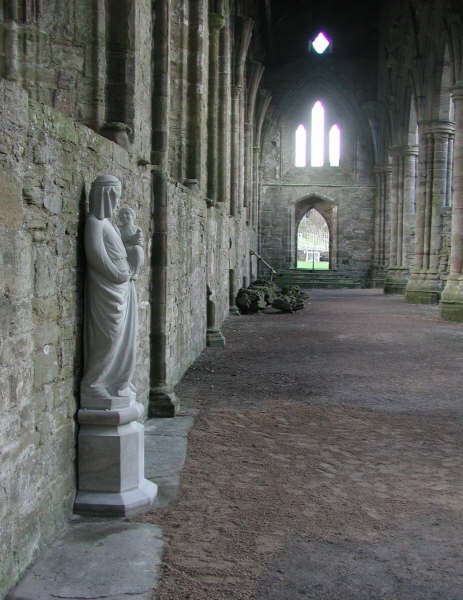
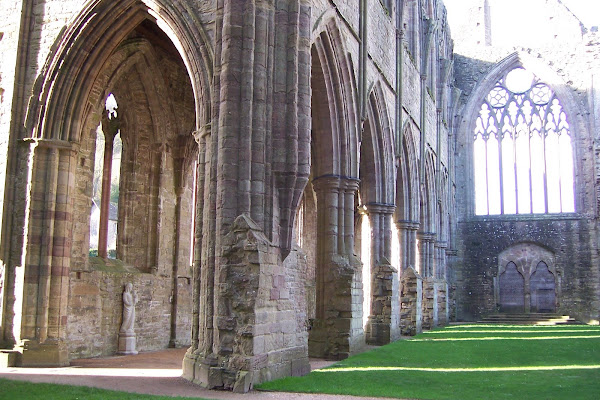
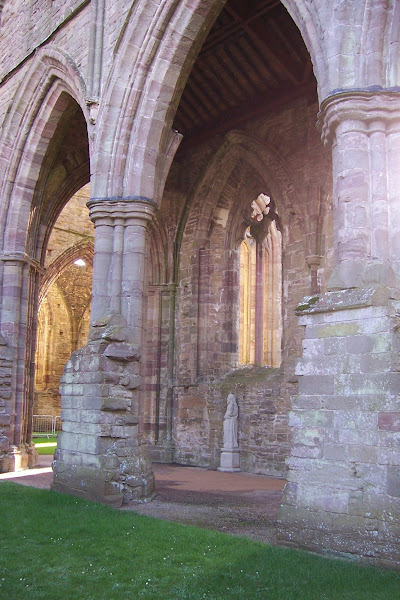
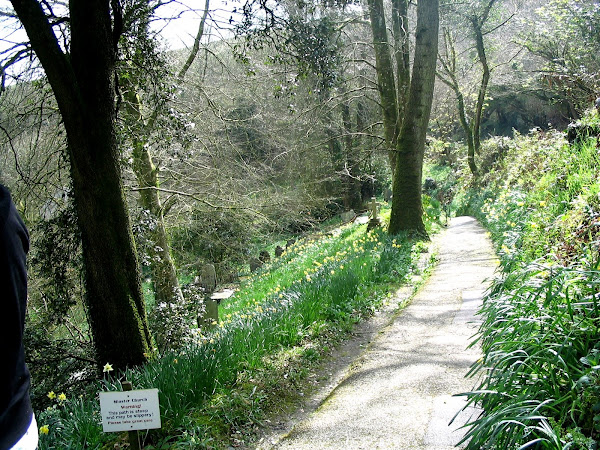
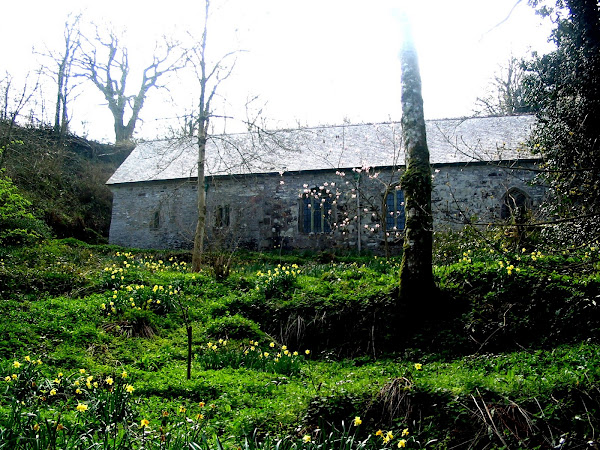
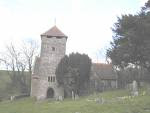
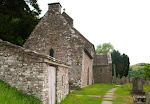
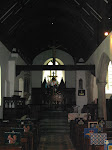
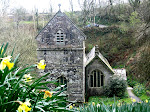
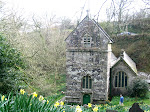
The Church of John the Baptist at Llanrothal was surrounded by a mediaeval village until the time of the Great Plague or Black Death (1348-49) and archeologists have found evidence to prove it. A road runs nearby and a mill stood by the river, but now all has disappeared. Did the Death kill everyone in the village, or did the survivors make for nearby towns where their services could be rewarded with good money. We may never know. Like the Monmouthshire villages of Trellech and St Brides Netherwent-they are no mmore and the remains of their houses lie under the fields.+

The parish of Llanrothal was to the south of the realm of St Dubricius or Dyfrig, which was called Ergyng or Archenfield.The River Monnow is a boundary and lies nexts to the parishes of Welsh Newton and Garway, the Templar Church. Ergyng was a separate kingdom, but eventually joined with Monmouthshire or Gwent and it was here Dyfrig started his building of monasteries, which he did all his life. I have posted about Dyfrig before in the 2006 archives (see Left hand side near the bottom of the page) Dyfrig was a major figure of the church in sixth century Wales, building more monasteries at Hentland and Moccas. Was this one of his early mmonasteries? It was certainly his territory, but nothing remains of the early structure, although we know it was a Welsh monastery. Monks would have made a clearing, prayed and fasted over the ground for forty days and nights, banished evil spirits with incense, then divided heaven from earth by means of an encircling wall, long since robbed. This monastery would have been founded in these times by the Welsh Monk Rhyddol (pronounced ru (as in ‘under’)thawl’.The title ‘Llan’ draws us back to Celtic monasteries and clearly the saint is still remembered in the name of the village, if not the Church.

The BOOK OF LLANDAFF

The ‘Liber Landavensis’ or ‘Book of Llandaff’ names Llanridol amongst the Ergyng Churches subject to the See of Llandaff under Bishop Herwald between 1056-1104-precisely the time of the Norman Conquest.The Liber Landavensis goes back to the very beginning of the sixth century and who was its first archbishop?St Dubricius of Ergyng, succeeded by the great St Teilo and his nephew Euddogwy (Oudocceus) It is likely oit remained a monastery or even Hermitage right up to the time of the Normans, who rationalised the Celtic Churches, endowing them with Augustinian charisms of Nature and good works. Later the Celtic style of Catholicism was taken right into the Cistercian way of Christ. Deep prayer and contemplation, Office of the Hours, regular confession.The Book describes the church as situated on the banks of the River Mynwy, 4 miles North West of Mmonmouth.Little was known of St Rhyddol himself, and it seems he had a hermitage in the area district during the time of the Holy David. In the 1291 ‘Taxatio’ off Pope Nicholas valued the Church at £3.6.8d-quite a good amount for such a small church, which seems, however, very spacious. Whether it first became a stone church and then rededicated or whether it was built under Herewald after an earlier wooden or mud and wattle church became unusable.

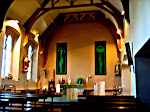
The Church belonged to the Priory of Our Lady and St Florent at Monmouth. After perhaps it was rebuilding, its Welsh Saint was erased to provide a more biblical name after one of the great saints of the Church – St John the Baptist. The rest of the parish comprises, even today ,farms and several private houses, the most notable being Tregate House Castle and the Cwm-later to become the Roman Catholic College of St Francis Xavier in Penal times.It was moving to see the fine crosses carved into the original altar, now replaced and how the crosses consecrrating the altar were in front of me, as they had been carved by those monks from MMonmouth a thousand years ago!

St Rhyddol, Ridol, Roald Rheidol the Hermit

The Saint, Saint Ryddol seems to be commemorated in several place names around the British Isles as it was at this time, there is a Rhyddal valley in Cumberland for example, and the River Rhyddal (Reiddol) in Cardiganshire, and even one in Devonshire, where the name still exists as a surname. It follows that Rhyddol may have been a founder of the monastery, but more likely a dedication of one of Dyfrig’s (Dubricius’s )early monasteries. This area of Ergyng was all part of Wales and Welsh was the spoken language of this part of what is nnow Herefordshire, although Herefordshire is still included in the Catholic Diocese of Cardiff .

Normans

When the Normans arrived in Wales, they ‘regularised’ a good deal of Welsh religious life. The Christianisation of Wales had been very early in the history of the Church, and the break with the Roman Empire had cause some falling away in some areas from true Christian doctrine, as we see with the Holy St David’s passionate defence of the Church’s position against heresy. Welsh priests often wanted to celebrate Easter at Imbolc, the Druid Spring Festival and liable to follow Morgan, a heretic, a non clergyman living in Rome, also known as Pelagius. St German had travelled from Armorica to preach against Pelegius ideas (he had made them up himself) and later it was to Holy David the Welsh bishops, including Dubricius appealed which prompted David’s appearance at Llandewi Brefi to speak against this. The Holy Dewi was later canonised by the Church by Pope Callixtus for his defence of true teaching and his name became a holy day for the whole British Isles until the sixteenth century.

The Normans,( keen to record the Welsh Christian experience in writing) were the first to write them down in Latin and sometimes Welsh, as the aural tradition, with Bards singing the great deeds of their ancestors and the histories, the triads (the three holiest families etc) was the Welsh Way of recording information. It was to the Benedictine Monks such as Geoffrey of Monmouth and the Cistercians of Margam Abbey that can be credited the recording of such information. According to a Cambridge Scholar, the first stories of Arthrwys (Arthur) were written in the Scriptorium of the Benedictine Priory at Bassaleg. The Normans almost certainly changed the name of this little Church, and its dedication to an obscure Welsh Saint, to that of John the Baptist, a very popular saint in the Middle Ages, linked by blood to both Jesus and Mary through his mother Elizabeth, Mary’s cousin.

The Death

In 1349 the village died. Almost everyone died in the Black Death and the houses went into ruins. The church had become a grange of Monmouth Priory, and now only Tregate Castle (probably the local Manor House-built on the site of a Norman motte-and-Bailey castle survive.In 1086 there was certainly a house there (possibly an earlier house made perhaps of mmud and wattles or wood on a natural ‘motte’) but it seems to have escaped the compilers of the Domesday Book, so perhaps it was burnt down or in disrepair and rebuilt in stone during Norman times. The family who lived there were important as there was also a chapel there dedicated to the recently martyred St Thomas Becket, perhaps the most famous saint of the Middle Ages. Evidence of a wooden keep has been found there, but no evidence of it having been in stone. St Rhyddol was called St Roald in Saxon , and at Llangunville just along the Monnow Valley was the Chapel of St Michael, now disappeared and used in the building of farmhouses. Church and chapels all were in the possession and served by the Benedictines at Monmouth Priory in 1186.

Heroic Henry Milburne and a 'Ghost Story'

Henry Milburne, loyal recusant Catholic during Penal times, recorder of Monmouth and Agent to the Duke of Beaufort lived at nearby Hilston House and more than once helped his fellow Catholics to evade capture. He also kept priests and had Mass said at his house. He also paid fines for Catholics refusing to go to local protestant Parish Churches. A good man, he enjoyed a good fight and one was recorded in the evidence presented to parliament about the covert Catholics in Monmouthshire in the sad ‘trial’ of Saint David Lewis of Usk.

Llanrothal House was also a home of Henry Milburne and it appears he was killed here, conveniently perhaps, when his horses bolted in 1692 (just 13 years after the death of Fr Lewis)He was thrown into the river as the horses panicked. His body was never recovered and,according to local legend his ghost haunted the house . Twelve Anglican vicars were sent to ‘exorcise’ him –the oldest one was the vicar of Raglan(Rhaglen). The ghost appeared and the vicars all fled except the vicar from Raglan. The ghost seemed to have asked the Vicar for how long he was to be laid and he was told ‘until I next eat bread’. The ghost disappeared into the river, according to the legend and was never seen again, because within a few hours, the Raglan vicar became ill and died before he had the opportunity to eat any more bread. A very deep pool in the river near Llanrothal Court is still known as ‘Milburne’s Hole’. We shall come back to Milburne when we get to the post 16th century posts, but this is an interesting story. It may be a garbled story in any case, trying to discredit the man who had done so much to help his fellow Catholics and he may well have had a staged accident to remove the strong Catholic patrons by the Catholic haters like Arnold and Scudamore, able to hunt their priests more efficiently.The Catholic church never died out in this part of Monmouthshire, because of the heroic efforts of the great landed families, who helped their fellow faithful through one of the darkest times.

There was also one of the few bridges over the Monnow at Tregate, the original swept away in 1880 in a storm and the bridge was reopened in 1888 after considerable argument as to whom should pay.

Anglican Use of Llanrothal Church after Renaissance

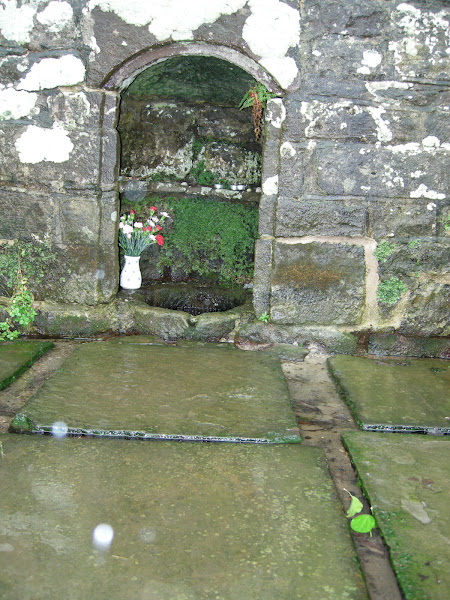
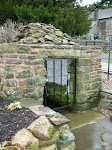
Apart from the Anglican Bishop of Hereford hunting Catholics in the 1605 incident, when there was a revolt because he refused Catholics burial in consecrated ground (my post on the ‘Priest’s Well’ at Skenfrith. At Allensmore five miles south of Skenfrith the people made a stand against the powers because they felt Alice Wellington should be buried in their churchyard by torchlight and they duly did so. The local Protestant vicar went immediately to the Bishop and gave the names of all he recognised. The Bishop of Hereford had issued a warrent for all their arrests. Two weavers defended themselves and escaped capture and there was an uprising by the Catholics and they fled after being pursued by the Bishops men and soldiers he had got to back him up.They fled over the River Monnow into Monmouthshire, which the Bishop (Robert Bennet) who declared furiously was ‘almost totally corrupted with Catholicism’. The priest who had said Mass for them when they first fled to Darren Wood secret meeting place. The names mentioned William Vaughan of Llanrothal and his shepherd. They searched all the local houses and found many Mass books, relics, altars, works of art, which declared Catholic worship, but the entire villages had fled into Monmouthshire, apart from the old and infirm, including the priest, Father Ainsworth and in a fit of spite they ‘executed’ the old man, near the stream called the ‘Priest’s Well’, still in the ground of the ‘Sandhouse’ next to the River Monnow (Mynwy).

Father Pritchard, Prior of the Franciscans at Perthir,Rockfield and Vicar Apostolic of the West of England during penal times often walked with his brothers to the Priests Well to pray for his soul.His ancestor was possibly one of those who fled what was now England. The Bishop of Hereford had fled-there was no one to be caught. The whole situation was calmed by the Earl of Worcester, who was himself a ‘harmless’ Catholic.Edward, friend to the Catholics, arranged for the safe removal of the priests in hiding and from his home at Raglan, supported the covert Church by harbouring and sending out priests until the time of Cromwell when Fayrfax destroyed the castle and Chapel. Many great and powerful families moved to the area, where it was felt that the remoteness of the area and its strong resistance to forced conversion to another religion would not be so important. The organisation of the church passed from the hierarchy to the noble families who saved the religion. Interesting that the cross at Llanrothal Church is definitely of a Catholic design, from Thrumpton Court in Nottingham.

Later History of the Building

In 1851 the Anglican Vicar of Llanrothal was Reveerend John Watherstone conducted services at 11am and 3pm every Sunday at the beginning of his incumbency, but Anglican numbers had dropped off, since the Hierarchy of the Catholic Church had been restored in 1850 and the Catholic church in Monmouth already built.In 1882, towards the end of his mministry, a parish minute says the church had been closed and ‘no service was held there in any rregular way’. Plans were made to put up a small iron church suitable for the requirements of parishioners’. The plans came to nothing and before long ‘services’ at the old parish church were resumed.

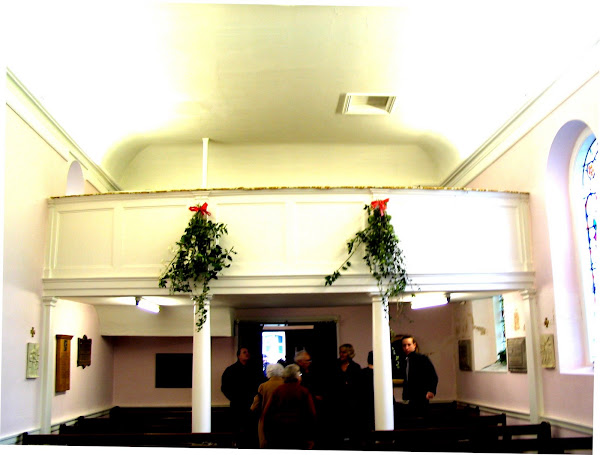
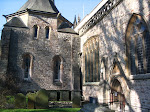
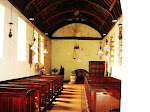
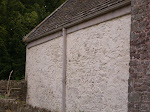
The fabric of the church, however, was crumbling and in 1921 Griggs of Newport did an extensive renovation, but it became necessary to abandon the nave which was falling in and concentrate on preserving the chancel and adapting it. The unsafe roof was removed from the nave and the chancel arch demolished in 1948 and the work on the chancel carried out by the Historic Churches Conservation Trust and the Friends of Friendless Churches-in 1957-8.The Churches’ Conservation Trust has rre-roofed the nave(in order to protect the walls from more deterioration and the walls and windows made good.The windows were glazed and the whole exterior lime washed, partly by the Trust, but helped by many of the parishioners.

The Font and Templar Connections?

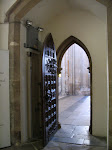
Found near the original door in the nave is a simple bowl shaped font on a narrow pedestal, which it is estimated comes from the early Norman period.The interesting thing, however, is not the date, nor the lack off decoration, but the presence of a small raised ‘cross patte’ at the centre of the bowl. The Cross patte is a cross which tapers towards the centre, not unlike an iron cross but without the indented ends associated with the iron crosss symbol. The crosse patte sits on a small raised plug of carved stone, not unlike the drain plug of a modern bath. The crosse patte was associated with the Knights Templar, though there is no known association of the order with the church. However was the Lord of the Manor or a member of his family a Templar, or did local farms supply Garway. There is no way of telling, so secret did the order become.
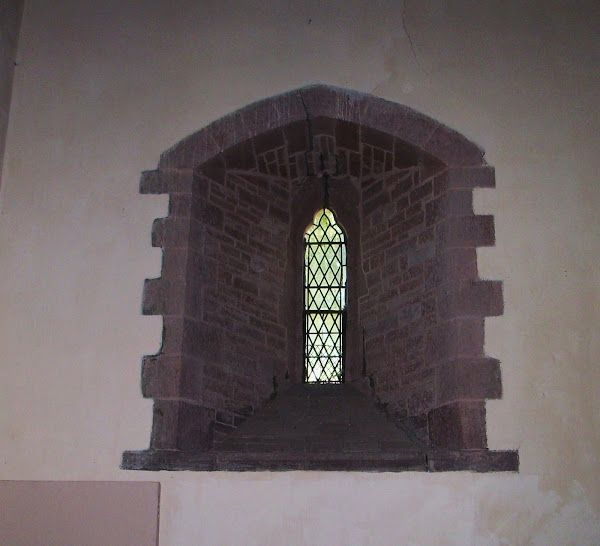
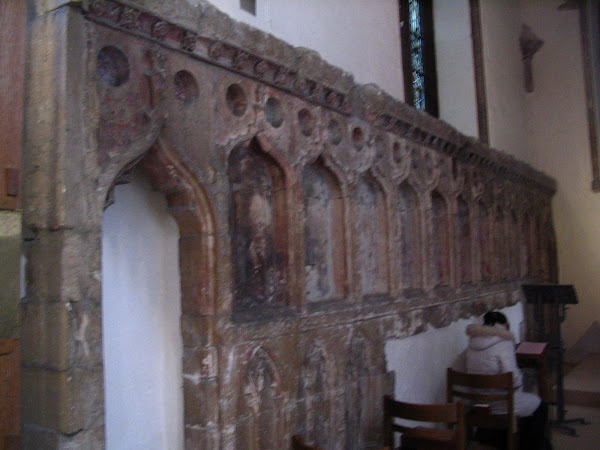
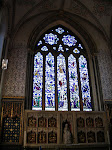
The Church was built of sandstone and roofs originally covered with slates but are now tiled. Of the original 1186 building part of the north wall and one window remain. Most of the rest is 13th century and beginning in the 14th. The church which dominated the village was quite new when the Black Death struck.There was a rood loft, off course removed when the iconoclasts struck, but north of the arch a square headed doorway can be seen,which gave access to it-it was removed during the partial demolition in 1948 . A replacement chancel arch was built in 1958 in brick.

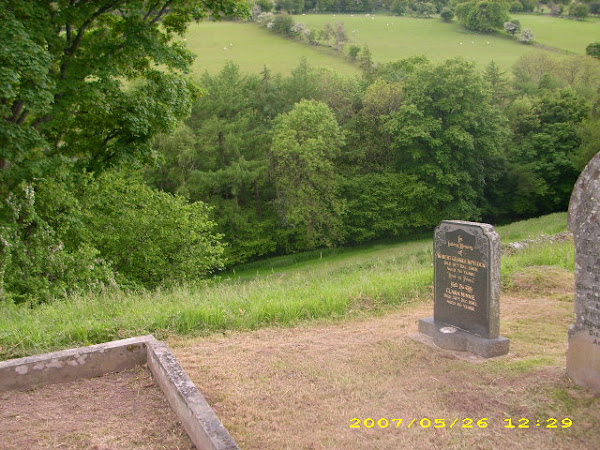
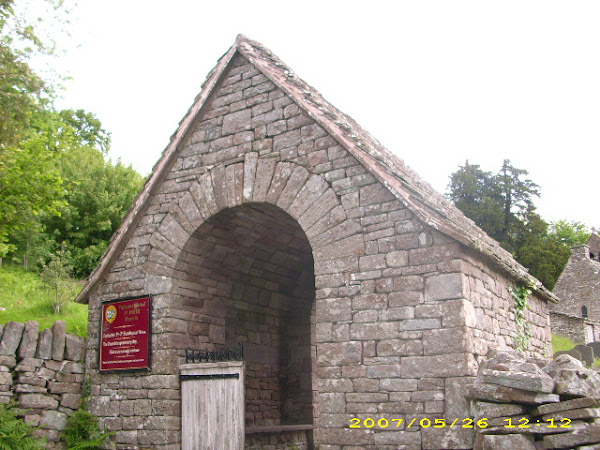
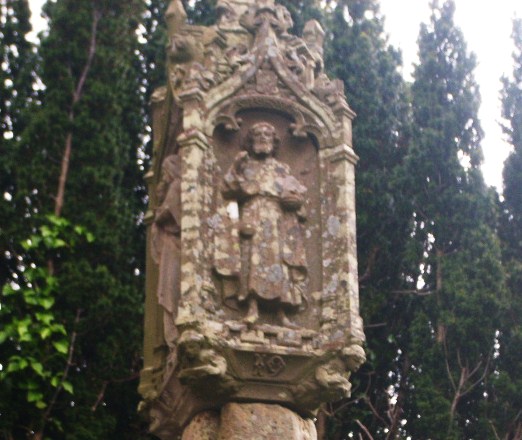
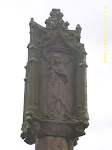
In the 15th century the great window in the chancel was added, probably brought ffrom elsewhere. The 1500s saw the building of a south porch, now ruined, but near where the font was to be found. The Vestry was made into the present north porch. Fragments of the preaching cross are to be found there, but the base remains in the churchyard, where there is a wonderful view of the Monnow River.

1680 a Welsh bell cote or turret was made which features prominently in old pictures of the church, but which was demolished in 1948. It had a pitched roof and its west side was built with broken mediaeval coffin lids. !680, the church received a bell as a gift of Martin Boothby of Tregate, cast five miles away at the foundry of John Pennington of Monmouth and rehung in Welsh Newton Church in 1953 in commemoration of Queen Elizabeth II’s coronation.

The Mediaeval Altar

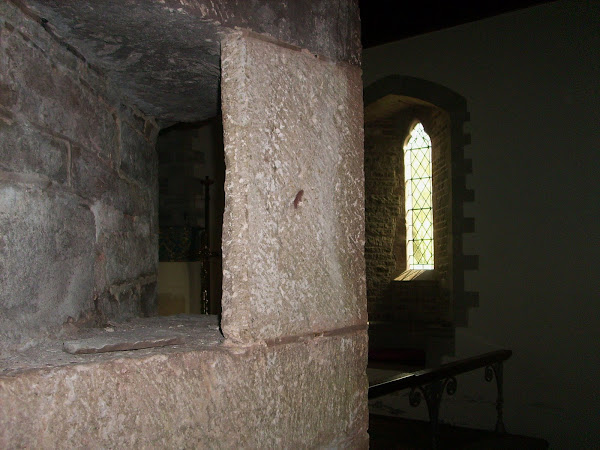
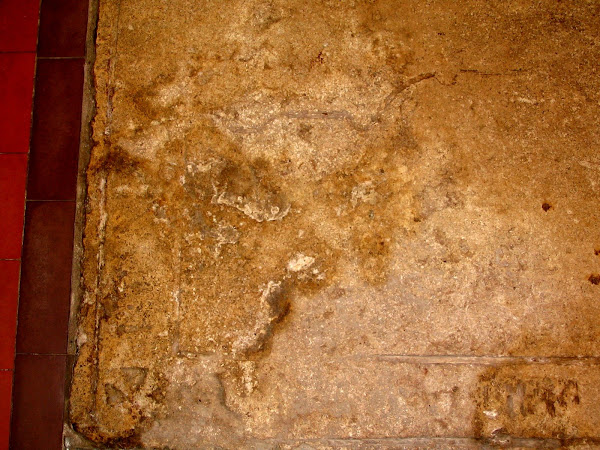
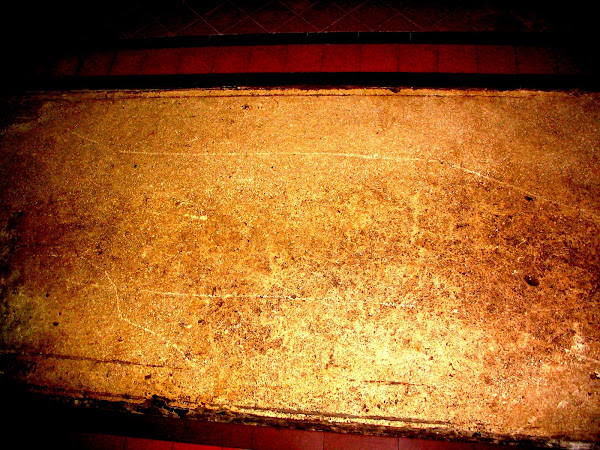
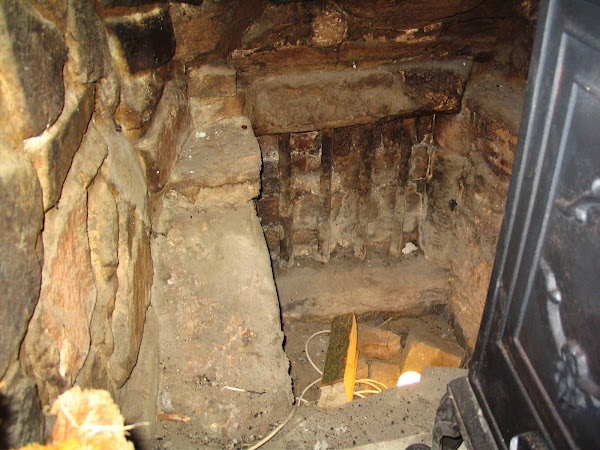
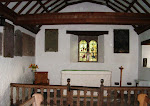
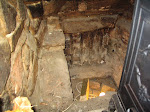
This is original and weighs two tons. It was, characteristically hidden under the floor in 1890.They would originally have held relics, which are either still there or hidden by parishioners. The Altar cross and candlesticks together with the brass chandelier are of Catholic design and given to the church in 1958. They are of the same period of the persecution and may have come from a Catholic church and preserved by some loyal parishioners.The chandelier also is 18th century but incorporates earlier work, from Thrumpton Court, Nottinghamshire. All were given to the church by the first Chairman of the Churches Conservation Trust the late Ivor Bulmer-Thomas. The chair near the altar is Jacobean from the time of James I (1603 onwards).

Annual Anglican Service on the Saints Day-St John the Baptist 24th June-on the nearest Sunday.

Directions Post Code:NP25 5QJ Ordinance survey SO489169
5 miles north of Monmouth off the A466.
Leave A50 at Monmouth, take A466 towards Hereford. Turn left towards Llanrothal.
Take the signpost for Llanrothal. Entrance through a gate between a large white house on your right and the next house. Gate is missing-says ‘Public footpath’, but drive down the track at the side of the field and then turn left to park by the church. Please remember to give a donation.

Tuesday, December 22, 2009

MERRY CHRISTMAS TO ALL IN MONMOUTHSHIRE AND BEYOND!

I have had an unbeluievably busy few weeks with very little time to call my own, and asadly not evben enough time to post my Christmas Podcast.Then I have been ill for the last few days with a heavy cold and having to get ready for travelling. I think my facebook friends can contact me there-or you can contact me on 'maryinmonmouth@googlemail.com. I hope perhaps on 27th or 28th to put up my Christmas Special and may even get around to blog about our travels if I take my laptop with mje tomorrow. I have a problem with castblaster which only seems to work with XP and so am completely puzzled as my microphone will not work, yet does if I use only files from the Zoom H2 ehivh is good quality but rather limiting as I can't mix sounds. Hopefully I will get some help soon over this.

I will see what I can do tomorrow!

Can I wish all readers and listeners a happy and holy Christmas and also a happy and healthy new year. There are big surprises in store in the podcasts and in the blogs as we go deeper into Mediaeval devotions.

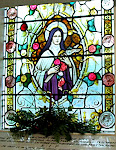
Highlight of the year was the visit of the relics of St Theresa when 4,000 people turned up in Cardiff to venerate her, including all sorts of Christians as wel;l as Catholics, all clutching red roses and candles! Beautiful!

Sunday, November 22, 2009

Pilgrimaqge in the steps of St Hywyn and St Derfyl-Our Summer Holiday


17th August 2009

We left Chirk after another excellent breakfast (mine somewhat small because of the diet) and drove of towards Bala. I did want to call in on Gwyddelwern. This was said to be a settlement of St Beuno . It proved to be a challenge for the satnav, but we did find it-and it was locked-even the gate into the church was locked, so it was a dead loss. We drove half a mile north of the village to find the well, but this proved to be elusive. We thought we had found it, but in the height of the summer it was possible that the well had dried up.

Llanderfyl

We found a stream but not a well and so that was unsuccessful.We drove down to Bala, passing through Llanderfyl. Now we have a Llanderfyl in Cwmbran, where Arthrwys’s soldier friend had become a hermit and established a small community. I was eager to see a surviving relic of the reformation- the stag upon which St Derfyl had ridden on his memorial statue in the church. St Derfyl could have been the patron saint of vets.

He was brilliant at curing animals particularly from their ailments. There was reputedly a statue at Cwmbran as well. Both statues, like that of Our Lady of Penrhys were quite wickedly dragged off to England to be burned at Smithfield. The legend of St Derfyl said, that one day if it were ever destroyed a whole forest would be set on fire. It suited the rather wicked people at that time, that to burn poor Father Forrest on the pyre of these wooden statues was funny. The stag remained in the church. One vicar tried to wreck it, and it remained in the chancel for many years. Now it is out in the porch. Masses and Divine Office was once said and sung here. I said another Rosary , after photographing the remains of the stag and other artefacts and after locking up the church, returned the key to the old peoples home from whence it had come.

Stop off at Portmeirion

Bala and Llyn Tegid were a poem in the Autumn sunshine. Wonderful colours and scenery as we drove further into the Snowdonia National Park arriving at Portmeirion in the early afternoon. This was a most interesting place for the family, including a swimming pool and hundreds of different Italian styled architectural exhibits. Some of them were hotel rooms, others just shells, with nothing inside, a fad of Clough Williams Ellis. We spent about two hours looking around and managed to find some food there too. It really was like walking into Italy or Spain-such a load of colour. Bookshops, paddling pools for little children ,a swimming pool, dog cemetery and the all important ‘Prisoner Shop’ as ‘The Prisoner ‘ with Patrick Magoohan was filmed here in the 1960s. I bought a couple of books after a long walk. A children’s book about St David and ‘What Welsh Plae Names Mean’ and ‘Wales before 1530’ which proved very interesting indeed.

Lleyn Peninsula to Aberdaron

Driving off again we started the long journey down the Lleyn peninsula to Aberdaron. My son leapt with joy at seeing the sea just over the road and ran off to leap into the sea with great abandon. He returned very cold when it was almost dark. We loved our room in the comfortable pilgrims pub ‘The Ship’ although we ate in the Gwest opposite. I walked into St Hwyn’s Church which was the pilgrim’s church and where people would say Mass before leaving for Bardsey Island, the holy mystical island at the end of the journey.

There has been a place of Christian worship at the edge of the sea at Aberdaron since the fifth century. At first a simple wooden structure housed both Hywyn and his prayer cell where the Gospel was preached to the few villagers whose humble cottages clung to the side of the cliffs and whose livelihood depended on the sea and the few acres of soil in which they grew crops.
Cadfan, the warrior saint, who travelled from Brittany with Hywyn, moved on to Enlli, the island off the tip of the LlÅ·n peninsula. There he set up a religious house, later to be dedicated to St Mary. To both men these were places of their resurrection. Places where they felt God had called them to live, to pray and to die.
The title 'saint' in the early Catholic Church was often by acclamation of the people before the Congregation ofSaints was set up in the Twelfth century.The Bishop of Hereford created St Issui saint, and so such holy men were aclaimed by bishops locally.

Griffudd (Griffith)ap Cynan

In 1137, Gruffydd ap Cynan, King of Gwynedd, began erecting stone churches to replace the wooden buildings in the most important parishes and so the oldest portion of St Hywyn's Church dates from this time. It became a sanctuary church within which, on the stone chair called the chair of peace, disputes could be settled and no fugitive could be ejected for 40 days and nights.

St Hywyn's Church was also a clas church, similar to a monastic settlement but without affiliation to a particular rule -an association of clergy working together and leading a common life under the authority of a chosen leader or Abbot. The clas was maintained long after the Normans set out to break up such organised structures and was followed by a portionary church - a network of benefices held by individuals, usually following a family tradition - without corporate ties. The revenues were divided into portions among the clergy in charge of the area.

In 1417, the church at Aberdaron was enlarged. Records show that it was still closely connected with St Mary's Abbey on Bardsey.
When Henry VIII broke from the Church in 1536, the monasteries were closed and for a short while the Diocese of Bangor benefitted from a revitalised church served by devout priests, but gradually decline set in and sinecure rectors with no parish duties to perform were in charge and paid vicars to take on the duties of parish priest.

St John's College Cambidge vicar struggles to speakWelsh

In 1624, St John's College, Cambridge became the patron of the parish and remained so for almost 300 years. The Rectors in the 17th & 18th centuries seem to have been instituted by the Bishop of Bangor and 'read themselves in' by the saying of Matins. Rowland Simpson was required to take services in Welsh even though he did not speak the language, those before him taking the services in English.

Bardsey Island-The Holy Island of 20,000 Saints!

Aberdaron is the starting point for Bardsey Island.
Saints Cadfan and St Hwyn came to found a llan on the island, after hermits had been there for sometime. In Norman times, St Mary’s Abbey came into being and its ruins can still be seen. I was thrilled to be coming to go to the island, the highlight of the pilgrimage and I managed to buy in the bookstall a copy of ‘Monks of Ynys Enlli’ and ‘Monks of Ynys Enlli II’ (being Normans and beyond) The pilgrim church of St Hywyn had originally been a single chambered church with few windows as you would expect so near the sea, which was literally outside.I was also interested to note that RS Thomas, the wonderful poet had been vicar there for part of his life.

Disappointment

I went back to the hotel and we went to sleep getting up early for the trip to Bardsey Island. At last I was going to step on to the Island of 20,000 saints, where St Madryn had built her church. (This was St Materiana of Gwent and Cornwall), Where Dyfrig (St Dubricius)had died and been buried before his relics were brought back to Llandaff. I was looking forward to stepping on the holy island.

Tuesday 18th August 2009

Alarm at 8 and then we dressed in our warmest clothes as there was a strong wind blowing and a hint of rain in the air. Ian and Christian went off to the car and I went with them and then Ian rang the boatman on the payphone (as there was no mobile reception!) To my tremendous disappointment (and no one who knows how much I had looked forward to treading on that island can doubt how disappointed I was) There was no prospect of any sailing for a few days because of forecasts of strong winds. I fought to hide my disappointment. I know the others knew how it was and they were anxious to help. Instead, we decided to do the pilgrims route in reverse and visit two sites on the way to Caernarfon, where pilgrims would stop on their way to Bardsey. A trip around Caernarfon Castle was included for fun at the end.

More later frm the pilgrimage¬!

Thursday, November 19, 2009

Coedkernew-The Woods of St Pedrog ap Glywys the Cornishman


Coedkernew Church

I visited this Church in November 2009 but found it with great difficulty. Coedkernew is a small parish four-and-a-half miles from Newport, on the Cardiff road, and two miles from Marshfield station, The Church is dedicated to All Saints, and contains 130 seats, and annexed to it is that of St. Bride's, Wentloog. The registers date from the year 1733. Early llan, though it is and a hermitage in his wood , and St Pedrog ap Glywys being the son of two saints-Gwynlliw and Queen Gwladys, I found it had become a gated private dwelling.

The Church had obviously been sold to a private person – which is better than falling into disuse, but the house was so private it was difficult even to see the outline of the church. Trees disguised the shape of the tower and the wood completely surrounded it, so it could not even be photographed any longer. I therefore put before you an early sketch of the church, much as it looks today but covered over with trees and shrubbery and a very large gated fence.

So who founded the church of All Saints? The present building seems to be a Victorian rebuilding of the original mediaeval church, which was administered by the Clunaic monks of St Mary’s, Glastonbury along with St Bride’s Wentloog, which appears to have been a kind of grange or even priory of this abbey, as the heads of the monks can be seen in the 13th century nave. Somewhere, no doubt pictures exist of the inside of Coedkernew Church , and if anyone knows of anyone who has them , please send me some to put up here. So where did Coedkernew get its name?

St Pedrog ap Glywys Cernyw

Coedkernyw was given its name from a llan or hermitage of St Pedro gap Glywys the son of Gwynlliw Filwr,ab Glywys ab Tegid by St Gwladys, Daughter of the saintly King Brychan Brycheiniog. He was thus a brother of St Cadoc (Cattwg).He is mentioned as an ‘honoured saint’.

To him is said to have been formerly dedicated the church at Coed Cernyw, the ‘Cornishman’s wood’ now on the site of All Saints’ Church,Coedkernyw. He appears to have died a martyr as ‘Merthyr Gluis’ is mentioned in the book of Llandaff, the name which is preserved at Clivis, in Newton Cottage, Glamorgan.

The Cornish Church of St Gluvias is also probably dedicated to Glywys.There was a chapel in Lanherne (see my article on Lanherne Friars) dedicated to St Gluvias and the farm by it, the descendant of the little monastery of St Glywys.His Feast was on the first Sunday in May.(not officially commemorated nowadays) In the Domesday Book this was called St Guillant and in the Exeter transcript Sain Guilan.

Glywys was quite out of the region except from Gwentian settlers, but Glywys belonged to a later generation and hence did not come into Cornwall until the settlement in the North was a ‘fait accompli’and the excitement and resentment of the Gwentian invasion had subsided, which is why his church is found on the ‘Fal’. St Clenzen is another variant at Treguier, Cornwall, and he was replaced by St Cletus, Pope, and it may have been Glywyz, then Cleuzen. In the parish, however, there is a church dedicated to his brother, St Cadoc.

His grandfather, Glywys ap Tegid founded the church at Machen (now St Michael), but there is no evidence of his canonisation by acclamation.Glywys gave his name to the [rincipality of Glwysing (lower courses of the Usk and the Towy) but did not include all of Glamorgan.In the preface to the life of St Cadoc, he is said to have had ten children, between whom Glwysing was shared upon his death but Pedrog (St Glywys Kernyw) gave up his inheritance and left for Cornwall.(gave up a ‘transitory for perpetual inheritance’)

Since Coedkernew lies so closeo Peterstone,it may be that Pedrog was also the inspiration for the foundng of this. Pedrog meaning 'Peter'.

Saturday, November 7, 2009

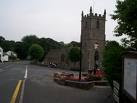
The Magic of the Moor-Peterstone Augustinian Church-Petra Petri


The Names- Welsh Latin and Saxon

Ths Church was once the Monastery of St Arthfael and Augustinian Cell (Petra Petri-Llanbedr Gwynllŵg-Holy Place of Peter (Pedr) in Wentloog.),Petra Petri as it is also called in papal records in Rome means 'the Rock or Stone of Peter-Peter Stone' asChrist said to Peter:'Upon this rock I will build my church!'.

The Rule of St Augustine of Hippo in Monmouthshire

I mention Peterstone, as it became Augustinian in the early days after Wentloog was conquered by the Normans. Later it proved-although it serve for a hundred years or so as an Augustinian Priory of Bristol Abbey, when the plan became unfeasible, as not enough financial supportwas i the deal from the Lord of the Manor, there was another planto found a purpose built monastery at St Peter's in Rhymny which also failed, leaving St Peter in the Moor as a small church served by monks, one of severa in the area.

Robert de la Haye and Wentloog

When Robert Fitzhamon came to divide up the lands of South East Wales, one of his manor lords, Robert de la Haye received the cantref of Gwynllwg as his share, to be held by the service of four knight’s fees. It was Robert de la Haye who built the Motte and bailey Castle on Stow Hill, called then Stow Castle, just next to Gwynlliw’s Church of the Virgin Mary. Bruce Copplestone Crowe believes this may have been built by William Rufus in 1075. Robert’s influence extended throughout Wentloog or Gwynllwg. Robert took pains to reform on more sound and orderly lines the canonically sound (in Norman eyes)Welsh church, and first of all gave St Woolos, Gwynlliw’s Celtic monastery to the monks of St Peter’s in Gloucester. William II (Rufus) had already given the house to St Peter’s Abbey in Gloucester.

Benedictine Monks of Gloucester at St Woolos

It was a monk of Gloucester Cathedral who collated and made records of the life of Gwynlliw and his legends, and that of his family. The church had been acquired by Rufus in 1075.He also gave other churches and properties for his beautiful abbey of Tewkesbury. Robert's two largest grants were however to two Somerset houses one already an abbey.

Monatacute was a daughter house of the now Clunaic house of Glastonbury Abbey and to this Abbey the churches at Coedkernew, Marshfield and St Bride’s Wentloog were given. His gifts to Somerset houses were perhaps to curry favour with the Count of Mortain, whose lands were in the west Country. Clunaic Montacute had also been founded by Robert de la Haye. Bassaleg had actually also been the clas Church of St Gwladys,Gwynlliw’s wife, but as we have already learned it was given to the Clunaic monks of Glastonbury, who were a much stricter order of monks than the more usual Benedictines.Malpas was given to Montacute. Robert and Gundreda Fitzhamon were more than generous with their largesse, as was their devout daughter Mabel, commemorated at nearby house called Cafn Mably, where she lived sometimes.

Little Holland

The boundaries of Bassaleg priory therefore went right through the Moor (Wentloog level-Marshfield) along the line of the Broadway Rhyn-which used to be called ‘Dufeles’ by the Welsh. The village of Peterstone with its church of St Peter in the Moor lies on the Wentloog Levels halfway between Newport and Cardiff on the coast road stretching from St Brides to Rumney. The area is known as 'Little Holland', because of its many ‘rhyns’ or small ditches and flatness. These places are mentioned in the charters of Bassaleg priory.See the Broadway ditch above.

The Original Dedication of the whole 'llan' church and monastic buildings-now on the sites of the houses round the church, was to Gwentian Prince and Saint Arthfael.

The Church is called Petra Petri or (Peter Rock) or Peterstone and even St Peter in the Moor in papal records and others in Mediaeval times. Whilst Peter was one of the greatest of the saints, it was originally –there in the middle of the moor- an island of the Old Welsh monks, probably dedicated to St Armagillus, and a chapel of St Armagillus was attached to the old church and destroyed during the Reformation. The settlement would have been prepared with prayer and fasting in the usual way and had a wall around it , separating the world from heaven.

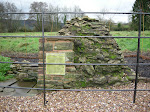
Bruce Copplestone Crow guesses Armagillus is actually St Arthmael or St Arthfael, whose hermits pushed into the Augustinian Order in Norman times, because the origins of early Welsh monasticism were also with St Anthony of the desert and St Augustine. This chapel would have not been in St John’s Church, Rhymney, which Robert de la Haye was thinking of considering the founding as an Augustinian monastery. It is more likely he thinks that St Arthmael’s monastery became St Peter’s and blossomed to become the amazing ‘Cathedral of the Moor ‘ of gothic architecture, which the preset ownersare taking care to preserve. It was always known to have been , like St Kynemark’s (St Cynfarch’s near Chepstow) in existence perhaps even from the sixth century, the era of David and the saints.

Identity of the King-Saint

Bruce Copplestone Crowe says Bartrum, an expert on the period has said it was a name used by three historical kings or princes of Glwyssing and Gwent in the eight to tenth centuries. As Artmali or Arthmael it occurs as the name of laymen and religious and priests on ninth and eleventh century inscribed stones at Llantwit Major and Ogmore in Glamorgan and in the twelfth century, the Life of St Cadoc (Vita Sancti Cadoci) as the name of a king (BCC thinks probably fictitious) who ruled the lands by the river Neath (Nedd) in Glamorgan in the sixth century.

It was therefore a name which was in common use in South east Wales from the sixth to the twelfth centuries. The question is, which of these Kings was the saint? We have already noted how so many of the ancient saints came from the royal houses of the three holiest families of Wales, especially Brychan Brycheiniog who gave his name to Brecon. The royal houses had the means to fund monasteries, their servants and friends joining them in these monasteries and accompanying them on their travels usually between Wales, Ireland, Cornwall and Britanny.

BCC goes further by distilling several mediaeval lives of the saints, picking out the common characteristics. That he existed is not in doubt, since he has three churches dedicated to him in Brittany. BCC gives us these ideas and believes he was a native of the cantref of Penychen who studied in an unnamed monastery in South East Wales. The main theological colleges were at Caerwent , or possibly at Caerleon, where St Dyfrig had revived the ancient Roman school or college.

Mamhilad may also have been a possibility, as it is where St Cadoc’s body was taken to escape from marauding Saxons and the abbot of that college and monastery was called Caroncinalis . He then left for Brittanny (Armorica) and founded a monastery at St Armel de Boschaux , a few miles south of Rennes of which he became an abbot. He was a contemporary of St Childebert of Paris (511-558). He was not credited with any churches in Wales, but perhaps with Melanus (Mellon) also being active in France before returning to Wales .

Saint Melanus, St Mellons, Saint Malo (Same Person!) St Mellons (of St Malo)

probably returned home with news of Arthmael’s ministry and Christian actions. He was also celebrated in Cornwall , where he had a church dedicated to him at Stratton near Bude and a Church at St Erme, near Truro as well as the two others in Britanny. Saxon and Norman settlers may have changed the name of the little monastery to St Peter –also venerated in Wales (as in Llan Pedr-Lampeter)and other places, but among the native Welsh, clearly Arthmael never lost his popularity and the name persisted at Peterstone for another four hundred years in the name of St Armagillus. It probably still looks very much like it does today, but with smaller and less houses. With what sadness these monks were moved out of their home to St John’s in Rhymney nearer Robert’s castle and finally te native welsh monks pushed out to a cold stone monastery at Flatholme , where Gildas was active at one time in his hermitage in Ynys Echni, one of the holy islands of Wales.

Bristol Abbey

Between 1148 and 1157, the unreformed clas (royal Celtic) church of St Arthfael was given by William of Gloucester to the Augustinian Canons of Bristol Abbey. It may have been his desire to offer it as part of a priory-cell or even grange of the Abbey at St John’s Church and remove them from their remote cell on the margin between the sea and the Rhymney Moor, but it the church was never endowed as an Augustinian Priory. Mabel had been in talks with the Abbot of Bristol about setting up the new priory as her father has set up Bassaleg from Glastonbury (Ynys Witrin) and the Clunaics of Montacute.The donations to Clunaics (strict observance Benedictines) is interesting because Cluny was not in Normandy.These dedications are a little later. The monastery of St Arthfael,(Llanarthfael?-perhaps even Llanarth may have been named for him?) as it must have been called was mentioned by the Earl’s Father, Robert at the time when he had Gwenllwg under his hand, between 1120 and his death in 1147. During that time he gave to Mabel his wife land ‘near the monastery of St Peter on the Moor’. After Earl Robert’s death but before her own in 1157,and while Gwynllwg was in her hands and was part of her dowry. Mabel gave this to the Augustinian Church of St John the Baptist at Rhymney as part of the process whereby she and her son hoped to found a monastery there. Here is the text of the charter, for which I am very grateful for BCC’s translation:

‘Mabel, Countess of Gloucester,( Robert’s Fitzhamon’s daughter) to William Fitzstephen the Constable of Newport) and her officials of Gwenllwg (Gunlion)and all the barons, men and friends, Welsh, French and English,and also her Welshmen, greetings. Know that my lord Robert Earl of Gloucester gave me sixty acres of free land in the March of Rhymney near the monastery of St Peter on the Moor(iuxta monasterium sancti petri de Mora) and the wood towards the north, that Gilbert, priest of Rhymney held of me in the time of the said Earl, my lord, and that I, for the good of the soul of my Lord, Robert and of Robert Fitzhamon, my father and for the good of myself and our children grant and concede to the Church of St John in Rhymney, the said sixty acres of land in free alms, my son, William , Earl of Gloucester, conceding the same free of all earthly exactions……’

Morgan and Ioworth, leaders of the Welsh upland made grants to the proposed St John’s Church monastery site round about the same time as this belonged to the Cathedral

Rumney was formerly called Llanrhymney ,Romney or Rompney and the river on which it stands is the Rhymney, which shares its name with the town at the top of the valley, but there are other variations. Remni, Remne and Rempney all appear in old documents and maps as far back as 1100. St John’s itself, therefore could also have been an ancient church and monastery, but being closer to the castle, easier to defend from the Welsh, who continued to try to drive out the English and Normans until one of their own Henry VIII of the Welsh Tudor line, tried to extinguish the identity of Wales and trashed the ancient religion of the people.

Broadway Ditch and the rhyns on the Moor

All the studies suggest a connection with water, a boundary stream or marshes, which , of course, would be most appropriate, as the river used to form the boundary between Gwent and Morganwwg (Glamorgan) and Rumney(Rhymney) includes the moors .Like most of the settlements on the Wentloog Level it lies on land reclaimed from the Bristol Channel. Peterstone itself lies right against the sea wall. Earl Williams own endowment for the proposed priory included 100 acres of land in Cilbwr , in his lordship of Glamorgan on the other side of the Rhymney, lands at Penarth in Glamorgan , the church of St Mellons in Wentloog and the Island of Flatholm (Ynys Echni). Regarding this island of Ynys Echni, the Earl had previously given to the hermits of SS Michael , Cadoc and Dolfino lands at Llandough near Penarth .

Norman 'Ethnic Cleansing' of St Arthfael'a monks

When the plans did not come to fruition with St Johns (probably because Bristol Abbey did not think it well enough provided for) all it’s churches and lands were given to the Augustinian monks of Flatholm. These monks may have been the former hermits, of Peterstone, now become Augustinian Canons.’ If all these grants relate to a proposed priory cell of the proposed Abbey at Rhymney,they must date from after the inductions of the first canons of Bristol on 11 April 1148 and before the death of the Countess Mabel in 1157. It actually seemed to be a case of ethnic cleansing, the hermits of Michael Cadoc and Dolfino pushed out to Flat Holm, as well as the hermits of St Arthmael’s monastery. Peterstone was then built in glorious architechture and perhaps became a parish church in a prosperous farming area, being served by the Augustinians of Bristol, whose job it was.

Monastery land is let out to two burgesses in Bristol

St Peter on the Moor had become the property of Bristol Abbey, the buildings of the clas old Welsh monastery became the centre for the abbey’s manor of Peterstone. In 1542, the Cathedral Valor of Bristol described its lands in Wentloog as ‘the manor of Peterstone and the Rectory, which extends into Peterstone, Marshfield, St Mellons and Rhymney in Wentloog, together with rectory of the lordship of Wentloog.’ The tithes of these churches were paid to Bristol Abbey, who administrated the area, the monks probably staying in accommodation in the village in a Conventual setting, using the Church for its worship.We know that the lands of the old order were leased to two burgesses of Bristol, who probably administrated and oversaw the lands for the monks.

Bruce Copplestone Crowe goes on to say that eleven years prior to this, the abbey had leased to two burgesses of Bristol the chapel and manor of St Peter on the Moor with 52 acres of demesne lands and two granges, one at Marshfield and the other at St Mellons and with the directory of Rumney in the Lordship of Wentloog. This is confirmed in the following papal registers

( 'Lateran Regesta 85: 1400-1401', Calendar of Papal Registers Relating to Great Britain and Ireland, Volume 5: 1398-1404 (1904), pp. 345-363.):The Pope confirmed the endowment of the Augustinian Abbey of Bristol of many churches, including those of Newport (Austin Friars) as they had proved possession for a great many years.

those of Rumeney with its chapel of St. Peter de More, St. Melan de Porttaske, and Pennart,(Penarth) with the chapel of Lavermarke(Lavernock) in that of Llandaff. For all the above, the archbishop states that they have proved possession for 40, 50, 60 years and more and even from time immemorial, and that they have possessed for some time, as appropriated, the church of Meresfeld (Marshfield). The pope further grants that in future they need not exhibit, by way of proof, other than the archbishop's letters. Ad fut. rei mem. Is que pro statu. (De mandato.) In 1536, St Peter on the Moor became a parish church, but with the subsequent deprivation of the church lands, (the Great Plague and the enclosures, meant a subsequent shrinking in of the village, which still exists.

The Church has been sold as it was not used enough

Sadly, in recent times, the small congregation could not pay to save such a large and beautiful church.To pay for the maintenance of one of the most splendid Early English style churches to have been built in Wales . The recently published “Gwent” volume of the Buildings of Wales sees John Newman enthuse over this building "indeed the noblest and most beautiful Perpendicular churches in the whole county", a "queen" among churches by the Severn Estuary. He illustrates the exterior and interior in the plates.This priceless piece of architecture has been sold and made into a private home in 2002 and it has been lovingly conserved even as a Grade I listed building.This was unquestionably a good way to save the building and landscape for posterity. It is better if small congregations cannot save the buildings not to let it fall into ruin or disappear as St Kynemark’s has done.Leastways I met the owner at the gate, a most pleasant lady to told me everything inside was still intact, and it is good that the new owners take such care oftheir beautiful surroundings ad treasure it.Hopefully, at some stage, I might be allowed in to see , but there has been also understandibly bad feeling about the sale and she was a bit wary of letting me in. The told me that the font was beautiful.

The 'Tsunami ' of 1606

The lovely Norman church of St Peter, often referred to as the 'Cathedral of the Moors', bears a floodmark of 1606, when many lives of inhabitants and livestock were lost. It is recorded that over 1,000 people drowned and were buried in a communal grave in Rumney, then called Rompney or Llanrhymney. Long and hard hours were toiled on the soil for the next 20 years to bring the land into production again. There have been several such deluges recorded, one in the time of Gwylliw, written by the monk of Gloucester,(late 5th, early 6th century) and another in mediaeval times.
The Bells of Saint Peter after the ‘Reformation’

The Augustinian Church of St Peter in the Moor had a Western tower and a ring of eight bells. These bells were installed when the Church was an Anglican church.As far as I know, these are still in the tower and a great deal of conservation work to do.The monastery church became a parish church in Protestant times and its beautiul furnishings stripped out, neverthe less it is one of the most beautiful church buildings. The small sculpture in the tower devoted to Mary Mother of God (above) is a case in point-absolutely charming, but very high up in the tower

Thursday, November 5, 2009

New Appeal for missing Catholic child Madeleine McCann

http://www.youtube.com/ceop You need to c and p this as links never work on this blog.
It is available in most European languages and Arabic. Can you click on the one you wish to use.......

http://www.findmadeleine.com/ This is Madeleine's web site

Please paste this into your browser for the latest video from the Leicestershire police about Madeleine McCann. The ceop website also gives details about other missing children and the attempts made to find them. It is good that Madeleine's case seeks to highlight this menace.There were cases before the iron curtain coming down, of wealthy people kidnapping babies and toddlers from eastern countries and raising them as their own. This is cruel and heartbreaking for the parents. In the case of Madeleine's parents, they have really been through the mill and are sustained with fortitude by their faith and the love of the people around them.

That child, and the nine months that Kate had her in her womb are precious memories of a child snatched by someone who had no right to take her away from loving parents and plunge her into an artificial life. At some stage she has to be found-her DNA as belonging to her parents, will be identified and those are the parents who bore her, nurtured her and cared for her, who endured sleepless nights while she cried.Notwithstanding criticism from people who said she should not be left alone, with which I agree, I think sometimes we forget there are times when we have all left children for a few minutes-to answer the door or take a phone call for example-they were the people who presented her to the church for baptism and whose child she is in the sight of God. The people who know where she is-on your conscience-tell the parents, her true parents. Od course those who have her now will love her too, but what they have done is evil-to remove the child from her parents. If you are frightened, arrange to leave your child with your local catholic church. Retribution is not sop much an issue as returning Madeleine to her real parents. the Catholic church's teaching, I believe, is that children should have the right to be brought up by their blood mother and father, the people who made her, in love.

By that very fact, you must send Madeleine back and seek help and consolation and confession for what you did. It is evil and wrong to do this. It has completely robbed two young children for growing up with their complete family and Madeleine's true family will never give up on her. Please do the right thing, which is of God and give her back. Taking a child from her true family is not of God-is of someone else. If you are a family member of the family who have Madeleine, a family of a school friend, a friend or aquaintance-someone who has recently moved into your vicinity or neighbourhood with a six year old child who speaks good English, contact Madeleine's website -even anonymously and tell them where she is, precisely if you can-or suspect. The police believe she is in Portugal and the video gives more details. This could also apply to France or to any European country.

Look at your neigbour's six year old child. Does she have the fleck in the eye? Does she have a knowledge of English, could she be Madeleine Mccann?

Sunday, November 1, 2009

LET'S CELEBRATE - ALL HALLOWS (SAINTS) DAY!!

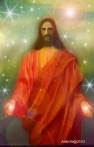
Jesus and the Angels-devotional picture
Revelations image


This whole passage of Rev 4 is interesting and inspirational.And then the glorious passage in Rev 5

Then I sw in the middle of the throne with its four living creatures and the circle of the elders,a lamb standing that seemed to have been sacrificed; it had seven horns and seven eyeswhich e the seven spirits that God has sent out over all the whole world. The Lamb (Jesus) came forward to take the scroll from the righthand of the One sitting onthe Throne, and when he took it, the four living creatures prostrated themselves before him and with him the twenty four elders.

Each one of them was holding a harp and HAD A GOLDEN BOWL FULL OF INCENSE

WHICH ARE THE PRAYERS OF THE SAINTS.
They sang a new hymn:

You are worthy to take the scroll and to break its seals
Because you were sacrificed and with your blood
You bought people for God
Of every race, language, people and nation
And made them a line of kings and priests for God
to rule the world.


In my vision, I saw an immense number of angels gathered around the throne, the living creatures and the elders ; there were ten thousand times ten thousands of them and thousands upon thousands loudly chanting


'Worthy is the Lamb that was sacrificed
To receive power, and wisdom strength
Honour, glory and blessing.'


Then I heard all the living things in creation-evrything that lives in heaven, and the earth and under the earth and in the sea crying:

'To the One seated on the throne and to the Lord
be all Praise, Honour, Glory and Power
Forever and ever!'.