Thursday, April 16, 2009

Greyfriars in Cornwall and an enclosed Convent at Lanherne!! Part One


___________________________________________________________________________________


Background


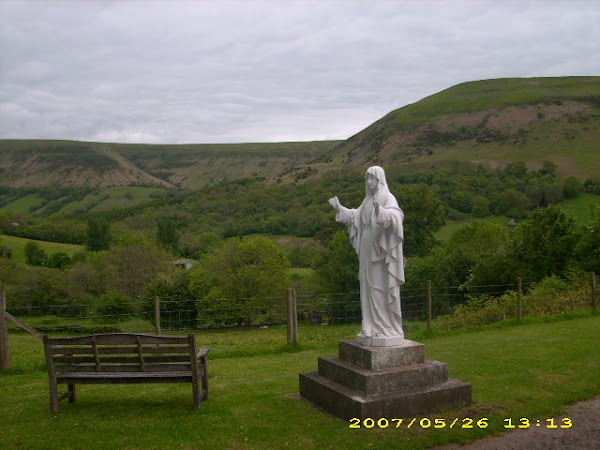
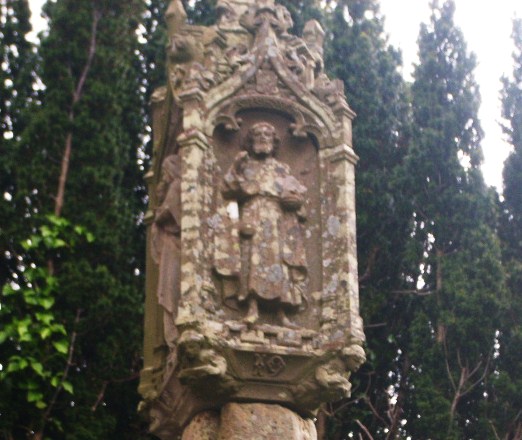
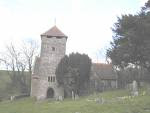
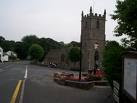
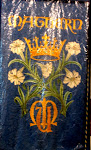
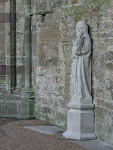
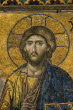
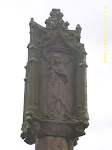
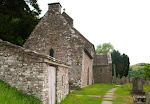
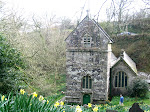
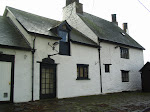
Two days ago we visited a tiny convent in St Mawgans. In fact this was the oldest Carmel in England. This is in a beautiful valley midway between the town of St Columb and the sea and the site of a monastic settlement in Celtic times. You can still see the ancient cross with Christ dressed in a tunic next to the ancient chapel.In Saxon times it became administered by Bishops of the Saxon church and then it became the great manor house of the Arundel family.

We have in previous blogs been over many things: How the celtic saints

a)tended to be from royal families and took their retainers with them
b)They embarked on 'martyrdoms' and would give up their lives for God

i.White martyrdom, setting sail on the sea (symbolic of death) on a small craft and setting up a small monastic settlement wherever they landed.
2. Green Martyrdom-starting a small monastic settlement on some sort of 'island' in a beautiful place-often next to a water source, or obedient to the Pope, in a place previously held as holy by Druids. Many priests became the new advisors to the king
3. Sometimes there was a martyrdom by blood -a 'red' martyrdom-in some ways reflecting the red colour of vestments on martyrs days.

c) They tended to 'hallow' a piece of ground for their island. Everything inside the wall belonged to God, and all outside to the earth.The little oratory chapels would be consecrated by 40 days of praying and fasting(only being allowed a scrap of bread, a hen's egg and a little milk and water)The church, often made of wood or mud and wattles in these early days would then be consecrated in the name of the founding saint. When a church was restored or enlarged, frequently another saint was added.

d)Celibacy was not mandatory for clergy in the early church, and because of the early influences in Britannia, either through St Joseph of Arimathea or through the good offices of Pope Eleutherius and , of course the Roman army members coming to Britain, Catholicism in Britain developed a flavour of its own. It myst be said, however, that the Christian faith is the first which gave women the freedom not to marry or have a family if they wished to consecrate themselves to God.

It is to these two Celtic settlements, one at Laneherne, which developed into a wonderful witness of the faith, through the Arundel Family and one at St Ives. Tomorrow I shall take St Ives, today Lanherne.

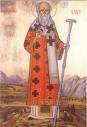
St Hernan
Feastday: September 15

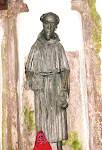
Hernan was a 6th century Cornishman, who had studied in the great monastery of Illtyd at Llantwit Major (blog coming soon)He travelled to Britanny and spread the gospel there so effectively that he became patron Saint of Loc Horn in Brittany.Like many of these forgotton sons and daughters of God, he toiled and clothing the naked, healing the sick and feeding the hungray and his monastic settlement did well and much to improve life in the area until the beginning of the Anglo Saxon raids. Whereas the Saxons gradually put most of the old British Christians to the sword and bornt all their churches, they began a similar harrying of the lands of Britanny. People had adorned their little churches with beautiful and costly things, which were prized by the Saxons.Cornishman, Hernan and some of his followers, hearing that Saxons were coming, managed to get himself and his people into a boat and sailed accross to Cornwall, which was largely free from English interference, largely because the Saxons were not attracted by the rough and lonely landscape with no possiblily of arable farming. Saint Herne (Hernan) settled in this tiny beautiful valley where he built up his community. He, like Materiana, established their green martyrdom after following a white martyrdom, neccessitated by their refugee status. They had skills and were a big addition to the community.

In Wales we call them Llans. In Cornwall they are 'lans'.Loc Harne is near Mantafilan in the Catholic diocese of Vannes. He died in Brittany.A church was built there over a sepulchre which still remains , and many of the relics of the saints are held there, with due reverence. St Hernan may have been attracted back to Cornwall by the holiness of St Meugant (St Mawgan or St Maugham (in Monmouthshire)who was a great disciple of St Illtyd, the famous teacher of the faith, who had lived there as a hermit among the people in Western Britain.The village which sprang up was called 'Mawgan' after the saint.

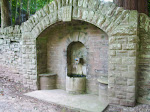
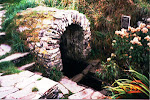
The old Monastery at Lanherne gave many pilgrims shelter and refreshment as they made their way to Rome and compostella. Mawgan lay in the direct rout of the Welsh and this pilgrimage to St James of Compostella was also a favourite with the English, and we find many St James dedications on the route.Near the Church at Mawgan is St James Moor and a well higher up on the hill supplies the COnvent and village with water is called St James' Well.

St Teilo

St Teilo, second Bishop of Llandaff after Dyfrig , while on his way to Brittany was entertained by Geraint of Cornwall. Seven years later, Geraint received the Viaticum from the Holy Bishop.

At the close of the first Millennium, the two neighbouring British churches of St Mawgan (Lanherne) and St Columb became administrated by the Saxon Bishop of Crediton or St German's and became a manorial estate under the name Lanherne.The bishops in those days had to provide (as did other manorial lords) a certain number of men for the army and granting property to their retainers they rid themselves of a great deal of the responsibility. In 1074, we see Lanherne was 'Three Hides' in Bishop Osbert's endowments.The Domesday Book (1085) records the owner as the layman Fulcard under the Bishop of Exeter as Overlord. He was probably a knight.The last of the Fulcards married an Arundell.

The Arundells

This was Lady Alice, the heiress and she married Sir Remphrey Arundell of Treby and Trembleth in 1231. Lanherne was her dowry and this set the Arundells up as the most ancient and wealthy family in Cornwall for five or six centuries.According to Carew, the Cornish historian,

this family were the greatest for love, and living heretofore in the county; but they placed their highest honour in the practice and munificent protection of religion'.

1333 St Columb Major

In this year they built the church at St Columb and instituted a fair there, and the new patronage and benefice was theirs.

1376 Lady Joan de Arundell had a licence to have Mass in her private oratory at Lanherne and in 1385 had a licence to choose her confessor.

1379 Sir John Arundell replulses the French Fleet

this he did off the coast of Cornwall when commanding an expedition fitted out by King Richard II in aid of the Duke of Brittany. Later the ships were wrecked off the Irish coast and Sir John was drowned. His grandson (Sir John Arundell KB) was called 'The Magnificent' and was a great benefactor and also of the submerged church of St Petroc at Peranzabuloe-St Piran in the Sands. He also founded the Arundel chantry of the Blessed Virgin Mary in the church of St Columb Major with a warden and five priests in 1427.He was a naval commander, Sherriff of Cornwall, possessed 52 complete suits of gold, and he was an MP for 1422-3. This family married with all the other old Cornish families and in the reign of Henry VI, John Arundell (1421) was the largest free tenant in Cornwall with an income of £2,000 per year-an enormous sum in those days.

Bishop John Arundell

died in 1504 and was educated at the college for Augustinian monks in St Columb and took his MA at Exeter College, Oxford. He then became Rector of St Columb, Bishop of Lichfield, Coventry and Exeter. He died in London at St Clement Danes and it was said of him that he was conspicuous for his love of learning and is hospitality to the poor.

The Brutal times of the Tudors

Henry VIII , wishing to marry his mistress, decided to put away his wife of 35 years and his daughter and as the Pope would not comply with this scheme, he decided to start his own version of the church.Acts of parliament 1536 and 1539 seized the property of the church and sold it off to the many noblemen, eager to have the wealth and assets of the abbies. The monks and nuns were turned out, although a few received pensions in the richer monastaries and convents.Aged clergy were simply put out to starve, many were killed as they refused to deny the church thy loved. Cranmer brought in a new Protestant prayer book, put together from prayers furthered by Luther and Calvin abroad. Edward was just a boy and his many advisors were beneficiaries of the lott from the convents and monasteries and not eager, ever , to see their reightful owners restored. Cranmer also made the Holy Sacrifice of the Mass illegal and in places like Wales and Cornwall, where the people did not speak English, but knew what the Latin meant, there was great distress.The country was thrown into poverty and unrest. The dissolution had led to many being turned out of house and home with no resources or alternative employment. Besides the vast army of monks and nuns , instead of offering help, they themselves were forced to beg and forage for food and warmth, and begged or starved if they could not find a job. The new landlords turned out the peasants and lay brothers and whole villages made destitute. And Rowe in 'Struggles for the Faith' says 'in all their troubles the poor people were deneid the consolations of their religion'.

Cassell's History of England says:

'their oldest and most sacred associations were broken, their hapy holidays had become a gloomy blank. What their fathers and pastors had taught them as peculiarly holy, their rulars now pronounced to be damnable doctrines and delusions of priestcraft. They thought the sermons very dull, and were, by no means , pleased with these renovations.'

Insurrection breaks out all over Britain 1549

Men of Cornwall and Devon 1,000 strong rose in arms against the enemies of the Old Faith. At their head was Sir Humphrey Arundell of Lanherne.1539 he had received the monastery of St Michael's Mount, hoping to restore it in happier times to the church. The Defenders of the Faith mustered at Bodmin , they had a wagon with an altar for saying Mass . Their protest was as follows:

Item we will not receyve the new servyce because it is like a Christmas game, but we will have holy bread and holy water made everye Sundaye:Palmes and Ashes at the tymes accustomed; images to be set up againe inevery church and all other auncient olde ceremonies used hertofore by our Mother the Holy Churche.
Item, we wyll have everye pryest at his Masse praye especially by name for the soules in purgatory as our fathers did'.

Some Sucess and then Overwhelming Defeat

The authorities managed to 'spin' support for the Holy Faith as disloyalty to the country and the newly wealthy had much to fight for to keep their booty. A fierce battle raged around St Mary Clyst and Arundell fled to Launceston. The town council, themselves cowed by all the edicts gave him up for Tyburn on January 27 1550. Henry Bowyer, Mayor of Bodmin, another loyal Catholic was hanged at Bodmin and Master the Mayor of Lanherne was also condemned-his wife who intended to plead for him took so long 'prinking' herself that she missed his execution. Heywood in his 'Chronicle' complains of the extreme cruelty measured out to the Cornish Faithful who took part in this struggle for the Holy Faith. His son and granson pretended to conform for a while to hang on to their estates, but in 1570 (Queen Elizabeth) his name appears on the recusant rolls. By then the Jesuits had begun to arrive in England, and Father John Cornelius SJ reconciled that Sir John Arundell to the Church.Sir John's daughters, Gertrude and Dorothy entered a convent in Brussels six years after their father's daeth.

Father Cornelius was martyred in 1594

He was arrested in the house of Sir John's widow and Mr Thomas Bosgrove a kinsman was also arrested , as well as two servants of the family. He was taken to London and tortured by the Lord Treaurer,and the Privy Council as well as the Anglican Archbishop of Canterbury. they wanted the list of other Catholics in the area. He would not answer them, and sent back into the country to stand trial with his three friends.(no doubt it was hoped the servants would 'break rangks' with their masters)

'Charges !:Mr Cornelius-high treason for being a priest, coming into the kingdom and staying.
Mr Bosgrove and the other two, for felony , aiding and assisting Mr Cornelius knowing him to be a priest.'

They were all condemned on July 2nd and suffered martyrdom at Dorchester on July 4th 1594, in the dying years of Elizabeth's reign, and entered their eternal rest.

The Letter

In the letter he wrote to Dorothy in Brussels, half an hour before he was to die, he begs her to keep inviolable the word she has first given to God and then to St Bridget and concludes ' I don't forget those whom I don't name. God be your keeper. Yours, John, who is going to die for a moment, that he may live forever.'

Lanherne and 'Popish Recusants'

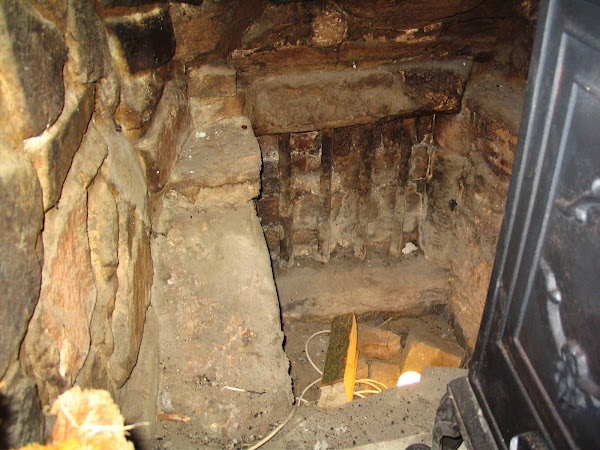
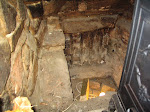
Lanherne's chapel became a rallying point for Catholics in Cornwall and the West. They would not attend the new services in the old parish church. Mass was said here in secret by devoted English priests from the seminary at Douai, who landed in a secret creek in Cornwall and were entertained by Sir John at Lanherne, sometimes ten or twelve at a time. These brave men, many of noble families, became outlaws and exiles for the faith and suffered exile to Flanders to be educated and ordained, and returning to England their lives were forfeit and if they were aught it was death.One priest was hidden in the house for eighteen months for fear of priest bounty hunters. Hiding holes can be found in the chimneys at Lanherne, which rise a solid stack to the attic.

St Cuthbert Mayne

was intimately connected with Lanherne, but I will tell his story separately as the blog is becoming long.

Holy and happy Lanherne, hallowed by the footsteps of the Martyrs, poor and abandoned in the eyes of the world, yet rich, immeasurably rich in the things that perish not'

1794 The French Revolution

and a party of English Carmelite nuns flee the terrors of France and Lord and Lady Arundell offer them the Manor of Lanherne to set up their convent. This Carmel was founded in 1619 (1/5)In that year Venerable Ann of Jesus, chosen companion of St Theresa sent two of the Community to Antwerp to run a convent for English Carmelites. She was helped in making the foundation by Lady Mary Lovel, who wanted to help the persecuted Catholics of England and keep the Faith alive. St Theresa of Avila and Venerable Ann loved England, adn there were already three English nuns in the order.The foundation flourished and the order spread to Cologne Dusseldorf and Bois de Luc . Another foundation hapened at Lierre (now Darlington)and another at Chichester, which remained wholly English. All from Antwerp. 1794 the revolutionary armies attacked Belgium a second time and the nuns had to flee the country. June 29th, they chartered a boat from Rotterdam with the Augustinian nuns of bruges and sailed for their native land, arriving in Wapping on 12th July with cries of 'French Devils' and other rude names, but when they explained they were English ladies seeking refuge from the French in their own country, the temper of the crowd changed and they were shown every kindness and consideration.

Toleration Act 1781

brought an improvement for Catholics in England. Oaths etc from previous reigns were no longer enforced and they were allowed to live in London and religious wroship was permitted in licensed little chapels .1794, the Mother Prioress Elizabeth Maddocks and twelve nuns and three lay sisters took up residence in Lanherne. The house needed to be renovated because it had not been in use, but been used for smuggling. Apparently one of the nuns met a smuggler to his, and her surprise.

The repairs took years and Feb 27th 1797 when alterations were completed the sisters resumed their lives of prayer and penance in this treasure hous of the Faith.

The Building

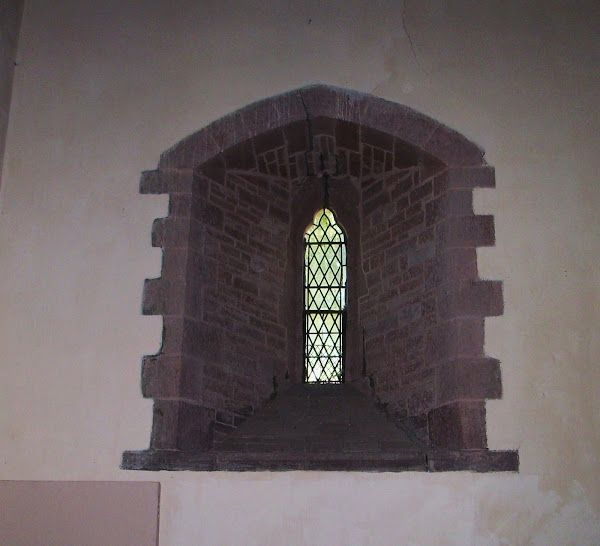
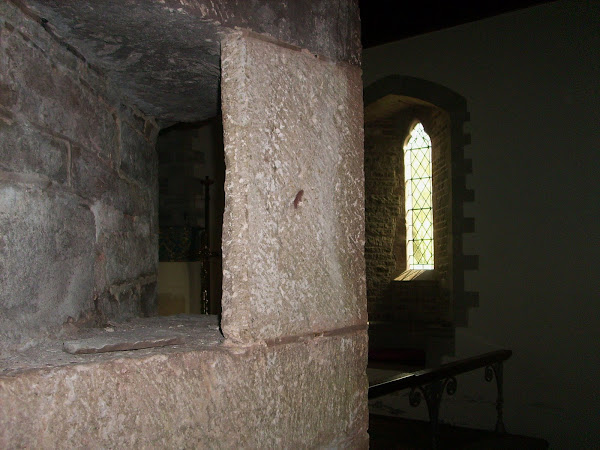
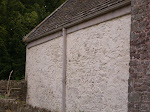
The oldest portion is the nuns choir.the wall of which and the cellar opposite date from Celtic times. The windows in this wall are the original ones and this was the Church of the Celtic monastery.

The Entrance to the Convent, old staircase and wondows inside are Elizabethan. Sir Christopher Wren refaced the building and Bishop Vaughan caused many alterations to be made.

The Chapel


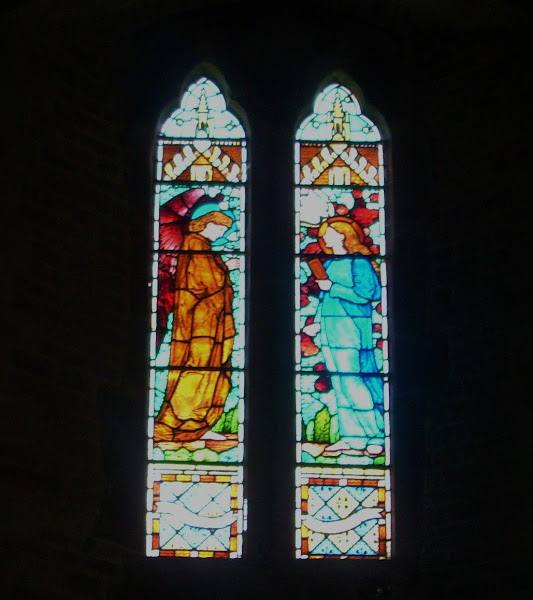
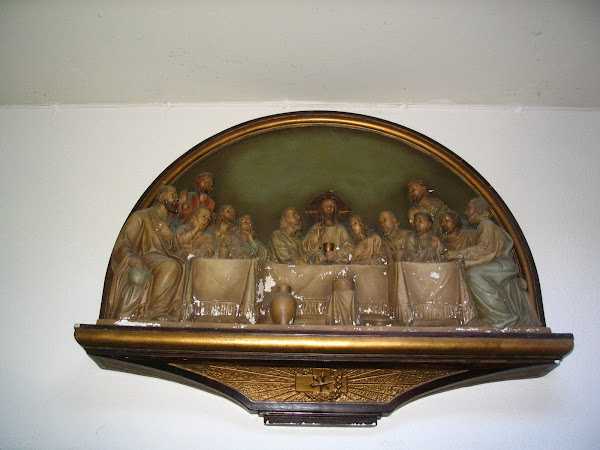
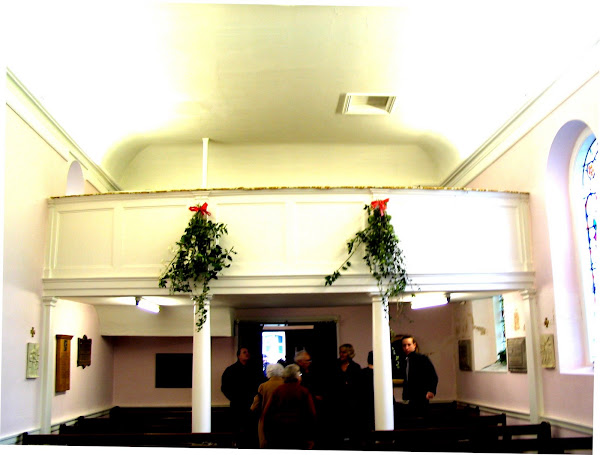
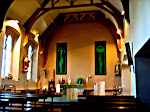
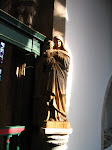
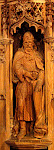
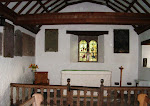
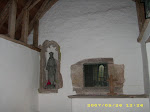
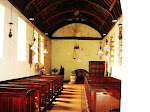
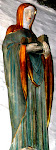
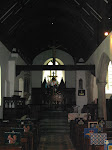
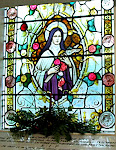
Only the chapel is open for viewing and worship (an EF Mass is said every morning at 8am) It is built in the style of Louis VIV with rich ornamentations. There are three wonderful medallions showing the Agony in the Garden, the Crucifixion and the Last Supper. In the niches are fine carvings of representations of Our Lady, St John Baptist, St Anne, St Theresa, St Joseph and the Angel Gabriel. Pillars of marble and stone support the base and the tabernacle is carved in alabaster, with 4 beautifully carved angels above appearing to adore the Blessed Sacrament. The old silver lamp burning before the Blessed Sacrament has not been extinguished since pre reformation days; it bears the crests of the Arundells-three swallows 'Les hirondelles' was a version of the name.

Parish Church

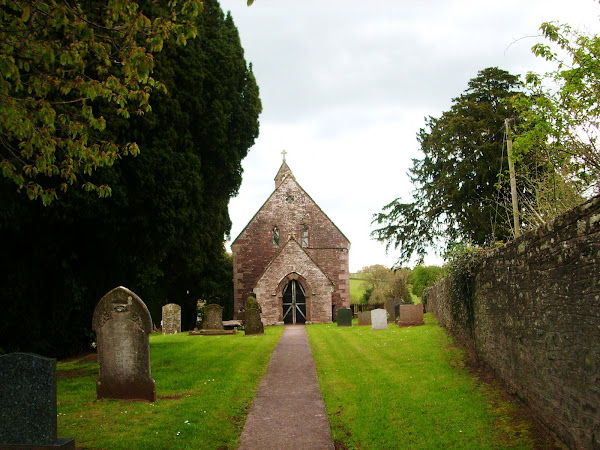
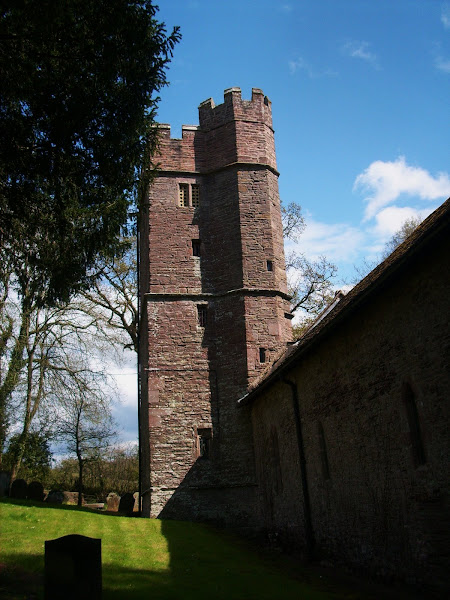
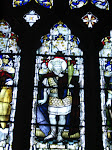
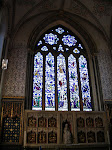
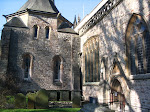
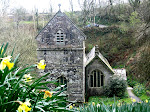
The chapel serves as the Parish church of the Catholics in Mawgan and district, the beautiful church next door now having been passed into Anglican hands. The Arundell aisle in this church remained for some years the porperty of the family and the convent and ten of the Carmelite nuns are buried here.

I must stop for today! This was a trasure place for Catholics and there is much, much more to come in the next days!!!This holiday was amazing for fact finding.

Monday, April 13, 2009

St Constantine of Cornwall and another St Michael's Mount!


Roche and Langonand

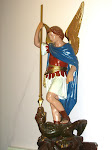
There are no surviving records of St Gonand, the patron of the little church at Roche. He may have been Conan, Abbot of King Athelstan's foundation at St Germans, but generally the town is named after the huge hermit's rock in the parish on the tope of an escarpment.Indeed, this may have been the mystical St Gonand of legend. There is a massive outcrop of granite and on top is the hermit's cell or living quarters. Above this are the remains of the chapel of St Michael built in 1409. This huge chapel dedicated to St Michael, the Archangel is common to Cornwall as there are many high places.

The form of the word Roche is presumably a reflection of the widespread use of French in the Middle Ages, where there were such great and interpersonal relations across the channel. There was a very popular Saint Roche from France who is portrayed in a wall painting in the church of St Thomas by Launceston.

Michael is one of the three named archangels named in the Bible. These are high angels who side with god against Lucifer the fallen angel. Michael appears in the book of Daniel as a 'great prince' in the struggle between good and evil.

It is the intercession and help of Michael that is invoked in the battle for God.

The 'Prayer of Exorcism of evil ' invokes Michael's help as the most powerful angel, God's general if you like.In the New Testament, the Apostle Jude mentions' The Archangel Michael contending with the devil' and of course in 'Revelations we read about Michael and his angels fighting aginst the dragon and his demons, the falling angels.

The Catholic prayer of exorcism runs

' Blessed Michael, archangel, defend us in the day of battle....by the power of God, cast down to Hell Satan and all his wicked spirits'.

There is also the tradition that he is the the guardian of the soul through the perils of death as is shwon in the song ;Michael row the boat ashore'

He was venerated by the Jews, before the formation of the Church, which adopted him from the beginning.His major feast day (wth Gabriel and Raphael) is on 29th Sepember and this was called 'Michaelmas' originally.

In 492 was the appearance of the the Archangel Michael in Mount Gargano in Italy and from that time Michael was always associated with high places (although the Skirryd was always associated with St Michael and his fiery sword)St Michaels Mount was a settlement of Celtic monks originally and was one of Cornwall's most holy sites of pilgrimage.The Count of Mortain, who after the Conquist became Overlord of Cornwall wore the badge of St Michael into battle, and indeed St Michael became the partron saint of Cornwall as well as of the Celts generally.He is parton of Helston

Our Visit on a rainy Easter Monday

It is difficult to describe the impressive building and the sight of it on top of this large outcrop of granite. It is an alternative St Michaels Mount set in the middle of the China Clay country. The hermitage, reached by an iron ladder is ruined. The lower part seems to be living quarters for the hermit and the upper part with an amazing view, sadly taking in a new housing development. Whether this hermit was the elusive Gonand, as seems likely as he is not mentioned anywhere else.You have to be very sure of foot to rise up to the top. The upper floor contains the remains of the chapel. The piscina is still to be seen there. There is a light in the East Window and a doorway into the chapel.It remains a romantic monument, but it is a shame that this unique building cannot be renovated for others to enjoy more safely. The outcrop is surrounded by thick gorse, which now, in the spring is in full bloom and looks amazing. The chapel, small though it is, is perched high on the rock and you can quite easily imagine that an archangel resides in there beating off all evil. I am sure the saintly Gonand or Conan also enjoyed his wonderful location in which to praise God.


_____________________________________________________________________________

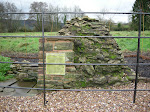
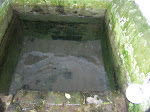
Just above the creek aboe the Helford River is the parish near Constantine Bay . There remain the ruin of a chapel and a holy well, which is now set on the golf links near Padstow. Constantine was a King of Cornwall, no doubt named after the famour Emperor who made Christianity legal, and after whom was named Constantinople in Trukey (now 'Istanbul') which is what it was named after the Turkish invaders had conquered this outpost of the Christian Roman Empire.Our King Constantine was a rular of a small part of the country , a local chieftain found in Celtic times. Constantine was a warlike chieftain, he was bound to keep his patch of land free form invaders, and make sure his people were fed. However , when his beloved wife died, he gave up his throne and became a monk in Irland, leaving his son to rule.

His identity was only discovered there after he laughed one day, while making flour

'King Contantine of Cornwall-and he is working at the mill' Perhaps when he had spent his time in Ireland, he returned to this lovely part of Cornwall to worship and to pray in his last days/There is an account of Contantine also being linked with St Columba in Scotland. He was the saintly King of the Cornish and he came to be respected and venerated also in Wales. It is also thought he may have been converted to the faith by St Petroc .His feast day is March 9th.

Our Visit

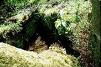
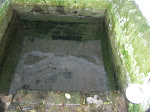
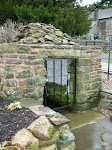
On the heavily overcast and rainy day, which was Easter Monday, we drove fromPadstow to Trevone and turned off to Harlyn Bay and Headed for the trevose Golf Club. We managed to drive to the inks and soon found the footpath to the site. We were quite surprsed to see the modern cover for the Holy Well (marked onthe OS map)underneath was the ancient sqare walls of the well and inside that the cspring had been contained. We needed to walk for some while to find the small ruined chapel, or which only a foundation and a single archway is left standing. The thought of Constantine living in a small nearby hut (possibly beehive hut) along side this chapel and his well, where he would pray and his priest would say Mass for him.Of course it was a bleak rainy day, but no doubt the circular wall, which would have circumvented the site and been cleared and blessed and consecrated.No doubt much of the stone had been taken for local homes and for laying out the golf course.But the little area takes us back to that wonderful time of the Saints,whao travelled all over the Cetic world.

Thursday, April 9, 2009

The Mystery of 'The Lamb' and why it is 'Good 'Friday.


THE SACRIFICE OF 'THE LAMB' ON GOOD FRIDAY

'Good Friday', I used to say as a child-what is 'good' about it for heaven's sake? I remember it as a time when there was doom and gloom, a horrific crucifixion story. I did not like the story of poor Jesus being tortured like that and spat on-exactly like poor Aslan when the wicked queen mocks and humiliates him before having him killed. But Aslan knew the 'deep magic' he could not be killed.He put himself in as an innocent to save someone else. The nature of Sacrifice is very old.The idea of the 'Scapegoat'someone who takes the punishment for someone else.

The ancient Druids in Britain too, sacrificed people as well-usually undesirables-in giant wicker men. These sacrifices were as offerings to the great Creator for salvation from starvation or for a better harvest next year.It was to atone because they had displeased their deity.

It was not difficult to persuade the original Druids, who believed in one Deity, who believed in an underworld , the earth where one learnt wisdom and became initiated into mysteries and Heaven, which was the destiny of those who had become enlightened, and their rather cruel idea of human sacrifice, that no more sacrifice was neccessary, not of humans nor animals, because Christ was the Full and Final Sacrifice.This is why it so quickly superceded the Druid religion.

But the idea of the Sacrificed human is here, is the same, except the stripes and scourging ,the blood, the cruel crown of thorns, these are the sins of mankind, put on the back of Jesus , who is then ritually sacrificed, and with him the sins of the World. Imagine the agony of that Load! Imagine the Love which prompted the Sacrifice. Imagine what our gratitude should be! We who can't get much right in our lives are helped in this divine way! And yet Jesus did not come as a Lion to be sacrificed-like C.S.Lewis' 'Aslan' but as a Lamb. The Lamb that has made us Sons and Daughters of the King of Heaven-how good that is! That with death we could be initiated into the heavenly saints, if we call upon his holy Name, believe and act according to the Commandments-not easy in today's world.
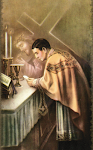
Last night I could only watch befoe the Altar of Repose for ten minutes because my family wanted to go to the Supermarket before it closed-but Seeing Father there -all on his own, before the Blessed Sacrament really brought home to me, the fact that Christ had prayed all alone in Gethsemane when the disciples fell asleep.

Today, following the long standing tradition at Abergavenny, and in many other place in Monmouthshire and everywhere else, Christians will accompany the Cross to a High Place, where due honour will be given to the Lord. Catholics in Abergavenny will once again climb the Holy Mountain, the Skirryd, where at the hour of 3, the time of Jesus Sacrifice, legend says St Michael struck the mountain, for in that hour, the Prince of Evil gave up hope of every completely conquering the Earth.

Jesus left himself in the Eucharist on earth with St Peter and the apostles, to teach and guide and serve.He gave us a Way Out of being slaves to ourselves and focused us on the next world

THE VENERATION OF THE HOLY CROSS RITUAL

When I survey the wondrous Cross, on which the Prince of Glory died...
My richest gain I count by loss, and pour content on all my pride...

Death is swallowed up in Victory.And it is the Victory and Triumph of the Holy Cross
we celebrate at 3 o'clock, as we sing

Hagios o Theos-Holy is God
Hagios ischyros-Holy and Mighty
Hagios athanatos-Holy and Immortal- Have mercy on us.

I have been an admirer of Dr Scott Hahn's book'The Lamb's Supper' -The Mass as Heaven on Earth. I hope it will be a great revelation and joy to read bits and pieces of it. For the full effect, however, you need to get it and read it yourself. It is the greatest explanation of the book of Revelation I have read.I will carry on with the theme tomorrow.

'Lamb of God'-why Jesus the 'lamb'.

References to lambs are all over the gospels-the sheep at Christmas, 'I am the good shepherd', 'the Lord is my Shepherd' and every Sunday at Mass we sing before we receive the Lord's body

Agnus Dei, qui tollis peccata mundi, miserere nobis.
Lamb of God, you take away the sins of the world, have mercy on us.

Dr Scott Hahn writes in his wonderful book 'The Lamb's Supper' :'The phrase that knocked me out was 'Lamb of God' because I knew that this Lamb was Jesus Christ himself.

No one has to tell you that. Perhaps you have sung or recited the words a thousand times....Just as many times, you have seen the priest elevate the broken host and proclaim

'This is the Lamb of God....happy are those who are called to His Supper'. The Lamb is Jesus. This is not news, it's not the kind of thing we gloss over. Jesus is many things after all: He is Lord, God, Saviour, Messiah, King , Priest, Prophet...and LAMB.

Yet if we were really thinking, we wouldn't gloss over that last title.Look again at the list: Lord, God, Saviour, Messiah, King , Priest, Prophet...and LAMB. One of these things is not like the others. The first seven are titles with which we could comfortably address a God - Man. They are titles with dignity, implying wisdom, power and social status. But 'Lamb'Again I ask you to divest yourselves of two thousand years of accumulated symbolic meaning. Pretend for a moment you have never sung the 'Lamb of God''.

ON THE LAMB

the angels and saints sang

Blessing and Honour, Glory and Power be unto Him be unto Him
That sitteth upon the Throne
And unto the LAMB......(Revelations)

Dr Hahn points out that the title is almost comical. Lambs are not on the list of admired animals, not strong, clever, quick or handsome. There are other animals Christ could have been 'Lion of Judah' for example. Lions are the King of the Jungle strong and agile-Dr Hahn points out though that they only appear once in the Book of Revelation.The Lamb dominates and appears 28 times.

'The Lamb rules, occupying heaven's throne.(Rev 22:3) It is the Lamb Who leads hundreds of thousands of men and angels, striking fear in the hearts of the wicked (Rev6:15-16) This last image , the fierce and frightening Lamb, is almost too incongruous to imagine with a straight face'.So what is this great mystery and miracle and what has it to do with Good Friday?

It is John the Baptist who first says 'Behold the Lamb of God' and thenthe title appears almost exclusively in John's Gospel and Revelations.

Jesus is often called 'like the Lamb of God'but never do they dare to call him 'Lamb of God'(John 1:36 and Revelations) Dr Hahn goes on to point out that the Lamb is central to the Mass and to Revelations.If we want to experience the Mass as heaven on Earth we need to know whyhe is called the 'Lamb'.

Dr Hahn in his excellent and readable book looks at explanations and the Jewish history for the background to the mystery.

WELL BREAD

Lamb always identified with sacrifice in ancient Israel.(cain and Abel-Abel brings lambs to the sacrifice). Noah (Gen 8.20-21) Abraham , Jacob and others. The Jewish fathers were always making offerings and building altars and sometimes poured sacrificial offerings of wine over them .

Melchisidech

Melchisidech is the first priest mentioned in the Bible and many Christians have seen in him a forsadowing of Christ. He was a priest and king-a king of Salem a land that later became 'Jeru-salem' - meaning 'City of Peace'. JEsus would one day be King of the New Jerusalem and like Melchisidech-'King of Peace'.
Here Dr Hahn says
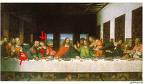
'Finally Melchisidech's sacrifice was extraordinary-it involved no animals. He offered bread and wine, as Jesus did at the Last Supper, when He instituted the Eucharist. Melchisidech's sacrifice ended with a blessing on Abraham'.(page 17)

NEAR SACRIFICE OF ISAAC

The next point made is about the Sacrifice of Isaac, Abraham's most dearly loved son. God asks Abraham to sacrifice him to test his obedience. When it appears Abraham is going to obey, God realises Abraham's faith and stops it.The words of Abraham to Isaac are telling: When Isaac asks who will be the offering, Abraham says:'God will provide Himself the lamb for the burnt offering my son '(v8)Abraham's descendants are made a mighty nation.God says:

By myself I have sworn...because you....have not witheld your son....I will multiply your descendants as the stars of heaven.....and by your descendants shall all the nations of the earth bless themselves'.(Gen 22:16-17) 'That was God's IOU.It was Israel's Life INsurance policy . In the desert at Mount Sinai when the Chosen People earned death by worshipping the Golden Calf, Moses invoked God's covenant oath to Abraham in order to save them from divine wrath. (Ex 32:13-14)(DR Hahn)


Later Christians looked on this incident as a profound allegory for sacrificing his only son on the cross.As Paul later mentions of the incident 'that in Christ Jesusm the blessing of Abraham might come upon the gentiles (non Jews).(Gal 3:14 and Gen 22:16-18)


ANIMAL SACRIFICE


This is a central part of Israels' worship.The Egyptian overseers in Exodus complain the Israelites spend too much time sacrificing animals...when Moses makes his appeal to Pharoah to let the people go, he demand the right to sacrifice. So why animals?

Sacrifice was

Man gave back to God what was His because 'the earth is the Lords.'

An act of thanksgiving.We can only give bakc what we have received.

Solomnly sealing an oath a covenant before God.

Act of renunciation and sorrow for sins.Person sacrificing knew he deserved death fo sins and offered the animals life in exchange for his own.


PASSOVERExodus 12:1-23

When the Israelites were slaves in Egypt, for the last plague, God asked the people to take an unblemished lamb without broken bones, kill it and sprinkle its blood on the doorpost. That night, Israelites were to eat the Lamb. If they did, their first born would be spared. If they didn't their firstorn would die with all the others. The sacrificial lamb died as a ransom, in place of the first born of the household. The Passover was a redemption-a 'buying back'.They had to recreate this passover every year.

JERU-SALEM AS A ROYAL CAPITAL

When the Temple was built about 960 BC , the sacrifices took place in a royal setting. Every day, the priests offered two lambs in the morning and in the evening to atone for the sins of the nation and there were many private offerings too.The High Priest could only enter the 'Holy of Holies' (sacred space where God is) once a year, because he too was a sinner.The Temple was built on the place where Melchisidech had offered bread and wine, and where Abraham had offered his child and where God had sworn an oath to save all nations.Each year at the Passover two and a half million pilgrims came to Jerusalem from all over the known world came there. Now they come to the Wailing Wall, an old remnant of the Temple, I believe.

Jesus obeyed the sacrifice laws

Jesus celebrated the Passover every year in Jerusalem and ate the sacrificed lamb-first with his family, then with the Apostles.The Passover as Dr Hahn says' was central to his Mission', a definitive moment. Jesus isthe Lamb. When Jesus stood before Pilate. John notes it was the 'day of the preparation of the Passover; it was about the sixth hour when the priests were beginning to slaughter thePassover lambs. This, then, is the moment of the sacrifice of the Lamb of God.

John , in speaking of the garment of Jesus at the time of the crucifixion, John uses the precise term for the vestments the High Priest wore when he offered sacrifices such as the Passover Lamb.

John records that none of his bones were broken-(Just as above at the old passover in Egypt.)Jesus was a Worthy Offering a perfect fulfilment.

Jesus was given sour wine from a sponge on a hyssop branch The hyssop was the tree used by the Jews for the sprinkling of the Lamb's blood. This moment marked the beginning , when Jesus suffered on the Cross of the new and perfect redemption. Then Jesus cried out :


'It is finished!'


Thanks be to God.


(to be continued)

Quotes and materials from Dr Scott Hahn's book
The Lamb's Supper2007 Darton, Longman and Todd
IBSN-10:0232-52500-5

Holy Thursday-and the Lord's Supper Ubi caritas et amor-deus ibi est.


from 'The Lord's Supper' Dr Scott Hahn Darton Londman Todd 10:0-23252500-5


'Cannibalism' and 'human sacrifice' were charges often wispered aganst the first generation of Christians. The early Christian apologists took them up in order to dismiss them as gossip. Yet through the distorted lens of the pagans' gossip, we can see what was the most identifiable element of Christian life and worship.

It was the EUCHARIST; the re-presentation of the sacrifice of Christ, the sacramental meal , where Christians consumed Jesus'body and the blood. t was the distortion of these acts of faith that led to pagan calumnies against the Church , only the baptised (those initiated into the Body of Christ-Editor)-though it is easy to see how the pagans misunderstood. In the early church only the baptised were permitted to attend the sacraments and Christians were discouraged from even duscussing these central mysteries with non Christians. So the pagan imagination was left t run wild, fueled by small scaps of fact 'this is my body....theis is the cup of my blood...Unless you eat the flesh of the son of man and drnk his blood you will have no life in in you.

The pagans knew that to be a Christian was to participatein some strange and secretive rites'

To be a good Christian was to go to Mass .This was true for the early Christians from the day pof the New coventant. Just hours after Jesus rose on the first day of the New Covenant , Just hours after rising from the deed, he found his way with a stable with two dsciples. 'He took the bread and blessed it and gave it to them. AND THEIR EYES WERE OPENED.

..........He was known to them in the breaking of the bread (Luke 24:30-31)The centrality of the Eucharist is evident also in the Acts of the Apostles capsule description of the early Church's life. #They devoted themselves to the Apostles' teaching and fellowship, to the breaking of the bread and to prayers (Acts 2:420 St Paul's First Letter to the Corinthians (ch 11) contains a veritable handbook of liturgical theory and practice. Paul's letter reveals his concern to transmit the precise form of the liturgy, in the words of institution taken from Jesus' Last Supper. 'For I freceived from the Lord what I delivered unto you, that the Lord Jesus, on the night that he was betrayed,took bread, and when He had given thanks, He broke it and said 'This is my body which is for you. Do this in remembrance of Me'.In the same way also the cup, after supper saying ' This cup is the new Covenant in my blood . Do this, as often as you drink it, in remembrance of mke (1Cor 11:23-25)Paul emphasised this doctrine of the Real Presence and sees dire consequences in unbelief.

'Any one who eats and drinks without discerning the body eats and drinks judgement upon himself (1 Cor 11:29)

The Lord's SupperDr Scott Hahn 2007
The Mass as Heaven on Earth


These words of Scott Hahn are part of the story of the real meaning of the Mass and the spiritual conflict with Evil. Even un St John Chapter 6 many disciples walked away because they could not accept the teaching of the unbloody sacrifice of the bread and wine transforming into the body of Christ and being received by every Christian bringing him before the Lord and receiving him personally as Lord and SSaviour, in the Body, Blood, Soul and Divinity.Christ was saddened by their departure and asked Peter if he was going too. He was not. 'Lord, where should we go? You have the words of Eternal life. (John Chapter 6 conclusion)

This amazing mystery of the Lord physically present in the Eucharist, is depicted in the liturgy of St James, one of the oldest hymns ever, which we sang today at Mass.

Let all mortal flesh keep silence
And with fear and trembling stand
Ponder nothing earthly minded
For the King of Kings and Lord of Lords
Christ our God, comes forward to be sacrificed,
and to be given food for the faithful.
And the bands of angels go forth before him
With every power and dominion.
the many-eyed cherubim , and the six winged seraphim,
covering their faces, and crying aloud the hymn
Alleluia! Alleluia! Alleluia!

Keep all of this in mind; the sounds and the silences of the Church's Masses. The Mass is a Mission-the mission to go out into all the world and preach the gospel. When the Mass is ended , the Mission is given 'The Mass is ended. Go out, to Love and serve the Lord'

Not for nothing did Ignatius of Antioch, the pupil of St John ,disciple of Jesus say
'stay away from the schismatics as they do not believe that the bread and wine are the body and the blood of the Lord Jesus'. He gave them this warning as he himself was being take to Rome to die at the hands of the wild animals in the colisseum.These early Christians knew quite clearly that the bread was the Real Presence, handed on from the teaching of the apostles so many years before the Church compiled the Bible. The Eucharist is an amazing and mysterious gift from the Lord. who will remain with us until the end of Time...

Thursday, April 2, 2009

Up the mountain to Padre Pio and the Capucins on Carmel..........


UP ON TO MOUNT CARMEL


Pantasaph lies very close to Holywell in a trough of land between the villages of Gorsedd and Brynford in rolling green countryside high above the Dee estuary. During the early nineteenth century it was a rather desolate piece of open country broken up with lead mines and a lime stone quarry.

The area always was Catholic and after St Kentigern (Mungo) refounded the monastery at St Asaph (originally founded by the Welsh St Elwy-of whom we know little) he left the settlement with Asaph after whom the settlement was named. In the 12th century the Norman invaders officially set up a Community which encompassed Powys. The Dociese remained Catholic until Bishop Thomas Goldwell was expelled by Queen Elizabeth in 1559, when it came to the family of the last Abbot Pennant.

The Family of Nicholas Pennant, Last Abbott

'Pantasaph' is first recorded in 1536 although spelt 'Pant Assay'when it was owned by Basinwerk (1131-Cistercians )In 1240 Davydd ap Llewellyn granted the church at Holywell, and the Well Shrine of St Winifride to the Abbey. The monks named the abbey after St Asaph, the local patron who had laboured , spreading the Kingdom in the area for many years. By 1537, Basinwerk was destroyed by Protestants and the last abbot, NICHOLAS PENNANT made it his business to distribute the Abbey lands among his relations to conserve it in Catholic hands. This was easily done, because his father, Thomas Pennant had been abbot before him, but resigned office to take a wife and four children. So the lands of Pantasaph remained in the Pennant Family for three hundred and nine years until 1846 when the sole heiress conveyed it by marriage to Rudolph, the 8th Earl of Denbigh.

Louisa Pennant eventually inherited not only Downing Hall, but all the lands owned by Basinwerk Abbey, including Pantasaph. Louisa married Rudolph in 1846 .They were devout Angicans and decided to build a church in thanksgiving for their marriage at Pantasaph .November 1847 the couple spent the winter abroad in Europe, travelling by carriage through France and Italy, arriving in Rome in January 1848. They were, graciously received byPope Pius IX and Louisa's catholic sympathies grew (remember the Catholic hierarchy in Britain was only just being restored in England) and there were still penalties on Cathlolics , even though they had not been enforced for some time. Rudolf's prejudice and anti-catholicism waned noticeably as he gained respect for the ancient church.

THE FEAST OF ST AUGUSTINE (28/8) 1850

In the summer of 1850 , Louisa felt sick and the couple travelled to Edinburgh to visit a medical consultant. While Louisa underwent treatment, Rudolph chose to go walking with a local clergyman. They discussed religious issues and Rudolph increasingly took the Catholic position. Louisa's illness grew worse and she suggested she wanted to join the Catholic Church and Rudolph decided to join her. This happened on the Feast of St Augustine on 29th August 1850.

CHURCH AT ST ASAPH NOW TO BE OFFERED TO THE CHURCH

Rudolph felt he could no longer offer the newly built church to the Anglican Church.He had built it for £10,000 out of his own and his wife's money, but since he and Louisa had become Catholics they decided to withdraw the offer to the Anglicans at St Asaph. There was a violent reaction by local protestants in Holywell ad Mostyn when an effigy of Rudolph was burned. Money flowed in from others, however, for the local Anglicans to build two churches at Gorsedd and Brynford for their own religion, so things worked out well . Undaunted, Rudolph continued with the new church,as an offering of gratitude for their marriage and their new found faith in the ancient faith.

FRIARS MINOR CAPUCIN

They spent much time in Italy for Louisa's health and mad ethe aquaintance of the Capuchin friars (of St Francis of Assissi). They were much taken by this order and their work with the oor, and decided they would make Pantasaph (dedicated to the Protector saint of Wales St David(St Dewi))and so Pantasaph became the mother house of the Friars Minor Capuchin of Great Britain.

LAW SUIT

Litigation followed but did not get anywhere and the courts upheld Rudolph's right to dispose of his property in any way he saw fit.The architect had been James WYATT who built the church in the neo-gothic style .Subsequently, Rudolph called in PUGIN who was called in to adapt the building for the celebration of Mass.Pugin was broadly satisfied by Welby's work, though he considered the chancel windows too small. The church was dedicated to St David and St Asaph.(The two patron saints of Wales are St David ad St Winifride)The Church was officially opened on 13th October 1852.

DEATH OF THE LADY LOUISA AND RUDOLPH's REMARRIAGE

Louisa eventually died of consuption at the family villa in Naples, and was embalmed and brought back to Pantasaph in the family vault.Four years later Rudolph was introduced to Mary Berkely of the Old Catholic familyof Spechley Park, Worcestershire and on 29th Septemeber 1857 they were married at Spechley by Cardinal Wiseman. 1864, the Old Earl died (Rudolph's father) and he became the 8th Earl of Denbigh .His wife had presented him by this time with five children and they lived as a model catholic family providing daily for the poor and sick at the gates of Downing Hall. Rudolph and Mary had joined the Third Order of St Francis (now nown as the secular Franciscan Order). This came to an end on 10th March 1892 when Rudolph died at Newnham Paddox . His body was brought by rail to Holywell Station and was carried from there by the friars to Pantasaph and was put in the vault next to his first wife.This is the end of the known history of Rudolph, Louisa and Mary.

THE LADY CHAPEL

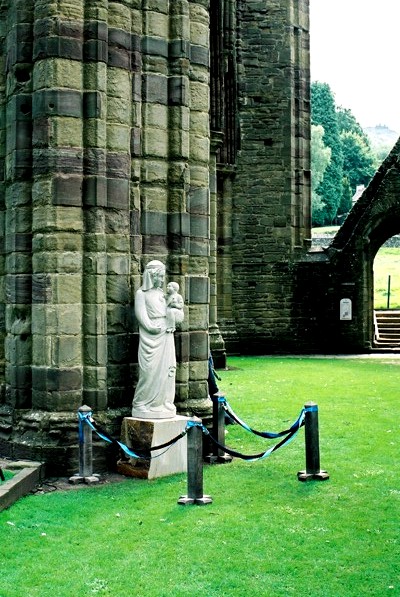
To the right of the high altar is theLady Chapel , the exquisite reredos over the altar showing the Annunciation (Gabriel coming to Mary) and this was carved by Pugin and exhibited at the Great Exhibition of 1851. There is a tabernacle was put here after the Second Vatican Council.To the right of the chapel is a wonderful Pugin Madonna and CHild, one of the finest ever carved by Pugin and much admired at the Great Exhibition.

ST PRIMITIVUS

On the 25th May 1849 a year before the opening of the church, a Signor di Rossi in Italy identified the bones of a second century martyr, St Primitivus in the catacombs in Rome. Next to the bones was an earthenware vessel which contained the dried blood of the martyr and at the entrance of the tombof the grave a broken slab of ancient marble

Primitibus:d.v.k. Oct IX (Primitivus deposited on the 5th of the Kalends of COtober-(27 September))When Pope Pius IX learned of Rudolph's conversion, these relics were presented to him on thi return to Wales from Rome in 1851 . In August of that year they were finally installed in their oaken casket by Bishop Brown of Shrewsbury, beneath the Lady Altar. The original marble slab from the catacombs, may be seen at the base of the altar.

THE FRIARS

The Order is one of the three main branches of the Franciscan order .They arrived at Pantasaph in 1852. The friars set to work to beautify the lands around the church. Gardens were laid, trees planted and paths made and walls built and what was an ugly waste became the beautiful grounds we know today. This work had to be done in addition to the work over a large section of the local countryside to establish Mass centres, preach and bring the Sacraments to the faithful scattered Cathlics of North Wales.

THE SITE and the LOURDES GROTTO

Denbigh House where the friars lived until the present friary came into being stands at the head of the avenue leading up to the present building. To the right of the house a substantial path leads to the entrance to CALVARY -a steep zigzag path contains the fourteen stations of he cross erected at intervals in tiny chapels. The chapels were hewn and laid out and chapels built by the friars over the years.At the top of the Mount above the Chapel of the Sepulchre, stands Calvary proper a striking and impressive group in bronze. On coming back down the hill and opposite the first station a path leads to the Grotto,one of the finest seen anywhere. The grotto is a replica of that in Lourdes and is a tranquil haven where in spring and summer butterflies dance as pilgrims say their rosary prayers.Sadly there was no time to visit these sites as the walking is quite substantial. There is a large car park.

RETREATS and 1999 Shrine to St Pio

in 1987 the retreat centre was opened and there is a wide variety of retreats for groups and for individuals (Details stpioshrinepantasaph@catholic.org,or tel 01352 711053) Franciscan Friary, Monastery Ave, Pantasaph nr Holywell, Flintshire, CH8 8PE)Some people just come to enjoy the beautiful surroundings.

In 1999 the National Shrine to St Pio was opened and during the summer months 'St Pio Days of prayer'are run using the Shrine,Pilgrims Hall, Church and Grotto, all are welcome for these days and booking is available through the office in the last paragraph.

MARY in MONMOUTHSHIRE

I have included all these sites-Gwytherin Village of Winifride's work and burial,St Asaph Cathedral (originally Catholic) and the Shrine itself plus the Friary, simply because of the link with st Beuno, whose 'Vita' tells the story of Winifride and also because during Recusant times some articles were rescued from Monmouthshire Churches before they could be seized by those closing them down and taking away the churches property.They were taken and hidden at St Winifride until the Restoration of the Church.This shows also in this stronghold of the church, a link between the two strongholdsof Catholicism. The two areas contained 50% of Wales Catholics during Penal times.

This concludes February's pilgrimage to Holy Well. I am sure there will be more as the prayers I made to God at the Shrine were answered with the help of Winifride. The pictures at the shrine chapel below show thatalso Orthodox visit the shrine and chapel.

A Morning at Tridentine Mass in Holywell-Day 3


_____________________________________________________________________________


My Last Day in Holywell (for now!)

On the Sunday morning early, we had gone to the Well Shrine as I have reported and then we went up to the top of the hill to the Catholic Church for Sunday Morning Mass.

I recently learned the reason for the name Mass and that it should never be called a service.Mass is much more. Dr Scott Hahn, the brilliant theologian in his book 'The Lamb's Supper' writes this:

To go to Mass is to go to heaven, where "God Himself....will wipe away every tear"(Rev 21:3) Yet heaven is even more than that. Heaven is where we lace ourselves under judgment, where we see ourselves in the clear morning light of eternal day, and where our Just Judge reads our works from the book of the Lamb. Our deeds go with us as we go to heaven. Our deeds are with us when we go to Mass.

To go to Mass is to renew our Covenant with God, as at a marriage feast-for the Mass is the Marriage Supper of the Lamb.

To go to Mass is to renew our Covenant with God, as a marriage feast-for the Mass isthe marriage Supper of the Lamb. As in a marriage, we take vows, we pledge ourselves, we assume a new identity. We are changed forever.

To go to Mass is to receive the fullness of Grace, the very life of the Trinity. No power in heaven or earth can give us more than we receive at Mass, for we receive God unto ourselves.

We must never underestimate these realities. In the Mass, God has given us his very Life. This is not just a symbol or a metaphor of foretaste. We must go to MaWITEYES eyes and ears,mind and heart open to the Truth that is before us, the Truth that rises like the incense. God's life is a gift we must receive properly and with gratitude . He gives us grace as he has given es fire and light. Fire and light, misused, can burn or blind us. In a similar way grace received unworthily subjects us to judgement, and much direr consequences.

In every Mass God renews his covenant with each of us, setting before us life and death, blessing and curse. We must choose the blessing for our own, and reject the curse, and we must do this form the very start.........'

For the most amazing explanation of the Mass read Dr Hahn's book (Nihil Obstat and Imprimatur from Bishop of Stubenville)ISBN-100-232-52500-5.

He makes some wonderful statements of which this is one of my favourites:

The martyrs of the Apocolypse Revelation are the ones who speak from the Altar. They are the sacraments of the Eucharistic Sacrifice of Christ. In their lives, they manifested the true nature of love, sacrificial self offering.

We can live this martyrdom wherever we are. We need not travel to oppressive , anti Christian Countries to be martyrs. We need only to do the same things we have always done-but now making every one of those gestures, actions, thoughts and feelings, an expression of love for the Father, an imitation of the Son within us. That is what it is to live the Mass.

That is what it is to be a missionary and a martyr, restoring all things in Christ. It means cooking dinner unto Christ, and through Him to the Father, and for his Children, who are yours. It means going to work and doing a job meaning friendship for your co-workers, and not just to get a better salary next year or get a promotion, but to earn an eternal inheritance.Remember again the words of Vatican 2:
(Their)work, prayers and apostolic endeavours, their ordinary married and family life, their daily labour,their mental and physical relaxation....all of these become spiritual sacrifices acceptable to God through Jesus Christ...During the celebration of the Eucharist these sacrifices are most lovingly offered to the Father along with the Lord's body'.

Our whole life gets caught up in the Mass and becomes our participation in the Mass. As Heaven descends to earth , we life up our earth to meet it half way. That's the splendour of the Ordinary;the workaday world becomes our Mass. That is how we bring about the Kingdom of God. When we begin to see that heaven awaits us in the Mass, we already begin to bring our home to heaven.And we begin already to bring heaven home with us.

We become Martyrs , witnesses to Jesus Christ,Whose parousiaWhose Presence, we know intimately.'


As I have already written from the life of the Saint, this Chastity which she defended was important , because of the way Christ gave women-the right not to marry if they did not wish. Gwenfrewi or Winifride in repulsing the amorous Llewellyn defended herself as a unique virginal vessel-her own gift to God. So it was with some awe I entered the church dedicated to her above the shrine on that February Sunday morning.

Holywell Catholic Church and the Vocationist Fathers

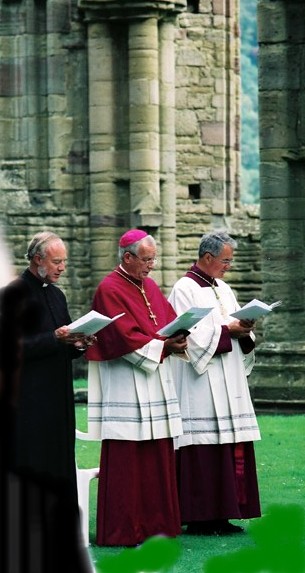
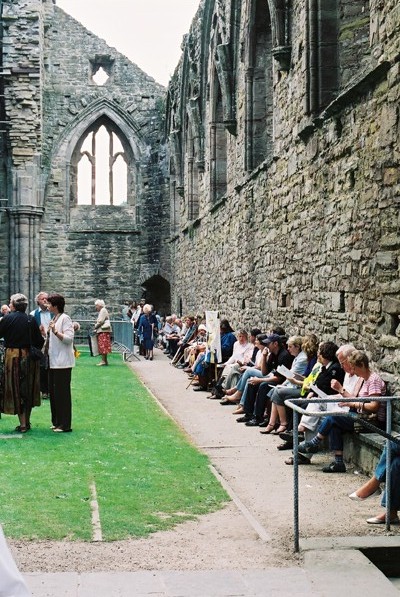
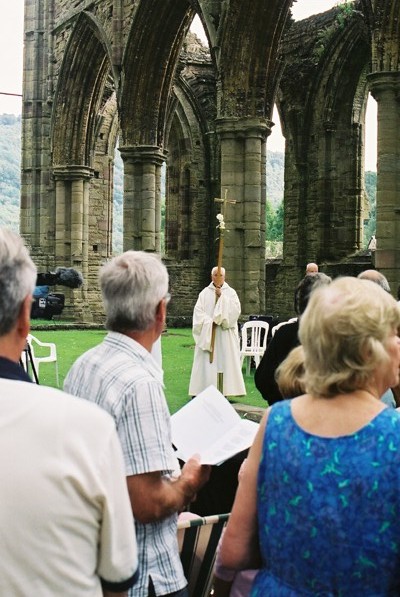
We got to the Church by walking up from St Winifride's Pilgrims Guest House. For the first time in my life, as this was a Tridentine Mass, I wore the traditional small black veil. Since the new revision of the Canon law it is not required, and yet many women are voluntarily using it, as a gesture of love for the Lord and a 'one in the eye' for the evils of our present day life in the world. Moreover, the Tridentine Rite had always required to have the head covered. It was my first time of experiencing this Mass and one thing it did inspire in me was reverence and awe. There are not so many places where you have to actually say something so you can enter a deep relaxation and really enter into the words on the page of the missal. Everything in Latin and English is written in there, but there are no microphones, everything is said normally and provided you keep up with the liturgy on the page-you can be 'laid asleep and become a living soul' as Wordsworth says in his contemplation of Tintern Abbey ruins. Then, or course how much more can this happen if you are witnessing heaven in this spiritual warfare? The singing of the plainchant was heavenly and if I have not lost the files on the crashed computer, I will put it up on the podcast. I could not kneel for the Communion because of the damage to my knees, but I very much liked the new experience. I was even more pleased when I found it was being offered in my nearby parish of Cheltenham.
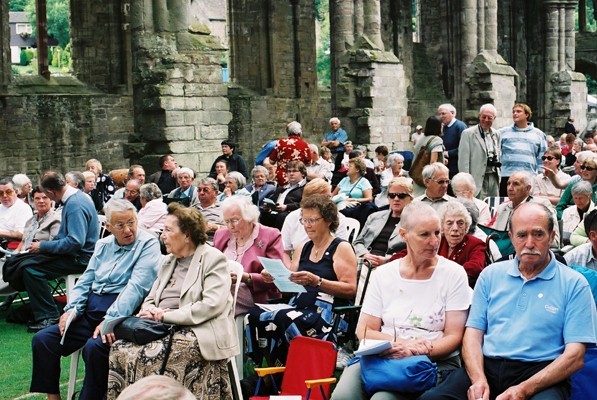

So when the priest says 'This was the Mass'he means 'This is the Mission' (Ita Missa est) and in the Ordinary Rite we have 'The Mass is ended go out to Love and Serve the Lord'. In effect we, in the Church, the Body of Christ are to go out into all the world working for Christ, to bring more souls to heavenly bliss.

It was certainly well worth coming for the pilgrimage as it gave me a lot to think about! Also the link with Monmouthshire-via St Beuno, who educated in Caerwent went on to found so many religious houses (Basingwerk may have been one of his originally) and help restore the health of our little girl saint, who still draws people to her cmartyred state in the the Name of Christ to this day.

After the Mass we met Fr Salvatore who welcomed us and invited us again. HE also does prayers at the Shrine every day at 5.He also invites all of you to the annual Welsh pilgrimage.

15, Well St, Holywell, Clwyd CH8 7PL
Tel: 01352 713181

The Annual Welsh pilgrimage is a deep moment of faith in this holy place. Our faith needs expression of signs as well and this pilgrimage is one. We can keep alive the historical Catholic Christian Faith by participating at the Procession, Mass and Veneration of St. Winefride’s relic. All members of Diocese are warmly welcomed to join us and to bring other people to share this wonderful experience, which I have experienced personally since arriving here from Italy on April 1st 2008. By taking part in this pilgrimage we can witness together our common faith to God through the intercession of St. Winefride venerated here in Holywell.Salvatore Musella SDV

The Vocationist Fathers, they have a religious house at St Winifrides, is an orer dedicated to fostering vocations for the priesthood and religious life all over the world, and helping young men with discernment, educating the very poorest and makig it possible for them to be priests.


The Right Reverend Edwin Regan, Bishop of the Diocese of Wrexham, entrusted St. Winefride`s Parish Holywell to the Vocationist Fathers on April 06, 2008.

The Society of Divine Vocations,

more commonly referred to as "Vocationist Fathers,"founded by Fr. Justin Russolillo, is a Catholic Religious Congregation that strives to foster vocations to the Priesthood and Religious Life, especially among the poor. Its main ministry is to identify and guide those who believe they are called to serve God as Priests or Brothers.
The Society of Divine Vocations, currently serves God's people in Italy, North America, South America, Africa, Asia and now in the United Kingdom. Their ministry is carried out in Parishes, Schools, Missions and the Vocationary (a place for vocational discernment and religious formation).
The Vocationist Fathers and Brothers live in community and take the vows of poverty, chastity and obedience.

MORE DETAILS LATER ABOUT THE ANNUAL PILGRIMAGE.