





























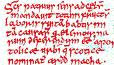















My podcast Mary in Monmouthshire has been achieved using new equipment which I hope will improve the quality of my output. In Part One I have recorded the story as it appears in the Liber Landaviensis (Book of Llandaff) complete with the prophecy of the Angel of the Lord. I also speak about my car problems, the lovely Spring weather and my trip to Llandaff. But the soundseeing there is for another episode!
Download it by downloading itunes 7 free
Click on 'Store'-in the store window type in Maryin Monmouthshire and click
When the podcast appears,please subscribe.
Please send feed back OR if you have any information to maryinmonmouth@googlemail.com.
I will definately include it in my podcasts.I can see listeners from all over the world. You can join facebook if you like and join our maryinmonmouth group-we'd love to see you.
We have had frost the last two nights, but lovely spring weather by day!
Sunday, February 17, 2008


Thursday, February 14, 2008
So who did kill Tewdrig then? The Answer!
Yesterday I recorded my interview with historian Mr Anthony Utting from Mathern. A professional historian , he has published two books about St Tewdrig and therefore very knowledgeable also about various other aspects of history locally. He has researched the Anglo Saxon Chronicle and History of the English Church by Bede and is therefore able to tell me that whilst many of the facts about Tewdrig’s death are not certain that he believes the person buried beneath the sanctuary is the Saint King.He seemed from Archbishop Godwin’s account to have been a large, well nourished man with a large wound in his head-similar to the account in the Book of Llandaff. Modern historians and Scholars like to scoff a bit at this book as they are anxious to prove everything from science, but three days to die is plausible for a head wound inflicted by an Angon or Anglo Saxon spear inducing a coma. He was brought from Tintern (or Ty’r n Brennin-House of the King) to Mathern on the way to Ynys Echni (Flat Holm in the Bristol Channel) a holy place where so many Welsh Saints and royalty are buried. Interesting the word ‘Ynys’-(unnuss-island)Islands were very holy indeed and equivalent to a desert. We have heard about Bardsey Island off North Wales, Caldey Island off Tenby, Flat Holm (Ynys Echni-where the monk Gildas was for a time)and of course St Joseph of Arimathea’s island (Ynys Witrin) or Glastonbury. Tony is quite a colourful character and his interview very interesting and fun. It was another glorious day. Tony was originally Catholic and is now Churchwarden of St Tewdrics in Mathern.
I won’t give you the answer to whom Tony thought killed Tewdrig, you will have to listen to the Podcast for that.
I am currently having a bit of trouble installing my new equipment.An improved microphone and mixer facility which should improve sound quality, but I can’t hear what I am recording through the ear phones and need to take advice at the moment so any day now-when the penny drops I’ll get it up there on iTunes! Not aving had a car for some days has worsened the problems, but I’ll have the Two Tewdrig programmed up very soon!
I won’t give you the answer to whom Tony thought killed Tewdrig, you will have to listen to the Podcast for that.
I am currently having a bit of trouble installing my new equipment.An improved microphone and mixer facility which should improve sound quality, but I can’t hear what I am recording through the ear phones and need to take advice at the moment so any day now-when the penny drops I’ll get it up there on iTunes! Not aving had a car for some days has worsened the problems, but I’ll have the Two Tewdrig programmed up very soon!
Wednesday, February 13, 2008
St Teilo's Day-Relic in Llandaff Cathedral, Cardiff
Alright, I know that Llandaff is not in Monmouthshire, however, when Tewdrig's son Meurig become King he made huge grants of land to Llandaff in memory of his father and was one of the great Christian Kings of early times. Meurig granted the land to Odoceus (Oh doh kay us) which is still easier toe say than the Welsh version Euddogwy (Oi thog oo ee!)
Odoceus was the bishop at the time. Teilo succeeded Dubricius as bishop of Llandaff and by then the 'archbishopric' at Caerleon had gone to St David's in Pembroke (Menevia) by then.So Teilo, although a North Wales Saint is the missing bishop.
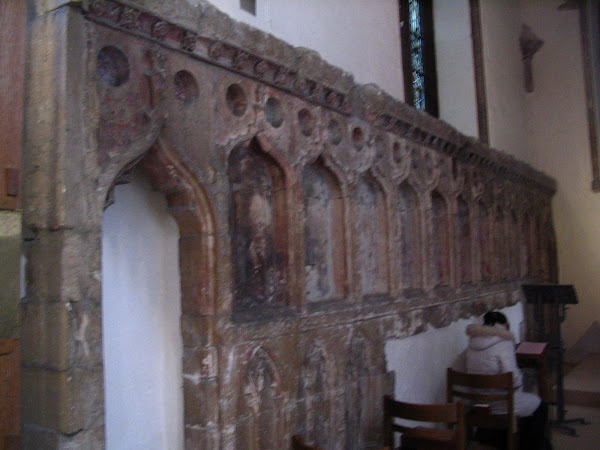
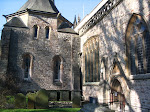
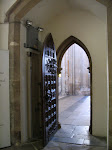
On Tuesday I went to see Llandaff Cathedral. The new car went well and very much enjoyed the trip because the weather was fabulous for February and I drove down through the Wye Valley and Forest of Dean. I got to Llandaff at about 11.30am and was able to park close to the Cathedral. It seemed large and imposing from the car park, but in truth,much smaller than St David’s and there was extensive rebuilding because of a bomb having been dropped in the Cathedral precinct I 1941 I think.
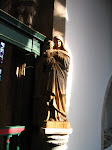
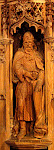
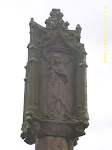
There were no transepts, so it was not cruciform and therefore perhaps plainer than many cathedral (or as it was Abbey designs) It was an Abbey before the sixteenth century. There was a large preaching cross outside, though not the original one, where Archbishop Baldwin of Canterbury had preached for the crusades in 1188, when accompanied by Gerald the Welshman. It was on the same spot, however. There were gargoyles on the tower and many mediaeval Welsh saints, but also a statue of St Peter on the tower.
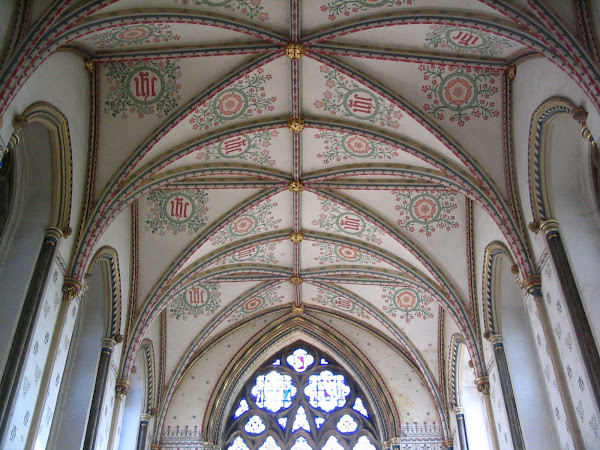
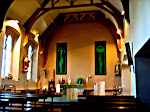
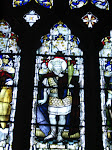
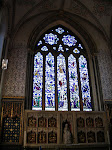
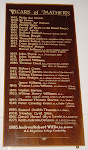
Inside was a large, quite light cathedral, with a big nave. I am not a huge fan of contemporary sculpture, but in the centre a large cylinder of concrete resting on four supports with an enormous figure of Christ sculpted on it-very expertly. I felt he looked quite scary, however I am not a connoisseur of such things and no doubt it is very good craftsmanship.I always thought Christ looked like us and was not so scary. There were various people looking after the cathedral who were lovely. And after buying a guide book I shot off. There were many treasures here, which I will describe in the podcast. There are a few videos on Facebook ‘MaryinMonmouth’ group as well. The parts I liked most were the Lady Chapel and the Dyfric/Dubricius Chapel. Which I thought was the St Teilo Chapel. This was to the right of the altar. I understand the original Abbey Church had quite a few chapels. Biggest thrill was they opened the locked St Teilo relic for me to see. This had quite a chequered history, but was beautifully kept. I was only sorry there was no candle stand or candles or prie-Dieu there so you could spend some time looking at it.It was so extremely kind of the lady and gentleman verger to open it for me to see. The relic has literally been around the world, inlaid with gold.The skull was the part kept in Llandaff. I am doing a separate podcast on Welsh relics. These precious souvenirs of saints of old were often destroyed during the sixteenth century in Britain, so we are fortunate to have kept some. Evidence of Oliver Cromwell using it as a tap room, place for their horsesand defacing so many ancient monuments is all around us . (The evil that men do lives after them-Hamlet) The details of the visit can be heard on the podcast, although I am too close to the microphone.
I am currently having a bit of trouble installing my new equipment.An improved microphone and mixer facility which should improve sound quality, but I can’t hear what I am recording through the ear phones and need to take advice at the moment so any day now-when the penny drops I’ll get it up there on iTunes! Not aving had a car for some days has worsened the problems, but I’ll have the Two Tewdrig programmes up very soon!
Odoceus was the bishop at the time. Teilo succeeded Dubricius as bishop of Llandaff and by then the 'archbishopric' at Caerleon had gone to St David's in Pembroke (Menevia) by then.So Teilo, although a North Wales Saint is the missing bishop.
On Tuesday I went to see Llandaff Cathedral. The new car went well and very much enjoyed the trip because the weather was fabulous for February and I drove down through the Wye Valley and Forest of Dean. I got to Llandaff at about 11.30am and was able to park close to the Cathedral. It seemed large and imposing from the car park, but in truth,much smaller than St David’s and there was extensive rebuilding because of a bomb having been dropped in the Cathedral precinct I 1941 I think.
There were no transepts, so it was not cruciform and therefore perhaps plainer than many cathedral (or as it was Abbey designs) It was an Abbey before the sixteenth century. There was a large preaching cross outside, though not the original one, where Archbishop Baldwin of Canterbury had preached for the crusades in 1188, when accompanied by Gerald the Welshman. It was on the same spot, however. There were gargoyles on the tower and many mediaeval Welsh saints, but also a statue of St Peter on the tower.
Inside was a large, quite light cathedral, with a big nave. I am not a huge fan of contemporary sculpture, but in the centre a large cylinder of concrete resting on four supports with an enormous figure of Christ sculpted on it-very expertly. I felt he looked quite scary, however I am not a connoisseur of such things and no doubt it is very good craftsmanship.I always thought Christ looked like us and was not so scary. There were various people looking after the cathedral who were lovely. And after buying a guide book I shot off. There were many treasures here, which I will describe in the podcast. There are a few videos on Facebook ‘MaryinMonmouth’ group as well. The parts I liked most were the Lady Chapel and the Dyfric/Dubricius Chapel. Which I thought was the St Teilo Chapel. This was to the right of the altar. I understand the original Abbey Church had quite a few chapels. Biggest thrill was they opened the locked St Teilo relic for me to see. This had quite a chequered history, but was beautifully kept. I was only sorry there was no candle stand or candles or prie-Dieu there so you could spend some time looking at it.It was so extremely kind of the lady and gentleman verger to open it for me to see. The relic has literally been around the world, inlaid with gold.The skull was the part kept in Llandaff. I am doing a separate podcast on Welsh relics. These precious souvenirs of saints of old were often destroyed during the sixteenth century in Britain, so we are fortunate to have kept some. Evidence of Oliver Cromwell using it as a tap room, place for their horsesand defacing so many ancient monuments is all around us . (The evil that men do lives after them-Hamlet) The details of the visit can be heard on the podcast, although I am too close to the microphone.
I am currently having a bit of trouble installing my new equipment.An improved microphone and mixer facility which should improve sound quality, but I can’t hear what I am recording through the ear phones and need to take advice at the moment so any day now-when the penny drops I’ll get it up there on iTunes! Not aving had a car for some days has worsened the problems, but I’ll have the Two Tewdrig programmes up very soon!
Sunday, February 10, 2008
Who Killed King Tewdrig? A Celtic Mystery.....Part I
Podcast no 9 (Download free from iTunes)
The place of our mystery
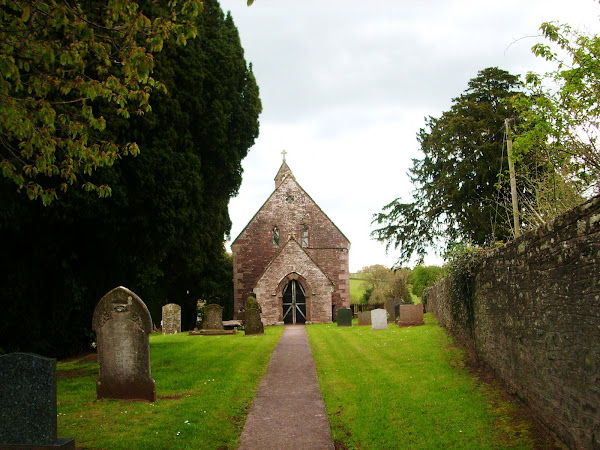
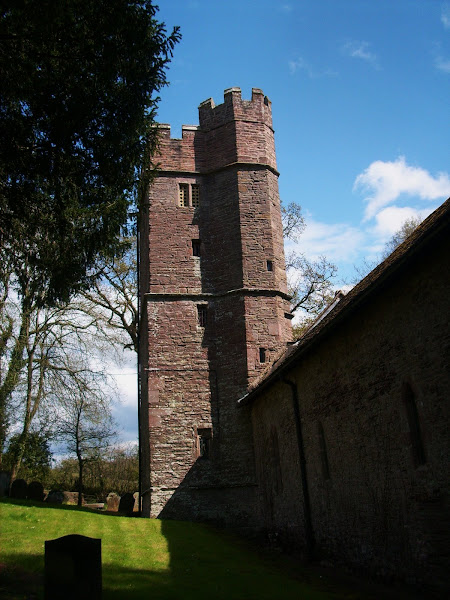
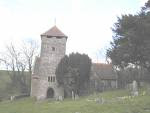
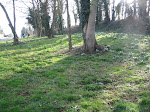
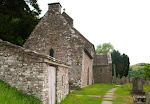
A few miles west of Chepstow, or as it used to be known by its French name Striguil, there are verdant meadows on either side of the A40 which form a pill or a low area of land, which used to be flooded from the Severn at High Tide. This was the Saint Pierre Pill .This was near one of the most important of the crossing places on the River Severn at Porth Iscoed (The Harbour under the wood)which became Portskewett. Apart from Beachey ferry and some stepping stones further down the Severn, this was an important crossing place. The road passing trough Mathern was an ancient British track winding right from the coast to Shirenewton. Here nestling in a small settlement of religious buildings amidst beautiful trees, rests Mathern Church, dedicated to the protection and memory of Saint Tewdrig and miraculously still keeping his relics.
At this time Morgannwg or Glamorgan, was joined to Gwynllwg (Gwent)- extended right to the Brecon Beacons, Gwent above the wood and Gwent below the Wood. This is a truly lovely and ancient corner of Gwent.
Birth of Tewdrig
The king of Gwent and his wife-King Nynniaw had a son called llwywarch who was a fine prince and brought up as a Christian, ;probably training at Caerwent and learning all the things chieftains did at that time-fighting with an axe, sword fighting archery and quarter staff fighting. He married and had a son called Tewdrig. Tewdrig is called Theodoric in Latin documents. Now Tewdrig was educated as a child with St Tatheus monks at Caerwent-as all the local Welsh royalty attended this very special monastery and he loved the rhythm of the day, the liturgy of the hours, he loved the Vespers as the sun went down and adored the way the monks sang their hymn to Our Lady after Compline when they went to bed.
Tewdrig the Christian Prince
Prince Tewdrig was inspired by the ideals of Christianity, the value of Peace and love, service of others and a gentle life of Praise to God for all his goodness in the gift of Jesus as a scapegoat for all our sins. He engaged in lively debate with the monks who saw his joy. Gradually his boyhood turned to manhood and he was needed at home where he was groomed for hid duty as a future king of Gwent and Glamorgan. He was trained in every aspect of warfare, which he embraced gladly. His father told him about the menace of the Saxons who were coming Westwards all the time. They were pagans, not Christians and destroyed monasteries wherever they could. Llywarch explained how important it was to defend these places from the pagans and how one day he would be king and have to defend the Church.
King Tewdrig of Gwent
The Chieftain Lwywarch died and King Tewdrig was made King. He took over all the great offices of state and donated a great deal of money to help the church at Llandaff to set it off on a firm footing. Above all, he wanted to help the church, which but for his rank, he might have joined. One day he saw a beautiful woman at court. Her name was Govan and she was a princess of a neighbouring tribe. At length he and Govan married. They loved each other a great deal and Tewdrig had never been so happy, because Govan was a gentle and loving Christian princess. Nevertheless Tewdrig, always placing his fate in the hands of God gained some startling successes over the marauding English invaders. His joy seemed complete when Tewdrig and Govan found they were to have a Child. But there were no more recorded children and Tewdrig wearied of the world of politics and fighting and desired to enter his green martyrdom. He did his duty by his people, was a brave and fearless fighter and his son had grown into a fine young king and now just wanted to serve God. However no more children are heard of and it is just possible that the saintly Govan died in childbirth, as so many young women did, and it is a possibility that this is why Tewdrig desired to retire from the world when his son had grown to manhood.
Saint Govan his wife
The other possibility, since his wife is also designated a saint, that having produced a son, she also retired to a convent to serve God, but I think it unlikely she would leave her child Meurig.
Hermitage at Tynderyn or Dinas y Brennin (Tin-tern)Wye Valley
Tewdrig went into his desert, where he dwelt on the rocks at Tintern. The very name Tintern is Welsh Ty Deryn (the house of the King). The spot he chose was rocky we know but probably on the site of the present Abbey since it was a beautiful place.It could also have been Dinas y Brennyn (the King’s fortress)Archeology suggests there was something Roman in the site of the abbey. He spent his days in prayer, lived from fishing in the Wye and growing food and was visited often by his son. He was greatly troubled by the tales of Saxon Mercian raids on Christian monasteries in Gwent. Every time a messenger came with tales of another Celtic monastery destroyed in the Herefordhire or West of the Severn , he would become even more angry. In the book containing this story, the Liber Landevensis we read Tewdrig was a great warrior abd while he possessed the kingdom he was always victorious, so that when his face was seen in battle he was always victorious’.
The angel also speaks of the natives and other inhabitants, because clearly these were refugees from the invading Saxon line which had spread to the Severn or the Hafren as it is called in Welsh.
Story from the Liber Llandaff
The angel of the Lord said unto him on the preceding night:
‘Go tomorrow to assist the people of God against the enemies of the church of Christ, and the enemy will turn their face in flight, as far as Pwll Brochwael (possibly Brockweir)and thou being armed stand in the battle, and seeing thy face and knowing it, they will, as usual take themselves to flight, and afterwards for the space of thirty years, in the time of thy son, they will not dare to invade the country; and the natives and other inhabitants will be in quiet peace, but thou wilt be wounded by a single stroke in the district of Rhyd Tyndyrn and in three days die in Peace.(et tu tamen vulnerabis una plaga in Ryl Tindyrn et morieris in pace post triduum’.’
Now 3 days to die is consistent with a head injury. The Saxons under Ceolwulf or a Mercian raider were advancing down the Wye.Meurig, possibly still a teenager, took fright and rode for Tewdrig at Tintern. Reaching Tintern with his men by evening , he jumped off his horse, ran in and told his father the news. Tewdrig was horrified and knew the time the angel had spoken of had come.
The Book of Llandaff continues the story:‘Rising in the morning , when the enemy of his son Meurig came , he mounted his horse and went cheerfully with them, agreeably to the commandment of the angel, and being armed he stood in battle on the banks of the Wye, near the ford of Tintern (that was later known as Pont y Saeson or Saxon Bridge) and on his face being seen, the enemy turned their backsand betook them to flight, but one of them threw a lance, and wounded him therewith, as had been foretold for him, and he therefore rejoiced, as if spoil had been taken on the vanquishing of the enemy.
The dying Tewdrig makes for Flat Holm Island (Echni)
After his son, Meurig returned victorious, and with the spoil he had taken, he requested his father to come with him, who said thus :I will not depart hence until my Lord Jesus Christ shall bring me to the place which I have desired, where I shall like to lie after death, that is, in the Island of Echni (possibly Flat Holm.)And in the morning two stags, yoked and ready were before the house where he lodged, and the man of God, knowing God had sent them, mounted the carriage, and wherever they rested, there springs flowed, until they came to a place near a meadow towards the Severn.’
The Death of King Tewdrig, Saint and Martyr
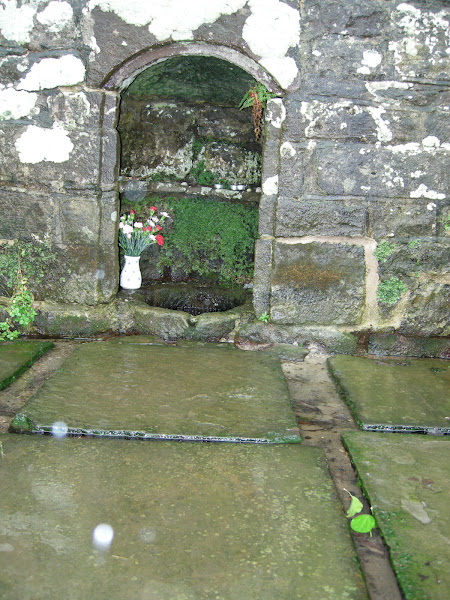
At this point, we come to the place when Tewdrig needed to rest and have his wound cleaned, and they stopped near a holy spring. Tewdrig was carried to the spring and was cooled by the fresh water and the grass. He called his son to him and ordered that a church should be built on the spot the God had led them to, and he wished to be buried in it. The carriage with the stags was completely broken . He ordered the stags be let loose and then said‘ Father, into thy hands I commend my spirit’. Lying there on the grass, he stared at the heavens and waited for God to take him. After a short while, he met his Maker.
The Liber goes on:
’His son, Meurig, being informed of the death of his father, built there an oratory and a cemetery, which were consecrated by St Oudoceus (or as we know him Euddogwy) and for the soul of his father he granted the whole territory to Bishop Odoceus, and the church of Llandaff , and its pastors in perpetual consecration without any payment to any mortal man besides St Oudoceus and the Church of Llandaff. (St Oudoceus’ monastery was at Llan-dogo north of Tintern, on the site of the present church.. The area of the inland water flow is now called Pullmerick (Pwll-Meurig).
Meurig and St Oudoceus when he was made Bishop of Llandaff
The king held the four gospels in his hand and confirmed the endowment of the holy church, with the Holy Cross going before them, and the holy choir singing, with Odoceus singing “May peace be within thy walls, and plenteousness within thy palaces.” “Glory and riches shall be in his house, and his righteousness endureth for ever.” And with the sprinkling of holy water on all the boundaries, he confirmed the same Privilege as had been before given to St. Dubricius. He would not have to go on military expeditions, the church had the right of sanctuary, without human protection forever , together with the kings of Britain whose bodies were committed to Llandaff, forever. The document goes on’ as the Church of Rome has dignity above all the churches of the catholic faith, so the Church of Llandaff exceeds all the churches of southern Britain in dignity, and in privilege, and in excellency; and with complete commonage to be enjoyed by the present and future inhabitants, in field, and in waters, in wood, and in pastures; and with those boundaries, From Cynlais within Taff, and EIei, the whole territory as far as the sea. We are told he was a great scholar and very humble and wise. The Church and monastery at Llandogo was and is still dedicated to him.
Tewdrig’s Feast Day is given as January 3rd.The place where he died was called Merthyr Deryn or the Martyr King-and now shortened to Mathern. Mathern is near the junction of the Wye and Severn. Some historians have argued the battle was at Bath, where we know there was a great battle and come in to the big Hunger Pwll at high tide , transported by boat , This would exactly have brought him to that area. It is also true that Meurig managed to keep the Saxons to the East of the Severn, safeguarding the area now known as Wales (Land of Romanised Britons) .
There is a huge mountain and forest in the Malvern area called Wychwood, and further up the forest of Arden, near Birminham. The superstitious Saxons would not penetrate there not being fond of woods or mountains. This meant Wales kept its identity inspite of individual Saxons settling there. Tewdrig and Meurig are true heroes of Wales as well as the Church, which they defended so valiantly and for whom Tewdrig gave his life.
That is not the end of the tale. I shall continue next time with what happened afterwards.
The place of our mystery
A few miles west of Chepstow, or as it used to be known by its French name Striguil, there are verdant meadows on either side of the A40 which form a pill or a low area of land, which used to be flooded from the Severn at High Tide. This was the Saint Pierre Pill .This was near one of the most important of the crossing places on the River Severn at Porth Iscoed (The Harbour under the wood)which became Portskewett. Apart from Beachey ferry and some stepping stones further down the Severn, this was an important crossing place. The road passing trough Mathern was an ancient British track winding right from the coast to Shirenewton. Here nestling in a small settlement of religious buildings amidst beautiful trees, rests Mathern Church, dedicated to the protection and memory of Saint Tewdrig and miraculously still keeping his relics.
At this time Morgannwg or Glamorgan, was joined to Gwynllwg (Gwent)- extended right to the Brecon Beacons, Gwent above the wood and Gwent below the Wood. This is a truly lovely and ancient corner of Gwent.
Birth of Tewdrig
The king of Gwent and his wife-King Nynniaw had a son called llwywarch who was a fine prince and brought up as a Christian, ;probably training at Caerwent and learning all the things chieftains did at that time-fighting with an axe, sword fighting archery and quarter staff fighting. He married and had a son called Tewdrig. Tewdrig is called Theodoric in Latin documents. Now Tewdrig was educated as a child with St Tatheus monks at Caerwent-as all the local Welsh royalty attended this very special monastery and he loved the rhythm of the day, the liturgy of the hours, he loved the Vespers as the sun went down and adored the way the monks sang their hymn to Our Lady after Compline when they went to bed.
Tewdrig the Christian Prince
Prince Tewdrig was inspired by the ideals of Christianity, the value of Peace and love, service of others and a gentle life of Praise to God for all his goodness in the gift of Jesus as a scapegoat for all our sins. He engaged in lively debate with the monks who saw his joy. Gradually his boyhood turned to manhood and he was needed at home where he was groomed for hid duty as a future king of Gwent and Glamorgan. He was trained in every aspect of warfare, which he embraced gladly. His father told him about the menace of the Saxons who were coming Westwards all the time. They were pagans, not Christians and destroyed monasteries wherever they could. Llywarch explained how important it was to defend these places from the pagans and how one day he would be king and have to defend the Church.
King Tewdrig of Gwent
The Chieftain Lwywarch died and King Tewdrig was made King. He took over all the great offices of state and donated a great deal of money to help the church at Llandaff to set it off on a firm footing. Above all, he wanted to help the church, which but for his rank, he might have joined. One day he saw a beautiful woman at court. Her name was Govan and she was a princess of a neighbouring tribe. At length he and Govan married. They loved each other a great deal and Tewdrig had never been so happy, because Govan was a gentle and loving Christian princess. Nevertheless Tewdrig, always placing his fate in the hands of God gained some startling successes over the marauding English invaders. His joy seemed complete when Tewdrig and Govan found they were to have a Child. But there were no more recorded children and Tewdrig wearied of the world of politics and fighting and desired to enter his green martyrdom. He did his duty by his people, was a brave and fearless fighter and his son had grown into a fine young king and now just wanted to serve God. However no more children are heard of and it is just possible that the saintly Govan died in childbirth, as so many young women did, and it is a possibility that this is why Tewdrig desired to retire from the world when his son had grown to manhood.
Saint Govan his wife
The other possibility, since his wife is also designated a saint, that having produced a son, she also retired to a convent to serve God, but I think it unlikely she would leave her child Meurig.
Hermitage at Tynderyn or Dinas y Brennin (Tin-tern)Wye Valley
Tewdrig went into his desert, where he dwelt on the rocks at Tintern. The very name Tintern is Welsh Ty Deryn (the house of the King). The spot he chose was rocky we know but probably on the site of the present Abbey since it was a beautiful place.It could also have been Dinas y Brennyn (the King’s fortress)Archeology suggests there was something Roman in the site of the abbey. He spent his days in prayer, lived from fishing in the Wye and growing food and was visited often by his son. He was greatly troubled by the tales of Saxon Mercian raids on Christian monasteries in Gwent. Every time a messenger came with tales of another Celtic monastery destroyed in the Herefordhire or West of the Severn , he would become even more angry. In the book containing this story, the Liber Landevensis we read Tewdrig was a great warrior abd while he possessed the kingdom he was always victorious, so that when his face was seen in battle he was always victorious’.
The angel also speaks of the natives and other inhabitants, because clearly these were refugees from the invading Saxon line which had spread to the Severn or the Hafren as it is called in Welsh.
Story from the Liber Llandaff
The angel of the Lord said unto him on the preceding night:
‘Go tomorrow to assist the people of God against the enemies of the church of Christ, and the enemy will turn their face in flight, as far as Pwll Brochwael (possibly Brockweir)and thou being armed stand in the battle, and seeing thy face and knowing it, they will, as usual take themselves to flight, and afterwards for the space of thirty years, in the time of thy son, they will not dare to invade the country; and the natives and other inhabitants will be in quiet peace, but thou wilt be wounded by a single stroke in the district of Rhyd Tyndyrn and in three days die in Peace.(et tu tamen vulnerabis una plaga in Ryl Tindyrn et morieris in pace post triduum’.’
Now 3 days to die is consistent with a head injury. The Saxons under Ceolwulf or a Mercian raider were advancing down the Wye.Meurig, possibly still a teenager, took fright and rode for Tewdrig at Tintern. Reaching Tintern with his men by evening , he jumped off his horse, ran in and told his father the news. Tewdrig was horrified and knew the time the angel had spoken of had come.
The Book of Llandaff continues the story:‘Rising in the morning , when the enemy of his son Meurig came , he mounted his horse and went cheerfully with them, agreeably to the commandment of the angel, and being armed he stood in battle on the banks of the Wye, near the ford of Tintern (that was later known as Pont y Saeson or Saxon Bridge) and on his face being seen, the enemy turned their backsand betook them to flight, but one of them threw a lance, and wounded him therewith, as had been foretold for him, and he therefore rejoiced, as if spoil had been taken on the vanquishing of the enemy.
The dying Tewdrig makes for Flat Holm Island (Echni)
After his son, Meurig returned victorious, and with the spoil he had taken, he requested his father to come with him, who said thus :I will not depart hence until my Lord Jesus Christ shall bring me to the place which I have desired, where I shall like to lie after death, that is, in the Island of Echni (possibly Flat Holm.)And in the morning two stags, yoked and ready were before the house where he lodged, and the man of God, knowing God had sent them, mounted the carriage, and wherever they rested, there springs flowed, until they came to a place near a meadow towards the Severn.’
The Death of King Tewdrig, Saint and Martyr
At this point, we come to the place when Tewdrig needed to rest and have his wound cleaned, and they stopped near a holy spring. Tewdrig was carried to the spring and was cooled by the fresh water and the grass. He called his son to him and ordered that a church should be built on the spot the God had led them to, and he wished to be buried in it. The carriage with the stags was completely broken . He ordered the stags be let loose and then said‘ Father, into thy hands I commend my spirit’. Lying there on the grass, he stared at the heavens and waited for God to take him. After a short while, he met his Maker.
The Liber goes on:
’His son, Meurig, being informed of the death of his father, built there an oratory and a cemetery, which were consecrated by St Oudoceus (or as we know him Euddogwy) and for the soul of his father he granted the whole territory to Bishop Odoceus, and the church of Llandaff , and its pastors in perpetual consecration without any payment to any mortal man besides St Oudoceus and the Church of Llandaff. (St Oudoceus’ monastery was at Llan-dogo north of Tintern, on the site of the present church.. The area of the inland water flow is now called Pullmerick (Pwll-Meurig).
Meurig and St Oudoceus when he was made Bishop of Llandaff
The king held the four gospels in his hand and confirmed the endowment of the holy church, with the Holy Cross going before them, and the holy choir singing, with Odoceus singing “May peace be within thy walls, and plenteousness within thy palaces.” “Glory and riches shall be in his house, and his righteousness endureth for ever.” And with the sprinkling of holy water on all the boundaries, he confirmed the same Privilege as had been before given to St. Dubricius. He would not have to go on military expeditions, the church had the right of sanctuary, without human protection forever , together with the kings of Britain whose bodies were committed to Llandaff, forever. The document goes on’ as the Church of Rome has dignity above all the churches of the catholic faith, so the Church of Llandaff exceeds all the churches of southern Britain in dignity, and in privilege, and in excellency; and with complete commonage to be enjoyed by the present and future inhabitants, in field, and in waters, in wood, and in pastures; and with those boundaries, From Cynlais within Taff, and EIei, the whole territory as far as the sea. We are told he was a great scholar and very humble and wise. The Church and monastery at Llandogo was and is still dedicated to him.
Tewdrig’s Feast Day is given as January 3rd.The place where he died was called Merthyr Deryn or the Martyr King-and now shortened to Mathern. Mathern is near the junction of the Wye and Severn. Some historians have argued the battle was at Bath, where we know there was a great battle and come in to the big Hunger Pwll at high tide , transported by boat , This would exactly have brought him to that area. It is also true that Meurig managed to keep the Saxons to the East of the Severn, safeguarding the area now known as Wales (Land of Romanised Britons) .
There is a huge mountain and forest in the Malvern area called Wychwood, and further up the forest of Arden, near Birminham. The superstitious Saxons would not penetrate there not being fond of woods or mountains. This meant Wales kept its identity inspite of individual Saxons settling there. Tewdrig and Meurig are true heroes of Wales as well as the Church, which they defended so valiantly and for whom Tewdrig gave his life.
That is not the end of the tale. I shall continue next time with what happened afterwards.
Wednesday, February 6, 2008
Ash Wednesday-Time to say sorry?
The sun shone brightly this morning at the Mass with the distribution of the Ashes-even if you did hear tummies rumbling! The beautiful Psalm 51 was said check podcast MaryinMonmouthshire from Itunes for today's episode 'A Newport Boy in Venice' to hear this psalm sung in Venice!
Miserere Mei
Have mercy on me O God in your faithful love
In your great tenderness wipe away my offences
Wash me throughly from my guilt
purify me from sin.
For I am well aware of my offences
My sin is constantly in mind
Against you alone have I sinned
I have done what you see to be wrong.
That you will show your saving justice when you pass sentence
and your victory may appear when you pass judgement
Remember I was born guilty
A sinner from the moment of my conception,
But you delight in sincerity of heart
and insecret you teach me wisdom
Purify me with hyssop until I am clean
wash me till I am whiter than snow.
Let me hear the sound of joy and gladness
and the bones you have crushed will dance
Turn away yur face from my sins
and wipe away all my guilt
God create in me a clean heart
renew me with a resolute spirit
do not thrust me away from thy presence
do not take away from me your spirit of holiness.
Give me back the joy of your Salvation
sustain in me a generous spirit
I shall teach the wicked your paths
and sinners will return to you......
Psalm of David 'for the choirmaster'
Psalm for Ash Wednesday
Today the Father gave us the sign of the cross in ashes on the forehead as an outward sign of penitence, which was very inward too and pleasing to see Mass so full on a weekday/
Miserere Mei
Have mercy on me O God in your faithful love
In your great tenderness wipe away my offences
Wash me throughly from my guilt
purify me from sin.
For I am well aware of my offences
My sin is constantly in mind
Against you alone have I sinned
I have done what you see to be wrong.
That you will show your saving justice when you pass sentence
and your victory may appear when you pass judgement
Remember I was born guilty
A sinner from the moment of my conception,
But you delight in sincerity of heart
and insecret you teach me wisdom
Purify me with hyssop until I am clean
wash me till I am whiter than snow.
Let me hear the sound of joy and gladness
and the bones you have crushed will dance
Turn away yur face from my sins
and wipe away all my guilt
God create in me a clean heart
renew me with a resolute spirit
do not thrust me away from thy presence
do not take away from me your spirit of holiness.
Give me back the joy of your Salvation
sustain in me a generous spirit
I shall teach the wicked your paths
and sinners will return to you......
Psalm of David 'for the choirmaster'
Psalm for Ash Wednesday
Today the Father gave us the sign of the cross in ashes on the forehead as an outward sign of penitence, which was very inward too and pleasing to see Mass so full on a weekday/
Tuesday, February 5, 2008
Shrove Tuesday-Are you Shriven?
To Shrive is an old English word meaning to absolve people of sin. This was something everyone did before Lent. In the early Church Confession of venial (small scale sins) sins was left to the rite at Mass or Holy Communion,or was done privately. The custom of private confession actually was taken into the Church from the custom in Wales, Ireland and Scotland. It was customary for clergy in this area to have an anmchara or 'soul friend'. The 'soul friend' was usually a priest who wanted to reconcile someone weighed down with sin. Because of the Keys of Peter, the Priest absolved his 'soul friend' (another priest or lay person). The person would come back into good standing with God, having admitted his sins and been forgiven. This process f private confession came to the European Continent eventually because of Saxon and Celtic Missionaries. Large sins (mortal or grave sins) elsewhere were always confessed to the Church as a whole and penances could last for years and the person would have to do public penance. The Celtic custom was adopted at the Fourth Lateran Council of 1215. Shrove Tuesday reminds us of the Easter Duty.
The Pancakes are also a sign of the season, because in Celtic times, they their shape and colour reminded them of the sun, or Christ, the Light of the World. The sun was an ancient symbol of the Welsh Irish and Scottish and easily incorporated into a Christian symbol, as it was into the Celtic Cross.
Take a look at these:
1.He who fails to guard the Host properly so that a mouse eats it, shall do penance for forty days.
He who gives anyone a beverage in which a mouse or a weasel is found dead shall do penance with three special fasts.
I like this one:
Small boys who strike each other shall do penance for seven days;but if they are older for twenty days. If they are adolescents they shall do penance for forty days!
(Penitential of Cummean) A good penance fasting!
The Pancakes are also a sign of the season, because in Celtic times, they their shape and colour reminded them of the sun, or Christ, the Light of the World. The sun was an ancient symbol of the Welsh Irish and Scottish and easily incorporated into a Christian symbol, as it was into the Celtic Cross.
Take a look at these:
1.He who fails to guard the Host properly so that a mouse eats it, shall do penance for forty days.
He who gives anyone a beverage in which a mouse or a weasel is found dead shall do penance with three special fasts.
I like this one:
Small boys who strike each other shall do penance for seven days;but if they are older for twenty days. If they are adolescents they shall do penance for forty days!
(Penitential of Cummean) A good penance fasting!
Monday, February 4, 2008
Our Lady, St Mary of Tintern, Pray for us.........2.2.08
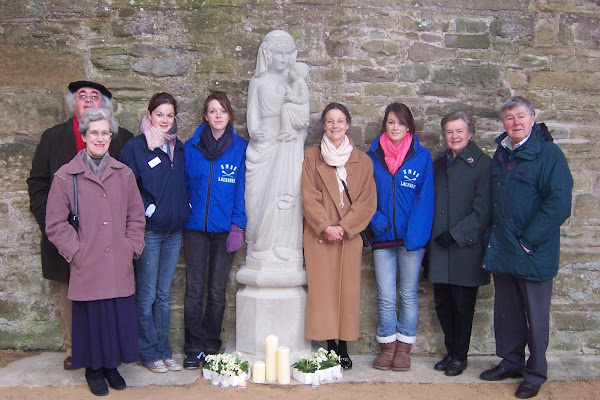
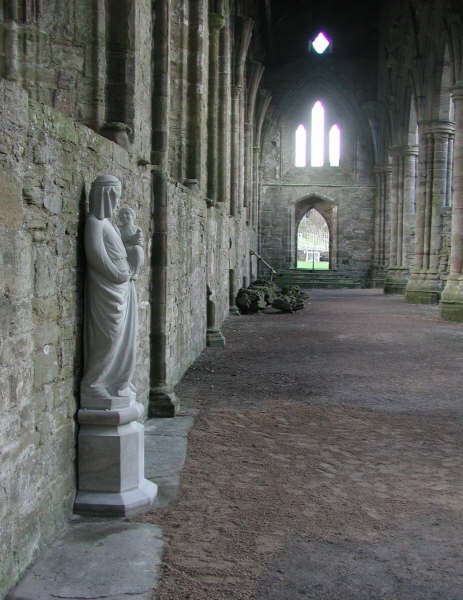
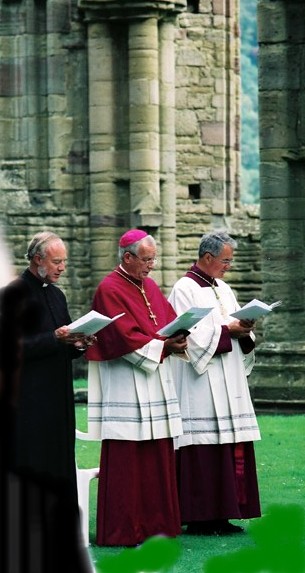
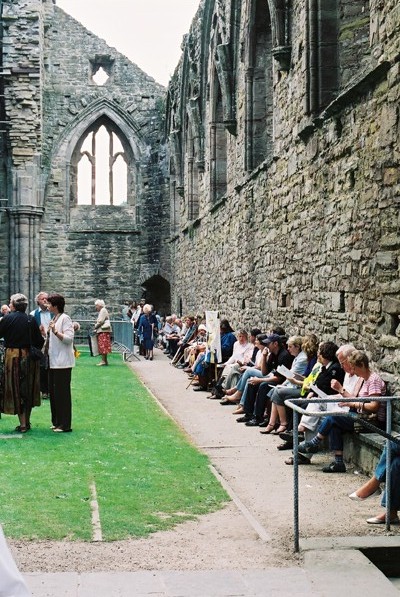
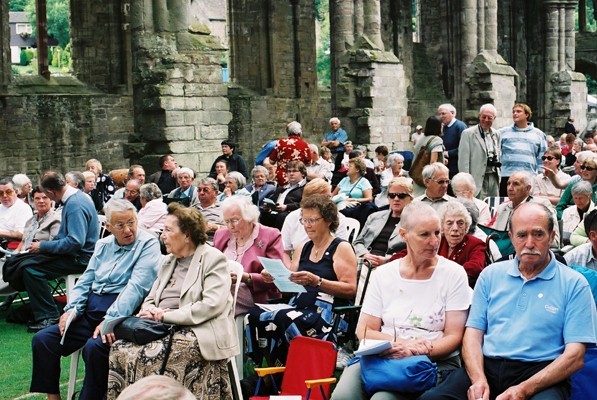
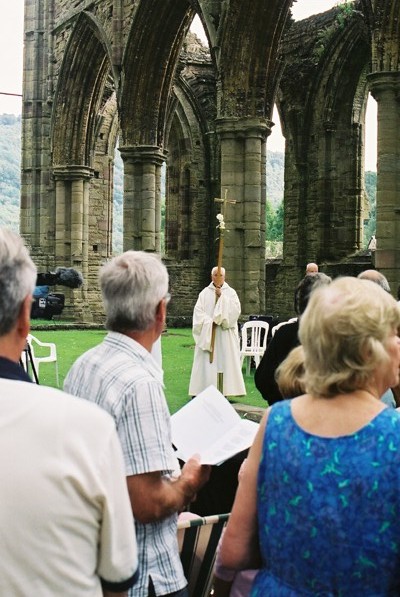
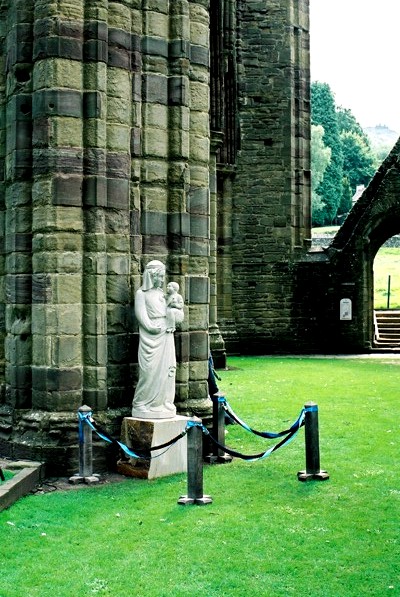
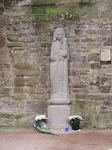
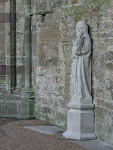
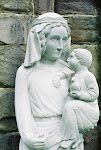
A beautiful statue of Our Lady of Tintern, similar to to the original destroyed in the sixteenth century, was officially installed in Tintern Abbey on Candlemas Day (Saturday 2nd February) by sculptor Philip Chatfield and masons employed by Cadw, from Tintern Abbey.Many happy pilgrims gathered for Midday Prayer at Tintern Abbey and all rejoiced at the beautiful setting of the statue in this holy place.
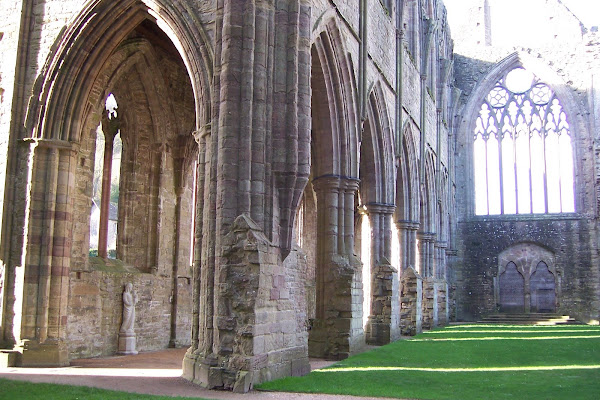
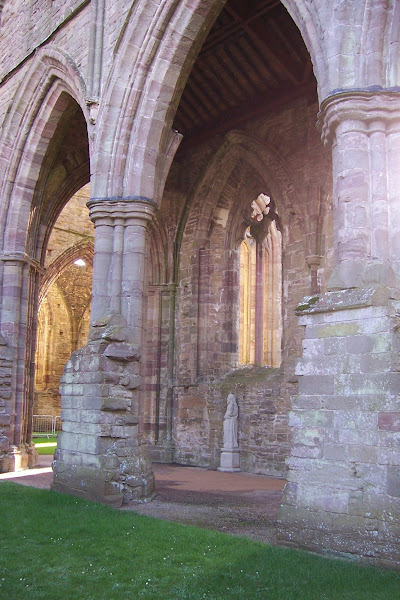
It has been placed on a specially carved plinth under the window nearest the transept in the covered south aisle. Flowers and candles adorned the statue brought by pilgrims. Whist it was very cold, the sun shone brightly as did the happy faces of the pilgrims.
The statue is a re-creation of one dating from the 13th century, similar to one at Amiens Cathedral, fragments of which were found at the abbey, where Cistercian monks lived and worshipped for four centuries until the Dissolution, in 1536.
Using stone from the Forest of Dean and hand tools only, Mr Chatfield carved the statue at the abbey, based on detailed research of similar pieces ‘
The work was carried out with the permission and encouragement of Cadw, under the patronage of Rt Revd Dom Paul Stonham, Abbot of Belmont; the Rt Revd Dominic Walker, Bishop of Monmouth; Rt Revd Daniel van Santvoort, Abbot of Caldey, and the Friends of Our Lady of Tintern. (email address in links below)
Prayers were said to mark the occasion, at noon on Saturday, the Feast of the Presentation. The service began with the office hymn for the feast of Candlemas-the Presentation of the Lord and then prayers were said. Revd Norman Wallwork (Methodist minister from Ecumenical Society of the Blessed Virgin Mary) led the intercessions. We finished with a new hymn ‘Our Lady of Tintern’ sung to a popular tune.
At this point the recitation of all 20 decades of the Rosary began, led by Lynne Hunter Johnston, the Joyful, the Sorrowful, The Glorious and the Luminous. Not every one stayed for all 20 mysteries but it was a spiritual and joyous occasion, one of several in 2008.
Our Lady of Tintern
By Dannie Newson
Lady of Tintern we come to proclaim
The wonder and joy of your Son’s saving name:
Lady of Tintern we thank you and bless
The courage and grace which made you say ‘Yes’.
Yes to salvation for all of our race,
Yes to rebirth in a heavenly place;
Yes to the end of pain and despair,
Yes to a life of love and true care.
Lady of Tintern we come to proclaim
The wonder and joy of your Son’s saving name:
Lady of Tintern we bless you again;
Let heaven and earth ring out the Amen.
It has been placed on a specially carved plinth under the window nearest the transept in the covered south aisle. Flowers and candles adorned the statue brought by pilgrims. Whist it was very cold, the sun shone brightly as did the happy faces of the pilgrims.
The statue is a re-creation of one dating from the 13th century, similar to one at Amiens Cathedral, fragments of which were found at the abbey, where Cistercian monks lived and worshipped for four centuries until the Dissolution, in 1536.
Using stone from the Forest of Dean and hand tools only, Mr Chatfield carved the statue at the abbey, based on detailed research of similar pieces ‘
The work was carried out with the permission and encouragement of Cadw, under the patronage of Rt Revd Dom Paul Stonham, Abbot of Belmont; the Rt Revd Dominic Walker, Bishop of Monmouth; Rt Revd Daniel van Santvoort, Abbot of Caldey, and the Friends of Our Lady of Tintern. (email address in links below)
Prayers were said to mark the occasion, at noon on Saturday, the Feast of the Presentation. The service began with the office hymn for the feast of Candlemas-the Presentation of the Lord and then prayers were said. Revd Norman Wallwork (Methodist minister from Ecumenical Society of the Blessed Virgin Mary) led the intercessions. We finished with a new hymn ‘Our Lady of Tintern’ sung to a popular tune.
At this point the recitation of all 20 decades of the Rosary began, led by Lynne Hunter Johnston, the Joyful, the Sorrowful, The Glorious and the Luminous. Not every one stayed for all 20 mysteries but it was a spiritual and joyous occasion, one of several in 2008.
Our Lady of Tintern
By Dannie Newson
Lady of Tintern we come to proclaim
The wonder and joy of your Son’s saving name:
Lady of Tintern we thank you and bless
The courage and grace which made you say ‘Yes’.
Yes to salvation for all of our race,
Yes to rebirth in a heavenly place;
Yes to the end of pain and despair,
Yes to a life of love and true care.
Lady of Tintern we come to proclaim
The wonder and joy of your Son’s saving name:
Lady of Tintern we bless you again;
Let heaven and earth ring out the Amen.
Subscribe to:
Posts (Atom)