A site tracing the Catholic life and history of the Ancient Kingdom of Gwent, now known as Monmouthshire,UK from Silurian times. Linked to Mary in Monmouth download free from iTunes Store or RSS feed at end of this blog.Also MaryinMonmouth Group of Face book. Photographs of interesting places. Some Catechesis.Strength of site is in tracing obscure Gwentian saints and martyrs and digging out gems from forgotten sites.Some photographs by Chris Tottle are copyright. Sites in Welsh Marches.
Ready for Ash Wednesday?
Total Pageviews
ST DAVID's CANONISATION 1120AD
WALES WIDE PILGRIMAGE IN 2020 to celebrate a thousand years since his canonisation!-using old pilgrim routes!!!
Come to the Waters....
Whoever drinks the water I will give him will never thirst, indeed the water I give him, will become in him a spring of water, welling up to Eternal Life....John 4:14
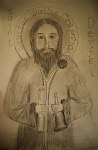
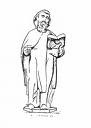
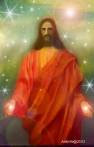
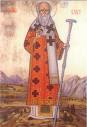
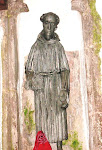
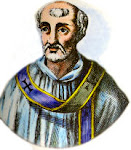
Drawing of St Derfel/Duellus based on similar saints'images
Followers
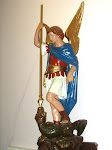
St Michael as a Centaur, fighting on the side of Peter and the Church
Liam Neeson played this int he film
PODCAST IMMINENT OF THE VISIT OF THE RELICS TO CARDIFF
I took recordings of the various Masses and liturgies in the Church as the relics were being received in Cardiff on Tueday and have only lightly edited them. I was doubly glad so many people, who were not able to get in and hear the service of reception and so forth will have the possibility of listening to the Masses for Priests and Vocations, Evangelisation, and personal sanctity, Angelus, Rosary , Litany and Benediction. It was extremely crowded, but I think it captures all the excitement of that day when thousands descended on Cardiff, clapped the little saint for her Christian witness and brought her candles, red roses and many other flowers, incense and beautiful music at the evening Mass.People streamed in until the Cathedral closed at Midnight, and devotions continued all evening, with people praying for conversion of sinners, confessions, praying for priests and praying that all would accept Jesus as their personal friend and Saviour. A Mediaeval style day none will forget. And Bravo to the superb organist!
Dominicans Today buiding a new Friary in US
Procession of Friars
PODCASTS RESUMING SOON AFTER COMPUTER PROBLEMS
I am resuming podcasting later this week or next, because I hade two computer crashes and have had little time to find all the things I need to resume it. I apologise to all the fans of the podcast and all the emails. You can download them from the rss address on this blog, or even via iTunes. Many people like listening on long car journeys! There are some interesting topics coming up.So keep posted.
Dominican Friars
At Chapter
SANCTUS ILTUTUS
St Illtyd , the great Educator
St Ia sculpted by Oberammergau Sculptor
In the Catholic Church. St Ives
Spring in St Ives
The time in Bredon is
Listen free Online to the new podcast!My Pilgrimage to St Winifride's Well
Main road from Abergavenny to Hereford, (or Hereford to Abergavenny if coming the other way!!) Turn off to Llanvihangel Crucorney. Pass Skirrid Inn. Turn LEFT to Llanthony Priory and stay on that road, past priory and up the mountain until you come to Capel y Ffin. Turn Left to monastery, but monastery is in private hands and so you must ask permission to view. On pilgrimage days parking in designated field kindness of Mr and MRs Watkins.
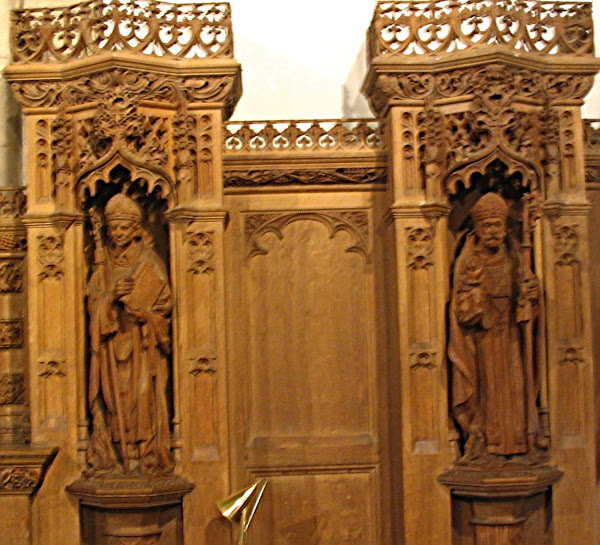
DO YOU KNOW WHY BISHOPS WEAR POINTY HATS CALLED MITRES?
Because they represent the flames which came upon the Apostles when Jesus met them to give them these gifts and the organisation of his Church. There was a great Wind and flames of fire, and we are told they settled on the Heads of the Apostles. When the Apostles appointed their successors, the Bishops they received this headwear to remind them they are the descendents of the Apostles of Christ himself, who founded his church on the rock of Peter.
Veni Sanctus Spiritus
Come Holy Ghost-A Happy Birthday to the Church!
Gwent Links to Arthur or Arthryws recalled in place names
Monks from here built the Priory of St Mary Magdalene in Goldcliff. The local church is still dedicated to this saint. The Church was built there after the Tsunami of 1607 which destroyed what was left of the Priory.
Truth about Relics
Relics have often been a stumbling block for people trying to understand the church. It is no different than keeping a special photo, item or clothing etc from a loved one when they have passed on. Kissing a picture or reverencing it, lighting a candle next to it or putting a poppy by it on remembrance day, just brings them alive again to you, shows them honour and respect. In the case of relics, if you can ask a living person to pray for you, then we can ask the souls who have made it to heaven to pray for us too, Having a small item which has actually touched their body or even a part of that body brings them especially close to them. The Holy Spirit has completely infused their body, So you ask this person to add their prayers to yours up above, and sometimes there are miracles as a result, although it is the prayer to Almighty God that works the miracle if there is to be one and it is his Will.
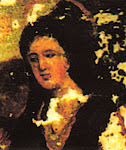
Head of Our Lady from a fresco in the Gunter House, Abergavenny
Secret Masses were said here in times of Persecution 17th century
Hello! The first ten pictures
The first ten pictures are from Llandaff Cathedral or Abbey Church of Our Lady and St Teilo, Then there are some from Mathern Church. Please download the Internet podcast Mary in Monmouth to hear the programmes at maryinmonmouth free from iTunes. This programme is FREE as well. So just type the title Maryinmonmouth into the Store Window and you will find it then subscribe! Automatic after that! Big pictures and feeds and links are at the VERY BOTTOM of the blog! Sorry! Mary
Snowdrops in February
Glorious!
Relic of Teilo's skull-Legend
The tale of this is amazing and will do a podcast
King TEWDRIG Llandaff
Jesse Tree Window in Lady Chapel
beautiful Colours
Lady Chapel from Outside
Beautiful spring day!
Into the Sanctuary
Bigger pictures at the very foot of the blog
Entrance to Lady Chapel
More pictures below-too good to squash!
Pray for the Holy Martyr, Tewdrig
Ora pro nobis peccatoribus
King Tewdrig, Saint and Martyr
Relics are buried under the Chancel
Earliest Catholic Priests and Monks until today
Church became Anglican aruond 1536
Stone of Commemoration to St Tewdrig
Over door at Mathern
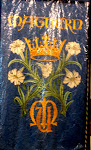
Banner of Mathern Church, with St Tewdrig's crown
Insignia of Blessed Virgin Mary below
That Catholic Show Catechetical & Fun! sqpn shows. You need a YouTube account (free ) to view
Evelyn Nicholson is a professional singer who has sung with all the major opera companies as principal soprano.Evelyn has begun her blog influenced by her father's love of the ancient Kingdom of Gwent and to foster a defence of misconceptions about the Catholic Faith.She is a qualified catechist of the Catholic Faith.
This
study considers the concept of spiritual martyrdom as it came via the ‘Desert
Fathers of Africa, via the Church in Gaul to Wales and Ireland
It argues that spiritual martyrdom existed as a practice We consider three Gwentian saints who show the characteristics ofspiritual martyrdom, even though the exact sequence of events in their lives cannotbe accurately verified.I hope to show that the 'White Martyrdom' of St Augustine was an early practice, involving penance and deprivation,that the ‘glas’ or blue martyrdom was a particularly British and Irish penance, involving tears and atonement
.
The
Greek word ‘martyr’ μάρτυς,=mártysmeans ‘witness’.
The saints are ‘shining like the sun’
for Jesus Christ lived again in their deeds and being. Such were St Tecla, working
on an island near Chepstow andSt Tegfedd,both killed ‘by Saxons’ or more likely bandits. It
was considered martyrdom, because sacrilege
had occurred. On the death of her husband, in continental practice of the time,
widows often consecrated their lives to God and took the veil. They were on a spiritual martyrdom but had shed their
blood
Spiritual
martyrdoms were observed in different colours,
practised by the Desert monks, brought via Gaul, and promoted by St Martin of
Tours and the Spanish monk Bachiarius, who combined the concept of penitence,
austerity and atonement for these working with the poor and praying for the
dead.
The
Cambrai Homily ‘summarise’ these teachings from the early church,so that
sinners can offer their sufferings and penances as ‘living martyrdoms’. We know
what ‘red’ martyrdom is
‘they endure a cross or destruction for
Christ’s sake, as happened in the Apostles when they persecuted the wicked and
taught the law of God’.
It is possible Tegfedd’s quiet estate(podum,villa),
where the consecrated widow retired to end her days seeking salvation in
penance, was polluted by an attack by bandits, possibly Saxons only out of
greed for the treasures which may have been in her chapel. Her spiritual
martyrdom of tears-her ‘glas’ or blue
martyrdom thus became a ‘red(bloody)’
martyrdom, when her life was taken . It has been claimed by Bradney that her
body was kept as a relic, as a bone was found walled up, when the Church was
restored.
St
Derfel, seems to have spent most of his life and a charismatic and powerful
soldier. It should be remembered he and his brotherswere taught by one of the greatest Christian
abbots in Wales, St Illtyd at Llantwit Major. He may indeed have been a warrior
monk, or priest, and since Illtyd himself had been both of Breton extraction
and a soldier and may have encouraged Derfel to literally fight the pagans, who
had destroyed all churches in their wake in the Borderlands of Wales. The story
of Camlan is well known, although its location is uncertain. Tristran Grey
Hulse believes it took place at North Wales at the River Camlan in Eifionydd,
now part of Gwynedd. We
know the story of Gwynhwyfar’s adultery, not with Geoffrey’s fancifulFrench ‘Lancelot’, but his own nephew, (or
possibly evenown son,) Medrot.(Meuddredd
or Mordred) The Battle of Camlan seems to have been victorious, but nothing was
solved. No vita has survived for Derfel, but he appears in the Bonedd ,and the bards
kept his deeds in memory with stirring poems about his ‘red hand’..There is a
reference to ‘Dorfil’ in the hills around Camlan, which may have been a
residence, and of course he did spend time in Llandderfel, Merionethshire,
North Wales, but we have no way of knowing the sequence of the chronology of
his life.
According to Bartrum "Llydaw" may also be a nickname for
SE Gwent , because of immigration so these saints may have been born in Gwent
with Breton ancestry. In fact his aunt Dervella (Deruil)was later Queen of Gwent and his father,
‘Llowell’ may have been the founder ofLlanllowell near Usk.Derfyl’s
surviving friend at Camlann, Petroc was also from South Wales, the Royal House
of Glywys.He was preserved ‘by his
spear’. We do not know when he came to the Llandderfelsite on the Mynydd Maen, but we do know he
was driven into a life of penitence and atonement there at one time. He had
perceived the effect of the sin of adultery rising up and causing the widespread
slaughter of Camlann and the death of all his companions.The Church, as the Body of Christ, had to
pray for sinners, so it appears Derfel would have dedicated his life to a ‘Glas’ (blue) Martyrdom’, defined in the
Cambrai Homily as ‘when through fasting
and hard work, they control their desire or struggle in penance and repentence’
Derfel was known as ‘Derfel Gadarn’
and it was now with his spiritual ‘might’ he approached martyrdom. Like the Druid
deity Hu he ‘dragged souls from Hell’. It was a powerful accolade that lasted
nearly a thousand years until his memory became extinguished when his statue
burnt in 1536. His penance of tears in his ‘glas’ martyrdom, was probably in
fasting, and praying for the souls of dead comrades. Such ‘spiritual martyrs’
gained heaven through suffering and penance and fierce ascetic penances, in
addition they had to see to works of mercy and shrive others, because
‘Elwynt e lanneu e benýdýaw.They went to the llan to do penance’.
He may have been a crefyddwyrbeen an ordained priest or fighting monk-and
it might have been the reason his life was spared at Camlan, we do not know but he was certainly educated
to this level at Llantwit Major.There
were late night vigils and prayers and a strict ascetic penitential like that
of Gildas and Cummean’Glas’, we are told was the ‘hyacinth’ the
colour of heaven. Derfel had ‘washed his robe ’ not in his blood, but ‘in
tears’ for his companions and devoted his whole life to atonement and penitence,
for his companions and leader and hence improved the lives of all around him.
Yesterday we left Madrun married happily to Ynyr Gwent (Honorius in Latin) in the town of Venta Silurum or Caerwent. The life of a queen, overseeing the affairs of the palace and the raising of her eldest son, Ceidio was also combined in the production of two more sons for Ynyr, the famous Iddon, one of the most celebrated of the Gwentian Kings and Caradoc, who married Caradoc . She also gave birth to a daughter Cynheiddon.
Venta was a large and beautiful Roman city as was Caerleon, but the latter was a fort and not a Roman city, totally different to most other town dwellings or 'Trefs' in Gwent.
Their way of life was as the court was, Christian and the Irish priest Tathyws who was brought to Sudbrook on a small boat with twelve of his disciples, was the core of the Christian life and pattern of festivals and holidays. Tathyws was responsible for educating the royal princes of Glysyssing, Cadoc, Cyfyw, Cynydr and also their sister Maches who was foully murdered while tending the sheep.
Madrun must have gravitated towards Tathyws. Kindly and holy, he was a gifted teacher and priest. She was especially drawn to the teaching of St Augustine, the teaching which said that after their husbands death, widows could take the veil and become consecrated Widows as well as women, who were elderly and past child bearing age, who could also take the place of holy matrons. In this way they could embrace martyrdom, not of the 'red' or bloody type. This was called a White Martyrdom, where the Christian leaves all their security and all they hold dear and puts themselves outside the security system of the llan. The White Martyrdom was also usually preceded by a pellegrinatio ,where the would be Martyr (Welsh 'Merthyr') would embark on some sort of test, often by setting off on a boat on the sea to see where the boat would take him, should the Christian be worthy to be spared death of the sea, that was where God wanted him or her to be. Sometimes this journey would take place on land, until a sign from God would come and a new llan would be set up. It was often royal people who took the lead in this, having the means and the manpower to set about something like this. The gifts of land and farms necessary to support such llans could only be realised by people with some wealth. In the case of Ynyr, he granted land and a monastery to St Tathyws.
Having a monastery in the Roman town was a kind of social services. The Vita Tathei says that Ynyr provided part of his own palace for the monks to reside in and moved elsewhere. Although the monks main job was to pray for the world, they worked hard in manual labour in the field, and provided a school , counsel and wrote records for the King and Queen, and writing letters and deeds.They often took in orphans and fed the poor in harsh winters and famines.
In particular, Tathyws was the kindly father Abbot, who replaced her own beloved father Vortimer the Blessed and he was a big support to the traumatised woman and a wise spiritual counsellor.
It has been a while, since I have visited the topic of Queen Madrun of Gwent, wife of Ynyr.She is far from the 'legendary figure' in the guide books of the church, nor is she obscure.After doing some considerable study on the Queen as part of a degree in this period of history, I new have some new information, which I am sharing with my blog readers.
Madrun was born into a pagan family. The name Madrun itself is similar to the Roman goddess Matrona. Her grandfather was the pagan king named in English as Vortigern, at first married to the Roman Sevira, who was descended from the British Roman Emperor and pretender, Maximus or Macsen Wledig. Their child , Vortimer came to greatly disagree with his father's way of dealing with the Picts-that is, by inviting in Saxon mercenaries. This was a disastrous policy and as the young child Vortimer (Gwytherin Fendigaid in Welsh) grew up, he counselled his father against this policy. His mother brought him up in the universal Christian faith, and Vortimer started to join his fathers' opponants fighting against the Saxons. He married, though we don't have the name of his wife, yet his Children were two girls Madrun and Anna, who were brought up on the Lleyn peninsula near Nefyn in North Wales.
The scenery at Lleyn is wonderful, especially with Bardsey Island, the 'Island of Twenty Thousand Saints' before them. In fact she and her maid Annwn visited the island, and whilst they were there, they had a dream, in which the Virgin told them both to build a church on the mainland, when they slept on the Island overnight.
This church was founded by the teenage girl at Trawsfynydd and later became the church of Father John Roberts a Catholic priest and saint, who was executed in the time of persecution.
Vortimer, Madrun's father was blessed by St German and was always called 'Gwytheryn Fendigaid) Vortimer the Blessed after that. When the ageing Vortigern married his second wife, he chose Rowena, daughter of Hengist as his bride and she is reputed to have poisoned the saint. The British were furious and rose up in rebellion. Vortigern and his family fled to Tre'er Ceiri, a hillfort near Neven, and Madrun, by now married Baring Gould and Fisher allege a first marriage of Madrun to Gwgon Gwron ab Peredur ab Eiffer Gosgorgg fawr(!!) However we hear no more of him. Aurelius a war commander of Roman extraction, possibly the true identity of 'Artur' as he ticks all the boxes.
Vortigern was also very unpopular with Saint German, Bishop of Auxerre, because he had committed incest before marrying Sevira and 'marrying' his own daughter, Catteryn. This child, who went on to be the saint Faustus, was taken back to Brittany with St German to be a monk. Vortimer was furious, refused to confess and all the clergy of Britain took against him for this evil. In fact, it is believed St German himself was behind
the attack on Tre'r Ceiri, the hillfort near Neven, where Madrun and Anna lived. St German did pray for the soul of Vortigern for forty days and nights, but Vortigern would not relent.
Aurealanus attacked the fortress with a combination of Britons, from Ynyr Gwent to a variety of Vortigern's friends, anxious to avenge him. Vortigern Rowena, Hengist and Horsa were all killed and seemingly also Madrun's husband. She fled from the burning hill fort with Madryn and her son Ceidio and took refuge in different places. Because of the Pictish ancestry of the Vortigern Family, it was Madrun and Anna who became the heiresses of the lands of Vortigern. His property in Powys was seized by the Usurper Benadyl and land in Ceridigion (Carmarthen) went to Anna, and the lands in Gwent and Glamorgan went to Madrun. Knowing she was a Christian princess and that Ynyr Gwent was a strong warrior, St German brokered a marriage between Madryn and Ynyr which turned into a successful love story. Both welcomed St Tathyws from Ireland when his boat landed on the beach at Sudbrook (Porth Esgewin) and helped him to build his monastery .
Tomorrow the story goes on about her family life in Caerwent.
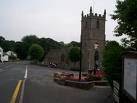
This is St Merthiana's Church in Minster, Boscastle.
I have tried to post some pictures, but it clicking the 'add photos' page just brings up some trashy scratchcard game. Yet another glitsch. Everytime the BlogSpot becomes 'new' there are more problems.
So no pics, sorry unless you click onto EWTN and 'pininterest' which gives you wonderful stills from the video. Monks, ancient abbeys and St Winifride's well. Plenty of pictures of all these things on my own blog.
This is truly the amazing story of the Catholic Faith in Wales. EWTN on
UK
MONDAY 10th June at 9pm- Romans to Age of Saints
TUESDAY 11th June at 9pm- Age of Saints to Henry VIII
WEDNESDAY 12th June at 9pm- Henry VIII to present times
USA:(Airs 3 a.m. ET, 6:30 p.m. ET, and 11 p.m. ET, Monday through Wednesday, June 10-12.)
Steffano Mazzeo, who made these films is speaking at the History Day on Saturday in Cardiff for the Wales and Marches Catholic History Society. (Look at Diocese of Cardiff Website or email me 'maryinmonmouth@gmail.com' if you would like to order tickets. It is a day of lectures with lunch included.
Underlines the survival of the church throughout penal times and how this can be useful to us today in the world to come and how to survive.
FILMED ON LOCATIONS THROUGHOUT WALES, much of it in Monmouthshire.
When speaking of Catholic repression and
persecution, Wales is not always a country that comes to mind – yet Catholics
in Wales endured repression and persecution from the time of the Roman Empire
through the time of Henry VIII and the Protestant Reformation. Fortunately,
their faith remained strong. How is that possible – and what can we, as 21st
Century Catholics, learn from them?
To find out, tune in to EWTN's original three-part documentary mini-series
"Wales – The Golden Thread of Faith." (Airs 3 a.m. ET, 6:30 p.m. ET,
and 11 p.m. ET, Monday through Wednesday, June 10-12.) 9pm for Welsh, Irish, Scottish an English.
22nd December,is the feast day of
several early Roman Martyrs and some very holy saints. St Zeno who died in the same year as St Julius and
Aaron,who was a martyred soldier at Nicomedia(Turkey) After watching Diocletian
(284-405) offering a sacrifice to the Roman deity Ceres, he burst out laughing,
but was seized tortured and condemned to death. St Amaswinthus, Abbot of
the Andalusian
monastery of Silva de Malaga for forty four years, was a good and holy man who died
much later in 982AD.St Chaeromon was Bishop of Nilopolis in Egypt during
Trajanus Decius’ persecution, and was quite elderly when he and his friends
fled into the desert and vanished. He is listed as a martyr and died in 250AD.St
Flavian was another early saint who died in December 262. He was branded on the
forehead and exiled to Tuscany, where he died in prayer. St Demetrius was a Martyr with Honoratus and Flaviun. They died at
Ostia,
Italy. Possibly the same as Sts. Demetrius and
Honorius on November 21. St
Hunger was Bishop of Utrecht in the Netherlans=ds and fled the diocese during
th invasion of the Nortmans who died in Prum Germnanyi. All these men,
whichever theoir epocht, their period lived out good and holy lives. However gruesome some of the stories, a young man giving his life to the service of
God is heartwarming, especially in the beautiful setting of the Abbey Church of St Michael and All Angels Belmont, where Dom Edwin Echeander Loro was made a Deacon by the Most Reverend Kevin Macdonald, Archbishop Emeritus of Southwark. The Mass, which had a beautiful liturgy began with Venantius Fortunatus (530-609AD) beautiful hymn QuemTerra pontus aethera \\(The Lord, whom earth and sea and sky adore and praise and magnify) followed by the Advent prose-the Rorate Caelidesuper sung in plainchant, led by their cantor, Abbot Paul Stoneham..
The Scriptures were from Samuel, when Hannah takes Samuel to Eli to give him to the Lord (I:24-25) The Psalm was 'My heart exults in God my Saviour' and was the canticle Mary's Magnificat. The second reading from the Act of the Apostles explains how the seven disciples were filled with the Holy Spirit (6:1-7)St Stephen was one of these disciples and he and the other disciples Philip, Prochurus,Nicanor, Timon Parmenas and Nicklaus of Antioch all had hands laid on them and they became deacons and the Apostles prayed for them. Stephen, as we know was one
of the first deacons to be martyred and is commemorated on 26th December.
Following the Alleluia and the 'O Antiphon' O rex Gentium was sung before the reading of Lukes gospel from the Magnificat. (1:46-56)Brother Edwin was then called forward and presented for ordination by Father Abbot,He was accepted, called to celibacy, obedience and prayer and there followed the Litany of the Saints.during which Brother Edwin prostrated himself before the altar., Then, as in the Acts of the Aspotles, Archbishop Kevin laid hands on Edwin and made him a deacon and then prayed the prayer or consecration and invested him the the stole and dalmatic. There followed the presentation of the Books of the Gospel, the Kiss of Peace, and the Ave Maria.
After that we went into the Sanctus and the Mass followed as usual. The Communion hymn was the Liturgy of St James translated by Gerard Moultrie.Let all mortal flesh keep silence.,There followed Ecce Virgo Concipiet and Alma redemptoris Mater.. This was a very beautiful singing and Deacon Edwin looked as if he had been assisting at Mass for ever.The guests were invited to Hedley Lodge for teas and refreshments, which were delicious and I met some very interesting people.
For all your favourite Christian Songs Ave Maria, Schubert, Bach, Panis Angelicus, Our Father. Also available on iTunes!! Buy a track and give me a small Christmas Present!!!
This time of year is often one of reflection, looking back over the year and remembering the events and the people who have shaped the year.
Life is full of blessings and full of tragedies, looking at the terrible tragedy of the last week, the death of a 22 year old in a car crash. Hope in Salvation is a powerful joy, and all the things that make our lives worth living-family, our parents-even like my mother in a home with Dementia, to hold her hand and stroke her hair and see her smile is a powerful blessing. My sisters, my family and a growing list of good friends , old friends who have sent me Christmas cards and a good and loving husband and son! In fact life itself, its meaning is all wrapped up in whom we love and those who love us, a powerful gift of God, the God of Love and Christ, his love itself.
Wells
This year has seen several holy wells rediscovered and actively being refurbished. St Ffraed's at Skenfrith has yet to be dealt with. It has its own brown sign and pathway, but more of that in the new year. The Cope at Skenfrith, which was being used as a table cloth for a long time, has been sent to London for authenticating and and provenance and the unfortunate Marian Priest John Aynsworth has been traced, who was martyred at the Priest's Well, now at the Sandhouse in Skenfrith. Piuctures are in the archive under Skenfrith. However BRYNGWYN -St Peter's Well has been found and will be restored as is St Teilos Well. Distinguished authoress on folk customs, Janet Bord asked me if I had ever found it and the Vicar Father John Humphries found iut after talking to an 80 year old parishioner. Incidentally the head of the preaching cross at Llanarth, destroyed by Puritans was found in another well further down the road and was retrieved by Catholics in Llanarth, Paddy and Celia Nash and put on another plinth outside the Catholic Church. So interesting things going on there.
I also managed to find St Gwladys Well which was supposed to have been destroyed, It has not not been sensitively managed, in that the current owners did not know what it was. Finding St Gwladys Chapel (the mediaeval one on the site) was also very exciting. This was extremely strong as a string and was bath shaped, but now lined with black plastic pool liner and held down with two little pixies. Still I like to think St Gwladys would have approved!
Yesterday I talked about the 'popish practices' claimed by Protestants of the Faithful after the Reformation, watching Catholics gathering together at Holy Sites in God's Creation-Holy wells, Holy Mountains and Shrines. You are led to believe their devotion is 'mumbo jumbo or magic spells', but they are actually straightforward the Catholic devotions we know today. We have not cut 'cut off ' the life of the spirit, God and Christ from our worship, because we still live in God and the spirit. This second post is concerning these 'popish' devotions we still have as sacred today. Of course in the 'stations' described as sacred places where the penitents would pray, there would be other things-Easter Sepulchres in Churches or even crawling under the saints' altar
The Mass is for Christians the source and summit of their Christian Faith. It kept the people together, even when they outwardly performed what they needed to to escape the terrible fines and attended the local parish church , not taking the Communion offered there. The Mass, the same as today, consists of the Liturgy of the Word (Biblical readings and teaching from the OT, The Psalms, the Epistle and the Gospel for which the people all turn to the readers and the preacher signing the cross on the foerehead (God be in my Head and in my Understanding) on the lips (God be on my mouth and on my speaking) and on the heart (God be in my heart and in my thinking).This is in respect of the Words of the Gospel. The glory of the Word of the Lord is welcomed by the people who acclaim 'Alleliua! three times, at the end of the reading and the three fold Alleluia is the Homily, the teaching. The priest surrenders his voice to that of Christ to tie together the readings and psalms. The people rise and sing the beliefs of the Christians present in the Nicean Creed. Jesus shares fully in the Divinity of the Father-'God from God, Light from Light, True God from True God, begotten not made, consubstantial with the Father) Those who profess the one God, are standing firmly against idolatry ancient or modern) There follow the prayers to God...the Faithful call out 'Christe Audi nos'-Lord hear us and the response 'Lord graciously hear us'. The prayers are for the living and the dead saints of the Church and then the first part of the Mass-the Liturgy of the Word-where God speaks to us finishes.
The wine and bread and water which will become Christ's body are offered to the altar with a hymn. Bread and Wine are 'Wheat and Vine' and this implies Earth, Fire,Water Air Soil Wind and Sunshine-indeed the Cosmos itself. The small gifts are therefore representative of the Creation of the God of the Universe. There follows the Liturgy of the Eucharist.(Thanksgiving in English)In songs and responses we speak to him. There follows the Meal, which he himself prepares for us, the High Priest and the victim draws us to himself.In a world gone wrong, there is no intimacy without sacrifice, because sin has twisted us out of shape and so intimacy with God will mean a painful 'twisting back' -a sacrifice. In an animal sacrifice someone took one small aspect of God's creation and returned it to its source as an act of gratitude for the gift of his own existence. God has no need of these sacrifices - He does not need anything at all, but we need sacrifices (He knows our need)in order to reorder things with us and restore union with God , What is given back to God and sacrificed to Him breaks against the rock of Divine Self Sufficiency and returns for the benefit of the one who has made the Offering. Sacrifice produces Communion.
This is the distinctive meaning under the Liturgy of the Eucharist. All the angels and saints are called to be present.The Priest then begins the process of confecting the Communion as the Faithful sing the beatiful words of Isaiah 6: 'Holy Holy Holy Lord God of Sabaoth. Heaven and Earth are full of your glory! Hosanna in the Highest! and our Christian addition 'Blessed is He , who comes in the Name of the Lord'. Hosanna in the Highest. The people join themselves with the Angels and Saints .There follows the Eucharistic Prayer and the priest speaks the words of Jesus over the gifts and they become-as the Faithful stand there asks God to send down the Holy Spirit and transform the Bread and the Wine. The very words of Jesus are spoken: 'This is my Body', This is the Chalice of the new and Everlasting Covenant-the bread and wine are transformed into the body and blood of the Lord. -the whole Church organism around the world, sing AMEN with the angels and saints in heaven, and Christ becomes present in the Eucharist and every Communicant is fed by Him, who will be with us till the end of time. The Body of Christ is present actually on the altar. (Unless you eat (troge-gnawing in Greek) my Body and drink my blood you will have no life in you-St John Ch 6 v 53-58) The vessels used in the feast are then cleaned while the Faithful enjoy their encounter with the Lord and finally the priest takes his leave from his people 'The Mass is Ended' ,'Go in Peace!' and the priest and deacons, altar servers, and others process out.People remain to pray, 'talk' to the saints or ask Our Lady for her prayers to her Son for something, and there is usually a gathering for refreshments and chat. What appears to be Bread and Wine have changed in its reality.God's work effects what it says: whether 'Let there be Light' or 'This is my Body'. What Jesus says -is.
Benediction usually follows thr Rosary, and is a thanksgiving for the Eucharist, which is placed in a beautifully decorated monstrance and with the consecrated Host (Sacrifice) inside, the people are blessed . The Tantum Ergo and O Salutaris Hostia , two beautiful ancient hymns are sung.
The Rosary (sometimes called Mary's Psalter in Wales) was a collection of Meditations on the life of Christ-Joyful ones Sorrowful Ones, Glorious Ones) as seen through the eyes of His earthly mother-little Mary of Nazareth.Like us, a small specimen of God's Creatures, raised by Him because of her obedience and freely given co-operation-to great things. Originally the Rosary were the 150 psalms, which could be said in turn by monks in a monastery. Ordinary non reading people had a rosary and in the time it took to say 10 Hail Mary prayers-(the address of the Angel Gabriel to Mary) the petitioner would reflect on and recall the visit of the Angel and her words to Mary-the use of the word 'Overshadowed' -his Divinity and so on. They would reflect this world had been used with reference to the Spirit of God entering the Tabernacle of David on Mt Zion in Jesusalem, where the Ark of the Covenant had been placed. All this would be contemplated. There would follow contemplations on the Visit to Elizabeth and the Magnificat, the Nativity itself and visit of the Shepherds and Wise Men, the Presentation of Jesus in the Temple to Simeon and the Finding ot the Child Jesus in the Temple. Whatever else, these were an illiterate person's prayer book and Bible and not a sheaf of 'magical mumbled prayers'.
'Stations' The devotion of the Stations of the Cross , popular across Christendom during lent had its origins in the 'stations' around the churches. The stations of the Cross follows the final walk of Jesus to the Cross in nthe local parish church rather than by actual pilgrimage to Jerusalem. Pilgrims would be there in spirit if not physically. Pilgrims in Catholic times, possibly en route to some famous pilgrimage site would often take in the Holy wells on the route and pray for strength. The Holy Well was often the last 'Station'. Other stations could be some site of special significance in the Llan or church, the memorial of the buried saint or statue, another smaller Church or chapel, a Celtic style Cross, a nun's house or Convent.Sometimes Station 1 would be the altar of the Church, Station 2 perhaps a small cairn of stones, and more stones would be deposited on it as a sumbol of the sorrow for sin. In Ireland there were often the 'grave beds' (there was one at Bassaleg Priory in the Middle Ages, dedicated to St Gwladys of Newport, wife of St Gwynlliw who was buried there'.Each community would work out its hallowed stations where prayers would be said and generally, the Our Father was said reverentially five times, the Hail Mary prayer also five times and the Nicean or Apostolic Creed (mentioned above) (This is about half a decade of the rosary for each station-although the Crees was only said once, usually before moving off) The Faithful would trace out the circle around these stations, and finally the well would be reached and would be also walked around ,and water drunk, cures implored, penance completed etc.They would kneel to pray after walking once around the 'station', whatever it was.
Pilgrimages
Such a pilgrimage also took place at Good Friday in some places and certainly on the Patronal Festival or 'Pattern' of the saints. There was often feasting and -in some lamentable occasions because of over indulgence of alcohol-fights.Some people felt every 'Pattern' had to have a fight and indeed at Welsh Weddings, this often appeared to be the case! This was not ideal. Unfortunately there are problems with popular piety and the twentieth century views of these things:
a)Abuse of the Holy Wells by superstitions and by pagans, witches and other such beliefs, which came out of the closet, and in large part re-invented rites with no ancient significance.Many clergy, Carroll believe actively discouraged the worship of the Trinity at Holy Wells during the late 19th and 20th centuries-as witness the number of holy wells fallen into disuse.They said less Masses there and also led less pilgrimages around stations.
b) More faith in scientific remedies than in the water cures which are reserved for the illnesses science has problems with.
c)Loss of faith because of bad catechesis-family breakdowns and loss of identity of some Catholic parishes displaced by other incoming faiths.
d) No teaching of local history in schools or even of the lives of the very saints who have given their names to the dedication of their church being given. Protestant insistance and criticism of statues and Communion of Saints making this unfashionable
e) Children addicted to the virtual computers, iphones, iPads etc. They have a feeling of being invincible with all these tinsels of the world. Children isolated ,in some cases, having no 'real' friends just virtual ones.When the real world crashes in, there is no fall back position, especially if the family is not strong.
Whilst The Mass itself connects us with the Triune God, I believe that local worship around the church (in an age rapidly becoming less analytical, and with less fluent readers for a long time) could benefit the young by reenforcing what the Mass is, as well as informing the Faithful about the life lived in God of their forgotten saint. It could breathe new life into penance and the patronal festival and make all of us more grateful for all the gifts and blessings of our creation in life giving springs and the 'real things of the earth in God's Creation''in which we are grown, whilst looking heavenward for our future. I would like to see parishes taking Children-especially out of urban areas for enjoyable days of contemplation and fun and doing some of these rounds and discussions of some of these things. They are the Real Gifts and Blessings of God's Creation not fake ones .

































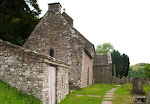
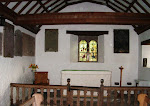


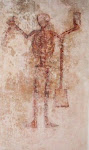
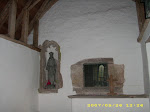








 According to Bartrum "Llydaw" may also be a nickname for
SE Gwent , because of immigration so these saints may have been born in Gwent
with Breton ancestry. In fact his aunt Dervella (Deruil) was later Queen of Gwent and his father,
‘Llowell’ may have been the founder of
Llanllowell near Usk. Derfyl’s
surviving friend at Camlann, Petroc was also from South Wales, the Royal House
of Glywys. He was preserved ‘by his
spear’. We do not know when he came to the Llandderfel site on the Mynydd Maen, but we do know he
was driven into a life of penitence and atonement there at one time. He had
perceived the effect of the sin of adultery rising up and causing the widespread
slaughter of Camlann and the death of all his companions. The Church, as the Body of Christ, had to
pray for sinners, so it appears Derfel would have dedicated his life to a ‘Glas’ (blue) Martyrdom’, defined in the
Cambrai Homily as ‘when through fasting
and hard work, they control their desire or struggle in penance and repentence’
Derfel was known as ‘Derfel Gadarn’
and it was now with his spiritual ‘might’ he approached martyrdom. Like the Druid
deity Hu he ‘dragged souls from Hell’. It was a powerful accolade that lasted
nearly a thousand years until his memory became extinguished when his statue
burnt in 1536. His penance of tears in his ‘glas’ martyrdom, was probably in
fasting, and praying for the souls of dead comrades. Such ‘spiritual martyrs’
gained heaven through suffering and penance and fierce ascetic penances, in
addition they had to see to works of mercy and shrive others, because
 He may have been a crefyddwyr been an ordained priest or fighting monk-and
it might have been the reason his life was spared at Camlan, we do not know but he was certainly educated
to this level at Llantwit Major. There
were late night vigils and prayers and a strict ascetic penitential like that
of Gildas and Cummean ’Glas’, we are told was the ‘hyacinth’ the
colour of heaven. Derfel had ‘washed his robe ’ not in his blood, but ‘in
tears’ for his companions and devoted his whole life to atonement and penitence,
for his companions and leader and hence improved the lives of all around him.