








































www.friendsoffriendlesschurches.org.uk.


 ________________________________
The Glories of Llangeview
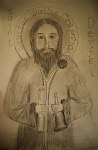
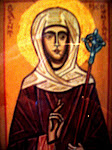
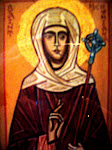
Born in 499 AD , St Cyfyw was the third son of Gwynlliw and Gwladys but there is a huge variety of spelling of his name in the different records, mainly because there was no standardised spelling at this time. It occurs as Kemmau, Cennen, Cannan and even Kymymyn, Kynfyw Kynnyw , Cammab, Camarch,Cannen, Kenmeu a veru old version of the name. In the late pedigrees his name turns up as Cynfyw, Cynyw , cyfyw and Cifiw . After training in St Tatheus theological college at Caerwent like his Brothers, such as Cadoc and Cynydir, he went to join his brother’s Monastery at Caernarfon and he was the Registrar of cofedydd of his brother there. There is another llan dedicated to his honour in Montgomeryshire( Powys).
Monk and registrar of Llancarfan
At some point he founded his own small monastery at Llangeview and English pronunciation of Llan-Cyfiw –the Holy Place of Cyfiw. This circular ‘island’ chuch would have been spiritually cleansed in the manner described in the post on Trevethin last month. It was cleansed with prayer and fasting and the n consecrated, the earliest church almost certainly being of mud and wattles or of wood. Later towards the first millennium, it would have been rebuilt in stone and finally the Normans built this strong church, no doubt extending the nave and porch.
Llan-Cyfiw pronounced Langeview
The Church itself was, however dedicated to the greatest of the Welsh saints, to David or St Dewi. I have done a series of podcasts of the life of David. Another church probably founded by Cyfiw was probably St Ciuiu which is mentioned in the book of Llandaff and later dedicated to St Cadwaladr, which is at Bishton, so it it seems that Cyfiw travelled quite a lot. St Cyfiw’s Church in Montgomeryshire (Ecclesia S Ciuiu) is mentioned in the Red Book of St Asaph. St Cyfiw does not have a feast day, so he may not have been a heroic saint of great distinction, worthy of ‘public sainting.’Neverthe less, here at Llangeview , he probably spent his days in prayer and fasting, clothing the sick and feeding the hungry and content with his portion.
Friends of Friendless Churches
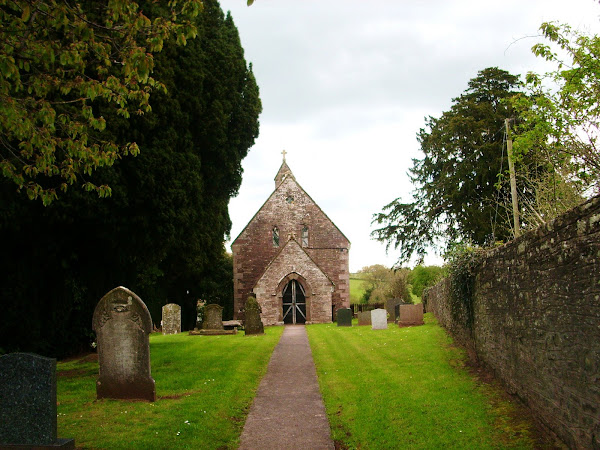
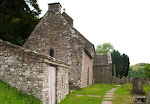
Taken on by the Friends in 1999, Llangeview Church has recently emerged from a programme of repairs to the exterior. The charity Friend of Friendless Churches will turn their attention next to the interior. The original stone building is believed to be from 1254, perhaps the first Norman church on the site of the previous religious foundation.
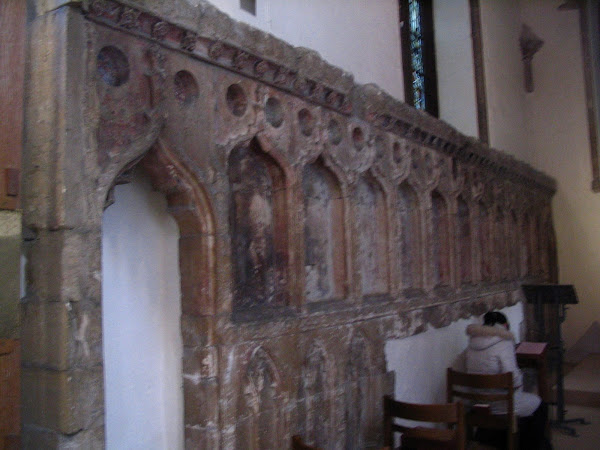
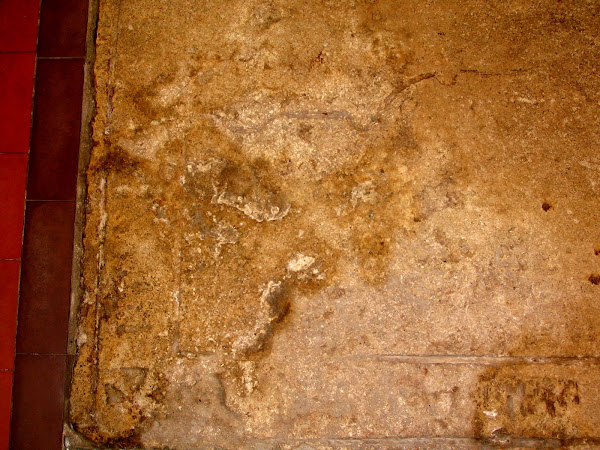
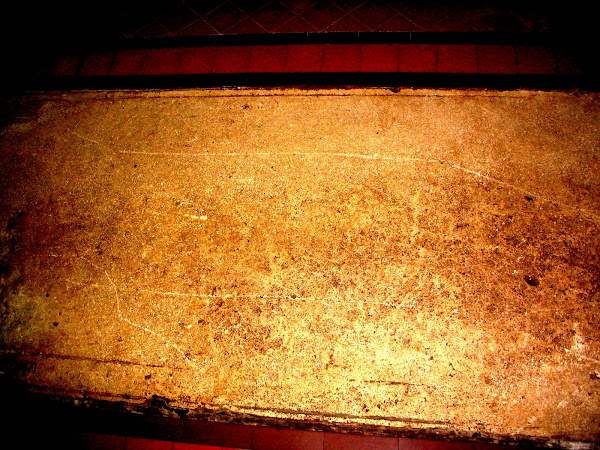
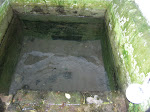
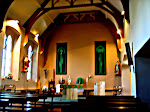
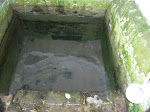
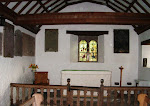
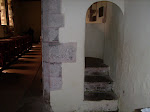
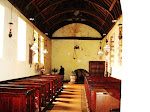
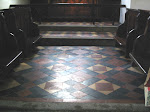
The building was extended in the fifteenth century, which is the period of the fabric of the present church from which time date are most of the windows and the screen and rood loft inside (where the crucifix would have been placed originally. Rood is another word for the cross.) The font (pictured, left) is another, very simple, medieval survival but the box pews and pulpit and indeed the larger squire’s pew in the chancel are all eighteenth century. They are very reminiscent of Nonconformish chapels. There are a range of monuments the largest being to William Jones who died in 1829. The altar rails in twisted baluster date from circa 1700. Closer to my own heart is the memorial to Eileen Mary Griffiths of the Yews, Llangeview who played the harmonium in this little church from 1981-1997. There is also a tombstone in the sanctuary, I believe commemorating a priest who was buried there in 1557
The Country of ‘Wolves’
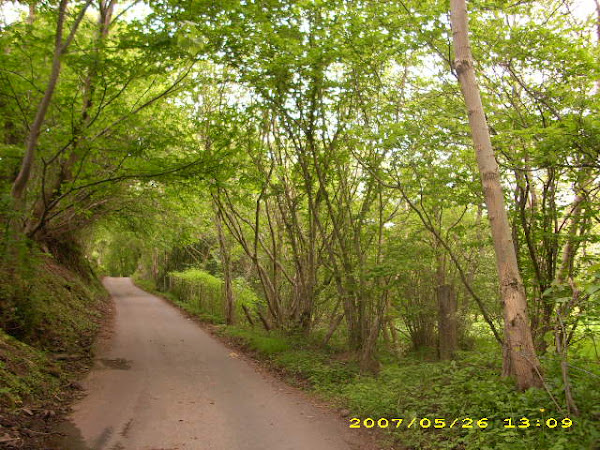
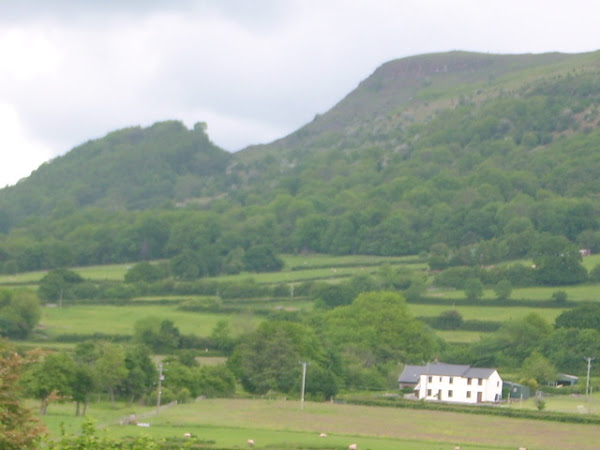
The church is set in the ‘Wolf Country’ as this area of Gwent was thickly wooded and contained many wolves in ancient times. A nearby mansion Allt-y – Bela means the ‘wolf’s cliff’, ‘Trevella’-another farmhouse, the wolves’ farm’. This is all land to the east of Usk, reaching over to Wentwood originally. Llangeview is the smallest church and was very difficult to find, but when I did find the Llan of the Holy Cyfiw, it was worth every moment. The large road from Monmouth to the Coldra Roundabout, passes by Usk where you must turn off. When in Usk, turn into the Square to the left, or the right if you are coming over the Usk River from the South. In Twyn Square turn left and then fork right at the pub. At the next turning right, a small track style road drive to the top , over the road bridge and then turn Right. Llangeview Church is down there to the left up a grassy drive.
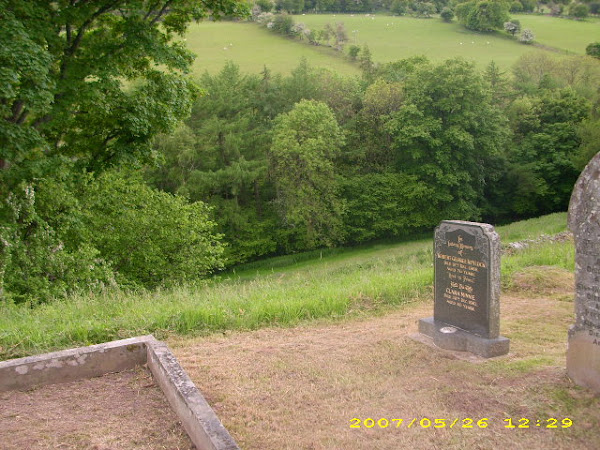
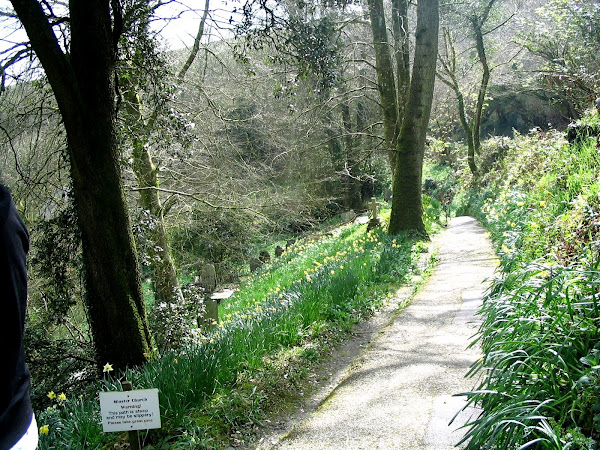
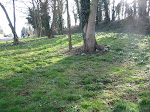
The great number of bluebells in the churchyard suggests that in earlier times, this area was indeed surrounded by dense, thick woodland, and Cyfiw built the church on his island within it.
This, as I said was holy land from the fifth century, and an ancient track from the time of the Druids is the road you have just come from.
The churchyard remains the responsibility of the parish.
The Church Building
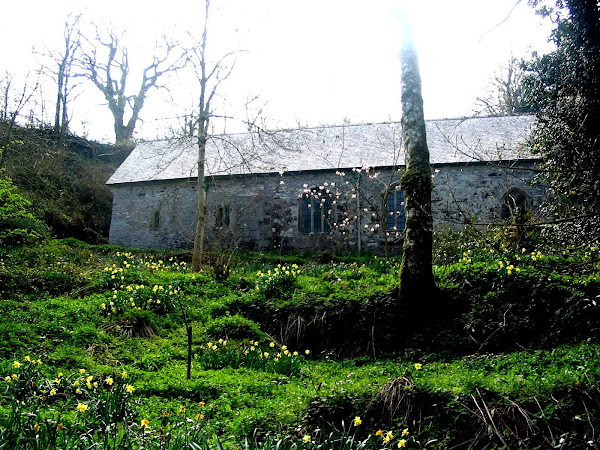
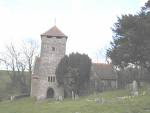
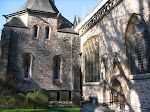
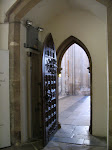
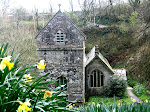
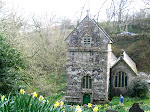
This simple construction –chancel, nave, porch and bell turret-might cause the casual visitor to dismiss it as unimportant. But is its beautiful, and there is even a stone bench outside the porch and two stone benches inside the porch . Unusually behind the altar in the east wall, there is also a bench, and I have never seen this in any sanctuary or ‘chancel’ before. The stone seats were usually there along the aisles for weak people who could not stand for mass, but not behind the altar! There is room for 70 people.
The Bell cote
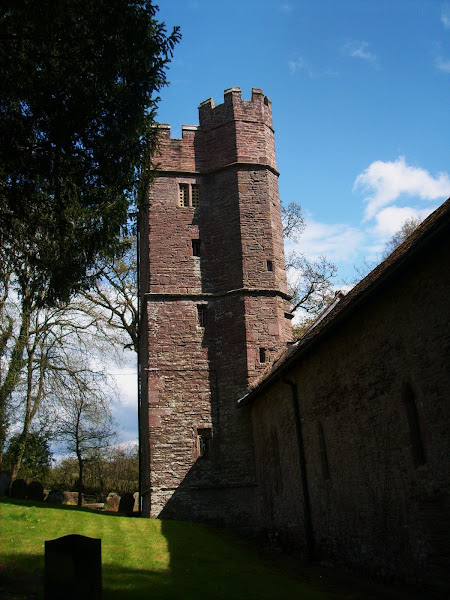
This is picturesque, however, on the day I saw it, it did not seem connected to the ropes below. There are reputed to be two bells, but I only saw one. These bells are generally very old and is reputed to have been hung in 1558 which ties in with the tombstone of the priest inside at 1557. The sacred heart and IHS in the middle of the monument would signify this may have been a priest forced to become a vicar in the troubled times of the sixteenth century.


 _______________________________
Only the date seems clear. This may have been the time when the church was extended to accommodate more people, as it is just possible it was originally a grange church of some Abbey, such as Grace Dieu or Tintern,or Chepstow Priory perhaps.
The Rood Loft Framing
 ________________________________________
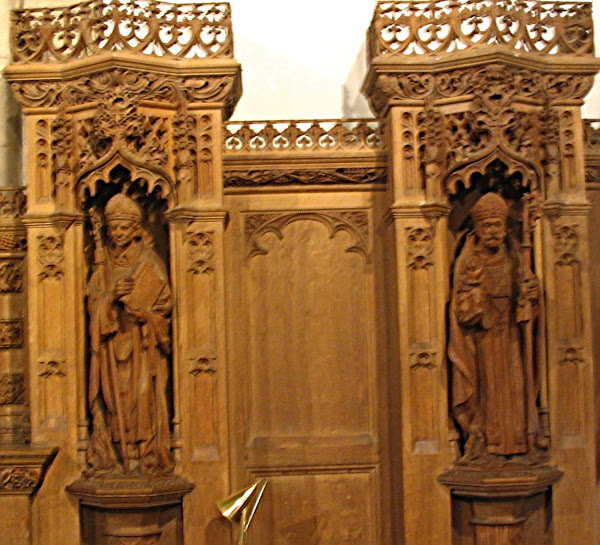
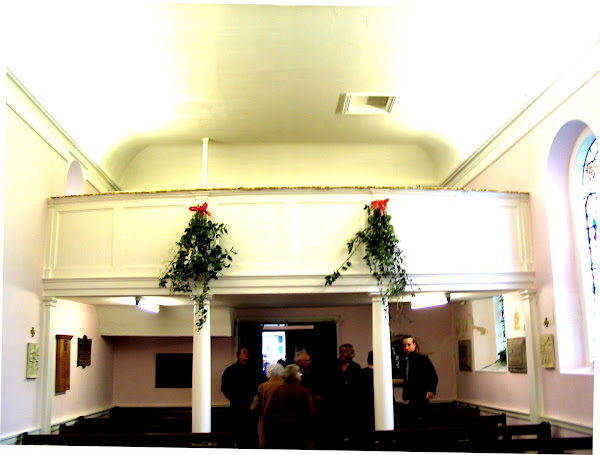
A rood usually refers to a sculpture or painting of the cross with Christ hanging on it. More precisely, "the Rood" refers to the Cross, the specific wooden cross used in Christ's crucifixion. The rood loft framing survives here at Llangeview, and this, again would be a fifteenth century addition.
A rood screen is a wooden or stone screen, usually separating the chancel or choir from the nave. This is the place people sit in. The screen may be elaborately carved and was often richly painted and covered with gold as at Abergavenny Priory. It supported a large cross or crucifix (the rood), sometimes with attendant figures. Rood screens are not unique to Britain: they are found in Christian churches in many parts of Europe;. Some rood screens incorporate a rood loft, a narrow gallery which could be used by singers or musicians. The rood itself provides a focus for worship, most especially in Holy Week, when worship in the old Catholic churches was highly elaborate. During Lent the rood was veiled; on Palm Sunday it was revealed before the procession of palms and the congregation knelt before it. The whole Passion story is read from the rood loft, at the foot of the crucifix, by three ministers.
Few medieval rood screens and galleries now survive in churches in the United Kingdom. Most were deliberately destroyed as acts of iconoclasm during the Protestant zeal of Edward VI and Elizabeth I and during other fanatical attacks by Cromwell’s forces when many rood screens were also removed, priceless stained glass windows were smashed. Today, in many British churches, the rood stair, such as that at St Bridget in Wentloog which gave access to the gallery is often the only remaining sign of the former rood screen and rood loft.
‘Horse Box Pews’
Evidence of Protestant Nonconformist influence can be seen by the erection of these pews, near the pulpit (itself short for pulpitum). These pews were the progenitors of the ‘set fawr’ or ‘big seat’ in nonconformist chapels.

Windows
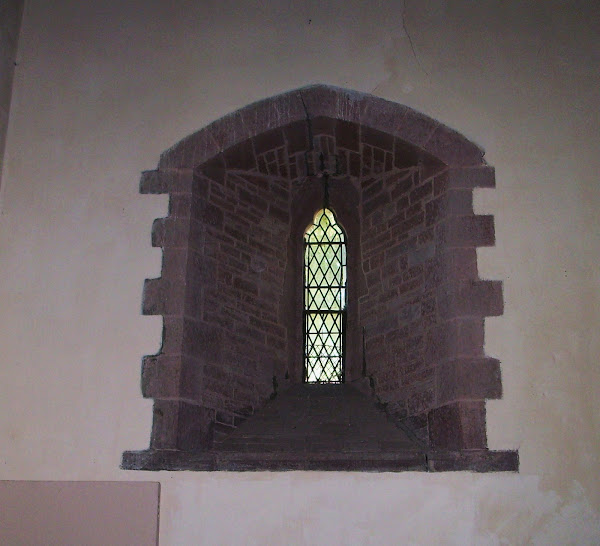
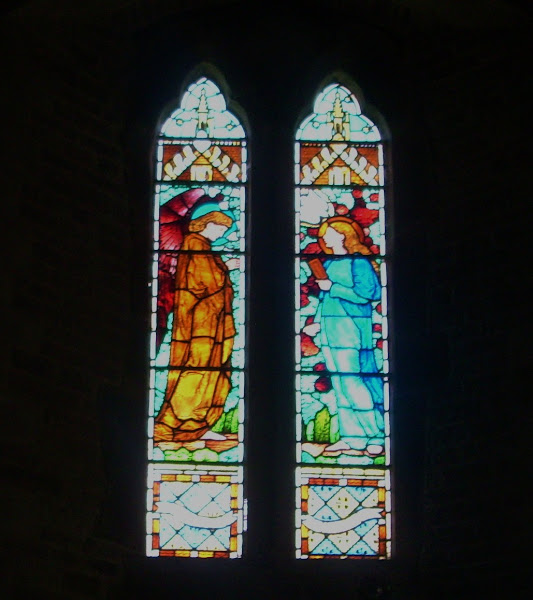
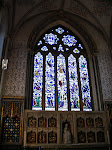
There is no stained glass left and the windows are square headed, with ogee lights, which are attractive from within or from outside.
The Mediaeval Piscina
 _______________________________
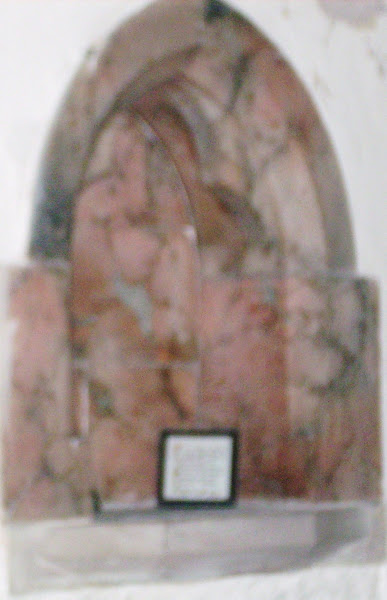
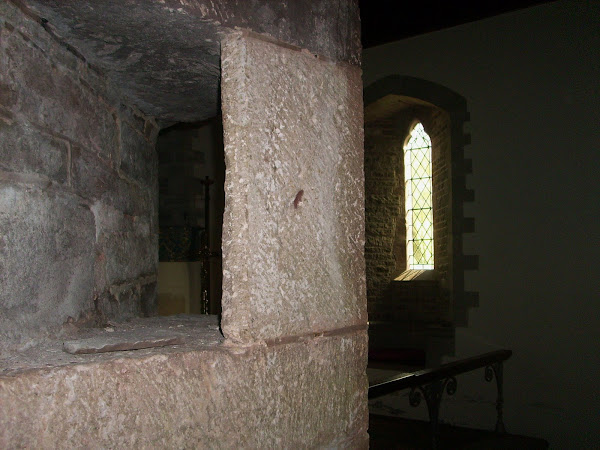
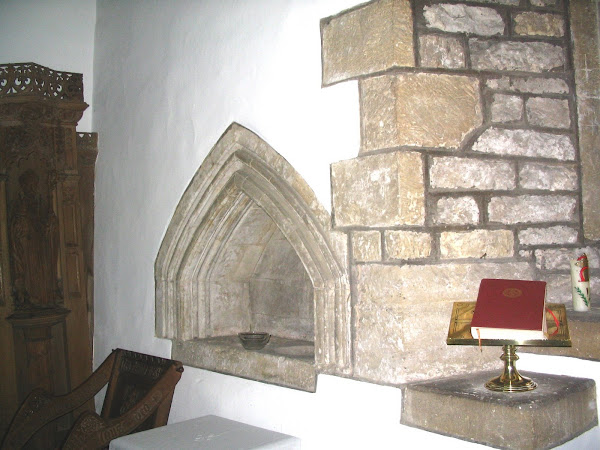
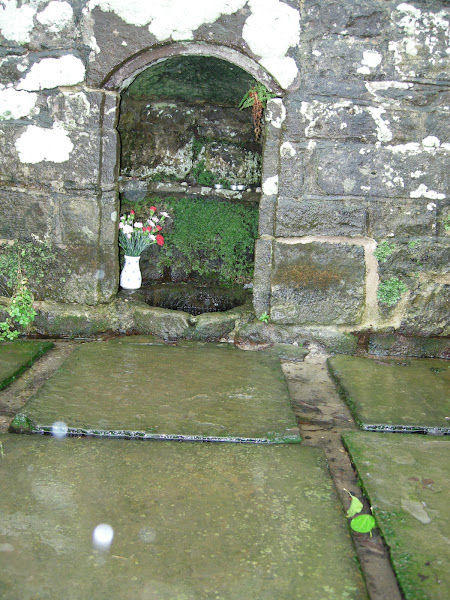
The piscins for saying Mass is incredibly still there. This was originally carved into the wall, as a type of sink. The sink part of it seems to have been filled in at some stage in later times, concrete not being available in Tudor times . Whether the original stone altar here has also been hidden under the present table, I do not know. A crucifix is in evidence on the altar.

 _____________________________
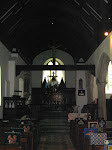
The Church is comparatively unspoilt and apart from its whitewashed interior, is unspoiled from the first intentions of the builders. It is clear, there is even a tiny slit window over the large western porch, a lovely east window. The oak pews seems to match the rood loft in a funny sort of way.
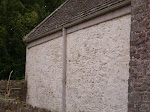
As you walk around the building you notice how the north side of the nave is completely windowless, setting its face against the harsh weather.
Other Church Ornaments
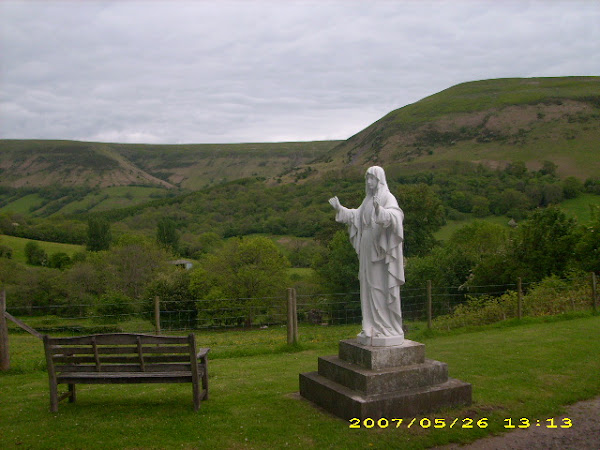
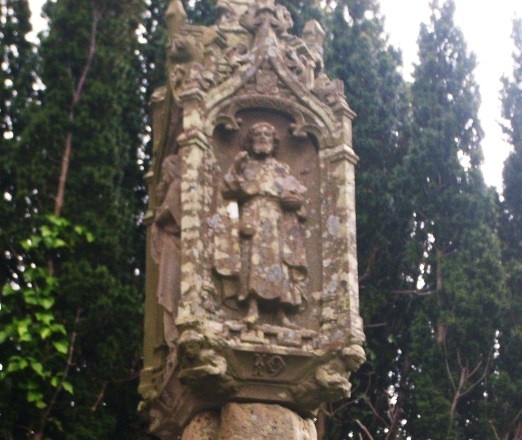
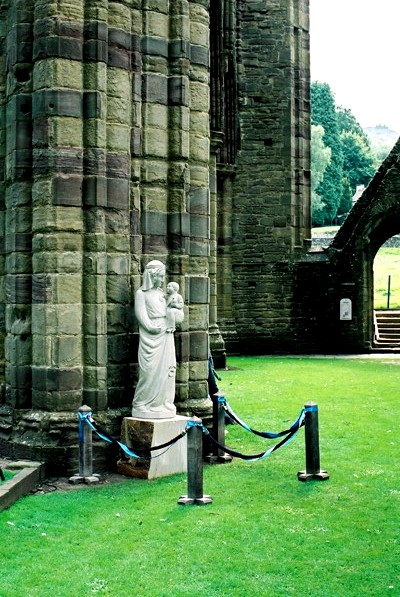
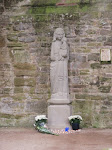
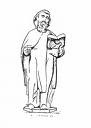
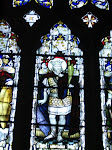
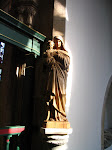
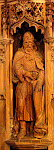
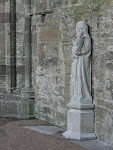
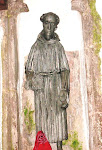
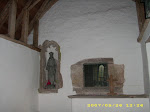
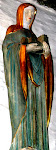
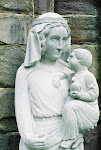
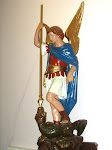
There is a small statue, rather weathered of St David, I think, but he looks a bit more like St Nicholas, as he is wearing a blue cope, and I think the one given to him in Jerusalem was gold.
Visiting St David’s Church in Llangeview, Usk- Obtaining Keys
If you would like to visit the church and need details of keyholders, directions etc, please telephone Friends of Friendless Churches on: 020 7236 3934. When I visited on a Sunday, it was open.
Llangeview in 1848
This was roughly when the Catholic church was being restored in Gwent. A contemporary account mentions Llangeview parish, ‘a parish, in the union of Pont-y-Pool, division and hundred of Usk, county of Monmouth, 1 mile (E.) from Usk. It contained 187 inhabitants, and comprised by 1500 acres. The church is an ancient structure. An almshouse was founded and endowed for 12 people, at Coedcwnnwr, by Roger Edwards, who also bequeathed several sums for distribution among the poor generally. in 1697. Tis was roughly the time of the Martyrdom of the Blessed Davied Lewis.
It remarks:
‘The church of St. David is a small edifice of stone, in the Norman style, consisting of chancel, nave, western porch and a western bell turret containing 2 small bells:.
In 1848 The Duke of Beaufort A.D.C. was lord of the manor, and W. H. P. Jenkins esq. of St. Pierre, Chepstow, and E. B. Reece esq. of Cardiff, chief landowners’.
How long Cyfiw remained here or was perhaps buried here, we do not know. But we have now met most of the Children of Gwladys, the saintly wife of Gwynlliw. Cynfiw was therefore also decended from the house of Brychan Brycheiniog at Talgarth through his mother, descendants of the reputed family of Joseph of Arimathea and therefore the extended family of the Virgin Mary.
In spite, asso many churches, being battered throughout the years, this little lonely church still stands proud and cared for. For details of how you can help to care for this church, please visit the pages of Friends of Friendless Churches website.This will help to replace things missing insode the church, things of beauty which have beenremoved over the years.