
Showing posts with label near Hereford. St Dyfrig. Show all posts

Tuesday, September 28, 2010

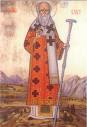
Holy Hentland in the land of Ergyng and St Dyfrig's HOLY WELL

Location: Off A49 going from Ross on Wye(junction ofM50) to Hereford. Turn Right to Hoarworthy. When you reach (after about a mile) a sharp turn to left, turn right and Hentland is signposted. Drive to the end of the road. From Hereford, obviously turn left to Hoarworthy.

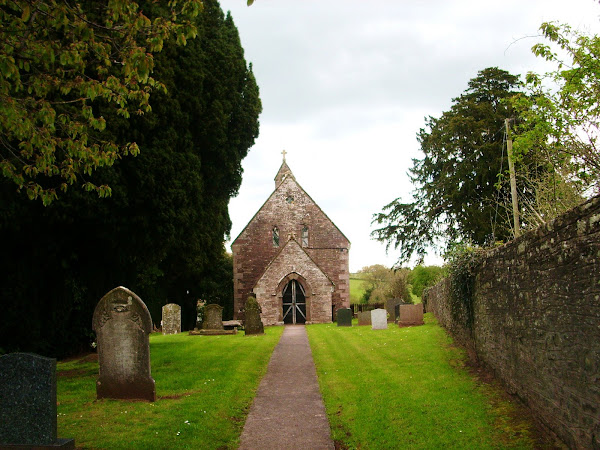
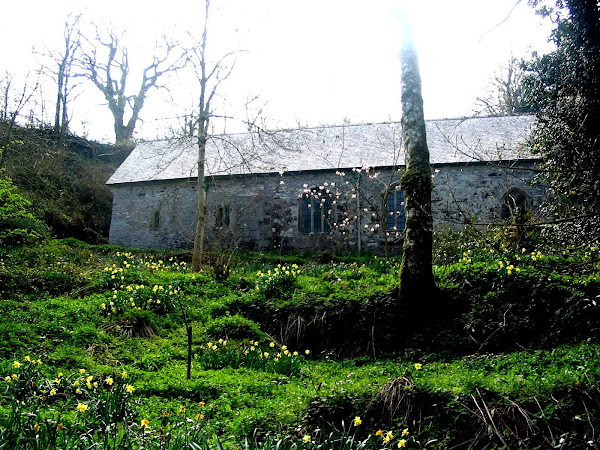
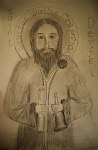
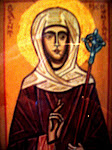
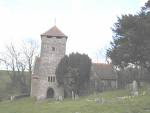
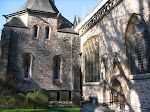
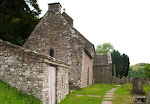
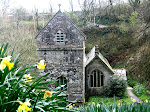
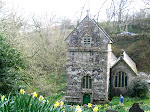
Hentland Church is one of the oldest in the area of Ergyng/Glwyssing. Most of today's (now Anglican) church exists from the 13th and 14 centuries, but back in the sixth century, the famous saints Dyfrig (Dubricius) trained from a young child as a religious went to this charming little village and gained land,possibly the gift of his grandfather and founded his first 'llan'-a small early British monastery.Dyfrig was to do more and more in the way of evangelisation and the fact Churches are dedicated to him throughout Ergyng, Glamorgan and Gwent is testimony to his popularity . This llan is said to have been one of the first two he created , here in Ergyng, now on the border between Herefordshire and Gwent. (Glywyssing) and the other at Moccas, also in Ergyng. 

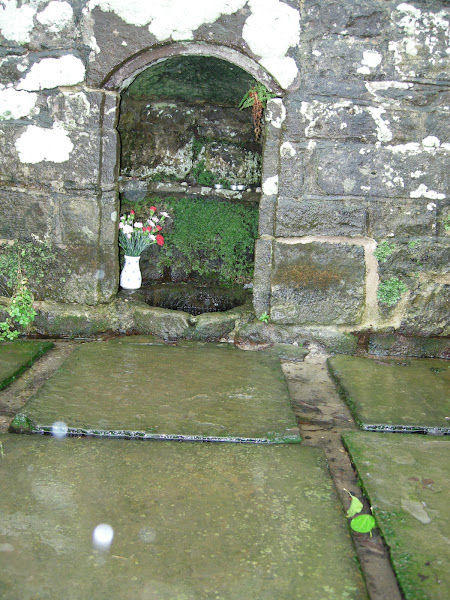
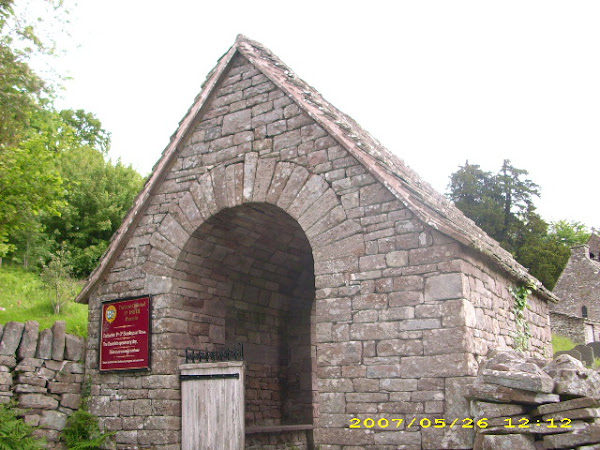
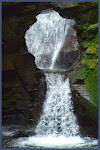
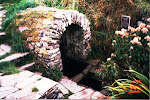
The circular nature of this early British monastery can immediately be seen, including an interesting water spring ad Holy Well.
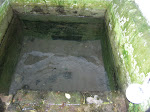
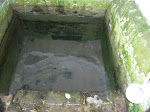
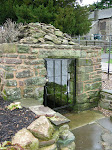
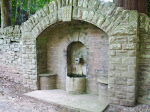
The Well is outside the llan and has a lip for humans and also another for animals. It is in a mysterious little dip next to the present Norman church, although the main part of the Church now dates to the 13th and 14th century. Dyfrig's founding of the llan here though dates the first little mud and wattles or wooden church to the fourth or fiffth centuries and definately by the sixth century it would have been thriving. The Spring would have been a useful place to build a llan and the water is clear and pure.

The name Hentland is an anglicization of 'Hen Llan' 'Old Holy Place'. Dyfrig, or Dubricius as he was known in Latin, was not a legendary figure. He was Bishop of Llandaff. He was responsible for bringing St David from his hermatage at Capel Dewi in Llanthony to the Synod of Llandewi Brefi to defend the Catholic Church's teaching against the wrong teaching of Pelagius-another Briton, also with Druid influence in his thinking. Dyfrig was also responsible for receiving St Gwynlliw of Newport into the Church and for shriving and giving him Extreme Unction before that saint's death. As such he was closely connected with St Cadoc, Gwynlliw's son. As Bishop of Caerleon as was his job description, he also revitalised the disused and neglected Roman college at Caerleon. It was David who took the Bishopric to Menevia finding Caerleon too noisy.After Llandewi Brefi, Dyfrig relinquished the Bishopric to David, believing it needed a younger man such as David to control the Druids and Pelagian thinkers. Dyfrig had founded monasteries in many places and then withdrew to the monastery (Llan) on the river Taff (llan daf)or Llandaff near Cardiff.

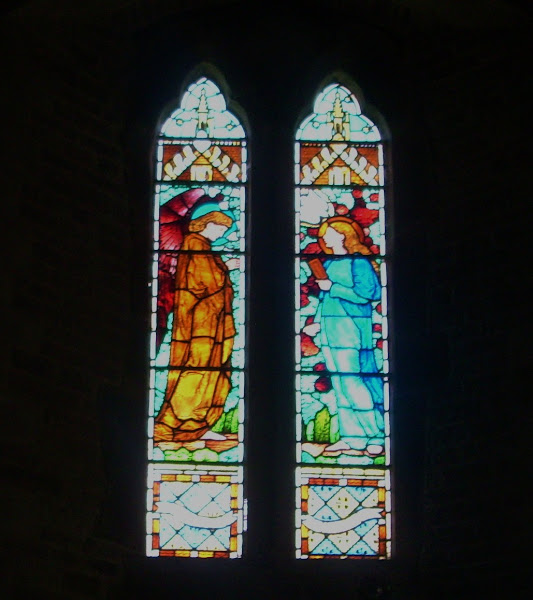
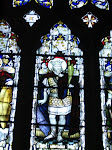
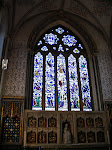
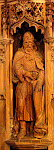
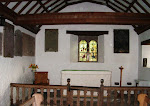
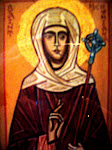
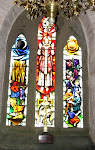
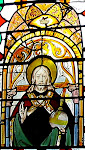
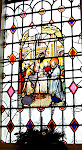
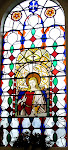
The beautiful stained glass of the saint was dedicated by a forner Anglican Vicar William Poole (1854-1902) There was another monastery at Llanfrawther  (Llanfrother-Church of the Brethren) Worship has gone on here for over 1,600 years. Stained glass of Dyfrig is also in evidence from the 15th century, also depicting Dyfrig.

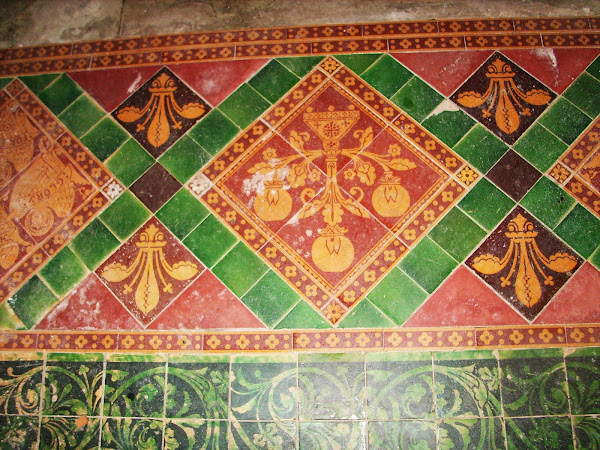
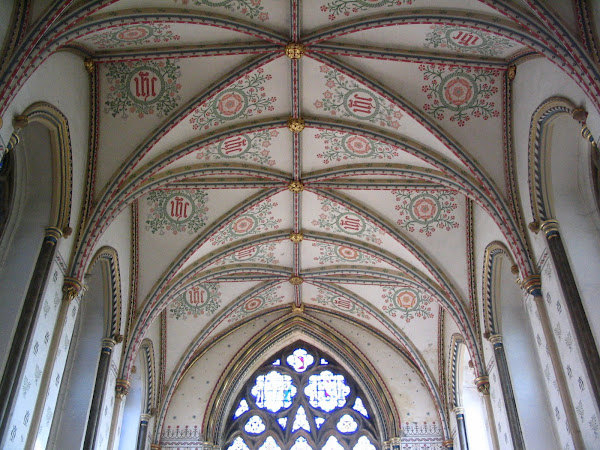
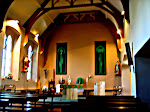
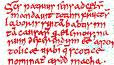
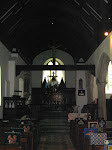
The organ is startlingly brightly coloured and its pipes provides a rich addition to the colour in the chancel/Sanctuary. In a restoration programme of 1853, a design of polychromatic decoration was put on the walls, it seems obscuring the earlier mediaeval wall paintings, but we don't know the state of those. It is just a design like a stem with leaves but there are words on it in rectangles which are hard to read.

 
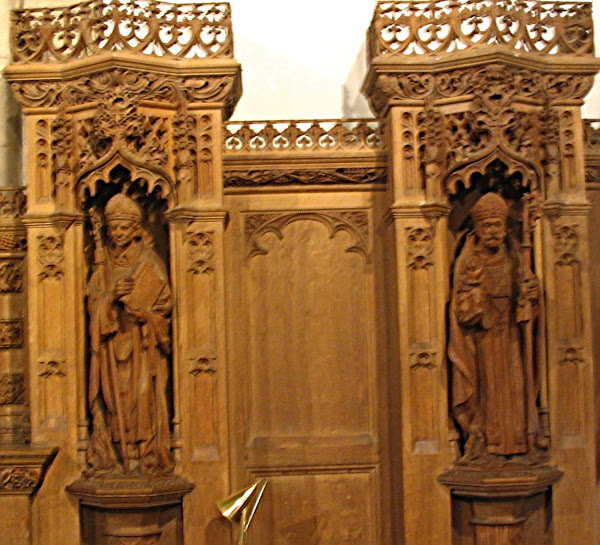
Interesting was the modern(1920!) wheeled funeral bier and a 17th century chest with original lock plate recently restored.There is a Jacobean (James I) carved chair, 17th century pulpit, 19th century screen but the poppy heads on the choir stalls are pre 'reformation'.

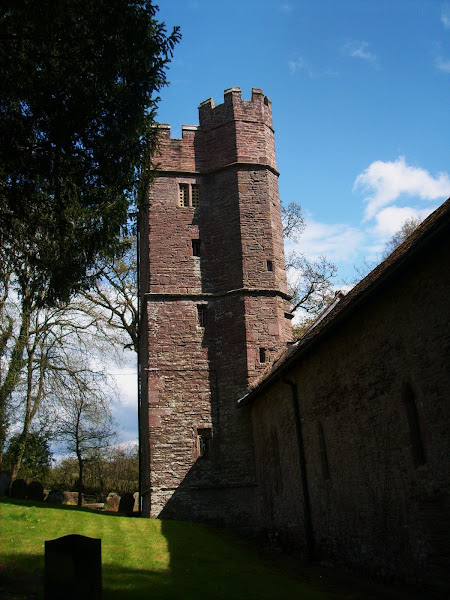
The Tower is original with one mediaeval bell (other 3 1628) Tower needs strengthening before the bells can be rung, which is major work.

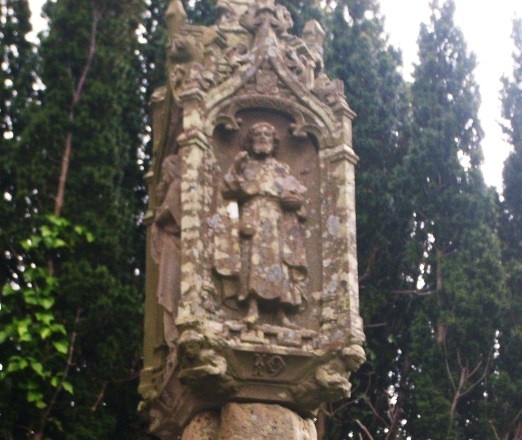
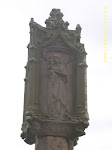
There is a mediaeval lantern cross (14 century) with four facets
1 The Madonna and Child (East)
2 Saints Mary and John (West)
3St Teilo (South)
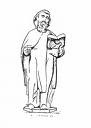
4 St Dyfrig (North)
It is unusual in Britain to find them all in their original positions.

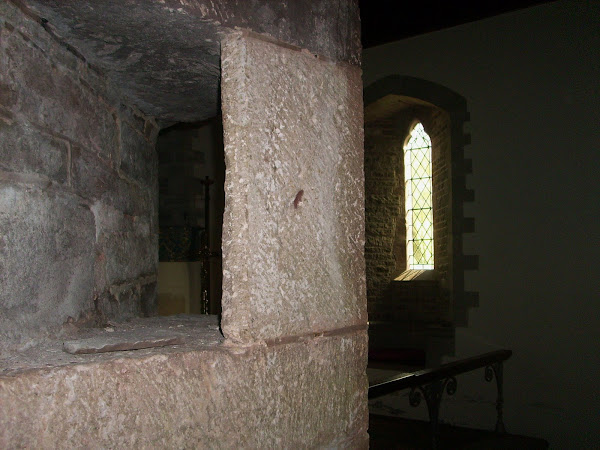
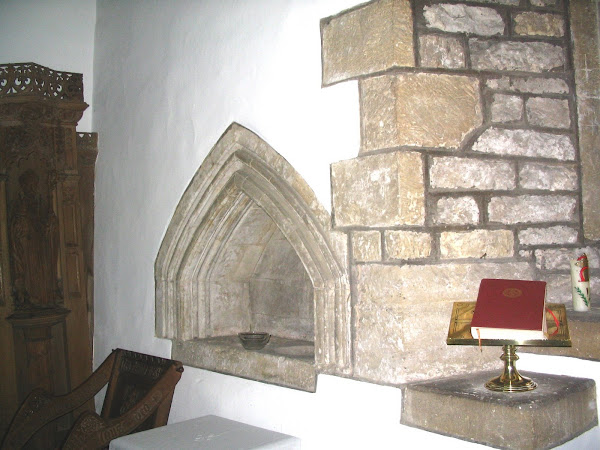
The font is late 16th-17th century.There is a stone credence and piscina in the sanctuary. To the left of the sanctuary is the entrance to the Rood Loft. There under the crucifix the penitents would come for confession. Unfortunately this appears to have been taken down by the authorities, and it would have been a most beautiful sight, judging by the beautifully painted rafters, in green and red and gold above the sanctuary.The words over the arch of the 19th century screen could not have compared, with the picture of the Doom with its bright colours, dire warnings and glorious scenes of salvation.

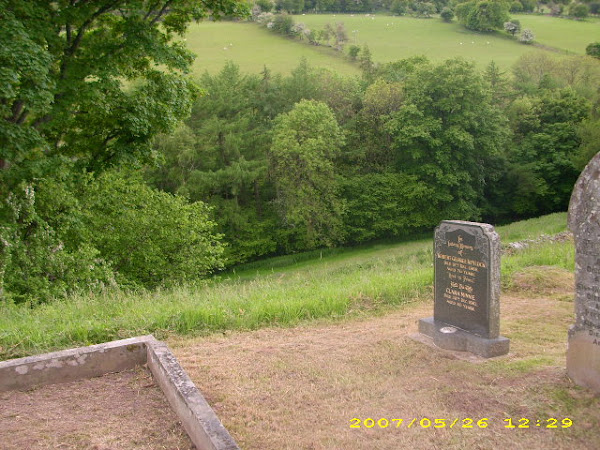
The yew trees in the yard are very old and common in llans being both sacred for the early British and useful for Elizabeth I's bowmen. The one by the gate into the lane was planted in Shrove Tuesday 1615 according to records.

Pax Cakes
On Palm Sunday each year, the ancient custom of the blessing and distribution of Pax Cakes takes place paid for with money from a local titled lady. with the Blessing of 'Peace and Good Neighbourhood.'


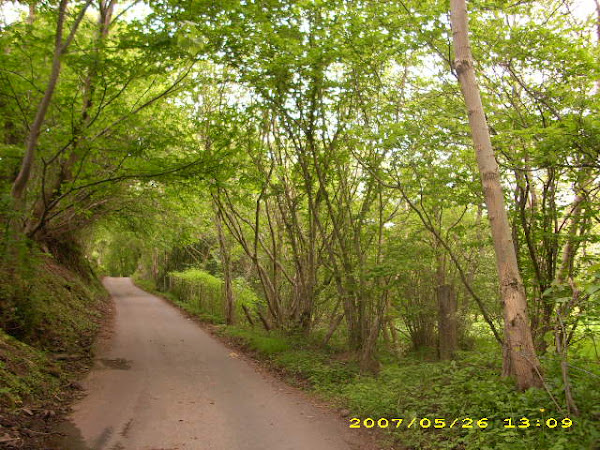
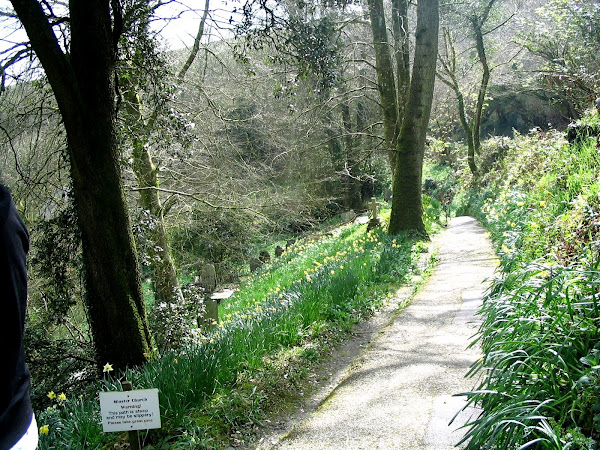
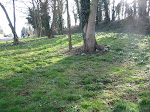
The Way to the well is simple. From the grassy church car park. Turn left and walk back a little way to the small track which leads you gradually down the slope. You walk through a track of wild flowers, garlic and nettles-not on path towards the stream. There is a small wooden bridge over the stream. the well is up on the right hand side.
A delightful place to sit and pray-as no doubt St Dyfrig would have found.

Madley-A Huge church with a crypt, dedicated to the Nativity of the Virgin Mary and the Crypt in which the miraculous statue stood


Last week I visited St Dyfrig


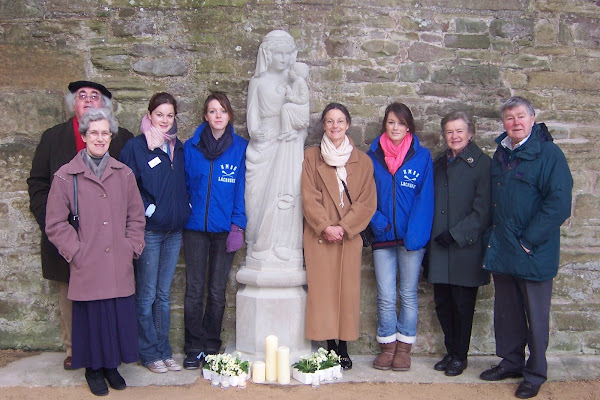
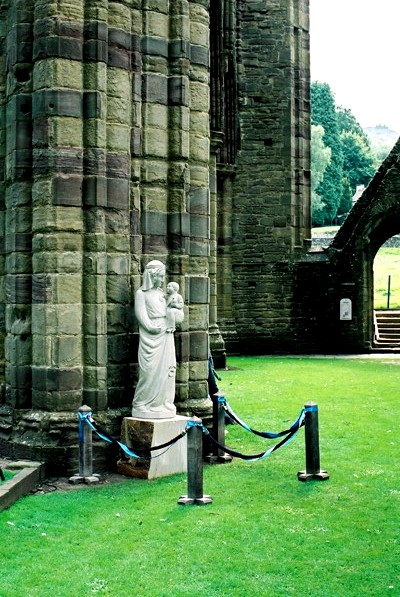
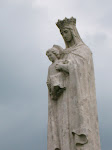
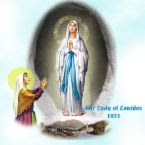
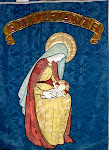
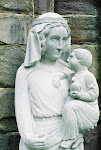
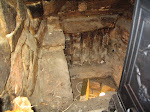
Above is the Madonna of Llanllowell near Usk. A Statue of the Virgin stood in the above recently restored CRYPT

.(Dubricius')  birthplace at Madley and the present Church  on 21.9.10
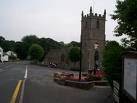
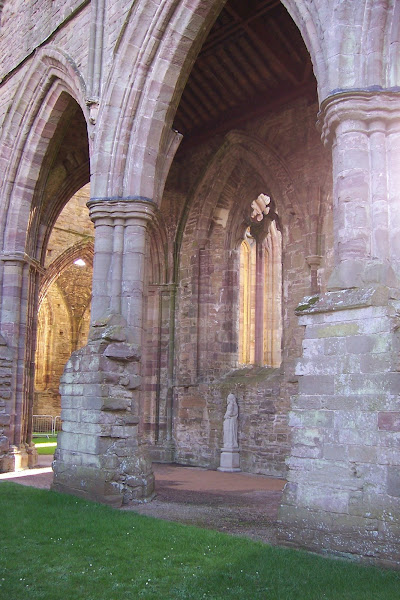
This is the second of my posts about Dyfrig. However, the size of the church at Madley, his birthplace is that first thing, that takes your breath away. We know this area of what is modern Herefordshire (but then in the Welsh kingdom of Ergyng) was devastated by Saxons and taken by them in 577AD, when the Battle of Deerham routed the local British. There was no thick Forest of Dean or Arden to scare them off and Hentland, Moccas and Madley were destroyed or may even have been made into pagan places for a while, the British Church being driven underground, the people enslaved or killed, and many refugees fleeing to Wales as the Book of Llandaff tells us. So following on the re-conversion of Britain in the Mission to the Saxons by St Augustine of Canterbury, with the Saxons themselves converting, the ancient churches began to be rebuilt, usually as stone structures now, and there was certainly an earlier Saxon structure here, still dedicated to St Efrydyl. After the Norman Conquest, however, this was strengthened and a church of some size built. The link with Dyfrig made this church a powerful place of pilgrimage and in 1250 AD the church was greatly enlarged in an early English style, with more new features around 1320 , which give us the church we see today.


The Norman Church


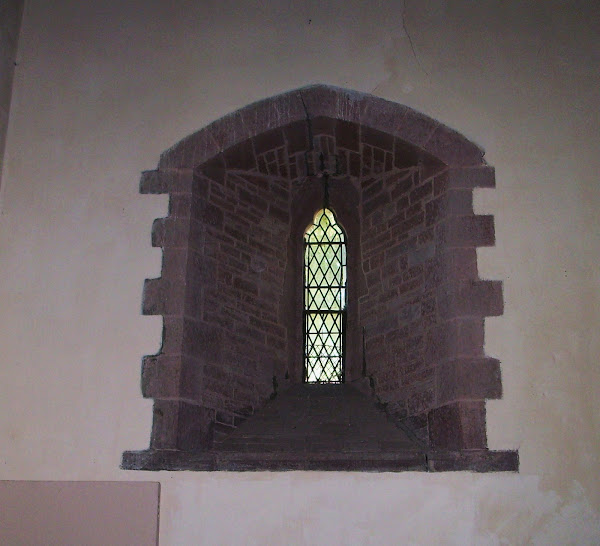
The Norman features can be seen in the North porch, with its Norman window and door and part of the first Norman church built 1050-1100AD. There are also parts of the original Norman wall, the original church having been cross shaped (cruciform). There is also more Norman wall in the Chilstone Chapel. The font is also Norman.There were still slit shaped windows which were there in case the village needed to defend itself against the welsh, who were trying to get their lands back. Churches were often defensive buildings, with food and weapons stored in the tower to withstand siege. Most of the building then is early English, large, spacious as befits a Church of pilgrimage to Dyfrig, and thousands came here at a time when all people loved the saints and prayed for his prayers to add to their own.
The Tradition of Pilgrimage to St Dyfrig, and to the Blessed Virgin


The Norman church was dedicated to the Nativity of the Virgin Mary and there was said to be a special statue here to the Virgin Mary, who gave flesh to the Lord. This being a powerful place to pray, poor St Efrydyl having been set aside by the Saxon clergy, many miracles are said to have happened here, and many healings from sickness especially with a holy well nearby, which belonged to the church and would have been known to Dyfrig. There is no doubt he and his mother continued to pray for the people of Ergyng. The mother church for the Church of the Nativity of the Virgin Mary was Hereford Cathedral. However there is no representation of the Blessed Virgin in the Church today, and no representation of Hereford’s greatest saint in Hereford Cathedral. However his effigy and tomb still are to be seen at Llandaff Cathedral albeit the bones being desecrated by the Protestants. We know about the pilgrims and the statue from records in the cathedral from 1318AD.
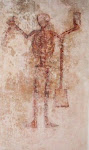
Madley Church does have Wall Paintings, which would originally have been all over the church. These are high up over the chancel arch and were preserved from the wrecking of the sixteenth century by being whitewashed. These paintings were restored in 1992. They are possibly pictures of the Last Judgement or the Doom, so faithfully restored at St Teilo’s Church in St Ffagan’s Welsh Heritage museum, where their richness and glory tell of the wonderful visual experience of going to church in the middle ages.

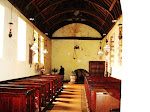
There are many features from the later history of the Church after the break with Rome. A wooden pew, many monuments to worthy people and so forth. The sedillia (seating for the priests and deacon ) and the piscina where the vessels for mass were washed and sent directly to the earth after Mass are still to be seen as is the stained glass from the glorious past of the church’s pilgrimage days. The Chancel and Sanctuary area (the rood screen seems to have disappeared, but an opening arch still remains where the choir ascended for Mass on those Pilgrim days) are in the shape of an apse rather than a standard square shape. This has much ancient stained glass which has been preserved. Possibly the ‘model army’ iconoclasts destroyed much of the glass in the seventeenth century, which were lovingly gathered up after they had left. Nevertheless it is a majestic view.On the altar was a beautiful and rich decoration, which may have been a tabernacle, but am unsure.
It should be noted that the rood loft, was the place where many attended confession under the crucifix by the light of the candle, ominously showing the picture of the glories of heaven and the pains of hell in glowing colours.
Crypt Chapel of the Blessed Virgin Mary
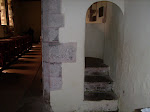
Only in 2007, the Crypt was restored to be used now for prayer , meditation and meetings. It was originally the place where the statue of the Blessed Mary was kept for the veneration and requests for prayers .The pilgrims, says the guide book would have come down the one set of stairs , prayed and then departed by means of the other stairs. This was quite common in mediaeval times and I have seen the stone coffin of St Radegunde at Poitiers placed in a similar position.Following its use as a Protestant Church, it was for some time used as a coal boiler house. Thankfully no more

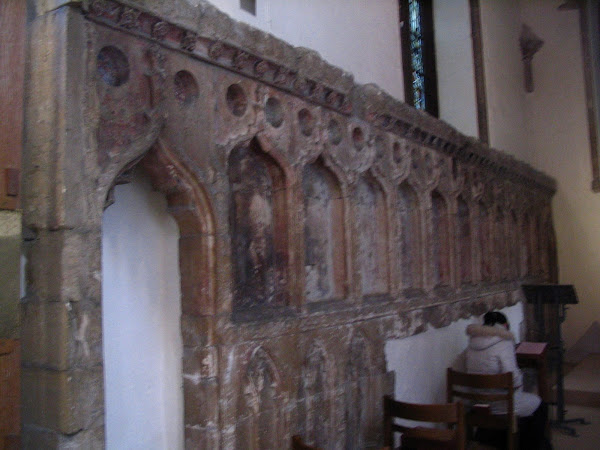
The Chilstone Chapel (Effigies are in the Chilstone Chapel) was built about 1330 and in it a monument to Richard Williston and his wife (around 1575). This was added after the ‘Reformation’ period. They underwent considerable damage, Richard’s face seems to have been sawn off completely and half his effigy is missing.On the side of the monument are arches and kneeling figures possibly of his children. He was probably quite a beneficiary of the Church. It seems, however the same wwreckers who destroyed the stained glass also destroyed his monument. The monument is surrounded by large light decorated windows, which were much lighter, and at this time the larger larger leaded windows were added all around the church.
The Tower is open (as the church is every day) and there is a wonderful view of the surrounding countryside
But where is  St Mary’s Well?
I was unable to find this on my first visit, but would be most interested to see it.If anyone can furnish me with some directions.