




Showing posts with label St Clether. Show all posts

Thursday, November 6, 2008

ST CLETHER--AND A PRESENCE!!!!3


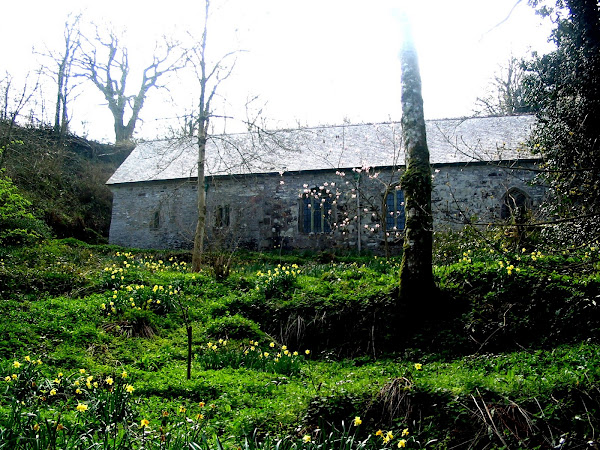
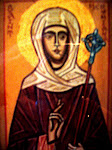
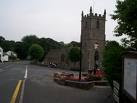
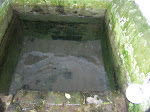
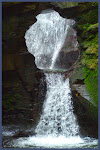
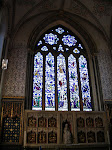
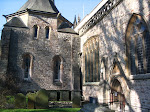
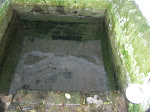
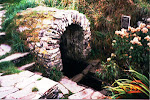
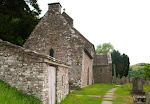
St Clether was one of the twenty our children of Brychan, along with Finbarr who also worked in Cornwall.This monastery was only a short way away from his sister';s at St Keyne.The hamlet where this was still situated is well worth a visit. The parish church itself was built in Norman times and the Vicarage obviously built after the Church was used by the Anglicans in the 16th century. The ancient well was rebuilt and repaired in Norman times and the well carefully conserved.

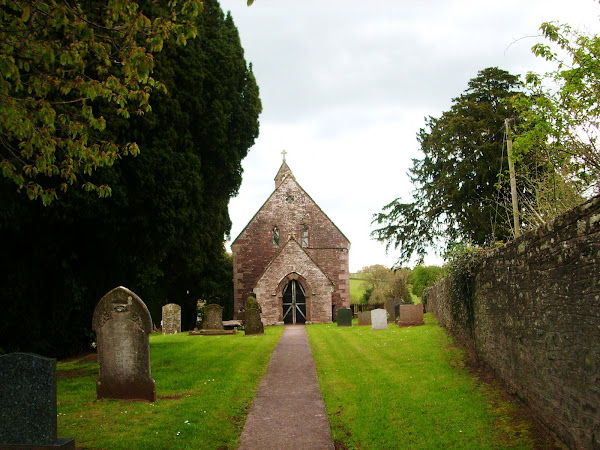
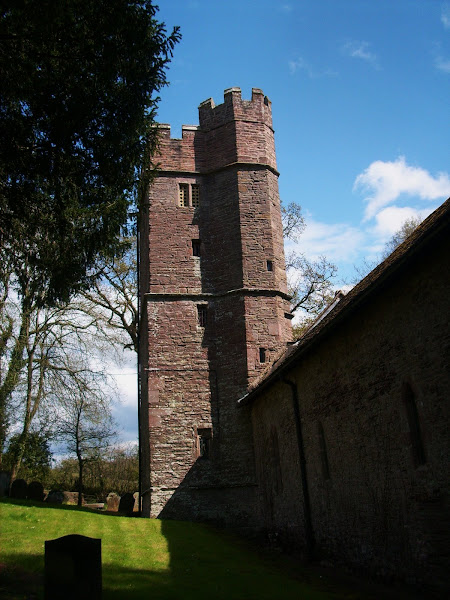
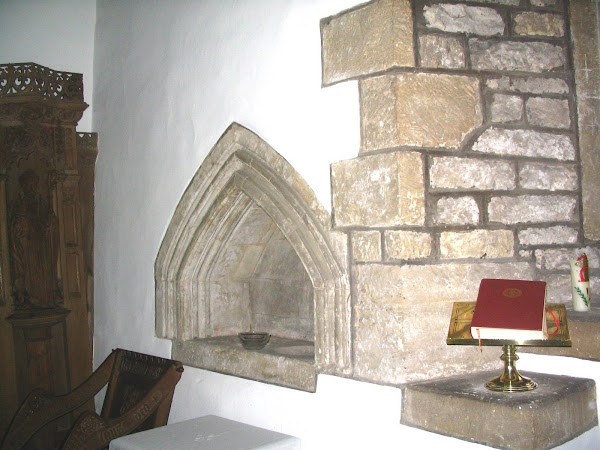
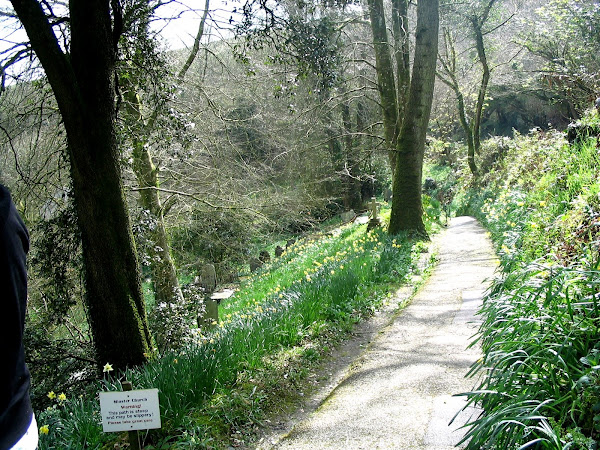
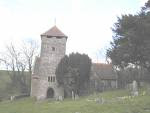
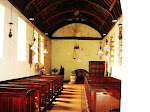
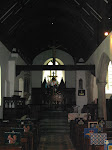
Firstly we went to visit the Norman age built church which leads over the fields for half a mile. St Clether is South of Bodmin.We drove up on a windy day, and there was much of interest in the church, which had had a refurbishment recently, and the piscina and stoup had been removed at some time. The area where St Clether had lived and worked among the people , healing, praying and clothing the naked, feeding the hungry was set well apart from the church, which is nearer the small road leading through the village. Clether seems to have established his monastic cell here on the river Inny. It is north of Altarnan, though not accessible through very wet weather as the road floods. It can be reached from the main Bodmin-Liskeard road, however.

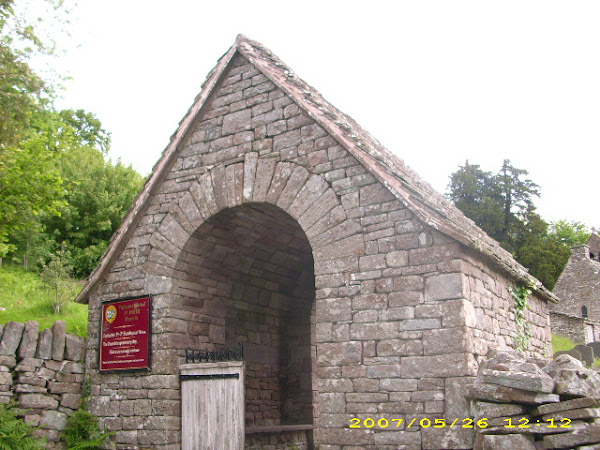
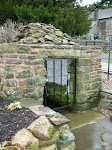
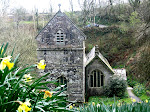
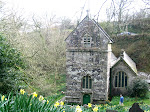
The parish church is mediaeval, but very few original features remain and it has more in keeping with the 18th century charming rectory over the road.The Well at St Clether has a chapel, however which is more ancient than the church. It needs money at the moment for repairs, so anything you can send would help. St Clether designed his chapel well, so that the water from the well flowed beneath the altar of the church. At some point he went to live and died at St Cleer (possibly in old age and infirmity) and his relics were put beneath the altar over the running spring.
St Clether's Feast Day is on November 4th.

The well would have been sought for healing by many people and as the Normans did not demolish it and put up a church elsewhere, it was probably far more colourful in those early years, with wall paintings and such.Candles are available for lighting at St Clether's well, to ask for St Clether's help in prayer to the Father for healing.

A STRANGE OCCURANCE

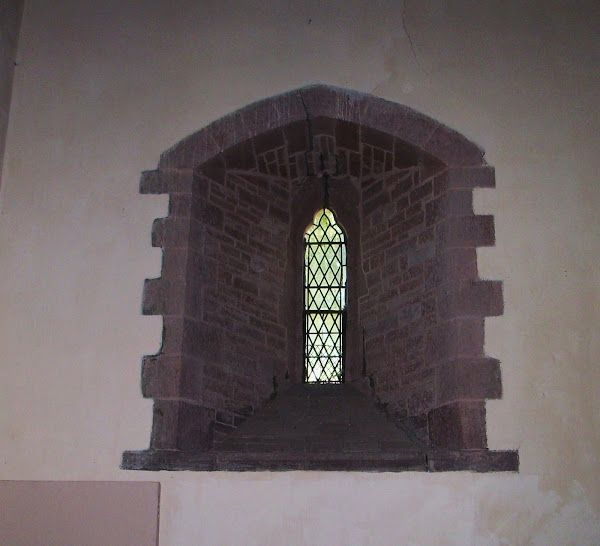
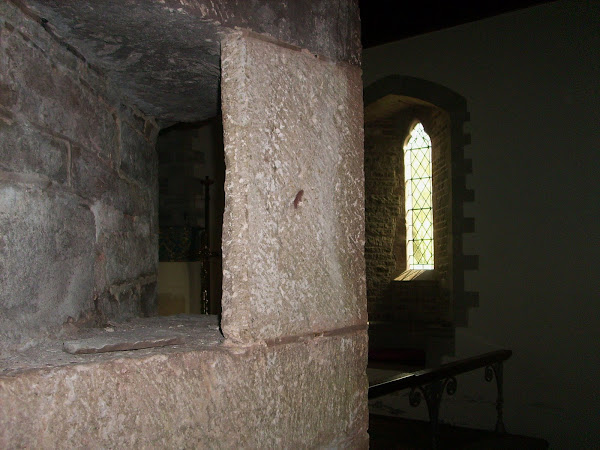
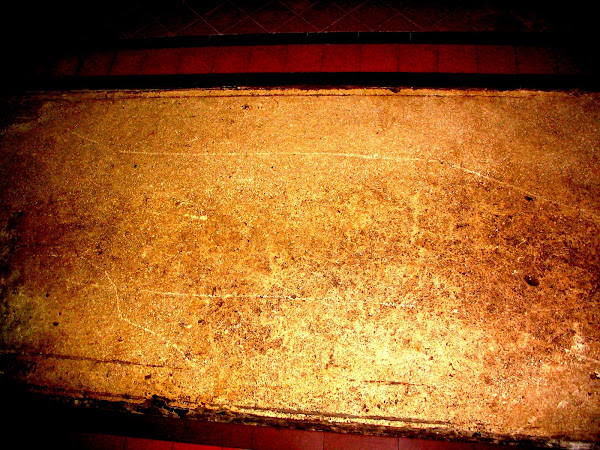
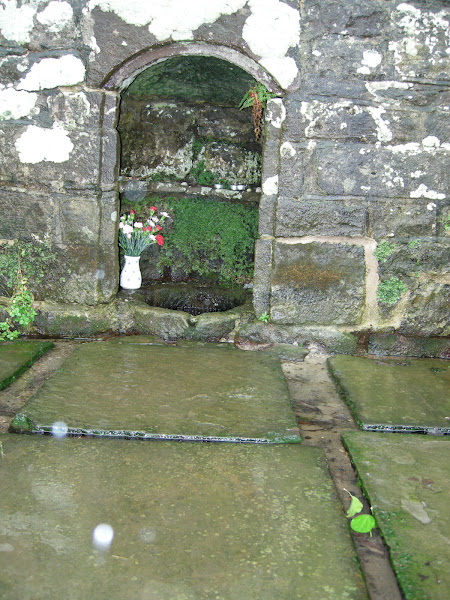
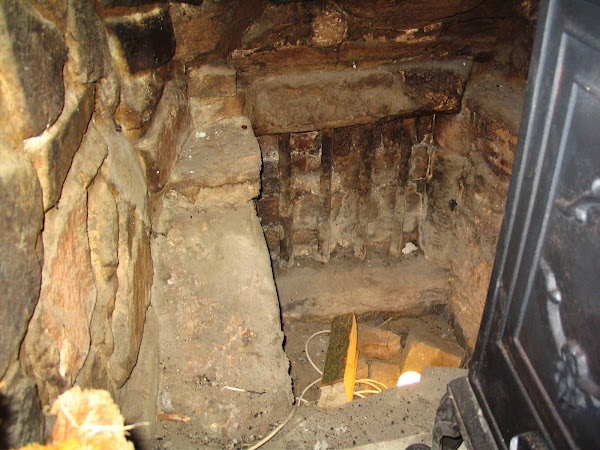
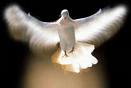
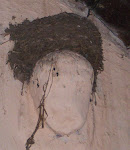
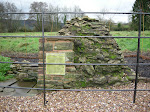
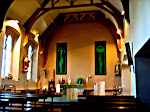
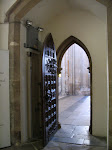
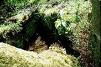
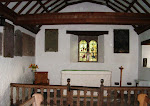
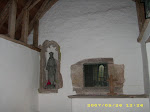
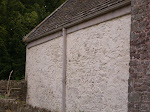
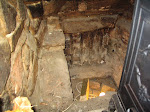
The distance to get to the well, clearly marked by oak markers was too great a distance and I sent my husband to photograph the well and chapel. My knee has an injury at the moment. He returned quite excited. He had photographed the well and chapel and had snapped the inside of the chapel the minute he walked in. With his naked eye he could see nothing at all, yet on the digital camera screen he saw a white shape. Now he is sceptical of many things but the white shape, as you can see above was clearly visible, apparently 'fleeing' into the stones. Five seconds later he snapped again and it had gone. If you look carefully, you can see plainly that the window is lower than the white shape. He said he was not afraid, so perhaps the camera recorded an angel guarding the place,we did not know. But it would be great to hear any explanations?

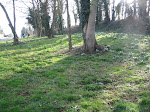
The Well itself is slightly higher than the chuch, through which the spring flows.
It was certainly worth a visit and needs repair money so if you have a spare fiver...

Will post more on St Clethers when I have time.

MADELEINE MCCANN

There has been no informatin on here whereabouts, yet I absolutely have a hunch she will be found one day soon and will continue to pray for her and her family.

FACEBOOK

There is a Mary in Monmouth Page on Facebook .

LLANFAIR DISCOED CHURCH

Following the recent blog on this church and its connection to Lady Margaret Pole, Countess of Salisbury and her son Cardinal Reginald Pole, both martyred for the Faith in Tudor times, I was contacted by some descendants of the Pole Family in Hampshire and we have become friends.They are still Catholic and help with the National Catholic Library in Farnborough. So that has been a blessing for me.

Tuesday, November 4, 2008

Well, Well, Well!-St Clether , St Keyne and St Guron Part I


Holy wells were once very important to the Welsh people and that they existed in quite large numbers.Our pagan ancestors regarded wells, springs, lakes and rivers as the abodes of gods. No doubt a range of ceremonies were associated with them and they remained dear to the populace.
In the year 601 Pope Gregory instructed missionaries to destroy the idols of Britain but to purify existing temples. Ancient pagan sites, including wells, gradually came to be associated with the early missionary saints.

Many of the wells were roofed and acquired small chapels with niches for statues of saints but over the centuries the upheavals in the religious life of Britain led to the desecration and destruction of many old shrines and the majority of the old well chapels disappeared, although many remain in remote places in Cornwall, where they are restored and venerated.

Ffynnon Fair Penrhys was a south Wales well belonging to Llantarnam Abbey at the time of the dissolution of the monasteries. In 1538 Thomas Cromwell, vicar-general to King Henry VIII, ordered that the effigy of the Virgin Mary be removed "as secretly as may be" and the "Image and her apparel" were sent to London to be burned. The country folk were not easily swayed by the reformers and intellectuals of London, however, and pilgrimages to holy wells continued.

St Winifred's Well at Holywell


St. Winifred's well at Holywell has survived with associated buildings intact. The well and chapel were granted by the Countess of Chester to the monastery of St. Werburg in 1093. Later, possession reverted to the Welsh lords and in 1240 Dafydd ap Llewelyn granted it to Basingwerk Abbey. Kings Richard I and Edward IV are said to have made pilgrimages there and in 1439 the Countess of Warwick presented her "russet velvet gown" to the chapel (an early example of the present trend in which famous people donate garments for the benefit of favourite charities). Richard III met the cost of maintaining a priest at the well. The present architectural remains resulted from the largesse of Lady Margaret Beaufort, the mother of the future King Henry VII.

It is possible that she prayed there for his success and when he was indeed victorious at the Battle of Bosworth Field in 1485, the Tudor dynasty attained the throne. The Tudors were proud of their Welsh ancestry and the royal connection seems to have accounted for the survival at Holywell. some of the wells retained their ancient associations despite the religious and social upheavals of the centuries. Francis Jones notes the way in which wells often figure in the "Lives" of the saints. The surviving manuscripts date from around 1100 to 1400 and the theme of a saint's battle with dark forces at the site of a well is commonly encountered. Giants, demons (and sometimes women!) slew or were slain by saintly figures and the Lives confirm that even after the many hundreds of years in which Christianity had been the state religion, the wells were still associated with the ancient pagan beliefs of the Celts.

My trips to the three wells we are to discuss, were all undertaken in the last days of October in 2008, and were real treasures. St Clether even had its ancient holy chapel intact as it had been rebuilt by the Normans and kept as a Baptistery.There was a strange experience there too.

BODMIN ST GURON AND ST PETROC

Bodmin is a fine historic town which was mentioned in the Domesday Book. The name Bodmin is thought to derive from the Cornish 'bod' meaning dwelling and 'meneghi' meaning monks.

Bodmin has a long association with religious history being home to Cornwall's largest parish church, dedicated to St Petroc. The church contains an ornate ivory casket which is reputed to have held the bones of the Saint.

WELLS OF BODMIN

St Guron's Well

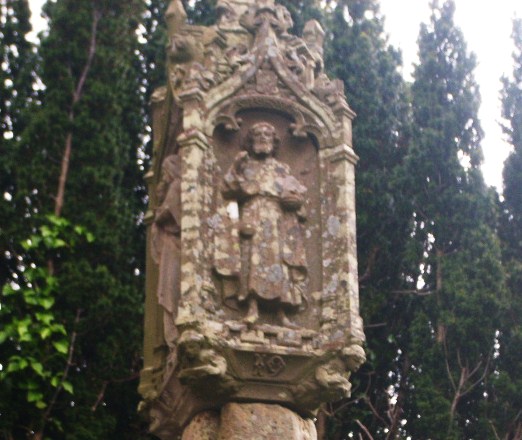
A holy Well, dedicated to St Guron is to be found at the foot of the present St Petroc's Church. St Guron is traditionally held to be the original founder of the llan or monastery there, however the arrival of St Petroc, the Great Evangelist obviously superceded him. What is more interesting is that at St Gurons, two strange heads seem to be looking over the well, and perhaps this could be why St Petroc built his well further up by the Church area (where presumably he built or established his own church in later times. These two heads could be gargoyles, chasing away evil spirits from the Well-they certainly look threatening.


St Petroc's Well is situated in the valley close to the church.

In the churchyard is another Holy Well believed to date from around AD 510. This well is dedicated to St Guron, who is thought to be the original founder of Bodmin, pre-dating St Petroc.

Alternatively, the fact remains Guron may not have been a saint after all. The name 'Goronwy' is an old British Druid name, and it could be a link with Druid religious rites. Petroc maybe built his own well to draw people away from the practice and clearly very successful.As the Druid religion also embraced another World, however, it proved simple to present, as many Druids have said a fulfilment of Druidism. They had human sacrifices and so a Crucified Christ felt very close to them and put an end to all need of such things, especially as Christianity offered everlasting life and the holy springs bubbling up from the ground still a symbol of the new life of Baptism by Water and Spirit.


Saint Petroc established a monastery here in the 6th Century after going on a White Martyrdom from Padstow, where he landed and it is from this ecclesiastical settlement that the town grew. Later in Mediaeval times, it also got a Benedictine Priory and finally the Franciscans arrived in the later Middle Ages. It is possible that St Petrocs was reorganised by the Normans into an Augustinian Monastery, though it could equally well also become a priory administrating for the Norman Overlords.

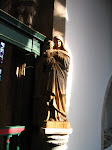
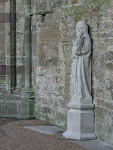
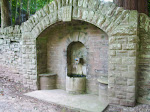
As we can see, the well of St Petroc, (no doubt the new house is a Mediaeval building) and contains a Christian relief or a young woman praying at the well. The young woman appears to have had her head knocked off in an attack probably by Cromwells men or perhaps a casual vandal. Sadly I could not get into the church of St Petroc, which is said to be the largest in Cornwall.