


Showing posts with label Hywel Dda and Morgan Hen. Show all posts

Sunday, August 30, 2009

Catholicism in Mediaeval Wales-Part II-Catholic words in Welsh


_____________________________________________________________________________________________________________________________
Religious Terminology of the Welsh

Valuable evidence as to the nature of early Welsh religion may be gathered from a brief examination of the religious terminology of the Welsh people.

The late Professor Huw Williams , a great authority on the early British Church, writes:
The Faith in Britain was the Faith of Western Europe generally; its Church had the same organisation of ministers. in which Bishops and presbyters became Sacerdotes , the Lord’s Table, an altar. To these Sacerdotes belong the power of binding and loosing. Behind all was the wonderfully powerful force of Monachism.’

And again:
‘Throughout the west one language universally prevailed in religion. Gildas quotes a Latin Bible, and the literature he read was Latin. Long before Gildas, even St Patrick, the Apostle of Ireland, though a Welshman, wrote in Latin.’‘The native language it would seem, was only used for preaching to the people. The result of this close contact with the Latin world- if one may thus describe the early ecclesiastical situation – was that out religious language has become steeped in Latin’

The following short list of the principal Welsh religious and ecclesiastical terms will illustrate this; and though the list may be dry reading to some of my readers, it is desirable that the point should be made clear before proceeding further.

eglwys ecclesia
offeriad,offrwm, offeren Eucharistic sacrifice
baglawg baculus ecclesiastic entitled to carry a crozier
Periglor Parochus, Parish Priest
Trindod,or trinted Trinitas
Bedydd Baptismus
Senedd Synodus
Clerigwr Clericus
Pregeth Praedicatio
Cardawd Caritas
Gosper vesper
Gras gratia, grace
Crệd credo
Erthygl articulus
Crysfad chrisma (Old Welsh name for Confirmation)
The second Sacrament, says Canon Griffith Roberts in his ‘Grammadog Cymraeg’.’is the Bedydd Esgob a clwir Crysfod.’
Cablyd,Difiau Cablyd capillatio

(The monks were tonsured on this day, Maundy Thursday)

Calan Caledoe

The calong par excellance was January 1st,, but we also have calan mai and calan Gauaf)
Ynyd initium(dydd Mawrth Ynyd= Shrove Tuesday)
Cabidwl Capitulum cathedral chapter
Urdd ordo
Garawys Quadragesima Lent
Segyrffig (now obsolete) sacrificium
Ystwyll Stella (star)Epiphany festum stella
Pgiol vial
Paeol holy water stoup
llện legend
elusen eleemosyna
y fall malus the evil one,
naf numen
pader paternoster
gwers versus
benedith benediction
Merthyr martyr
Llith lectio
Nadolig natalis
Paradwys paradisus
Pechod peccatum
Addoli adoro
Achub occupo
Arawd oratio
Ysbryd spiritus
Plygain pulli cantus;(night song)
gwỹl vigilio
swyno meaning ‘bewitch or charm’
(means makingthe sign of the Cross Signo- to bless
dwfr swyn holy (blessed ) water
sagrafen sacramentum
allor altare
ysymmuno ex-communio
uffern inferna
dofydd domitor, divinity
cappan cope
cappa;cymun communion
cyffes confession
mynach monachus
mynachlog monachi locus
Lloc locus part of Welsh placenames.( A notable use of its use as signifying a monastery is contained in the Black Book of Camarthen.
Ni phercheist ti creiriau,Na lloc na llaneu
You have not respected relics, nor monastery nor churches.
It also survives in the word ‘llech’(sometimes erroneously interpreted in Welsh Place names such as ‘stone’ or ‘slate’) eg Llechgenfarwydd, Llechydwr, Llechgomer, Caellech, Penllech)
Cil, Cill Cella
Columba was called Columncille- thedove of the cell)
Kilmuine St David’s Cell (Kilmynyw)
Disart,disserth from desertum, lonely place, monk’s retreat
Caregl calyx, chalice
cá»™r chorus
clas classus,clausum old cathedral chapter
clos (cognate word) Cloister, close monastery-clausus
syber superbus
Abad I’w glosydd rhwng bedw gelision’.

We could go on indefinitely with the list of Welsh religious terms derived from Latin, but these examples are enough to prove how largely we have borrowed from the parent language of Welsh Christendom. So that, apart from the evidence of Welsh history, we have the clear evidence of language .The Welsh word for ‘religion’ crefydd is a notable instance of this. The word crefydd in pre reformation times meant, with scarcely an exception , not what it means nowadays, the abstract principle of religion, vague enough to incorporate any kind of religious belief, but the definite profession of religion in the monastic sense. It meant the religious life, consecrated and followed under the organised discipline of the Catholic Church. Crefyddwr meant those who were under religious vows. In early Welsh literature crefydd was of the masculine gender, but in modern Welsh it is feminine. In fact it represents in its change of Gender the evolution of religious faith from the dogmatic and definite to the undogmatic and indefinite.

The Puritan,’a good man in the worst sense of the term’ may be said to have changed the meaning with the change in gender.

Crefydd Gwyn e.g. meant The Order of White Monks,-crefydd being the specific term for a religious order.This is the invariable meaning attached to it in our oldest Welsh literature , such as the Welsh Laws,The Chronicles and the San Greal and others.
The old monastic or Catholic connotation of the word passed away with the supression of the Welsh monasteries.

Dr Hartwell Jones, the author of Celtic Britain and the Pilgrim Movement-throws a flood of light on the Catholic Character of early and mediaeval Welsh religion-writes as follows:

It is difficult to conceive that Catholicism at one time permitted Welsh habits of thought ; that its beliefs were jealously cherished; that its theological terminology is woven into the very warp and woof of the Welsh language. Indeed from the third century to the sixteenth, Wales adhered to the old Faith as rigidly as Spain or Italy at the beginning of the nineteenth. This revulsion of national temperament and reversal of a national bias is one of the strangest psychological phenomena of English history’.

After quoting the evidence of foreign writers in the sixteenth century, to the effect that this country was strongly and avowedly Catholic, he goes on:

‘Catholicism appealed to the poetical temperament of the Welsh. Underneath the surface, there lies in the Welsh nature a vein of mysticism which three centuries of Puritanism have not succeeded in eradicating. A love of symbolism also, an eye for the artistic aspects of the Christian religion, a fervid imagination, and an impressionable temperament, would naturally find expression in the Catholic Creed and Catholic ritual; in the stately aspect of the Christian year, the unbroken round of services, the religious acts by which Christian truths were expressed, and in the warm colouring of Catholic ceremonial. Many instances might be cited from modern Welsh literature by the pens of writers who would repudiate any sympathy with Catholic belief or practice, yet betray and instinctive harmony with the Catholic spirit.

A more scientific study of Welsh history, and the renaissance of genuine interest in archaeology and antiquarian lire, have led a new generation of Welsh people to grasp the truth that the heroic period of Welsh history and the golden age of Welsh literature sprang from the heart of the Catholic spirit

And specially prominent in this ancient literature is the spirit of loyalty to the See of Rome, deep even passionate devotion to the Blessed Virgin and the Holy Mass.
And this evidence is not limited to any particular period; it is true not only of mediaeval Wales, but of early Wales as well. Of this early period of Welsh exxlesiastical history, Stephens, in his Literature of the Kymry writes:

“The Church had become powerful in Wales, as well as over the rest of the civilised world. Papal theology possessed and directed the human understanding , and gave its impress to all opinions. We have one striking instance of this in the Awdl Fraith which is evidently an ecclesiastical production of the romance era. This might have been inferred from the tone of the composition, its allusion to the afrilat cyssegredig and its Latinised diction.

He even considers that the immortal Arthur himself, the religious hero, the greater part of whose memorials were found in convents, is partly, at least, a being of monastic creation.

‘The Catholic Church’ he adds,’was now in its glory and at the height of its power ;and now, as at all times, was most studious to conform itself to the improvements of society. It mingled with all things without excluding any; and in Wales, theological modes of thought, feeling and expression were everywhere displayed.

‘The Mabinogi’ of Taliesin is replete with theological expressions.’

He attributes the spirit of the old Welsh romances not to the lay bards, but to the inmates of a monastery:

‘Of the fine and high tones sentiments which breathe through the Mabinogion, we have no traces in the works of the bards;they must therefore have emanated from the clergy.’

This , it may be added, is specifically true of the tales of the San Greal, which was supposed to be the cup out of which our Lord is said to have drunk before his crucifixion, or which contained His blood.

Our earliest Welsh literature, in spite of its mythological background and martial atmosphere is by no means lacking in definite evidence of a Catholic age. Scattered phrases and sporadic allusions, as well as explicit references to Catholic truths, all point steadily in the same direction.

The ‘Book of Taliesin’ e.g. one of the ‘Pedair Cainc y Mabinogi’(4 ancient books of Wales)contains very distinct allusions to the religious beliefs of the age.

The Eucharistic Sacrifice (Holy Communion) is designated as the Urddol Segyrffic, the honoured Sacrifice of the Mass.And the Awdl Fraith the ‘Ode of Varieties’, attributed to Taliesin, the Holy Eucharist as Stephens says is referred to as the afrllad cyssegredig.
‘
Again in ‘Air y Mynydd’, a fantastic imaginative poem of great antiquity, preserved in te Red Book of Hergest, the Holy Communion is mentioned in Connection with Confession which is regarded as an essential principle of the religious life.

The end of alle thing in Confession for the sayke of God, make a full confession.
Again the Blessed Sacrifice is desired by the writer as a shield of salvation against the dread decree of the Day of Judgement-
Rhag gormeil golaldydd brawt’

Llywarch Hện , a sixth century prince and poet, and probable priest as well, writes:

Before I was a fair priest Kyn bum kein vaglawc
I took part and made prayerful compassion Bum kyffer eiryawe
Before I was a fair priest Kyn bum kein vaglawc
I was bold Bum by
I was entertained in the convent house Am kynnwysit yg kyuyrdy
Of Powys, Paradise of Wales Powys Paradwys Cymru

The title in connetion with Llwywarch (hện) refers, in the opinion of Professor High Williams, the author of Opera Gildae, to his ecclesiastical status-senior.

But apart from the external corroboration,the words of the poem itself show that the author was a priest.

In consequence of this ecclesiastical significance of hện , he quotes Pawl Hện , the Welsh name for Paulinus, but it is doubtful if this is a true parallel. Pawl Hện seems to be merely the Welsh form of Paulinus with the Latin terminal lopped off. In fact, there is on the borders of Cardigan (Dyfed) and Camarthen , a church dedicated to Paulinus called Capel Peulin. Paulin or Peulin could easily become Pawl Hện, in which ‘Hện’ is, of course a mere phonetic addition.

In the Book of Taliesin (xvii) we have the following lines:-
There will be no priest ‘Ne byd effeiriat
The wafer bread will not be consecrated Ny bendieco afyrllat
The perverse will not know Ny wybyd anyguat
The seven faculties(=Sacraments) Y seith lafanad’

The primary meaning of llafanad is ‘intellect’ or ‘interllectual faculty’ hence its meaning of faculties in the sense of means of grace, Sacraments.

Anygnat is an early Welsh form of anynad from an and ynad,unreasonable contentious, perverse.

A poemin the Black Book of Carmarthen attributed to Meigant a bard and saint of the sixth century, contains a curious proverbial saying:
Ni chenir bwyeid ar ffro’
Mass is not sung on a retreat

In the Book of Aneurin a sixth century document, we have an interesting collection of phrases , referring to different religious subjects, but which, if taken together, point to a decided Catholic environment. They are taken at random:

The Trinity in Perfect Unity
The shaft, heavy as a crozier of the principal priest (Bishop)
They went to the Llan for penance.
A Llanfawr full of desire for Baptism


In spite of their meagreness, the beliefs and customs of the Catholic Church in early Wales peep out quie clearly between these ancient lines.

The last quotation in particular seems to point to a period of high antiquity, when the country was being gradually from Druidic paganism to the Christian faith.

The process of conversion from Paganism was always expressed in Welsh literature as ‘desire for Baptism’.

The following conception of S Peter at this very early period is a convincing tribute to the antiquity of the Catholic tradition among the Welsh:
I love to praise Peter Caraw voli Pedyr
Who can bring Peace! A vedir tag tew!(Skene)
‘Tag’ seems to be an early form of ‘tanc’ assuming the reading to be a correct transcription- and tew is a form of taw tewi.

Again:
Oret y Duw buw budyeu Pray to the Living God
Am byd ryd radeu for benefits.through the
Drwy eiryawlseinhau (i.e.seintiau) Intercession of the Saints.

The influence of the Latin on early Welsh phraseology is well illustrated by the first word of this verse-‘oret’ from oro.In fact the Latinized diction of the ancient Welsh bards is quite noteworthy.

We have, unfortunately, very few relics of pre-Norman Welsh script to fill up the long gap between the age of Taliesin and Gildas. And the literature that blossomed forth under Norman influence or at least in Norman times. But even the Welsh glosses and verses on the Cambridge ‘Codex of Juveneus’ (ninth century) which probably came from the monastery from Llancarvan, contain englynion of a highly religious character. The text as we have it is sadly imperfect , but evidence is made to the Tindaud, Bedit, and Mab Mair: The Holy Trinity, Baptism and the son of Mary.

If we had the full text ,we should doubtless have ample evidence of the ancient Faith and its liturgical and devotional forms among the old Kymry

Sunday, June 22, 2008

Aelfred the Great and King Aedgar in Gwent-962 AD

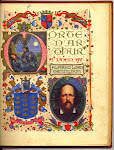
King Alfred and King Edgar the Peacemaker-Two Saxon Christian Kings.


_

So how did the quiz go, people of Monmouthshire? I am pushed for time this week as this is my last week of exam prep! So a little piece about King Aelfred (yes Aelfred who burnt the cakes!)in Gwent, as well as King Edgar.

King Aelfred is known for burning the cakes, yet his main benefits were his own character and personality in shaping the Christian Kingdom of Wessex, when the Saxon people (who now resided in the area known as England-(Angle-Land)had been converted to the Christian Faith from their old gods.

What the Warlord Arthur had been to the Welsh earlier in the sixth century, Aelfred (pron Alfred) was to the Saxons. He built monasteries on the sites of previously British 'llans' which his forefathers had burnt. Importantly he founded colleges of learning and schools and orphanages. He codified a system of Laws-important in his kingdom which was based on peace-and implemented it. He built a strong nevy to defend the coastline (perhaps in keeping with his Saxon origins). He was a realist. He did realise in England, that the Danes would never leave Angle-land (England) and ,having built up so much in his peaceful Christian kingdom and struggled so hard, he made a deal wth the Danes, giving them a large portion of the North of England (Called the 'Danelaw') in return for leaving Wessex and the South of England free from attack (yet they were still to be attacked and defeated by the French Normans (also descendents of the Norse-men-hence their name)England was peaceful for a while, bt the Danes continued to attack South Wales. More of that anon.

The Conversion Story of the Saxons
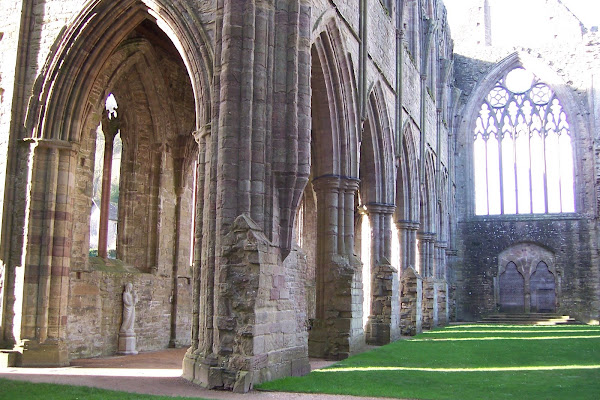
The story of the conversion of England deserves seperate telling, as we know the bruised British tribes and priests refused, after centuries of pillaging and raping and murdering to evangelise the English. They had a tough and savage reputation, and here was Gregory the Great, the Pope insisting that they walk into the lions den and evangelise them. The Pope needed to take other steps to evanglise the English, which he did via his messenger, Augustine (later called St Augustine of Canterbury)more of this later.
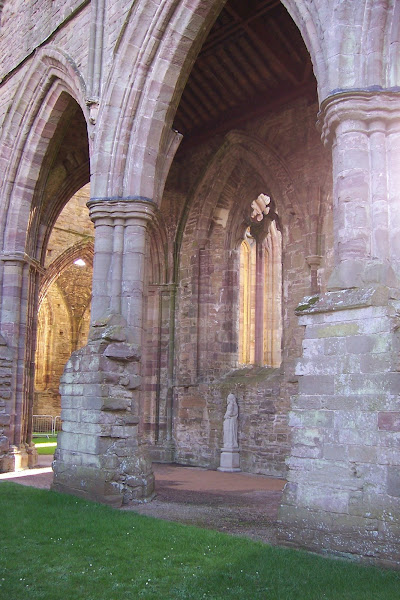
So here is information from David W Oates, about Aelfred and Edgar in Gwent.

After the lapse of more than ten centuries the name of Aelfred the Great is still remembered with pride and affection. Every nation has its hero ruler, but perhaps no hero occupies so large a place in the minds and hearts of his race as the English King Aelfred. He stands for all time as the example of an ideal king., great as a leader, never unduly elated as a conqueror, the whole of his life and energy devoted to the advancement and well being of his people.

Two kings of Gwent Brochwel and Fernwal

Towards the end of his reign, so greatly did all the princes of the Britons trust him, that the two Kings of Gwent Brochwel and Fernwel turned to Alfred for protection against the Mercians. Aethelred was Aelfred's son-in-law. This we learn from Asser,the learned Welsh bishop who had fled to Aelfred for protection and who was made Bishop of Sherborne by him.

In the days of Aelfred's great grandson Aedgar (Edgar) we get a fresh light on what was happening in Gwent.

Hywel Dda(Howell the Good) and Morgan Hen(Old Morgan)

A portion of land to the North of Gwent (Glwyssing) had long been the subject of a dispute between Morgan Hen and Hywell dda who reigned over Dyfed, another Kingdom of South Wales. When Hywel died in 949, his son, Owen continued the dispute, and both Morgan and Owen prepared for war. The Bishop of Llandaff appealed to them to lay down their arms and settle the dispute by the old Welsh Law. Each king therefore chose six of his chief men to decided the matter , but, as it was their own dispute, neither of them could preside over the Assembly. They therefore called King Edgar to preside and judge between them.

The Meeting at Caerleon ca 962 AD

The court was held at Caerleon about 962 and there can be no doubt, the city made every attempt to entertain the Saxon king in a manner fitting his dignity. When he had fully investigated the matter in dispute, Edgar declared, that the judgement of the court was that the land had always belonged to Morgan Hen (Old Morgan) and that Owain had acted wrongfully in invading the district.

Increasing friendship with the Saxons

So toawards the close of the tenth century , we begin to catch glimpses of a kinder and more friendly feeling and a growing interaction between Welsh and Saxons , which was the inevitable result of acommon foe in the Danes and a now common religion'.

from 'The Story of Gwent' by David W. Oates, published in 1930's by Cardiff Publishing Company.

My Weekend

Anyway,on Friday I did my usual stint of teaching and all day Saturday. My choir from Cwmbran are competing in the World Choir Olympics at Graz in Austria next month. It was quite gruelling. I have some little tots of eight years to eleven years and am astouned by the tenacity of them in learning to alto 2 parts. The rest of the choir is shaping well now (although it is wearing me out) Curiously I handed out copies of 'On the Blue Danube' to them and they loved it-even when I suggested that they learn the end in German.(an introduction to some Autrian Music) They are modern kids but SO loving the classical pieces we sing in the choir.

On Saturday afternoon from 4-4.30 I have the youngest ones for half an hour for extra help. They are lovely children-the older girl very confident. The little boys are lovely too, but (naturally at this age0-they are younger than the girl have a narrower attention span) and keeping them focused on some difficult must not easy- but possible with a lot of clowning around (by me) and their own motivation.One is desperately waiting for a kidney transplant and made his First Communion last year. I saw him in the procession at Corpus Christi in Llantarnam Abbey.Dan is a lovely enthusiastic child, full of energy (sometimes too exuberant in the singing!) but a keen and gifted soccer player.Angharad is very motivated and her mother ex[pecting two boy twins later this year. They worked very hard and I was amazed at how good the German became at the end of the session. Drove off then and watched 'Dr Who' at my mother's house , where we had tea.

Yesterday there was a big Choir rehearsal with some older girls who understandibly needed to prioritise their GCSE's. A recording team arrived to record the choir as well which was an added pressure (although good of them!) because all those awkward little corners to deal with had to be dealt with quickly. I had ot practised the piano part sufficiently well of one of the pieces.It was written for harp and I scraped my fingers trying to do 'glissandi'in the scale of Ab with all those black notes. The plus side is that it was a real, in tune piano rather than a keyboard (albeit a good one) which I loathe. When they had sung the Russian song five times (someone had coughed , someone else scraped their foot, a parent walked in and footsteps were recorded etc etc.they were very tired and pleased when another parent returned with all the MAcdonalds. Well to be fair, these are kids for whom a Macdonalds are a treat, rather than a regular thing) In two weeks we are having our last major rehearsal and then having a big barbie in my sister's huge garden before going to Graz.


Madeleine McCann

Please continue to pray for Madeleine. I understand there have been hundreds of new leads and so forth, which it appears were not originally followed up. There may also have been somethings which were important and not followed up. I guess we may never know the full story, with such powerful international agencies involved, this is no ordinary abduction so there is every hope she will return.

Bridgend Suicides


_______________________

The Sunday Express yesterday carried a story about mobile phone masts being responsible for the suicides at Bridgend? Are there no mobile phone masts anywhere else then??? However, on reading the article a professor Cogshill has stated that Bridgend has a high number of mobile phone masts close.Some of the twenty suicides (bridgend has been called the suicide capitol of the world after twenty young people have killed themselves since Christmas. Below is the link for the professor's story, which is interesting and thought provoking.


Schism in the Anglican Church

There was a strong piece on the front page of the Telegraph yesterday about important Bishops not attending the Lambeth Conference. As a Catholic, I can feel only sadness that people who should be obedient to Biblical and Church teachings are not and in themselves are working not for the Kingdom of Heaven, but for its downfall.As Eve and Adam were thrown out of Eden for disobedience, they continue the trend interpreting things for themselves which are quite clearly out of step. The Christian religion is not a political party which can promise everything to everyone. There is discipline involved. Everyone carries their cross.We can'tknow the reason,but if you are a genuine Christian, your thoughts and mind should be on Christ and his Apostles' teaching of his teaching and not on what you would like to happen.The Pope is right to excommunicate the bishops who consecrated the women 'prests'._St Margaret of Scotland and Our Lady


Women's key role in the Church

___________

Hard as this decision was for the Church, and it is agonising, Christ did not desire this. He would have consecrated his own blessed Mother,and St Mary Magdalene (his disciple who with the other Mary was in the Upper Room at Pentecost)Both women evangelised until their dying day-Mary MAgdalene for another thirty years in Baume in the Massif central in France, where she had gone with St Philip, and Joseph of Arimathea who went on to Wales (Britain then)All three Marys went on preaching until their dying day and now St Mary Magdalene is buried at the shrine there, guarded over by Domenican Brothers.


Our Lady and St John at the foot of the Cross

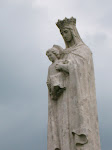
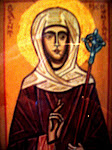
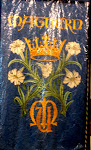
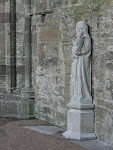
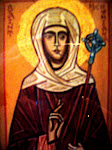
My point is there are so many Catholic Saints who are women and made a huge difference to the Kingdom of God, and they, and the millions of Catholic women who have carried the Catholic faith on through the ages-with their bright-eyed sons and beautiful daughters.There are the great women mystics-Julian of Norwich, Theresa of Avila (Doctor of the Church) Therese of Lisieux with her 'Little Way'-the little 'tiny unremembered acts of kindness and of love'(Wordsworth) and the tiny things which go to make up the support mechanism for the human race. It is we women who create the love, wo pass it on, who sacrifice, who 'keep everything together'when disaster strikes. Then there is the Blessed Mother herself, who died at Ephesus , far from the land of her birth, but secure in her future.The priesthood is one area where Christ wanted men to do the consecration of the host-so how can anyone change it, just because people may feel driven to do it.Here is a picture of St Margaret of Antioch who stuck up for the Woman's right to choose to be celibate and follow Christ. There was an important shrine to her at Caerwent in the Middle Ages-Marged Sant.


The issue with two priests wanting to 'marry', is that in just wanting this ceremony for themselves, they have been disobedient to Biblical teaching and the handed down teaching of the Apostles. The teaching is, that the act itself is sinful adultery, which is having sex with someone , not your husband or wife of the opposite sex. The act is regarded as a disorder.Many people of this persuasion understand this and attend Mass regularly. They try to overcome it. I have to say most of the people I have known that are like this, have been generous, loving, understanding and caring and people I am proud to call friends.Moreover the Catechism of the Catholic Church (available £8 in paperback from Amazon)teaches that people with his problem are not to be discriminated against, as they have their part to play in the Salvation Plan of the Almighty.

The sin remains wrong, but sins can be confessed, and absolved if people accept the discipline of belonging to the Body of Christ. The problem comes when people form a Civil Partnership, when they are trying to declare the teaching of Christ and his church wrong.Theresimply is no authority for changing the teaching of Christ, and his desire for purity and holiness, when people make up their own morlity and then try to bludgeon everyone else into accepting it. Real Christians will understand that WE ACTUALLY BELIEVE IN GOD, AND HIS CHRIST and THE HOLY SPIRIT. It is not a set piece for respectibility, but we actually fear the consequences of going against the teaching of Christ, and our own fancies and wishes cannot come into this. Men and women have always had people they cared about of the same sex , comrades in the trenches, but it does not mean they wanted to have sex with them-and this is the crucial point.

When the two vicars went through this ceremony, I've no doubt it was meaningful and precious to them but what they have done has immensely damaged the Anglican Church, which is staggering as it is. People have no respect for a church which is not clearly teaching the gospel. Rev Nazir Ali is right to call this disobedience into question and the vicars ought to mull over very seriously what they have done.We seem to be undergoing some sort of persecution at the moment, and this is the wrong time to be lobbing shots at any church. I undestand fro the video and reports below that the African Anglicans are 'going it alone', finally losing patience.

In the Bible, Matthew Ch 18 v15-18 gives the Authority for the Catholic Church's teaching on the subject.'If your brother does something wrong, go and have it out with him alone between yourselves. If he listens to you, you have won back your brother. If he does not listen, take one or two others along with you, whatever the misdemeanour , the evidence of two or three witnesses is required to sustain the charge. But if he refuses to listen to these, report it to the Church, and if he reuses to listen to the Church, treat him like a gentile or tax collector.

In truth I tell you , whatever you bind on earth will be bound in heaven; whatever you loose on earth will be loosed in heaven'.


Some people say that the references to homosexuality in the Bible-pretty spectacular in Genesis, are only contained in Paul's letters.


Yet what was in the Holy Scriptures was not everything in the Church teaching
. The Catholic Church made the Bible and formed it. St Paul was three years after his Damascene Conversion learning from the Apostles the teachings of Christ. Christ explained things seperately and in detail to his Apostles. St Peter, our first Pope actually preached on this and it was written down by his scribe and disciple Mark in Chapter 4 verse 33 on the use of parables to teach the multitudes. So Peter hmslef must have said:

'Using many parables like these, he spoke the word to them, so far as they were capable of understanding it.He would not speak to them except in parables,

but he explained everything to his disciples when they were by themselves.'

This 'in depth' teaching was the teaching Paul would have received in those three years from the Apostles when he was with them after his Baptism.


Adam and Eve destroyed their Garden of Eden through disobedience.Is it now the turn of people who call themselves servants of their flocks to do the same for their church and make up their own variations of the gospel. It would have been more prudent if they had to do this to resign and go through such a service elsewhere where it would not cause such embarassment and hurt to the church, which cannot change its policies like a political party.

Trying to weld together this split church will be immensely difficult for Dr Williams, the Anglican Archbishop of Canterbury.It is very sad for them.We have to realise we are all disobedient and sinners and put the wounds into Christ.We all need salvation, and 'feeling comfortable with it' is not good enough if you are a genuine follower of Christ. Video below.

http://link.brightcove.com/services/link/bcpid1488655367/bctid1620684361


Full story is here...

This link is not working so go to www.telegraph.co.uk then to UK News then to Leading Anglican Bishops to boycott Lambeth Conference over gay clergy.
Sorry folks.

"http://www.telegraph.co.uk/news/uknews/2170886/Leading-Anglican-bishops-to-boycott-Lambeth-Conference-over-gay-clergy.html">