








































Tuesday, February 21, 2012


The Ashing of the Sinners- Ash Wednesday, the Beginning of Lent


--------------------------------------------------------------------------------------------------------------------------------------------------------------------------------------------------------------------------------------
Have mercy on me, O God, according to thy great mercy. And according to the multitude of thy tender mercies blot out my iniquity.
2 Wash me yet more from my iniquity, and cleanse me from my sin.
3 For I know my iniquity, and my sin is always before me.
4 To thee only have I sinned, and have done evil before thee: that thou mayst be justified in thy words and mayst overcome when thou art judged.
5 For behold I was conceived in iniquities; and in sins did my mother conceive me.
6 For behold thou hast loved truth: the uncertain and hidden things of thy wisdom thou hast made manifest to me.
7 Thou shalt sprinkle me with hyssop, and I shall be cleansed: thou shalt wash me, and I shall be made whiter than snow.
8 To my hearing thou shalt give joy and gladness: and the bones that have been humbled shall rejoice.
9 Turn away thy face from my sins, and blot out all my iniquities.
10 Create a clean heart in me, O God: and renew a right spirit within my bowels.
11 Cast me not away from thy face; and take not thy holy spirit from me.
12 Restore unto me the joy of thy salvation, and strengthen me with a perfect spirit.
13 I will teach the unjust thy ways: and the wicked shall be converted to thee.
14 Deliver me from blood-guiltiness, O God, thou God of my salvation: and my tongue shall extol thy justice.
15 O Lord, thou wilt open my lips: and my mouth shall declare thy praise.
16 For if thou hadst desired sacrifice, I would indeed have given it: with burnt offerings thou wilt not be delighted.
17 A sacrifice to God is an afflicted spirit: a contrite and humbled heart, O God, thou wilt not despise.
18 Deal favourably, O Lord, in thy good will with Sion; that the walls of Jerusalem may be built up.
19 Then shalt thou accept the sacrifice of justice, oblations and whole burnt offerings: then shall they lay calves upon thy altar.
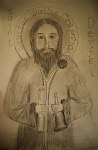
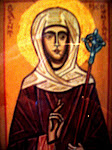
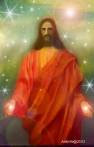
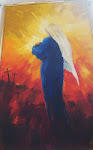
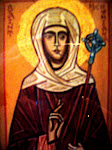
Last painting by Ashraf Gery. Thank you Ashraf-beautiful
PANCAKES AND REPENTANCE - GROSMONT AND SHROVE TUESDAY-ARE YOU ABOUT TO BE SHRIVEN?

--
--
Secondary School Childrens race.& nbsp; This was a fine bunch of people, who raced from the Town Hall behind down the road to the church. There was great fun and great enthusiasm, especially when the dog ate the pancakes that fell on the floor. The little boy cried but was given another pancake.
Women's Race


---
Junior race Winner and runner up.....I think he was quite disappointed!
It was a pleasure to see such kind and welcoming people and the children, without attitude and with plenty of fun taking part in a local festivity. They were polite and yet really enjoyed themselves, shrieking with laughter.
 Male finalist
 Finalists in the Childrens Race
 The Road at dusk D

People used to have a half day off work in Britain . Usually the church bell rang at 11am. Pancake races are still run in many places.Indeed the popularity of the pancake races and making of
 pancakes in neighbourhoods, care homes and all over has not died out.
Clarkes, the Newport based food manufacturing plant have reported record sales for the Canadian Maple Spirit this week.They are said to be working round the clock to fill the orders for the four leading supermarket chains. Schools also take the lead in keeping the custom going!
Abergavenny Tithe Barn have published a recipe for this years' pancakes and there are more races at South Cerney, Gloucestershire from All Hallows Church at 3.30pm, and at St Margaret's Chapel (next to Our Lady of Glastonbury Catholic Church) at 3.30. I shall be travelling to Grosmont this afternoon to see the races there.
The tradition is said to have originated when a housewife from Olney in Buckinghamshire was so busy making pancakes that she forgot the time until she heard the church bells ringing for the service. She raced out of the house to church while still carrying her frying pan and pancake. Pancake races in Olney can be dated back to 1445- in Catholic times.
The first pancake recipe was in a cookbook dating back to the 1439.
Shrove Tuesday is a term associated in English-speaking countries, Other Countries have, of course, Carnival and Mardi Gras.It is noted in Britain in histories going back to 1000AD, but may have been much earlier in the aural tradition.Making and eating the pancakes was considered the last feast which would be restricted during Lent.The date of Shrove Tuesday depends on the date of Easter and based on cycles of the moon.
There are Penetential Masses in all parishes this Lent, which will be published on the Churches Websites.Unfortunately some of these are not up to date, and cannot be accessed.
CWMBRAN NP44 3LTOur Lady of the Angels confessions (reconciliation) Sats at 12noon -12.30
NP7 5UD Our Lady and St Michaels Abergavenny, not sure
NP20 ITP St Mary's Stow Hill Sats 10.05-11.45
NP10 9DW St Basil and St Gwladys, Tregwylym Rogerstone Tuesday 6.30-6.50
NP20 3AQ St David's Park Crescent Monday 6.30-6.50
NP20 7DX St David Lewis, Bettws Newport 6.30-6.50
NP4 6HL St Alban's Pontypool 5.30-5.40
NP4 9RA St Felix, Saturday after morning Mass
NP20 2BZ St Michaels Newport. Wed 6.30-6.50.
NP25 3BD Saturday St Mary's Monmouth 11-11.30 and on Request
And finally....a recipe!
- 110g plain flour
- 2 eggs
- 200ml milk mixed with 75ml water
- 50g butter
- pinch of salt
Gently melt the butter (30 secs in microwave) or in a pan. Sift together the flour and salt. Crack the two eggs into a dish and mix thoroughly and then pour into a well in the middle of the flour (make this with a spoon)Whisk in the eggs gently so that there is a creamy runny mixture.Put 2 tablespoons full of butter into the pan and then keep the rest of the melted butter for the frying pan.Get the pan really HOT and then TURN DOWN THE HEAT . Put two tablespoonfuls of the mixture into the pan, after the butter has completely lubricated it and move the pan around to make sure the whole of the base of the pan is covered.With a palate knife , gently keep the pancake moving until it is firm enough to flip over or toss over (if you are brave!) Serve with anything you like!
Wednesday, February 1, 2012
The Passing of a truly wonderful priest and confessor at Belmont Abbey

Monmouthshire Monk Priest, from Cwmbran, Torfaen. Requiescat in Pace
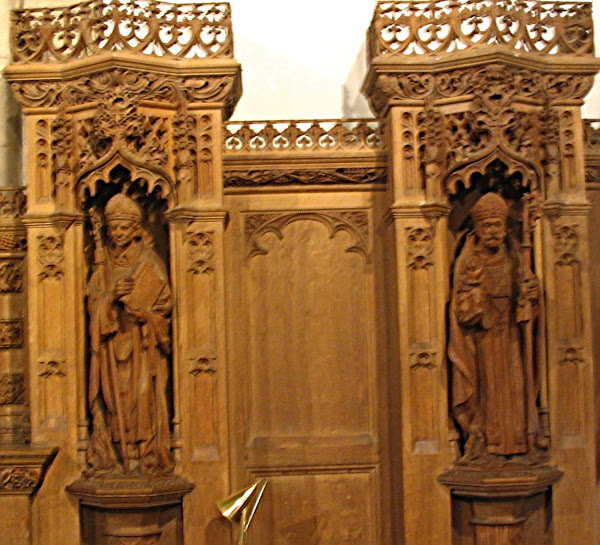
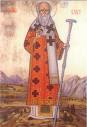
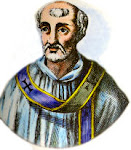
Right:St Dyfrig of Ergyng, Bishop of Llandaff
http://www.youtube.com/watchv=6hh_irzH7yo&list=UU_fY_pyY33755pFgGP8rKfw&index=1&feature=plcp

The Benedictine Community have lost one of their Brethren, to a stroke quite suddenly on 23rd of January. I drove down to the Abbey at Belmont today in glorious sunshine, and thought how fitting it was, that although extremely cold, the heavens were smiling on us, and on father Dyfrig. To my surprise I found he was christened Kevin Harris and attended Our Lady's church in Cwmbran, where he was Christened and confirmed and then at Pontypool. certainly I would never have guessed he was from Cwmbran. Jovial, laughing and and extremely kind Confessor, with real concern for the faithful he served, he will be sorely missed by us all-his stints at Abergavenny during the penetential masses in particular, because these were where I cam into contact with him.
There was no room in the car park, and I walked back up through the graveyard to the Abbey Church and soon the procession of clergy entered, Abbot Paul being last . There were also representatives from the Ukrainian Catholic Church, which Father Dyfrig loved, having been to the Ukraine, and able to chant the liturgy. A sizeable number of the Ukrainian Catholics were also in the congregation. The Abbey church was packed with people standing at the back and sides and all the chapels full. During Father Abbot's moving homily, you felt a real sense of loss, echoed in the emotional letter written by his brother Michael later after the mass. Dyfrig was a Welsh priest from Madley just down the road from Belmont, who became Bishop of Llandaff. (no myth here-it is fact) The hymns chosen, 'Jesu Lover of my soul' , 'Soul of my Saviour' and 'Guide me ,O thou great Redeemer' were all well known and fervently sung, and the plainchant music written out for us in a beautiful booklet meant that most participated in the Ordinary of the Mass, which was largely sung. Father Dyfrig's brother and sister in law Jean and their families sat at the front, obviously distraught and our sympathy and love went out to them.
The gospel lesson from St John 14:1-6 was
'Do not let your heart be troubled
Trust in God still and trust in me
There are many rooms in my Father's house
If there were not, I should have told you
I am now going to prepare a place for you
And after I have gone and prepared you a place,
I shall return to take you with me
so that is where I am
you may be too
You know the way to the place where I am going.
Thomas said 'Lord, we do not know where you are going
so how can we know the way?'
Jesus said
I am the Way and the Truth and the Life
No one can come to the Father, except through me.'
The commendation was sung 'Receive me Lord and I shall live, and do not disappoint me in the promise you have given me'.
There followed the Byzantine Rite Commendation and the Christos Aneste, sung in Greek.
Finally, as the coffin was carried out from the church, the In Paradisum
In Paradisum deducant angeli; in tuo adventu suscipiant te martyres, et perducant te in civitatem sanctam Ierusalem.
 Chorus Angelorym te suscipiat, et cum Lazaro quondam paupere, aeternam habeas Requiem.
As the Abbey church doors were open, the departing procession was bathed in bright sunlight, including Father Dyfrig's coffin- a great sign and a great blessing as a great priest, humble and human was carried out. I breathed the words:
'Well done, thou good and faithful servant'.
St Dyfrig Pray for him
St Benedict Pray for him
St David Pray for him
St Winifride, Pray for him.
 Above Christ Receives Fr Dyfrig

Tuesday, January 17, 2012
BRYNGWYN, An ancient Church on a White Hill and Cistercian Grange

Ancient Welsh Studies.co.uk points to two men of Gwent, the first born c. 1045 and the father of Sir Gwyn, and secondly, the father of Aeddan who was born around 1135 and AEDDAN ap Gwaethfod a King of Gwaethfod . These Gwaethfods lived originally in Tegeingl and identify the earliest Gwaethfoed of Gwent as "ap Gwyn ap Glyddien (Cloddien) ap Gwybedydd ap Gwrydr Hir ap Caradog ap Lles Llyddog “ and believe he (or an intermediate ancestor) took up residence on the family's paternal lands in south Powys when other branches of the family remained in Tegeingl. This is not quite the story given by Sir Joseph Bradney,of a marauding Cardiganshire raider but fits in better with the family history.
They give the possibility that when his lands were overrun by Normans and incorporated into Shropshire, That KingGwaethfoed moved south looking for new lands.He appealed, the Ancient Welsh Studies site say, on entering the north of Upper Gwent , to King Ynyr ap Cadwgan, and was given Merwydd ferch Ynyr as wife and lands where White Castle was later built.
It is even possible Gwaethfoed came to Gwent as an invader/squatter and avoided armed conflict with its king by agreeing to marry Ynyr's daughter. Ynyr is dated to c. 1030 and Merwydd to c. 1060 .The Theory that Merwydd married a Gwaithfoed of Gwent seems more reasonable, both as to geography and chronology. His only known son is called Sir Gwyn, born c. 1075, builder of Gwyn's Castle now known as ‘White Castle’ (white also being the translation of ‘Gwyn’. )
So much for the genealogy of Gwyn. About the year 1100, Sir Drew de Baladon (or Balun) invaded upper Gwent as a retainer of the Marcher Lord Roger fitz William fitz Osbern. Ynyr and Gwaithfoed,confronted them but it apppears bloodshed was averted by both Welshmen for their sons to marry de Baladon's daughters. Sir Gwyn ap Gwaithfoed married Emma de Baladon. Sir Dryw ap Gwaithfoed was probably his son, who was father to Aeddan, born around 1165.
Aeddan , seemingly by now seems to be living at Grysmwnt or Grosmont, grew up a pious and faithful youth. He is mentioned in the Journey through Wales by Gerald the Welshman. I have already blogged about the route that (Catholic) Archbishop Baldwin of Canterbury took through Gwent from Llanthony, Patrishow (St Issui’s Shrine)Monmouth, Abergavenny, Usk, Newport etc. This Aeddan took the cross from Baldwin, becoming a Crusader knight. The ceremony was performed as Baldwin, accompanied by Gerald the Welshman, Archdeacon of St David’s was proceeding from Abergavenny to Usk.
.........a certain nobleman of those parts named Arthenus came to the Archbishop ,who was proceeding towards the castle of Usk and humbly begged pardon for having neglected to meet him sooner. Being questioned as to whether he would take the cross, he replied ‘That could not be done without the advice of his friends’, The Archbishop then asked him, ‘are you not going to consult your wife?’ He modestly answered, with a downcast look. ‘When the work of a man is to be undertaken, the counsel of a woman ought not to be asked’ and instantly received the cross from the Archbishop’.....(The itinery of Archbishop Baldwin(Third Crusade 1188)
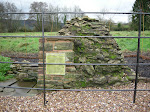
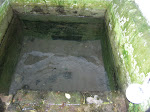
It is recorded, that soon after this, fired by his commitment, Aeddan and his sons founded three new chapels (which may have been founded on more ancient sites)Aeddan’s Chapel in Clytha, Bettws Newydd Chapel (Bettws Fovour Aeddan)(Bettws is a corruption of Bet-Haus-ancient for House of Prayer) and Bryngwyn Chapel, which he dedicated to St Peter.) (Cambria Triomphans by Percy Enderby 1661 p 250)He held the manor of Clytha by payment of a sparrow hawk and granted out his lands to his relatives to hold by suit of court and a red rose (which was his badge)The Papal charters were given for this by Pope Honorius II and given to Aeddan by Teilo.The family supported the church and its Holy Well (St Peter’s Well-300 yards SE from the Church)and the church and manor were administered by the abbot and Community of Llantarnam. The church was likely to have been served with priests from Llantarnam also.
Some of the possessions of the Abbey of Llantarnam in Bryngwyn descended to the co-heirs of the manor of Wentesland and Bryngwyn . Lower Ty Mynach House in 1845.The small farm called Brynhyfryd was part of Lower Ty mynach.(Monks' House) The house was built on the site of two original cottages.The Chapel Farm, so called because of the association with the monastery, descended with the manor.It is likely they appointed local men as parish priest.
Following the collapse of the rural economy with the Black Death, and depletion of priests and monks and finally the Reformation, Clytha, seems to have collapsed, and the other churches taken over by Henry VIII’s new church. The tithes were formerly paid to the priory at Abergavenny but now paid directly to the Crown’s commissioners.
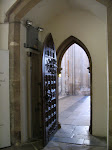
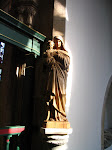
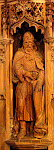
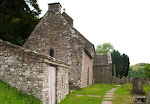
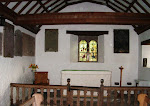
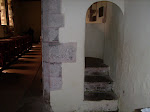
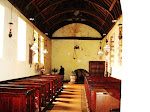
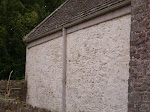
The visit was taken at Christmas, and I did not get to see the well, which was hard to locate, but I am going back there later on a warmer brighter day. From the pictures you can see we church was visited at Christmastide. It was charmingly warm and inviting, with a definite sense there is a real community at the Church. At the altar is a lovely reredos carved in wood, and pride of place given to a beautifully carved crucifix next to a carving commemorating The other carvings are equally remarkable, and most wonderful was, that the church was actually open! These were carved in memory of a beloved Rector, William Crawley a fellow of Magdalene College, Cambridge. This Anglican rector died at the age of 94, arranged for the building of a North aisle and a new chancel arch and in 1872 built the first parish school and the first bell of this school displayed in the church.The other figures on the reredos carvings are St Peter, the disciple, Our Lady, John the Beloved Disciple and Peter shown as Pope. The carvings are of a beautiful quality.
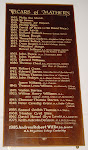
 The last three priests of the Catholic Church recorded who said Mass here were
Father ADAM ap LLEWELLYN
Father GREGORY DE TREGRUG Both these priests are mentioned at the same year 1352. Possibly these were the first non monks to become rectors following the plague, monks at Llantarnam having been reduced to a small number.
 |
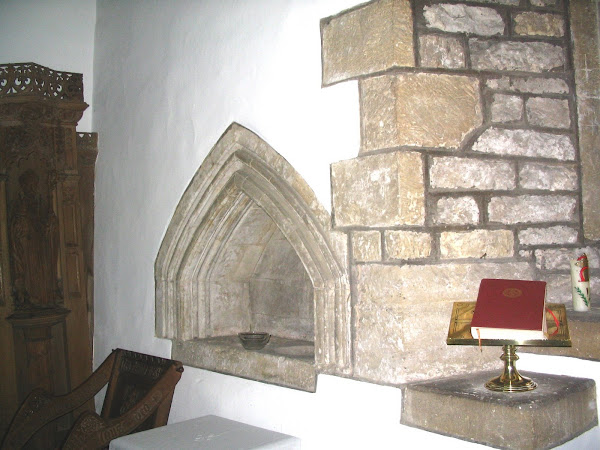
| Priest's door into the Sanctuary |
Fr Gregory seems to have survived as priest until 1399 when FATHER JOHN AP GRUFFYDD became the new priest. After that the records seem not to give subsequent names, but we must assume the Lord of Bergavenny appointed future priests. They seem to have all been Welshmen, because until Henry VIII ‘annexed and extirped Wales’ and the Welsh language .
this area still spoke Welsh (and possibly English as well!) the Language of the church always was Latin, as it had been from the beginning in Wales.
 The original bell (Tenor) cast in Bristol about 1480 is inscribed AVE MARIA GRATIAE PLENA (Hail Mary, full of Grace) the second, commissioned in Anglican times was cast in Gloucester by John Palmer (Feare God, Honor the King-SOLI DEO DETUR GLORIA)1632 and the third bell cast in Chepstow by William Evans ‘ WM Henry Churchwarden ‘ is written on this 1766 bell. The writer of the Handbook of the Church, Mr C W Crawley also records that ropes were frequently purchased, so the bells were fully used at a time when parishioners did not have watches.
The church also possesses a silver chalice and patencover of the early Stuart Period.
< The Font
I plan to return to Bryngwyn to find the well and publish more informationon that, although I understand it is in much need of restoration.Tuesday, January 10, 2012
Heartwarming and Uplifting Epiphany Meditation at Belmont Abbey and a poem

Epiphany Meditation Such a great afternoon yesterday, when I drove up through a balmy and sunny Monmouthshire landscape into the ancient Welsh Kingdom of Ergyng where Belmont Abbey is in modern Herefordshire. Belmont, I understand was originally built as the Cathedral for Newport. We had already been to a lovely Mass at Abergavenny but after the frenetic rushing around before and after Christmas, the Meditation at Belmont, which included two Spanish carols, which were movingly sung by Father Abbot and one of the brothers from Peru who was spending Christmas and Epiphany at the Abbey.
Una estrella que llama en la noche and De Luz nueva se viste la terra.
The parish choir sang some lovely things, the Epiphany Hymn, 'How Brightly Shines the Morning Star' and a 'Untous a child is born' not the usual 'puer nobis nascitur from 'Piae Cantiones' but a more unusual version, with a rrefrain for the congregation. There were some beautiful prayers from ancient liturgies of Our Lady.These meditations, were of extraordinary beauty and insight, and were interspersed with the carols you might expect, 'Bethlehem of Noblest Cities', 'As with gladness men of Old', 'We three Kings', 'O Worship the Lord in the Beauty of Holiness', and the 'First Nowell'. The organist delighted with the testing chorale Prelude:' Wie Schoen leuchtet der Morgenstern' (How brightly shines the Morning Star' by Bach played I believe by Mr Tom Hempson. Amongst the shimmering candles and rich decorations, the relaxed and quiet mood made this an inspirational hour, quite different from Christmas excitement, and getting to the heart of the miracle of Christ coming to the gentiles, drawing the Whole world to theFather. The liturgical chants were especially moving in this setting. Ecce advenit , Vidimus stellam eius (We have seen his Star) rang around the Abbey, as it has been sung over the centuries by our Benedictine Monks.It occurred to me that the highlight of the BBC's surprisingly (on the whole) faithful 'Nativity' TV series last year curiously finished with the Wise Men, (they were not neccessarily kings, nor three,) bowing before the Infant God-Man , Christ the Child. The line in one of the Belmont hymns, 'Bow down before Him, His Glory proclaim' seemed apposite and moving. We were able to reflect, the Lamb was born in a cave, associated with Shepherds. He was born in Bethlehem, which means THE TOWN OF BREAD and placed within a MANGER (an eating place for the animals) Both heavily pointing to the Eucharist. The quiet atmosphere allowed these insights and all was beautifully done.Remembering the birth of my own son, I thought of Mary, poor girl, nine months pregnant having to ride all those miles on a donkey and give birth in a lowley animal shed.
Afterwards people took the trouble to walk around the wonderful displays, especially the crib above and take photographs, as well as to pray prayers of thanks for the grace of such a wonderful meditation in beautiful surroundings. The faith and love of the monks, is shown in the tremendous care they take in carefully preparing the whole church for the feast, slightly after the Twelfth Night, and yet still in Christmastide, which the church will continue to celebrate until Candlemas on February 2nd. Refreshments, pies, biscuits and drinks of various kinds were available for the considerable congregation afterwards. I walked out past the crib the monks had built outside the Abbey, the beautiful words and sounds ringing in my head and felt greatly blessed!

Abbot Paul was kind enough to send me his sermon of the morning, in which he offered some reflections on the Epiphany, which I will lay down for you here so you can share them, and I am looking into a podcast of this lovely event.
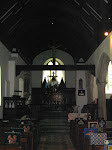
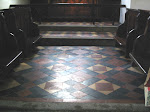
 From the End of the Nave to the High Altar
The poem below is one of my favourite Epiphany poems, along with 'The Burning Babe' and 'The Journey of the Magi' by T S Eliot.
BC:AD by U.A. Fanthorpe
This was the Moment, When Before turned to After
And Time's unelected Timekeepers presented Arms.
This was the Moment, when Nothing Happened
Only dull peace sprawled boringly over the earth.
This was the Moment, when even energetic Romans
Could think of nothing better to do
Than counting heads in remote provinces.
And this was the Moment, when a few farm workers
And three Members of an obscure Persian sect
Walked haphazard, by Starlight
Straight into the Kingdom of Heaven.
 Christmas Display under the stained glass window of Benedictine Abbot , Blessed Richard Whiting of Glastonbury, who was hung drawn and quartered on the orders of Henry VIII.
The traditional Announcement of Easter in the Roman Missal reminds us of the centrality of the Feast of the Epiphany to the Christian faith and the liturgical year. This proclamation is made not on the First Sunday of Advent nor on Christmas Day but on the Epiphany, the great feast of Light, Easter in winter. “Arise, shine out, Jerusalem, for your light has come, the glory of the Lord has risen upon you, though night still covers the earth and darkness the peoples.”
Although the Epiphany recalls and celebrates the triple manifestation or revealing of the Son of God as recorded in the New Testament: the Star and the Magi, his Baptism in the Jordan and the miracle at the Wedding Feast of Cana, today’s Gospel concentrates on the first of those events. Yesterday we heard how Jesus transformed water into wine at the behest of his Mother, the first miracle or sign, which would ultimately lead to his Death and Resurrection and the Eucharist in which wine becomes the Blood that was shed on the Cross. Tomorrow we will hear the testimony of St John the Baptist, a vision of the Trinity in which the Father’s voice is heard, the Spirit is seen descending upon Jesus in the form of a dove and his identity is revealed, “This is my Son, the Beloved; listen to him.”
Today’s Gospel story is sheer magic. From its first appearance 2,000 years’ ago to the present day it has blown the minds and fired the imagination of countless writers and poets, artists and musicians, and of entire nations and cultures.
It can only have been the Protestant Reformation and the Puritan abolition of all popular religious customs in this country that has denuded Great Britain of the many wonderful traditions we meet all over Europe and the Middle East, not to mention those countries on other continents where Catholic, Orthodox and other ancient Christian Churches have taken root. For them all the Epiphany far outweighs Christmas in importance and tradition. We also recall that in the early Church it was only at Epiphany and Easter that people, young and old, were baptised and made members of God’s family.
 Outdoor Crib-Belmont Abbey
By the time he writes his gospel the Church has become predominantly Gentile, so the believers attracted to the good news of God incarnate are Gentiles just like the Magi. It is through nature that God reveals himself to the Gentiles, and to the Magi through astrology, but it is an imperfect revelation.

Here Matthew highlights the paradox: those who have the Scriptures, and can understand what the prophets have said, are not willing to worship the newborn king. They reject the Messiah and seek his death. Here we see the essential gospel story in miniature. God has made himself present to us in his Son, Emmanuel, yet this revelation, this Epiphany, was considered an offence and contradiction to many.
 On the other hand it was recognised as salvation by those who had eyes to see and hearts to believe. Of these the Magi are the first, the anticipation of all those who would come to worship the risen Christ proclaimed by the apostles.
In the Star of the King of the Jews at its rising, they see in prophecy, hence the gifts of gold, frankincense and myrrh, the One whose kingship would not be fully visible until he had hung from the Cross, beneath the title “The King of the Jews”, and been raised to God’s right hand through the Resurrection
The question for us and for all Christians today is simply this: which road do I follow: that of King Herod and those who reject the truth of the Gospel, the light of faith, or that of the Magi and those who gradually make sense of divine revelation and can grasp what it means to be saved? In other words, what does the Epiphany mean to me?
by Abbot Paul Stoneham.
Our Lady of Belmont, Pray for us
Our Lady of Tintern, Pray for us
St David.... Pray for us
St Winifride... Pray for us
Wednesday, December 28, 2011
A WELSH CHOIR FROM CWMBRAN CELEBRATES THE HOLY NIGHT
This may interest some of you, the Nidus Choirs, Children and Adults singing O Holy Night. The song is available on iTunes. I am singing the solo, just out of interest. The blog will be returning shortly. We have had to take my mother, who has Alzheimers on a Christmas Trip to Germany, her homeland where she has not been for ten years and prior to that the time has been taken up by trips down to Wales to promote and sell the CD 'Christmas in Wales'. The Album is available via download from iTunes or you can buy it at
http://www.niduschildrenschoir.co.uk and it is all badly needed funds for their forthcoming competitions, which always cost a lot of money.
http://www.youtube.com/watch?feature=player_embedded&v=oeLa_8r2ZF4
Subscribe to:
Posts (Atom)